🎁 Buy 2 kits, get the 3rd FREE · Free shipping on every order

What Is a Miniature House Kit? Your Complete Guide to Tiny World Building
A complete guide to miniature house kits: what they contain, how they differ from book nooks, dollhouses, and dioramas, who they are for, and how to choose the right difficulty level. Written by Hannah Brooks, founder of Yavok.

A miniature house kit is a boxed craft set containing all the pre-cut pieces, materials, and instructions you need to build a detailed, scaled-down structure by hand. No woodworking skills. No trip to a hardware store. Everything arrives in one box, and a few hours later you have something that looks like it belongs in a museum display case. That contrast between “I just opened a cardboard box” and “I built this entire Victorian parlor with my own hands” is exactly why these kits have pulled in millions of crafters worldwide.
Whether you spotted one on a friend’s bookshelf, saw a finished build go viral on social media, or received one as a gift and have no idea where to start, this guide covers everything: what these kits actually are, how they differ from similar products, who they are genuinely for, and how to pick the right one for your skill level or budget.
The Anatomy of a Miniature House Kit
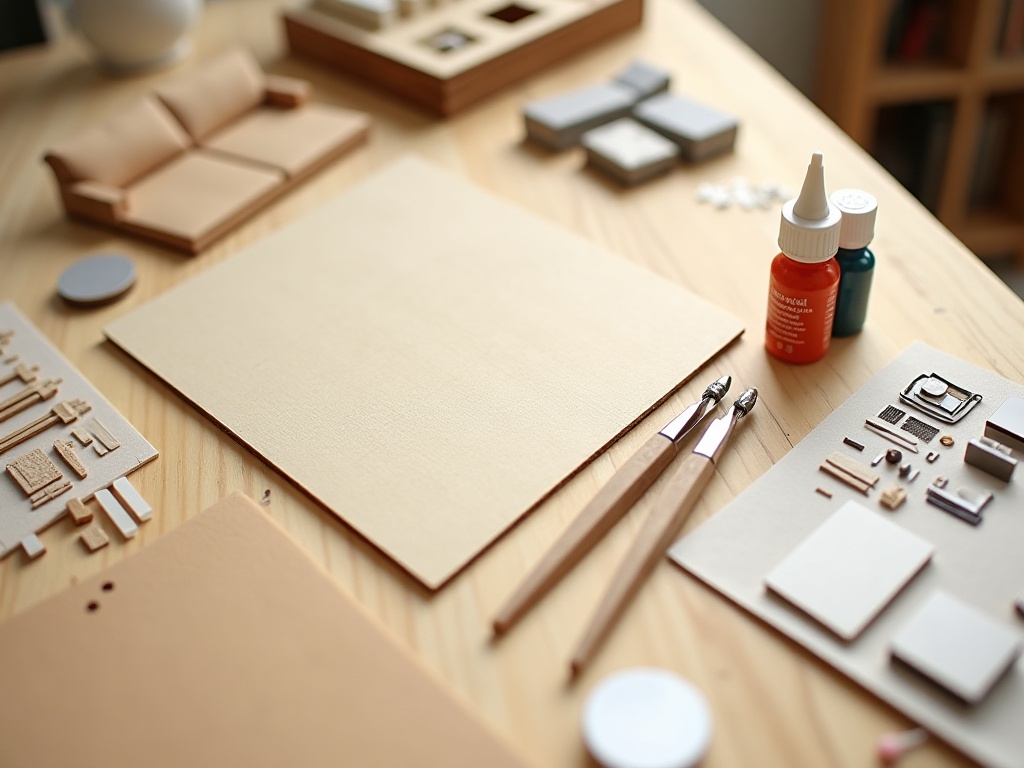
Open a quality miniature house kit and you will typically find a stack of laser-cut wood panels, a set of acrylic windows, rolls of tiny wallpaper and flooring sheets, small bottles of craft glue, and a collection of micro-furniture pieces or the raw parts to assemble them. Better kits also include LED fairy lights with a small battery pack, fabric swatches for curtains, and sometimes even decorative accessories like books smaller than your thumbnail.
The scale most commonly used is 1:24 (half-inch scale) or 1:12 (one-inch scale). In 1:12 scale, a six-foot door translates to exactly six inches tall. That mathematical precision is part of the charm: every piece has a real-world counterpart, and the act of assembling them triggers something quietly meditative.
- Laser-cut wood sheets: numbered panels that slot or glue together, usually made from basswood or birch plywood.
- Finishing materials: wallpaper sheets, floor tiles or wood-grain paper, paint, and sometimes air-dry clay for decorative accents.
- Furniture components: flat-pack micro pieces that you sand, assemble, and often paint yourself.
- Lighting (in premium kits): pre-wired LED strips or fairy lights that slip into routed channels in the wood.
- Illustrated instruction booklet: step-by-step diagrams, usually with numbered callouts that match the cut sheets.
The quality of that instruction booklet matters more than most beginners expect. A well-photographed, logically sequenced guide can make a 40-piece build feel completely manageable on a Sunday afternoon. A poorly printed, loosely translated manual can turn the same 40 pieces into a frustrating puzzle. That is a big reason why sourcing kits from a trusted retailer makes a measurable difference in your experience.
Key takeaway
A miniature house kit is not just a product; it is a complete crafting experience. The build process itself, from dry-fitting the first panels to placing the final tiny cushion, is the point. The beautiful finished piece on your shelf is a welcome bonus.
A miniature house kit is not just a product; it is a complete crafting experience. The build process itself, from dry-fitting the first panels to placing the final tiny cushion, is the point. The beautiful finished piece on your shelf is a welcome bonus.
Miniature House Kits vs. Book Nooks, Dollhouses, and Dioramas
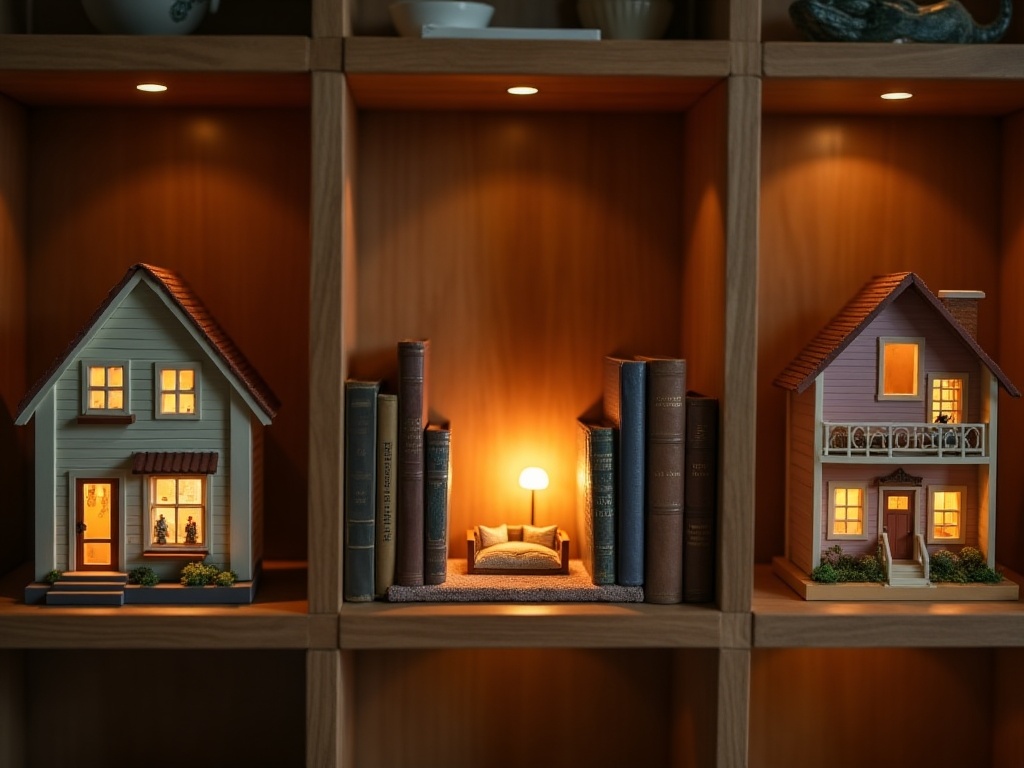
These four categories overlap visually, and gift buyers especially get tripped up by the terminology. Here is a plain-language breakdown.
Miniature House Kits
A miniature house kit is the broadest category. The finished piece is a fully enclosed or semi-open structure, usually architectural: a cottage, a bakery, a library corner, a treehouse. It can sit on a shelf as a standalone display. The emphasis is on the build process as much as the finished object. You are not just receiving a decorative item; you are making it.
Book Nooks
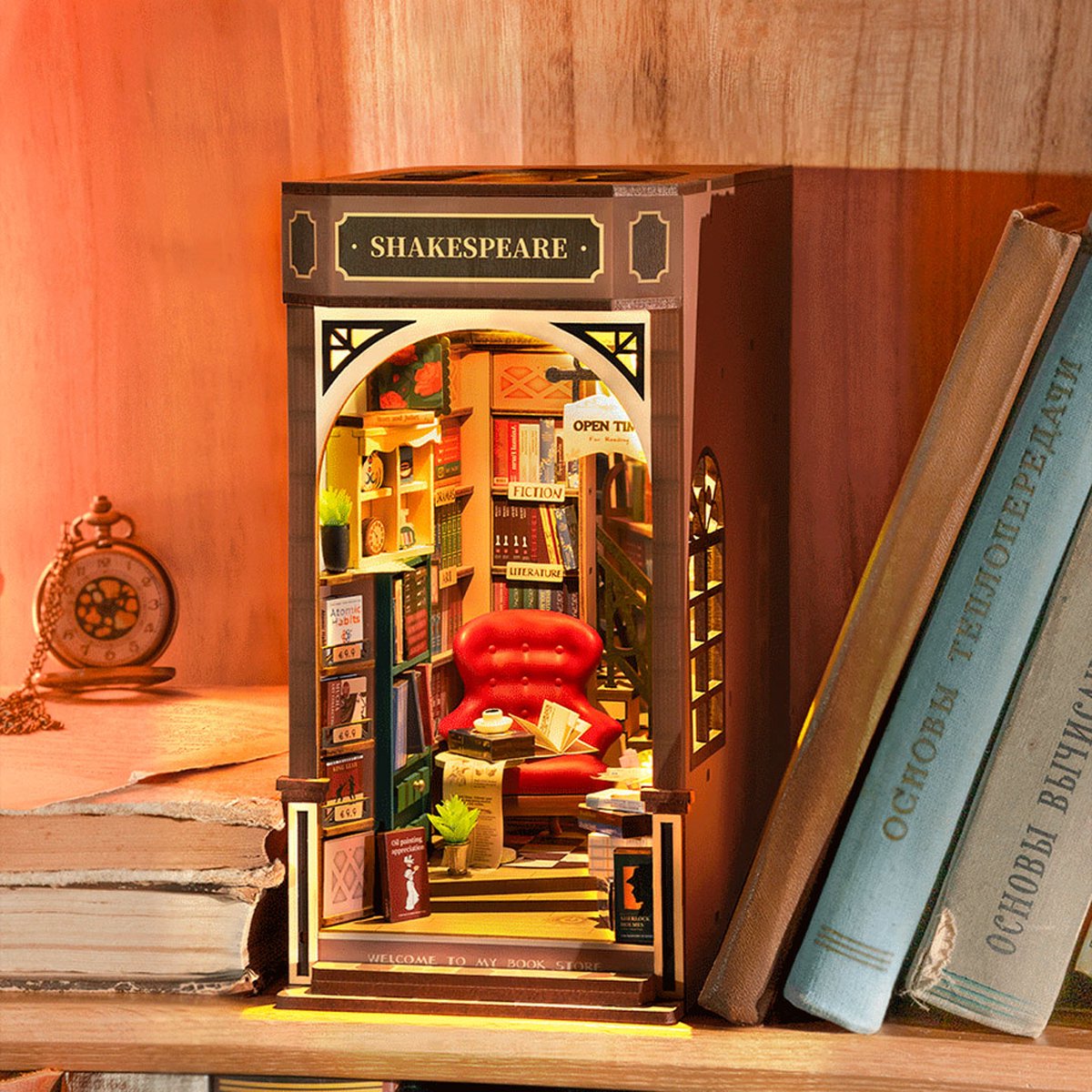
A book nook (sometimes called a shelf insert) is a specific sub-type of miniature kit designed to slide between books on a standard shelf and create the illusion of a tiny world tucked inside your bookcase. The form factor is narrow and deep rather than wide. Book nooks almost always include LED lighting because the viewing angle is dark by default. If you own bookshelves and love the idea of a secret door effect, exploring our full miniature house kit collection is a great place to find the right format for your space. And if you are specifically after that shelf-insert magic, our dedicated book nook kit range is its own wonderful rabbit hole.
Traditional Dollhouses
Classic dollhouses are toy-adjacent. They are open-fronted, often 1:12 scale, and historically marketed toward children as play items. They can be incredibly elaborate and are a legitimate collector’s hobby. The key difference from a modern miniature house kit is intent: dollhouses prioritize play or open display, while miniature house kits prioritize the building experience and finished-piece presentation. Many adults who grew up with dollhouses graduate naturally to miniature house kits because the craft component is richer.
Dioramas
A diorama is a scene, not necessarily a structure. Model railway enthusiasts build dioramas. Military history hobbyists build dioramas. The word simply means a three-dimensional scene displayed in a box or on a base. Miniature house kits can produce something diorama-like, but the distinguishing factor is that a kit is a product with a defined build process. A diorama is more often a scratch-built or heavily customized creation.
If you are still deciding which format suits you, the table below captures the key differences at a glance:
| Format | Typical footprint | Lighting included? | Build complexity | Best for |
|---|---|---|---|---|
| Miniature house kit | Freestanding, any surface | Often yes (premium kits) | Beginner to Advanced | Crafters who love the build process |
| Book nook kit | Between books on a shelf | Almost always | Beginner to Intermediate | Book lovers, shelf decorators |
| Traditional dollhouse | Open-fronted, floor or table | Rarely | Play-focused, low assembly | Children, open-display collectors |
| Diorama | Custom, scratch-built base | Builder’s choice | Advanced (scratch build) | Experienced modellers, customisers |
📜 Did you know?
The tradition of miniature architectural models dates back to ancient Egypt, where small-scale house models were placed in tombs as early as 2000 BCE. European cabinet-makers of the 17th century built elaborate “baby houses” not as toys but as status displays for wealthy households, featuring working hinges, silver tableware, and hand-painted tiles. Modern laser-cut miniature house kits carry that same impulse, scaled down to a $30-$80 price point anyone can access.
The tradition of miniature architectural models dates back to ancient Egypt, where small-scale house models were placed in tombs as early as 2000 BCE. European cabinet-makers of the 17th century built elaborate “baby houses” not as toys but as status displays for wealthy households, featuring working hinges, silver tableware, and hand-painted tiles. Modern laser-cut miniature house kits carry that same impulse, scaled down to a $30-$80 price point anyone can access.
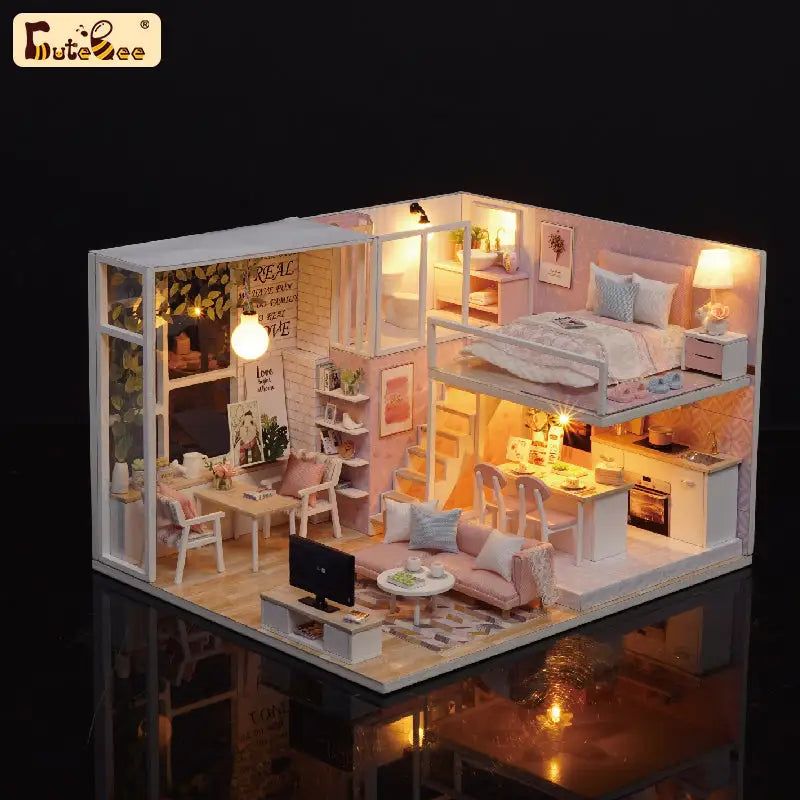
Who Actually Builds Miniature House Kits?
Short answer: almost everyone, once they try one. Longer answer:
Complete Beginners with Zero Craft Experience
This is the audience most people underestimate. The single most common message we receive at Yavok goes something like: “I have never built anything in my life and I was scared to try this, but I finished it and I cried a little.” No exaggeration. Miniature house kits for beginners are specifically engineered so that the only tools you need are craft glue, tweezers, and patience. The laser-cut panels fit together like a jigsaw puzzle. The wallpaper is pre-printed and pre-sized. If you can fold a piece of paper without tearing it, you can finish a beginner kit.
Experienced Crafters Seeking a New Medium
Knitters, painters, resin artists, and paper crafters frequently migrate toward miniature building because the multi-disciplinary nature of it scratches every itch at once. One project can involve woodworking (gluing and sanding the structure), painting, textile work (fabric curtains), and lighting installation. The most popular miniature kits in our shop consistently attract crafters who describe themselves as “always needing a project.”
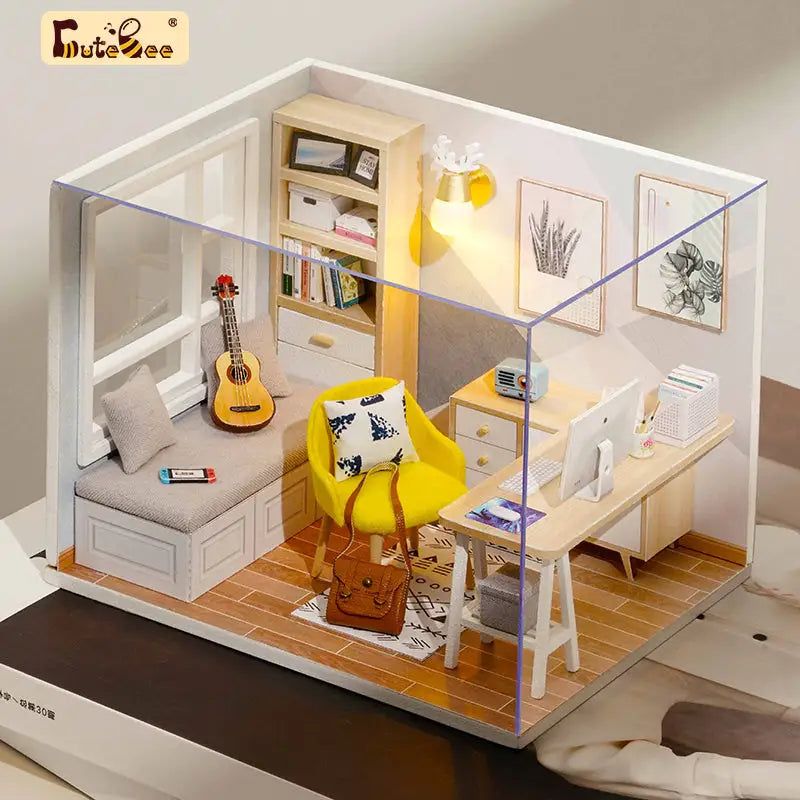
Easy starter under $50
Sun Room DIY Miniature House Kit
$49.99
A perfect first build: straightforward assembly, satisfying results, and a bright open-room aesthetic that looks stunning on any windowsill.
Gift Buyers Looking for Something Meaningful
A miniature house kit is an unusual gift in the best sense. It is consumable in that it becomes something, unlike a candle that disappears. It is personal in that the recipient builds it with their own hands. It lands well for birthdays, holidays, “thinking of you” moments, and creative housewarming gifts. Price points range roughly from $25 for a small beginner structure to $90+ for a large, illuminated multi-room kit.
People Who Need a Screen-Free Ritual
This one comes up constantly in community feedback. People describe building sessions as meditative, almost like knitting or puzzling. Your hands are busy. Your brain is focused on something small and concrete. An hour disappears. The anxiety that was sitting on your chest an hour ago has relocated somewhere quieter. That is not marketing copy. It is what our community actually reports, and it is worth naming honestly.
✨ Hannah’s tip
Before you glue a single piece, do a full dry-fit of your kit. Lay every panel out on your table, find the numbered callouts in the instructions, and just look at how the structure will come together. It takes 10 minutes and saves you from the most common beginner mistake: gluing a wall in backward because you skipped this step. I learned this the hard way on my very first Victorian dollhouse build, and I have never forgotten it since.
Before you glue a single piece, do a full dry-fit of your kit. Lay every panel out on your table, find the numbered callouts in the instructions, and just look at how the structure will come together. It takes 10 minutes and saves you from the most common beginner mistake: gluing a wall in backward because you skipped this step. I learned this the hard way on my very first Victorian dollhouse build, and I have never forgotten it since.
Difficulty Levels: How to Choose the Right Kit for Where You Are
Miniature house kits come in a real range of complexity, and most reputable sellers label them clearly. Here is what those labels actually mean in practice:
Beginner (Level 1-2)
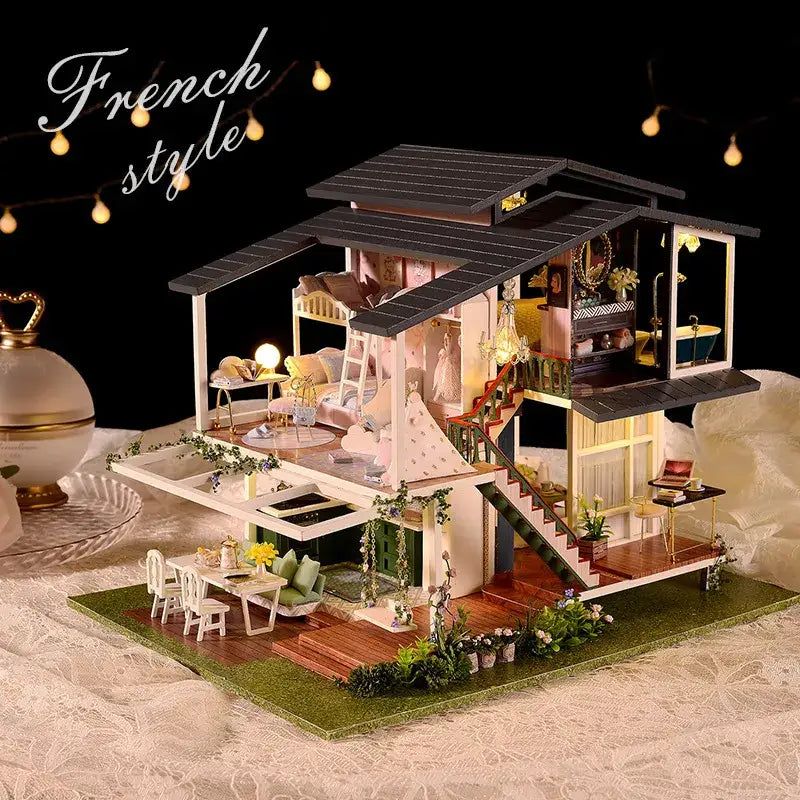
Fewer than 60 components. No intricate furniture assembly. Usually a single room or small structure: a tiny cafe, a garden shed, a compact bookshop front. Build time runs roughly 3-6 hours spread over one or two sessions. Glue bonds are simple. Lighting, if present, is a single pre-wired strand. Perfect for a first kit or a gift for someone who has never built anything before.
Intermediate (Level 3-4)
60-150 components. Multi-room or two-story layouts. Furniture assembly required, including small hinged doors or working drawers. Wallpaper and flooring layers add finishing steps. Build time extends to 10-20 hours total. This is where most of our community lands after their first kit. The satisfaction-to-effort ratio hits its peak here. Intermediate miniature house kits are the category that tends to generate the most detailed finished-build photos in community spaces. Many builders tell us the Tranquil Life kit, with its layered rooms and warm LED ambience, is where their real love for the hobby began.
Advanced (Level 5)
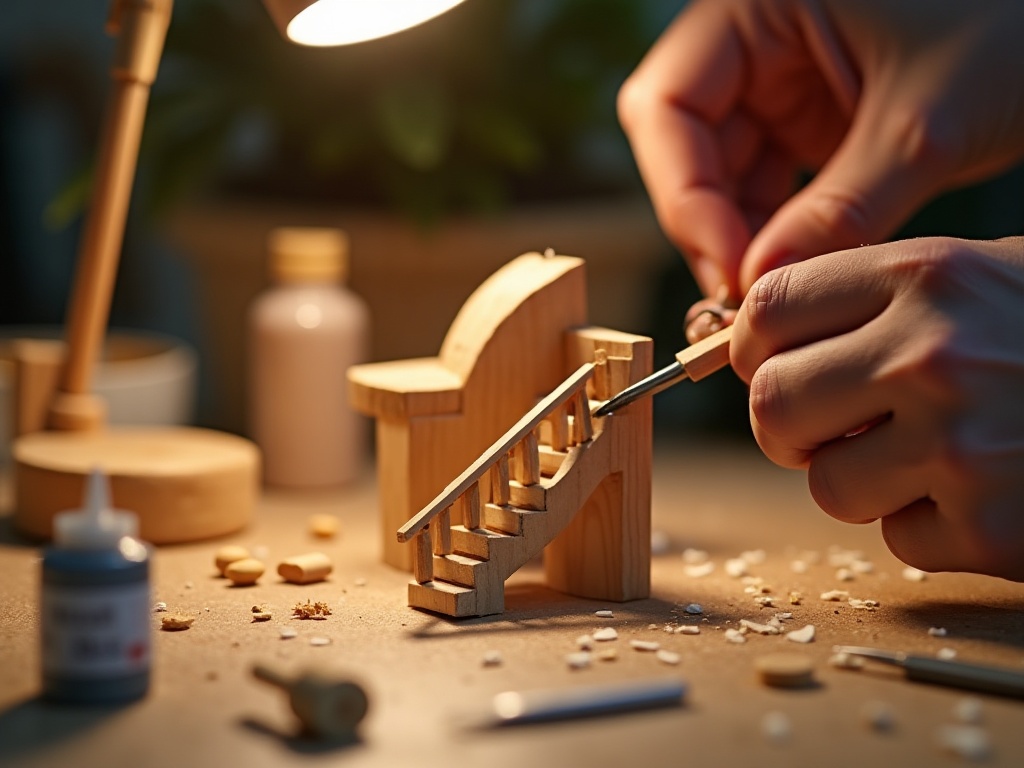
150+ components. Complex structural elements: bay windows, curved staircases, multi-panel facades. Often includes LED circuits, multiple lighting zones, and detailed custom furniture with working mechanisms. Build time can reach 30-50 hours across multiple weeks. Not intimidating if you have completed two or three intermediate kits beforehand. The jump from intermediate to advanced is less about technical skill and more about patience and organization. Spreading the build across several evenings, one room at a time, makes even the most elaborate kit feel approachable.
The table below shows the practical differences at each level so you can match a kit to your current mood and schedule:
| Level | Components | Build time | Key skills | Good first pick |
|---|---|---|---|---|
| Beginner (1-2) | Under 60 | 3-6 hours | Gluing, basic assembly | Sun Room Kit ($49.99) |
| Intermediate (3-4) | 60-150 | 10-20 hours | Painting, wallpaper, furniture | Tranquil Life Kit ($67.90) |
| Advanced (5) | 150+ | 30-50 hours | LED wiring, curved structures | Monet’s Garden Kit ($155.00) |
What to Look for When Buying a Miniature House Kit
Not all kits are built equal. Here is a practical checklist before you add anything to your cart:
- Wood quality: Basswood and birch plywood hold detail well and sand cleanly. Low-grade MDF can splinter under tweezers and does not accept paint evenly.
- Instruction language and clarity: Check that the manual is fully translated into English (many kits originate in China or Japan and are translated with varying levels of care). Numbered, photographic instructions beat text-heavy descriptions every time.
- Component count vs. stated difficulty: A kit labeled “beginner” with 200 parts is mislabeled. Trust component count over marketing language.
- LED lighting inclusion: If you want a lit display piece, confirm the kit includes pre-wired LEDs rather than just an optional accessory sold separately. Retrofitting lighting after the fact is frustrating.
- Scale consistency: If you plan to build a collection and display them together, buy kits from the same scale (1:24 or 1:12). Mixing scales looks mismatched on a shelf.
- Community reviews: Finished-build photos from real buyers tell you more about actual quality than product photography. Look for them in reviews or the brand’s social media tags.
Our full miniature house kit collection filters by difficulty level, scale, and theme so you are not guessing. Every kit we carry has been reviewed for instruction clarity and material quality before it goes live.
Shopping tip
When choosing your first kit, prioritise instruction quality and wood grade over aesthetics. A beautifully photographed kit with a poor manual will frustrate you. A simpler, well-documented kit will build your confidence and have you reaching for the next one within days.
When choosing your first kit, prioritise instruction quality and wood grade over aesthetics. A beautifully photographed kit with a poor manual will frustrate you. A simpler, well-documented kit will build your confidence and have you reaching for the next one within days.
Premium collector piece
Monet’s Garden DIY Miniature House Kit
$155.00
An advanced-level masterpiece with multi-zone LED lighting and 150+ precision components. Best attempted after two or three intermediate builds.
Wondering where the Book Nook collection fits into all of this? After your first standalone kit, a book nook kit makes a naturally satisfying next step: the skills transfer directly, but the narrow shelf-insert format adds a fresh spatial puzzle that keeps things interesting.
Frequently Asked Questions about Miniature House Kits
Everything you might be wondering (click a question to expand).
Do I need any special tools or prior experience to build a miniature house kit?
No special tools required. A bottle of craft glue (PVA or wood glue works well), a pair of tweezers for small pieces, and a toothpick for applying glue precisely are all you genuinely need for most beginner and intermediate kits. Prior craft experience helps with patience and steady hands, but it is not a prerequisite. Thousands of people complete their first kit with zero background in building or modeling.
How long does it take to finish a miniature house kit?
Build time varies by complexity. A small beginner kit takes 3-6 hours total. An intermediate kit runs 10-20 hours, which most people spread across a week of evening sessions. Advanced kits can take 30-50 hours across several weeks. Most crafters report that time passes faster than expected once they are in a building session, so those numbers rarely feel as large as they look on paper.
What is the difference between a miniature house kit and a book nook kit?
A miniature house kit is a standalone structure that displays on any flat surface: a shelf, a desk, a mantel. A book nook kit is a specific format designed to insert between books on a shelf and create the illusion of a tiny illuminated scene tucked inside a bookcase. Book nooks are typically narrow and deep, and almost always include LED lighting. Both share the same build process and craft skills; the main difference is where the finished piece lives.
Are miniature house kits good gifts for children?
Most miniature house kits are recommended for ages 14 and up, primarily because of small parts and the precision required for gluing tiny components. Some beginner kits with simpler builds and fewer micro-parts are suitable for ages 12 and up when an adult helps. For younger children, traditional dollhouses with snap-fit furniture are safer and more age-appropriate. Always check the age recommendation on the specific kit before gifting.
Can I customize my miniature house kit beyond the included materials?
Absolutely, and many builders consider the customization phase the most enjoyable part. Common upgrades include swapping the included paint colors for your own palette, adding extra LED strips for warmer lighting, hand-painting wall murals on the printed wallpaper, and using air-dry clay to sculpt custom accessories. The laser-cut wood structure accepts acrylic and watercolor paints well. Once you finish a kit to the base instructions, the structure becomes your own canvas.
What scale are most miniature house kits, and does it matter?
The two most common scales are 1:12 (one inch equals one foot, sometimes called “one-inch scale”) and 1:24 (half-inch scale). 1:12 kits are larger and generally easier to work with for beginners because the components are more forgiving. 1:24 kits produce a more compact display piece but require finer motor control when assembling tiny furniture. If you plan to display multiple kits together, choosing the same scale keeps everything visually consistent. Check the product description before buying; we always list the scale clearly on every kit page.
Building Your First Kit: What the First Session Actually Feels Like
You lay out the cut sheets. You read the first three steps. The wood panels click together dry before you add glue, and suddenly the skeleton of a tiny building is standing upright between your hands. That moment, somewhere around step four or five of any kit, is when most people stop feeling uncertain and start feeling genuinely absorbed.
The meditative quality is not incidental. Your attention narrows to a two-inch window frame. The rest of whatever is going on in your life recedes. You are placing a piece of wallpaper smaller than a business card and smoothing it with a toothpick, and that is the only thing that exists right now. Crafters who describe themselves as anxious or prone to overthinking are often the ones most surprised by how effectively a build session quiets their minds.
If you are still deciding where to start, our best-selling kits are a reliable first move. They are the ones our community has built the most, reviewed the most, and photographed the most. That volume of real feedback weeds out any kit with unclear instructions or subpar materials. Pick a theme that genuinely appeals to you: a cozy bookshop, a seaside cottage, a tiny ramen shop, and let that personal pull carry you through the first session.
The box is just wood and paper until you build it. After that, it is yours. ✨