🎁 Buy 2 kits, get the 3rd FREE · Free shipping on every order

What Is a Dollhouse? History, Types, and How to Choose Your First Build
A complete guide to what a dollhouse is, tracing its history from Petronella Oortman's 1686 cabinet house and Queen Mary's 1924 masterpiece to modern miniature house kits and book nook kits. Covers scale, difficulty levels, and how to choose your first build.

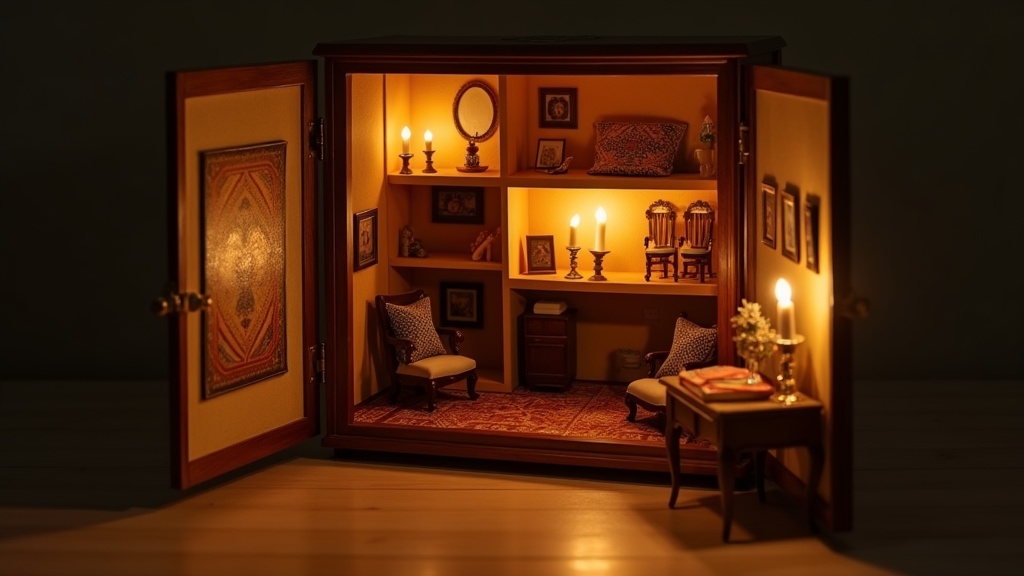
What is a dollhouse is one of those questions that sounds simple until you start pulling the thread. A miniature home. A child’s toy. A collector’s obsession. A meditative building project for adults on a quiet Sunday afternoon. All of those answers are correct, and none of them is complete on its own.
Dollhouses have been with us for centuries, shifting shapes and meanings across cultures. They started as cabinets of wonder owned by wealthy collectors, became nursery staples, and then quietly transformed again into a craft niche that draws in architects, hobbyists, and people who simply want something beautiful to build with their hands. Understanding that arc helps you see why the hobby feels the way it does: layered, rich, and surprisingly personal.
If you have already decided you want to build and are just looking for the right kit, our miniature house kits collection is a good place to start. If you want the full story first, read on because the history makes the craft feel even more meaningful.
The Cabinet Origins: Dollhouses Before They Were “Toys”
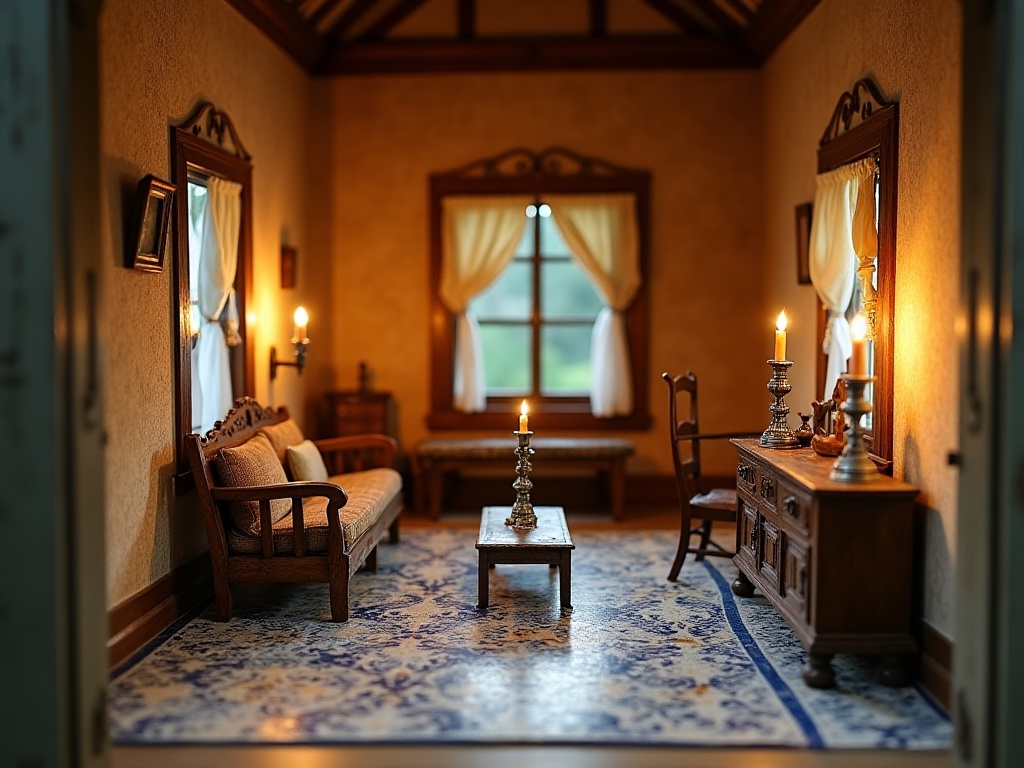
The earliest dollhouses were not toys for children but status objects owned by aristocrats and wealthy merchants, built with custom furniture and hand-stitched textiles that rivaled full-scale craftsmanship in precision. The first dollhouses were not for children at all. They were status objects, sometimes called “baby houses” in England or Kabinetthaus in the Netherlands, and they lived in the parlors of aristocrats and wealthy merchants who used them to display their taste and material standing. Every piece of furniture inside was custom made. Every textile was hand-stitched. The craftsmanship rivaled full-scale furniture in precision, if not in size.
The most celebrated surviving example is the cabinet house built for Petronella Oortman around 1686 in Amsterdam. Oortman was the wife of a wealthy Dutch silk merchant, and she commissioned a house that reportedly cost as much as a real canal-side home of the era. The cabinet is roughly 6 feet tall and contains nine rooms filled with silver miniatures, hand-painted Delftware tiles, and silk curtains scaled to the centimeter. It now lives in the Rijksmuseum in Amsterdam, and visiting it in person is genuinely startling: the level of detail makes your eyes adjust, like shifting focus on a photograph.
📜 Did you know?
Petronella Oortman’s cabinet house took approximately 20 years to complete and is thought to have cost around 30,000 Dutch guilders, which would buy a large house on Amsterdam’s most prestigious canal at the time. The Rijksmuseum acquired it in 1875 and it remains one of the most visited objects in the collection.
Petronella Oortman’s cabinet house took approximately 20 years to complete and is thought to have cost around 30,000 Dutch guilders, which would buy a large house on Amsterdam’s most prestigious canal at the time. The Rijksmuseum acquired it in 1875 and it remains one of the most visited objects in the collection.
These early cabinet houses were never played with. They were documentation of domestic ideals: how a respectable household should look, what objects it should contain, what values it should project. Historians have used them as primary sources for understanding 17th and 18th century interiors with a precision that painted portraits simply cannot match.
England developed its own version of the form. The oldest known English baby house dates to around 1673 and is held at Nostell Priory in Yorkshire. By the early 18th century, the fashion had spread across Europe’s upper classes. Cabinet houses appeared in German princely collections, in Swedish manor houses, and in the private rooms of French aristocrats. Each reflected the architecture and material culture of its home country, making them extraordinarily useful to social historians today.
Queen Mary’s Dollhouse and the 20th Century Turning Point
Queen Mary’s Dollhouse, completed in 1924 at 1:12 scale by architect Sir Edwin Lutyens, set the global standard for collector-grade miniatures and reframed the dollhouse as serious craft rather than children’s play. Fast forward to 1924 and you reach the most technically sophisticated miniature house ever built. Queen Mary’s Dollhouse at Windsor Castle was designed by the architect Sir Edwin Lutyens as a gift to Queen Mary of the United Kingdom. It operates on a scale of 1:12, meaning one inch represents one foot of real-world measurement. That ratio would go on to become the global standard for collector-grade dollhouses and miniatures.
The house has running hot and cold water in every bathroom. The wine cellar contains actual wine in tiny bottles. The library holds hand-written manuscripts contributed by authors including Arthur Conan Doyle, Rudyard Kipling, and Thomas Hardy, each written specifically for the collection. The garage has working cars with real rubber tires. More than 1,500 craftsmen and artists contributed over three years. It was exhibited publicly in 1924 before being installed at Windsor, where it remains on display today.
Queen Mary’s Dollhouse matters to the modern hobby for a specific reason: it reframed the miniature house as serious craft rather than domestic display or children’s play. Lutyens and his team proved that every system in a real building could be reproduced at scale, which inspired a generation of hobbyists and craftspeople. The idea that a dollhouse could be a complete, functioning world rather than a stage set took hold, and it never really let go.
Through the mid-20th century, commercial dollhouses shifted toward children’s toys: pressed tin, then injection-molded plastic, sold in department stores. Those products served their purpose, but they existed on a different plane from the collector tradition. The two streams ran parallel for decades until the craft hobby revival of the 1970s and 1980s brought them back into conversation. Miniatures guilds formed across the United States. Dedicated magazines launched. Suppliers began offering precision laser-cut wood kits that made high-quality building accessible to people without professional woodworking backgrounds.
What Counts as a Dollhouse Today
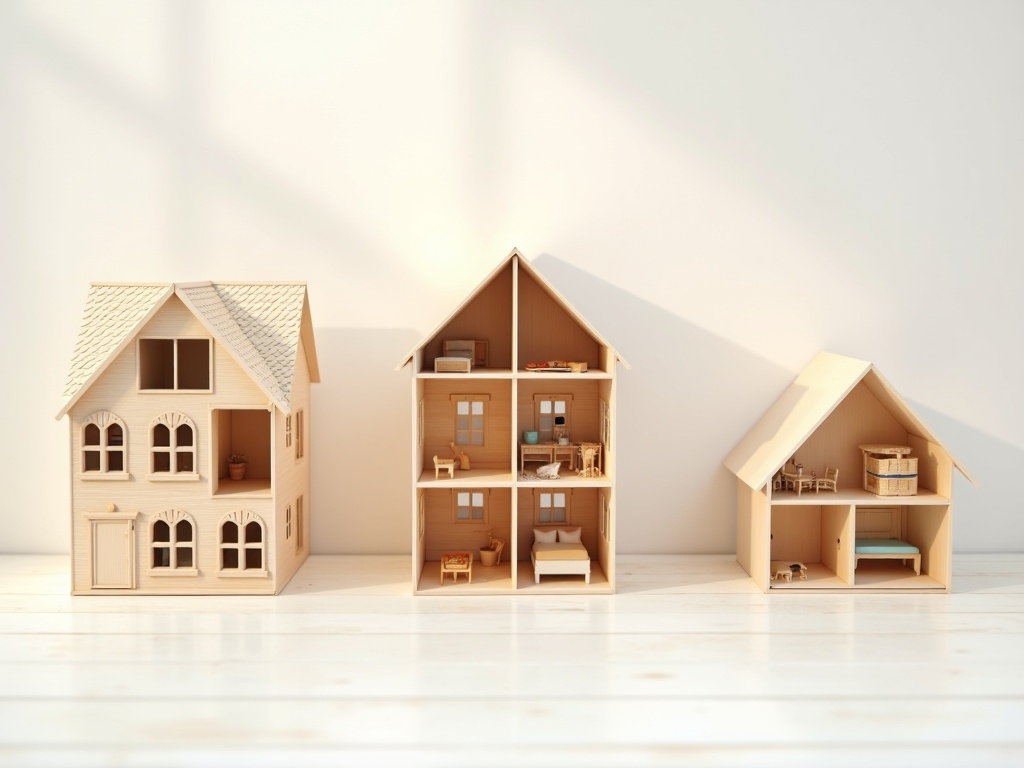
Today, “dollhouse” covers three main forms: traditional multi-room structures, themed miniature house kits built around a specific scene, and book nook kits designed to display between shelf books. The word “dollhouse” now covers a genuinely wide range of objects, and the distinctions matter if you are choosing something to build or to buy as a gift. Here is a practical breakdown of the three main forms you will encounter.
Traditional Dollhouses
A traditional dollhouse is a multi-room structure built at a consistent scale, most commonly 1:12, designed to represent a full residential building. It has an exterior facade, multiple floors, and rooms arranged as they would be in an actual house: living room, bedrooms, kitchen, sometimes a bathroom or attic. Traditional dollhouses can be bought pre-built or assembled from a kit. Kit versions range from beginner-friendly flat-pack designs to complex structures that take 80 or more hours to complete. The satisfying part of a kit build is that the difficulty ramps gradually: you start with the frame, develop confidence on the basic joinery, and then spend the most time on the interior finishing details that are entirely your own.
Miniature House Kits
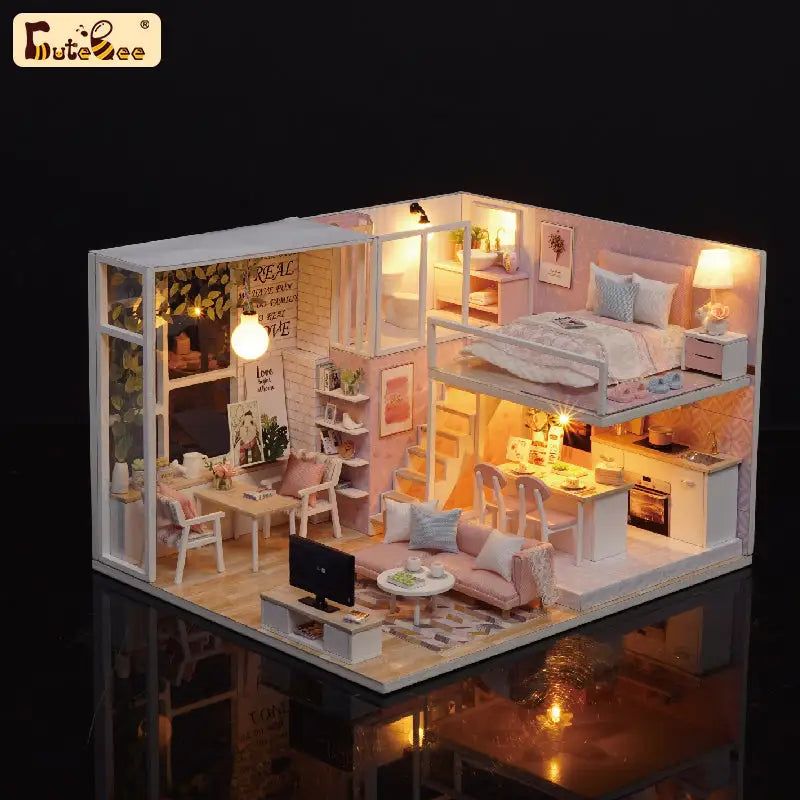
A miniature house kit designed for adult hobbyists is related to the traditional dollhouse but tends to prioritize scene and atmosphere over architectural completeness. Rather than representing a generic family home, these kits often depict a specific setting: a Japanese tea house, a Parisian attic studio, a countryside bakery, a greenhouse filled with hand-assembled plants. Each kit typically includes pre-cut wooden parts, fabric scraps, LED lighting components, and all the specialty pieces needed to complete the scene.
The experience of building one is deliberately meditative. You work through the instructions methodically, assembling tiny chairs, threading LED wires, gluing individual tiles onto a miniature floor. There is no rushing it. People who build miniature house kits regularly describe the process as one of the few activities that fully quiets a busy mind. Our full range of miniature house kits covers skill levels from first-time builders to experienced miniaturists looking for a longer, more complex challenge.
That cottage-on-a-rainy-afternoon feeling is exactly what draws so many people into the hobby. If you are curious whether it would suit you, the Tranquil Life DIY Miniature House Kit below is one of our most popular entry points: gentle in difficulty, generous in detail, and deeply satisfying to finish.
Book Nook Kits
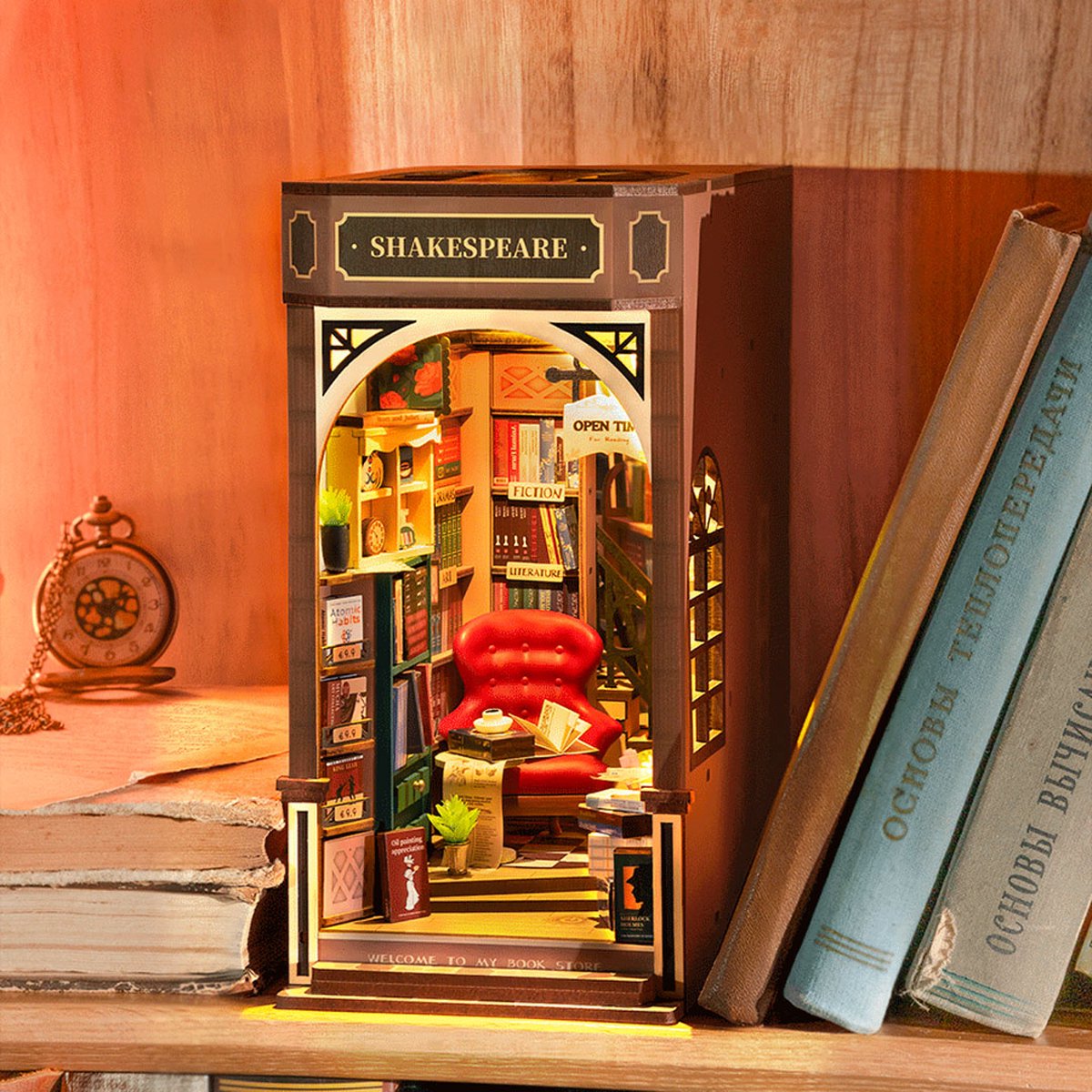
A book nook is a miniature scene built to fit between books on a shelf. The opening is typically the width of a standard hardcover spine, and the scene extends back 6 to 10 inches, creating an illusion of depth. Lighting plays a big role: most book nook kits include warm LED strips that give the interior a glowing, inhabited feeling when placed on a dark shelf.
Book nooks share the fine detail work and meditative build process of miniature house kits but are more compact. They suit people who want the craft experience without dedicating a display surface to a full structure. They also make excellent gifts for readers who already feel some attachment to the idea of fictional worlds existing between their books. Browse our book nook kit collection if you are looking for something that combines a love of reading with hands-on building.
✨ Hannah’s tip: choosing between a kit and a book nook as a gift
Ask yourself one question: does the recipient have a shelf they love? Book nook builders tend to be people who already have a relationship with their bookshelf as a curated space. Miniature house builders tend to be people who want a standalone object to display and return to over time. Both are wonderful. The instinct usually tells you which fits. If you are still unsure, our kit collection pages include a difficulty filter so you can match the build to the person, not just the aesthetic.
Ask yourself one question: does the recipient have a shelf they love? Book nook builders tend to be people who already have a relationship with their bookshelf as a curated space. Miniature house builders tend to be people who want a standalone object to display and return to over time. Both are wonderful. The instinct usually tells you which fits. If you are still unsure, our kit collection pages include a difficulty filter so you can match the build to the person, not just the aesthetic.
Scale, Difficulty, and What Goes Inside
The 1:12 scale is the most common for dollhouses and miniatures, where one inch equals one foot; beginner kits almost always use this ratio because the pieces are large enough to handle without specialist tools. Scale is the first technical concept worth understanding before you buy or build anything. The 1:12 scale (one inch equals one foot) is the most common for traditional dollhouses and collector-grade miniatures. It produces pieces that are visually convincing from a normal viewing distance and large enough to handle without specialized tools.
Other scales exist, and the differences matter more than they might seem at first glance. Here is a quick reference:
| Scale | Also called | 1 inch equals | Best for |
|---|---|---|---|
| 1:12 | One-inch scale | 1 foot | Beginners, traditional dollhouses, widest accessory availability |
| 1:24 | Half-inch scale | 6 inches | Compact builds, experienced builders who want detail in less space |
| 1:48 | Quarter-inch scale | 3 inches | Advanced miniaturists; tweezers required for most assembly steps |
| 1:144 | Micro scale | 1 inch | Specialist collectors; extremely fine work, rarely in kit form |
Beginner kits almost always work in 1:12 or a similar accessible ratio, which is a practical choice: the pieces are small enough to feel miniature but large enough that accidental drops do not result in unrecoverable losses. If you plan to mix furniture or accessories from different sources, always confirm the scale matches before ordering.
Difficulty in a modern kit is usually rated on a scale of 1 to 5, with 1 being suitable for ages 14 and up and no prior craft experience, and 5 reserved for builds involving complex electrical wiring, multi-stage painting, and fine upholstery work. A good beginner kit typically includes:
- Pre-cut laser-precision wooden panels (no saw required)
- Illustrated step-by-step instructions
- All specialty materials (LED lights, fabric, wallpaper sheets, flooring)
- Basic tools or a clear list of what you need to source separately
- Estimated build time, usually between 15 and 40 hours for a Level 2 kit
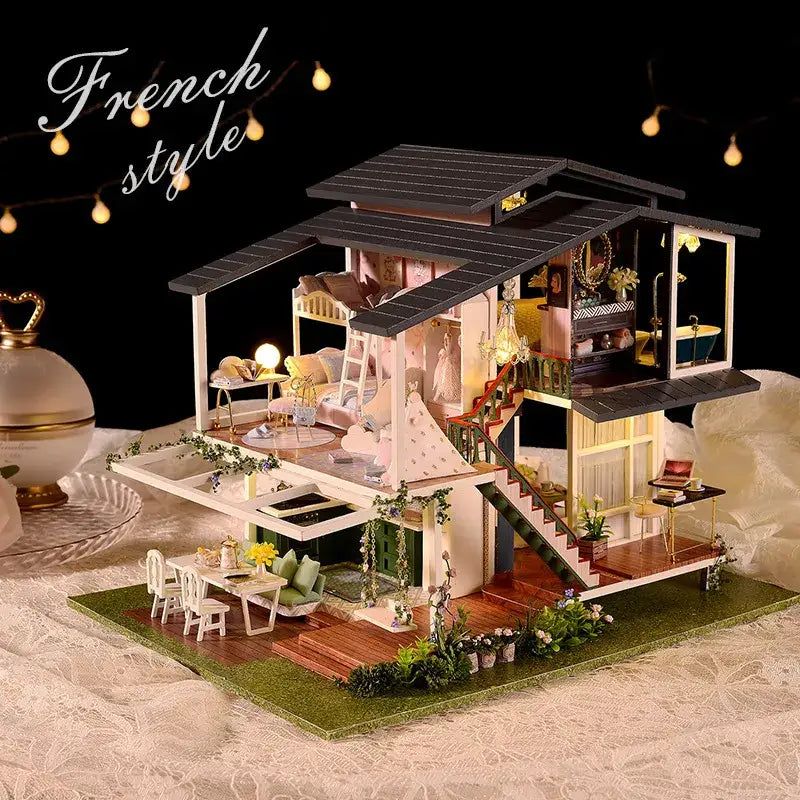
Intermediate and advanced kits add complexity through architectural elements like staircases with individual balusters, functioning doors and windows, or multi-room layouts requiring careful planning before assembly begins. The reward scales with the commitment: a 60-hour build produces something that genuinely stops people when they see it on a shelf. If you want to stretch into something ambitious, the Monet’s Garden kit is one of our most beloved complex builds.
Why Adults Build Miniature Houses in 2026
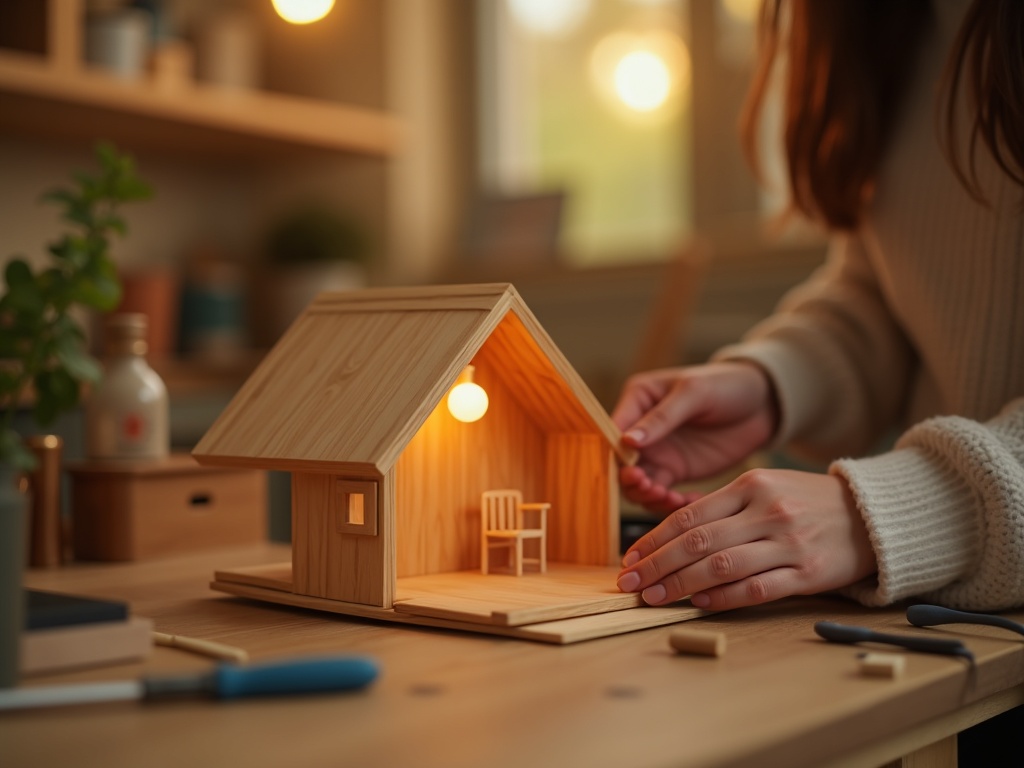
Adults build miniature houses in 2026 because the slow, hands-on craft delivers genuine mental relief, a structured creative outlet, and a finished object that holds the proof of their patience in a way few hobbies can match. The modern miniature hobby sits at an interesting intersection. It attracts people who loved Lego as children and want something similar but more organic. It draws in interior designers who use small builds to prototype ideas. It appeals strongly to people recovering from burnout who need a structured creative outlet that demands attention without demanding performance.
The community aspect matters too. Online communities around miniature house kits have grown substantially over the past five years. Builders share in-progress photos, trade tips on tricky assembly steps, and post finished pieces that inspire the next person to try a more ambitious project. That feedback loop, between individual builds and shared community enthusiasm, has the same quality as the older guilds and miniatures clubs of the 1970s, just faster and more global. You can see what that community looks like in practice by browsing the customer photos on any of our kit pages.
There is also something worth naming about the object itself. A completed miniature house is a proof of patience. You spent hours on something small, detailed, and entirely self-directed. The finished piece holds all of that time in a way that most hobbies do not produce. People who finish their first kit almost universally say the same thing: they had no idea they would care this much about a tiny kitchen.
For gift buyers, that emotional weight is worth considering. A miniature kit is not just a product. It is an invitation to spend 20 or 30 hours doing something careful and quiet. The best ones are calibrated to feel challenging enough to be engaging but achievable enough that the builder finishes with confidence rather than frustration. Choosing the right difficulty level is genuinely the most important decision, and it is the first thing we help you figure out in our best sellers collection.
Frequently Asked Questions about Dollhouses and Miniature Kits
Everything you might be wondering (click a question to expand).
What is the difference between a dollhouse and a miniature house kit?
A dollhouse is any small-scale representation of a home, whether a child’s toy, a collector’s piece, or a craft build. A miniature house kit specifically refers to a packaged set of components that a person assembles, typically marketed to adult hobbyists and focused on a specific theme or scene. Miniature house kits usually include higher-detail components, LED lighting, and curated materials that go well beyond the structural basics of a traditional dollhouse.
What scale are most dollhouse kits sold in?
The most widely used scale is 1:12, where one inch in the model equals one foot in real life. This scale produces miniatures that are easy to work with and visually convincing. Some kits use 1:24 scale for a more compact build. The scale is always listed in a kit’s specifications, so check before buying if you plan to mix furniture or accessories from different sources.
How long does a miniature house kit take to build?
Build times vary significantly by complexity. A Level 1 beginner kit typically takes 10 to 20 hours spread over several sessions. A mid-range Level 3 kit runs 30 to 50 hours. Advanced builds of 60 or more hours are not unusual for large multi-room structures. Most builders work in sessions of one to two hours, which makes even a longer kit very manageable over a few weeks.
Are book nook kits suitable for complete beginners?
Yes, many book nook kits are specifically designed for first-time miniature builders. They are smaller in scope than a full dollhouse kit, which means fewer components and a shorter learning curve. The skills you develop on a book nook (cutting, gluing, wiring small LEDs, painting tiny surfaces) transfer directly to larger miniature house projects when you are ready to try one.
What is a good first dollhouse kit for an adult who has never built one?
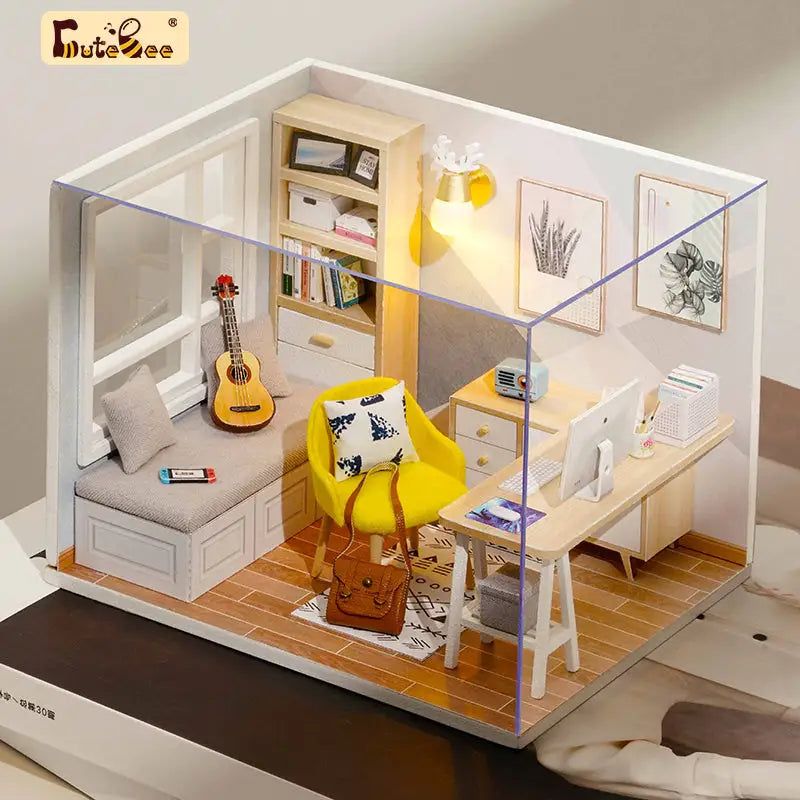
Look for a kit rated Level 1 or Level 2, with pre-cut laser-precision wooden pieces, illustrated instructions, and a build time under 25 hours. A contained scene with a single room or a simple two-room layout is easier to manage than a full multi-floor structure. Our miniature house kits collection includes a beginner filter so you can sort by difficulty and find the right starting point without guessing. The Sun Room DIY Miniature House Kit at $49.99 is a particularly approachable first build.
Can I buy extra miniature accessories to customize my build?
Absolutely. Most 1:12 scale accessories from any supplier are cross-compatible, so you can add furniture, plants, books, or decorative objects beyond what comes in the kit. Many builders use this as a way to personalize a finished scene to reflect their own taste. Just confirm the scale (1:12, 1:24, etc.) matches before ordering additional pieces. Our full shop includes standalone accessories alongside complete kits.
From Petronella’s Cabinet to Your First Kit Build
The thread from a 17th-century Amsterdam cabinet house to a modern flat-pack miniature kit is thinner than it looks: both reward patience and attention to detail in ways that feel disproportionately satisfying. The thread running from a 17th-century Amsterdam cabinet house to a modern flat-pack miniature kit is thinner than it looks. Both are built by people who wanted to create a small, complete world with their own hands. Both reward patience and attention to detail in ways that feel disproportionately satisfying. Both end up meaning more to the person who made them than the object’s physical size would suggest.
Petronella Oortman spent 20 years and a fortune on her cabinet. You can get that same pull of focused, detail-oriented making in a single weekend with a good beginner kit. The scale has changed. The feeling has not.
If the history got you curious about what building actually feels like, start with something small. A book nook kit for a shelf you already love is a low-commitment way to find out whether miniature building clicks for you. If it does, and for most people it does, the next level is waiting whenever you are ready. Our full miniature house kits collection is organized by difficulty so you can move at your own pace, from a relaxed first build to a collector-grade piece you will keep forever. ✨
Ready to build your first tiny world?
Browse 82 kits organized by difficulty, style, and build time. Find the one that feels like yours.