🎁 Buy 2 kits, get the 3rd FREE · Free shipping on every order

What Is a Diorama? Dioramas, Book Nooks, and Miniature Houses Explained
Dioramas, book nooks, and miniature houses look similar at first glance, but each format has its own history, scale, and creative logic. This guide breaks down what a diorama actually is, where it came from, and how it compares to the modern book nook and miniature house kits that crafters are building in 2026.

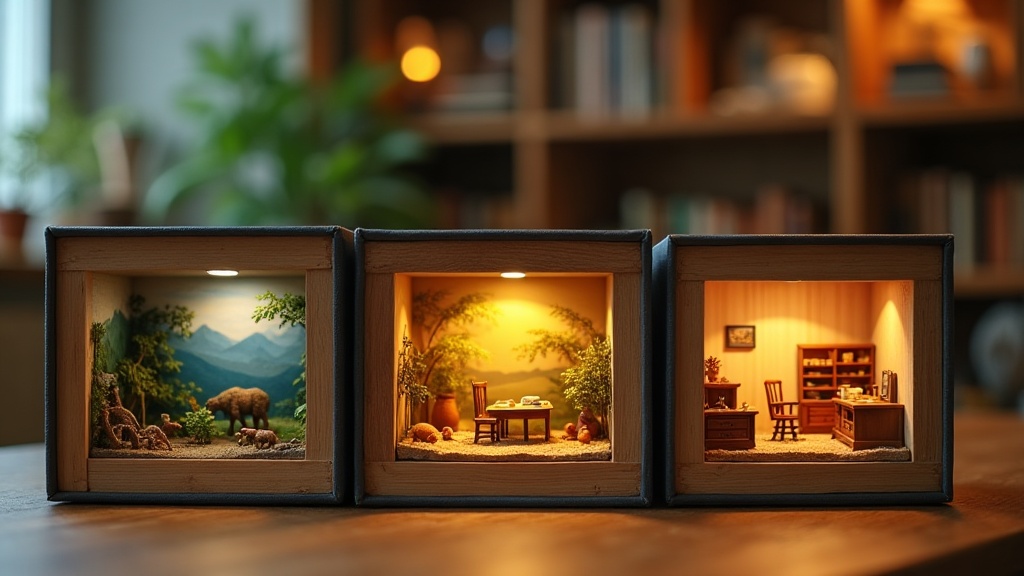
A Tiny World Behind Glass: The Diorama Defined
Picture a glass case at your local natural history museum. Inside it, a grizzly bear stands mid-stride across a painted autumn forest. Light filters in from a hidden source behind the background panel. Every leaf looks real. You lean closer, and for a second, the scale trick works completely.
That is a diorama.
A diorama is a three-dimensional miniature scene, typically set inside a box or case, that combines sculpted or physical foreground elements with a painted or photographic background to create the illusion of a real, inhabited space. The word comes from the Greek dia (through) and horama (that which is seen). You are, quite literally, looking through a window into another world.
The format is older than most people realize, and it has branched into several distinct creative hobbies that attract millions of makers worldwide in 2026. Understanding where dioramas came from, and how formats like book nook kits and miniature house kits grew out of that tradition, makes picking the right project much easier.
📜 Did you know?
The diorama as a public spectacle was invented by Louis Daguerre (yes, the photography pioneer) and Charles-Marie Bouton in Paris in 1822. Their original installation used translucent painted panels lit from behind by controlled natural light to simulate sunrise, storms, and time-of-day transitions for paying audiences. It was part theater, part optical illusion, and wildly popular before photography made it obsolete as a novelty.
The diorama as a public spectacle was invented by Louis Daguerre (yes, the photography pioneer) and Charles-Marie Bouton in Paris in 1822. Their original installation used translucent painted panels lit from behind by controlled natural light to simulate sunrise, storms, and time-of-day transitions for paying audiences. It was part theater, part optical illusion, and wildly popular before photography made it obsolete as a novelty.

From Museum Halls to Hobby Tables: A Brief History
Natural history museums adopted the diorama format in the late 19th century, primarily to display taxidermied animals in context rather than in sterile cases. The American Museum of Natural History in New York built some of the most celebrated examples, with Carl Akeley pioneering habitat group dioramas from the 1900s onward. These were not toys. They were scientific and artistic projects requiring taxidermists, painters, sculptors, and lighting engineers working together over years.
Military modeling communities took up the format enthusiastically in the mid-20th century. Scale modelers began placing their painted tanks and soldiers into recreated battlefield landscapes, complete with churned mud, burning vehicles, and crumbling walls. Hobbyist magazines like Fine Scale Modeler formalized competition standards and techniques. By the 1970s and 1980s, diorama building had a dedicated global community with its own vocabulary, supply chains, and annual competitions. It was (and still is) a serious craft, with builders spending months on a single square foot of scene.
What changed in the 2010s and accelerated through the 2020s was accessibility. Laser cutting, affordable resin casting, and the explosion of DIY craft kit manufacturing (largely out of China and Taiwan) meant that anyone could buy a pre-engineered diorama kit with pre-cut wooden pieces, printed wallpaper, and tiny furniture, and build a polished scene in a weekend. The tools that once lived only in professional workshops arrived at kitchen tables everywhere.
That accessibility wave gave birth to two formats that now have their own distinct identities: the book nook and the miniature house.
What Makes a Book Nook Different from a Diorama
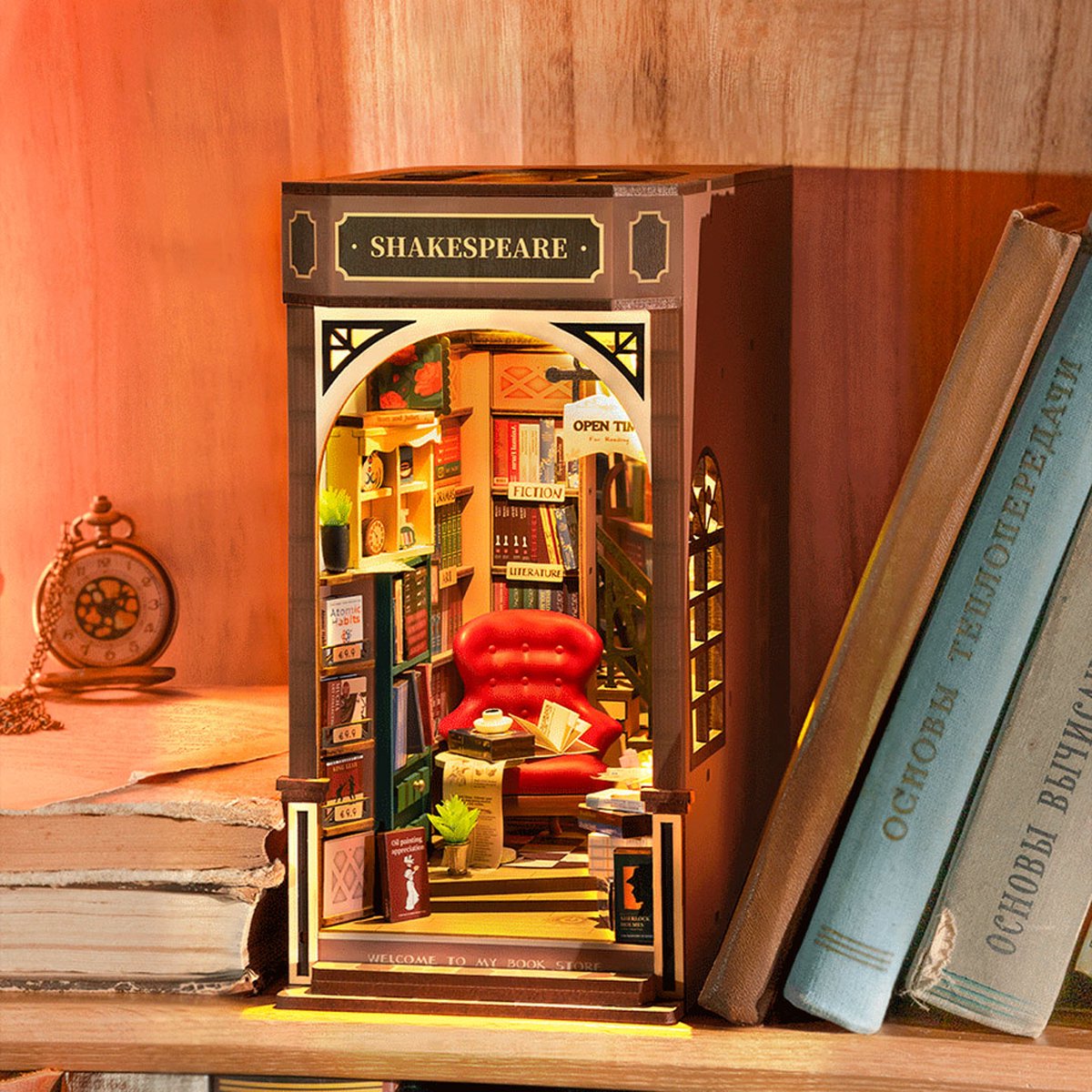
A book nook is a specific type of miniature scene built to slot between books on a shelf. The form factor is vertical and narrow, designed to look like a portal or hidden room glimpsed through a gap in your bookcase. Most book nooks are 6 to 9 inches tall and only 2 to 4 inches deep.
That depth constraint is what makes book nook design genuinely tricky. Builders use forced perspective, angled floors, and strategic lighting (usually a small LED strip or fairy lights) to create the impression of a space much deeper than it physically is. A well-built book nook diorama scene can convincingly suggest a cobblestone alley receding 30 feet into darkness, even though the actual box is barely 3 inches deep.
The audience crossover with bibliophiles is enormous. People who love books also tend to love the idea of a tiny world living between them. Themes skew literary: wizard libraries, Japanese tea houses, enchanted forests, Parisian cafes. The book nook is fundamentally decorative and shelf-integrated, which gives it a distinct advantage in small apartments where a full dollhouse would not fit.
- Footprint: 2-4 inches deep, fits on any bookshelf
- Typical build time: 4 to 12 hours, depending on complexity
- Key technique: forced perspective and internal lighting
- Skill floor: beginner-friendly with a kit; no prior experience needed
- Display context: between books, on a shelf, or as a standalone shadow box
If this sounds like your kind of project, our full range of book nook kits is a good place to start. Most include pre-cut MDF pieces, printed scenic backgrounds, miniature furniture, and an LED light strip. The first time you switch the lights on and see that tiny glowing alley sitting between your novels, you will understand why this format has its own devoted following.
Explore the collection
All Book Nook Kits
76 handcrafted book nook kits
Each kit includes pre-cut MDF, printed backgrounds, miniature furniture, and an LED strip. Build time: 4 to 12 hours.

Miniature House Kits: A Closer Cousin to Classical Dioramas
The miniature house format is closer in spirit to the natural history diorama tradition. Instead of a hidden portal, you are building a habitable space, often a full room, a street-facing shopfront, or a multi-room structure, at 1:12 or 1:24 scale.
The craft tradition here overlaps heavily with dollhouse building, which dates back at least to 16th-century Europe, where Kabinetthaus (cabinet houses) were built as status objects and household inventories for wealthy Dutch and German families. Those were functional archives of domestic life, not toys for children. The same impulse to document and inhabit a tiny world in miniature runs through every kit built today.
Miniature house DIY kits honor that spirit of meticulous domestic documentation. A well-designed kit might include 200 or more individual components: tiny books with printed spines, working hinged doors, fabric curtains cut to scale, and wallpaper with period-accurate patterns. The build process is slower and more deliberate than a book nook. Many builders spend 20 to 40 hours on a single room box.
That longer build time is not a drawback for most people who choose this format. It is the point. The meditative quality of placing a tiny chair beside a tiny fireplace, of mixing a custom paint color for a 1-inch wall, is what keeps builders returning. It is absorbing in a way that is hard to explain until you have done it. Hannah’s first Victorian dollhouse kit on that rainy Sunday in 2021 was supposed to take a weekend. It took three, and she did not mind at all.
- Scale: typically 1:12 (1 inch to 1 foot) or 1:24
- Typical build time: 15 to 40 hours for a full room kit
- Key technique: furniture assembly, wallpapering, fabric work, painting
- Skill floor: beginner kits available; advanced kits reward prior experience
- Display context: shelf, cabinet, tabletop, wall-mounted
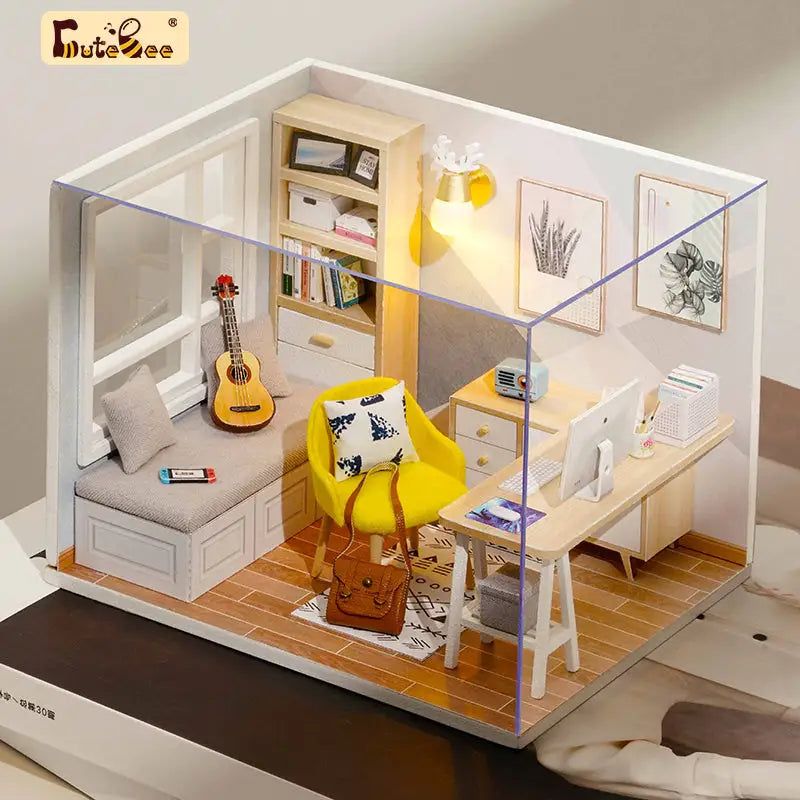
A good entry point is a single-room kit with a contained scene and a clear theme. The Sun Room DIY Miniature House Kit below is one of our most popular starters: the component count is manageable, the instructions are genuinely clear, and the finished result is display-ready at under $50.
Easy starter under $50
Sun Room DIY Miniature House Kit
$49.99
Single-room build, 15-20 hrs. Includes LED lighting, pre-cut MDF, fabric, and printed wallpaper.
Once you have one room kit under your belt, the scale of what is possible opens up considerably. Our full miniature house kits range goes from cozy single-room builds to full shopfront facades with multiple interior details and working LED systems.
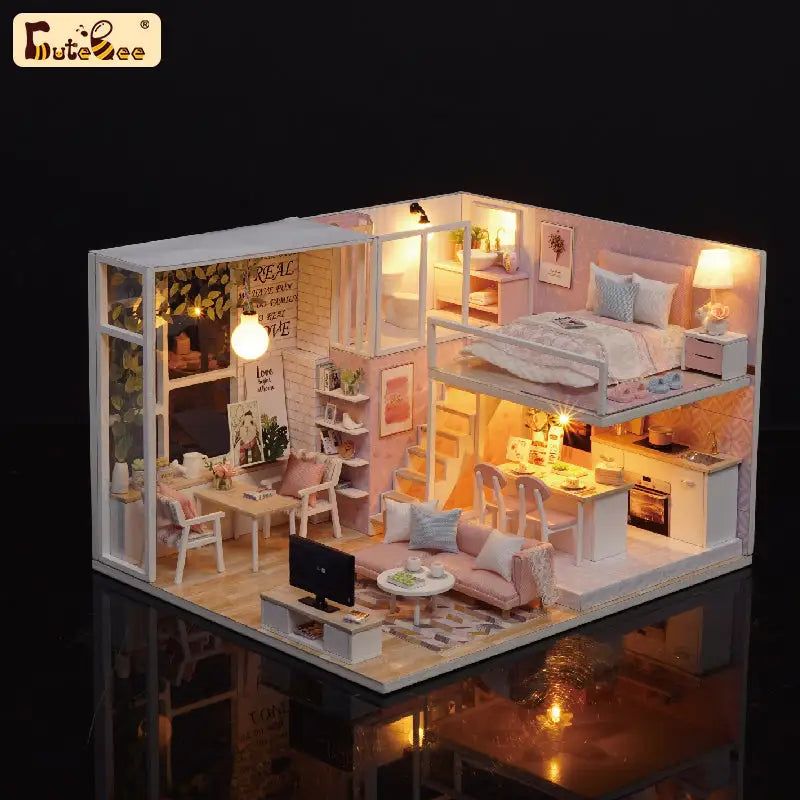
For builders who want something more ambitious from the start, the Tranquil Life DIY Miniature House Kit is a popular step up. It has more components and a richer scene, but the instructions are structured to carry you through every stage.
Bestseller cottage kit
Tranquil Life DIY Miniature House Kit
$67.90
Multi-room cottage scene. Includes dust cover, LED system, and 200+ pre-cut components.
✨ Hannah’s tip
Before you glue anything, do a full dry-fit run of every piece in your miniature house or book nook kit. Lay everything out, assemble without adhesive, and photograph it. That photo becomes your roadmap when you are three hours in and a piece looks unfamiliar. It sounds obvious, but skipping this step is the single most common reason beginners get stuck halfway through a build.
Before you glue anything, do a full dry-fit run of every piece in your miniature house or book nook kit. Lay everything out, assemble without adhesive, and photograph it. That photo becomes your roadmap when you are three hours in and a piece looks unfamiliar. It sounds obvious, but skipping this step is the single most common reason beginners get stuck halfway through a build.
Diorama vs Book Nook vs Miniature House: Which Format Fits You
Choosing between these three formats comes down to three honest questions: How much space do you have? How much time do you want to invest? And what kind of scene are you drawn to?
| Format | Space needed | Time investment | Best for |
|---|---|---|---|
| Classic diorama | Variable (shoebox to cabinet) | Hours to months | Military modelers, nature scenes, school projects |
| Book nook | Bookshelf slot (2-4 inches deep) | 4-12 hours | Apartment dwellers, book lovers, first-time kit builders |
| Miniature house | Tabletop or shelf (12+ inches wide) | 15-40 hours | Detail-oriented builders, long-project seekers, gift givers |
For gift buyers who are not sure of the recipient’s skill level: book nook kits are a safer starting choice. The build time is shorter, the finish is satisfying quickly, and the display footprint is minimal. For someone who you know loses themselves in craft projects for weekends at a time, a miniature house kit is the more meaningful gift. And for the dedicated collector who wants a statement piece, a premium kit like Monet’s Garden sits confidently at the top of the range.
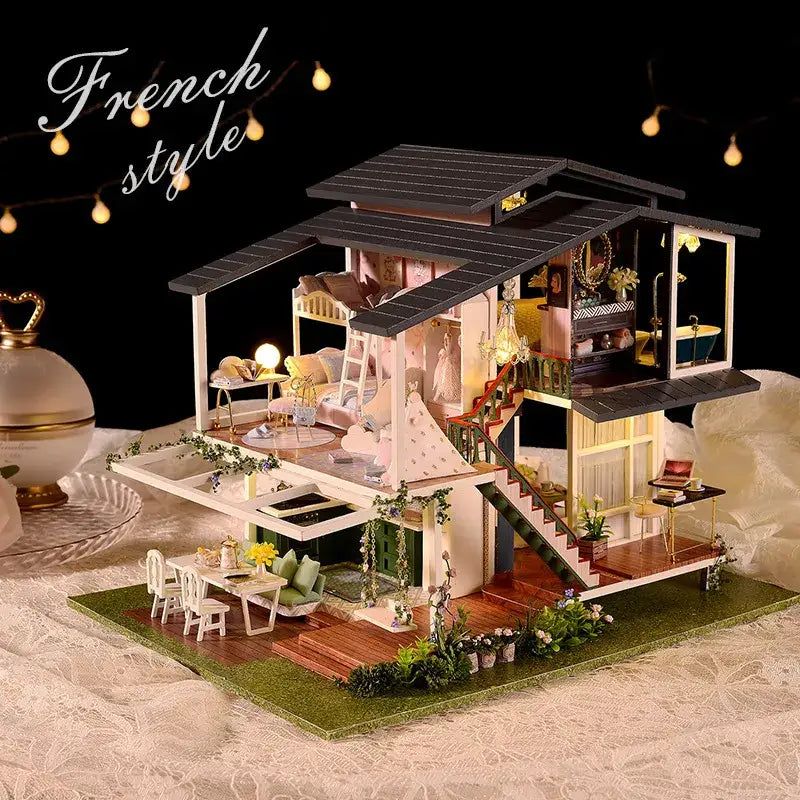
Premium collector piece
Monet’s Garden DIY Miniature House Kit
$155.00
Impressionist garden scene. 300+ components, full LED system, museum-quality finish. Recommended for intermediate to experienced builders.
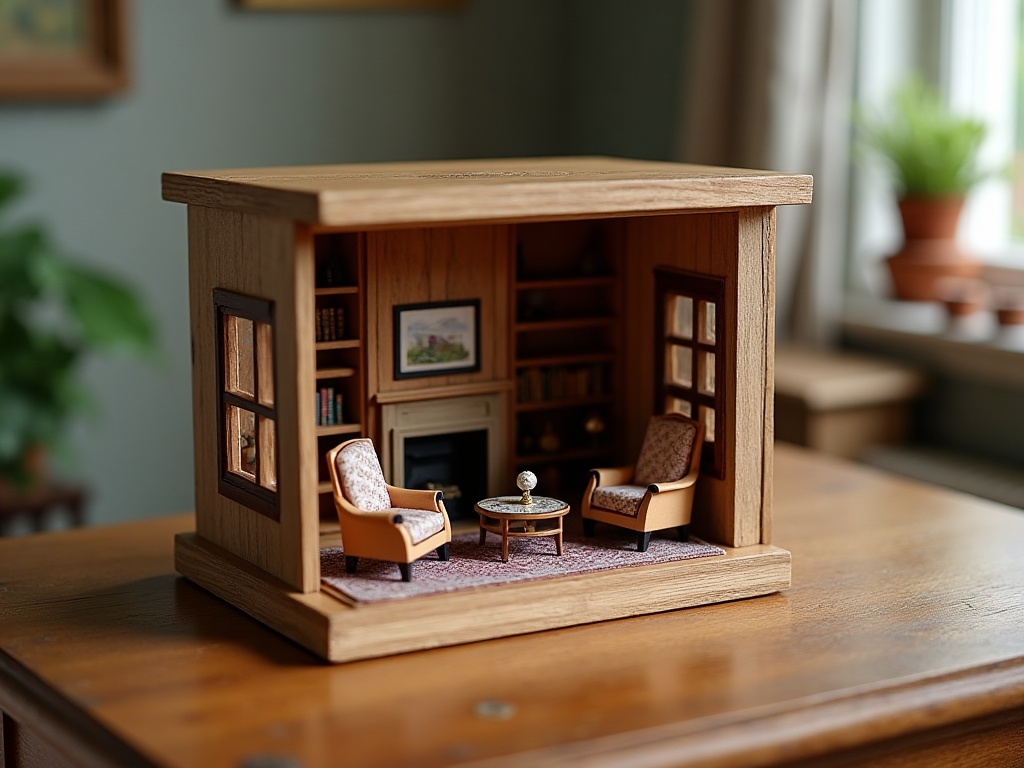
The Techniques That Cross All Three Formats
Once you understand the shared vocabulary of miniature scene-making, moving between formats becomes natural. These are the core skills that apply whether you are building a natural history diorama, a book nook, or a 1:12 scale room box.
Forced Perspective
Objects placed farther from the viewer are made smaller than their actual scale suggests. A street that appears to recede 50 feet might physically be 5 inches long, with each successive building slightly smaller and slightly less detailed. Book nooks use this constantly. Classical museum dioramas used it in their painted backgrounds. Even miniature houses use it subtly when suggesting a view through a window. Learning to think in receding scale is one of the small mental shifts that separates a convincing scene from a flat one.
Scale Discipline
Consistent scale in a 3D miniature scene is what separates a convincing result from a jarring one. A single out-of-scale object, say a slightly-too-large chair next to a correctly scaled table, breaks the illusion immediately. Kit builders benefit here because every component is pre-engineered to the same scale. Scratch-builders have to develop this discipline over multiple projects. If you ever add your own found objects to a kit build, hold them up against an existing kit component before committing to any adhesive.
Ambient Lighting
LED technology transformed miniature building in the 2010s. Tiny warm-white or amber LED strips now cost very little and fit inside spaces measured in millimeters. Lighting does more work than any single prop element. A dark corner suggests depth. A lit window implies a room behind it. A warm glow near a fireplace prop makes the whole scene feel inhabited. If your kit includes an LED component, treat it as the most important element in the box, not an optional extra.
Weathering and Aging
Brand-new looking surfaces read as fake. Subtle washes of diluted brown or gray paint applied to floors, walls, and furniture surfaces add age and authenticity. Military diorama builders have developed this into a sophisticated art form, but even a light dry-brush pass across a wooden floor in your book nook build makes a visible difference. Mix a tiny amount of raw umber acrylic into water until it is barely tinted, brush it across a surface, and wipe back with a dry cloth. That single step adds years to any miniature scene.
If you enjoy garden and outdoor scenes, our miniature greenhouse kits are a particularly good place to apply these techniques. The combination of glass-effect panels, tiny plants, and warm LED lighting rewards every weathering and lighting trick in the list above.
Rare in the niche
Miniature Greenhouse Kits
22 LED-lit greenhouse builds. Outdoor scenes with glass-effect panels and botanical detail. Great for applying weathering and ambient lighting techniques.
Frequently Asked Questions about Dioramas and Miniature Formats
Everything you might be wondering (click a question to expand).
Is a diorama the same thing as a model?
Not exactly. A scale model reproduces a specific object (a car, a ship, a building) at reduced size. A diorama places models or sculpted elements into a scene with a background, ground cover, and environmental context. The scene is the point, not just the objects inside it. Many dioramas contain models, but the diorama itself is the complete composition.
What scale do most hobbyist dioramas and miniature house kits use?
The most common hobbyist scale is 1:12, meaning 1 inch in the model equals 1 foot in real life. A standard interior door in real life is 80 inches tall; at 1:12 scale, it is about 6.7 inches. Military dioramas often use 1:35 or 1:72, matching the scale of specific plastic model kits. Book nooks are less strictly scaled since forced perspective is part of their design logic.
How do you make a diorama for beginners?
The easiest entry point is a complete kit rather than starting from scratch. A good beginner diorama kit includes pre-cut structural pieces, a printed background, basic materials, and step-by-step instructions. You supply the glue, a pair of tweezers, and patience. For a book nook style scene, expect to spend 4 to 8 hours. For a miniature room box, allow a full weekend. The key beginner habits: do a dry-fit assembly before gluing anything, work in good light, and let each glued joint dry fully before adding weight on top of it.
How hard is it to build a book nook kit as a complete beginner?
Genuinely approachable. Most quality book nook kits are rated for builders age 14 and up with no prior experience, and that rating holds up in practice. The main skills required are reading step-by-step instructions carefully, applying wood glue without over-saturating pieces, and exercising patience while adhesive sets. The average first-time builder finishes a beginner book nook kit in one to two evenings. The satisfaction at the end is immediate and real.
Are miniature house kits a good gift for someone who has never built one?
Yes, with one caveat: match the kit difficulty to the person’s patience level, not their artistic skill. Someone who enjoys puzzles, model assembly, or detailed crafts will be well-matched to a beginner or intermediate miniature house kit even if they have never touched one before. Someone who prefers faster creative payoffs would enjoy a book nook kit more. Check the estimated build time listed on any kit before purchasing.
Can I customize a kit, or do I have to follow the instructions exactly?
Kits are starting points. Experienced builders routinely swap out the included paint colors, add extra lighting, modify furniture arrangements, or incorporate found objects (a tiny real book page, a pressed flower, a fabric scrap from an old piece of clothing). The structural instructions matter; the decorative choices are yours entirely. Some of the most beautiful finished builds in our community started with a standard kit and went somewhere completely personal from there. If you want inspiration, our best-seller gallery shows customer photos of completed builds, many of which include clever personal modifications.
Where Miniature Building Goes From Here
The hobby is not slowing down. Community spaces on social platforms in 2026 have hundreds of thousands of active builders sharing works in progress, technique questions, and finished scenes. What started in natural history museums and military modeling clubs has become one of the most genuinely cross-demographic craft hobbies around: teenagers and retired surgeons, apartment dwellers and people with sprawling craft rooms, gift buyers and obsessive collectors.
The reason is not complicated. Building a tiny world gives you complete creative control over something finite and manageable. You decide what season it is, what time of day, whether the light through the window is morning gold or late-afternoon amber. Every miniature scene is a small, quiet argument that beauty is worth the attention.
Whether you start with a classic diorama box, slide a book nook between your favorite novels, or spend a long winter assembling a 1:12 scale kitchen with working cabinet hinges, the core experience is the same: patience rewarded, detail celebrated, and a tiny world made entirely by your own hands.