🎁 Buy 2 kits, get the 3rd FREE · Free shipping on every order

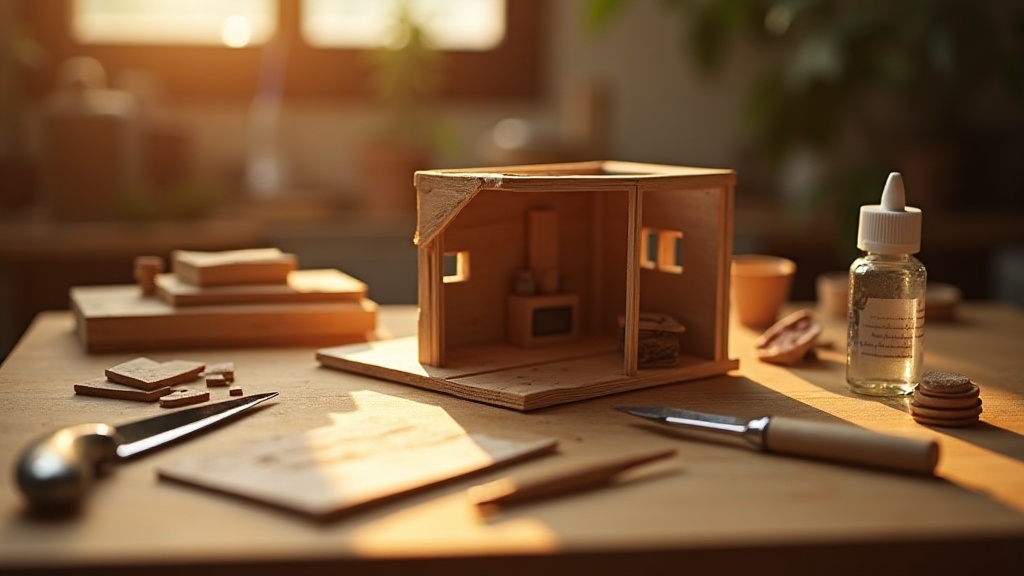
What Is Scale Modeling? A Complete Guide to Miniature Scales and the Craft
Scale modeling is the craft of building proportionally accurate miniature replicas at a fixed ratio. This guide explains what scale modeling is, covers the 1:12, 1:24, and 1:48 scales used in miniature house building, traces the hobby's historical roots, and walks first-time builders through what a real kit build involves from tools to finishing.

Scale modeling is the art of building a precise, proportionally reduced replica of a real or imagined subject, whether that subject is a World War II fighter plane, a Victorian row house, or a tiny cozy kitchen stocked with walnut-sized jars of jam. The finished piece exists at a fraction of the original’s size, governed by a fixed mathematical ratio called a scale. Get that ratio right, and suddenly a 6-inch hallway feels completely believable. Get it wrong, and the proportions quietly nag at every viewer who can’t explain why something feels “off.”
People come to scale modeling from a hundred different directions. Some start with plastic military kits at age ten and never really stop. Others pick up their first miniature house kit as adults looking for a slower, quieter hobby after years of staring at screens. Gift buyers stumble into the hobby while searching for something genuinely surprising for a friend who “already has everything.” What they all share is an appreciation for things made with care, one small piece at a time.
This guide covers what scale modeling actually means, how the most common scales work, where miniature houses fit historically, and what to expect when you pick up your first kit.
The Core Idea: Ratios, Proportions, and Why They Matter
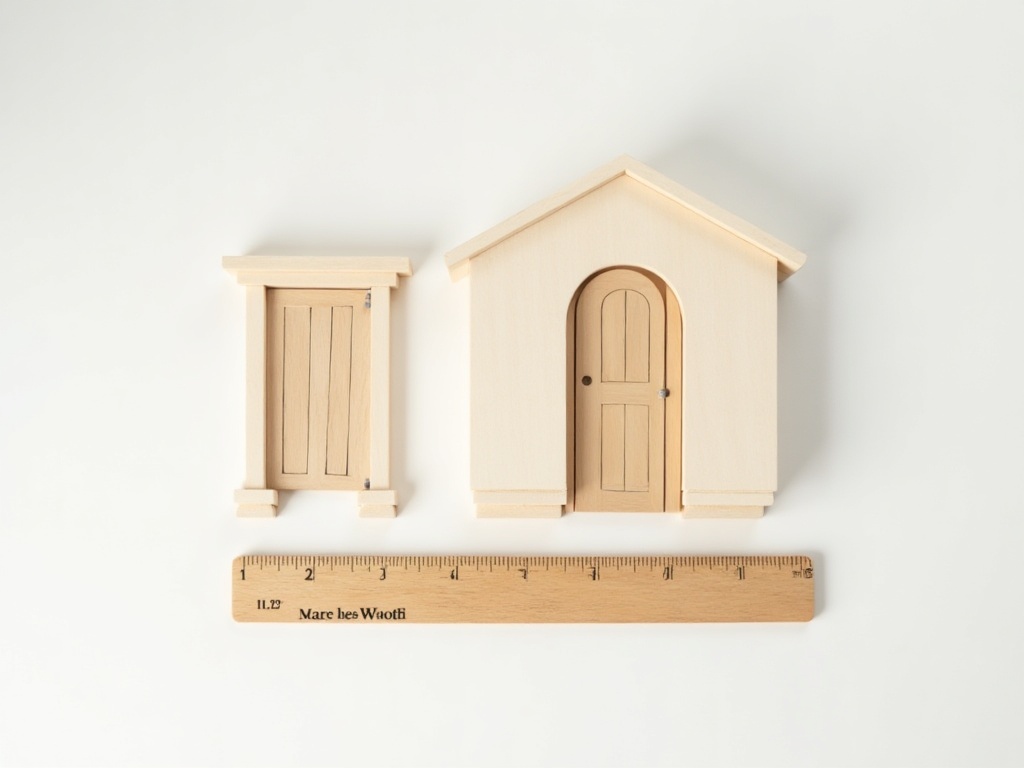
Scale modeling is built on a single ratio that keeps every element in a scene proportionally consistent: one unit on the model equals a fixed number of the same units in real life, so your brain reads the finished scene as believable no matter how small it is. A scale is written as a ratio, for example 1:12. That notation means one unit on the model equals twelve of the same units in real life. One inch on your miniature room equals twelve inches (one foot) in a full-size room. One centimeter on the model equals twelve centimeters on the original. The ratio is the same regardless of which unit system you use, which is why scale modeling speaks a universal language across countries.
Why bother with precise ratios at all? Because proportion is what creates believability. When every element in a scene shares the same ratio, your brain reads the scene as coherent. A 1:12 armchair next to a 1:12 fireplace next to a 1:12 Persian rug produces a room that your eye accepts as real, even though you know intellectually that everything is tiny. Mix a 1:12 chair with a 1:24 table and your brain immediately registers the wrongness, even if you can’t name it.
Modelers talk about scale in three ways: the ratio (1:12), the fraction (1/12), or a verbal shorthand like “one-inch scale” (because at 1:12, one inch represents one foot). All three describe the same relationship.
How Scale Affects Detail, Cost, and Build Time
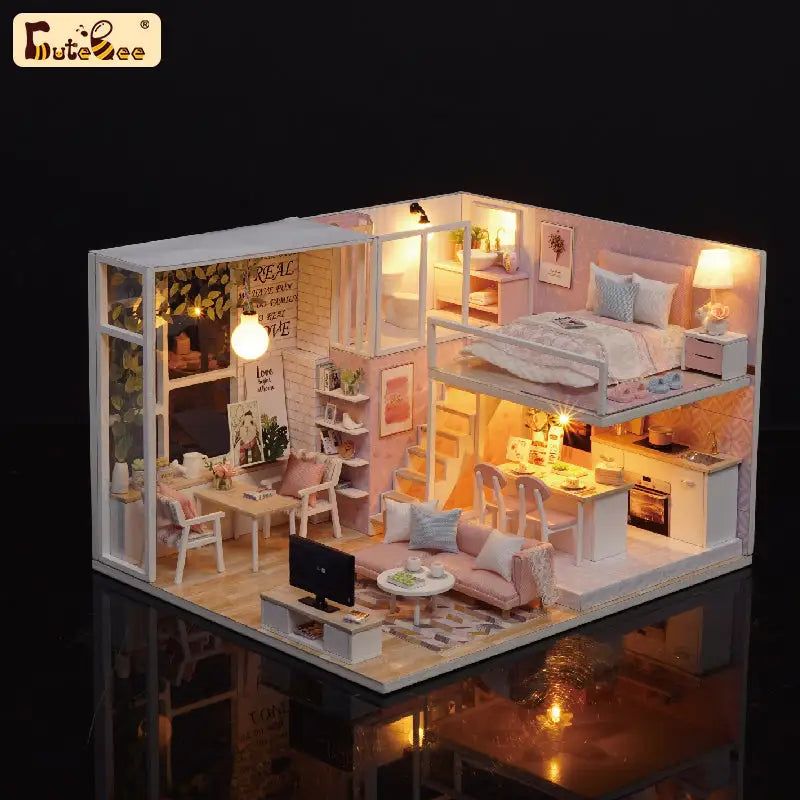
Smaller scales are harder to detail and easier to display. Larger scales offer room for intricate hand-painted elements but demand more shelf space and more material. There is always a trade-off, and experienced builders learn to choose a scale based on what they actually want from the project, not just what looks impressive on paper.
- Larger scale: More visible detail, more forgiving for beginners, physically bigger footprint.
- Smaller scale: Compact display, greater challenge, tiny parts that reward steady hands and good lighting.
- Mid-range scale: The sweet spot many hobbyists return to again and again for a balance of detail and manageability.
The Three Scales You Will Encounter Most Often in Miniature Houses
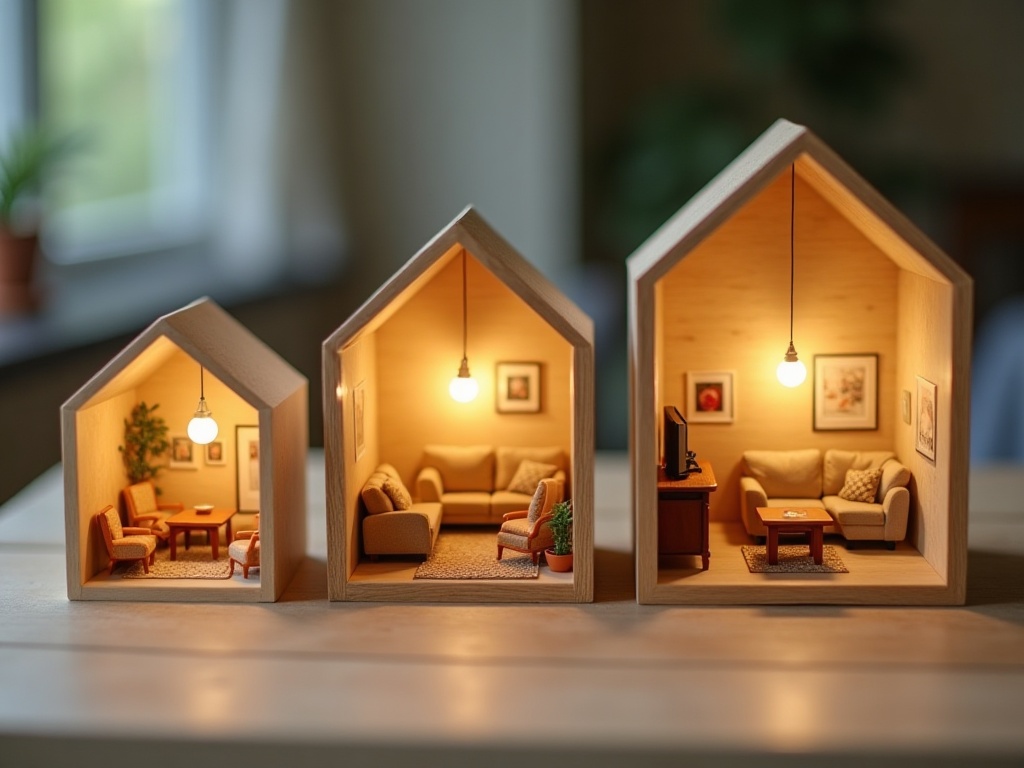
The three scales you will encounter most often in miniature houses are 1:12, 1:24, and 1:48, each controlling the finished size of your build, the level of detail possible, and the range of accessories you can source before you glue a single piece. Miniature architecture uses a handful of dominant scales. Three of them show up in the vast majority of kits, dollhouses, and collector pieces sold today. Knowing them before you buy saves you from the frustrating mistake of ordering furniture in the wrong ratio.
1:12 Scale (One-Inch Scale)
1:12 scale miniature building is the most popular standard in the English-speaking world. At this ratio, one real-life foot shrinks to one inch on the model. A standard 8-foot ceiling becomes 8 inches tall. A full-size sofa that measures 84 inches in your living room would be exactly 7 inches long at 1:12.
This scale is large enough to hand-paint realistic wood grain on a 1-inch bookshelf. It is large enough to wire for working LED lights. Furniture, wallpaper, fabric, and even food replicas are all widely available at 1:12, which means your kit does not have to remain bare; a thriving ecosystem of accessories already exists for this scale.
Difficulty rating for beginners: moderate. The parts are visible and handleable, but the rooms themselves can be substantial builds. Budget for a few evenings of work per room on a typical kit.
1:24 Scale (Half-Inch Scale)
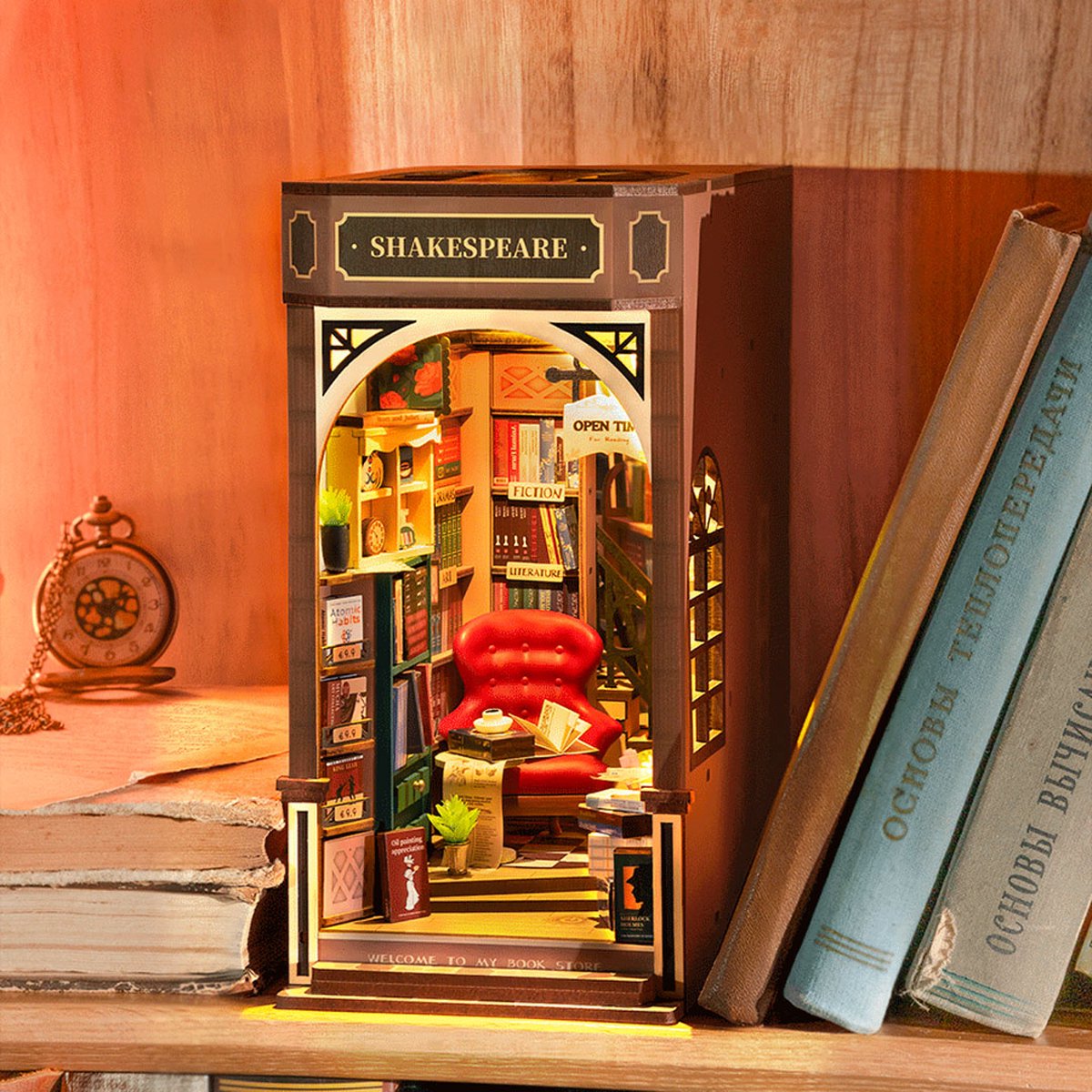
At 1:24, one real-life foot becomes half an inch. Everything is exactly half the linear size of a 1:12 piece. A sofa that measures 7 inches at 1:12 measures 3.5 inches at 1:24. The finished structure takes up roughly a quarter of the shelf space (half the width, half the depth), which makes 1:24 a genuinely practical choice for apartment dwellers or anyone building multiple scenes.
The trade-off is detail. Painting tiny cabinet pulls at 1:24 requires patience and a size 20/0 brush. Working lights are possible but the wiring is finer. Accessories are available but the selection is narrower than at 1:12.
Difficulty rating: moderate to challenging. A great second or third project after you have built one 1:12 kit and know your own tolerance for fiddly work.
1:48 Scale (Quarter-Inch Scale)
One foot becomes a quarter inch at 1:48. This is sometimes called “quarter scale” and it sits at the edge of what most people can detail by hand without magnification. A front door at 1:48 is barely 1.75 inches tall. Builders who love this scale tend to own magnifying lamps and fine-pointed tweezers and describe the focus required as genuinely meditative, almost like micro-surgery with glue.
The payoff is a complete architectural scene that fits in your palm. Collectors who have shelf space for perhaps one or two larger models can display a dozen 1:48 rooms in the same footprint. The satisfaction of finishing a 1:48 piece is particular and intense: every tiny shingle or brick that landed correctly feels like a small personal victory.
Difficulty rating: challenging to advanced. Best approached after experience at larger scales, though determined beginners who enjoy precision work do succeed.
Quick Comparison: 1:12 vs 1:24 vs 1:48
Not sure which scale fits your space, budget, and patience? This at-a-glance table covers the practical differences so you can make a confident choice before buying your first kit.
| Feature | 1:12 (One-Inch) | 1:24 (Half-Inch) | 1:48 (Quarter-Inch) |
|---|---|---|---|
| A standard 8 ft ceiling becomes… | 8 inches tall | 4 inches tall | 2 inches tall |
| Shelf footprint (typical room box) | Large (12+ inches wide) | Medium (6-8 inches wide) | Small (3-4 inches wide) |
| Accessory market availability | Vast, widest selection | Good, growing range | Specialist, more limited |
| Typical kit cost range | $45 to $160+ | $35 to $120+ | $25 to $90+ |
| Typical build time | 8 to 40+ hours | 6 to 30 hours | 5 to 25 hours |
| Magnification needed? | Usually not | Sometimes helpful | Almost always yes |
| LED lighting possible? | Yes, easy to source | Yes, finer wiring | Yes, very fine wiring |
| Best for… | Beginners and display collectors | Second builds, small spaces | Experienced, precision-focused builders |
✨ Hannah’s tip
If you are choosing your very first kit and feel torn between scales, pick 1:12. The parts are large enough to handle confidently on your first night, the selection of accessories is enormous, and you will understand scale logic intuitively by the time you finish. Then, when 1:24 or 1:48 calls to you, you will already know your own preferences as a builder.
If you are choosing your very first kit and feel torn between scales, pick 1:12. The parts are large enough to handle confidently on your first night, the selection of accessories is enormous, and you will understand scale logic intuitively by the time you finish. Then, when 1:24 or 1:48 calls to you, you will already know your own preferences as a builder.
A Brief History: Where Scale Modeling Comes From
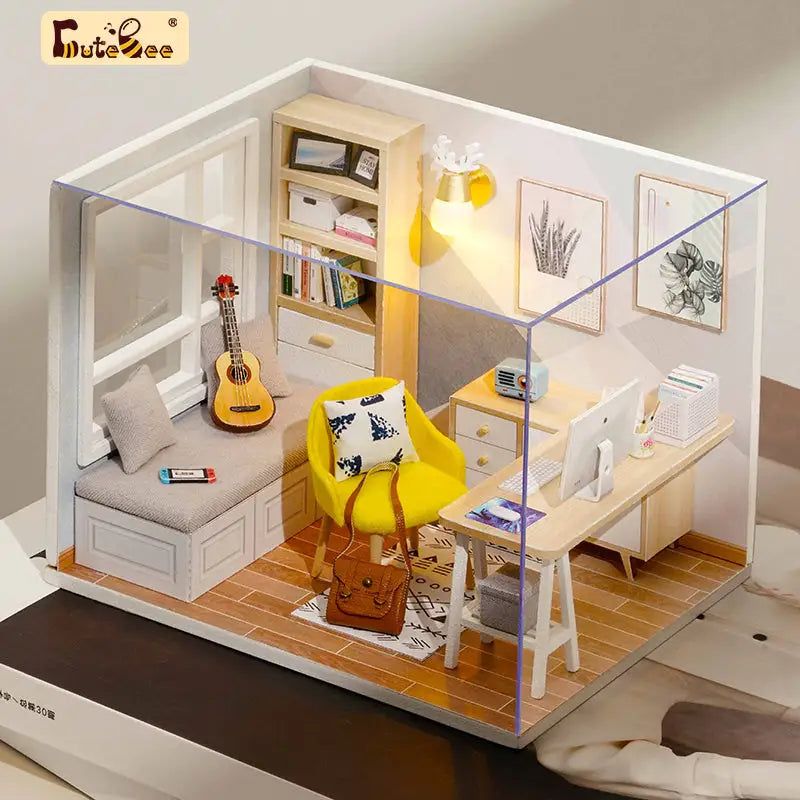
Scale modeling traces its roots back thousands of years, from Egyptian tomb models around 2000 BCE through European craftsmen’s architectural maquettes, to the formalized hobby that industrialized in the 20th century and found new audiences with every generation since. The human impulse to build miniature versions of real things is genuinely ancient. Egyptian tombs from around 2000 BCE contained small wooden models of granaries, boats, and houses, placed to serve the deceased in the afterlife. Medieval European craftsmen built architectural models to present building plans to patrons who couldn’t read technical drawings. Scale was implied, not standardized, but the concept was there.
The formalized hobby of scale modeling as we recognize it today grew from two directions in the 19th and early 20th centuries. Military and architectural professionals used precise scale models as professional tools. Separately, cabinet makers and toymakers in Germany, England, and the United States were producing increasingly sophisticated dollhouses for the aristocracy and then for the growing middle class. These weren’t toys in the casual sense. They were status objects, filled with hand-blown glass bottles, silver-threaded curtains, and furniture jointed like real cabinetwork.
📜 Did you know?
Petronella Oortman’s dollhouse, built in Amsterdam between 1686 and 1710, cost roughly the same as a real canal house of the period. Oortman commissioned tiny paintings from actual Dutch masters, ordered miniature Delfts aardewerk (Delftware) from the same potteries that supplied full-size pieces, and had the structure built to a precise 1:10 scale. It now lives in the Rijksmuseum and remains one of the most expensive miniature objects ever assembled. What began as a collector’s obsession became a historical document of 17th-century Dutch domestic life in extraordinary detail.
Petronella Oortman’s dollhouse, built in Amsterdam between 1686 and 1710, cost roughly the same as a real canal house of the period. Oortman commissioned tiny paintings from actual Dutch masters, ordered miniature Delfts aardewerk (Delftware) from the same potteries that supplied full-size pieces, and had the structure built to a precise 1:10 scale. It now lives in the Rijksmuseum and remains one of the most expensive miniature objects ever assembled. What began as a collector’s obsession became a historical document of 17th-century Dutch domestic life in extraordinary detail.
The 20th century industrialized both branches. Plastic injection molding after World War II made military and vehicle scale model kits affordable and reproducible. Simultaneously, the miniature house community organized: the National Association of Miniature Enthusiasts (NAME) formed in the United States in 1972, and dedicated trade shows, specialist magazines, and artisan networks followed. The 1:12 standard solidified during this period as the dominant ratio for the miniature house world.
Today, laser-cut wooden kits have added a third generation of builders, people who may never have touched a plastic model kit but are drawn to the texture of wood, the smell of wood glue, and the quiet focus of fitting hand-cut joints together one evening at a time. It is worth pausing on that for a moment: the reason scale modeling keeps finding new audiences is precisely because the act of building something small and precise satisfies something deep. It is not nostalgia. It is concentration, craft, and the pleasure of a problem small enough to solve completely in a single sitting.
✨ Hannah’s tip
When I built my first Victorian dollhouse kit on a rainy Sunday in 2021, I had no plan and no prior modeling experience. What surprised me most was how quickly two hours could vanish. The outside world simply stopped being relevant. If you are looking for a hobby that genuinely quiets a busy mind, that is the thing nobody warns you about: a good kit is extremely good at stealing time in the most satisfying way.
When I built my first Victorian dollhouse kit on a rainy Sunday in 2021, I had no plan and no prior modeling experience. What surprised me most was how quickly two hours could vanish. The outside world simply stopped being relevant. If you are looking for a hobby that genuinely quiets a busy mind, that is the thing nobody warns you about: a good kit is extremely good at stealing time in the most satisfying way.
Where Miniature Houses Fit in the Scale Modeling World
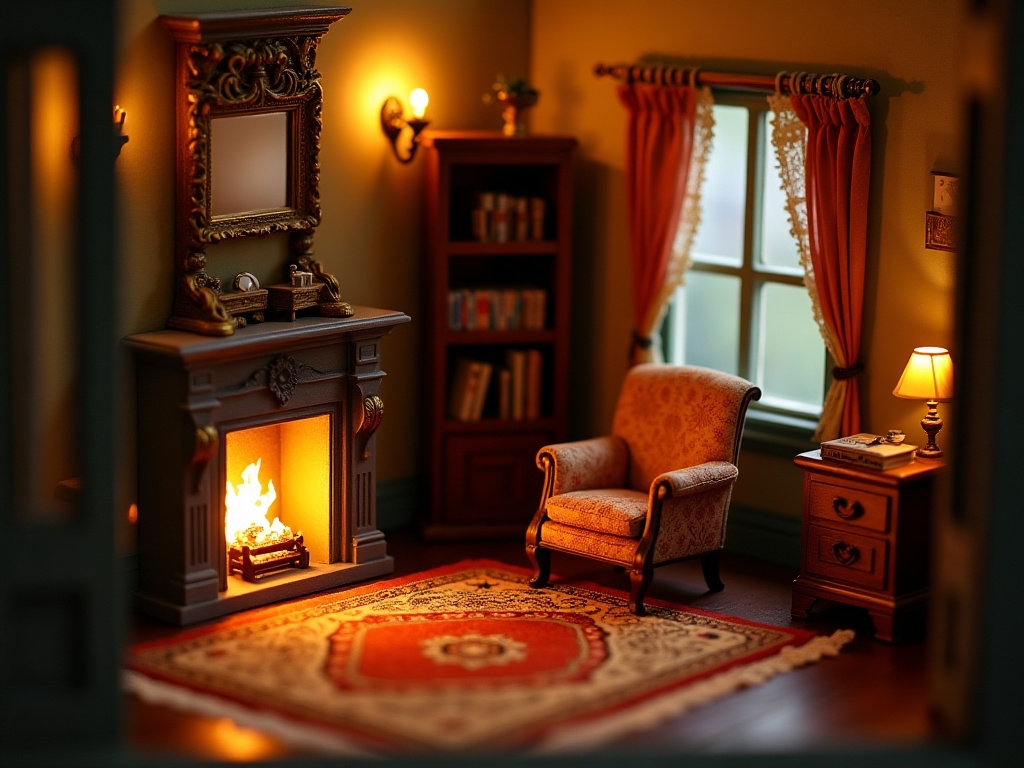
Miniature houses sit firmly in the architectural and interior category of scale modeling, sharing more DNA with diorama building than with plastic kit assembly, combining precise ratio work with storytelling through space, objects, and the small details that imply a life being lived. Scale modeling covers a wide spectrum: aircraft, ships, armor, trains, cars, figures, dioramas, and architectural subjects. Miniature houses sit firmly in the architectural and interior category, and they share more DNA with diorama building than with straight plastic kit assembly.
A diorama builder and a miniature house builder both think about storytelling through space. Which objects are on the table? What does the light coming through the window suggest about the time of day? Is there a coat on the hook by the door that implies someone just arrived, or just left? These are narrative questions as much as technical ones, and they are part of what makes miniature house building feel different from, say, assembling a 1:72 tank.
Our miniature house kits are designed with this storytelling dimension in mind. Each kit includes pre-cut wooden parts, illustrated assembly instructions, and enough detail work to keep experienced builders engaged without overwhelming first-timers. The difficulty rating is printed clearly on every box, because we believe knowing what you are getting into is part of enjoying the process.
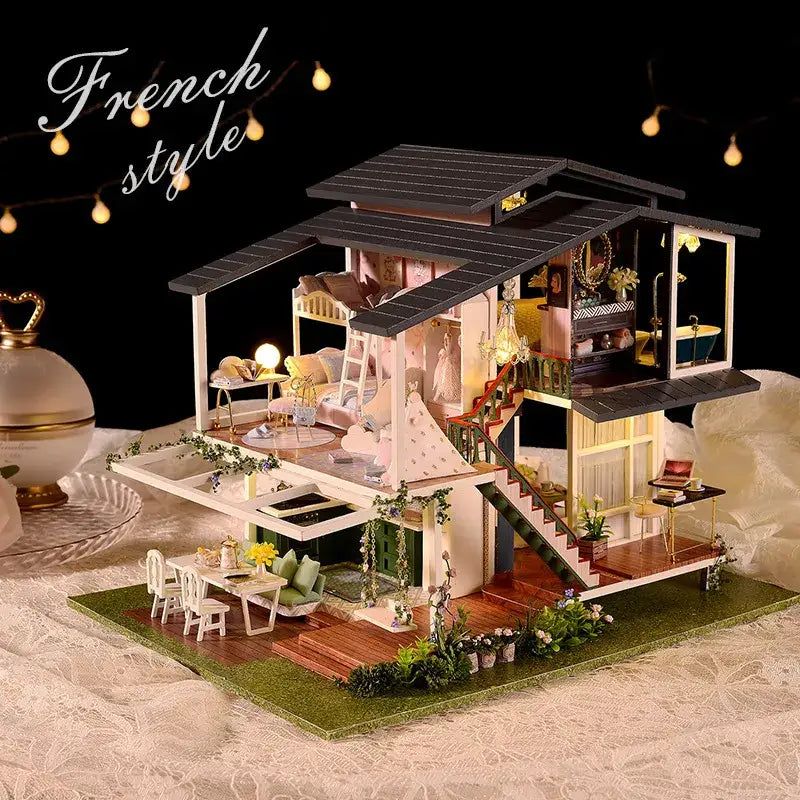
Miniature houses also occupy a unique space as hobby gifts for adults: they are tactile, they produce a finished object you can display, and the build itself is the experience, not just a means to an end. Someone who has spent fifteen evenings building a tiny Victorian parlor has lived inside that project. The finished piece carries that time.
Scale Modeling vs. Model Railroading: Overlapping Communities
Model railroading is scale modeling’s closest neighbor and the two communities overlap more than outsiders realize. HO scale (1:87) is the most popular train scale worldwide. N scale (1:160) is the second most common. Neither maps neatly onto 1:12, 1:24, or 1:48, which is why miniature house builders and train layout builders rarely share accessories. But they share vocabulary, suppliers, tools, and often the same workbench. Many experienced builders move between both hobbies across a lifetime.
Tools, Materials, and What a First Build Actually Involves
A first miniature house build requires very few specialized tools: a craft knife, a cutting mat, wood glue, sandpaper, clamps, and tweezers will carry you through most entry-level kits, and the build follows a logical sequence from dry-fit to final furnishing. First-time scale modelers are often surprised by how few specialized tools a beginner kit actually requires. A good quality craft knife, a self-healing cutting mat, a bottle of wood glue, some sandpaper in 220 and 400 grit, and a set of small clamps will carry you through most entry-level builds. Tweezers are indispensable. A magnifying lamp pays for itself immediately.
Materials in miniature house kits vary by manufacturer. Laser-cut basswood is the most common substrate: it cuts cleanly, takes paint and stain well, and is stable enough to hold fine joinery. Some premium kits include MDF panels for walls, balsa for lightweight trim, and pre-formed resin pieces for complex details like fireplaces or bay windows.
The build sequence for a typical kit follows a logical order:
- Dry-fit all parts before gluing anything. Understand what goes where.
- Paint or stain walls, floors, and ceilings while they are still flat and accessible.
- Assemble the structure from the base up.
- Add fixed interior elements: flooring, wallpaper, built-in shelving.
- Wire for lighting if the kit supports it (many do).
- Furnish and style, the part most builders find most satisfying.
Each stage has its own satisfactions. The dry-fit stage is puzzle-like and orienting. The painting stage is meditative and forgiving. The structural assembly stage has a builder’s momentum: each wall that stands up straight is a commitment, a small decision that the project is real and moving forward. Furnishing is pure play.
✨ Hannah’s tip
The single step that most first-timers skip is the dry-fit. Do not skip it. Spend twenty minutes just pressing parts together without glue, laying them out in build order, and checking that nothing is upside-down. It sounds slow, but it saves the particular misery of discovering a floor panel is glued the wrong way around after everything has set. Ask me how I know.
The single step that most first-timers skip is the dry-fit. Do not skip it. Spend twenty minutes just pressing parts together without glue, laying them out in build order, and checking that nothing is upside-down. It sounds slow, but it saves the particular misery of discovering a floor panel is glued the wrong way around after everything has set. Ask me how I know.
Explore our full range of kits sorted by difficulty and style in the miniature house kits collection, where you can filter by scale and theme to find the right starting point for your skill level.
What Is Scale Modeling: Your Next Project Awaits
Scale modeling rewards patience more than prior skill, and miniature house building rewards it most of all: builders who finish the most satisfying pieces are simply the ones who showed up at the workbench consistently and found genuine pleasure in the slow accumulation of a scene. Scale modeling rewards patience more than it rewards prior skill. The builders who finish the most satisfying pieces are not necessarily the ones who started with the steadiest hands. They are the ones who showed up at the workbench consistently, learned from the small errors in each session, and found genuine pleasure in the slow accumulation of a scene.
Miniature house building specifically tends to attract people who describe the process as grounding. There is something about working at a small scale, on small problems, with small tools, that quiets a busy mind in a way few other hobbies match. The outside world stays outside. The tiny parlor, with its 1:12 fireplace and its half-inch Persian rug, gets your full attention. That is not a minor thing. In a world of constant interruption, a hobby that earns your complete presence is genuinely rare.
Understanding what is scale modeling is only the beginning. The real reward is the finished piece sitting on your shelf, proof that you built something real with your own hands, to a ratio that makes it feel like it could be anywhere, at any size. Browse the complete miniature house kits collection to find a kit matched to your scale preference, skill level, and the kind of story you want to build. Your first piece is waiting.
Frequently Asked Questions about Scale Modeling and Miniature Houses
Everything you might be wondering (click a question to expand).
What does “scale” mean in scale modeling?
Scale is the ratio between the size of the model and the size of the real object it represents. At 1:12, every dimension on the model is one-twelfth of the corresponding real-life dimension. At 1:24, every dimension is one-twenty-fourth. The ratio applies to length, width, and height equally, which keeps proportions consistent throughout the build.
Which scale is best for a beginner miniature house builder?
1:12 is widely recommended for beginners. The parts are large enough to handle and paint without magnification, the accessory market is the largest of any miniature scale, and most beginner kits on the market are designed around this ratio. Once you have completed one 1:12 build, you will have the judgment to decide whether a smaller or larger scale fits your style better.
Can miniature house kits be displayed after building?
Yes, and that is most builders’ goal. Finished kits typically sit on a shelf, bookcase, or dedicated display surface. Many builders add a small acrylic dust cover to protect their work over time. Some kits are designed to hang on a wall as framed room boxes, which saves floor and shelf space while keeping the piece visible.
How long does it take to build a miniature house kit?
Build time depends on the kit’s complexity and your pace. A simple room box at 1:12 might take 6 to 10 hours spread across several sessions. A multi-room Victorian house with lighting can run 40 hours or more. Most builders work in sessions of 1 to 2 hours, which fits naturally into an evening routine and keeps the project feeling pleasurable rather than pressured.
Is scale modeling expensive to get into?
Entry-level kits start well under $50 and include nearly everything you need to begin. The ongoing cost scales with your ambition: basic tool kits, glue, and sandpaper are inexpensive, while specialty paints, LED lighting systems, and artisan-made accessories add up over time. Most builders find it easy to calibrate spending to their own comfort level, starting small and investing more as the hobby proves its hold on them.
What is the difference between a miniature house kit and a dollhouse?
The terms overlap but carry different emphases. Dollhouses traditionally refer to fully assembled or easy-to-assemble structures intended as display pieces or children’s toys. Miniature house kits, as the name suggests, are build-it-yourself projects: you assemble, paint, wire, and furnish the structure from flat-packed laser-cut parts. The build process is the point. Kits are designed for adults who want the meditative, hands-on experience of construction, not just the finished object.
Do I need any prior craft experience to start a miniature house kit?
No prior experience is needed for a beginner-rated kit. The skills you use (measuring, applying glue precisely, painting small surfaces, following illustrated instructions) are all learnable on the job. Most people find the first session a little slow while they orient themselves, and then find a comfortable rhythm by the second. The main requirement is patience, not talent.