🎁 Buy 2 kits, get the 3rd FREE · Free shipping on every order

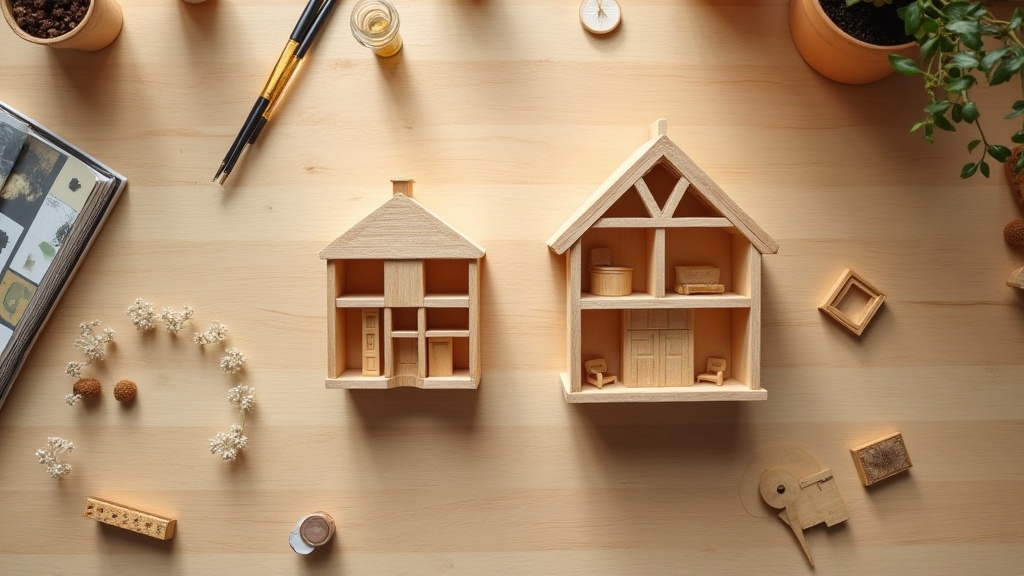
Miniature House vs Dollhouse: Which Scale Is Right for You?
A deep comparison of 1:24 miniature houses and 1:12 dollhouses, covering cost, build complexity, display options, and which scale suits different crafters, collectors, and gift buyers.

You find yourself holding two kits at the craft store, or hovering between two listings online. One box is surprisingly compact. The other is almost the size of a small suitcase. Both say “miniature house” on the label, yet they feel like completely different hobbies. That gap is real, and it comes down to one number: scale.
Miniature house vs dollhouse is, at its core, a question of 1:24 versus 1:12. Those ratios describe how much smaller the model is compared to a real building. A 1:12 dollhouse renders every inch of the real world as one inch of model. A 1:24 miniature house cuts that in half again. Small difference on paper. Enormous difference at the workbench.
Whether you are buying your first kit, shopping for a gift, or deciding where to take your hobby next, the right scale shapes everything: how long the build takes, how much shelf space you need, how much money you spend, and how satisfying the process feels. Here is a straightforward breakdown of both worlds, drawn from years of building, testing, and talking with crafters at every experience level.
Understanding the Two Scales Before You Build Anything
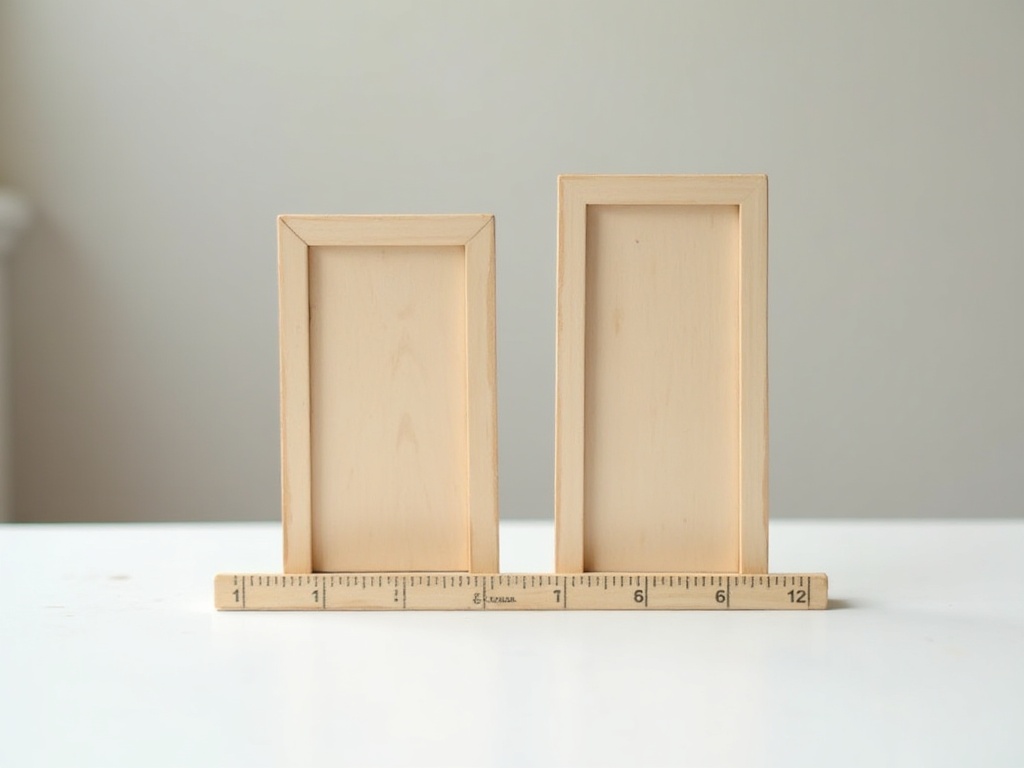
The core difference between a 1:12 dollhouse and a 1:24 miniature house is a single ratio: one scale renders every real-world inch as one model inch, while the other halves that again, making every piece dramatically smaller and the build experience fundamentally different. Scale is not just a measurement; it is a philosophy. In 1:12 (also called one-inch scale), a six-foot door on a real house becomes a six-inch door on the model. A dining table stands roughly one inch tall. Every piece is small enough to feel charming but large enough to hold in your fingers without tweezers.
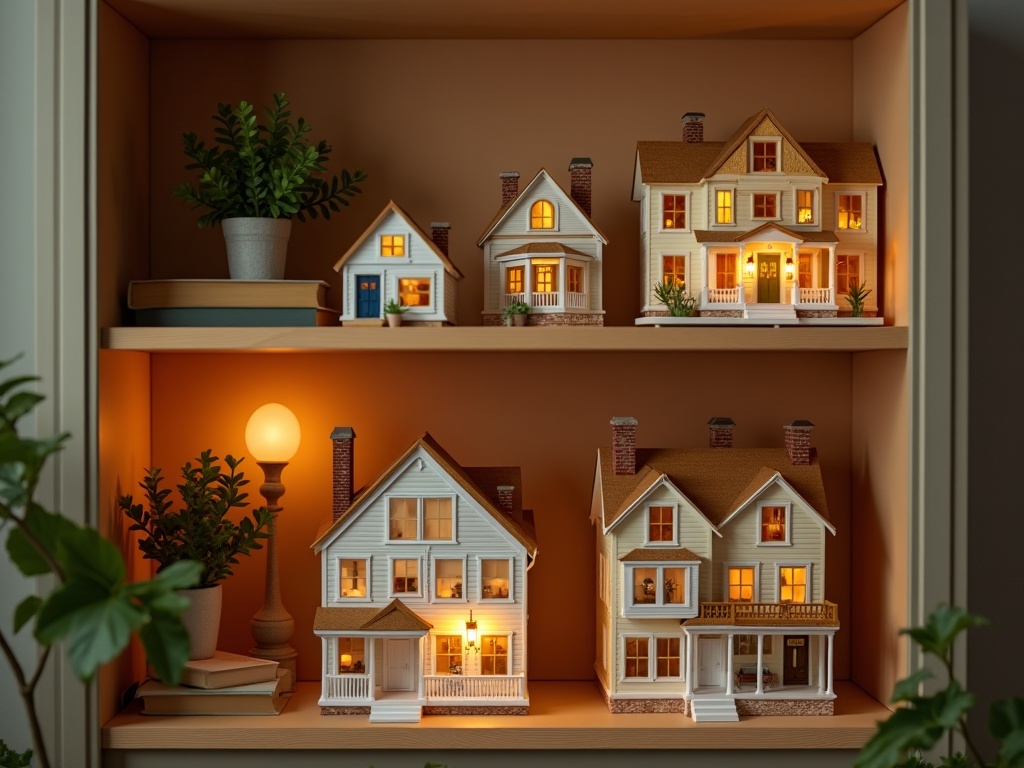
In 1:24 (called half-inch scale), that same six-foot door shrinks to three inches. Furniture pieces are often no bigger than a thumbnail. The entire footprint of a finished 1:24 house can sit comfortably on a single bookshelf tier, sometimes taking up less than 12 inches of width.
Both scales have been standard in the hobby since at least the 1970s, when dedicated miniaturists began pushing for consistent proportions across manufacturers. That standardization matters today because it means furniture, wallpaper sheets, and accessory packs from different brands are generally interchangeable within a scale, giving you a huge secondary market to shop from. When Hannah built her first Victorian piece, she sourced wallpaper from three different suppliers without a single mismatch because of this shared standard.
📜 Did you know?
The 1:12 scale became a hobby standard largely because of the National Association of Miniature Enthusiasts (NAME), founded in 1972 in the United States. Before that, scales varied wildly between manufacturers, making it almost impossible to mix pieces from different sources. Today, the 1:12 and 1:24 standards let crafters shop globally and still have pieces that fit together perfectly.
The 1:12 scale became a hobby standard largely because of the National Association of Miniature Enthusiasts (NAME), founded in 1972 in the United States. Before that, scales varied wildly between manufacturers, making it almost impossible to mix pieces from different sources. Today, the 1:12 and 1:24 standards let crafters shop globally and still have pieces that fit together perfectly.
🔍 Scale at a glance
A quick way to feel the difference before you buy: grab a standard 12-inch ruler. One inch is your 1:12 furniture height. Now fold that in half with your fingers. That half-inch is your 1:24 world. Everything in a 1:24 build lives in that half-inch universe, from sofa cushions to window frames. Suddenly “smaller” becomes very tangible.
A quick way to feel the difference before you buy: grab a standard 12-inch ruler. One inch is your 1:12 furniture height. Now fold that in half with your fingers. That half-inch is your 1:24 world. Everything in a 1:24 build lives in that half-inch universe, from sofa cushions to window frames. Suddenly “smaller” becomes very tangible.
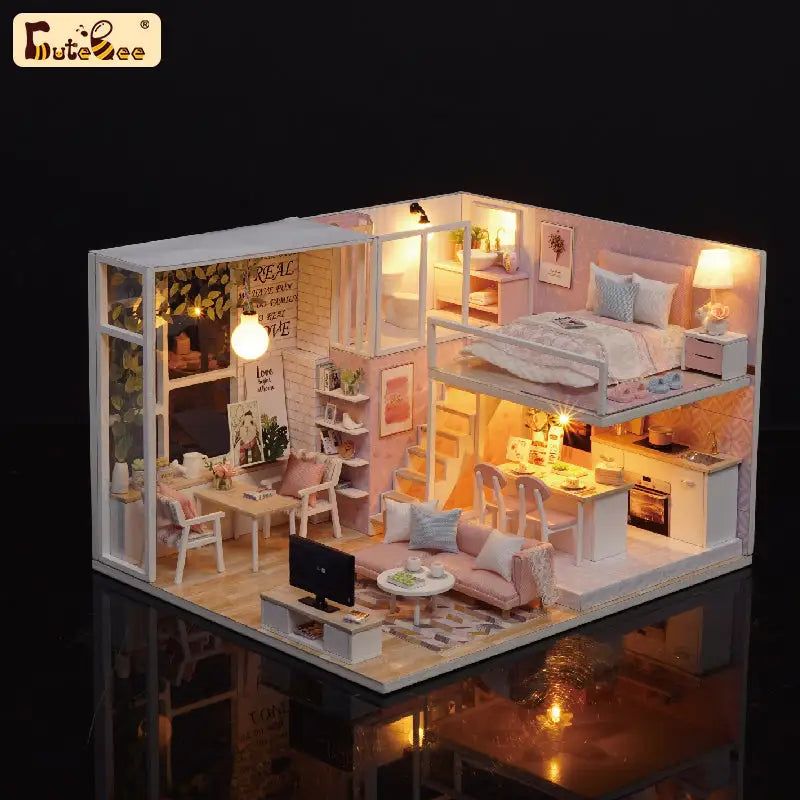
Bestseller cottage kit
Tranquil Life DIY Miniature House Kit
$67.90
A gentle 1:12 cottage that beginners finish in a weekend and display with pride. Pre-cut panels, clear instructions, and a satisfying snap-together structure make it the kit we recommend most for first-time builders.
Cost Comparison: What You Actually Spend at Each Scale
A starter 1:12 dollhouse kit typically runs $45 to $120 for the structure alone, while a comparable 1:24 miniature house kit costs $25 to $75, but lower per-kit prices in the smaller scale often lead crafters to buy more builds overall. The price difference is real but not always what you expect once you factor in how the hobby tends to grow. Here are the honest numbers.
Entry-Level Kit Prices
A starter 1:12 dollhouse kit from a quality brand typically runs between $45 and $120 for the bare structure. Add furniture packs, lighting kits, wallpaper, flooring, and paint, and a fully finished room box or small house can land anywhere from $80 to $250 total, depending on how detailed you want to go.
A 1:24 miniature house kit at the entry level usually costs between $25 and $75 for the structure. The accessories cost less too, simply because there is less material in each piece. A finished 1:24 build might come in at $50 to $150 all in.
Long-Term Spending Patterns
Here is the real plot twist. Many crafters who start with 1:24 kits end up spending more over time, not less. The lower per-kit price makes it easy to buy three or four kits instead of one, and those costs add up fast. Collectors also find 1:24 highly addictive precisely because a full scene takes up so little room; the temptation to “just add one more” is almost impossible to resist. Hannah keeps a running list of 1:24 builds she “definitely isn’t buying yet” and it currently has eleven items on it.
With 1:12, the larger investment per kit tends to slow the pace of buying and encourage deeper engagement with each build. Many hobbyists describe spending months on a single 1:12 project, which stretches the value considerably and turns each piece into something genuinely treasured.
You can compare real prices across both scales in our complete miniature house kits collection, where every listing shows difficulty level, estimated build time, and exactly what ships in the box.
💰 Budget tip
If you are deciding between scales on price alone, factor in the full build cost, not just the kit sticker price. A $30 1:24 kit that needs $40 in separate furniture packs lands in the same range as a $65 1:12 beginner kit that ships with several accessories included. Check what is actually in the box before you compare numbers.
If you are deciding between scales on price alone, factor in the full build cost, not just the kit sticker price. A $30 1:24 kit that needs $40 in separate furniture packs lands in the same range as a $65 1:12 beginner kit that ships with several accessories included. Check what is actually in the box before you compare numbers.
Build Complexity and the Experience of Making

Neither scale is objectively harder to follow in terms of instructions; a 1:12 dollhouse kit is more physically forgiving for beginners, while a 1:24 miniature house demands fine motor precision that some crafters find meditative and others find frustrating. This is where personal temperament matters more than skill level. Neither scale is objectively harder in terms of following instructions; they are just hard in different ways.
Working in 1:12 Scale
The larger pieces in a 1:12 dollhouse kit are genuinely more forgiving. You can apply wallpaper with a small brush and see what you are doing. Gluing a staircase baluster into place does not require magnification. For beginners, this tactile accessibility is a real confidence builder; finishing your first room and stepping back to look at it from across the table is a genuinely proud moment.
Difficulty rating for a standard beginner 1:12 room-box kit: 2 out of 5. Most kits include pre-cut wooden panels, basic glue, and step-by-step instructions. A first-time builder with no prior craft experience can complete a simple build in 6 to 12 hours spread over a few sessions.
Intermediate 1:12 house kits with multiple rooms, staircases, and electrical lighting systems push that to 3 or 4 out of 5. The complexity is not in the scale but in the number of components and the sequencing of assembly steps. Our beginner’s guide to miniature houses walks through exactly which steps to tackle in which order so you never get stuck.
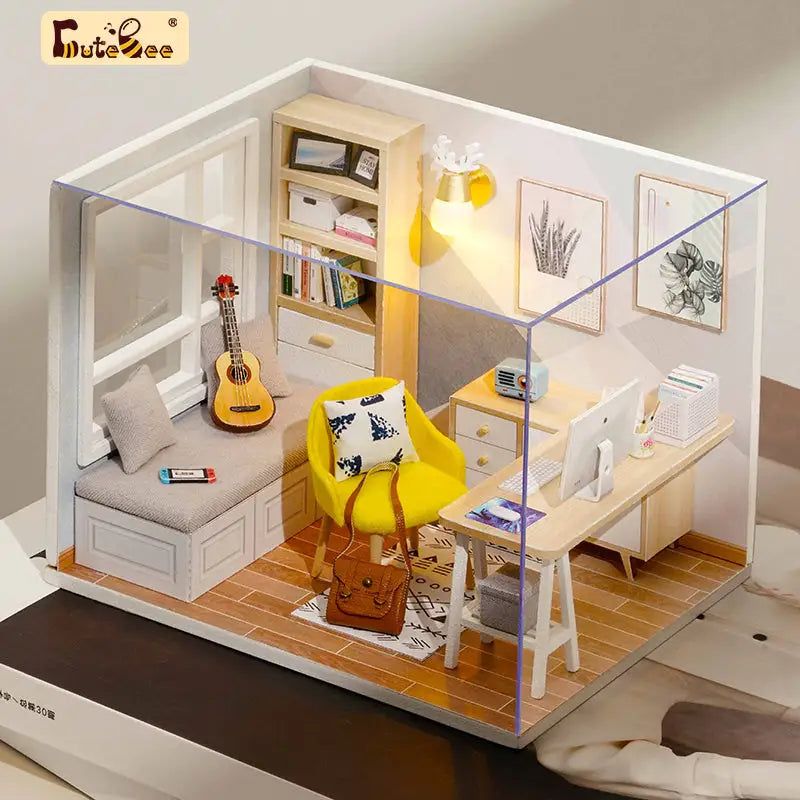
Easy starter under $50
Sun Room DIY Miniature House Kit
$49.99
An open-plan 1:12 room box with beautiful natural light in the finished photos and a parts count low enough to complete comfortably in a single weekend. The kit that converts skeptics into lifelong miniaturists.
Working in 1:24 Scale
Half-inch scale demands patience and fine motor precision. Pieces are genuinely tiny. A 1:24 chair seat might be smaller than your pinky nail. Some crafters use dental picks, watchmaker tweezers, and magnifying glasses as standard tools. If you find that level of focus meditative and absorbing, 1:24 will feel like a superpower. If it frustrates you, it will feel like a punishment.
Difficulty rating for a standard 1:24 miniature house kit: 3 out of 5 for a small structure, rising to 4 out of 5 for anything with interior furnishings. The challenge is entirely about scale, not conceptual complexity. The steps are the same as 1:12; your fingers just have less room to work.
What both scales share: the rhythm of building. Cutting, fitting, gluing, painting, waiting. Many crafters report that the process itself is the point, a way to slow down and be present for an hour or two. That meditative quality belongs equally to both scales, and it is probably the real reason this hobby has lasted decades and keeps growing.
✨ Hannah’s honest tip
If you are genuinely unsure which scale suits you, buy one small kit at each scale before committing to a big project. Spend a single evening with each. The one that makes you lose track of time is your scale. I did exactly this in 2021 before I settled on my first full Victorian build, and it saved me from a $200 mistake I would have deeply regretted.
If you are genuinely unsure which scale suits you, buy one small kit at each scale before committing to a big project. Spend a single evening with each. The one that makes you lose track of time is your scale. I did exactly this in 2021 before I settled on my first full Victorian build, and it saved me from a $200 mistake I would have deeply regretted.
Display Space: The Practical Reality of Living With Your Builds
A finished 1:12 dollhouse typically measures 24 to 36 inches wide and commands a dedicated surface, while a comparable 1:24 miniature house fits into roughly half that footprint and can sit comfortably on a standard bookshelf. Most crafters underestimate how much room finished builds take up, especially once the hobby takes hold and you start thinking in terms of collections rather than single pieces. This matters especially for apartment dwellers, parents sharing space with kids, or anyone who plans to display rather than store their work.
Footprint of a Finished 1:12 Dollhouse
A classic two-story 1:12 dollhouse with four to six rooms typically measures 24 to 36 inches wide, 12 to 18 inches deep, and 18 to 30 inches tall. That is a substantial piece of furniture. It commands a dedicated shelf, a side table, or a display cabinet. Many crafters give it a permanent spot and build their room decor around it, which, honestly, is half the fun.
Footprint of a Finished 1:24 Miniature House
A comparable 1:24 structure with the same number of rooms fits into roughly half that space: 12 to 18 inches wide, 6 to 10 inches deep, and 10 to 15 inches tall. You can line up three or four 1:24 builds on a single IKEA Billy shelf and still have room for books. For urban apartments or shared workspaces, this is a serious practical advantage that genuinely changes how the hobby fits into daily life.
The flip side: 1:24 builds can feel visually “busy” at a distance. The detail is there, but you need to get close, or even use a magnifying display case, to appreciate it fully. A 1:12 dollhouse reads clearly from across the room, making it a more dramatic decorative statement in a living space.
🏠 Display planning tip
Before you order, measure the shelf or surface where you plan to display the finished build. Then add 20% for accessories you will inevitably want to arrange around it: a tiny garden tray, a framed print in the same scale, a small lamp. Builds have a way of claiming more territory over time, and that is a feature, not a bug.
Before you order, measure the shelf or surface where you plan to display the finished build. Then add 20% for accessories you will inevitably want to arrange around it: a tiny garden tray, a framed print in the same scale, a small lamp. Builds have a way of claiming more territory over time, and that is a feature, not a bug.
Which Scale Works Best for Gifts?
For most gift-giving situations, a 1:12 dollhouse kit is the safer choice: pieces are easier to handle, the payoff per hour of work is higher, and first-time builders finish with confidence rather than frustration. Gift buyers face a different decision matrix than hobbyists buying for themselves. Here are the key considerations, drawn from the questions we hear most often from customers choosing a kit for someone they care about.
- Age of the recipient: For children aged 8 to 12 who want to build with light parental supervision, 1:12 is the safer bet. Pieces are handleable, and the result is impressive quickly. 1:24 suits teens and adults with existing patience for fine work.
- Available time: A 1:24 kit makes a great weekend gift for someone who loves a focused micro-project. A 1:12 kit is better for someone who wants a longer, ongoing creative commitment over several weeks.
- Living situation: For someone in a smaller home or apartment, a 1:24 build is genuinely kinder to their space, and they will thank you for thinking of that.
- First-time crafter: Start with 1:12. The accessibility and the visual payoff per hour of work are both higher, which keeps motivation strong through the learning curve.
- Experienced crafter who “has everything”: A premium 1:12 kit with LED lighting or a multi-room layout offers genuine new challenge. Our Monet’s Garden kit in particular consistently surprises even seasoned builders with its complexity.
Side-by-Side Comparison: 1:12 vs 1:24 at a Glance
The table below compares every key factor side by side, from piece size and cost to display footprint and beginner friendliness, so you can make your scale decision in one place. The table below pulls together every factor covered above so you can make your decision in one place. Print it, screenshot it, send it to someone who is asking you which kit to buy you as a gift.
| Factor | 1:12 Dollhouse | 1:24 Miniature House |
|---|---|---|
| Piece size | Larger, easier to handle | Very small, needs precision |
| Starter kit cost | $45 – $120 | $25 – $75 |
| Full build cost (with accessories) | $80 – $250 | $50 – $150 per kit (easy to buy multiples) |
| Display footprint | Large (dedicated surface) | Compact (bookshelf-friendly) |
| Beginner friendliness | High | Moderate |
| Difficulty rating | 2-4 / 5 | 3-4 / 5 |
| Typical build time (beginner) | 6 to 80 hrs depending on size | 4 to 40 hrs depending on detail |
| Accessory availability | Very wide market | Growing, highly active |
| Visual impact at distance | Strong, reads across the room | Best appreciated up close |
| Best for | Beginners, families, display | Collectors, small spaces, detail lovers |
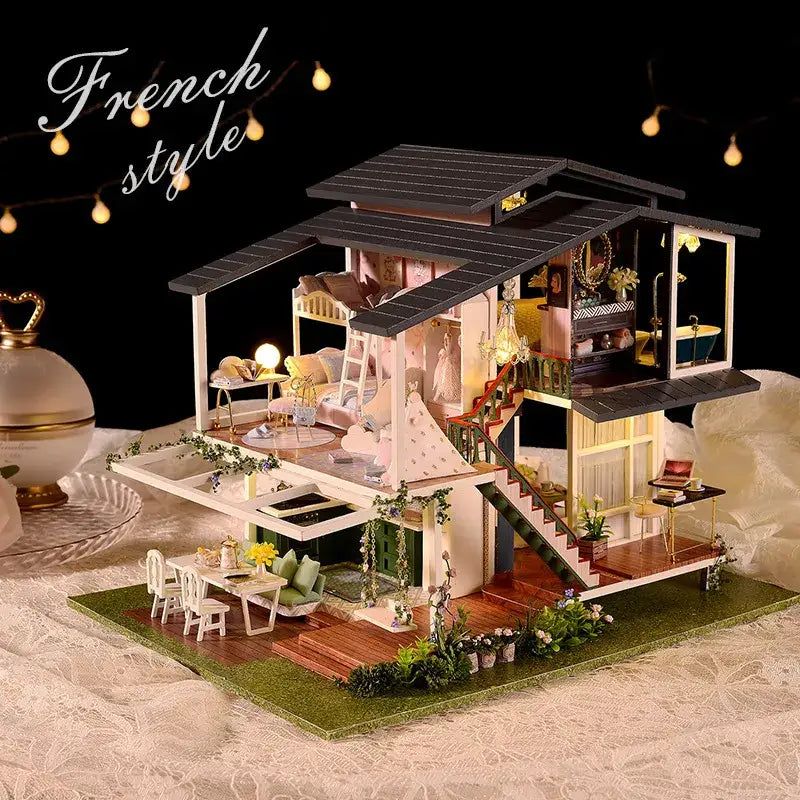
Premium collector piece
Monet’s Garden DIY Miniature House Kit
$155.00
An impressionist garden scene with working LED lighting, hand-painted foliage details, and a complexity level that makes experienced builders genuinely lean forward. This is the kit people photograph and frame.
Frequently Asked Questions about Miniature Houses and Dollhouses
Everything you might be wondering (click a question to expand).
Can I mix 1:12 and 1:24 furniture in the same build?
Technically you can, but it breaks the visual logic of the scene. A 1:24 sofa next to a 1:12 armchair will look noticeably off to any experienced eye. Within a single room or house, stick to one scale consistently. Mixing scales intentionally for artistic effect is a more advanced technique that works best when the entire piece is framed as an art installation rather than a realistic miniature scene.
What does “what’s included” typically look like in a kit at each scale?
Most quality beginner kits at both scales include pre-cut wooden panels or MDF pieces, basic hardware (hinges, tiny nails or mini screws), a glue sachet or small bottle, and printed instructions. Some include basic paint and a small brush. They rarely include furniture, which is sold separately. Always check the product listing carefully for what ships in the box versus what is shown styled in the photos.
Is 1:24 scale called something other than “half-inch scale”?
Yes. You will also see it called “half scale” or “1/24 scale” (written as a fraction rather than a ratio). In older British catalogs it sometimes appears as “half-inch to the foot.” All three terms refer to the same proportion. If a listing says “half scale” without further detail, it almost always means 1:24.
How long does a typical miniature house kit take to complete?
A simple 1:12 room box takes most beginners 6 to 12 hours. A full two-story 1:12 dollhouse with furnished interiors can take 40 to 80 hours spread over several weeks. A small 1:24 house structure builds faster (4 to 8 hours for the shell), but detailed interior work pushes the total up significantly. Most crafters build in one to two hour sessions, which is part of why the hobby feels so sustainable alongside a busy schedule.
Are there scales beyond 1:12 and 1:24?
Yes. The 1:48 scale (quarter-inch scale) exists for extreme miniaturists and is genuinely a specialist discipline requiring professional tools. On the larger end, 1:6 scale (sometimes called “fashion doll scale”) matches proportions for 12-inch fashion dolls. For most crafters, 1:12 and 1:24 cover the full range of practical hobby building.
Do I need any special tools to get started?
For a beginner 1:12 kit, your hands, the included glue, and a toothpick for applying glue precisely are genuinely all you need. A small craft knife helps for trimming, but most pre-cut kits do not require it. For 1:24, add a pair of fine-tipped tweezers and a magnifying glass or craft loupe to your kit before you start. You will use both on almost every session. Our beginner’s guide has a full recommended tools list that costs under $15 to assemble.
Picking Your Scale and Starting Your First Build
If you are a first-time builder, start with a 1:12 dollhouse kit: the learning curve is gentler, the pieces are easier to handle, and finishing your first build successfully gives you the confidence to try any scale next. Neither scale is objectively better. They reward different things. The 1:12 dollhouse rewards accessibility, visual impact, and a generous build experience where your hands can work freely. The 1:24 miniature house kit rewards precision, spatial efficiency, and the particular satisfaction of creating something intricate in a very small space.
If you are a first-time builder: start with 1:12. The learning curve is gentler, and finishing a build successfully will give you the confidence to try anything else. If you have already built in 1:12 and want a new challenge that fits on one shelf, 1:24 will keep you absorbed for months.
If you are shopping for someone else: think about their space first, their patience second, their budget third. A kit that fits their life is the one they will actually finish. And finishing a miniature house build, watching a tiny world take shape from flat wooden panels, is one of the most satisfying craft experiences available at any price point. It is why people who finish one almost always start looking for their next one before the glue is fully dry.
Ready to pick your first (or next) project? Our miniature house kits collection has beginner-friendly and advanced options at both scales, with clear labels on difficulty, what’s included, and estimated build time. Your next build is waiting. ✨