🎁 Buy 2 kits, get the 3rd FREE · Free shipping on every order

Wooden vs Metal Model Kits for Adults: Which Material Fits Your Build?
A practical, hands-on comparison of wooden and metal model kits for adult hobbyists. Covers material feel, longevity, finishing options, difficulty levels, and which kit type works best for different builders and gifting situations.

Two Materials, Two Completely Different Experiences
Pick up a sheet of laser-cut basswood and a sheet of die-cut steel side by side, and you feel the difference before you build a single piece. One is warm, slightly textured, faintly scented. The other is cool, rigid, almost clinical. That sensory gap sets the tone for everything that follows. Wooden vs metal model kits for adults is not just a materials question. It is a question about the kind of builder you are and the kind of object you want sitting on your shelf when the build is done.
Both formats have grown dramatically in quality since the early 2020s. Laser-cutting technology pushed wooden kits into extraordinary detail, while precision die-cutting brought metal kits to a level where tolerances rival professional engineering components. The hobby has never offered more variety, and that variety can be genuinely confusing. This breakdown sorts through the real differences so you can pick with confidence, whether you are building for yourself or choosing a gift.
A quick personal note: the store you are browsing grew out of one rainy Sunday with a single Victorian dollhouse kit and a lot of curiosity. That first build taught me that the material is not incidental. It shapes your posture, your pace, and the feeling you are left with at the end. I have been thinking about that difference ever since, and what follows is the honest version of what I have learned.
Material Feel and the Build Experience
What wooden kits actually feel like to assemble
Wood is forgiving in the best possible way. Laser-cut pieces fit together with a satisfying snap, but if a tab is slightly off, a bit of sanding brings it into line quickly. The process feels meditative in a way that is hard to replicate with other materials. There is something about the grain running through a tiny door frame or a miniature staircase that makes each piece feel genuinely handmade, even though a CNC laser did the cutting.
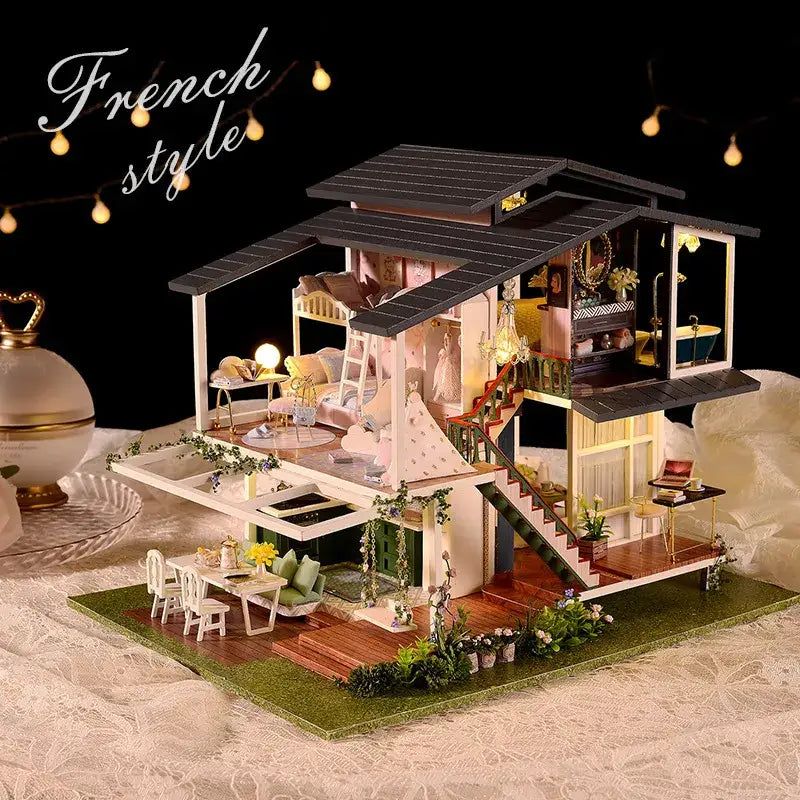
Bestseller cottage kit
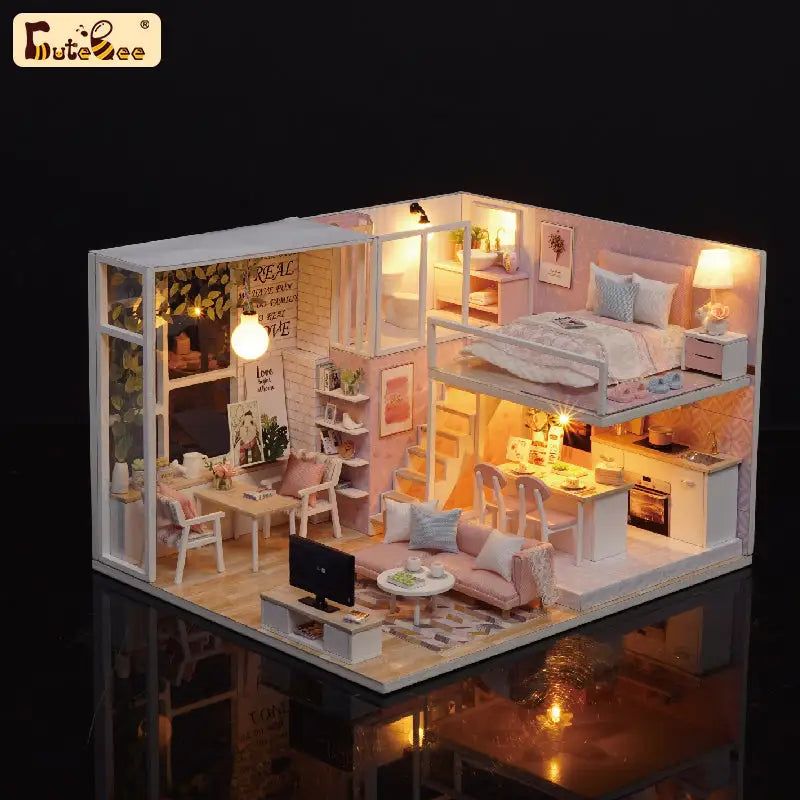
Tranquil Life DIY Miniature House Kit
Birch plywood panels, 180 pieces, LED lighting included. One of our most-loved slow builds for a reason.
$67.90
Basswood and birch plywood are the two most common species used in quality kits. Basswood is softer, lighter, and easier to cut or modify. Birch plywood is denser, holds fine detail better, and takes paint more evenly. Most of our miniature house kits use precision-cut birch plywood panels between 1.5 mm and 3 mm thick, which keeps the builds lightweight without sacrificing structural rigidity.
Assembly pace is slower and more contemplative. You are gluing, clamping, waiting. That wait time is not dead time. Many builders use it to dry-fit the next section, plan their paint scheme, or simply sit with the project. It rewards patience rather than speed. Community members consistently describe completing a wooden kit as one of the most genuinely relaxing evenings they have had in months. That is not an accident of circumstance. It is built into the material itself.
What metal kits actually feel like to assemble
Metal kits operate on a completely different logic. Most modern steel and brass kits use no glue at all. Pieces interlock through friction tabs, and the satisfying click of a well-engineered tab locking into its slot is genuinely addictive. The process feels precise and almost mechanical. You are solving a three-dimensional puzzle as much as you are building a model.
That precision cuts both ways. Metal is unforgiving of misalignment. If two tabs lock in the wrong order, disassembly can scratch the finish or bend a tab permanently. The margin for error is smaller, and for some builders that tension is exciting. For others, it is stressful. Honestly assessing which camp you fall into will save you frustration.
Metal kits also require better lighting and often a magnifying glass. Fine steel tabs on a dark brushed-metal panel disappear fast under poor light. If your workspace is not well-lit, budget for a daylight lamp before you open the box.
✨ Hannah’s tip
Before you push any metal tab home permanently, dry-fit the entire section first. Metal has almost no give, so discovering a sequencing error after the fact costs you either a scratched surface or a bent tab. I keep a soft silicone mat on my bench and always dry-fit two or three steps ahead. Fifteen minutes of preview work prevents an hour of frustration.
Before you push any metal tab home permanently, dry-fit the entire section first. Metal has almost no give, so discovering a sequencing error after the fact costs you either a scratched surface or a bent tab. I keep a soft silicone mat on my bench and always dry-fit two or three steps ahead. Fifteen minutes of preview work prevents an hour of frustration.
Side-by-side: wooden vs metal at a glance
If you are trying to make a quick decision, this comparison covers the factors that matter most to most builders. Every row reflects real differences that affect how the build feels, not just how it looks on a shelf.
| Factor | Wooden kits | Metal kits |
|---|---|---|
| Assembly feel | Meditative, glue-based, forgiving | Precision puzzle, tab-lock, no glue |
| Error tolerance | High (sand, refit, reglue) | Low (bent tabs are permanent) |
| Finishing options | Paint, stain, wash, varnish, wallpaper | Etching primer + spray; limited hand-painting |
| Humidity sensitivity | Moderate (seal to protect) | Very low (steel is stable) |
| Display weight | Light | 3x to 5x heavier for same footprint |
| Best aesthetic | Domestic, cottagecore, Victorian, botanical | Mechanical, steampunk, architectural |
| Beginner friendliness | High | Moderate to low |
| Typical price range | $30 to $160+ | $25 to $120+ |
Longevity, Durability, and Display Life
Durability is genuinely nuanced here, because the word means different things depending on context. Structural durability, finish durability, and climate durability each point in a different direction.
How wood holds up over years
An unfinished wood build is vulnerable to humidity. If you live somewhere with significant seasonal humidity swings, wood can expand and contract enough to stress glue joints over several years. The fix is straightforward: seal your build. A coat of matte or satin varnish locks the moisture out and extends the lifespan of a wooden kit from years to decades. Many builders go further and apply a thin acrylic gesso before painting, which adds another sealing layer and improves paint adhesion dramatically.
With proper sealing, a well-built wooden miniature house can last generations. We have community members who built kits in the early 2010s that still look display-ready today. The key variables are: quality of the wood (birch holds better than MDF), quality of the glue (PVA over super glue for structural joints), and whether the piece was sealed after completion.
🪵 Finishing tip for longevity
Apply varnish in two thin coats rather than one thick coat. A thick coat traps moisture underneath and can bubble over time. Thin coats dry faster and bond better to the wood fiber. Water-based matte varnish works on most birch plywood kits without yellowing the lighter wood tones.
Apply varnish in two thin coats rather than one thick coat. A thick coat traps moisture underneath and can bubble over time. Thin coats dry faster and bond better to the wood fiber. Water-based matte varnish works on most birch plywood kits without yellowing the lighter wood tones.
How metal holds up over years
Stainless steel kits are essentially immune to humidity. They will not warp, swell, or contract. That is a real advantage in coastal or tropical climates where wood builds need careful maintenance. The structural integrity of a friction-tab metal build is also very high once fully assembled. The interlocked tabs distribute stress across multiple contact points rather than relying on a single glue joint.
The vulnerability of metal builds is finish, not structure. Brushed steel scratches. Chrome-effect panels show fingerprints. If your display shelf is in a high-traffic area or you plan to handle the finished model regularly, a metal build will show wear faster than a sealed and painted wooden one. Bare steel also oxidizes slowly in humid environments, though this is rarely a problem indoors and can actually add a pleasant patina over time.
Weight is the other practical factor. A comparable-size metal kit typically weighs three to five times more than a wooden one. That matters for display shelving, shipping if you are gifting it, and portability if you travel with your hobby.
📜 Did you know?
The tradition of intricate wooden architectural models dates back to ancient Egypt. Archaeologists found detailed wooden models of granaries, boats, and houses in tombs from around 2000 BCE, intended to accompany the deceased into the afterlife. The appeal of miniature wooden construction is, quite literally, thousands of years old.
The tradition of intricate wooden architectural models dates back to ancient Egypt. Archaeologists found detailed wooden models of granaries, boats, and houses in tombs from around 2000 BCE, intended to accompany the deceased into the afterlife. The appeal of miniature wooden construction is, quite literally, thousands of years old.
Finishing Options: Where Wood Wins Big
If you love the painting and decorating side of the hobby, wood is the clear winner. Birch plywood accepts watercolor, acrylic paint, oil-based stain, chalk paint, and ink washes without fuss. You can achieve a rustic farmhouse look, a crisp painted Victorian aesthetic, or a natural Scandinavian finish on the exact same base material. The surface texture of the wood grain adds depth to washes and *dry-brushing* that you simply cannot replicate on a smooth metal surface.
Metal kits typically arrive pre-finished or with a single surface treatment. Some come raw brushed steel, some come with a brass or copper tone applied. Customization beyond that requires etching primer and metallic spray paint, which is a different skill set. Builders who love painting miniature furniture and tiny textiles, the kind of deeply satisfying detail work you find throughout our full collection of miniature house kits, will find wood far more rewarding as a canvas.
That said, metal kits have a particular aesthetic advantage in one niche: mechanical and steampunk models. A brass-toned steel gear assembly simply cannot be convincingly faked in wood. The cool luster of the metal IS the design. For those builds, finishing is not really the point. The raw material is already the visual statement.
🎨 Finishing checklist for wooden kits
- Sand all exterior panels lightly with 220-grit before painting
- Apply one coat of acrylic gesso if using watercolor or chalk paint
- Use a fine liner brush (size 0 or 00) for window frames and door details
- Seal with two thin coats of water-based matte varnish when fully dry
- Let the final coat cure for 48 hours before displaying in an enclosed case
Two of our wooden kits that showcase just how far birch plywood finishing can go are the Tranquil Life and the Monet’s Garden build. The Tranquil Life has large flat wall panels that are ideal for first-time hand-painting experiments. The Monet’s Garden goes further with a garden facade that rewards careful layering of greens and ochres to build up a botanical depth you genuinely have to see in person to believe. Both are wooden vs metal model kits for adults comparisons in physical form: every detail on those builds is a product of wood’s receptiveness to paint, not a pre-applied factory finish.
Perfect finishing canvas
Tranquil Life DIY Miniature House Kit
Large flat birch plywood panels take acrylic, watercolor, and chalk paint beautifully. Ideal for builders who love the painting side as much as the assembly.
$67.90
Difficulty Ratings and Who Each Kit Suits
Beginner-friendly options in both materials
Entry-level wooden kits, typically rated 1 or 2 out of 5 in difficulty, are some of the most accessible hobby objects you can buy. Parts counts range from around 30 to 80 pieces. Glue is included or PVA craft glue from any hardware store works fine. No special tools are required beyond a pair of tweezers and a toothpick for glue application. A motivated beginner finishes a starter kit in three to five hours across one or two sessions.
Entry-level metal kits are harder to recommend to complete beginners. Even simple designs involve 60 to 120 interlocking tabs, and the sequencing can be unforgiving. The lack of glue means there is no room for repositioning. If you are buying a metal kit as a first build or as a gift for someone new to the hobby, look specifically for kits labeled “Level 1” by the manufacturer and check that the instruction diagrams include exploded-view step photos rather than just line drawings.
The Sun Room kit at $49.99 is the wooden kit we most often recommend as a genuine first build. It has a manageable piece count, generous assembly tolerances, and a finished result that looks polished on any shelf. Community members frequently message us to say it was their gateway build into a much longer-running hobby. That is exactly what a good beginner kit should do.
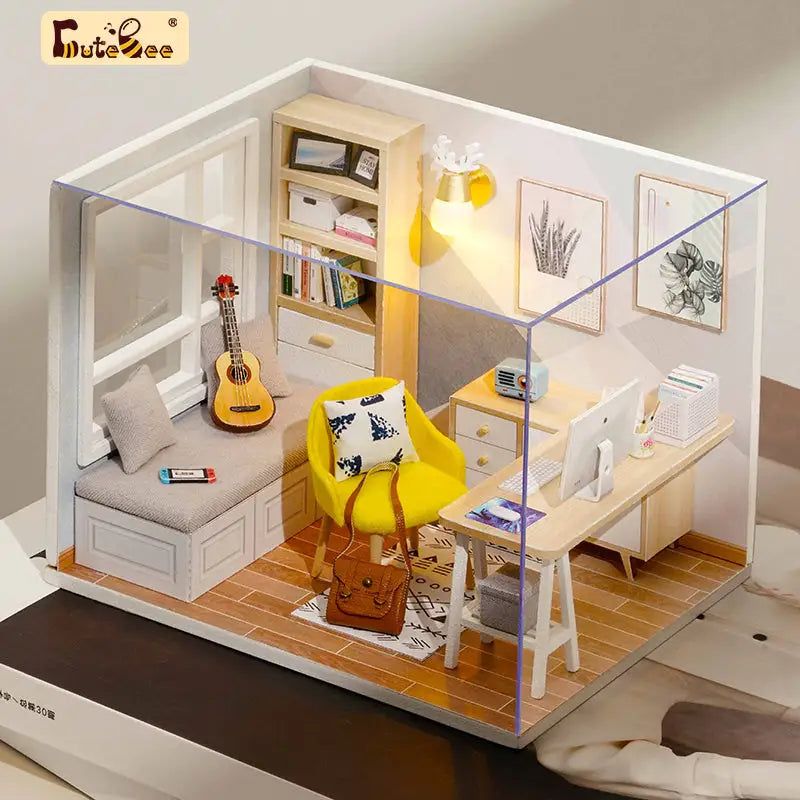
Best first wooden build
Sun Room DIY Miniature House Kit
Generous tolerances, 3 to 5 hour build time, everything included. The kit we recommend most often to first-time builders.
$49.99
Advanced builds: where each material shines
Advanced wooden kits, rated 4 or 5 out of 5, can include over 500 individual pieces, integrated lighting systems, hand-sewn fabric elements, and furniture you assemble at a true 1:12 miniature scale. The best wooden miniature house kits for advanced builders reward dozens of hours of focused work and produce display pieces that genuinely look like architectural models. The complexity is additive: each finished room adds to the whole.
Advanced metal kits go in a different direction. The complexity is mechanical rather than decorative. A high-difficulty metal kit might include moving gears, rotating mechanisms, or functional articulation. The satisfaction is engineering-oriented. You are not decorating; you are making something that actually moves. Both are legitimate peaks of their respective materials, and they appeal to fundamentally different creative temperaments.
Looking for a challenging wooden miniature house kit with furniture, lighting, and full interior detail? The builds in our Victorian and Cottage lines are a reliable next step if you have already completed one or two starter kits and want to commit to a longer project. Our book nook kits also offer a compelling middle ground: architecturally detailed, wood-based builds that fit on a shelf between actual books and take 8 to 20 hours to complete.

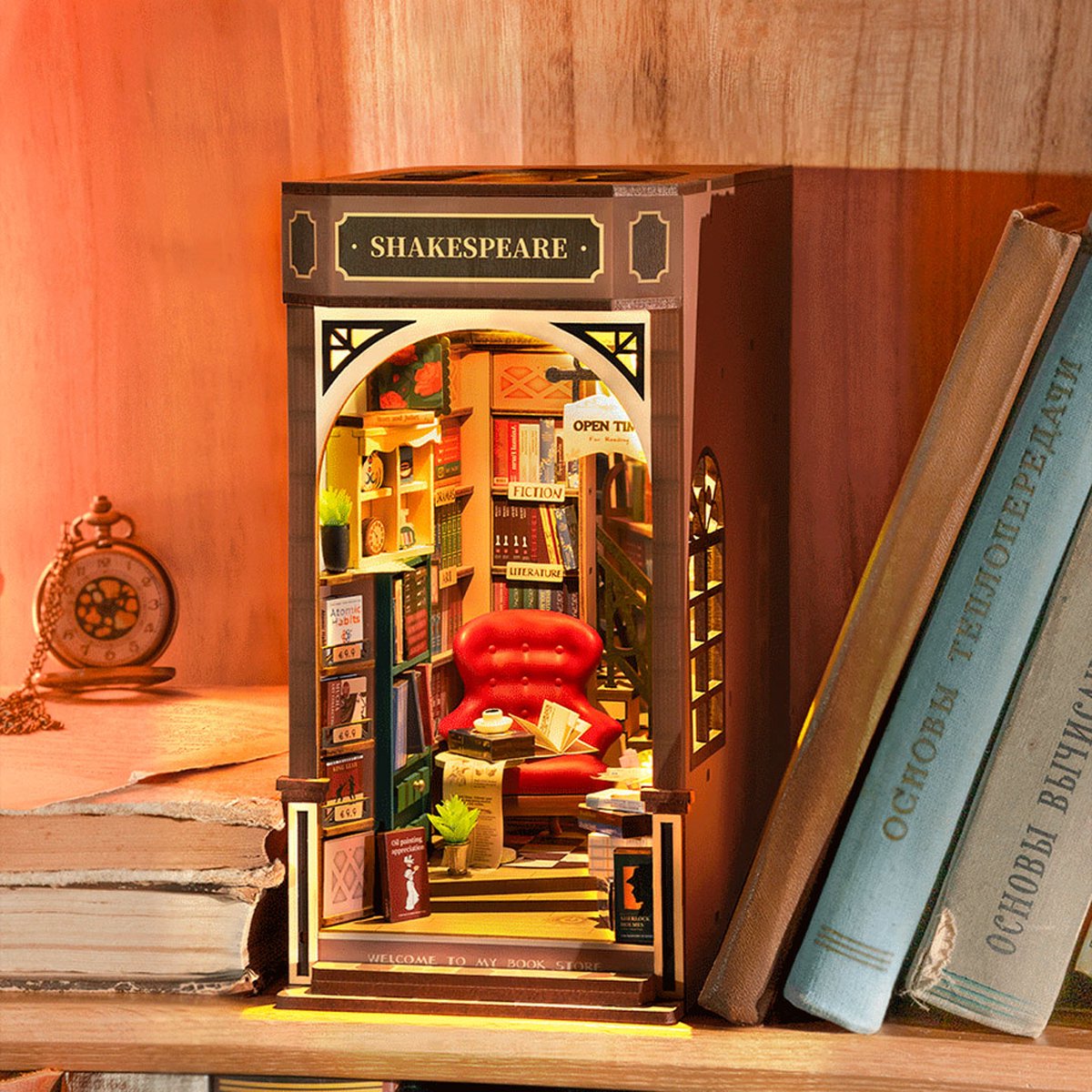
Wooden builds with architectural depth
All Book Nook Kits
76 handcrafted book nook kits. A great step up from starter builds for anyone who loves the wood finishing process and wants something that lives on their bookshelf.
Premium collector piece
Monet’s Garden DIY Miniature House Kit
500+ pieces. Integrated LED lighting. Hand-painted garden facade. The advanced build that lives on display forever.
$155.00
Frequently Asked Questions about Wooden vs Metal Model Kits for Adults
Everything you might be wondering (click a question to expand).
Which is better for a gift: a wooden or metal model kit?
For most gift situations, wooden kits win on accessibility. They suit a wider age range and skill level, the finished object tends to feel more personal and decorative, and they pair naturally with a cozy building session at home. Metal kits make excellent gifts for engineers, architects, or hobbyists who have already built wooden kits and are looking for a new challenge. If in doubt, a wooden starter kit in the $40 to $70 range is almost universally well-received.
Do wooden model kits require special glue?
Most wooden model kits are designed to work with standard PVA craft glue, which is widely available and inexpensive. PVA dries clear, gives you a minute or two of working time for repositioning, and creates a bond that is actually stronger than the wood fibers in most cases. Super glue works but dries too fast for complex joints, and it can stain or cloud the wood surface if it runs. Stick with PVA for structural joints and use super glue only for tiny decorative elements that need an instant bond.
Can metal model kits be painted or customized?
Yes, but it requires preparation. Raw steel and brass surfaces need an etching primer before any paint will adhere properly. Rattle-can etching primer followed by metallic or enamel spray paint gives decent results. Brush-painting metal models is much harder than brush-painting wood because the surface has no absorption. If customization and hand-painting are central to why you enjoy model building, a wooden kit will be significantly more satisfying.
How long does it take to build an average adult model kit?
Beginner-level wooden kits run three to six hours. Mid-range kits with furniture and wallpaper elements typically take eight to fifteen hours spread across several sessions. Large architectural wooden kits can run forty hours or more. Metal kits are generally faster because there is no drying time between steps. A mid-size metal kit of around 150 pieces might take four to eight hours for an experienced builder.
Are wooden model kits more fragile than metal ones once finished?
A properly sealed and varnished wooden build is more resilient than most people expect. It will not survive being knocked off a shelf the way a solid metal object might, but for a display piece in a stable environment, durability is rarely a concern. Metal kits have a structural advantage in high-traffic or handling-heavy situations. If the finished model will be handled regularly by children or moved frequently, a metal build’s interlocked structure holds up better over time.
What is the main philosophical difference between wooden and metal kit building?
Wooden kit building is, at its core, a decorative and narrative craft. You are creating a small world with atmosphere, color, and story. The process slows you down on purpose, and the finished object invites you to imagine who lives there. Metal kit building is an engineering craft. The satisfaction comes from precision, mechanism, and the feeling of having solved a three-dimensional puzzle. Both are completely legitimate reasons to build. Knowing which one resonates with you more is probably the single most useful thing you can do before choosing a wooden vs metal model kit for adults.
Picking the Right Kit Starts With Knowing Your Own Building Style
The honest answer to “which is better” is that neither material is universally superior. Wooden vs metal model kits for adults is ultimately a question about your creative temperament. Wooden kits offer more finishing freedom, a warmer aesthetic, and a more forgiving build process that many hobbyists find genuinely meditative. Metal kits offer structural permanence, a precise mechanical puzzle feel, and a finish that requires zero maintenance once the tabs are locked.
Most serious hobbyists end up building both. A wooden miniature house for the long project that fills a shelf with color and character. A metal mechanical piece for the sharp, satisfying weekend build. The two formats complement each other rather than compete. My own shelves have both, and they do not look at odds with each other at all. They just tell different stories about different kinds of afternoons.
If you are starting out or looking for your next extended project, the miniature house kits collection covers beginner, intermediate, and advanced wooden builds with everything you need to finish included in the box. Each kit lists its piece count, estimated build time, and difficulty rating clearly, so you can match the project to your schedule and your current skill level. Start where you actually are, not where you think you should be. The builds get more rewarding the more comfortable you become with the process. And if you want a curated shortcut, the best sellers page reflects what our community reaches for first, across every skill level and budget.