🎁 Buy 2 kits, get the 3rd FREE · Free shipping on every order

1:12 vs 1:24 vs 1:48 Scale Miniatures: Which Size Is Right for You?
A complete scale comparison for new hobbyists: 1:12, 1:24, and 1:48 miniatures explained side by side. Covers display footprint, difficulty, cost, and which scale suits different crafters and gift buyers.

The Scale Question Every New Miniaturist Faces
Every new miniaturist hits this wall: scale numbers feel abstract until you understand that they directly control the finished size, the build difficulty, the accessory market, and how far your budget stretches across the whole project. You found a kit you love. Then you noticed the scale listed in the description and felt that small, familiar panic: does 1:12 mean bigger or smaller? Will it fit on my shelf? Is 1:48 too fiddly for a first project? These are genuinely good questions, and the answers change everything about your experience. Scale determines how big your finished piece is, how much detail you can add, how long it takes to build, and how much your budget stretches.
I remember staring at that exact problem on a rainy Sunday in 2021 with my first Victorian dollhouse kit spread across the kitchen table. The kit listed “1:12” and I had absolutely no frame of reference. A quick internet search returned pages of hobbyist forum debates but very little concrete, practical information. That gap is exactly why this guide exists.
Comparing 1:12 vs 1:24 vs 1:48 scale miniatures is the single most useful thing a new hobbyist can do before buying. So let’s get concrete, with real numbers, real display sizes, and honest notes on difficulty.
How Miniature Scale Actually Works
A miniature scale ratio tells you exactly how many real-world inches one model inch represents: 1:12 means one inch equals one foot, 1:24 means one inch equals two feet, and 1:48 means one inch equals four feet, the higher the second number, the smaller everything gets. A scale ratio tells you how many real-world inches are represented by one inch in the model. At 1:12, one inch in the miniature equals 12 inches (one foot) in reality. At 1:24, one inch equals 24 real inches (two feet). At 1:48, one inch equals 48 real inches (four feet). The higher the second number, the smaller the miniature.
Here is a quick way to visualize it. A standard interior door stands 80 inches tall in real life.
- At 1:12 scale, that door measures about 6.7 inches tall in your miniature.
- At 1:24 scale, the same door comes out to roughly 3.3 inches.
- At 1:48 scale, it shrinks to just 1.7 inches.
Same logic applies to furniture, people, windows, and every accessory you place inside. The scale governs the whole world you are building. That is not just a technical fact; it is the thing that makes the hobby feel genuinely immersive. You are not just gluing wood together. You are establishing the laws of physics for a miniature universe.
The Common Names You Will See on Product Listings
Hobbyists and kit makers use shorthand names you should recognize before browsing any collection:
- 1:12 = “standard scale” or “one-inch scale.” The most common by far.
- 1:24 = “half scale.” Each element is half the size of its 1:12 counterpart.
- 1:48 = “quarter scale.” Everything is a quarter of the 1:12 size. Sometimes called “dollhouse scale” in antique collecting circles, though that term is not universal.
Getting these names firmly in your head makes browsing product listings much less confusing. When a listing says “half scale sofa” you will know immediately whether it belongs in the build you are planning.
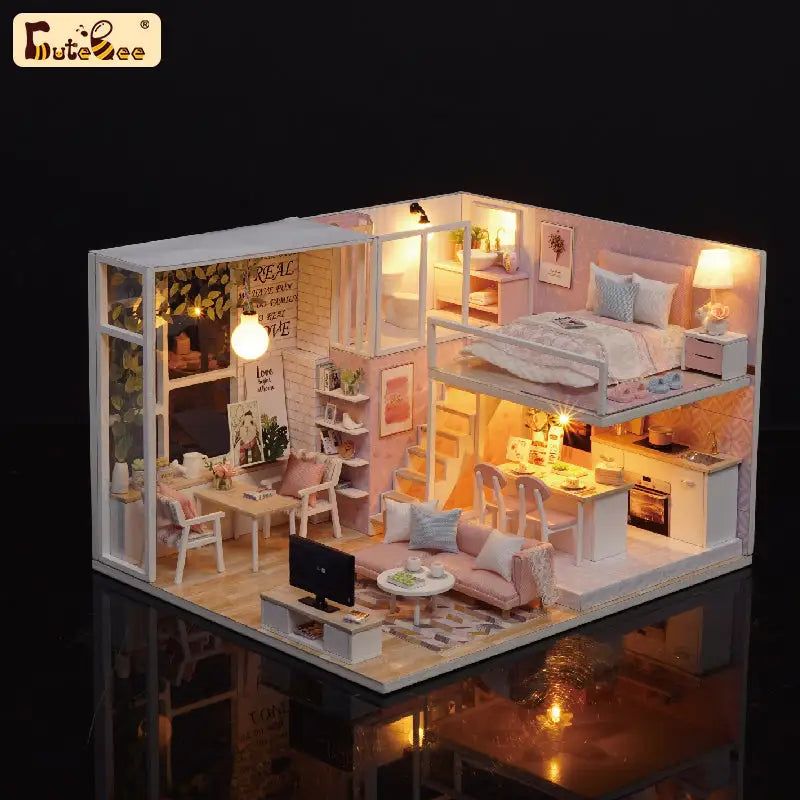
Bestseller 1:12 cottage kit
Tranquil Life DIY Miniature House Kit
Built at standard 1:12 scale. All materials included, clear step-by-step instructions, and pre-cut wooden parts that fit together without specialist tools. A perfect first build.
$67.90
You may also see 1:6, 1:16, or 1:144 in specialty shops, but 1:12 vs 1:24 vs 1:48 scale miniatures cover the vast majority of kits, furniture sets, and accessories on the market today.
📜 Did you know?
The 1:12 standard scale gained traction in the United States during the late 1970s when the National Association of Miniature Enthusiasts (NAME), founded in 1972, promoted it as a universal hobby standard. Before that, scales varied wildly from maker to maker, making it nearly impossible to mix furniture from different brands. That standardization is a big reason why 1:12 accessories are so widely available today.
The 1:12 standard scale gained traction in the United States during the late 1970s when the National Association of Miniature Enthusiasts (NAME), founded in 1972, promoted it as a universal hobby standard. Before that, scales varied wildly from maker to maker, making it nearly impossible to mix furniture from different brands. That standardization is a big reason why 1:12 accessories are so widely available today.
Display Footprint: What Each Scale Actually Takes Up
Shelf space is one of the most overlooked factors when choosing a miniature scale: a typical six-room 1:12 dollhouse needs dedicated furniture or a large shelf, a 1:24 build fits on a standard bookshelf section, and a 1:48 scene sits inside a shadow box or on a windowsill. Shelf space is real. This is one of the most overlooked practical factors when choosing a scale, especially if you live in an apartment or want to display multiple projects. One community member told us she keeps five 1:24 builds on a single IKEA Billy shelf alongside her book collection. The same five builds at 1:12 would need a dedicated room corner.
The table below shows approximate finished dimensions for a typical six-room two-story dollhouse kit at each scale. Actual kits vary, but these figures reflect common kit sizes sold in 2026.
| Scale | Typical Width | Typical Height | Typical Depth | Shelf Space Needed |
|---|---|---|---|---|
| 1:12 | 24 – 36 in | 18 – 26 in | 12 – 16 in | Dedicated furniture or large shelf |
| 1:24 | 12 – 18 in | 9 – 13 in | 6 – 8 in | Standard bookshelf section |
| 1:48 | 6 – 10 in | 4 – 7 in | 3 – 5 in | Shadow box, glass cabinet, or windowsill |
For collectors who build multiple houses, 1:24 and 1:48 are obvious winners. A 1:12 Victorian mansion can dominate an entire room. That is either a dream or a logistical headache, depending on your living situation. The good news: there is no wrong answer here, only the answer that works for your actual home and your actual shelves.
Difficulty, Detail, and Who Each Scale Suits Best
The smaller the scale, the higher the precision required: every time you halve the scale you roughly double the challenge, making 1:12 the clear choice for beginners, 1:24 a solid intermediate step, and 1:48 best suited to experienced crafters who are comfortable with fine detail work. Scale is not just about size. It directly shapes how challenging the build is, how fine your finishing work needs to be, and what tools you will reach for most often. Think of it this way: every time you halve the scale, you roughly double the precision required. That is not meant to intimidate; it is just useful to know before you commit.
1:12 Scale: The Best Starting Point
Most craft educators recommend 1:12 for first-time builders, and the reasoning is solid. The pieces are large enough to handle without tweezers for most assembly steps. Wallpaper, flooring sheets, and fabric fit standard cutting tools. Mistakes are easier to correct because you have more surface area to work with.
- Difficulty rating: Beginner to Intermediate
- Accessories are abundantly available and affordable.
- Furniture kits often include pre-cut parts that snap or glue together with basic craft glue.
- Painting windows, adding tiny curtains, or dry-brushing wood floors is all doable with standard brushes.
- Great for crafters who want a meditative building session they can return to nightly.
✨ Hannah’s tip: why 1:12 feels so satisfying
At standard scale you can actually see what you are doing without straining. You can brush on a coat of chalk paint, step back, and immediately feel the room come alive. That visual feedback loop, where your effort is rewarded in real time, is what makes 1:12 the most popular scale for people who use craft as a genuine wind-down ritual. I still build at 1:12 most evenings because the payoff-per-hour is unbeatable.
At standard scale you can actually see what you are doing without straining. You can brush on a coat of chalk paint, step back, and immediately feel the room come alive. That visual feedback loop, where your effort is rewarded in real time, is what makes 1:12 the most popular scale for people who use craft as a genuine wind-down ritual. I still build at 1:12 most evenings because the payoff-per-hour is unbeatable.
The trade-off: 1:12 kits take up real space, and a fully furnished house can become a long-term commitment of weeks or months. For many people, that is exactly the point. The slow, satisfying process of watching a house come to life room by room is where the real joy lives. There is something genuinely meditative about returning to the same small world every evening and finding it a little more complete than you left it.
Browse our full range of miniature house kits if you want to see the variety available at this scale, from tiny room boxes to full multi-story builds.
1:24 Half-Scale: The Sweet Spot for Space-Conscious Crafters
Half-scale hits a genuinely satisfying middle ground. The finished pieces are compact enough to fit on a bookshelf, but large enough that most adults can still work with their fingers rather than specialized tools for most tasks.
- Difficulty rating: Intermediate
- Furniture pieces are smaller and require more precision during assembly.
- Fabric work (curtains, upholstery) needs finer cutting and thinner materials.
- Wallpaper and flooring patterns must be scaled down, or the pattern will look oversized.
- Ideal for crafters who have finished at least one 1:12 project and want a new challenge.
One thing the community keeps telling us: 1:24 is where people start photographing their builds obsessively. There is something about the compact perfection of a half-scale room that photographs beautifully. If you share your projects on social media or want a gift that photographs well, this scale delivers. One subscriber wrote in to say her half-scale bakery scene gets more engagement on Instagram than any other creative project she has posted; the whole thing sits inside a 14-inch frame on her wall.
The meditative quality is different at half-scale compared to 1:12. Builds tend to move faster because the rooms are smaller, which creates a satisfying rhythm: finish one room, step back, admire it, move on. If you find very long multi-month projects hard to sustain, 1:24 may suit your creative energy better.
1:48 Quarter-Scale: Tiny, Intricate, Addictive
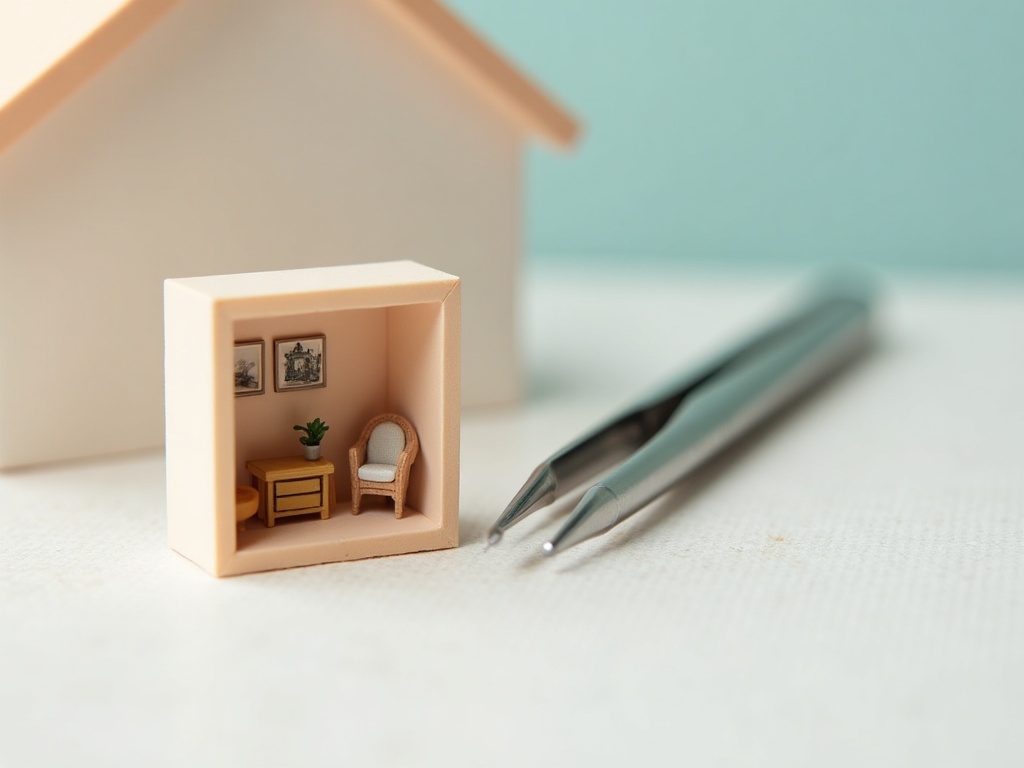
Quarter-scale miniatures are not for the faint-hearted, but they are absolutely magnetic once you fall in. An entire furnished room fits inside a shadow box frame you can hang on the wall. A full house fits in a shoebox. The trade-off is that every single element requires precision tools, steady hands, and real patience.
- Difficulty rating: Advanced
- Tweezers, micro paintbrushes, and magnification are standard kit.
- Furniture pieces may be less than half an inch tall.
- Pre-made accessories at this scale are harder to source; many crafters make their own.
- Best suited to experienced miniaturists or hobbyists with a fine-detail background (jewelry, watch repair, model railways).
That said, several of our community members started at 1:48 with a single room box kit and never looked back. If small-scale precision work feels meditative to you rather than frustrating, quarter-scale might be your natural home. One builder we know, a retired watchmaker, said it was the only craft that gave him the same focused calm he felt at the repair bench for 30 years. The scale suits a particular kind of mind: one that finds the challenge of extreme smallness genuinely restful rather than stressful.
✨ Hannah’s tip: test yourself before you buy
Before committing to 1:48, try this at home: pick up a single uncooked grain of rice with tweezers and place it precisely on a small dot drawn on paper. If that feels satisfying rather than maddening, quarter-scale is probably your scale. If it makes you want to throw the tweezers across the room, start at 1:12 and work your way down. No shame in that path whatsoever. I took two years at 1:12 before I attempted my first 1:48 room box, and I am glad I waited.
Before committing to 1:48, try this at home: pick up a single uncooked grain of rice with tweezers and place it precisely on a small dot drawn on paper. If that feels satisfying rather than maddening, quarter-scale is probably your scale. If it makes you want to throw the tweezers across the room, start at 1:12 and work your way down. No shame in that path whatsoever. I took two years at 1:12 before I attempted my first 1:48 room box, and I am glad I waited.
Cost Comparison Across the Three Scales
Smaller scale does not automatically mean cheaper: while 1:48 kit prices start lower, specialty tools and hard-to-source accessories can push total costs higher than a 1:12 build, where abundant competition keeps accessory prices reasonable. Scale affects your wallet in ways that are not always obvious upfront. Smaller is not always cheaper, especially once you factor in accessories and furnishings. Here is a clear-eyed breakdown of what each scale actually costs to build and maintain over time.
Easy 1:12 starter under $50
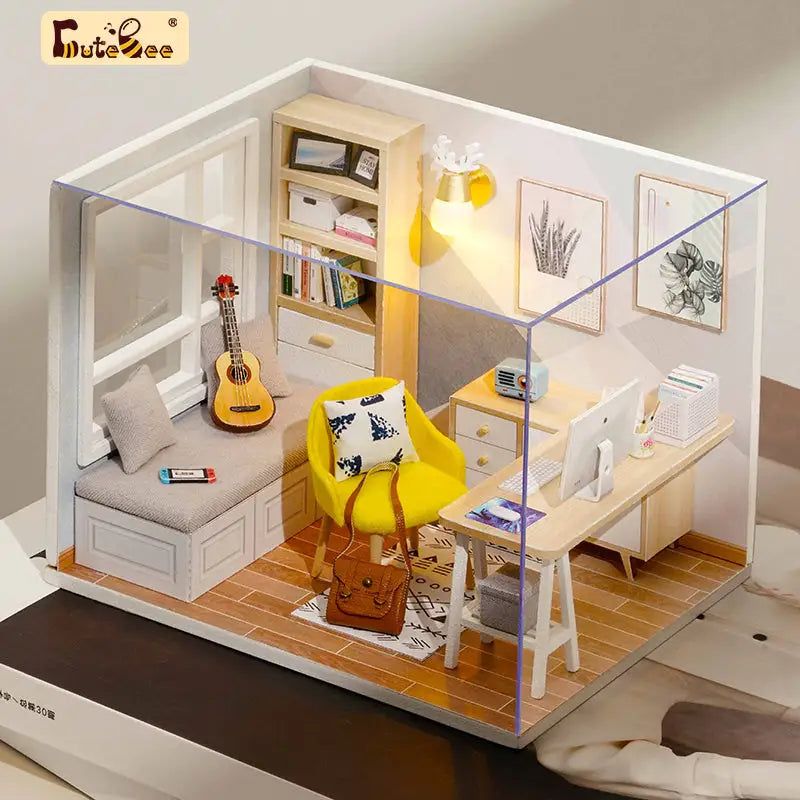
Sun Room DIY Miniature House Kit
A compact single-room 1:12 build that most people complete in one relaxed weekend. Everything included: pre-cut wood, LED lighting, furniture pieces, and detailed instructions.
$49.99
Kit Prices at Each Scale
Entry-level kits (single room or small cottage, unassembled) generally fall in these ranges in 2026:
- 1:12: $25 – $80 for a room box or small cottage kit. Full multi-room houses run $80 – $250 and above.
- 1:24: $20 – $65 for a compact single-room kit. Multi-room builds range $60 – $180.
- 1:48: $15 – $50 for a room box kit. The kit itself is cheaper, but specialty accessories add up fast.
Accessory Availability and Cost
1:12 wins this category by a wide margin. Because it is the dominant hobby scale, furniture, lighting kits, fabric, wallpaper, flooring, and decorative accessories are widely available from dozens of suppliers. Competition keeps prices reasonable, and you can often find pre-made furniture for $2 – $15 per piece. That abundance also means you can replace a piece you are not happy with without a long search.
1:24 has a solid but smaller accessory ecosystem. Expect to pay a small premium for half-scale-specific items, or spend time scaling down 1:12 patterns yourself. Many half-scale builders enjoy that extra creative layer; sourcing and adapting accessories becomes part of the hobby rather than a chore.
1:48 accessories often need to be sourced from specialty miniature suppliers or handmade entirely. Budget time, not just money. If you enjoy making every element from scratch, including rolling tiny rugs from thread or carving micro-scale chairs from balsa, that is genuinely part of the appeal at quarter-scale. If you want a well-stocked market of ready-made pieces, quarter-scale will frustrate you. It helps to think of 1:48 as a craft within a craft.
The True Cost of Each Scale Over a Year
Here is a rough picture of what a committed hobbyist typically spends across 12 months, including kit purchases and accessories, based on community feedback:
- 1:12: $200 – $600, depending on the number of builds and how extensively you decorate. The wide accessory market makes it easy to control spending or to splurge on beautiful handcrafted pieces.
- 1:24: $150 – $400. Kits cost a little less, but premium half-scale accessories can close the gap quickly.
- 1:48: $100 – $500 or more, with the upper end driven by specialty tool purchases (magnification, micro drill bits) that are a one-time investment but significant upfront.
The takeaway: no scale is dramatically more expensive than the others for a casual builder. For a serious collector, 1:12 tends to be the largest ongoing spend simply because the accessory market is so rich and tempting.
Choosing a Scale Based on Your Situation
Match the scale to your real constraints: choose 1:12 for a first gift or a long meditative build, 1:24 or 1:48 if display space is tight, and 1:48 only if you already have experience with fine-detail precision work. Not everyone comes to miniatures for the same reason. Here is a quick framework to match scale to situation.
You Are Buying a Gift
Go 1:12 for children (ages 8 and up) or for someone new to the hobby. The larger scale is more forgiving, more satisfying on a first build, and accessories are easy to find as follow-up gifts. Check our miniature house kits collection for gift-ready options with all materials included.
You Have Limited Display Space
1:24 or 1:48. A half-scale cottage fits neatly on a floating shelf. A quarter-scale scene lives inside a shadow box frame. Both make stunning wall or shelf displays without taking over a room. If you are genuinely tight on space but want a project you can display proudly, 1:48 room boxes framed on a gallery wall are one of the most visually striking things you can do with this hobby.
You Want a Long, Meditative Build Project
1:12 gives you the most hours of hands-on building per kit. A fully detailed Victorian house at standard scale can take 40 – 100 hours or more to complete, depending on how deeply you customize it. That steady, room-by-room progress is deeply satisfying for people who use crafting as a wind-down ritual. Many builders describe the daily 30-minute session at their miniature workbench as the most restorative part of their day, with the focus required to place tiny furniture pieces acting as a kind of moving meditation.
You Already Have Experience with Fine Detail Work
Try 1:24 as a stepping stone, or jump straight to 1:48 if you have a background in jewelry, watchmaking, model trains, or similar precision hobbies. The challenge of miniature detail work at quarter scale rewards patience with genuinely jaw-dropping results. A completed 1:48 room, sitting inside a shadow box frame on the wall, stops visitors in their tracks every single time.
You Want to Build a Collection Over Time
Plan your scale early. Mixing 1:12 furniture into a 1:24 house looks off immediately. Pick one scale and stick with it across a collection so rooms and buildings feel cohesive. Many collectors dedicate one shelf or display area per scale rather than mixing them. Several of our most dedicated subscribers keep a “1:12 shelf” and a “1:24 shelf” as two distinct collections, each with its own aesthetic and story.
Premium collector piece at 1:12
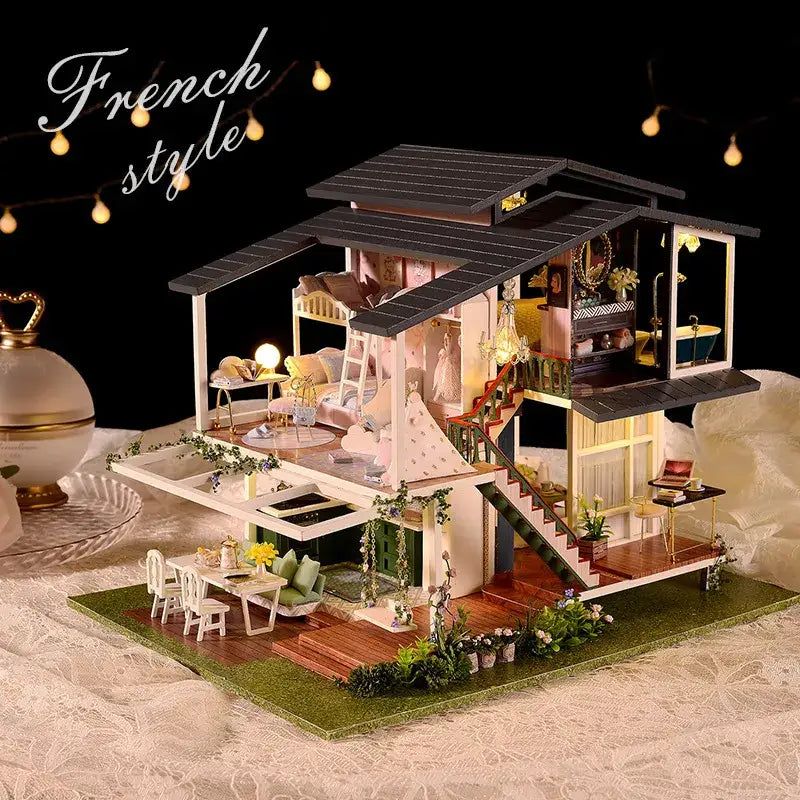
Monet’s Garden DIY Miniature House Kit
One of our most detailed and ambitious builds. Ideal for an experienced 1:12 builder ready to invest 60+ hours in something truly statement-worthy. LED lighting and 200 pieces included.
$155.00
Frequently Asked Questions about Miniature Scales
Everything you might be wondering (click a question to expand).
Can I mix 1:12 and 1:24 accessories in the same display?
Technically you can place them near each other, but furniture and architectural elements will look noticeably mismatched. A 1:12 sofa next to a 1:24 table creates an awkward size inconsistency that breaks the illusion. Keep each display to a single scale for the most convincing effect. The one exception some collectors make is intentional “perspective cheating” in deep diorama scenes, where slightly smaller pieces in the background create a sense of depth. That technique takes practice to pull off convincingly.
Which scale is best for kids?
1:12 is the clear choice for young crafters. The parts are larger and easier to handle, glue joints are more forgiving, and the wide availability of 1:12 furniture means kids can personalize their builds without hunting for specialty suppliers. Most beginner miniature house kits for beginners are designed at 1:12 for exactly this reason. We generally suggest ages 8 and up for assisted builds, and 12 and up for independent ones.
Do I need special tools for 1:48 scale miniatures?
Yes. Fine-tip tweezers are non-negotiable. A magnifying visor or lamp helps significantly. Micro paintbrushes (size 20/0 or smaller) are standard for detail painting. Many 1:48 builders also use a craft mat with grid lines to keep tiny pieces aligned during assembly. A thin, sharp craft knife and a self-healing cutting mat round out the essentials. Budget around $40 – $70 for a solid starter tool set if you are coming from 1:12 with none of these items.
Is 1:24 scale the same as H0 model train scale?
Not exactly. H0 (HO) scale for model trains is 1:87, which is much smaller than 1:24. The scale used for “G scale” garden trains is close to 1:24, which is why some miniaturists source train accessories for outdoor or large-scene builds. For dollhouse-style interiors, 1:24 is its own distinct category with dedicated furniture and accessory lines.
How long does a typical kit take to build at each scale?
Build times vary widely based on how much decorating you add, but rough estimates for a single-room kit with basic finishing: 1:12 runs 8 – 20 hours; 1:24 runs 6 – 15 hours; 1:48 runs 4 – 30 hours, with the wide range reflecting how many handmade micro-details you choose to add. Quarter-scale rooms can absorb as much time as you are willing to give them. A multi-room 1:12 house with full interior decoration and LED lighting can run 60 – 120 hours for a dedicated builder.
Which scale holds its value best if I ever sell a finished piece?
1:12 tends to have the broadest resale market simply because there are more collectors and buyers at that scale. Highly detailed 1:12 Victorian or Edwardian house builds in good condition can sell for several hundred dollars on platforms like Etsy or eBay. Exceptional 1:48 work commands a premium among specialist collectors, but the buyer pool is smaller. If you are building primarily to sell, 1:12 is the safer choice. If you are building for the love of it, sell or keep based on what makes the process most satisfying.
Start Small, Build Your Way Up (or Stay Right Where You Are)
There is no universally correct scale for miniature building: the right answer is whichever one fits your shelf, your hands, your patience level, and the kind of experience you are chasing, and most long-term hobbyists end up working happily at two scales. There is no universally correct scale. The right answer is the one that fits your shelf, your hands, your patience level, and the kind of building experience you are chasing. Most people who stay in this hobby long enough end up working at two scales: one for big, immersive projects and one for compact, frame-worthy vignettes.
If you are still weighing options, start with a single room box kit before committing to a full house. Room boxes give you a complete, displayable result in a weekend or two, and they are a low-stakes way to find out which scale feels right in your hands. Our miniature house kits collection includes room box options at 1:12 and 1:24 that are specifically designed for first-time builders, with pre-cut parts, clear instructions, and everything you need in one box.
The quiet satisfaction of comparing 1:12 vs 1:24 vs 1:48 scale miniatures in real life, by holding a finished piece, is something no guide can fully replicate. But the numbers and frameworks above should get you close enough to make a confident first choice. Pick your scale. Clear your table. The meditative pleasure of building something tiny and perfect is waiting. ✨