🎁 Buy 2 kits, get the 3rd FREE · Free shipping on every order


Are Book Nook Kits Worth It? An Honest Cost and Value Breakdown
An honest cost and value breakdown of book nook kits: what's inside the box, how long each difficulty level actually takes, how the price compares to other hobbies, and who gets the most satisfaction from building one.

Are book nook kits worth it? It’s a fair question before spending $40 to $120 on a small wooden box filled with tiny furniture, LED strips, and a set of instructions that may or may not make sense on page three. I’ve built dozens of these kits, heard from hundreds of crafters in our community, and I’ll give you a straight answer here, no hype attached.
The short version: yes, for most people. But the reasoning matters, and so do the caveats. Let’s get into the real numbers, the real time, and the real satisfaction before you decide.
What You Actually Get Inside a Book Nook Kit

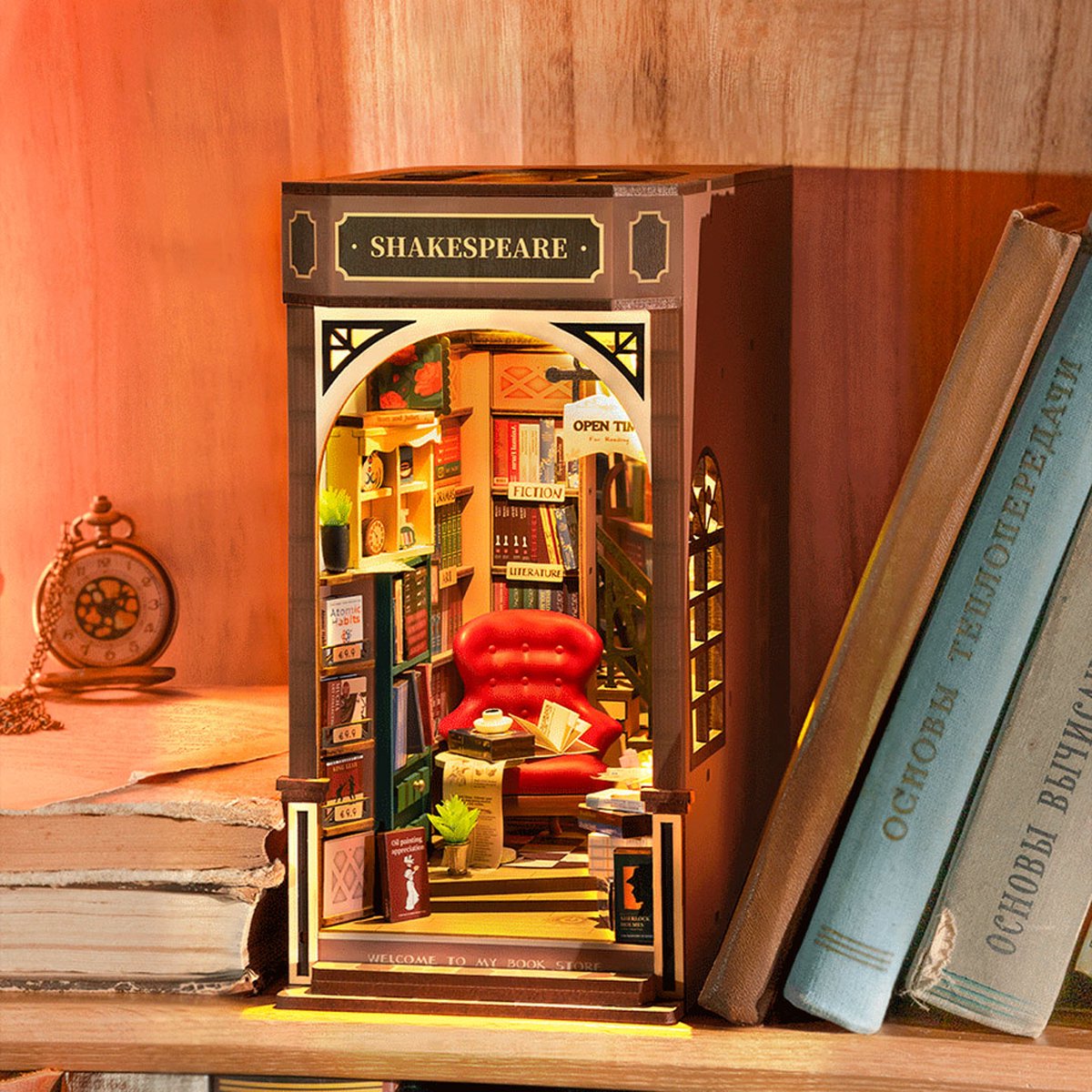
A book nook kit is a self-contained miniature diorama that slots between books on a shelf, and a typical mid-range box ships with laser-cut wood, pre-printed backdrops, miniature furniture, LED string lights, craft paint, glue, and an instruction booklet. A book nook kit is a self-contained miniature diorama designed to slot between books on a shelf, creating the illusion of a tiny world receding into the wall. Most kits ship with laser-cut wood pieces, pre-printed paper backdrops, miniature furniture, LED string lights, craft paint, glue, and a basic instruction booklet. A few premium kits also include resin accessories, fabric swatches, or brass hardware.
What you’re paying for breaks down roughly like this:
- Materials: laser-cut MDF or birch wood, acrylic paints, adhesives, and printed paper elements. A mid-range kit uses materials worth around $18-$25 at retail.
- Design and engineering: the template work behind fit-together joints, the scene layout, and the lighting plan can take a designer 40+ hours per kit before a single unit ships.
- Instruction quality: better kits provide step-by-step photo guides; budget kits often only give you a single-page schematic that leaves out crucial sequence steps.
- LED wiring: pre-wired USB LED kits save 30-60 minutes of frustration versus kits that have you solder or twist-connect components yourself.
Budget kits (under $40) typically cut corners on instruction quality and LED wiring. Mid-range kits ($50-$80) hit the sweet spot for most hobbyists. Premium kits ($90-$120+) add brass or resin details that genuinely show in the finished piece, especially when lit from behind.
The Honest Time Investment Per Difficulty Level
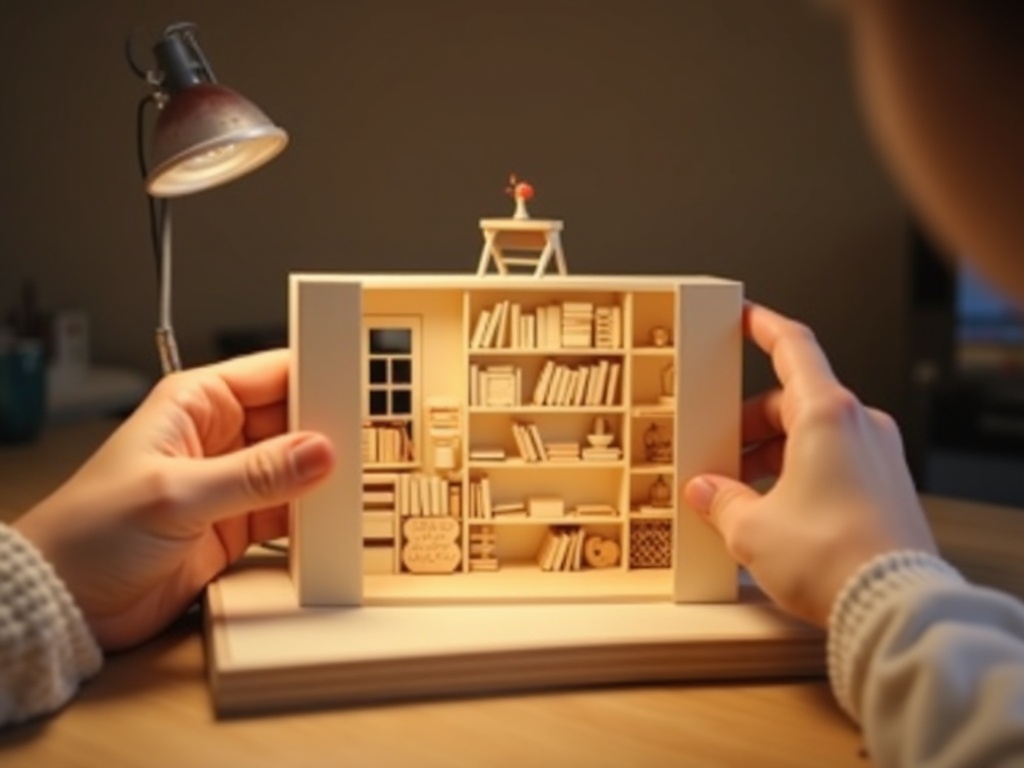
Time is the variable most buyers underestimate: a beginner kit runs 3 to 5 hours, an intermediate build takes 6 to 10 hours, and advanced kits with resin effects can reach 20 or more hours across multiple sessions. Time is the variable most buyers underestimate. A box labeled “beginner” can still take six hours if you’re new to craft glue and want clean results. Here’s what our community actually reports:
Beginner Kits (Difficulty 1-2 out of 5)
Expect 3 to 5 hours across one or two sessions. These kits have fewer pieces, wider tolerances, and forgiving paint steps. They’re perfect for a weekend afternoon or a first gift to someone who’s never done miniatures. The satisfaction-to-effort ratio is high because you finish quickly and the result looks far more complex than it was.
Intermediate Kits (Difficulty 3 out of 5)
Budget 6 to 10 hours. You’ll be dry-fitting wood sections, layering paint washes, and sometimes cutting paper trims to exact widths. Most of our community members who build regularly live in this range. The meditative quality really kicks in here: an hour of careful assembly becomes genuinely restorative, not frustrating.
Advanced Kits (Difficulty 4-5 out of 5)
These run 12 to 20+ hours. Resin water effects, multi-room layouts, hand-painted detail pieces. These kits are not for casual evenings; they’re for crafters who want a multi-week project and a statement piece. The finished build often looks professional enough to display prominently or give as a serious collector’s gift.
✨ Hannah’s tip
Before you open the box, lay every piece out on a clean surface and photograph them. Tiny components (hinges, micro beads, bracket pins) look identical until you need the right one at step 14. That two-minute photo session has saved dozens of our community members from the “where did that piece go?” spiral at midnight.
Before you open the box, lay every piece out on a clean surface and photograph them. Tiny components (hinges, micro beads, bracket pins) look identical until you need the right one at step 14. That two-minute photo session has saved dozens of our community members from the “where did that piece go?” spiral at midnight.
Comparing Book Nook Kits to Other Hobby Costs
At roughly $6 to $10 per hour of engagement, a book nook kit costs less per hour than a movie and leaves a permanent, displayable piece behind, making it strong value against puzzles, candle kits, or escape room boxes. Context makes pricing clearer. A 1,000-piece jigsaw puzzle costs $15-$30 and provides 3-6 hours of engagement with nothing to display afterward. A basic watercolor set plus paper runs $40-$60 and requires real skill development to get pleasing results. A mid-range book nook shelf insert kit at $65 gives 6-10 hours of guided building and leaves a permanent, displayable piece behind.
Compared to candle-making kits ($35-$50 for 4-6 candles consumed within weeks), escape room boxes ($25-$40, played once), or beginner embroidery kits ($20-$35 for a single hoop), the dollar-per-hour cost of a book nook kit sits at roughly $6-$10 per hour of engagement. That’s in line with going to a movie and you have something physical to show for it.
For gift buyers specifically, the perceived value is even stronger. A $70 kit looks and feels like a $100+ gift because of the packaging, the complexity of the pieces, and the clear effort that went into the design. Many buyers in our community report giving book nook kits as birthday or holiday gifts and receiving follow-up messages weeks later when the recipient finishes the build.
📜 Did you know?
The book nook as a decorative format traces back to Japanese miniature diorama culture (known as “diorama art” within the scale modeling community) and gained mainstream Western popularity around 2020-2021 when builders began sharing time-lapse assembly videos online. By 2023, searches for miniature shelf insert kits had grown by over 400% compared to 2019, according to Google Trends data.
The book nook as a decorative format traces back to Japanese miniature diorama culture (known as “diorama art” within the scale modeling community) and gained mainstream Western popularity around 2020-2021 when builders began sharing time-lapse assembly videos online. By 2023, searches for miniature shelf insert kits had grown by over 400% compared to 2019, according to Google Trends data.
Where Book Nook Kits Fall Short (The Honest Part)
The real friction points are poor instruction translation, inconsistent paint quality, weak LED strips on cheap kits, and fragile finished builds that need proper padding before transport. Not every experience is a smooth Saturday afternoon. Here are the real friction points our community has flagged:
- Instruction gaps: cheaper kits, especially those shipped from overseas marketplaces without localized instructions, often have translation errors or skip steps entirely. A missing “dry fit before gluing” reminder has ruined more than a few builds.
- Paint quality variance: the small paint pots included in many kits are notoriously inconsistent. Some colors apply smoothly; others are thick and streaky. Having a basic craft paint set on hand as backup makes a real difference.
- LED longevity: USB-powered LED strips vary widely. Premium kits use warm-white LEDs rated for 50,000 hours. Budget kits sometimes include cold-white or greenish LEDs that kill the cozy atmosphere the whole build is meant to create.
- Storage before gifting: assembled book nooks are surprisingly fragile. Transporting a finished build in its original box without additional foam padding is a common mistake that leads to broken pieces.
None of these issues make book nook kits a bad buy. They do mean that choosing your kit carefully matters more than the price tag alone.
Who Gets the Most Value from a Book Nook Kit

Crafters who want meditative screen-free time, readers who love physical books, first-time miniaturists, and gift buyers all get the most from a book nook kit, the finished display object creates lasting value none of those groups find elsewhere. After three years of community feedback, a clear picture has formed of who walks away most satisfied:
Crafters seeking meditative screen-free time
The repetitive, focused nature of fitting tiny wood pieces together is genuinely calming. Multiple community members have described their building sessions as similar to journaling or meditation: the outside world fades, and the only thing that matters is getting that miniature bookshelf to sit level. If you’re someone who struggles to fully disconnect from screens, having a physical project with a clear visual goal works surprisingly well.
Readers and book lovers
A finished book nook sits on an actual bookshelf, between actual books. For someone who loves that physical library atmosphere, the result is deeply personal. We’ve seen builds themed to specific novels, favorite genres, and childhood reading memories. The object becomes meaningful in a way a generic decor item never does.
First-time miniaturists
If you’ve ever been curious about scale modeling, dollhouse building, or miniature art but felt intimidated by the open-ended nature of those hobbies, a book nook kit is a structured entry point. Everything you need is in the box. The scene is designed. You execute it, learn the skills, and get a finished result on your first try.
Gift buyers who want something memorable
An experience-in-a-box gift beats a generic item for almost every creative personality. The recipient builds it over days or weeks, thinks of you each time they work on it, and then displays a finished object permanently. That’s a long tail of positive association no candle achieves.
Browsing our best-selling book nook kits is a good starting point if you want to see which builds our community rates highest across both beginner and intermediate levels. The community reviews there are real and unfiltered, which tells you more than any product description.
Frequently Asked Questions about Book Nook Kits
Everything you might be wondering (click a question to expand).
How long does a typical book nook kit take to build?
It depends on the difficulty rating. Beginner kits run 3 to 5 hours. Intermediate builds take 6 to 10 hours. Advanced kits with resin or multi-room layouts can reach 15 to 20 hours. Most builders spread the work across several sessions rather than completing a kit in one sitting, which many find more enjoyable anyway.
Are book nook kits suitable for kids?
Most kits are rated for ages 14 and up because of small parts, craft glue, and the precision required. Some simplified beginner kits work well for ages 10-12 with adult supervision. The fine motor demands and patience required make them a poor fit for younger children working independently.
Do I need extra supplies beyond what’s in the kit?
A good quality kit includes everything you need to complete the build. That said, having a fine-tip craft brush, a flat toothpick for applying small glue amounts, and a bright task light on hand improves the experience noticeably. A backup set of craft paints is useful if you want to customize colors beyond what’s provided.
Can I display a finished book nook somewhere other than a bookshelf?
Yes. Finished builds work well as standalone shelf displays, desk centerpieces, or wall-mounted shadow boxes with a small added frame. The “between books” format is the classic presentation, but it’s not a requirement. Several community members display their builds in custom shadow box frames as framed wall art.
What separates a quality book nook kit from a cheap one?
Three things matter most: instruction clarity (step-by-step photos versus vague diagrams), LED quality (warm white with a USB or battery source rated for real longevity), and wood precision (tight laser-cut tolerances that fit without forcing). Reading recent buyer reviews and checking whether a kit comes with customer support or replacement parts are practical filters before purchasing.
What Our Community Actually Builds and Why They Come Back
The vast majority of crafters who finish one miniature shelf insert come back for a second, because completing something small and beautiful with your own hands produces a satisfaction that’s hard to replicate any other way. The most telling signal about whether book nook kits are worth it: the vast majority of crafters who finish one come back for a second. Not because the first was easy, but because finishing something small and beautiful with your own hands produces a specific kind of satisfaction that’s hard to replicate another way.
Community members have shared builds themed to fantasy taverns, vintage libraries, Japanese alleyways, botanical greenhouses, and cozy bakeries. Some have completed eight or ten kits and begun mixing elements between builds to create custom hybrid scenes. That progression, from first kit to personal creative expression, is exactly what a well-designed craft product should enable.
If you’re ready to start, our top-rated book nook kits show the builds our community returns to most often, with honest difficulty ratings and what’s included in every box. Start at a level that feels slightly easy for your patience level. You can always go harder on the next one.