🎁 Buy 2 kits, get the 3rd FREE · Free shipping on every order


Do Book Nook Kits Come With Paint? What’s Actually Inside the Box
Most book nook kits do not include paint. This guide covers what's actually inside the box, which paints work best on laser-cut wood and MDF, how to set up a beginner finishing kit, and why the painting stage is the most personal (and satisfying) part of any book nook build.

You just ordered your first book nook kit, or you’re eyeing one as a gift, and the same question keeps circling back: do book nook kits come with paint? It’s one of the most common things new builders ask, and the answer is more nuanced than a simple yes or no. Let me walk you through exactly what to expect, what you’ll need to source separately, and why the painting stage is honestly one of the most satisfying parts of the whole build.
I speak from experience here. When I built my first Victorian dollhouse kit on a rainy Sunday in 2021, I assumed paint would be tucked somewhere in the box. It wasn’t. My initial reaction was mild panic, followed quickly by a trip to the craft store and then, about an hour into painting those tiny floorboards, the realization that this part was the whole point.
What Most Book Nook Kits Actually Include

Most book nook kits include pre-cut wooden panels, miniature furniture, LED lighting, printed paper accessories, and adhesive, but paint is almost never in the box, even well-made kits at every price point leave that creative decision to you. The contents of a book nook kit vary by brand and price point, but the majority of well-made kits ship with a consistent core set of components. Here’s what you’ll typically find inside the box:
- Pre-cut wooden panels and structural pieces (laser-cut, often birch plywood or MDF)
- Miniature furniture and decorative elements, either pre-assembled or flat-packed
- Lighting components, usually LED strips or fairy lights with a battery pack
- Printed paper accessories: wallpaper, floor tiles, labels, tiny book covers
- Adhesive: glue sticks, a small tube of craft glue, or double-sided tape
- An instruction booklet or QR code linking to a video walkthrough
Notice what is missing from that list? Paint. The overwhelming majority of miniature building kits do not include paint. A handful of premium kits do ship with a couple of sample pots of acrylic, but even then, the colors are usually limited to two or three base shades. You almost always need to bring your own palette to the table.
This is actually a deliberate choice that most experienced builders appreciate once they get into it. Paint is personal. The color of those tiny floorboards, the shade of the stone walls, the weathered gray of a fantasy library shelf: these are decisions that make the piece yours. Manufacturers know that, and they trust you to own it.
Painted vs. Unpainted: The Real Difference Between Kit Types
Book nook kits fall into two main finishing categories: raw-wood kits that give you full painting control, and pre-colored kits where some pieces arrive already painted or printed, narrowing your customization but reducing your steps. Kits generally fall into two broad categories when it comes to finishing.
Unpainted Raw-Wood Kits
These ship with all the laser-cut wooden components in their natural state. The wood smell alone is half the fun, honestly. Raw-wood kits give you full control over the final look. You can stain, paint, dry-brush, or even leave sections bare for a natural aesthetic. The build difficulty rating on these tends to be beginner-friendly to intermediate, because the structural work is straightforward and the finishing is as complex as you choose to make it.
Pre-Colored or Partially Finished Kits
A smaller segment of the market offers kits where certain pieces arrive pre-painted or pre-printed. Wallpaper panels might already be laminated onto foam board, for example, or the roof tiles might arrive with a gray wash applied. These kits narrow your customization window but reduce the number of steps. They tend to suit gift buyers who are shopping for a younger builder or someone who wants a faster first win.
For most adult hobbyists, the raw-wood path is the preferred one. The meditative rhythm of painting each tiny piece by hand, watching a blank sliver of wood transform into a mossy stone wall or a polished oak bookcase, is genuinely hard to replicate with a pre-colored kit. It’s the kind of slow, focused work that clears your head.
📜 Did you know?
The miniature building hobby traces back to 17th-century Europe, where craftsmen built elaborate cabinet houses as status symbols for wealthy patrons. These Kunstkammer cabinets contained hand-painted miniature rooms with real silver cutlery and silk drapery. Modern book nook kits carry that same spirit of obsessive, joyful detail at a fraction of the cost.
The miniature building hobby traces back to 17th-century Europe, where craftsmen built elaborate cabinet houses as status symbols for wealthy patrons. These Kunstkammer cabinets contained hand-painted miniature rooms with real silver cutlery and silk drapery. Modern book nook kits carry that same spirit of obsessive, joyful detail at a fraction of the cost.
What Paint Works Best for Book Nook Kits
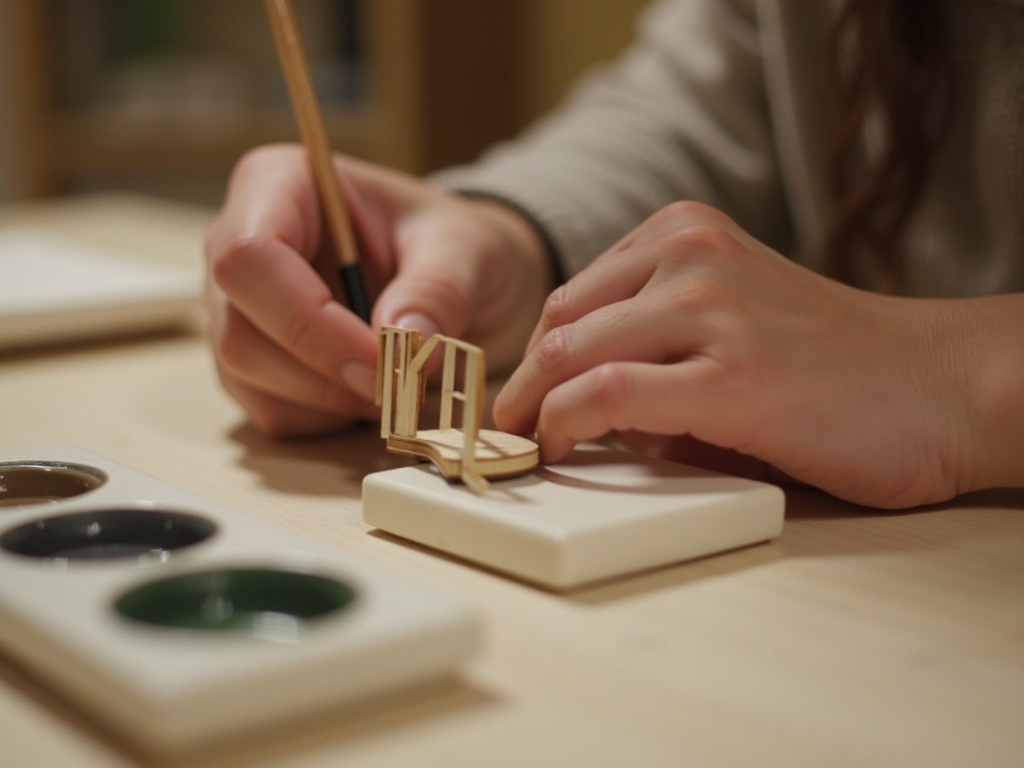
Standard acrylic craft paint is the community’s go-to choice for book nook kits because it dries fast, layers well for depth effects, cleans up with water, and is available in hundreds of colors at any craft store. Assuming your kit arrives unpainted (the likely scenario), here is what actually works well on the materials you’ll encounter inside the box.
Acrylic Craft Paint: The Go-To Choice
Standard acrylic craft paint is the community favorite for a reason. It dries fast, cleans up with water, layers beautifully for depth effects, and is available in hundreds of colors at any craft store. Brands like Apple Barrel, Folk Art, and Liquitex Basics all perform well on laser-cut wood and MDF. A set of 20 to 24 colors covers almost every scene you’ll encounter across a range of book nook kits.
Miniature Wargaming Paints
If you’ve ever painted tabletop miniatures, you already know that brands like Citadel (Games Workshop) and Vallejo produce paints specifically formulated for tiny, detailed surfaces. Their consistency is thinner than standard craft paint, which makes them excellent for fine detail work on book nook furniture. Washes and contrast paints from these ranges add instant depth to stone textures and wood grain without requiring advanced technique.
Stains and Wood Dyes
For floorboards and structural wooden panels, a water-based wood stain often looks more natural than opaque paint. A light walnut or golden oak stain on the floor panels reads as aged hardwood at a glance, no real painting skill required. Apply with a foam brush, wipe back after 30 seconds, done.
What to Avoid
- Oil-based paints: they take too long to dry and can warp thin MDF panels
- Spray paint on small pieces: overspray on pre-printed paper elements can ruin them
- Nail polish: the solvents smell, warp paper, and do not layer cleanly over themselves
Quick Paint Comparison: Which Type for Which Job?
Not sure which paint to reach for at each stage? This table covers the most common scenarios builders run into on their first few kits.
| Paint Type | Best For | Skill Level | Approx. Cost |
|---|---|---|---|
| Acrylic craft paint | Walls, large panels, base coats | Beginner | $0.50 to $2 per bottle |
| Wargaming paints (Citadel, Vallejo) | Furniture detail, washes, glazes | Intermediate | $4 to $7 per pot |
| Water-based wood stain | Floorboards, bare structural wood | Beginner | $8 to $14 per tin |
| Weathering powders | Rust, dust, aged stone effects | Intermediate to Advanced | $6 to $12 per set |
| Matte varnish / Mod Podge | Sealing all finished surfaces | Beginner | $5 to $10 |
✨ Hannah’s tip
Before you paint any structural panel, do a quick dry-fit assembly first. Slot everything together without glue, get a feel for the layout, then disassemble and paint each piece flat on your table. Painting flat panels is so much easier than trying to reach inside an already-glued box with a tiny brush. It’s the single habit that separates a frustrating first build from a smooth one. I learned this the hard way on my second kit, reaching a size-0 brush into a half-assembled room trying to touch up the back wall. Never again.
Before you paint any structural panel, do a quick dry-fit assembly first. Slot everything together without glue, get a feel for the layout, then disassemble and paint each piece flat on your table. Painting flat panels is so much easier than trying to reach inside an already-glued box with a tiny brush. It’s the single habit that separates a frustrating first build from a smooth one. I learned this the hard way on my second kit, reaching a size-0 brush into a half-assembled room trying to touch up the back wall. Never again.
The Customization Opportunity Nobody Talks About Enough
Paint is where your book nook truly becomes yours, the image on the box is a suggestion, not a contract, and every color choice you make turns a manufactured kit into a scene no one else could have built. Here’s the thing about book nooks that the kit photos can sometimes obscure: the image on the box is a suggestion, not a contract. Every builder who has come through our community has put a personal stamp on their scene, and it almost always starts with a color choice that deviated from the original design.
Community members have turned the standard “Cozy Library” scene into a gothic dark academia book nook with deep charcoal walls and blood-red bookshelves, kept every piece bone-white for a minimal Japandi aesthetic, or painted the woodwork in pastels to match a nursery. The bones of the kit stay the same. The soul of it changes completely with paint.
This is where sourcing quality book nook accessories and finishing supplies opens up real possibilities. A pot of metallic gold paint on the shelf edges, a tube of texture paste to fake plaster walls, a fine-tip brush for the tiny lettering on spine labels: small additions, enormous impact.
🎨 Community insight
In our builder community, the most-shared finished photos are almost never the kits built “by the box.” The ones that stop the scroll are the unexpected color choices: a deep navy Victorian library, a sun-bleached Mediterranean courtyard, a neon-lit cyberpunk alley. Your paint choices are where the real building begins.
In our builder community, the most-shared finished photos are almost never the kits built “by the box.” The ones that stop the scroll are the unexpected color choices: a deep navy Victorian library, a sun-bleached Mediterranean courtyard, a neon-lit cyberpunk alley. Your paint choices are where the real building begins.
If you’re buying a book nook kit as a gift, consider pairing it with a small set of acrylic paints and a brush kit. It signals that you understand the hobby, and it removes the one friction point that might slow a new builder down. Our accessories collection carries curated paint sets sized for miniature work, so you don’t have to guess at what brush sizes make sense for a 1:12 scale scene.
Building Your Finishing Kit: A Practical Starter List
Before you open your book nook kit, assemble a small finishing kit: at minimum, a set of acrylics, flat brushes in three sizes, a wash medium, wood stain, and matte varnish, the whole setup costs roughly $25 to $40 from any craft store. If you’re setting up for your first build, here’s a no-fuss list of finishing supplies worth having on hand before you open the main kit box:
- Acrylic paint set (at minimum: black, white, brown, gray, and one accent color)
- Flat brushes in sizes 0, 2, and 4 (flat for large panels, round for detail)
- A wash medium or pre-made wash (brown and black tones for aged effects)
- Water-based wood stain in walnut or oak
- Matte varnish or Mod Podge for sealing finished pieces
- A palette (a ceramic tile works perfectly and costs almost nothing)
- Painter’s tape to mask off printed paper sections during painting
This list fits comfortably in a small storage tin and costs roughly $25 to $40 to assemble from a craft store. Some builders extend the list over time with specialty pastes, pigments, and weathering powders, but none of that is necessary for a first or second build. Start simple, get a feel for the scale, then expand.
If you want to see these supplies in action before your kit arrives, our miniature finishing supplies section includes the specific brush sizes and paint sets I actually use at my workbench, curated for 1:12 scale work rather than full-size crafting.
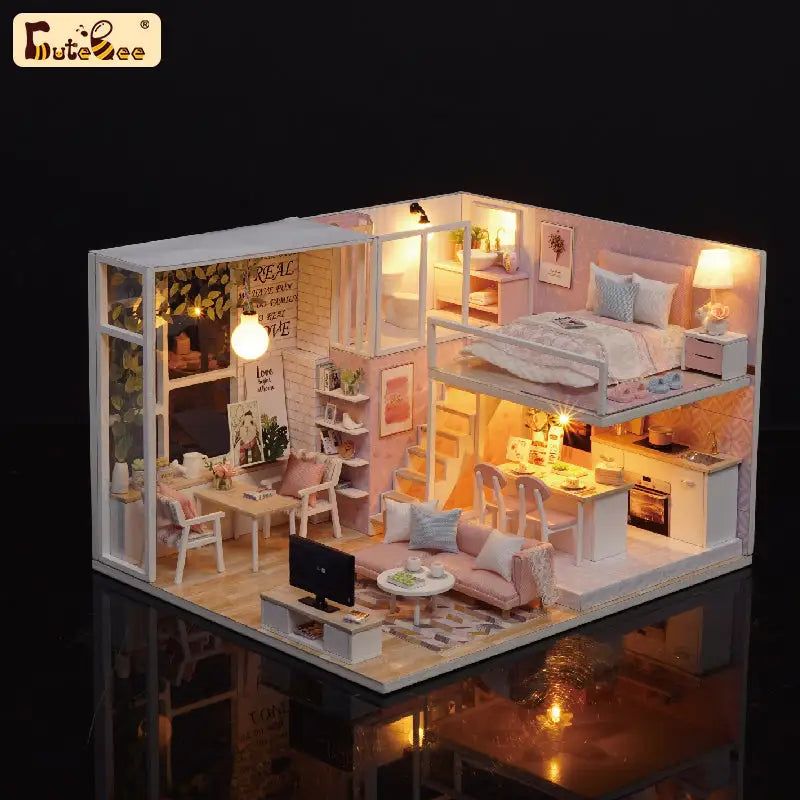
Popular unpainted raw-wood kit
Tranquil Life DIY Miniature House Kit
A favorite first build: raw laser-cut panels, full LED lighting, and total painting freedom.
$67.90
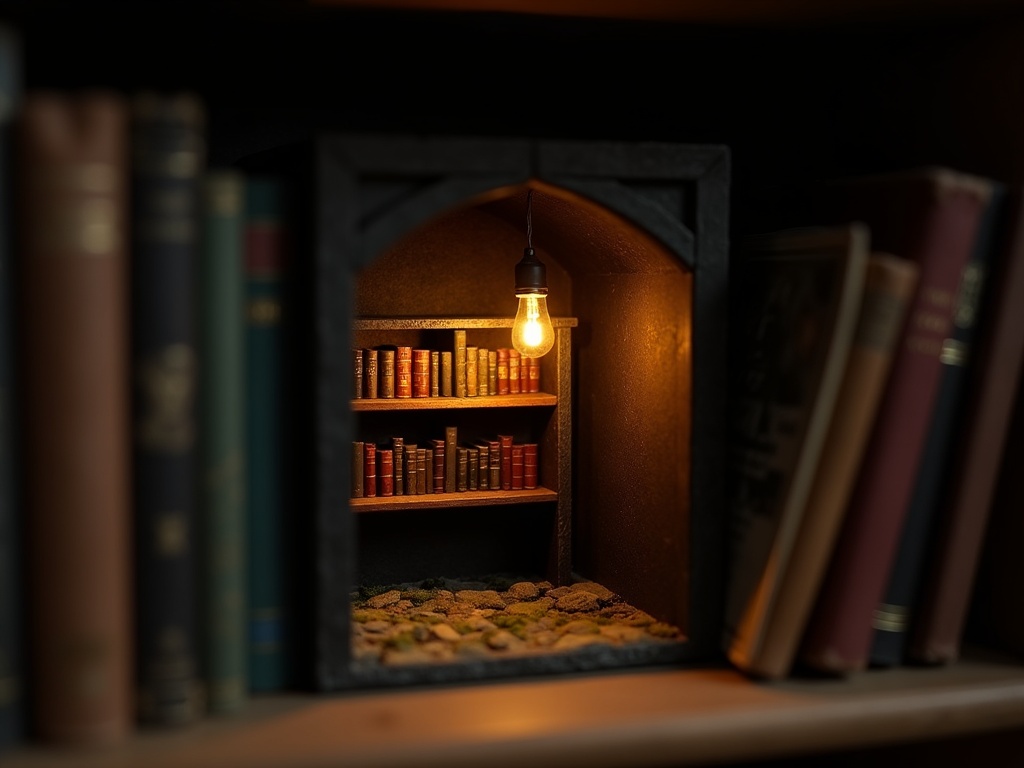
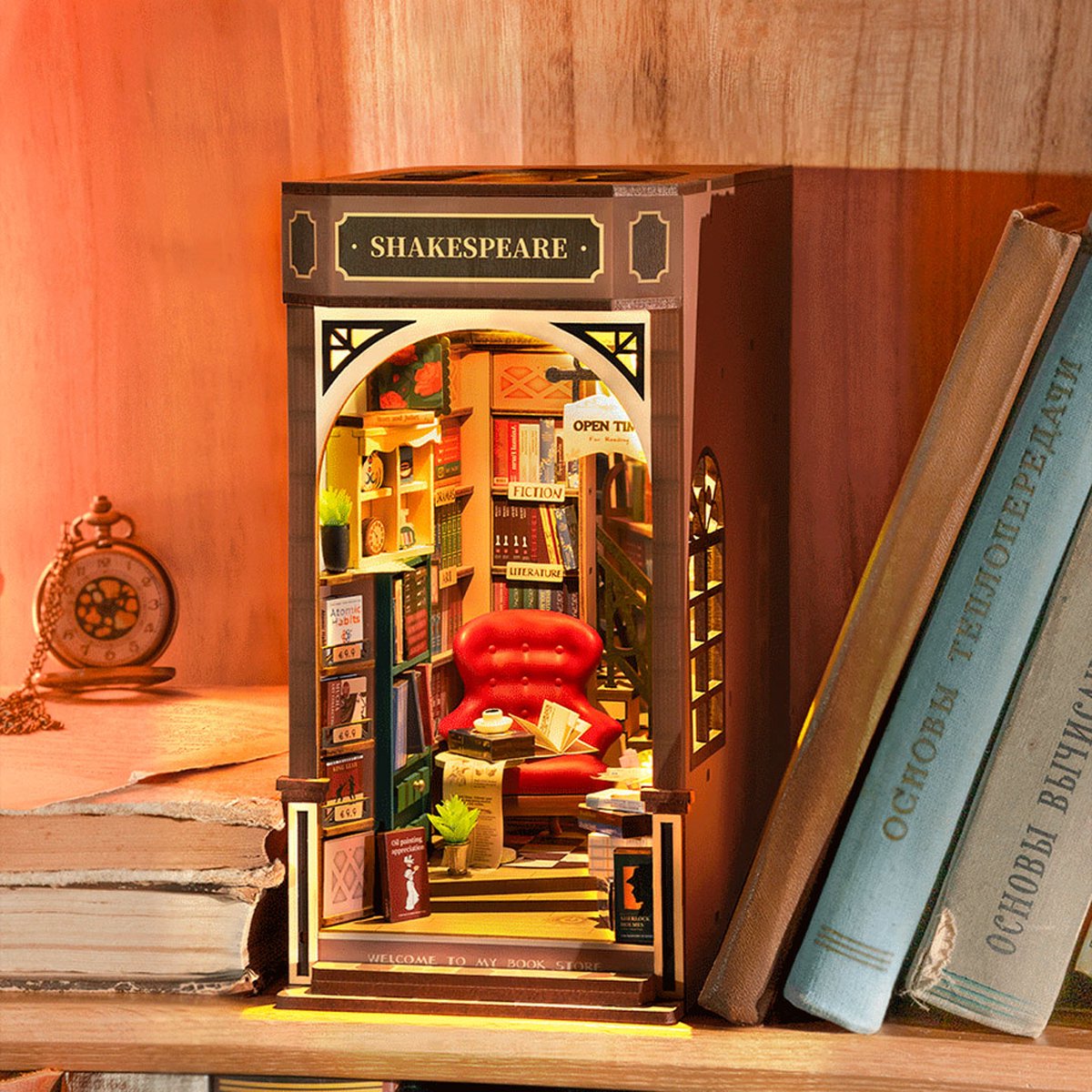
Explore the full collection
All Book Nook Kits
76 handcrafted book nook kits, each with a full contents list so you know exactly what paint you’ll need.
Frequently Asked Questions about Book Nook Kit Paint and Finishing
Everything you might be wondering before your kit arrives (click a question to expand).
Do book nook kits come with paint included?
Most book nook kits do not include paint. The majority ship with laser-cut wooden panels, miniature furniture, LED lighting, printed paper accessories, and adhesive, but paint is typically left out by design. A small number of higher-priced kits include two or three sample pots of acrylic, but these rarely cover the full scene. Plan to supply your own paints; a basic set of 20 to 24 acrylics handles virtually any kit theme.
Do premium kits ship with paint?
Occasionally, yes. A handful of premium kits in the $80 to $150 range include a small paint set alongside the main components. When they do, the included colors are matched to the specific scene (stone gray, wood brown, accent tones). That said, most experienced builders supplement these included paints anyway, because the quantities are small and you’ll often want to experiment with your own color palette. Check the individual product description for a full contents list before purchasing.
Do all book nook kits require painting?
No, not all kits require painting. Some come with pre-printed or pre-colored components that you can use straight from the box. However, most raw-wood kits do benefit from at least some paint or stain, and applying it yourself is genuinely part of the creative experience that makes the finished piece feel personal. Even a single coat of diluted brown wash over the bare wood transforms the look entirely.
What if I don’t know how to paint?
You do not need any prior painting experience to finish a book nook kit beautifully. The scale actually works in your favor: panels are small, mistakes are easily covered with another thin coat, and the LED lighting at the end will mask a lot of imperfection. Start with flat base coats on the large panels, add a wash (just diluted brown paint) over the whole surface, and dry-brush a lighter color over raised edges. Those three steps alone create a convincingly aged, handcrafted look without any advanced skill. I walked through this exact process on my very first build and was genuinely surprised by the result.
Can I use regular craft store acrylic paint on book nook kits?
Yes. Standard acrylic craft paint works well on laser-cut wood, MDF, and the foam board elements common in book nook kits. It dries quickly, does not warp thin panels when applied in thin layers, and is available in a wide range of colors. Thin it slightly with water for better control on small surfaces. Brands like Apple Barrel, Folk Art, and Liquitex Basics are all solid choices.
Should I paint before or after assembly?
Paint before assembly whenever possible. Painting flat pieces on a table is significantly easier than reaching into an assembled structure with a small brush. Do a dry-fit first to understand how parts connect, then disassemble, paint each piece individually, and glue once the paint is fully dry. This approach gives cleaner results and is far less stressful. It is the single biggest tip I give every new builder who reaches out to us.
How Paint Turns a Kit Into a Keepsake
Paint is what transforms a book nook kit from a manufactured product into a keepsake: every shade you chose, every dry-brushed highlight, every tiny gold detail makes the finished piece something only you could have made. A finished book nook sitting on a shelf between your favorite novels is not really about the kit that came in the mail. It’s about every small decision you made along the way: the exact shade of green on the mossy steps, the way you dry-brushed white over the stone to catch the light, the tiny gold details you added on a whim at midnight. Paint is the layer that turns a manufactured product into something that couldn’t have been made by anyone else.
That’s the real answer to whether book nook kits come with paint. They don’t need to. The best color is the one you chose yourself. ✨
Ready to build? Browse our full range of miniature finishing supplies and book nook accessories to put together your painting kit before your box arrives. And if you’re still choosing your first scene, the complete book nook kits collection includes difficulty ratings and full contents lists for every design so you know exactly what you’re getting into before you order.