🎁 Buy 2 kits, get the 3rd FREE · Free shipping on every order


Rotating Display Stands for Miniatures: How to Show Off Your Builds the Right Way
A practical guide to choosing and using rotating display stands for miniatures, covering lazy susan-style turntables, size and weight considerations, motorized vs. manual options, and pairing stands with display cases for a polished presentation.

A rotating display stand for miniatures changes everything about how you present a finished build. Suddenly, every angle is accessible. No more craning your neck to see the back wall of a tiny bookshelf, or picking up a fragile piece and risking a disaster. You just spin, pause, admire.
If you have spent hours assembling a dollhouse kit or painting a detailed scene, that work deserves a proper stage. Lazy susan-style turntables are the simplest, most satisfying way to give it one. I discovered this with my own Victorian build back in 2021: after weeks of careful work on every room, the thing that made visitors actually gasp was placing it on a smooth turntable and letting them spin it slowly themselves. It transformed a finished project into an experience.
Why Lazy Susan-Style Turntables Work So Well for Miniature Displays

Lazy susan-style turntables work so well for miniature displays because their smooth ball-bearing base gives you effortless 360-degree visibility without ever touching the model, keeping fragile top-heavy builds stable through every rotation. The lazy susan mechanism is centuries old, but it solves a very modern problem for miniature hobbyists: 360-degree visibility without touching the model. A smooth ball-bearing base keeps rotation effortless. You can spin a fully furnished miniature display accessory with one finger and it glides without a wobble.
That matters more than it sounds. Miniature structures are often top-heavy. A Victorian manor with a peaked roof and delicate chimney stacks has a high center of gravity. A quality turntable with a wide, non-slip base keeps the piece stable through every rotation rather than tipping at the halfway point.
- Ball-bearing core: a smooth ball-bearing base keeps rotation effortless, even with heavier builds
- Wide platform diameter: spreads weight evenly so the model sits level through every spin
- Non-slip surface: rubber or felt pads grip the model base and prevent mid-rotation slides
- Low profile height: keeps the visual focal point on the build itself, not the stand underneath
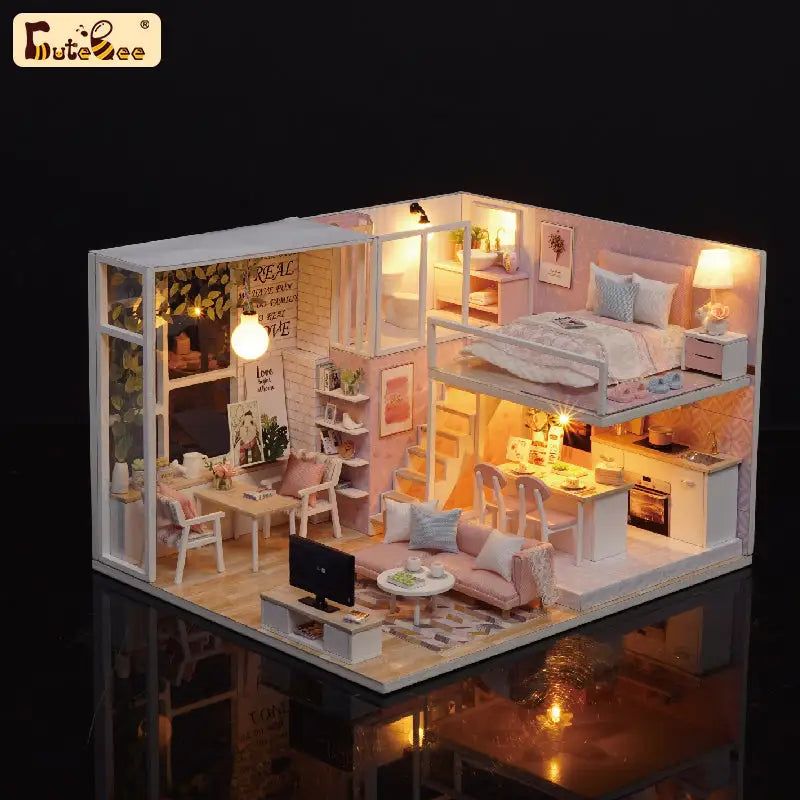
Bestseller cottage kit
Tranquil Life DIY Miniature House Kit
$67.90
This compact cottage sits comfortably on a 10-inch turntable and is one of our most-photographed kits from every angle.
Most hobby-grade turntables sit between 6 and 12 inches in diameter. For a small shed kit or a single-room diorama, 6 inches is plenty. For a multi-story dollhouse or a detailed 1:12 scale street scene, you want at least 10 to 12 inches of platform surface.
📜 Did you know?
The lazy susan turntable takes its name from a rotating serving tray popularized in early 20th-century American dining. Thomas Jefferson is sometimes credited with an early version, though historians trace the mass-market lazy susan to around 1917. By the 1960s, the same ball-bearing mechanism had migrated from dining tables into workshop tool organizers, and miniature crafters were not far behind in adopting it for display purposes.
The lazy susan turntable takes its name from a rotating serving tray popularized in early 20th-century American dining. Thomas Jefferson is sometimes credited with an early version, though historians trace the mass-market lazy susan to around 1917. By the 1960s, the same ball-bearing mechanism had migrated from dining tables into workshop tool organizers, and miniature crafters were not far behind in adopting it for display purposes.
Choosing the Right Rotating Display Stand: Size, Weight, and Surface
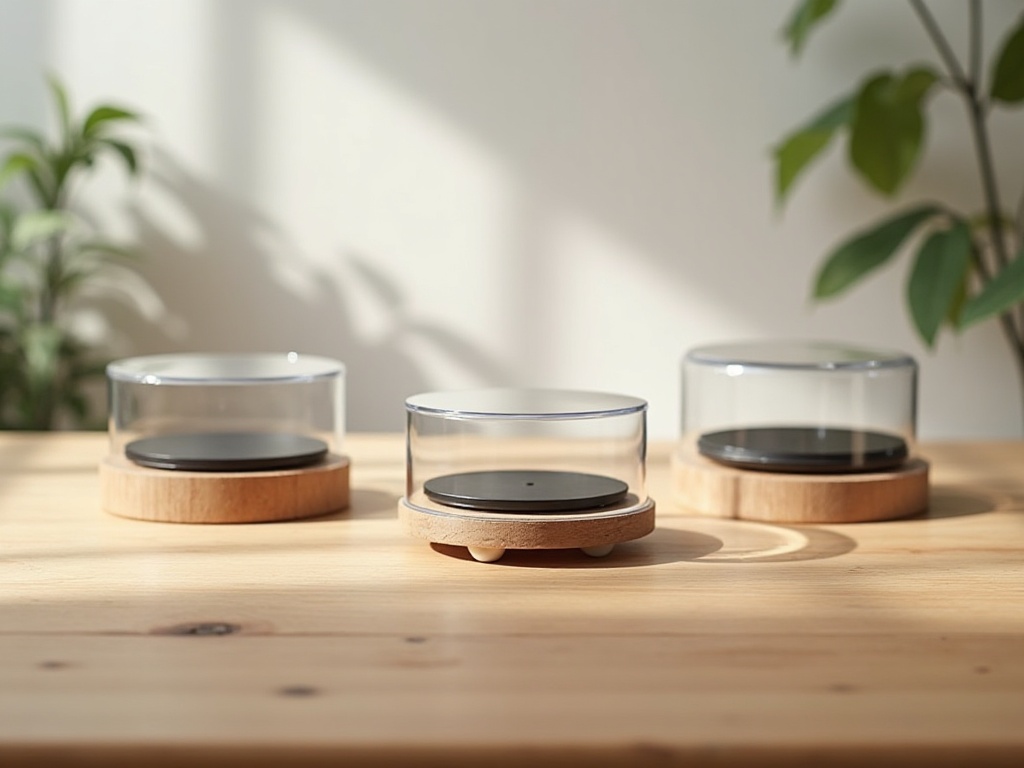
Choosing the right rotating display stand comes down to three checks: weight rating, platform material, and whether the rotation locks, get all three right and the stand will serve your build for years. Not every turntable is built for display work. Many are kitchen organizers dressed up in craft packaging. Before you buy, check three things: the weight rating, the platform material, and whether the rotation locks.
Weight Rating
A finished 1:12 scale dollhouse with furnishings can weigh anywhere from 4 to 12 pounds depending on the materials used. Lightweight MDF kits with paper furniture sit closer to 4 pounds, while solid wood builds with resin accessories push toward the upper end. Choose a stand rated for at least 150% of your estimated finished weight. That buffer keeps the bearing from grinding under load and means the spin stays just as smooth six months later as it was on day one.
Platform Material
Wood platforms look beautiful but can scratch. Clear acrylic platforms are popular because they virtually disappear beneath the model, letting the build float visually. This is especially satisfying with a detailed scene like a book nook kit, where the spine-facing side draws the eye and you want nothing competing with it. Painted or stained wood platforms work well when you want the stand itself to complement the aesthetic of the scene. Felt-backed bases protect both the model and the surface below the turntable.
Rotation Lock
Some stands include a small friction lock or brake that holds the platform at a chosen angle. This is genuinely useful when you are photographing your build, because the last thing you need is the scene drifting mid-shot. Not all hobby turntables include this feature, but if photography or social sharing matters to you, it is worth prioritizing.
✨ Hannah’s tip
Before placing your finished build on any turntable, add a small square of museum putty to each corner of the base. It creates just enough friction to prevent micro-slides when someone spins the stand a little too enthusiastically at a craft fair or on a shelf. It peels off cleanly later without leaving residue on your model’s base. I have used the same small tin of putty on every build since my second kit and it has never let me down.
Before placing your finished build on any turntable, add a small square of museum putty to each corner of the base. It creates just enough friction to prevent micro-slides when someone spins the stand a little too enthusiastically at a craft fair or on a shelf. It peels off cleanly later without leaving residue on your model’s base. I have used the same small tin of putty on every build since my second kit and it has never let me down.
Motorized vs. Manual Rotating Display Stands for Miniatures
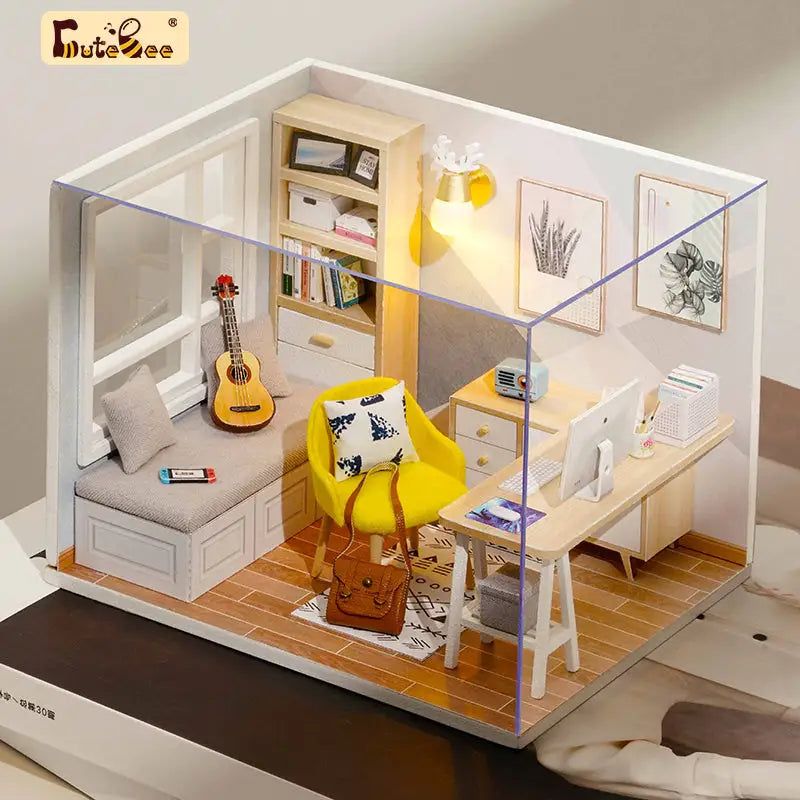
Easy starter under $50
Sun Room DIY Miniature House Kit
$49.99
A great first build to practice display setup, with a compact footprint that works perfectly on a 6-inch manual turntable.
For most hobbyists, a manual turntable is the right choice: manual stands cover home displays and craft fairs quietly and affordably, while motorized ones earn their cost at conventions and retail settings where slow continuous rotation draws a crowd. Manual turntables cover most situations. They are quiet, affordable (typically $8 to $30 depending on size and material), and require zero setup beyond placing the model on top. For home display shelves or craft fair tables, manual is almost always the right call.
Motorized turntables bring a different energy to the presentation. A slow, continuous 360-degree rotation at roughly 1 to 3 RPM draws the eye in a retail or convention setting in a way that a static display simply cannot match. Battery-powered motors run for 8 to 24 hours on a set of AA batteries. USB-powered versions are cleaner for permanent shelf installations near an outlet.
The trade-off with motorized stands is vibration. Lower-cost motors produce a faint hum that can transfer into a delicate model, loosening glued joints over time. If you go motorized, look for a brushless motor rated under 50 dB and a platform that sits on an additional rubber isolation pad.
- Manual lazy susan stands: best for home shelves, photography setups, craft fairs
- Battery-powered motorized stands: best for conventions, pop-up events, temporary displays
- USB-powered motorized stands: best for permanent retail or studio display with easy plug-in access
Pairing a Turntable with a Display Case or Dome
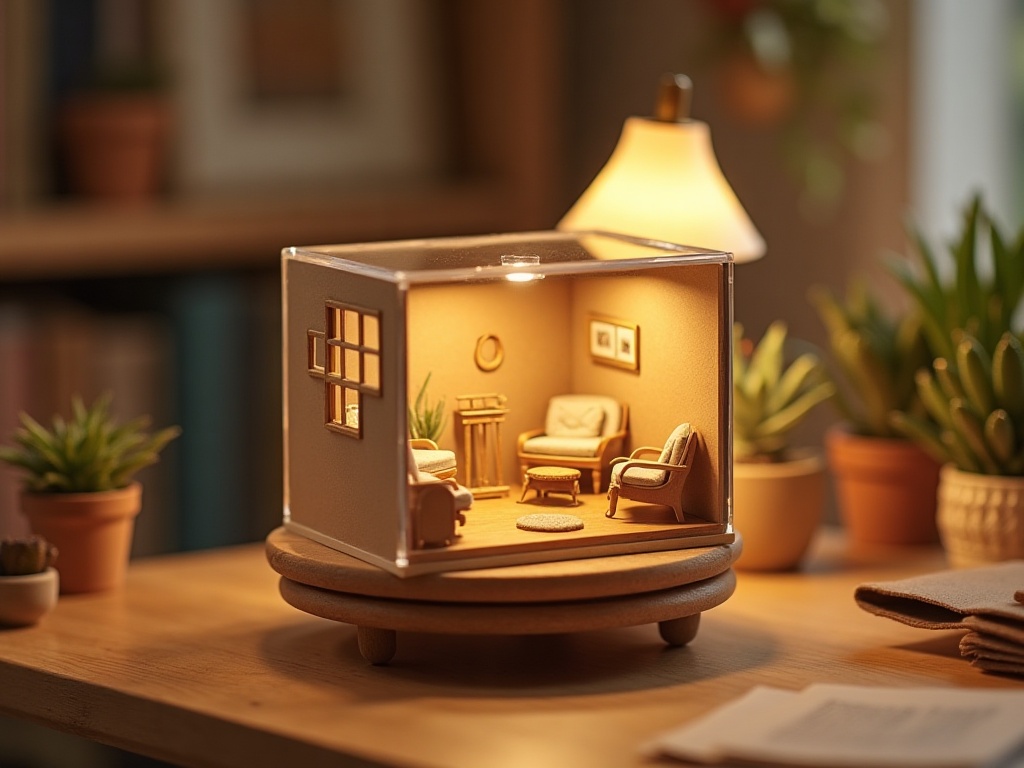
Pairing a rotating display stand with a glass dome or acrylic case keeps your miniature dust-free between viewings, protects every delicate detail, and lets you spin to any angle simply by lifting the dome and giving the base a gentle turn. A turntable for miniature model display works even better when paired with a dust-protection solution. Glass domes and acrylic display cases keep your build clean between viewings without requiring you to cover it with a cloth or box it away. The combination of a rotating base inside a display case is a classic museum trick scaled down to the hobby level.
Most standard glass display domes sit on a wooden base that is either 6, 8, or 10 inches in diameter. If you mount a thin turntable disc inside the dome base before placing the model, the whole assembly rotates when you lift the dome and give the base a gentle spin. The dome goes back on and the model sits at whatever angle you left it. Clean, protected, and endlessly adjustable.
Our miniature greenhouse kits are a beautiful example of this pairing in practice. Their glass-panel construction already feels like a display piece in itself, and mounting one on a clear acrylic rotating display stand for miniatures inside a matching dome creates a layered, trompe-l’oeil effect that stops people mid-step. The inner greenhouse walls catch the light differently at each rotation angle, which is something you simply do not get with a static placement.

Rare in the niche
Miniature Greenhouse Kits
22 LED-lit greenhouse builds
Glass-panel kits catch light differently at every rotation angle. Pair with a clear acrylic turntable inside a display dome for a genuinely stunning result.
For square or rectangular miniature builds like a row of terraced houses or a room box, rectangular acrylic display cases work better than round domes. Pair them with a rectangular lazy susan platform (yes, they exist, usually 8×12 inches) for a tidy, professional result.
Browse the full range of miniature display accessories and protective cases to find options sized for specific kit footprints. Matching a stand to the right case from the start saves a lot of awkward shimming later.
Setting Up Your Display: Practical Steps for a Polished Presentation
Setting up a polished miniature display takes only a few minutes when you follow these steps: clean the platform, center the model carefully, secure it with museum putty, pick your hero angle, and test the spin direction before anyone else sees it. Putting a model on a turntable takes about two minutes, but doing it well takes a little more thought.
- Clean the platform first. Dust or grit under the model base will scratch the finish on both surfaces. A quick wipe with a dry microfiber cloth is enough.
- Center the model carefully. Off-center weight distribution causes the stand to wobble on each rotation. Eyeball the center, then give it a slow test spin before committing.
- Add museum putty or non-slip pads. Small dots at each corner of the base hold the model without permanent adhesion.
- Choose your “hero angle.” Decide which face of the build you want to present first to a viewer, and orient it toward the front of the display space before the stand is loaded. For most dollhouse kits, this is the open facade side where all the room detail lives.
- Test the spin direction. Counterclockwise rotation feels more natural to right-handed viewers reaching from the right side. Clockwise suits left-to-right reading approaches. Small detail, but it shapes the experience.
If you are displaying a kit from our accessories collection alongside the main build, group smaller pieces on a separate smaller turntable at a slightly lower height. Two coordinated stands at different levels create depth and draw the eye across the whole scene rather than locking it on one spot.
Premium collector piece
Monet’s Garden DIY Miniature House Kit
$155.00
One of our most display-worthy kits, with hand-planted florals and LED lighting that reward a slow, full 360-degree rotation.
Frequently Asked Questions about Rotating Display Stands for Miniatures
Everything you might be wondering before you buy (click a question to expand).
What is the best size rotating display stand for a standard dollhouse kit?
Most 1:12 scale dollhouse kits have a base footprint between 8 and 14 inches wide. A 10-inch turntable works well for single-facade builds; a 12-inch stand covers most multi-bay designs. Always measure your kit’s base before ordering, and allow at least 1 inch of overhang clearance on each side for stable rotation. When in doubt, size up rather than down: a slightly too-large platform is invisible once the model is centered, but a too-small one creates a precarious look that nobody wants.
How much weight can a miniature turntable hold?
Most hobby-grade ball-bearing turntables are rated between 15 and 50 pounds, which is far beyond the needs of any miniature kit. The practical concern is not the weight limit itself but the bearing quality under sustained load. A cheap bearing that technically holds 20 pounds may still feel gritty or uneven when a 6-pound kit sits on it for months. Look for stands that specify smooth ball-bearing or precision-bearing construction, not just a maximum weight number. As a rule, choose a stand rated for at least 150% of your finished build weight to keep the spin effortless long-term.
Can I use a kitchen lazy susan as a miniature display stand?
Yes, with a few adjustments. Kitchen lazy susans are typically 12 to 18 inches in diameter and made from wood, bamboo, or plastic. They work structurally, but the surface finish may not suit a display context. Sanding and repainting the platform, or covering it with felt, brings it up to display quality without much cost. Just confirm the bearing is smooth and not grinding before you commit.
How do I keep my miniature from sliding off a motorized turntable?
Museum putty (also sold as poster putty or removable adhesive) is the cleanest solution. Apply small dots to the underside corners of your model base before placing it on the platform. At standard display speeds (1 to 3 RPM), the putty holds reliably without bonding permanently. For heavier builds, small rubber bumper pads around the base perimeter add extra grip.
Will a motorized rotating stand damage my miniature over time?
Low-quality motors with high vibration can loosen delicate glued joints after extended use. Choose a stand with a brushless or near-silent motor rated under 50 dB, and add a thin rubber isolation pad between the platform and the model base. For fragile paper or resin details, manual rotation on a quality ball-bearing stand is always the safer long-term option.
Are there display stands designed specifically for miniature kits?
Most hobby turntables are adapted from kitchen or workshop designs. However, some specialty craft and miniature accessory suppliers offer platforms sized to common kit footprints, with surface finishes and color options that complement wood and painted finishes. Checking kit-specific accessories before purchasing a generic turntable often saves a sizing headache. Our own display accessories range includes options matched to the most popular kit footprints in our catalog.
Making Your Display Work as Hard as Your Build Did
A well-chosen rotating display stand for miniatures honors every hour you put into your build by making all of it visible, from every angle, without anyone needing to handle the piece. You put real time into that model. Hours of careful cutting, fitting, painting, and furnishing went into every room and facade. A good rotating display stand for miniatures honors that effort by making all of it visible without requiring anyone to handle the piece.
The lazy susan format remains the most practical choice for most hobbyists: affordable, quiet, reliable, and easy to set up. Whether you go manual or motorized depends entirely on where and how the build will live. For home shelves and craft shows, a smooth ball-bearing turntable under $20 does everything you need. For convention displays or retail settings, a whisper-quiet motorized stand earns its extra cost.
A finished build on a well-chosen stand stops being just a project. It becomes something people gather around, spin slowly, and look at from every direction. That is the whole point of making something beautiful with your hands.