🎁 Buy 2 kits, get the 3rd FREE · Free shipping on every order

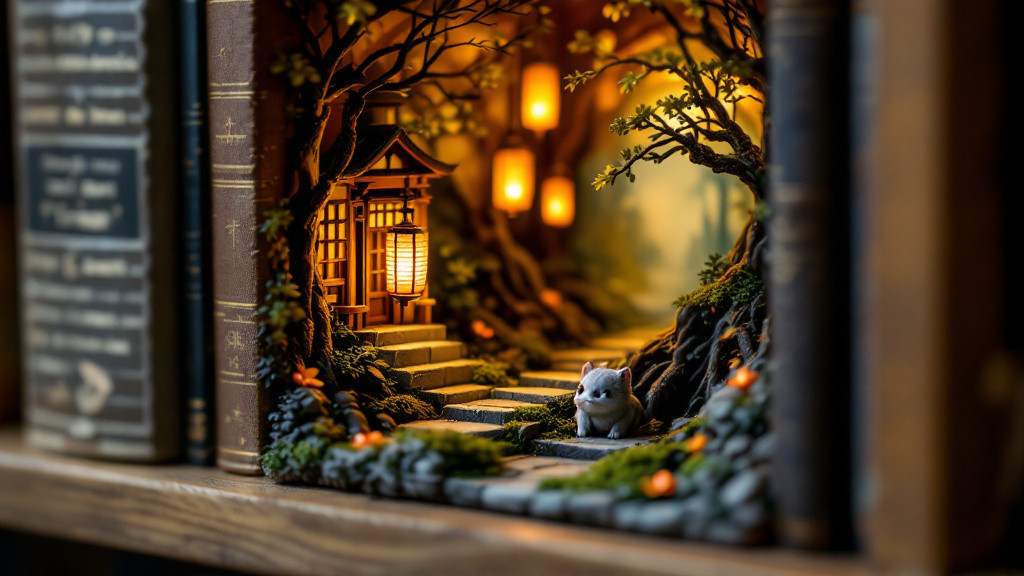
Studio Ghibli Inspired Book Nook: Build a Tiny Portal to Miyazaki’s Worlds
Build a Studio Ghibli inspired book nook that captures Howl's cozy hearth, Totoro's forest floor, Spirited Away's glowing bathhouse, or Mononoke's ancient shrine. Difficulty ratings, material lists, lighting tips, and honest time estimates for every skill level.

A Studio Ghibli inspired book nook turns a gap on your shelf into something that stops people mid-sentence. Guests lean in, squint, and ask: “Wait, is that Calcifer glowing in there?” That moment of recognition, that flicker of childhood wonder in an adult’s eyes, is exactly why these miniature dioramas have become one of the most requested projects in the crafting community over the past two years.
Whether you grew up rewatching My Neighbor Totoro on rainy afternoons or you only recently fell headfirst into Spirited Away, building a Ghibli-themed book nook is one of those projects that rewards you twice: once while you’re building it, and again every single time you walk past your shelf.
What Makes a Book Nook “Ghibli” Rather Than Just Fantasy?
A Ghibli book nook earns its identity through warm amber light, nature creeping over architecture, lived-in clutter, and hidden characters tucked in shadows, atmosphere doing the work that licensed figurines never could. Generic fantasy book nooks often rely on dragons, torches, and dungeon stonework. Ghibli is a different visual language entirely. Think warm lantern light through paper screens. Overgrown moss on wooden beams. A bathhouse sign half-hidden by fog. Tiny soot sprites tucked behind a staircase post.
The signature Ghibli aesthetic rests on a few pillars:
- Nature intruding on architecture – roots lifting floorboards, vines creeping over windowsills, wildflowers growing through cracks in stone paths.
- Warm, amber-toned light sources – paper lanterns, oil lamps, glowing hearths rather than cold blue LEDs.
- Lived-in clutter – laundry on a line, a hat left on a post, tiny books stacked on a miniature shelf.
- Scale trickery – a path that vanishes into painted depth, a staircase that seems to continue beyond the back wall.
- Hidden characters – you don’t plaster Totoro front and center; you tuck him in a shadow, just barely visible.
Getting these details right is what separates a beautiful book nook from an unmistakably Ghibli book nook. The atmosphere does the work, not the licensed figurines. If you are curious how these same principles apply beyond book nooks, our guide to miniature house kits covers the broader world of scale building with the same philosophy.
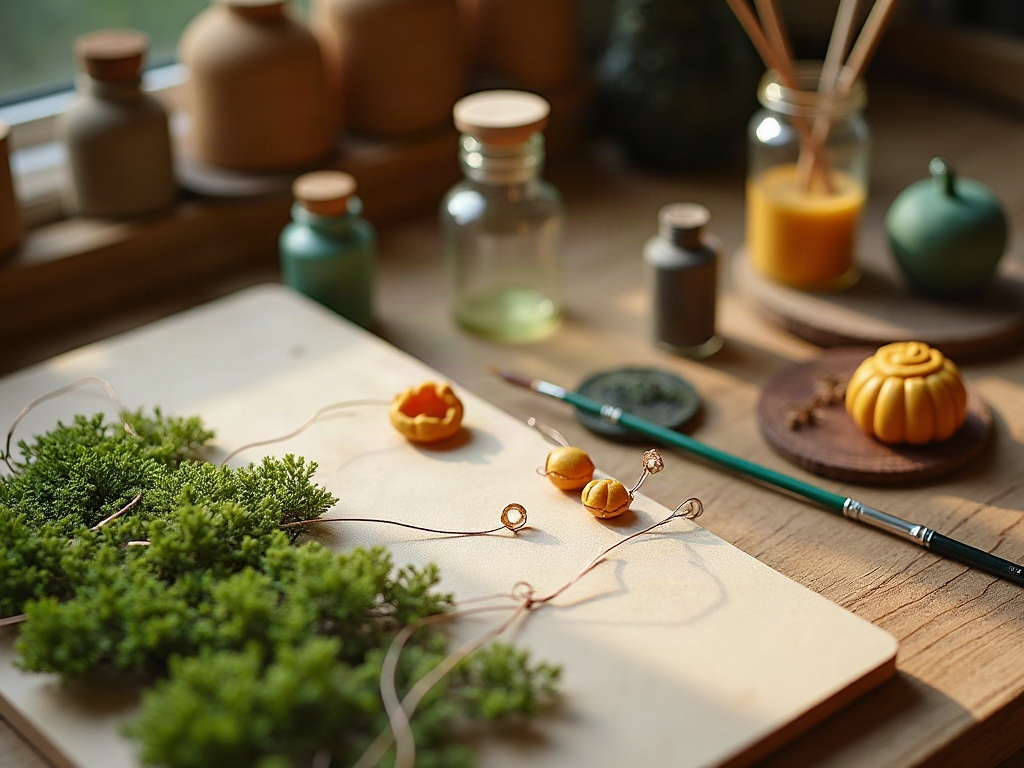
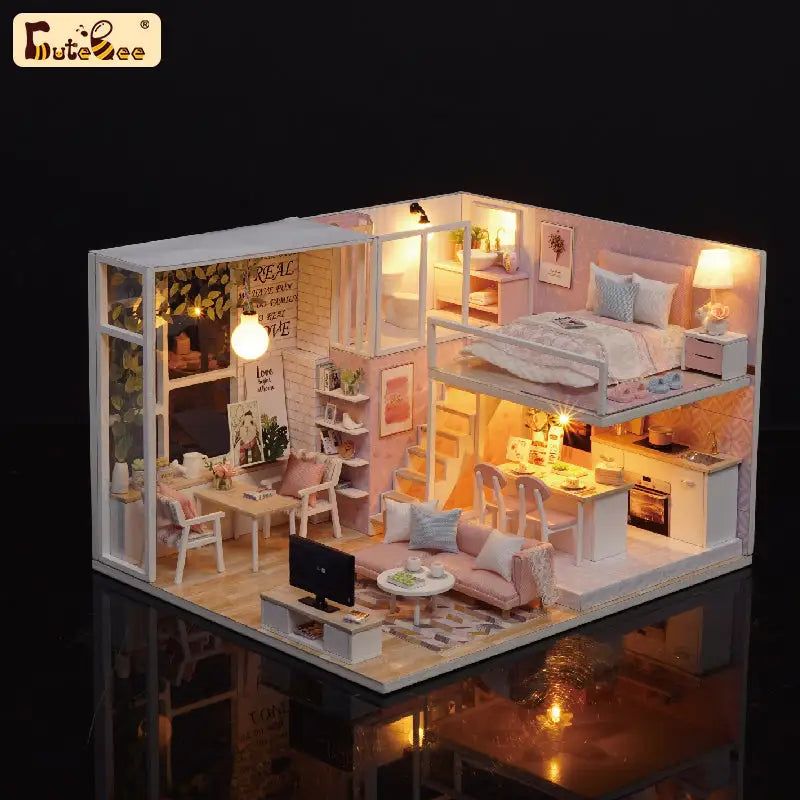
Bestseller cottage kit
Tranquil Life DIY Miniature House Kit
$67.90
A cozy cottage atmosphere with pre-cut basswood walls, preserved moss tufts, and 2700K warm LEDs already included. Its earthy palette and overgrown-garden detailing make it the closest match to the Totoro and Howl’s interiors of anything in the intermediate price range.
The Four Ghibli Worlds That Translate Best into Miniature
The four Ghibli films that translate best into miniature dioramas are Howl’s Moving Castle, My Neighbor Totoro, Spirited Away, and Princess Mononoke, each offering a distinct palette, texture, and difficulty level for builders. Howl’s Moving Castle gives you clockwork and cottage warmth. Totoro rewards restraint in a forest setting. The Spirited Away bathhouse is the most architecturally ambitious. And Mononoke leans deepest into organic, ancient texture.
Howl’s Moving Castle: Clockwork, Copper, and Calcifer’s Glow
Howl’s Moving Castle is a crafter’s dream. The exterior is architectural chaos, gears and chimneys bolted onto a walking fortress, while the interior is a cozy Welsh cottage wrapped in magic. For a book nook, focus on the interior: Howl’s vanity cluttered with tiny bottles, the hearth where a small flame-shaped LED bead stands in for Calcifer, the spiral staircase leading up to painted shadows.
Color palette: deep teal, burnished copper, warm amber, dusty rose. Materials that work beautifully here include thin balsa for wall paneling, copper wire bent into candelabras, and translucent orange resin cast into a teardrop flame. Difficulty rating on a dedicated Howl’s Moving Castle book nook kit: intermediate, roughly 15-25 hours of build time.
My Neighbor Totoro: Forest Floor Magic
My Neighbor Totoro scenes work at the smaller end of the book nook spectrum. A bus stop in the rain, a camphor tree hollow, a sunlit garden with a tiny vegetable patch. The genius of a Totoro-themed nook is restraint: one small grey form barely visible in the tree roots does more than a full Totoro statue front and center.
Textures matter enormously here. Real dried moss pressed onto resin bases. Twisted wire trees with individually applied paper leaves. A miniature Satsuki-and-Mei umbrella (made from a toothpick and a punched circle of painted tissue paper) leaning against the bus stop post. Totoro-themed miniature forest dioramas are consistently the most requested beginner-friendly Ghibli build because the color palette (greens, greys, soft yellows) is forgiving, and the scenes are naturally low on fine architectural detail. They are also the ideal first project if you are curious whether the meditative rhythm of miniature building suits you, something many builders in our community describe as the real reason they keep coming back to the craft.
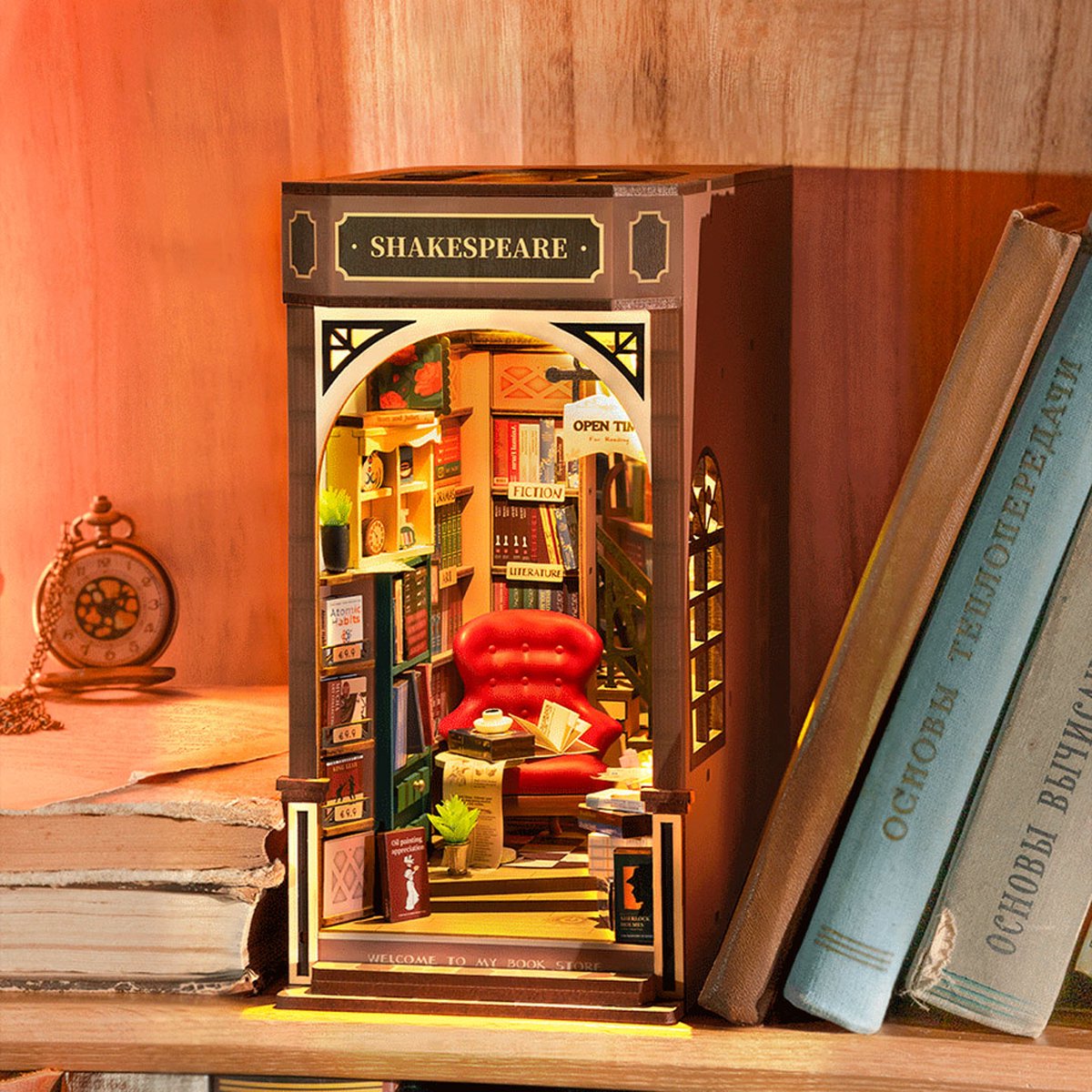
Explore the collection
All Book Nook Kits
76 handcrafted book nook kits
From a forest-floor Totoro scene to a full spirit-world bathhouse, every kit in this range ships with pre-cut components, step-by-step illustrated instructions, and the warm LEDs you need. A Studio Ghibli inspired book nook in the making, whatever your experience level.
Spirited Away: The Bathhouse at Night
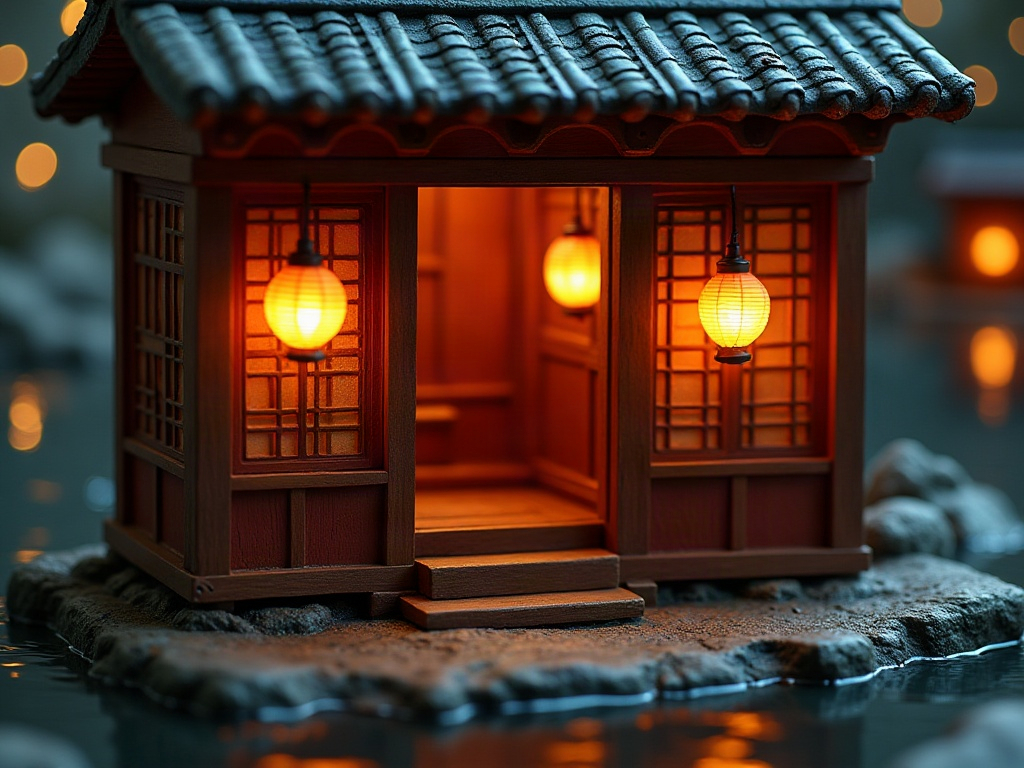
Yubaba’s bathhouse is the most architecturally complex of the four. Multiple floors, red paper lanterns, ornate carved eaves, the steep wooden staircase where Chihiro first arrives soaking wet. A book nook version that captures even one floor of the bathhouse interior, with warm window light spilling onto a tiny exterior path, is stunning.
The signature element to build first: the facade. Layered balsa sheets carved into decorative wooden panels, painted in deep oxblood red and aged with raw umber. Tiny paper lanterns made from tissue paper over wire frames, backlit with micro warm-white LEDs. A painted backdrop mural showing the foggy water and lights of the spirit world stretching into the distance creates an illusion of depth that genuinely fools the eye from three feet away.
Difficulty: advanced. Budget around 30-40 hours for a full bathhouse facade build. If you want a structured starting point with pre-cut architectural elements, our fantasy book nook kits collection includes several spirit-world-themed options that take the measurement and cutting work out of the equation.
Princess Mononoke: Ancient Forest Shrine
Princess Mononoke is the darkest and most textured of the four. Ancient cedar forests, moss-covered stone kodama paths, the ironwork of Irontown against a twilight sky. A Mononoke book nook leans heavily on organic textures: lichen, bark, rough stone. The color story is muted, deep forest greens, charcoal grey, rust iron, with a single point of warmth, a fire in the forge or a torch at the shrine gate.
Easy starter under $50
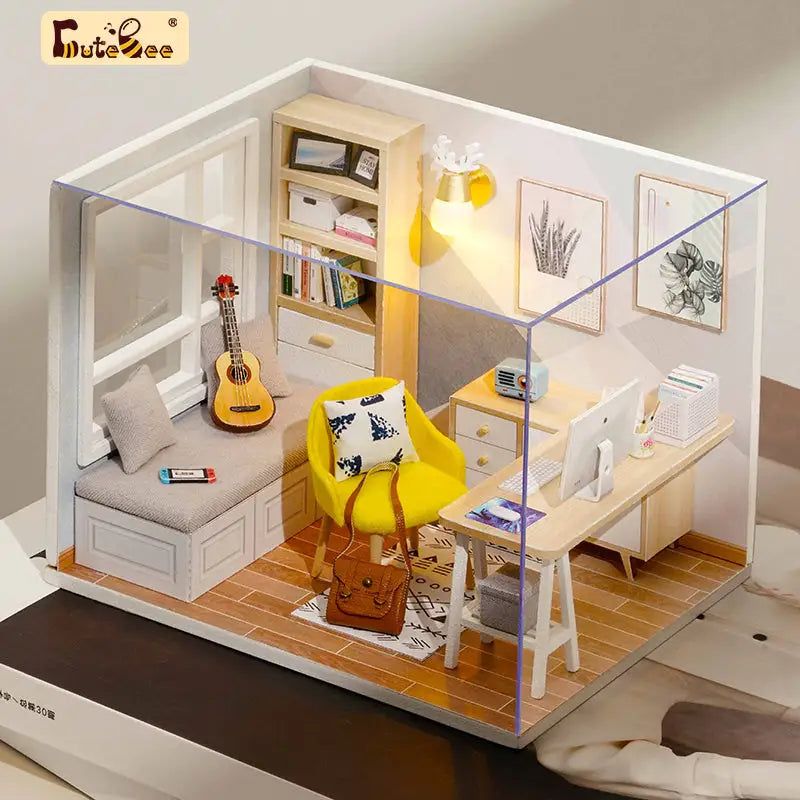
Sun Room DIY Miniature House Kit
$49.99
A great entry point for Mononoke-style nature builds: the kit includes preserved greenery, a pre-wired 2700K warm LED strip, and basswood panels that paint and stain beautifully in the mossy earth tones this aesthetic demands.
The kodama (those tiny white tree spirits) are surprisingly achievable with a small amount of air-dry clay and a toothpick for scoring their hollow eyes. Scatter a handful along a moss path and the scene is unmistakable to any Ghibli fan.
Hannah’s tip
For any Ghibli forest scene, skip the craft-store “forest green” paint and mix your own. Start with raw umber as your base, add sap green, then a touch of yellow ochre. That muddy, complex green reads as ancient forest rather than garden center. A single highlight of bright yellow-green on the most forward leaves pulls the eye in without losing the moody depth.
For any Ghibli forest scene, skip the craft-store “forest green” paint and mix your own. Start with raw umber as your base, add sap green, then a touch of yellow ochre. That muddy, complex green reads as ancient forest rather than garden center. A single highlight of bright yellow-green on the most forward leaves pulls the eye in without losing the moody depth.
Key Materials for Building a Ghibli Book Nook at Home
Building a Ghibli book nook at home requires five core material categories: basswood for structure, preserved moss for organic texture, 2700K warm LEDs for light, a painted backdrop for depth, and air-dry clay for custom figures and props. You do not need a workshop full of specialty tools. Most Studio Ghibli inspired book nooks are built on a kitchen table with five core material categories:
- Structural base: 3mm or 5mm basswood sheets for walls, floors, and architectural trim. Balsa is lighter and easier to cut but less durable long-term.
- Texture and greenery: preserved reindeer moss (holds color for years without maintenance), dried sea moss, fine-grain sand, and microballoon filler mixed with acrylic for stone textures.
- Lighting: warm-white (2700K-3000K) micro LED strip lights or individual 3mm LED beads on copper wire. Avoid cool-white, which destroys the Ghibli warmth instantly.
- Depth illusion: a painted backdrop on the rear wall is non-negotiable for any Ghibli scene. Watercolor or diluted acrylic on illustration board works well. Atmospheric perspective (lighter, bluer, less detailed as things recede) sells the depth.
- Figures and props: air-dry clay for custom characters, resin casting for repeated elements (lanterns, bottles, water), and fine-point acrylic paint pens for detailing at 1:12 scale.
Did you know?
Studio Ghibli’s background artists use a technique called “atmospheric painting,” where background details are intentionally left soft and slightly out of focus to draw the viewer’s eye toward the characters in the foreground. Miniature diorama builders can replicate this with simple airbrush work or by dry-brushing lighter, grayer tones onto background elements. Hayao Miyazaki’s team referred to this layered depth approach as ma (間), the Japanese concept of meaningful negative space. Hannah first noticed this principle in a documentary about the studio’s art department and has applied it to every shelf scene she has built since.
Studio Ghibli’s background artists use a technique called “atmospheric painting,” where background details are intentionally left soft and slightly out of focus to draw the viewer’s eye toward the characters in the foreground. Miniature diorama builders can replicate this with simple airbrush work or by dry-brushing lighter, grayer tones onto background elements. Hayao Miyazaki’s team referred to this layered depth approach as ma (間), the Japanese concept of meaningful negative space. Hannah first noticed this principle in a documentary about the studio’s art department and has applied it to every shelf scene she has built since.
Essential materials at a glance
| Material | Best Ghibli Use | Where to source |
|---|---|---|
| 3mm basswood sheet | Walls, floors, carved panels | Craft stores, kits |
| Preserved reindeer moss | Forest floors, shrine paths | Floral suppliers, kits |
| 2700K micro LED strip | All Ghibli scenes | Electronics, kits |
| Air-dry clay | Kodama, Calcifer, props | Craft stores |
| Illustration board | Painted depth backdrop | Art supply stores |
| Copper wire (0.5mm) | Trees, candelabras, lantern frames | Hardware, craft stores |
A retenir (key takeaway)
The single most important choice in any Studio Ghibli inspired book nook is light temperature. Order 2700K LEDs before you cut a single piece of wood. Everything else (colors, materials, depth tricks) is calibrated around that warm amber glow. Get the light wrong and no amount of detail work will save the atmosphere.
The single most important choice in any Studio Ghibli inspired book nook is light temperature. Order 2700K LEDs before you cut a single piece of wood. Everything else (colors, materials, depth tricks) is calibrated around that warm amber glow. Get the light wrong and no amount of detail work will save the atmosphere.
Lighting a Ghibli Book Nook: Small Decisions, Big Impact
The single biggest upgrade you can make to any Ghibli book nook is light: use 2700K-3000K warm-white LEDs, place two or three independent point sources rather than one strip, and route all wiring inside the walls before assembly. Lighting is where good Ghibli book nooks become great ones. The difference between a bathhouse that looks like a craft project and one that looks like it was pulled from the film is almost always the lighting temperature and directionality.
Warm vs. Cool Light
Stick to 2700K-3000K warm white. Anything cooler reads as modern and clinical. The amber warmth of an old incandescent bulb is the light of Ghibli films, and it is the light your nook needs.
Rare in the niche
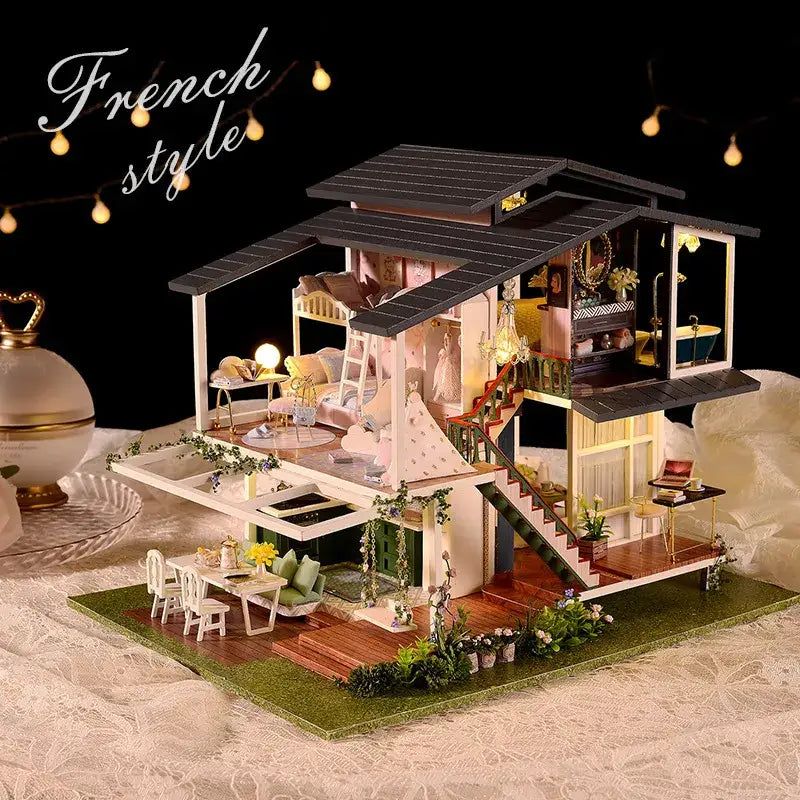
Miniature Greenhouse Kits
22 LED-lit greenhouse builds
Each kit ships with a pre-wired 2700K warm LED system already routed through the frame, so the light temperature question is solved before you open the box. The lush glass-and-greenery format translates beautifully into Ghibli-inspired nature scenes.
Multiple Light Sources
One strip of LEDs along the top of a nook produces flat, even illumination. That is the enemy of atmosphere. Instead, use two or three independent point sources: a glow behind a paper lantern, a faint light inside a window, a tiny flame at the hearth. Shadows and variation create the sense that something is alive in there.
Hiding the Hardware
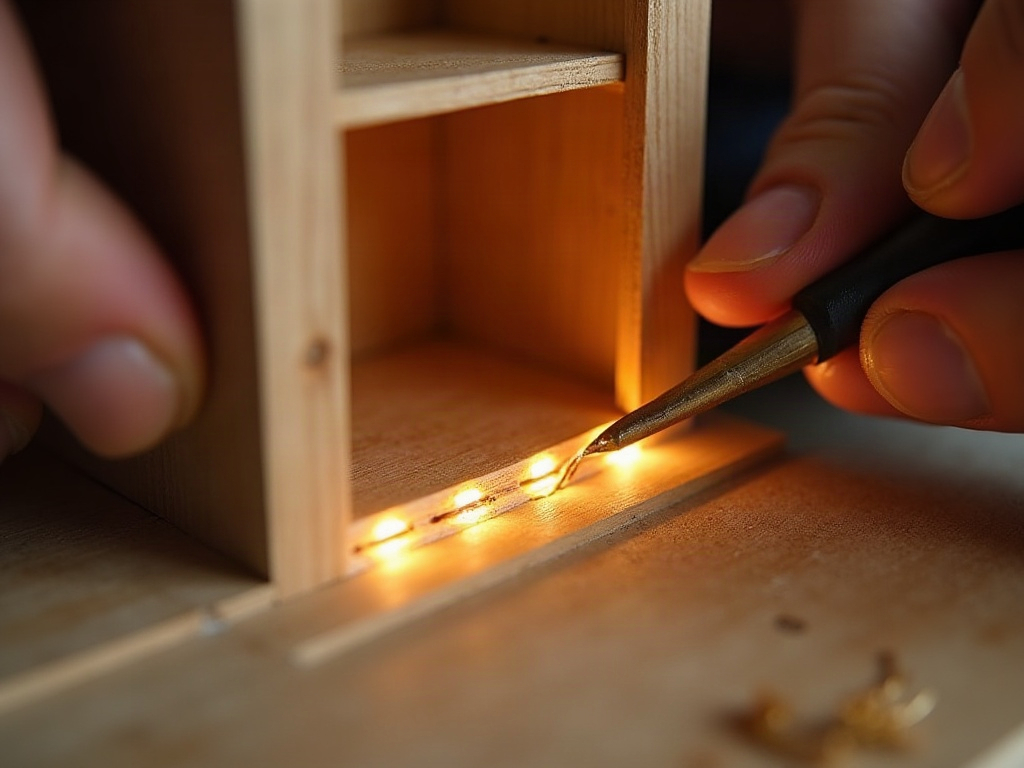
Tuck LED wires inside structural walls during the build phase rather than adding them after the fact. A 3mm channel routed along the baseboard before assembly keeps copper wire invisible. Pre-planning your lighting routes before you glue your first wall is one of the most valuable habits you can build. For more on wiring technique in confined miniature spaces, see our broader guide on miniature house kit building.
Difficulty Ratings and Honest Time Estimates
Ghibli book nook builds range from 10-18 hours for a beginner Totoro forest scene up to 30-40 hours for an advanced Spirited Away bathhouse, with scratch builds from raw sheet goods adding roughly 20-30% more time on top. One of the questions that comes up constantly in the community: “How long does this actually take?” Honest estimates by theme:
| Ghibli Theme | Difficulty | Estimated Hours | Best For |
|---|---|---|---|
| My Neighbor Totoro | Beginner-Intermediate | 10-18 hours | First-time builders, gifting |
| Howl’s Moving Castle | Intermediate | 15-25 hours | Builders with one kit under their belt |
| Princess Mononoke | Intermediate-Advanced | 20-35 hours | Texture lovers, patient builders |
| Spirited Away Bathhouse | Advanced | 30-40 hours | Experienced miniaturists |
These ranges assume you are working from a kit or a detailed plan. Scratch builds from raw sheet goods will add 20-30% more time for measurement and planning. If you want pre-cut components that skip the most tedious prep work, browsing the fantasy book nook collection is a good starting point for finding structured kits in this aesthetic.
Premium collector piece
Monet’s Garden DIY Miniature House Kit
$155.00
For builders ready to go beyond a first nook: this collector-tier kit shares the same lush, overgrown botanical energy as a Ghibli garden scene. The layered floral detailing and warm-light atrium are a natural next project once a Totoro forest build is done.
Frequently Asked Questions about Studio Ghibli Inspired Book Nooks
Everything you might be wondering (click a question to expand).
Do I need any woodworking experience to build a Ghibli book nook?
No formal woodworking background is needed. Most book nook kits use basswood or balsa that cuts cleanly with a basic craft knife and metal ruler. The skills you actually need are patience, willingness to dry-fit pieces before gluing, and comfort with acrylic paint. If you have done any model building, paper crafting, or similar fine-detail hobbies, you already have the manual dexterity these builds ask for.
What is the best material for a Ghibli-inspired book nook?
3mm basswood is the most reliable all-round choice for walls, floors, and architectural trim. It cuts cleanly with a craft knife, takes acrylic paint and wood stain equally well, and holds structural glue bonds firmly. For organic textures (forest floors, shrine paths, mossy banks) supplement basswood with preserved reindeer moss and air-dry clay. Balsa is softer and easier for absolute beginners but dents more easily over time. If you want to replicate specific Ghibli details: copper wire for candelabras and lantern frames, translucent resin for water and flame effects, and tissue paper over wire armatures for paper lanterns.
Can I use a Ghibli book nook kit as a gift for someone who has never crafted before?
A Totoro-themed or forest-based kit at beginner difficulty makes an excellent gift for a crafting newcomer, especially if you include a set of basic tools (craft knife, cutting mat, small acrylic paints) alongside it. Advanced kits like the Spirited Away bathhouse are better suited to someone with at least one prior miniature build. When gifting, match the kit difficulty to the recipient’s patience level rather than their enthusiasm for the IP.
What size shelf space does a standard book nook need?
Most standard book nook inserts are designed to fit a bookshelf gap of 4-6 inches wide, 10-12 inches tall, and 8-10 inches deep. Some larger Spirited Away bathhouse builds run closer to 7-8 inches wide. Always measure your shelf gap before ordering or cutting, and account for the LED power cable that needs to exit the back or bottom panel.
How do I get the depth illusion to work convincingly?
The depth illusion depends on three things working together: a painted backdrop that uses atmospheric perspective (lighter and less detailed as elements recede), a path or road element that narrows as it moves toward the back wall, and foreground elements (a doorframe, a lamppost, a tree) that are full-scale or slightly oversized. The contrast between the large foreground and the tiny, faded background convinces the brain the space is much deeper than it physically is. This is the same ma principle Miyazaki’s background artists use.
How long does it take to build a Ghibli-inspired book nook from a kit?
Working from a kit with pre-cut components, expect 10-18 hours for a beginner Totoro forest scene and 30-40 hours for an advanced Spirited Away bathhouse. Most builders spread the work across two to four weeks of evening sessions, which also gives glue and paint time to cure properly between stages. Scratch builds from raw basswood add roughly 20-30% more time for measuring and cutting. The rhythm of building in short, focused sessions is something most people find genuinely restorative rather than stressful.
Are there copyright concerns with Ghibli-themed builds?
Building a personal Ghibli-inspired book nook for home use or as a personal gift is generally considered fan craft and falls outside commercial reproduction. If you plan to sell finished builds or kits featuring direct copies of Ghibli characters, you would need to consider intellectual property licensing. Most sellers and builders in the community use inspired aesthetics and original character designs rather than exact replicas of licensed characters for this reason.
Choosing Your First Build: Matching the Scene to Your Shelf
Choose the Ghibli scene that fits your shelf gap, matches your current skill level, and comes from the film that genuinely moves you, technique can be learned, but building a world you love is what keeps you at the table every evening until it is done. The best Studio Ghibli inspired book nook for you is the one that fits three things at once: the physical gap on your shelf, your current skill level, and the film that genuinely moves you. Technique can be learned. Patience grows with practice. But building a scene you actually love, pulling it out of a film that has meant something to you since you first saw it, that is what makes you want to sit down at the table every evening until it is finished.
Start with one scene. One corner of one world. Keep the ambition tight and the detail rich. A six-inch slice of the Totoro forest done with care will always outlast a half-finished bathhouse that bit off more than the builder could chew. Once that first nook is done and glowing on your shelf, the itch to build the next one arrives almost immediately. That is not a coincidence. It is exactly how this hobby works.
For structured kits and curated materials that take the guesswork out of getting started, the fantasy book nook collection has options across every difficulty level described here.