🎁 Buy 2 kits, get the 3rd FREE · Free shipping on every order

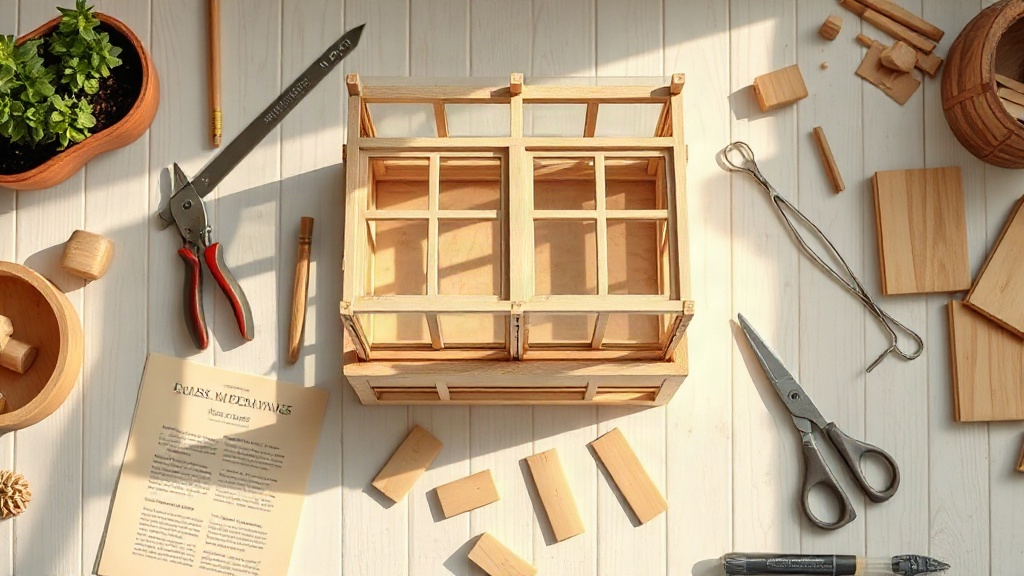
Best Miniature Greenhouse Kits for Adults: 2026 Buyer’s Guide
Discover the top miniature greenhouse kits for adult hobbyists in 2026. This guide reviews 5 premium options plus 2 alternatives, covering assembly time, scale accuracy, and what makes each kit special for crafters seeking meditative building projects.

There’s something deeply satisfying about building something beautiful with your own hands. Miniature greenhouse kits tap into that exact feeling. These detailed architectural builds offer a perfect balance: engaging enough to hold your focus for hours, yet forgiving enough that you’ll finish with a sense of real accomplishment.
Whether you’re looking for a meditative evening project, a gift for someone special, or your next collection piece, this guide walks through the five standout miniature greenhouse kits available for adults right now, plus two solid alternatives worth considering.
What Makes a Great Miniature Greenhouse Kit?
A great miniature greenhouse kit balances realistic architectural detail with approachable assembly, offering substantial materials, visible wood grain, cleanly aligning panes, and instructions that are clear without being condescending. Before we get into specific picks, let’s talk about what separates a kit worth your time from one that feels rushed. The best miniature greenhouse kits balance realistic architectural detail with approachable assembly. You want materials that feel substantial in your hands. Wood grain should be visible. Panes should align cleanly. Instructions need to be clear without making you feel patronized.
A solid kit typically ships with all structural pieces pre-cut and pre-sanded, letting you focus on assembly and finishing rather than prep work. Look for sets that include period-appropriate hardware, weatherable finishes, and optional LED lighting kits. Scale matters too. 1:24 scale is most popular for adult crafters because the details are visible enough to appreciate, yet the finished piece fits on a shelf without dominating the room.
Difficulty rating is personal. Some kits target beginners with snap-fit frames and minimal gluing. Others ask you to work with tiny brass hinges and glass panes, rewarding patience with exceptional realism. Your choice depends on whether you find complexity exciting or frustrating. If you enjoy the slow, focused rhythm of fitting tiny pieces together, you’ll probably love the more demanding kits. If you want a satisfying finish in a single weekend, the beginner options genuinely deliver.
Quick Comparison: All 5 Kits at a Glance
This side-by-side table covers all five kits across scale, difficulty, build time, price range, and best use, so you can match the right greenhouse kit to your space, budget, and skill level before reading further. Not sure which kit fits your space, budget, or skill level? This table lets you compare the five main options side by side before diving into the full descriptions below.
| Kit | Scale | Difficulty | Build Time | Price Range | Best For |
|---|---|---|---|---|---|
| Victorian Glass Conservatory | 1:24 | Intermediate | 12-14 hrs | $120-$150 | Centerpiece display, heirloom build |
| Modern Minimalist Greenhouse | 1:24 | Beginner | 4-6 hrs | $55-$75 | First-time builders, Scandi decor |
| Rustic Potting Shed Hybrid | 1:24 | Intermediate | 8-10 hrs | $85-$110 | Narrative storytelling, skill-building |
| Victorian Lean-To Greenhouse | 1:24 | Beginner+ | 5-7 hrs | $60-$80 | Small spaces, dioramas, wall displays |
| Steampunk Industrial Greenhouse | 1:24 | Advanced | 12-16 hrs | $130-$160 | Statement collectors, metal craft fans |
The Five Best Miniature Greenhouse Kits in 2026
1. Victorian Glass Conservatory Kit (Deluxe Edition)
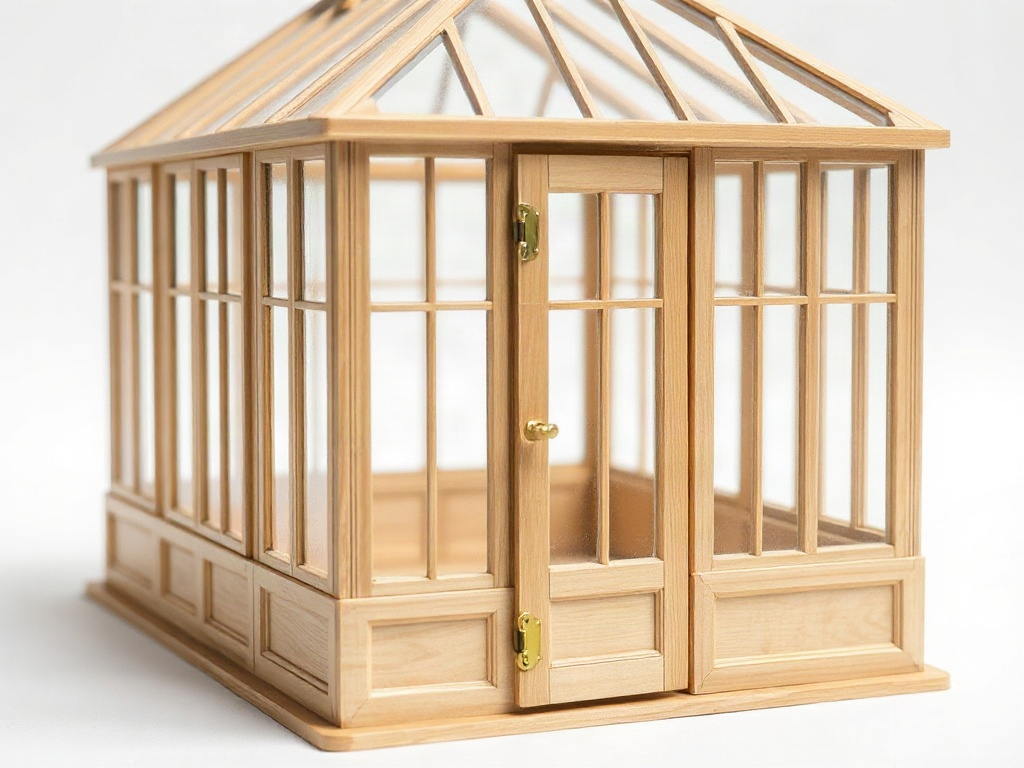
This is the benchmark. The Victorian Glass Conservatory combines handcrafted wooden frames with real glass panes and working metal hinges on both entry doors. Assembly runs 12 to 14 hours across 3 to 4 evenings, making it ideal for deliberate, mindful building. Many community members who’ve made this their first serious kit describe the moment the two door hinges swing freely as genuinely thrilling. That small mechanical payoff is hard to explain until you’ve experienced it yourself.
What sets it apart: the resin roof panels cast light beautifully when photographed, and the optional LED strip kit (sold separately) actually makes sense here. The frame joinery is mortise and tenon, not dowel heavy, so you see real craftsmanship reflected in your finished piece. Included are two benches, plant accessories, and a fully illustrated assembly guide that respects your intelligence.
Scale: 1:24. Difficulty: Intermediate (woodworking experience helpful, not required). Materials: basswood, glass, metal hardware, stain included. Finished dimensions: 8 inches wide by 9.5 inches tall. Most hobbyists report this feels like a legitimate keepsake, not a one-time project. Browse our full miniature greenhouse kit collection for more options at this level.
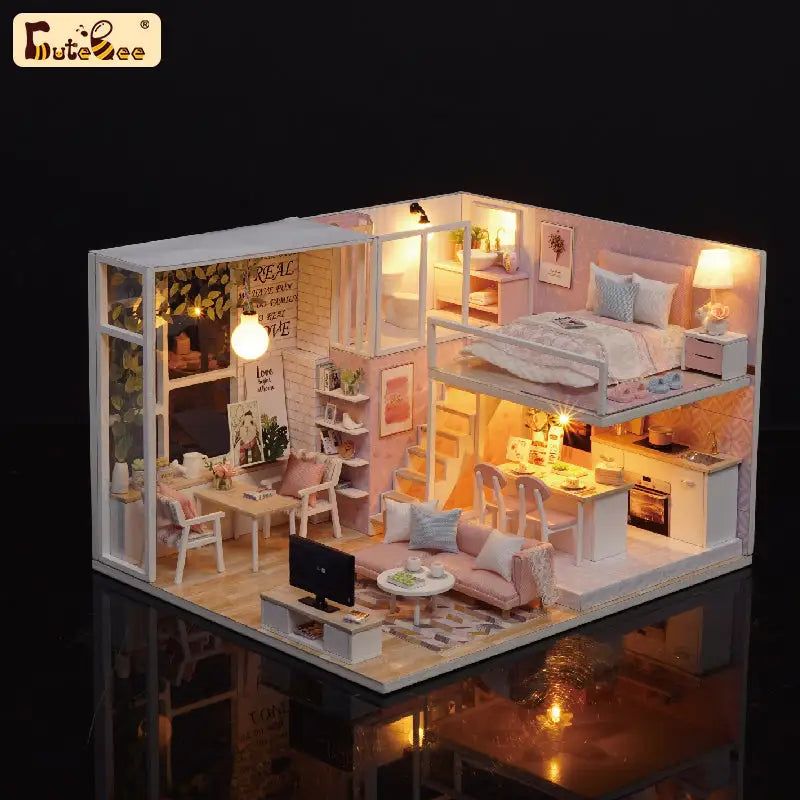
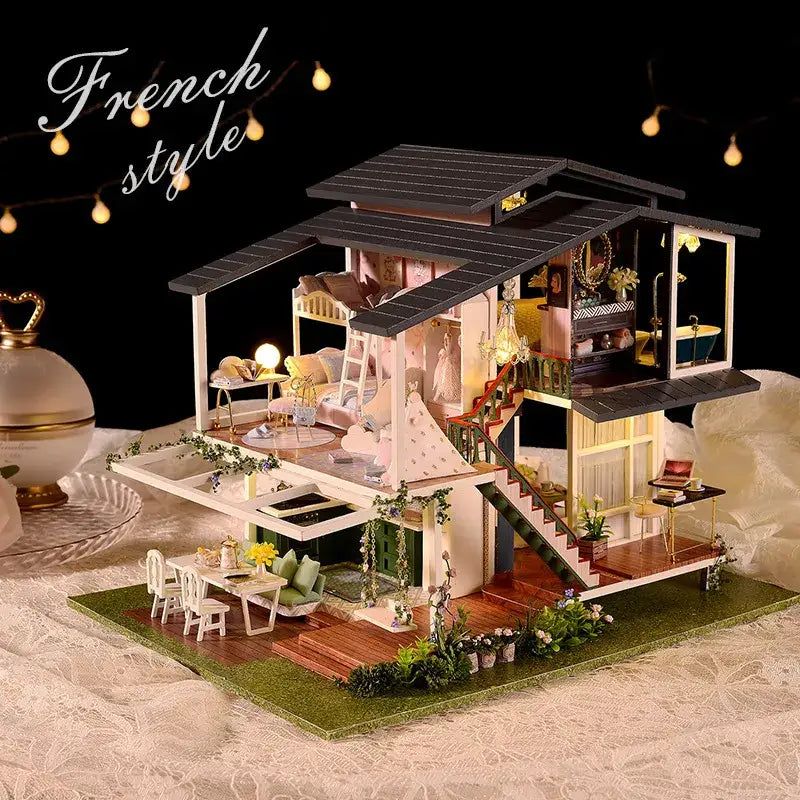
Bestseller cottage kit
Tranquil Life DIY Miniature House Kit
$67.90
Perfect companion build alongside your greenhouse for a full garden-cottage display scene.
2. Modern Minimalist Greenhouse (Snap-Fit Edition)
If you want the greenhouse aesthetic without the commitment, this one lands the mark. Snap-fit means no glue, no clamps, no waiting for things to dry. Assembly takes 4 to 6 hours straight, or two relaxed evenings. The process is genuinely stress-free: pieces click with a satisfying firmness, and if you make a mistake, you can simply unclip and try again.
The design leans Scandinavian: clean lines, lots of light, a natural birch finish that needs no staining. All panes are acrylic instead of glass, which means easier handling and no breakage risk during transport or storage. The hinged roof panel actually opens for access, and the floor board is perforated so water drains if you decide to add a small moss garden inside.
Scale: 1:24. Difficulty: Beginner to Intermediate. Materials: birch plywood, acrylic, integrated hinges. Finished dimensions: 7 inches wide by 8 inches tall. This appeals to minimalist decorators and anyone nervous about their first build. Several buyers report using it to house tiny succulents or air plants, blurring the line between model and functional plant display. If you like this aesthetic, our miniature house kits collection includes several builds with a similar clean, Nordic sensibility.
3. Rustic Potting Shed Greenhouse Hybrid
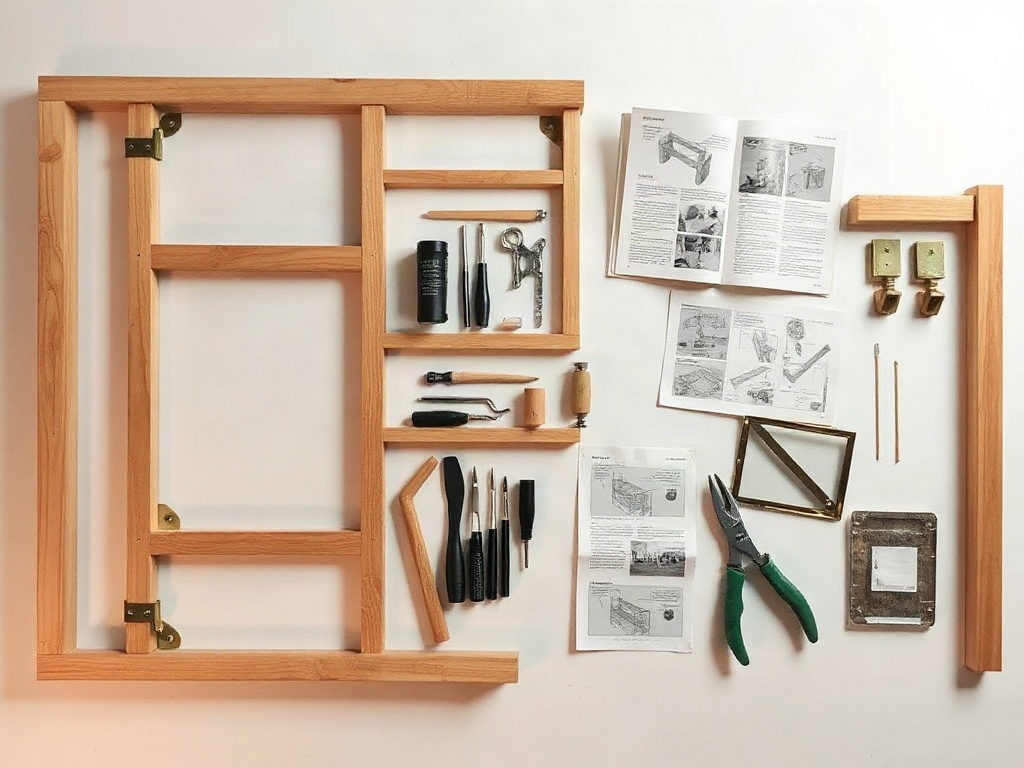
A hybrid structure that’s part greenhouse, part working potting bench. This kit gives you more visual interest because there’s actually a covered work area with storage cubbies, plus the glazed greenhouse section where a miniature gardener might actually work. It’s the kit that makes you want to invent a backstory for the person who uses the space.
The build teaches you real skills: fitting wooden frames square, applying wood stain to get even coverage, attaching glass with precision. Assembly runs 8 to 10 hours. Materials are premium: reclaimed-look basswood, real textured glass with an aged patina option, and brass corner brackets. The stain palette includes three options (natural, walnut, ebony), letting you match your decor.
Scale: 1:24. Difficulty: Intermediate. Materials: basswood, textured glass, brass hardware, stain choices included. Finished dimensions: 9.5 inches wide by 8 inches tall by 7 inches deep. This kit resonates with people who like narrative detail. You’re not just building a structure; you’re imagining the life that happens inside it. For a complementary project, our book nook kits share the same story-telling spirit and look wonderful displayed alongside a potting shed.
4. Victorian Lean-To Greenhouse (Wall-Mounted Edition)
Space constraints? This lean-to attaches to an existing dollhouse wall or stands freely against any 6-inch tall vertical surface. It’s a genius design for apartments or cramped desks because it uses wall real estate rather than taking up shelf depth.
The attachment system is invisible once installed, using small brass angles on the back. The front face is pure greenhouse: multi-paned glass door, slatted wooden shelving inside, and a peaked roof with delicate guttering. Assembly time drops to 5 to 7 hours because you’re building shallower. Precision matters more here since gravity and the wall do some of the structural work. Take extra care with the guttering pieces; they’re slender and reward slow, deliberate gluing over a rushed fit.
Scale: 1:24. Difficulty: Beginner to Intermediate. Materials: basswood, glass, brass hardware, wood stain. Finished dimensions: 5.5 inches wide by 8 inches tall by 4 inches deep. Buyers love this for dioramas or as an accent piece on floating shelves. The footprint is forgiving and the wall-mount approach means it pairs naturally with any existing dollhouse in your collection.
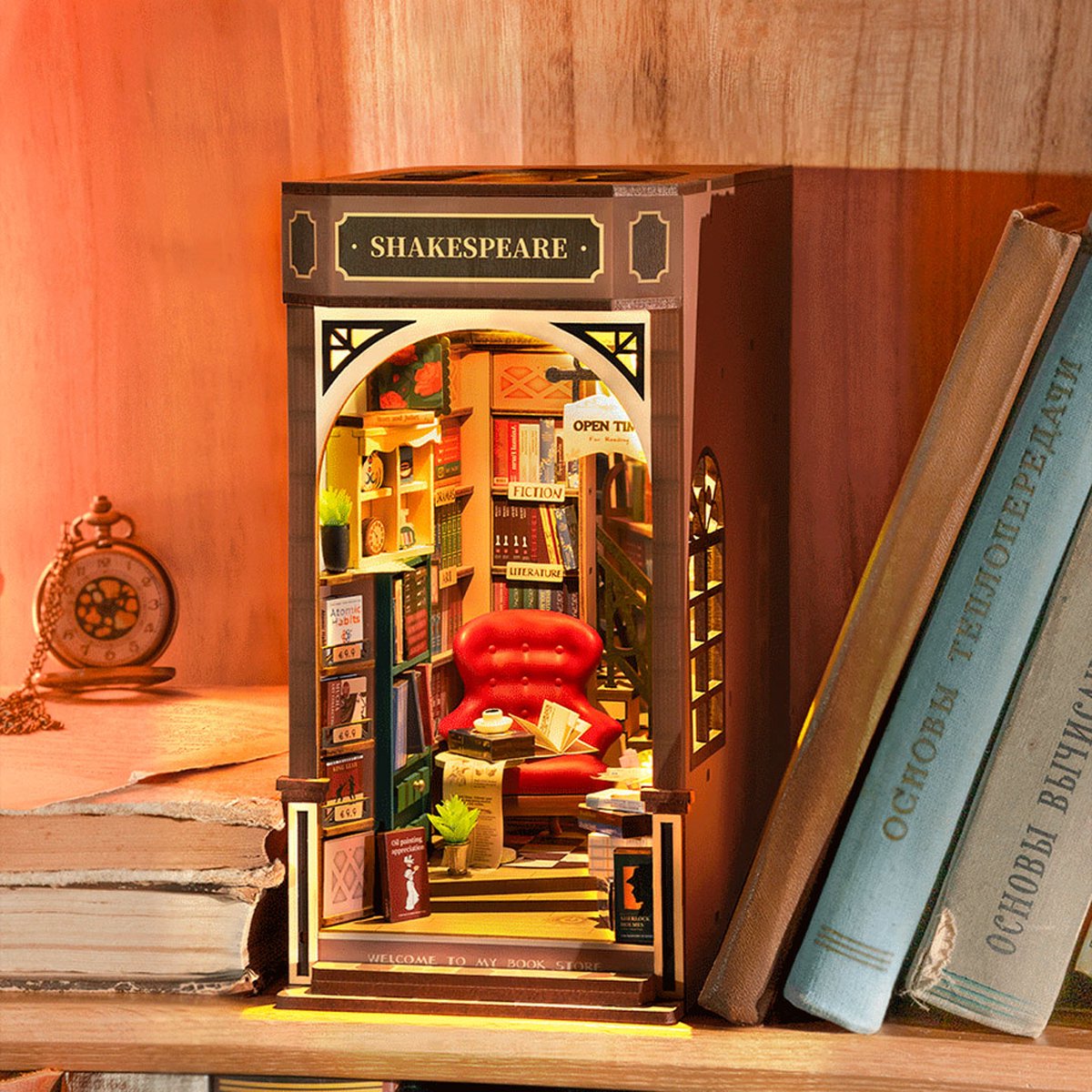
Explore the collection
All Book Nook Kits
76 handcrafted book nook kits
A book nook makes a wonderful companion piece to any lean-to or conservatory build, creating a full shelf display that tells a story.
5. Steampunk Industrial Greenhouse (Metal and Glass Edition)
For builders who want a statement piece, this ventures into steampunk aesthetic territory. The frame is entirely brass-toned metal, not wood. There are visible rivets, hinged panels with industrial latches, and a corrugated metal roof that catches light in a way no wooden kit can replicate.
This is the most mechanically complex kit in the lineup. You’ll work with metal tabs and slots, learn to solder (or use the included adhesive if soldering intimidates you), and install spring-loaded hinges that actually open smoothly. Assembly runs 12 to 16 hours because every joint needs precision. Take the time to dry-fit every panel before committing to adhesive or solder; this one step alone prevents most of the frustration newer builders report with metal kits. The payoff: a greenhouse that looks like it emerged from a Jules Verne novel, utterly unlike anything else in a dollhouse collection.
Scale: 1:24. Difficulty: Advanced. Materials: brass-toned steel, glass, metal fasteners, solder or metal adhesive included. Finished dimensions: 7.5 inches wide by 9 inches tall. This appeals to people who collect steampunk aesthetics or who want something that breaks the cottage-core mold entirely. It’s bold. It’s different. It’s not for everyone, and that’s precisely the point.
🪄 Hannah’s tip
Before choosing your first greenhouse kit, ask yourself what you’ll display inside or around it. Will there be tiny plants, furniture, or nothing at all? Will it be a standalone piece or part of a larger diorama? Your answer shapes which kit gives you the most joy. The Victorian Glass Conservatory shines as a centerpiece with an empty floor that lets light play through the glass. The Rustic Potting Shed works best filled with activity. The Steampunk version is compelling even empty because the frame itself is the art.
Before choosing your first greenhouse kit, ask yourself what you’ll display inside or around it. Will there be tiny plants, furniture, or nothing at all? Will it be a standalone piece or part of a larger diorama? Your answer shapes which kit gives you the most joy. The Victorian Glass Conservatory shines as a centerpiece with an empty floor that lets light play through the glass. The Rustic Potting Shed works best filled with activity. The Steampunk version is compelling even empty because the frame itself is the art.
Two Strong Alternatives Worth Considering
The Japanese Zen Garden Greenhouse and the Victorian Octagonal Conservatory are both strong alternatives: the first suits beginners drawn to Asian architecture, the second challenges experienced builders with its complex angled frame and curved glass panels.
Japanese Zen Garden Greenhouse
This is a departure from Western greenhouse styles. It’s a pavilion with sliding shoji-inspired panels and an open central garden area. Assembly is gentler at 6 to 8 hours, and the meditative aesthetic appeals to anyone drawn to Japanese architecture. The rice paper panels catch the light softly in a way that’s completely different from glass, and the open central section invites you to arrange tiny raked gravel or moss however feels right to you.
Scale: 1:24. Difficulty: Beginner. Materials: natural basswood, rice paper panels, brass hardware. Finished dimensions: 8 inches wide by 7 inches tall. Great for collectors of Asian miniatures or as a calm focal point in a display cabinet.
Victorian Octagonal Conservatory
An octagonal footprint means complex angles and more puzzle-like assembly, but the finished silhouette is stunning. Curved glass panels wrap the entire structure, so light and views matter as much as the build itself. This is the kit that experienced builders tend to return to when they want to genuinely challenge their own accuracy.
Scale: 1:24. Difficulty: Intermediate to Advanced. Materials: basswood, curved glass (shipped safely), metal corner braces. Finished dimensions: 7.5 inches per side, 9 inches tall. Best for experienced builders or those who love geometry and architectural challenge.
📜 Did you know?
Miniature greenhouse kits became popular in Victorian England during the 1800s as wealthy collectors displayed rare orchids and exotic plants in dollhouse reproductions. Those originals were handcrafted by artisans using techniques that modern kit makers still draw from today. Building a miniature greenhouse connects you to over 200 years of craft tradition.
Miniature greenhouse kits became popular in Victorian England during the 1800s as wealthy collectors displayed rare orchids and exotic plants in dollhouse reproductions. Those originals were handcrafted by artisans using techniques that modern kit makers still draw from today. Building a miniature greenhouse connects you to over 200 years of craft tradition.
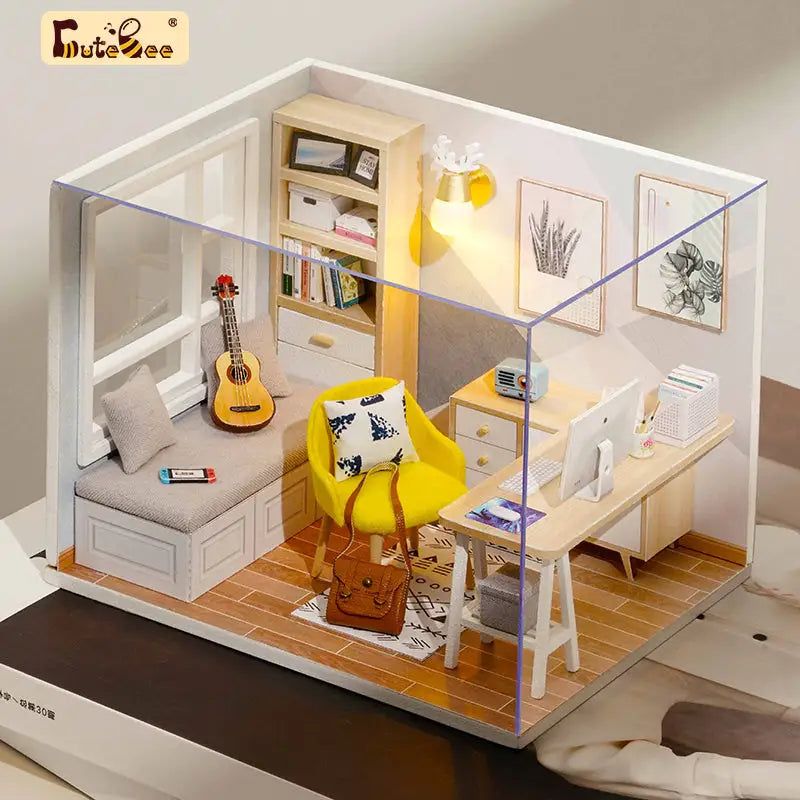
Easy starter under $50
Sun Room DIY Miniature House Kit
$49.99
A gentle warm-up build before tackling a full greenhouse kit. Snap-friendly and great for teens building alongside adults.
Assembly and Tools You’ll Actually Need
Most greenhouse kits technically only need a craft knife, white glue, and sandpaper, but adding two small bar clamps, fine-tip tweezers, and 220-grit sandpaper makes the process far less frustrating and your results noticeably cleaner. Most kits claim to need only a craft knife, white glue, and sandpaper. That’s technically true, but being practical: a few additional tools make the process far less frustrating.
For any wooden miniature greenhouse kit, a small clamp (two 3-inch bar clamps cost $15 total) holds frames square while glue sets. You’ll also want 120 and 220 grit sandpaper to smooth edges after cutting, and a small metal ruler for measuring before you glue. A rotary cutter or sharp craft knife matters for accuracy on glass panes. A pair of fine-tip tweezers is worth adding too; they’re invaluable for placing tiny hardware, brass corners, and hinges without accidentally denting the surrounding wood with your fingernails.
For metal-based kits like the Steampunk option, a soldering iron is helpful though not mandatory. The kit provides flux and lead-free solder. If soldering feels intimidating, the included metal adhesive works fine, though joints take longer to cure.
Don’t buy a full tool kit unless you already own almost nothing. Start with what you have. Most builders report the satisfaction comes from problem-solving constraints, not from having the perfect tools.
LED Lighting: Is It Worth Adding?
Yes, LED lighting is worth adding to any miniature greenhouse kit, and almost every builder who tries it wishes they had planned the wiring before final assembly rather than after, since it transforms the finished piece into a glowing display object. Short answer: yes, and almost every builder who tries it wishes they’d planned the wiring before final assembly rather than after. LED lighting transforms a finished greenhouse from a shelf object into something that genuinely glows and draws the eye across the room.
Warm white LED strips (2700K to 3000K colour temperature) suit Victorian and rustic styles. Cooler white or daylight strips (5000K) complement the Modern Minimalist and Steampunk kits. Most LED kits designed for miniatures run on USB power or AAA batteries. Battery packs are tidier for shelf displays; USB is better if the piece lives near a desk or bookshelf with accessible power.
If you’re wiring your own strip, the key step is to route the cable through the floor or along the rear wall before gluing the final panels in place. Retroactively threading wire through completed frames is possible but genuinely fiddly. Plan the route, tape it temporarily, then glue. Our greenhouse kit collection lists which kits include pre-routed LED channels in their specifications.
Finding the Right Difficulty Level for Your Skills
Choosing the wrong difficulty level is the main reason greenhouse kits sit half-finished: beginners should start with snap-fit or lean-to builds, intermediate crafters thrive with the Victorian Conservatory or Potting Shed, and experienced builders are best challenged by the Steampunk or Octagonal options. Choosing wrong on difficulty is the main reason kits sit half-finished. Honest self-assessment helps.
If you’ve never built a model or assembled furniture beyond flat-pack, start with the Modern Minimalist or Victorian Lean-To. These teach you how pieces fit without overwhelming you. You’ll finish in a weekend and feel capable.
If you’re comfortable following instructions and don’t mind gluing or minor problem-solving, the Victorian Glass Conservatory or Rustic Potting Shed are perfect next steps. These take longer but the process is logical and meditative.
If you’ve completed 2+ kits and enjoy mechanical puzzles or woodworking, the Steampunk or Octagonal options will engage your brain differently. The complexity isn’t frustrating; it’s rewarding.
Beginner kits aren’t “lesser.” They’re differently scaled. Some of our most engaged builders return to simpler kits after advanced ones specifically because the focus shifts from “can I do this” to “how beautifully can I finish this.” That’s genuine growth in any craft.
Lighting, Display, and Long-Term Care
To protect your finished greenhouse kit long-term, keep it away from direct sunlight, dust it regularly with a soft brush, and refresh the wooden finish with clear varnish every one to two years so the wood deepens gracefully rather than deteriorating. Once your greenhouse is complete, lighting transforms it. An LED strip kit (usually $20 to $40 extra) mounts inside the roof or along shelves, casting warm light through the glass. Photography improves dramatically. The piece becomes a display object rather than just a shelf item.
For display, avoid direct sunlight on acrylic or wooden surfaces. Both fade and warp over time. A glass cabinet or shelf set back from windows is ideal. If you’re adding real moss or tiny plants inside, ensure air circulation to prevent mold.
Wooden greenhouses benefit from an occasional light dusting with a soft brush and, every 1 to 2 years, a refresh of the finish with clear varnish or wax. This isn’t maintenance; it’s enjoying the fact that your build ages gracefully rather than deteriorating. Communities of builders often share their 5-year and 10-year photos of kits they’ve cared for. The wood deepens in tone. The patina tells a story.
Gift Considerations and Audience
Miniature greenhouse kits make thoughtful gifts for adults seeking offline hobbies, but match the kit’s difficulty and footprint to the recipient: a half-finished build is a wasted gift, while the right kit becomes a project they’ll talk about for years. Miniature greenhouse kits make thoughtful gifts for adults seeking offline hobbies. A few tactical notes if you’re buying for someone else.
Check available space first. A kit that demands a 10-by-10-inch footprint isn’t suitable for someone with tiny nightstands. The Lean-To edition solves this beautifully.
Difficulty rating matters more than price. A cheaper kit that frustrates is wasted money. If the recipient tends to multitask or abandon projects, choose something finishable in under 8 hours. If they’re methodical and patient, longer builds aren’t a burden; they’re a feature.
Consider pairing a kit with a display cabinet, LED lighting, or a small shelf specifically chosen for the finished piece. This signals that you believe the result is worth honoring, which most crafters deeply appreciate. For a curated gift bundle idea, the Sun Room kit paired with an LED strip and a small jar of fine-grain sand (for the base) makes a genuinely lovely set.
Browse our full miniature greenhouse kit collection to explore all current options and exclusive community builds.
Building as Meditation, Not Just Hobby
The real magic of a quality miniature greenhouse kit is not the finished object but the hours of focused, screen-free attention the build demands, offering a meditative rhythm that is genuinely rare in modern life. The underlying magic of a quality miniature greenhouse kit isn’t the final object. It’s the hours spent focusing on one thing. No screens, no multitasking, just your hands, the materials, and the specific challenge of aligning a pane or drilling a pilot hole.
Builders describe the process as meditative. There’s rhythm to it. Problems arise and you solve them. Progress is visible. That’s genuinely rare in modern life. The greenhouse you build becomes both a functional display piece and a record of focused attention you chose to give yourself.
Premium collector piece
Monet’s Garden DIY Miniature House Kit
$155.00
Our most lush garden build. Pairs beautifully with the Victorian Glass Conservatory for a full estate display scene.
Frequently Asked Questions about Miniature Greenhouse Kits for Adults
Everything you might be wondering (click a question to expand).
What scale is best for an adult hobbyist?
1:24 scale is the standard for adult builds. It’s large enough that details are visible and satisfying to execute, yet compact enough to display on a shelf or desk. Smaller scales (1:48 or 1:144) appeal more to collectors with extensive dollhouse collections. Larger scales (1:12) are rarer and pricier because they demand more materials. All five kits in this guide use 1:24 scale, so they display harmoniously alongside each other.
How much do miniature greenhouse kits for adults typically cost?
Prices range from roughly $50 at the entry level (snap-fit beginner kits like the Modern Minimalist) up to $160 for advanced metal or premium glass editions (Steampunk Industrial, Victorian Glass Conservatory Deluxe). Mid-range kits in the $80 to $110 band, such as the Rustic Potting Shed, offer the best value per build-hour for most crafters. Budget an additional $20 to $40 if you want to add an LED lighting kit, which isn’t always included.
Do I need a specific LED kit for my greenhouse, or will any strip work?
Any low-voltage LED strip (5V USB or 3V battery-powered) rated for miniature use will work in most kits. The key specs to match are: strip width under 8mm so it fits inside wooden channels, colour temperature of 2700K to 3000K for warm Victorian or rustic styles, and a self-adhesive backing so you don’t need extra glue near finished surfaces. Some kits include pre-routed LED channels; check the product page specifications before buying a separate strip. Our greenhouse kit range notes LED compatibility for each build.
Can I customize or modify the kits after assembly?
Absolutely. Many builders paint the finish differently, swap out hardware for vintage pieces, or add interior plants or furnishings. The kit gives you a canvas. Customization is encouraged within the community. Popular modifications include replacing the included stain with chalk paint for a weathered look, adding real dried botanicals inside, and installing miniature terracotta pots sourced from craft stores. Just ensure modifications don’t compromise structural integrity before the glue fully cures (usually 24 hours).
How long does a kit actually take to complete?
Completion times range from 4 to 16 hours depending on complexity and your pace. This isn’t continuous time; most builders spread it over 2 to 4 evenings. Rushing leads to mistakes. Taking your time is part of the appeal. Refer to the comparison table near the top of this article for build-time estimates for each specific kit.
Are these kits suitable for someone who’s never built a model before?
Yes, but start with Beginner-rated kits like the Modern Minimalist or Lean-To. These teach foundational skills (reading a parts diagram, applying glue cleanly, holding parts square while they cure) without overwhelming you. Success on an easy build builds confidence for something more complex next time. Even Hannah’s very first build was a simple Victorian cottage kit on a rainy Sunday, and the skills from that single afternoon carried directly into every build since.
What tools are needed that aren’t included in the kit?
All kits include the essentials: glue, stain, sandpaper, and basic hardware. The additions that make the biggest practical difference are two small bar clamps ($15 total) for holding frames square, fine-tip tweezers for placing tiny hardware, and 220-grit sandpaper for final smoothing. Metal kits like the Steampunk edition benefit from a soldering iron, though the included adhesive is a genuine alternative. A soft brush for dusting and a small bottle of clear varnish for the final seal are also worth having on hand.
What happens if I damage a piece during assembly?
Contact the maker with photos. Reputable kit manufacturers provide replacement pieces for items damaged during normal assembly. Keep all packaging until you’re certain no replacements are needed. For glass pane breaks specifically, most community members find that a clean cut along the fracture line and a small strip of lead-free solder or clear craft adhesive creates an almost invisible repair that actually adds character to a rustic or steampunk-style build.