🎁 Buy 2 kits, get the 3rd FREE · Free shipping on every order

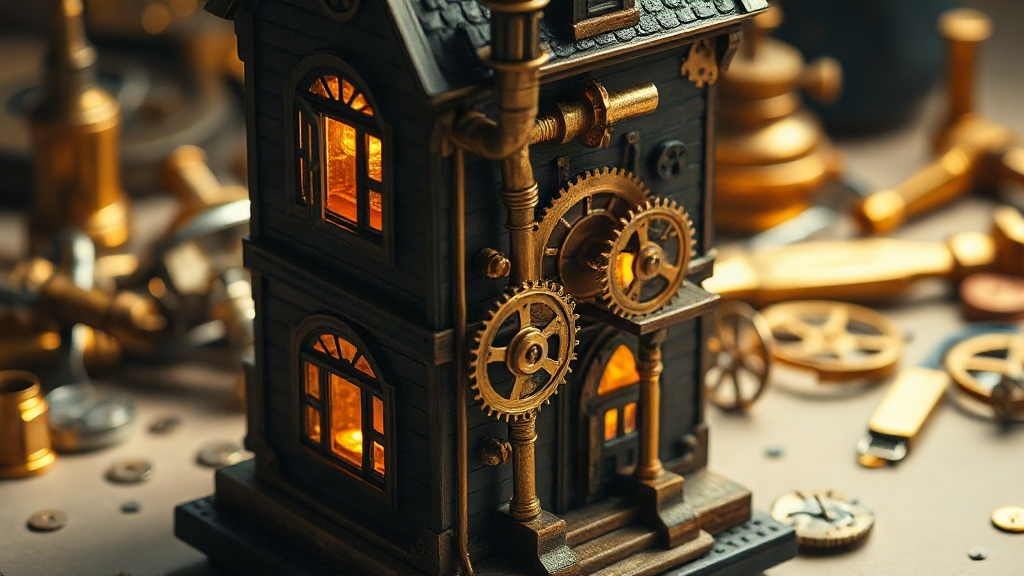
Steampunk Miniature House Kits: Building Industrial-Era Fantasy Worlds
Explore steampunk miniature house kits that blend Victorian architecture with brass gears and sci-fi details. Learn what makes these kits special, difficulty levels, and how to bring intricate industrial fantasy worlds to life through mindful crafting.

There’s something magnetic about the idea of a tiny Victorian mansion filled with brass gears, steam pipes, and the promise of adventure. Steampunk style has always felt like stepping into an alternate history, one where technology wears gears on the outside and leather straps aren’t just fashion. A steampunk miniature house kit captures exactly that: the mechanical heart of the Industrial Age married to the elegance of Victorian architecture, all scaled down to fit in your hands and on your shelf.
If you’ve ever imagined building a world that’s part history, part fantasy, and entirely yours, these kits are calling your name.
What Defines a Steampunk Miniature House Kit
A steampunk miniature house kit is a thoughtfully designed collection that blends Victorian architectural authenticity with fantastical mechanical details, including exposed gears, brass fittings, clockwork elements, and LED lighting. A steampunk miniature house kit is more than just a Victorian dollhouse with some metal accents. These are thoughtfully designed collections that blend architectural authenticity with fantastical mechanical details. You’ll find exposed gears, brass fittings, clockwork elements, and often functional LED lighting that brings the whole scene to life.
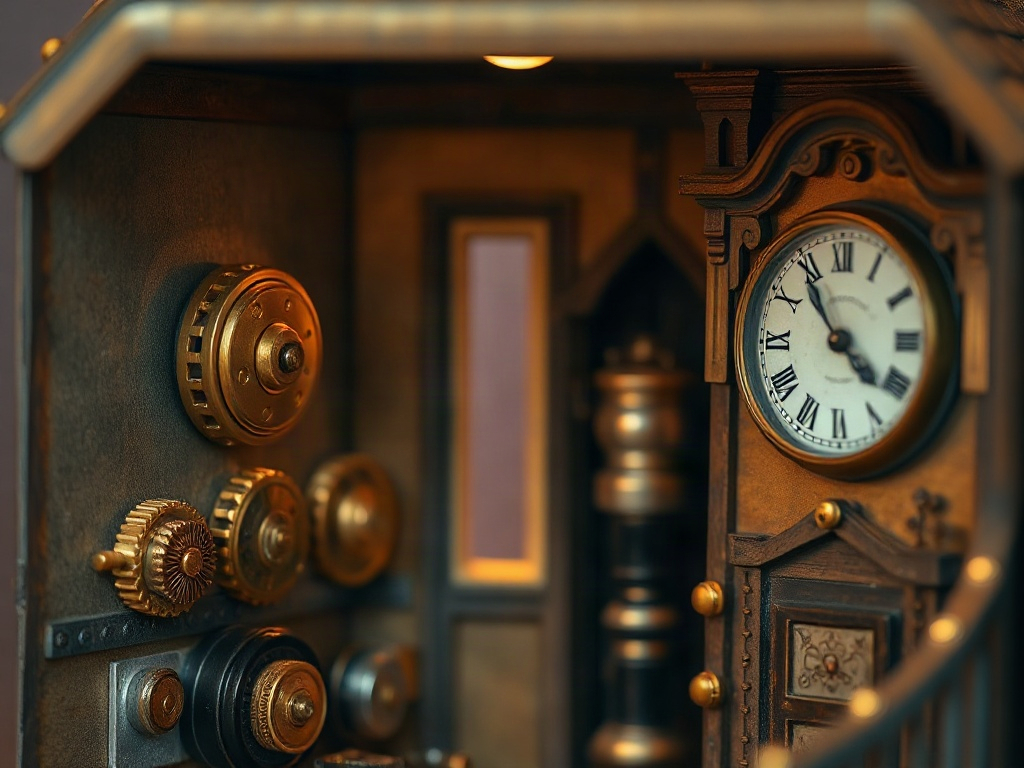
Most kits include laser-cut wooden walls, detailed window frames, miniature furniture scaled to 1:12 or 1:24 ratio, and a collection of brass hardware pieces. The mechanical elements aren’t just decoration. Gears actually protrude from walls. Clock faces sit prominent in rooms. Steam pipe details run along ceilings and corners. Some builders add moving elements, like spinning gears or rotating propellers, once construction is complete.
What separates quality steampunk kits from generic Victorian ones is intentionality. Every design decision serves the theme. A bookshelf isn’t just shelving, it’s a curiosity cabinet. A light fixture doesn’t simply hang, it looks like a gas lamp retrofitted with electricity. The aesthetic commitment runs deep.
📜 Did you know?
Steampunk as a genre emerged in the 1980s, drawing inspiration from Victorian-era literature (particularly Jules Verne and H.G. Wells) reimagined with advanced steam-powered technology. The aesthetic didn’t exist in the 19th century itself, but it captures how that era might have looked if innovation had taken a different technological path.
Steampunk as a genre emerged in the 1980s, drawing inspiration from Victorian-era literature (particularly Jules Verne and H.G. Wells) reimagined with advanced steam-powered technology. The aesthetic didn’t exist in the 19th century itself, but it captures how that era might have looked if innovation had taken a different technological path.
Difficulty Levels: Finding Your Right Challenge
Steampunk miniature house kits range from beginner-friendly builds of 6-15 hours to advanced projects of 40 or more hours, so matching your kit’s difficulty to your skill level is the single most important decision you’ll make before ordering. Steampunk kits range from beginner-friendly to genuinely complex builds. Understanding your own patience and skill level before ordering saves frustration later.
Beginner Level: 6-15 Hours
Entry-level steampunk kits typically include pre-assembled walls that slot together, clearly labeled pieces, and minimal gluing. The brass accents and gears come pre-attached or arrive in an organized hardware bag with a detailed placement guide. These kits work beautifully for anyone new to miniature building or looking for a weekend project. Expect simple painted details, basic lighting, and straightforward assembly instructions with photos at each step. The Tranquil Life Kit is a good benchmark for what a well-organized entry-level experience feels like: everything is labeled, the instruction photos are clear, and the brass details arrive pre-sorted so you’re never hunting through a bag of identical-looking pieces.
Intermediate Level: 20-35 Hours
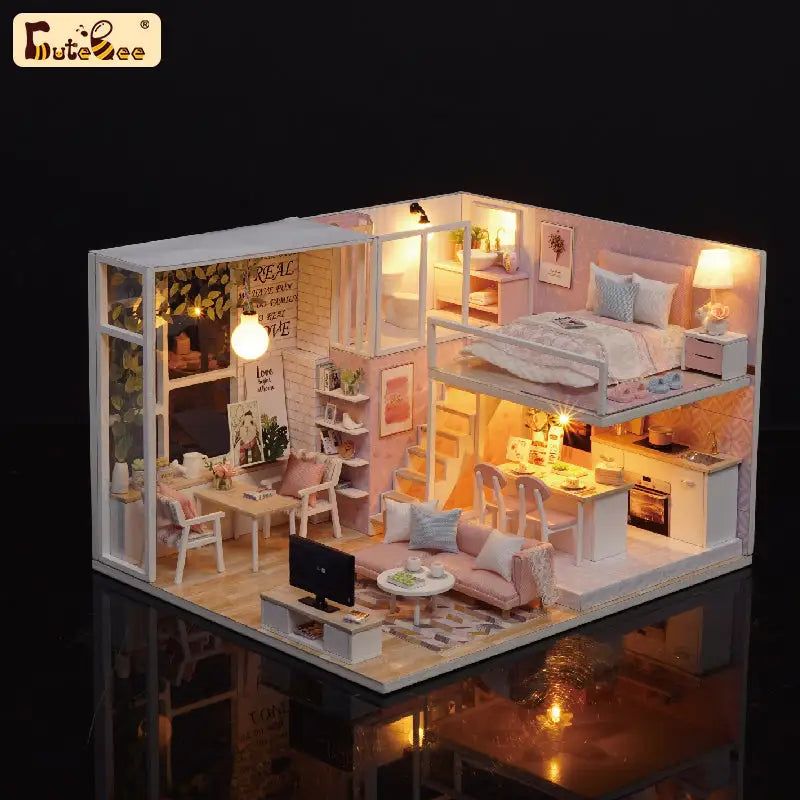
Mid-tier kits introduce more puzzle-solving. Walls may require some sanding or finishing. You’ll hand-paint certain details or apply weathering effects to give brass pieces authentic patina. Lighting installation becomes slightly more involved, often requiring you to thread wires through wooden structures. Smaller mechanical components need careful placement. These kits reward patient builders who enjoy the rhythm of repetitive tasks but don’t need everything spelled out.
Advanced Level: 40+ Hours
Serious builds demand real engagement. You might assemble walls from individual wooden pieces, hand-paint entire rooms with period-appropriate colors, create custom lighting arrangements, and add mechanical features that actually move. Some advanced kits provide the architecture but leave material sourcing partially to you. Every detail gets thoughtful consideration. These builds become meditative projects that stretch across weeks, pulling you back whenever you have creative energy.
🪄 Hannah’s tip
Start with the kit’s materials inventory before committing. Does it include all adhesives, tools, and lighting components, or will you need to source these separately? Some kits are complete boxes; others require you to gather supplies. Reading reviews for “what I wish came in the box” saves money and shopping frustration.
Start with the kit’s materials inventory before committing. Does it include all adhesives, tools, and lighting components, or will you need to source these separately? Some kits are complete boxes; others require you to gather supplies. Reading reviews for “what I wish came in the box” saves money and shopping frustration.
What Makes a Good Kit vs. a Disappointing One
The difference between a satisfying steampunk miniature house kit and a frustrating one comes down to wood quality, instruction clarity, hardware organization, lighting reliability, and consistent scale across all included pieces. Not every steampunk miniature house kit delivers the same experience. After testing dozens of builds, the differences between a satisfying kit and a frustrating one come down to a handful of very specific things.
The first is wood quality and laser precision. Cheap kits use thinner ply (often under 2mm) that warps when glue is applied or snaps under light pressure. Quality kits use 3-5mm plywood with cleanly cut slots. You can feel the difference in the first five minutes of assembly: pieces that slot together with a satisfying click versus pieces that need aggressive forcing or fall apart repeatedly. Builders in our community consistently flag this as the single biggest predictor of overall enjoyment.
The second is instruction clarity. A good instruction booklet shows each step photographically, labels every hardware piece with a matching diagram, and tells you exactly when to pause for drying time. Poor instructions use tiny black-and-white line drawings with parts labeled only by obscure numbers. You spend more time deciphering the guide than building. If an instruction booklet doesn’t have photos, treat it as a warning sign.
The third is hardware organization. Quality kits bag their brass pieces by step or by room, with a labeled inventory sheet. Discount kits throw everything into a single bag. Thirty identical-looking gears with no diagram means thirty minutes of hunting before you place a single piece. One builder told us she abandoned her first kit entirely at this stage. Her second kit, with organized hardware bags, she completed in a single long weekend.
The fourth is lighting reliability. LED strips that flicker after two weeks, connectors that fail at the solder point, or battery compartments that corrode are common in lower-cost kits. Look for kits with USB-rechargeable power and connectors that feel solid when you plug them in. A flickering finished build is genuinely disheartening after 30 hours of work.
Finally, scale consistency matters more than many beginners expect. Furniture in the wrong scale (1:24 chairs in a 1:12 room) breaks immersion immediately, even to non-builders. Check that all included furniture, figures, and accessories are confirmed to the same scale as the structure. If a kit’s product page doesn’t specify scale for its accessories, ask before ordering.
Essential Components in Quality Steampunk Kits
Quality steampunk miniature house building kits arrive with precision laser-cut wooden structures, warm LED lighting, organized brass and metal details, and scale-matched furniture, every component working together to deliver the full mechanical aesthetic. The best steampunk miniature house building kits arrive with everything needed to complete the main structure, though advanced builders often source additional decorative items. Here’s what separates a satisfying kit from a frustrating one.
Wooden Structure and Hardware
The foundation matters. Precision laser-cut wooden pieces fit together cleanly when quality control is maintained. Cheap kits often have rough edges or misaligned slots that require extensive sanding. Quality kits use thicker wood (typically 3-5mm plywood) that feels substantial and weathers beautifully when painted. All fasteners should be brass or quality metal, never cheap steel that rusts.
Lighting Systems
Most steampunk kits include warm-white or amber LED strips that create that gas-lamp atmosphere. Look for kits with non-flicker technology and long-lasting lithium or USB-rechargeable power systems. Some advanced kits include dimmable lights, multiple circuit controls, and pre-wired fixtures. Warm lighting (2700K-3000K color temperature) feels authentic to the period aesthetic.
Brass and Metal Details
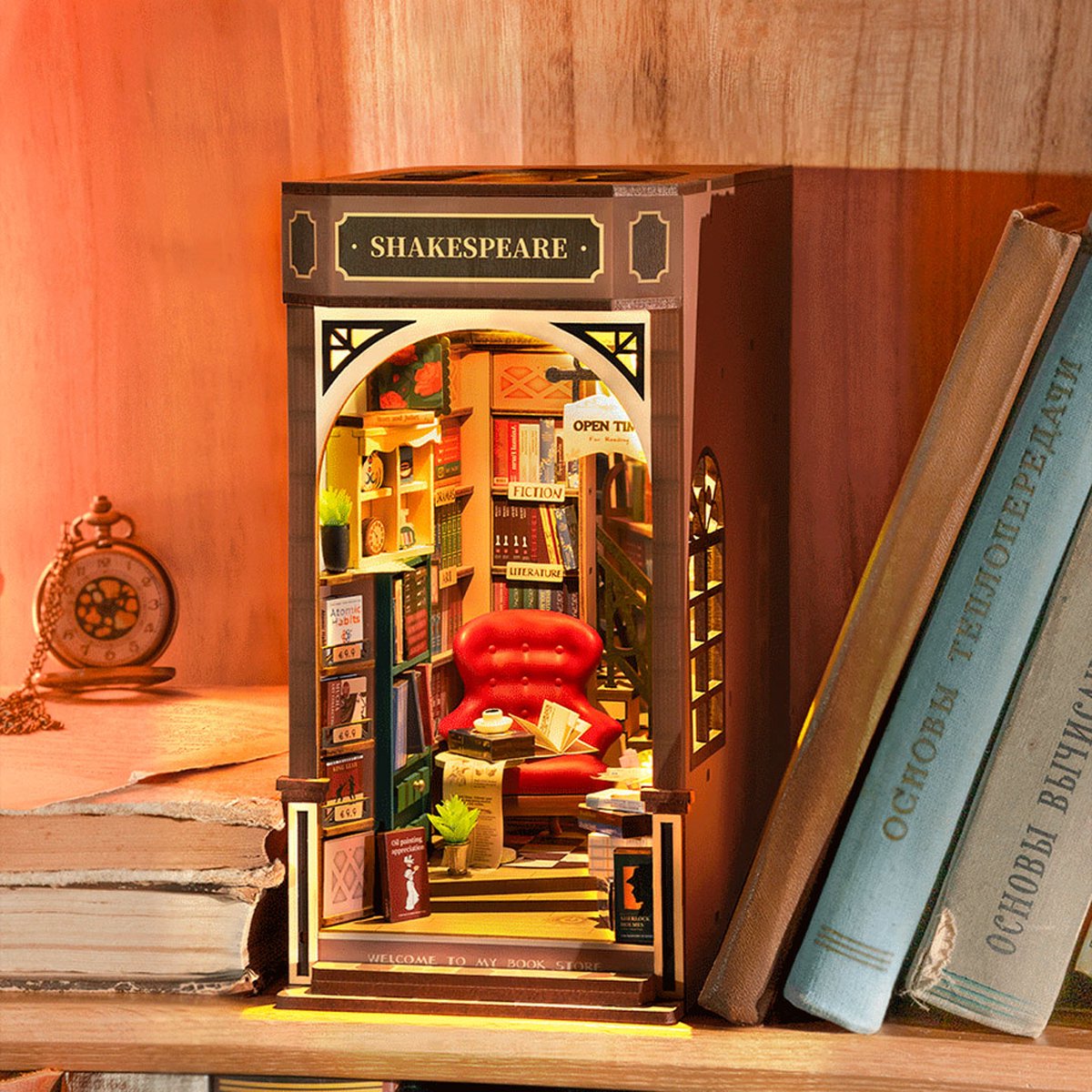
The mechanical soul of the build. Gears, clock faces, pipe fittings, hinges, and decorative brackets should arrive organized and labeled. Some kits include patina finish (aged brass appearance) while others provide shiny raw brass that you can weather yourself. Quality brass doesn’t tarnish aggressively or require constant polishing. Pre-glued components save hours compared to kits requiring you to attach every gear individually.
Furniture and Miniatures
Accompanying furniture should match the scale precisely. Scale mismatch (furniture sized for 1:24 models mixed with 1:12 rooms) breaks immersion immediately. Quality kits include fabric pieces, small mechanical accessories, and character figurines that fit the steampunk world. Some builders spend as much time decorating interiors as building the structure itself.
The Building Experience: What to Expect
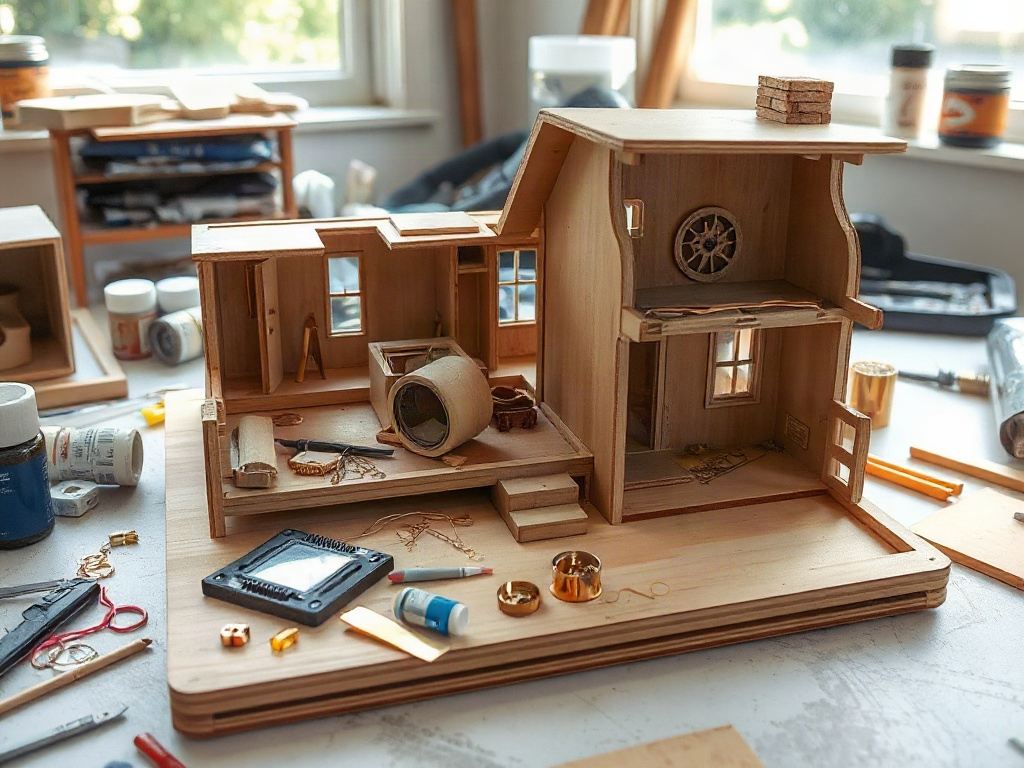
Building a steampunk miniature house kit unfolds across four distinct phases, assembly, finishing, lighting installation, and final decoration, each delivering its own satisfaction and requiring a different kind of patience. Constructing a steampunk miniature house kit unfolds in phases, each with its own satisfaction.
The assembly phase feels like solving a three-dimensional puzzle. Watching walls slot together, seeing the structure take shape across an afternoon, creates genuine momentum. Your hands remember repetitive motions. The brain quiets. Hours pass without frustration if you’ve chosen a kit matching your skill level.
Finishing work comes next. Sanding rough edges. Painting base colors. Applying details. This phase separates the hurried builders from the meditative ones. A room painted in three hours looks rushed. A room painted across three sessions, with time between coats to notice what works and adjust, becomes art. The weathering techniques that make brass look aged and wood look lived-in require patience and an experimental spirit.
Lighting installation brings the world to life. Suddenly those rooms hold atmosphere. The gears cast tiny shadows. The clock face glows with purpose. If you’ve included functional moving elements, testing them for the first time delivers genuine delight. A spinning gear or rotating propeller transforms a static model into something that feels alive.
Final decoration is pure creativity. Arranging furniture. Placing tiny books on shelves. Positioning figurines. Some builders spend weeks on this phase alone, rearranging elements to tell specific stories within their miniature world.
Choosing Between Popular Steampunk Kit Styles
The three main steampunk kit styles, Industrial Workshop, Victorian-Industrial Fusion, and Airship, differ sharply in palette, dominant features, and ideal builder profile, making style choice as important as difficulty level. Different manufacturers emphasize different aesthetics within the steampunk genre. The three styles you’ll encounter most often are quite distinct in feel, build experience, and final display effect. This table summarizes the key differences at a glance.
| Style | Visual Palette | Dominant Features | Ideal For | Typical Difficulty |
|---|---|---|---|---|
| Industrial Workshop | Metal grays, rust orange, deep brown | Exposed machinery, gear walls, pipe frameworks, large mechanical workings | Builders who love the factory and laboratory side of steampunk over Victorian refinement | Intermediate to Advanced |
| Victorian-Industrial Fusion | Rich woods, jewel tones, brass highlights | Ornate wooden trim, brass-accented windows, clockwork as accent not centerpiece | Builders seeking atmospheric homes where mechanical details enhance rather than dominate | Beginner to Intermediate |
| Airship & Dirigible | Riveted metal, warm amber, deep navy | Curved walls, porthole windows, riveted metalwork, compact narrative spaces | Builders who want to tell a story (captain’s quarters, engine rooms, navigation decks) | Intermediate to Advanced |
Industrial Workshop Style
These kits celebrate factories and laboratories. Expect exposed machinery, workbenches, large visible gears, and mechanical workings as architectural features. Rooms include gear walls, pipe frameworks, and technical equipment. The palette runs to metal grays, deep browns, and rust oranges. Perfect for builders who love the industrial side of steampunk over Victorian refinement.
Elegant Victorian-Industrial Fusion
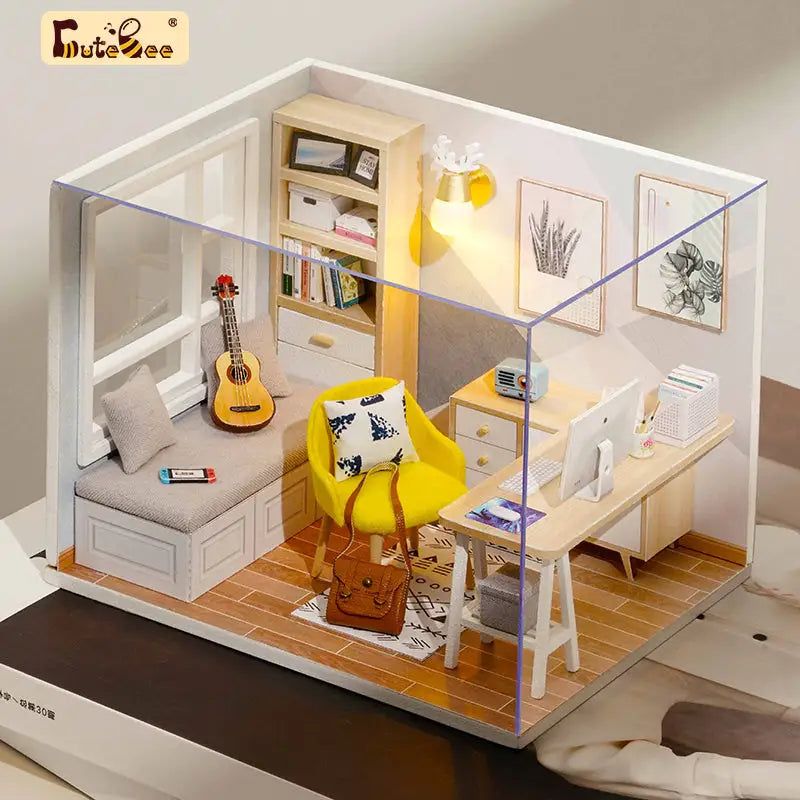
The most common style. Beautiful Victorian architecture meets mechanical details. Ornate wooden trim frames walls. Brass fittings accent windows and doorways. Gears and pipes enhance rather than dominate the aesthetic. These kits appeal to builders seeking atmospheric homes that happen to feature clockwork, not factory spaces. The palette includes rich woods, jewel tones, and brass highlights. If you’re unsure which style to start with, this fusion category is the safest first choice. The Sun Room Kit captures this balance well: Victorian warmth first, mechanical accents second.
Airship and Dirigible Themes
Specialized kits model interior cabins of fantastic airships. Curved walls, porthole windows, and riveted metalwork dominate. Compact spaces create intimate building challenges. Fully realized airship interiors (captain’s quarters, engine rooms, navigation decks) offer narrative possibilities that earthbound houses cannot.
Building Your First Steampunk Miniature House: Practical Guidance
First-time builders get the best results by starting at an intermediate difficulty level, investing in proper tools from day one, taking their time with the painting phase, and joining an online community for tips and inspiration. If you’re new to the hobby, a few decisions shape your experience.
Start with a kit in the intermediate difficulty range rather than the absolute easiest option. Beginner kits sometimes feel too simplified, lacking the satisfying complexity that makes the hobby meditative. You don’t need overwhelming difficulty, but genuine engagement beats boredom. Most builders report that their first intermediate kit took 20-30 hours of enjoyable work spread across 3-5 weeks.
Invest in proper tools early. A good cutting mat, fine-tipped glue applicators, small clamps, and a hobby knife transform the assembly experience. Cheap tools frustrate more than bad kit design. Your first kit’s success hinges partly on having the right implements for precise work.
Don’t rush the painting phase. This is where many builders feel disappointed, but only because they underestimate how much painting affects the final result. Base coats matter. Weathering techniques matter. Accepting that this phase takes time, allowing yourself to experiment on test pieces first, prevents regret when you’re halfway through.
Join the community. Sharing your build progress online, seeing how others tackled the same kit, and gathering ideas for customization enriches the entire experience. Many kits have active builder communities sharing photos, tips, and modification ideas. You’ll often find that seeing someone else’s finished version of your exact kit, weeks before yours is done, gives you ideas you’d never have thought of alone.
Customization Possibilities Beyond the Kit
Once you’ve mastered basic assembly, experienced builders personalize their steampunk miniature house with custom lighting effects, scratch-built furniture, authentic found objects like watch parts or antique brass fittings, and themed display solutions. Once you’ve mastered the basic assembly, experimentation begins. Experienced builders add custom details that personalize their builds.
Additional lighting effects expand atmosphere. UV reactive elements create otherworldly rooms. Programmable LED strips pulse in response to sound. Some builders integrate simple Arduino circuits for moving gears or color-changing lights controlled by apps.
Scratch-built details replace kit-provided elements. Custom furniture. Hand-sculpted miniatures. Vintage found objects (watch parts, old keys, antique brass fittings) incorporated into the design. These additions transform a finished kit into a unique creation that reflects your imagination. Hannah started this way with her first Victorian dollhouse kit in 2021: a single small clock face sourced from a watch repair shop became the detail that made the whole room feel real. That instinct to add one authentic found object carries over perfectly into steampunk builds.
Display solutions matter too. A high-quality display case protects your work while showcasing it. Themed backdrops create immersive scenes. Surrounding miniature landscapes (tiny streets, steam vents, industrial yards) extend the world beyond the house itself. If you enjoy the miniature landscape side of things, our greenhouse kits collection pairs beautifully with steampunk builds as exterior scene-setting pieces.
Gift Giving: Steampunk Kits as Presents
A well-chosen steampunk miniature house kit makes an exceptional gift for creative people: the package arrives complete, delivers hours of focused enjoyment, and matching difficulty level to the recipient’s available time is the key to getting it right. A well-chosen steampunk miniature house kit makes an exceptional gift for creative people. The package arrives complete, requires no guessing about what materials to source, and delivers hours of focused enjoyment.
Consider the recipient’s available time. A person with 10 hours monthly for hobbies needs a different kit than someone with evenings free. Difficulty level matters as much for confidence as for time investment. Someone new to miniature building appreciates clear instructions and logical assembly sequences.
Presentation counts. A kit wrapped thoughtfully, with a note suggesting it as a meditative project rather than a to-do item, frames it as a gift of time and creative space. Pairing the kit with quality tools (good glue, cutting mat, detailed brushes) signals that you understand this is serious hobby territory. For a premium gift that sits at the collector end of the scale, the Monet’s Garden Kit is consistently the piece recipients photograph and share most. It isn’t a steampunk build, but it illustrates what the top tier of kit quality looks and feels like, the same standard you should look for in any serious gift.
Frequently Asked Questions about Steampunk Miniature House Kits
Everything you might be wondering (click a question to expand).
How long does a typical steampunk miniature house kit take to complete?
Assembly alone ranges from 8 hours for simple kits to 40+ hours for advanced builds. Add 10-25 hours for painting and finishing details, 5-10 hours for lighting installation, and several hours for interior decoration and customization. Most builders spread this across 4-8 weeks of occasional work. Some ambitious projects stretch across months or years.
Do I need special tools to build a steampunk miniature house kit?
Quality kits work with basic tools: craft knife, cutting mat, small clamps, fine-tipped glue applicators, and a brush set. Advanced builders invest in hobby saws, precision sanders, and painting supplies. Your first kit doesn’t require expensive equipment, but proper basics prevent frustration.
Can I use real miniature furniture with these kits?
Absolutely. The scale matters most. Verify whether your kit uses 1:12 or 1:24 scale (standard for dollhouses and miniature buildings), then source furniture matching that scale. Mixing scales breaks immersion, but combining kit furniture with quality pieces from other makers creates more personalized spaces.
Are steampunk kits suitable for children?
Many beginner-level kits work for teenagers ages 14+ under adult supervision. The smallest pieces (gears, tiny hardware) pose choking hazards for younger children. Glues and finishes require ventilation. Detailed painting requires steady hands. Evaluate individual kits for age recommendations and complexity before gifting to younger builders.
How do I display and protect a finished steampunk miniature house?
A glass display case protects your work from dust while showcasing it beautifully. Warm LED lighting inside the case creates gallery-quality presentation. Some builders build custom wooden frames or shadow boxes as display solutions. Keeping your model away from direct sunlight prevents color fading over time.
What is the difference between a steampunk miniature house kit and a regular dollhouse kit?
A regular dollhouse kit recreates a realistic domestic interior: furniture, wallpaper, ordinary household items. A steampunk miniature house kit layers mechanical fantasy on top of Victorian architecture. You get gears, exposed pipe fittings, clock faces, industrial textures, and amber lighting designed to evoke a gas-lamp world where steam technology runs everything. The build process is similar but the design vocabulary is completely different. Steampunk kits tend to have more metal hardware, more detailed mechanical components, and more dramatic lighting systems than standard dollhouse kits.
Bringing Your Steampunk Vision to Life
Building a steampunk miniature house kit is fundamentally different from browsing steampunk aesthetics online. You’re not consuming a vision someone else created. You’re creating one, piece by piece, hour by hour. Your hands understand the weight of brass fittings. Your eyes notice how light plays through gears. Your mind slows to the rhythm of assembly and painting.
This is what draws people to the hobby. Not the finished product alone, though seeing your creation complete brings genuine pride. The satisfaction lives in the process itself. The meditative work. The problem-solving when a piece doesn’t fit perfectly. The moment when you paint a detail and suddenly the whole room shifts into focus. The quiet pride when someone else looks at your creation and understands immediately that this is labor born from genuine passion.
Choose a style that genuinely excites you (the style comparison table above is a good starting point), pick a difficulty level that matches your available hours, and invest in the right tools from day one. Everything else grows from there, including the habit of coming back to the workbench, the satisfaction of each finished phase, and the community of builders who understand exactly why a tiny glowing brass gear on a wooden wall is worth thirty hours of careful work.
A steampunk miniature house kit hands you the materials and the framework. Everything else, all the magic, comes from you.