🎁 Buy 2 kits, get the 3rd FREE · Free shipping on every order

Boho Miniature House Decor: Creating Whimsical Spaces with Plants, Rugs & Tapestries
Discover how to style miniature dollhouses with boho aesthetics using tiny plants, woven rugs, macramé tapestries, and natural textures. Learn practical tips for sourcing materials, layering textiles, and creating cohesive plant-filled spaces that feel intentional and lived-in.

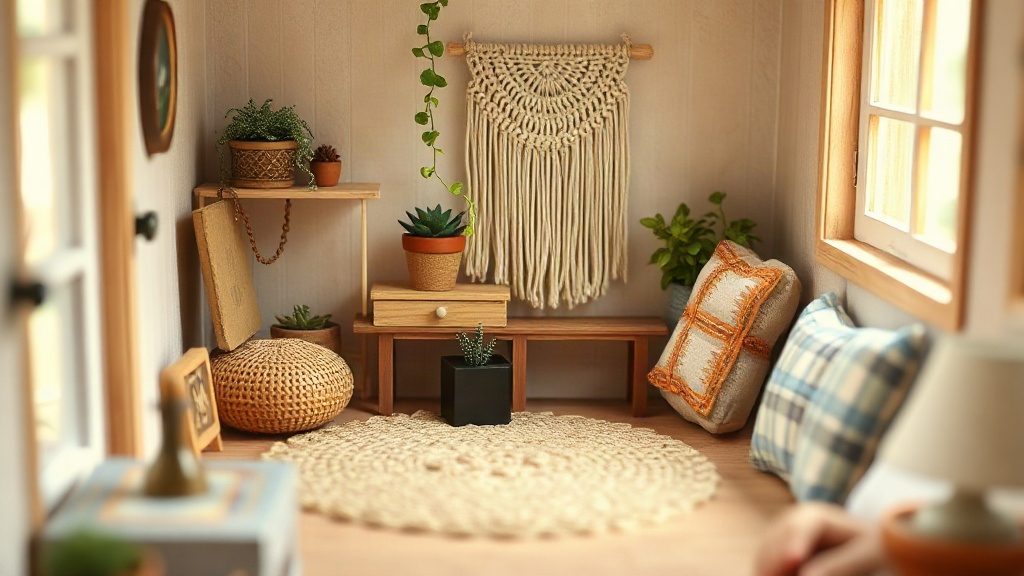
The boho aesthetic thrives on layering textures, celebrating natural materials, and letting plants breathe life into every corner. In miniature form, this becomes an art unto itself. When Hannah Brooks, founder of this shop, opened her first Victorian dollhouse kit on a rainy Sunday in 2021, she had no plan and no aesthetic framework. She placed a tiny plastic fern on a shelf and immediately knew something was wrong. It looked like a prop, not a plant. That small frustration sent her down the path of sourcing real dried botanicals, vintage linen scraps, and hand-knotted miniature macramé, and eventually to building an entire shop around the crafters who felt the same itch she did. A boho miniature house decor project demands patience, proportion sense, and a willingness to source from unexpected places. But the reward is a handcrafted sanctuary that feels unmistakably lived-in, where every tiny plant and woven element tells a story.
Understanding Boho Scale: Why Proportion Matters
Proportion is everything in boho miniature house decor: committing to 1:12 scale from your very first piece keeps the illusion intact, because even one mismatched element breaks the sense of a real, lived-in space. The foundation of any successful miniature boho space is respecting 1:12 scale (standard dollhouse proportions). A real potted plant on a 5-inch shelf looks wildly out of place; a plant that reaches exactly to the window sill, no more, no less, transforms the entire room. This constraint forces you to think like a real interior designer. You can’t cheat with oversized elements.
Boho design in full-size homes celebrates abundance. In miniature, abundance becomes intentional layering. A room packed with too many plants at random heights reads as chaos. A room with three plants positioned at varying heights, a rug anchoring the floor, and a tapestry breaking up the wall becomes a curated escape.
Our community has asked about this more than almost any other topic. The question we hear most often from new builders is: “What scale should I start with?” The short answer from everyone who has been doing this for a while is the same: commit to 1:12 from day one. Mixing scales is the single fastest way to break the illusion of a real space. If one element reads as 1:6 and everything else reads as 1:12, your eye catches the inconsistency immediately, even if your brain can’t name it.
🪄 Hannah’s tip
Measure everything twice. A plant that appears to be 1.5 inches tall looks reasonable in a 5-inch-high room; the same plant looks cramped if the ceiling is only 4 inches. Proportion breaks the spell faster than anything else. Sketch your room’s dimensions on paper first, then source items that fit those exact dimensions.
Measure everything twice. A plant that appears to be 1.5 inches tall looks reasonable in a 5-inch-high room; the same plant looks cramped if the ceiling is only 4 inches. Proportion breaks the spell faster than anything else. Sketch your room’s dimensions on paper first, then source items that fit those exact dimensions.
Sourcing Miniature Plants That Feel Real
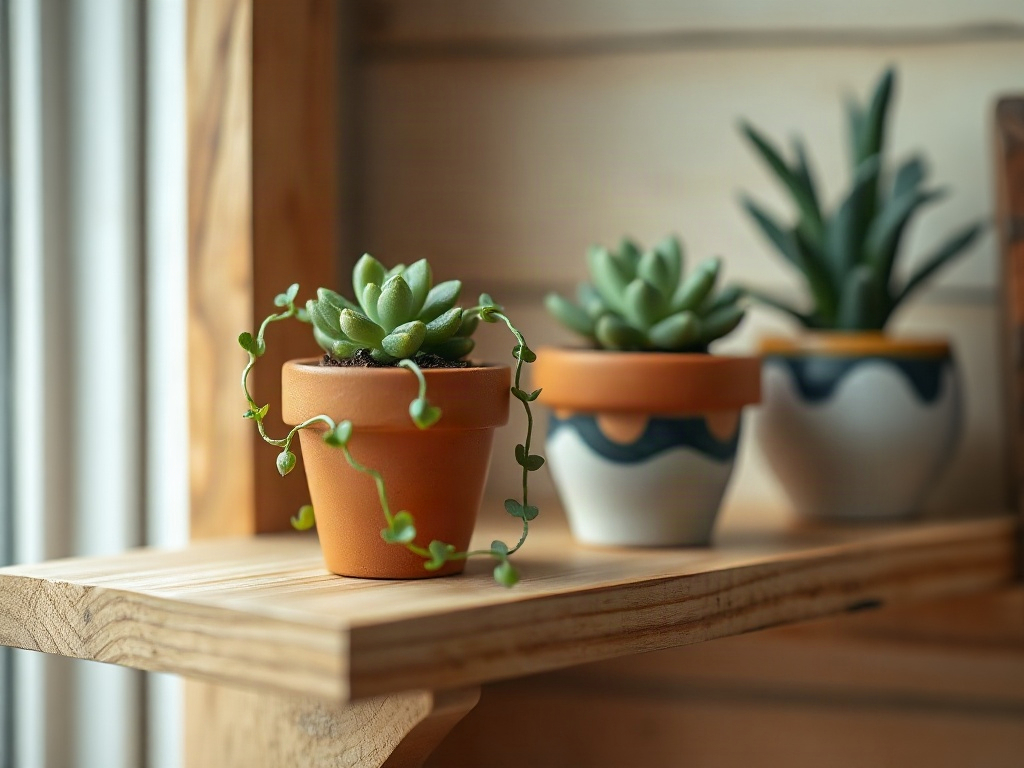
Realistic miniature plants come from real dried botanicals, preserved moss, and high-quality resin pieces, not dollar-store plastic, because irregular textures and natural forms are what make a tiny boho space feel genuinely alive. Realistic boho styling hinges on plants. The fake plastic leaves from dollar stores will undermine your vision instantly. Instead, hunt for plants that carry texture and irregular forms.
For plant lovers and boho starters
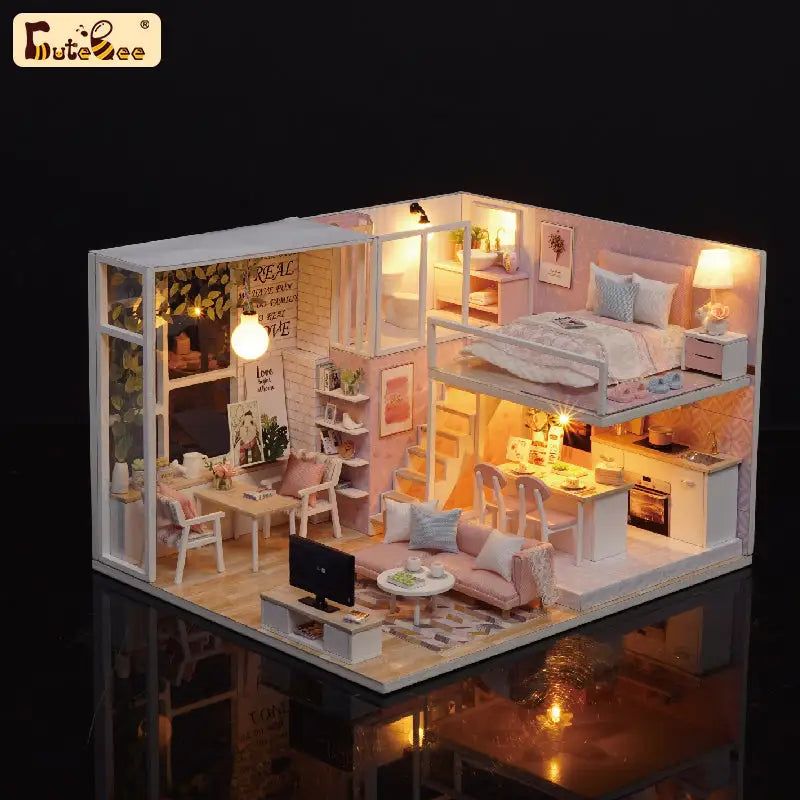
Tranquil Life DIY Miniature House Kit
$67.90
View this kit →
Real dried botanicals (tiny seed pods, pampas grass, baby’s breath) scale beautifully and lend authenticity. Preserved moss, when glued into small terracotta pots, creates instant greenery without watering. Succulents, both real and high-quality resin reproductions, anchor shelves and windowsills. The key is mixing scales and types: a trailing ivy, an upright fern, a sprawling succulent arrangement, and a single flowering stem create visual rhythm.
Where to find them: specialty miniature craft suppliers, Etsy sellers who specialize in dollhouse botanicals, and even some gardening suppliers who sell tiny propagation pots. Expect to spend $3 to $8 per plant, which feels steep until you realize a single stem of realistic greenery transforms an entire corner.
Wire-reinforced stems let you position plants exactly where you want them. Some builders drill tiny holes in shelves to anchor stems, creating the illusion that the plant has been there for years, growing into its space. This attention to detail separates a quick assembly from a story.
💬 From the community
“I spent two weeks hunting for a miniature trailing pothos that didn’t look like a toy. Eventually found a seller on Etsy who makes them from real preserved moss and wire. Worth every penny. The whole shelf changed the moment I placed it.”, Marisol T., community member
“I spent two weeks hunting for a miniature trailing pothos that didn’t look like a toy. Eventually found a seller on Etsy who makes them from real preserved moss and wire. Worth every penny. The whole shelf changed the moment I placed it.”, Marisol T., community member
Layering Rugs: Texture and Anchor Points
In a boho miniature room, the rug is the single most important anchor: natural-fiber textiles in earth tones carry 60% of the visual weight and instantly signal whether your aesthetic is intentional or accidental. A rug does more than fill floor space. It defines zones, anchors furniture, and signals aesthetic intention. In boho miniature rooms, rugs carry 60% of the visual weight.
Look for natural fibers: jute, sisal, wool felt, or linen-blend fabrics in earth tones (warm ochre, cream, rust, deep charcoal). Machine-washable dollhouse rugs exist, but vintage linen scraps often look more authentic. Fray the edges slightly with a seam ripper to avoid that “just woven” freshness. A worn edge says “I’ve been loved.”
Scale matters here too. A 4-inch by 6-inch rug swallows a tiny bedroom floor completely. A 2.5-inch by 4-inch rug leaves breathing room, suggests the space continues beyond, and lets the wood floor peek through. Layering two rugs of different patterns (boho thrives on pattern mixing) creates depth, but the secondary rug should be smaller and offset.
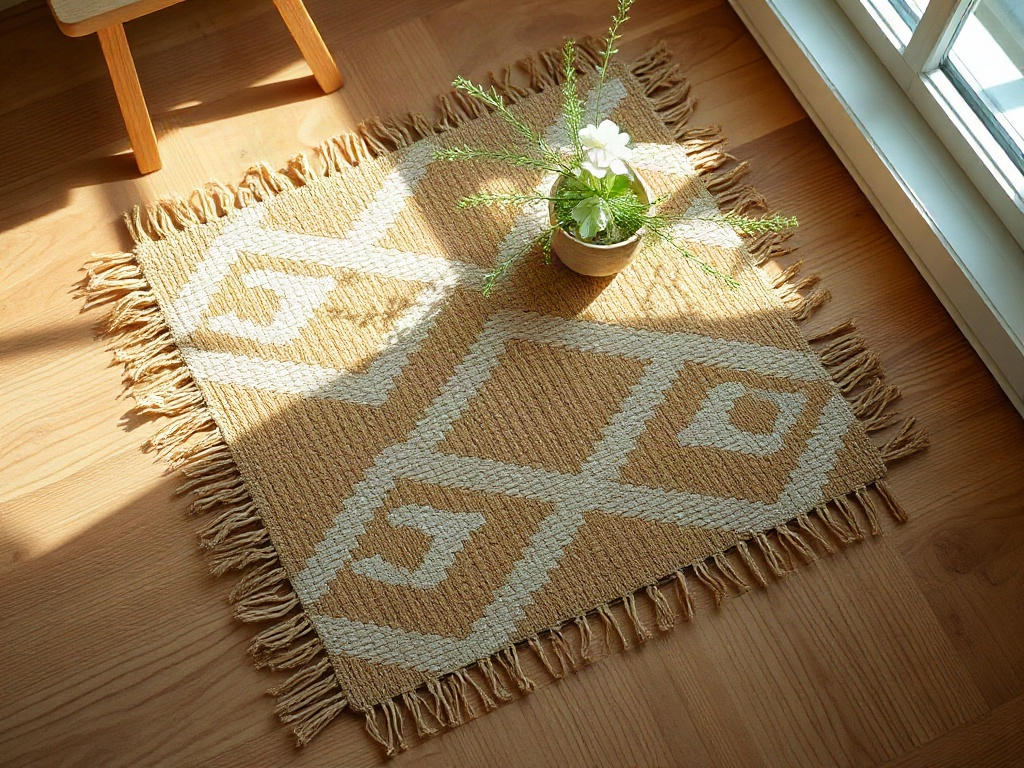
Consider the pile height. Shag and thick pile look outsized in miniature. Flat-weave or low-pile textiles read better. A rug with woven patterns (geometric Aztec motifs, tribal designs) carries more visual interest than solid color and requires no additional layering to feel intentional.
Macramé, Woven Tapestries & Wall Texture
A single woven tapestry or miniature macramé wall hanging lifts an entire boho room: made from raw linen, cotton cord, or jute in cream and earth tones, it fills bare walls without looking toy-like. Bare walls in boho spaces feel incomplete. A single woven tapestry or macramé wall hanging immediately lifts the entire room. The challenge is finding or creating pieces small enough to look proportional without looking toy-like.
DIY macramé for miniature spaces uses embroidery thread or thin cotton cord. A 3-inch by 4-inch wall hanging takes an afternoon to knot and transforms a blank wall. Online tutorials for beginner macramé translate surprisingly well to miniature scale. The repetitive knotting is meditative; watching a pattern emerge on such a tiny canvas feels satisfying in its own way.
Alternatively, search for pre-made miniature tapestries on Etsy or specialty dollhouse shops. Real woven pieces, even secondhand textile scraps from estate sales, can be mounted on a tiny dowel and hung above a bed or sofa. Boho design celebrates imperfection, so a slightly uneven hang or visible knots add character.
Fabric choice matters. Raw linen, unbleached cotton, wool, and jute all work. Bleached white or synthetic polyester reads as “miniature toy” rather than “intentional interior.” Cream, oatmeal, rust, and warm earth tones keep the aesthetic grounded.
📜 Did you know?
Macramé experienced its first major revival in the 1970s when handmade textile arts became central to the bohemian movement. Modern boho design draws directly from that era’s celebration of handwork and natural fibers, making DIY macramé not just stylistically appropriate but historically true to the aesthetic.
Macramé experienced its first major revival in the 1970s when handmade textile arts became central to the bohemian movement. Modern boho design draws directly from that era’s celebration of handwork and natural fibers, making DIY macramé not just stylistically appropriate but historically true to the aesthetic.
💬 Community tip
One of the most popular requests we get from our builder community is for kits that include a macramé wall element. Several members have told us they use their first finished hanging as a kind of milestone: “When the wall hanging is up, the room finally feels like mine.” If you want to try it, start with a square knot grid and a single wooden bead as a focal point. You’ll be done in an evening.
One of the most popular requests we get from our builder community is for kits that include a macramé wall element. Several members have told us they use their first finished hanging as a kind of milestone: “When the wall hanging is up, the room finally feels like mine.” If you want to try it, start with a square knot grid and a single wooden bead as a focal point. You’ll be done in an evening.
Perfect for your first boho build
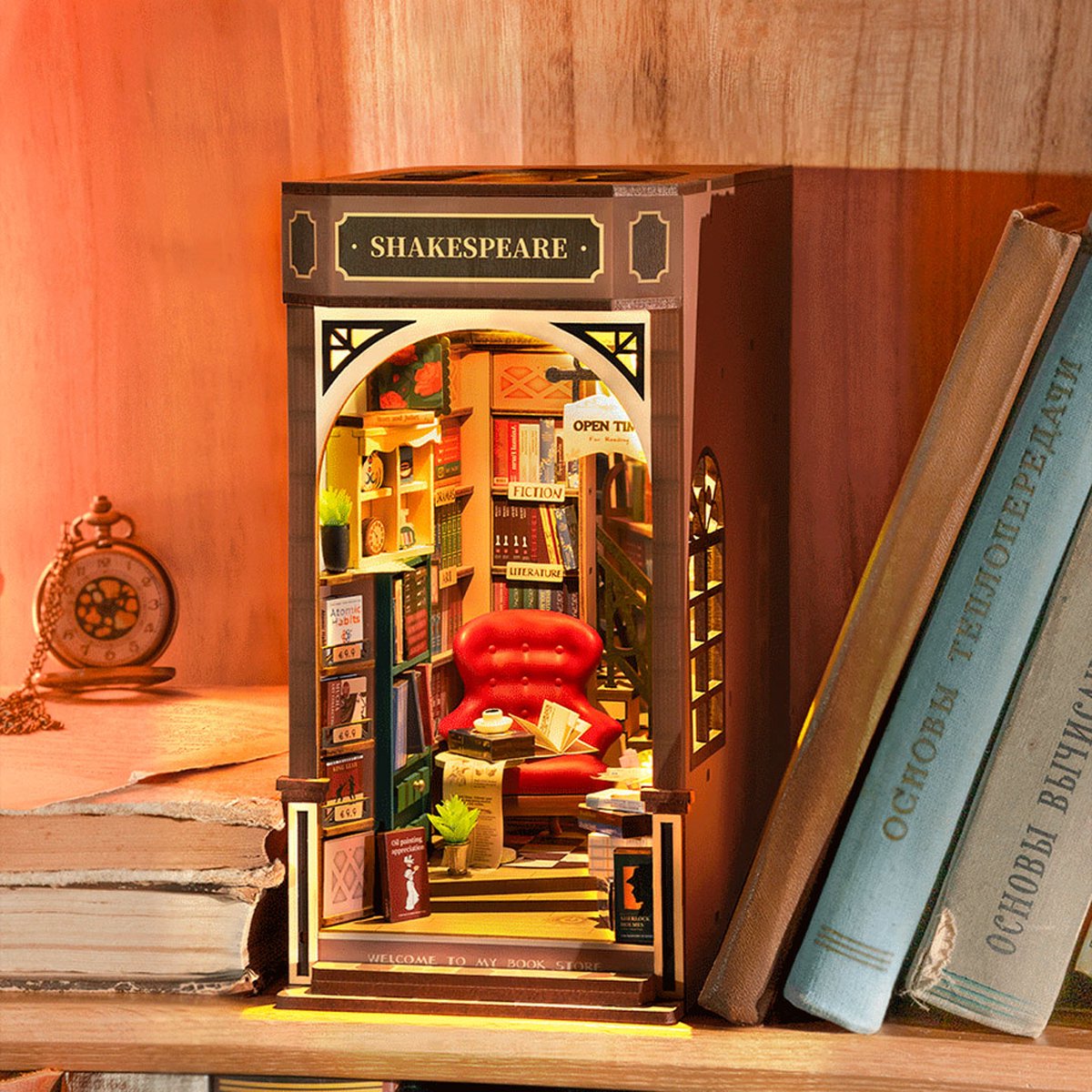
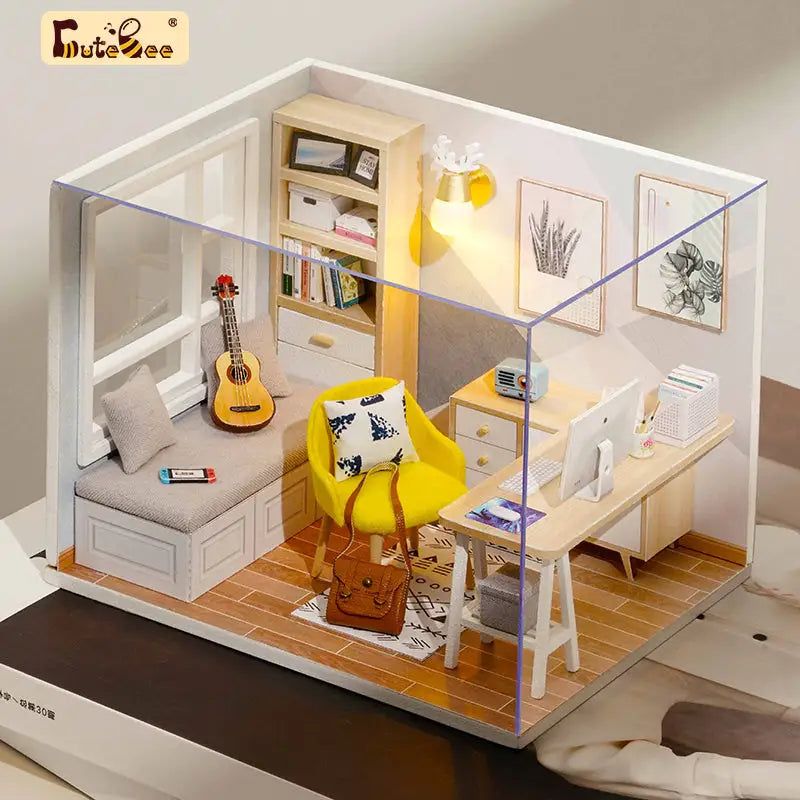
Sun Room DIY Miniature House Kit
$49.99
Start with this kit →
Balancing Open Space and Cozy Abundance
The secret to cozy boho abundance in miniature is contrast: one densely layered corner of plants, rugs, and tapestries lands harder when the opposite corner holds almost nothing at all, letting every detail breathe. The most common mistake in boho miniature house decor is cramming every inch. Boho celebrates abundance, yes, but abundance with breathing room. A shelf with five plants, a rug, a tapestry, and woven baskets can read as cluttered if every surface is covered.
Think zones. One corner might be a plant corner: plants clustered at different heights, a rug anchoring the arrangement, minimal furniture. Another corner stays almost empty: a single chair, a small side table, a sliver of unadorned wall. This contrast makes the full corners feel intentional, not accidental.
Negative space also lets tiny details shine. A single trailing ivy plant against a bare wall has more impact than five plants competing for attention. A room with a detailed rug, no furniture blocking it, and clear sight lines to enjoy it reads as more sophisticated than a room packed wall to wall.
Sourcing Boho-Appropriate Textiles and Materials
The best sources for boho miniature textiles are estate sales, thrift stores, and specialty fiber artists, not mass-market craft stores, because natural materials and authentic handmade quality are what separate a convincing boho build from a toy-store look. Success requires knowing where to look. Mass-market craft stores carry some miniature textiles, but they often feel too bright, too synthetic, too “doll-sized” rather than authentically proportioned.
Plant-forward builds, rare in this niche
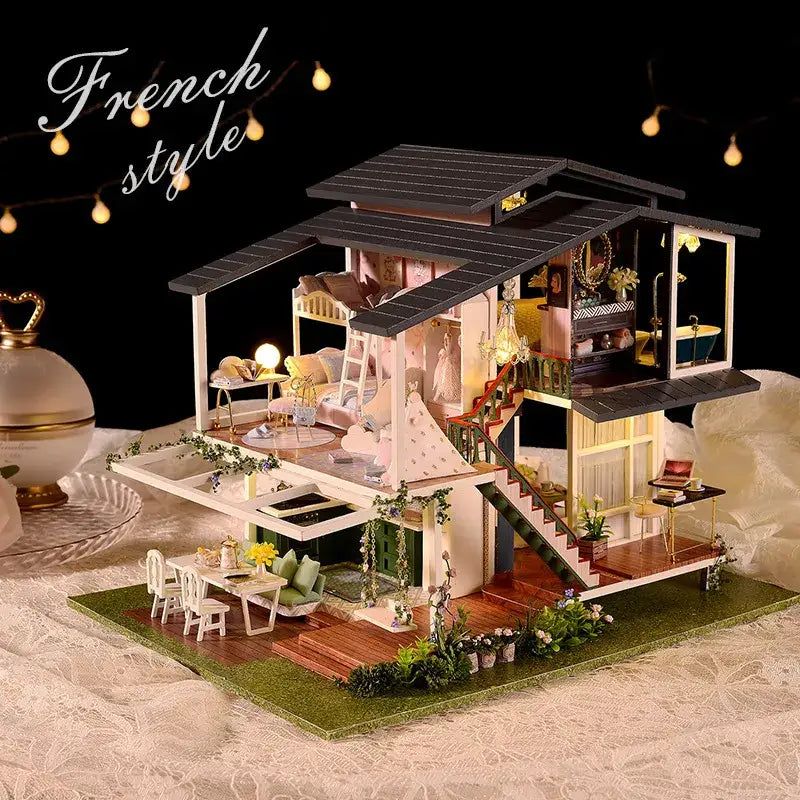
Miniature Greenhouse Kits
22 LED-lit greenhouse builds
Estate sales and thrift stores yield the best treasures: vintage linen napkins, worn wool scarves, faded cotton prints that fit the boho palette. A single vintage linen handkerchief ($0.50 to $2) becomes a tapestry, curtain, or throw rug. Vintage buttons in bone and wood add detail to cushions. Real dried flowers from a recent bouquet, preserved and framed, become botanical art on a tiny wall.
Online specialty retailers dedicated to miniatures offer higher price points but curated quality. Expect $15 to $40 for detailed handwoven rugs, $8 to $20 for artisan-made macramé. These aren’t throw-away pieces; they’re investment-level components that anchor the entire aesthetic.
Local fiber artists and weavers often accept custom orders for miniature pieces. Commissioning a 3-inch woven wall hanging from an artist familiar with boho design ensures a piece that matches your exact vision and carries authentic handmade energy. Several community members have connected with fiber artists through local craft fairs and Instagram, if you find a weaver whose work you love, it’s always worth asking whether they’d take a miniature commission.
Creating Depth Through Texture Variety
A boho miniature room earns its depth by mixing glossy, matte, smooth, and rough surfaces, terracotta against jute, copper wire against linen, so the eye keeps moving even when every element is the same earth-tone palette. A boho room photographed in black and white should still read as visually complex. This comes from varying textures, not colors.
Mix glossy glazed terracotta pots with matte fiber planters. Pair smooth linen with rough jute. Layer shiny copper wire details (macramé accents, plant stands) against soft woven surfaces. Smooth wood shelves contrast with textured rugs. A glossy ceramic plate hung as wall art breaks up a field of matte woven fabric.
This textural layering makes a space feel real. Photographs reveal the difference between a room where everything is the same weave (flat, visually monotonous) and a room where your eye travels across varied surfaces (engaging, lived-in).
Hannah keeps a small tray on her workbench with swatches of different materials: one square of rough jute, one scrap of smooth linen, one piece of copper wire mesh. Before she places anything in a miniature room, she checks whether that element adds a new texture to the tray or simply repeats one that’s already there. If it repeats, she looks for an alternative. It’s a simple habit, but it’s the reason the finished rooms always have that layered quality that’s so hard to put your finger on.
Premium collector piece for plant lovers
Monet’s Garden DIY Miniature House Kit
$155.00
Frequently Asked Questions about Boho Miniature House Decor
Everything you might be wondering (click a question to expand).
Can I use full-size boho decor scaled down, or does it need to be purpose-made for miniatures?
Both work if you’re careful about scale. A linen scrap from full-size home goods often scales better than a tiny item labeled “for dollhouses,” which sometimes feels artificially cutesy. The key is proportion: measure first, then source. Real materials (linen, jute, dried flowers) scale more believably than synthetic plastics.
How do I keep tiny plants from looking plastic or toy-like?
Prioritize texture and form over uniformity. Real dried botanicals, preserved moss, and high-quality resin plants with irregular leaf shapes feel authentic. Avoid symmetrical, perfectly formed leaves. Pot them in terracotta or wood, not bright plastic. Position them as they’d naturally grow: trailing plants cascading, upright plants reaching toward light sources.
What scale should I start with for boho miniature decor?
1:12 scale is the standard starting point, and for good reason. Nearly all commercially available miniature furniture and accessories are designed for it, so sourcing becomes far easier. Mixing scales is the most common beginner mistake: even one element at 1:6 scale will break the illusion in a 1:12 room. Commit to one scale from the first piece you source, and your room will hold together visually even as you add to it over months.
How long does it take to make a miniature macramé wall hanging?
A simple 3-inch by 4-inch wall hanging using square knots takes most beginners between two and four hours for their first attempt. Experienced crafters can finish the same piece in under an hour once the knotting pattern feels familiar. The repetitive rhythm is part of the appeal: many builders describe it as meditative. You’ll need thin cotton cord (0.5mm to 1mm works well at miniature scale), a tiny wooden dowel, and a pair of small scissors. That’s the entire toolkit.
What’s the best scale for boho rugs in miniature rooms?
Aim for rugs that cover 40 to 60% of the floor, leaving sight lines to the wood beneath. In a standard dollhouse bedroom (roughly 5 inches by 7 inches), a 2.5-inch by 4-inch rug works well. Layering a smaller (1.5-inch by 3-inch) patterned rug on top creates depth without overwhelming the space.
Where do I find boho miniature decor that doesn’t look cheap or mass-produced?
Estate sales, thrift stores, and specialty fiber artists deliver the most authentic pieces. Online, search for Etsy sellers specializing in handmade or vintage miniatures rather than mass-market dollhouse stores. Budget $3 to $40 per piece depending on complexity, and prioritize items made from natural materials.
Can I mix boho with other miniature aesthetics (like modern or cottage)?
Absolutely. Boho’s core is intentional eclecticism. A minimalist modern room gains warmth with a single woven wall hanging and potted plant. A cottage space feels cozy and current with layered rugs and macramé. The rule is consistency of material palette: if you’re mixing styles, keep textures and earth tones aligned.
Bringing Your Boho Miniature Vision to Life
Building a boho miniature house decor project is slower than assembling a pre-decorated dollhouse from a kit. You source items across months, test placements, reposition plants as you collect new ones. But this pace is the gift. Each element you add carries intention. The space grows with you, absorbs your aesthetic choices, and becomes unmistakably yours.
Start with one strong anchor (a beautiful rug, a handwoven tapestry, a cluster of realistic plants). Let that set the tone. Source complementary pieces slowly. Trust negative space. When you catch yourself reaching for one more item, pause and ask whether the room needs it or whether it already whispers what it wants to say. Boho thrives on that conversation between abundance and restraint, between curated detail and breathing room. In miniature, where every inch is magnified, that conversation becomes even more intimate. 🪄