🎁 Buy 2 kits, get the 3rd FREE · Free shipping on every order

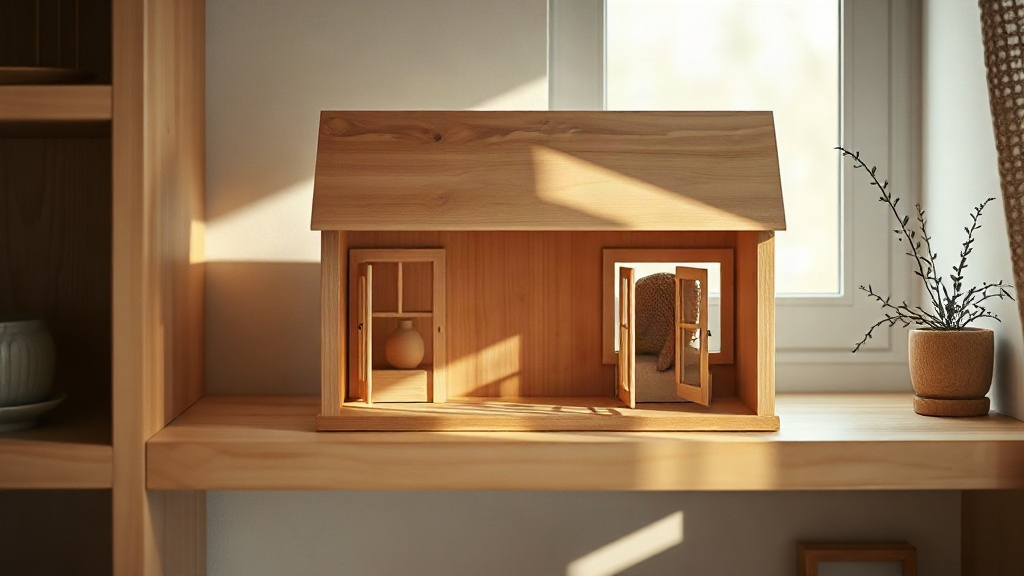
Japandi Minimalist Miniature Houses: Serene Spaces You Can Build by Hand
Discover the art of building Japandi miniature houses that blend Japanese simplicity with Scandinavian warmth. Learn what makes this aesthetic so satisfying to craft, which kits deliver that calm, lived-in feeling, and how to layer natural materials for authentic detail.

There’s a particular quiet that comes when you first open a Japandi minimalist miniature house kit. No glitter. No plastic vines tangling around your fingers. Just clean wood, natural linen, maybe a single ceramic vessel waiting to be placed on a shelf. You sense immediately that whoever designed this understood something about what makes a space feel like home: restraint, intention, and room to breathe.
Japandi is a fusion of two design philosophies separated by thousands of miles but speaking the same language of calm. Japanese aesthetics prize simplicity, negative space, and a deep appreciation for natural materials and imperfection. Scandinavian design brings warmth, functionality, and the belief that beauty lives in honest construction. When they meet in a miniature house, something quietly powerful happens.
What Makes Japandi Different from Other Miniature House Styles
Japandi miniature houses stand apart through a limited, intentional palette of natural wood tones and soft neutrals, clean geometry, low-profile furniture with visible joinery, and the deliberate use of negative space over decoration. A Japandi miniature house doesn’t shout. It whispers. You won’t find bright wallpapers, ornate moldings, or miniature chandeliers. Instead, you’re working with a limited, intentional palette: natural wood tones, soft neutrals, and perhaps one accent color that feels earned rather than decorative.
The geometry is clean. Walls are often left unpainted or finished in soft whites, warm grays, or pale naturals. Ceilings follow the same logic. Furniture tends toward low profiles, with visible joinery that speaks to the care in construction. Windows are large, framing views rather than being dressed up.
📜 Did you know?
Japanese architects have designed miniature spaces for centuries, from simple dollhouse gardens (known as bonsai displays) to architectural study models. The principle of ma (negative space) guides both: what you leave empty is as important as what you fill.
Japanese architects have designed miniature spaces for centuries, from simple dollhouse gardens (known as bonsai displays) to architectural study models. The principle of ma (negative space) guides both: what you leave empty is as important as what you fill.
Compare this to Victorian miniatures with their layered fabrics and detailed ornamentation, or cottage-core kits bursting with florals. Japandi asks a different question: what is essential? Everything else falls away.
The table below shows how the aesthetic lands relative to other popular styles. It’s a quick reference, not a verdict. Every style has its moment and its builder.
| Style | Palette | Key Materials | Mood | Typical difficulty |
|---|---|---|---|---|
| Japandi | Soft neutrals, warm wood tones | Pine, birch, linen, unglazed ceramic | Calm, intentional, meditative | Easy to intermediate |
| Victorian | Rich jewel tones, gilded accents | Velvet, wallpaper, ornate wood trim | Lavish, detailed, theatrical | Intermediate to advanced |
| Cottage-core | Pastels, florals, earthy greens | Fabric, dried botanicals, painted wood | Cosy, nostalgic, cheerful | Easy to intermediate |
| Industrial loft | Grays, blacks, raw metals | Metal sheet, concrete-effect resin, dark timber | Bold, urban, graphic | Intermediate |
| Fairy-tale fantasy | Bright, saturated, multicolour | Resin casting, painted clay, flock | Playful, imaginative, maximalist | Easy to beginner |
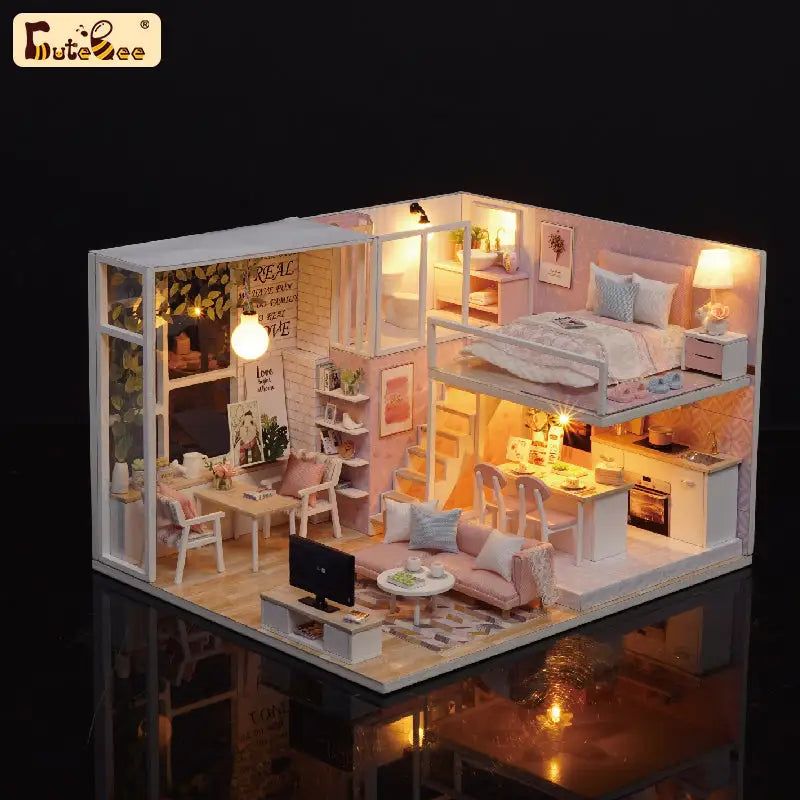
Bestseller cottage kit
Tranquil Life DIY Miniature House Kit
$67.90
View this kit →
The Meditative Building Experience of Japandi Kits
Building a Japandi kit is meditative because the simplified palette removes decision fatigue, letting you develop an eye for balance over 8 to 12 hours of intentional, unhurried work spread across a few weekends. Builders often describe Japandi miniature house construction as meditative. This isn’t accidental. The simplicity of the palette means you’re not managing dozens of paint colors or sifting through hundreds of tiny accessories. Your hands move with intention.
You might spend an hour arranging three pieces of furniture. Not because you’re indecisive, but because you’re developing an eye for balance. You place a low wooden bench on one side of a room. The space opposite feels heavier. You remove a decorative element from a shelf. The room breathes.
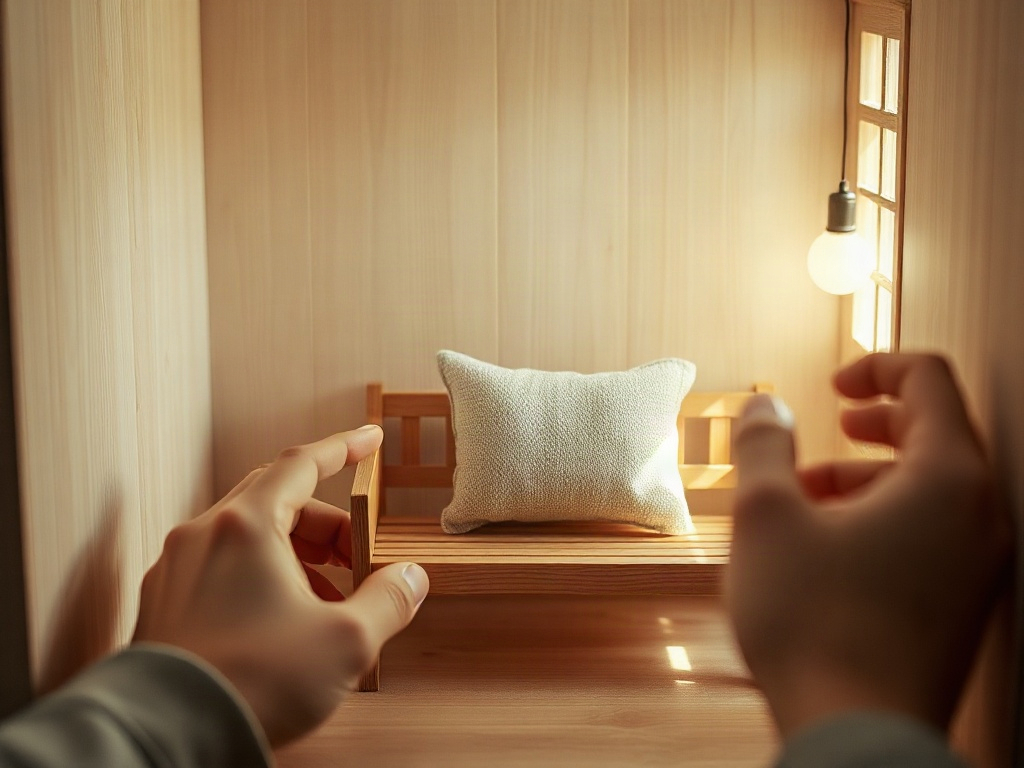
The difficulty rating on most Japandi kits sits in the easy-to-intermediate range. Basic woodworking skills help, but they’re not required. You’re gluing, fitting, and finishing rather than engineering complex mechanisms. First-timers can complete a simple Japandi structure in 8 to 12 hours spread across a few weekends. Experienced builders might finish in half that time, enjoying the meditative pace rather than rushing.
Texture becomes your primary tool for visual interest. Raw wood grain. Linen with honest weave. The slight irregularities of hand-applied finishes. These details reward close observation in a way that painted details never quite do.
Something Hannah noticed when building her first Japandi kit: the moment you stop trying to fill every surface, the build starts feeling genuinely restful. The half-empty shelf isn’t incomplete. It’s doing its job.
Natural Materials That Define the Aesthetic
Pine, birch, walnut, linen, unglazed ceramic, and simple metalwork like brass and copper define the Japandi aesthetic, chosen for their natural character, grain, and ability to age gracefully rather than to look pristine. A genuine Japandi minimalist miniature house relies on materials that feel alive. Wood isn’t stained to hide its character; it’s chosen for it. Pine, birch, and walnut are common. Each wood carries its own personality and grain pattern, and builders notice this. No two kits finish identically, even from the same manufacturer.
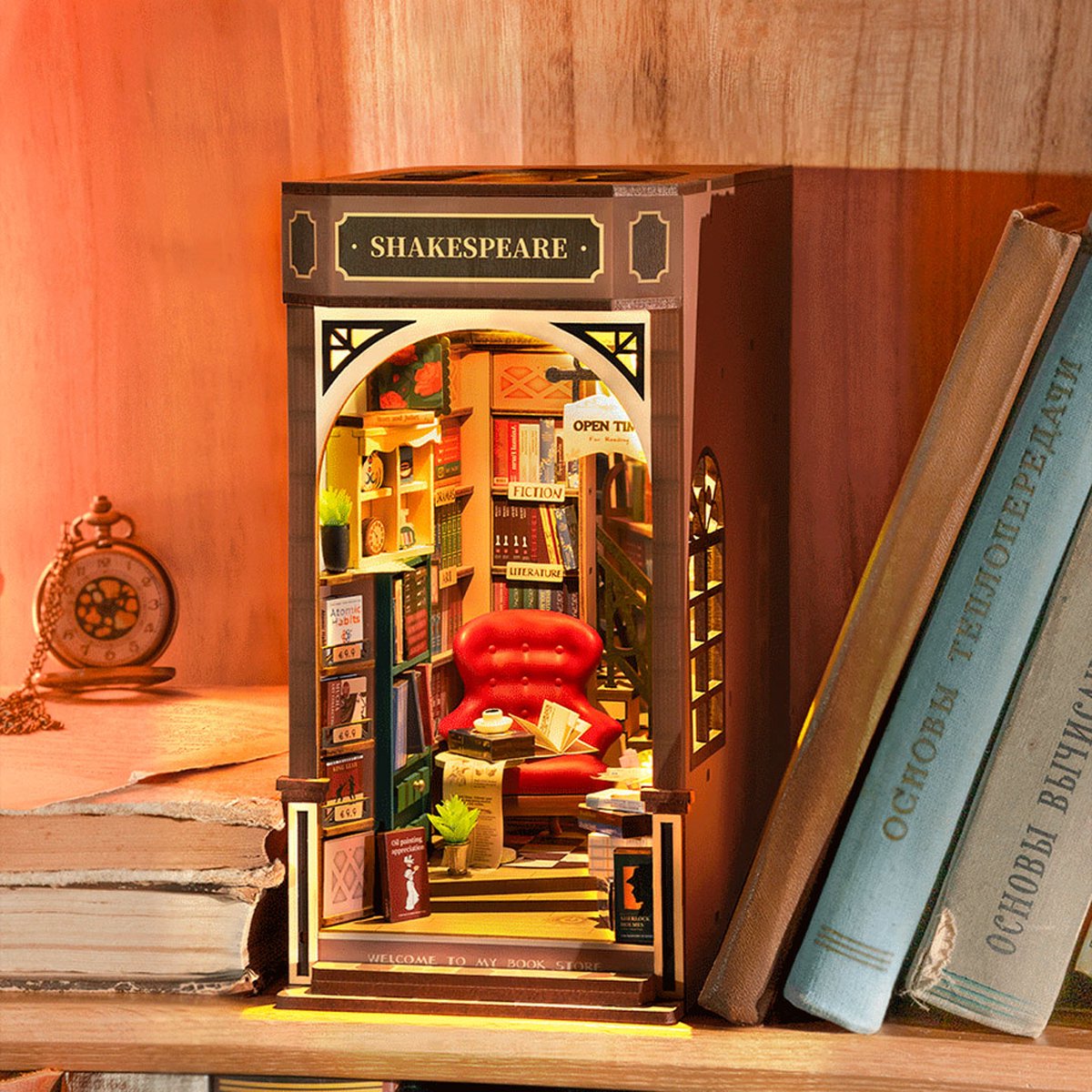
Linen and cotton textiles appear in curtains, cushions, and floor coverings. These fabrics age gracefully. They’re not meant to look pristine forever. A slight wrinkle or fading from light is part of the story.
Natural clay, unglazed ceramic, and simple stoneware fill the role of decorative objects. A tiny ceramic bowl. A small clay tile. Their imperfections are features, not flaws. This philosophy extends to metalwork: brass, copper, and iron appear as simple hardware or functional art, left unpolished to age naturally.
One small but meaningful detail: look at how the wood grain runs when you’re assembling the walls. In the best kits, the manufacturer has oriented the pieces so grain directions align. It takes a moment to notice, and then you can’t un-notice it. That’s the kind of care that separates a thoughtfully designed kit from a commodity one.
🪄 Hannah’s tip
When finishing a Japandi miniature house, resist the urge to add more. Complete the structure, place three or four meaningful objects, and live with it for a few days. Often, what you thought you wanted to add becomes unnecessary. This discipline is the heart of the aesthetic.
When finishing a Japandi miniature house, resist the urge to add more. Complete the structure, place three or four meaningful objects, and live with it for a few days. Often, what you thought you wanted to add becomes unnecessary. This discipline is the heart of the aesthetic.
Designing Your Own Layout: Space and Simplicity
Japandi layout design follows one guiding rule: every object needs a reason to be there, with a ratio of roughly one-third filled to two-thirds empty delivering the most restful, balanced result. Most Japandi kits come with suggested layouts, but the beauty is in personalizing them. The constraint remains: every object should have a reason to be there.
Start by defining the function of each room. A sleeping space needs only a low platform bed, perhaps a small lantern for light, and a window framing a view. A living area might hold a low table, seating for two or three, and one carefully chosen textile. A workspace remains uncluttered, with storage built into the structure itself rather than piling decorations.
Heights matter in miniature Japandi design more than in other styles. Vary your tallest element, your medium elements, and your open space in a deliberate ratio. Many builders find that a ratio of one-third filled to two-thirds empty creates the most restful feeling.
Windows become focal points. If a room has a window, consider what it “views.” Even a simple painted backdrop or a view into another room creates depth and purpose. The Japanese concept of shakkei (borrowed scenery) suggests that what lies beyond the frame matters as much as what’s inside.
A practical tip from the community: build the room bare first. No furniture, no textiles. Photograph it or simply sit with it for ten minutes. What you notice in that bare state tells you exactly what the space needs, and how little that actually is.
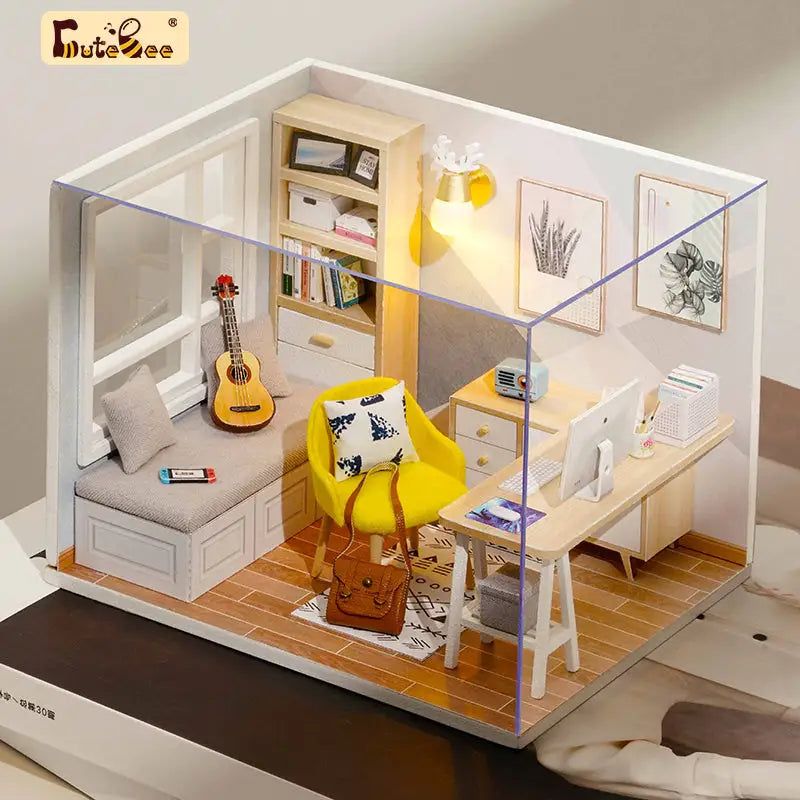
Easy starter under $50
Sun Room DIY Miniature House Kit
$49.99
Start with this kit →
Japandi Miniature House Kits Worth Your Time and Hands
Quality Japandi kits range from entry-level options at $35 to $65 up to premium builds above $150, with mid-range kits between $70 and $150 offering the best balance of challenge, material quality, and customization. Quality kits exist across price ranges. Entry-level options start around $35 to $65 and include pre-cut wood, basic fixtures, and clear assembly instructions. These teach you the fundamentals and deliver a satisfying finished space in a reasonable timeframe.
Mid-range kits ($70 to $150) add detail and choice. Better-quality wood, included natural textiles, ceramic or wooden accessories, and often options for customization. Intermediate builders find these the sweet spot: enough challenge to keep you engaged, not so much that you feel overwhelmed.
Premium kits ($150+) come with heritage craftsmanship. Carefully curated natural materials, sometimes handmade accessories, smaller production runs, and often a backstory about the designer’s inspiration. These are gifts for someone (or yourself) who already understands that what you build with your hands becomes precious.
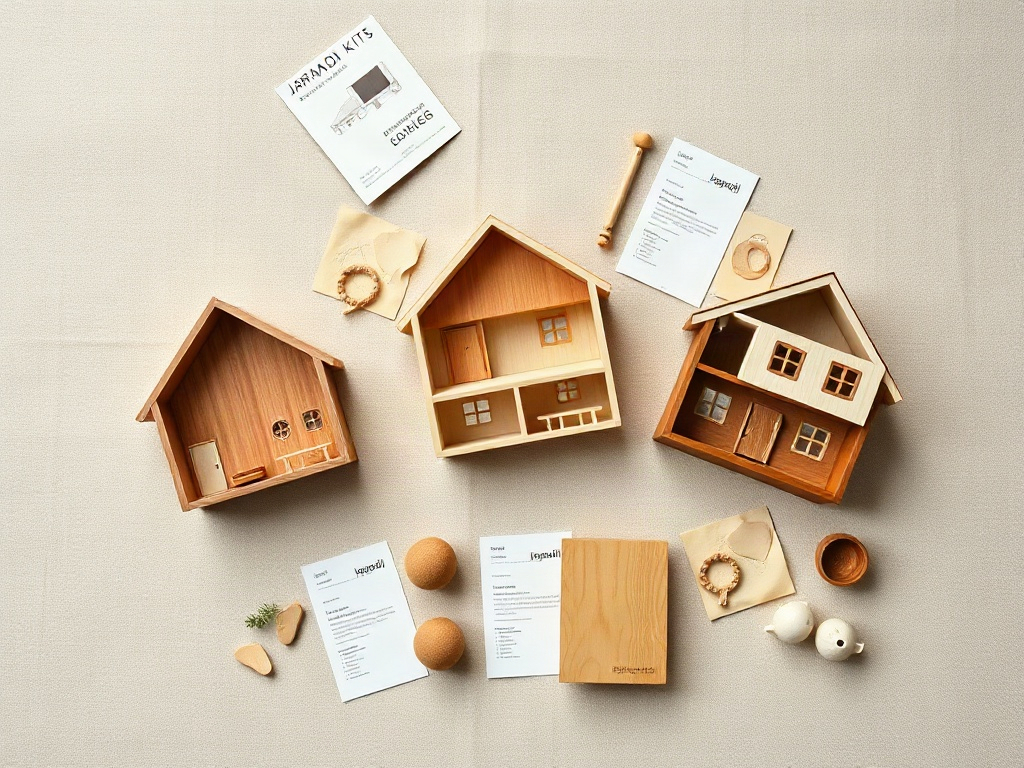
Look for kits that specify wood type, include high-quality hardware, and come with minimal pre-painted elements. The best Japandi kits let you shape the finish. Some include a choice of wood stain or offer natural, unsealed finishes that you can adjust.
The miniature house kit collection includes several Japandi-aligned designs. Pay attention to kits that mention “natural finish,” “wood tone,” “minimal accessories,” or “Scandinavian-inspired.” These tend to align with the aesthetic. If you’re also drawn to compact builds that sit on a bookshelf, the book nook kits include several designs with the same restrained material language.
Lighting That Honors the Aesthetic
Japandi lighting is architectural rather than decorative: simple paper lanterns, clean sconces, or hidden LED strips cast soft illumination that reveals natural materials without calling attention to the light source itself. In a Japandi minimalist miniature house, light is architectural, not decorative. Avoid ornate chandeliers or busy fixtures. Instead, look for simple paper lanterns, clean geometric sconces, or just candlelight from tiny tea lights.
Many builders wire their Japandi houses with subtle LED strips hidden above or behind elements, casting soft illumination on natural materials without calling attention to the light source itself. The goal is to reveal form, not to dazzle.
Natural light matters too. Position your finished house near a window or under indirect daylight. Watch how the wood grain deepens with morning light, how shadows cast by a single lantern change throughout the day. This living quality is part of what makes the aesthetic work.
If you want to go further with planted elements, a miniature greenhouse kit pairs naturally here. The glass-and-wood structure shares the same clean geometry, and soft LED lighting through the glass panels creates a warm glow that complements a Japandi palette nearby. You can find those in the greenhouse kits section.
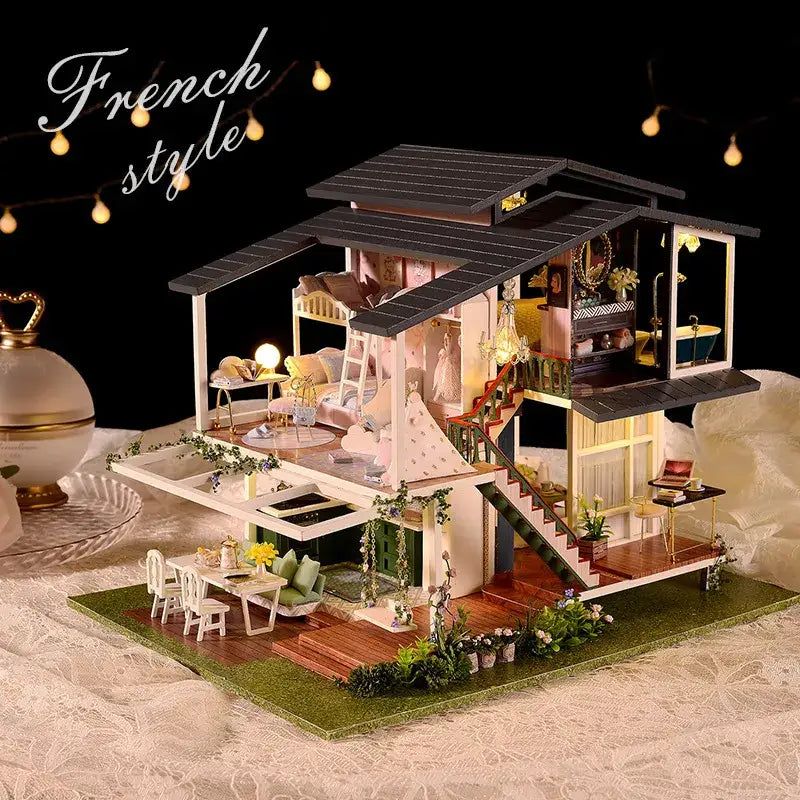
Glass, wood and soft light
Miniature Greenhouse Kits
22 LED-lit greenhouse builds
Displaying and Living with Your Japandi Miniature House
Display your finished Japandi house on an open shelf or desk in soft, natural light so wood and linen can age gracefully, becoming a living part of your home rather than a locked-away display piece. These aren’t meant to be locked in glass cases. A Japandi miniature house lives best on an open shelf, a desk corner, or a small dedicated table where light and air reach it. Display it in a room with soft, natural lighting. The wood will continue to age slightly, and the linen will settle into wrinkles. This is how you know it’s becoming part of your home.
Some builders refresh their Japandi houses seasonally, swapping one textile or moving the single decorative object. This restraint, repeated over time, teaches your eye about balance.
These miniatures make thoughtful gifts for people who appreciate quiet luxury. A designer friend. A collector of natural materials. Someone going through a season of life where calm feels essential. The act of building it yourself adds a layer of meaning that no purchased house could match.
Frequently Asked Questions about Japandi Miniature Houses
Everything you might be wondering (click a question to expand).
How long does it take to build a Japandi miniature house?
Most builders spend 8 to 15 hours total, spread across 2 to 4 weeks. The pace is intentional. Rushing defeats the meditative purpose. Intermediate builders often finish in 6 to 8 hours.
Do I need woodworking experience?
No. Most kits are designed for builders of all skill levels. Patience and attention to detail matter more than prior experience. If you can follow instructions and use a glue brush, you can build a Japandi house.
Can I customize the colors and materials?
Absolutely. Some kits come with unfinished wood that you can stain or paint. Many include natural fabrics you can replace. The aesthetic actually encourages personal choices that reflect your taste and available materials.
What’s the difference between Japandi and other minimalist house styles?
Japandi specifically blends Japanese simplicity (negative space, natural materials, respect for imperfection) with Scandinavian warmth and coziness. Other minimalist styles might feel cold or spare; Japandi feels intentional and lived-in. The comparison table earlier in this article lays out the key differences at a glance.
Where should I display my finished Japandi miniature house?
Anywhere with soft, indirect light and room to breathe. A shelf, desk, or small table works well. Avoid direct harsh sunlight and high-humidity areas. The natural materials will age gracefully if treated gently.
Which kit is best for an absolute first-timer?
The Sun Room DIY Miniature House Kit at $49.99 is a strong starting point. It ships with pre-cut birch, a clear step-by-step guide, and just enough accessories to feel satisfying without overwhelming you. Most first-timers complete it in two or three unhurried sessions.
Building a Practice in Intentional Craft
A Japandi miniature house is as much a practice in restraint and observation as it is a finished object, the building process teaches you what “enough” looks and feels like in a space you inhabit. A Japandi miniature house isn’t just a completed object. It’s an exercise in restraint, observation, and understanding what “enough” feels like. You come away with something concrete, yes, but also with a quieter sense of what matters in a space you inhabit.
The community of Japandi builders is growing. Look for projects shared online under tags like “minimalist miniature” and “Japandi dollhouse.” You’ll find people experimenting with materials, sharing their finishes, and celebrating the meditative practice itself. Join that conversation. Your hands know something your mind hasn’t put into words yet.