🎁 Buy 2 kits, get the 3rd FREE · Free shipping on every order

Build a Charming French Parisian Miniature Scene: Cafe, Balcony & Cobblestone Details
Discover how to create an authentic French Parisian miniature scene complete with a cozy cafe, ornate balcony, and hand-painted cobblestones. Learn the building techniques, material selection, and historical details that bring this iconic European setting to life in miniature form.

There’s something undeniably magical about capturing the essence of Paris in a space smaller than your hand. A French Parisian miniature scene isn’t just a craft project; it’s a portal to narrow streets lined with flowered balconies, the warm glow spilling from a neighborhood bistro, and the textures of centuries-old stone beneath your fingertips. Whether you’re building as a meditative escape or creating a gift that feels personal and handcrafted, this particular theme offers endless opportunities for storytelling through detail.
The appeal lies partly in Paris itself, but mostly in what you’ll discover while building. You’ll hand-paint tiles. You’ll arrange impossibly small chairs around a table. You’ll learn how light falls differently across European facades than it does in other architectural styles. Each piece you add teaches you something about observation and patience that carries over into every project you tackle after this one.
Why a Parisian Setting Resonates in Miniature Form
A Parisian setting works so well in miniature because its architectural language is rhythmic, restrained, and deeply recognizable, giving even a first-time builder clear visual targets to aim for and a satisfying sense of authenticity once achieved.
The architecture is ornate without being chaotic; there’s rhythm to a Haussmann-style facade with its repeating windows and wrought-iron railings. The color palette is deliberately restrained: creams, soft grays, aged golds, and deep greens for shutters and planters. These tones work together whether you’re viewing them at full size or through a magnifying glass.
What makes Parisian miniatures particularly satisfying to build is how they reward incremental detail. A single hand-painted cobblestone scene becomes a street. A doorway with a painted number becomes a neighborhood block. Builders often report that this theme’s meditative quality comes from the repetitive, rhythmic work of painting those tiny cobblestones or arranging café chairs in conversation groupings.
The historical authenticity of European café culture also grounds these builds in real place-making. You’re not inventing; you’re translating something that exists, and that authenticity gives the finished piece weight and purpose beyond just “making something cute.”
Essential Elements for an Authentic French Parisian Miniature
Building a convincing Parisian scene comes down to three non-negotiable details: a properly proportioned cafe storefront, a wrought-iron balcony with realistic oxidized finish, and hand-painted cobblestones that vary in tone and size the way real street paving does.
You won’t replicate the entire city, but you will recreate specific, recognizable markers. Getting those three elements right earns you the visual shorthand that makes every viewer’s eye say “Paris” instantly.
The Cafe Storefront and Interior
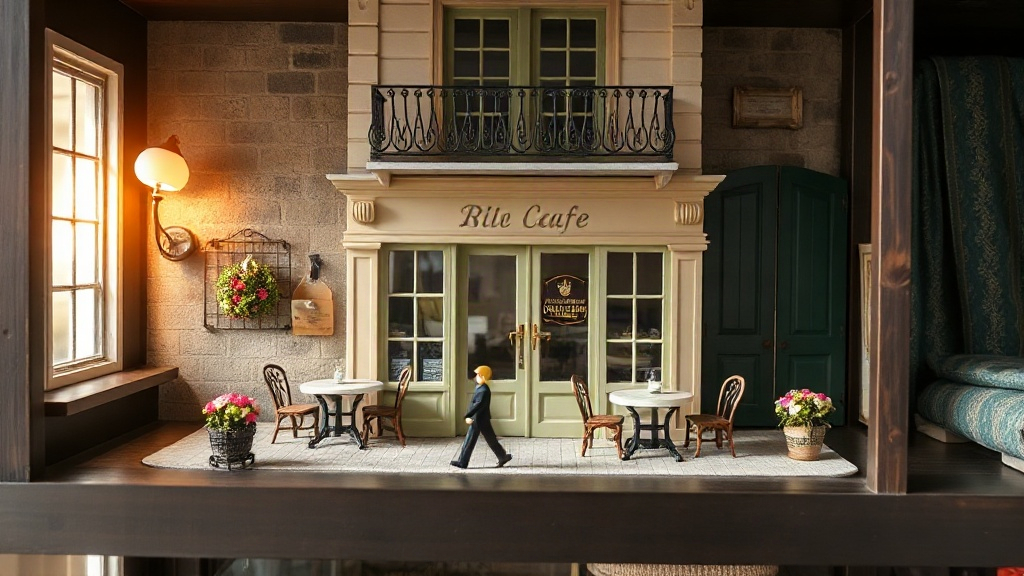
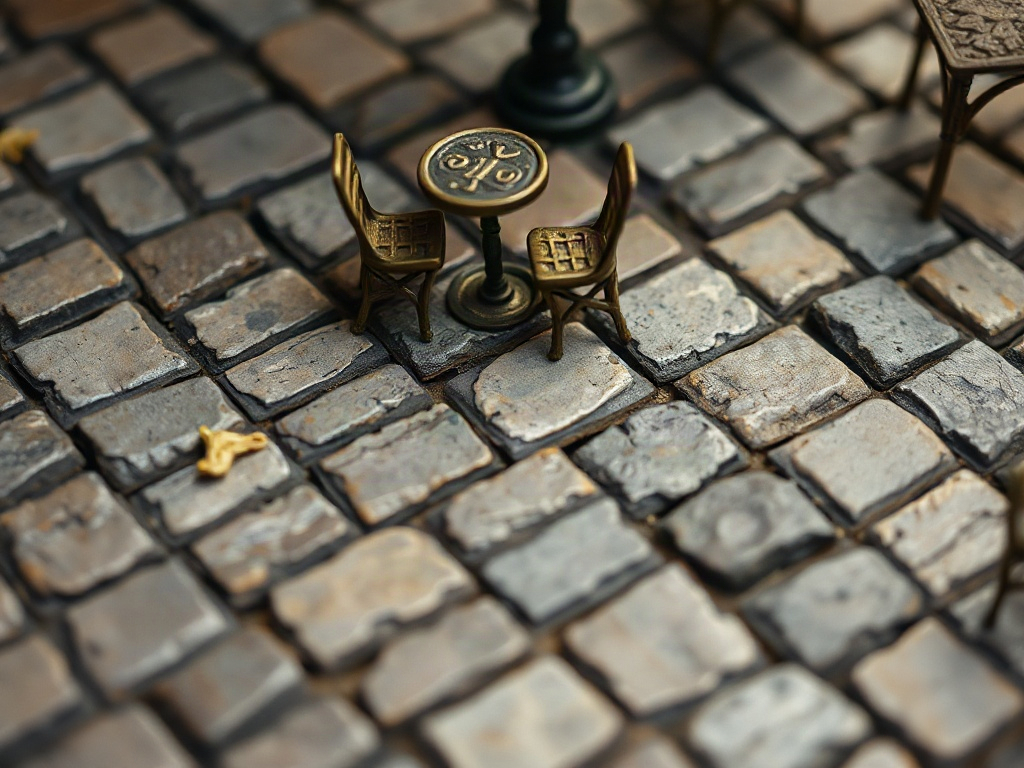
The café is usually your focal point. A proper French bistro has a few non-negotiable features: a recessed entrance (often with a door that has glass panes), a narrow storefront width typical of European ground-floor retail, and window boxes or planters with trailing ivy or geraniums. Interior details like a bar counter, small round marble-topped tables, and bentwood chairs (like the iconic Thonet cafe chair design from the 1800s, still used today) create instant recognition.
Paint the storefront facade in warm cream or pale ochre. Add dark green or forest-green shutters. A hand-painted café sign above the door, even if it’s just lettering that reads “Café” or a simple bistro name, anchors the entire piece. The lettering doesn’t need to be perfectly legible; the presence of it signals professionalism and care.
The Balcony with Wrought-Iron Railings
Bestseller cottage kit
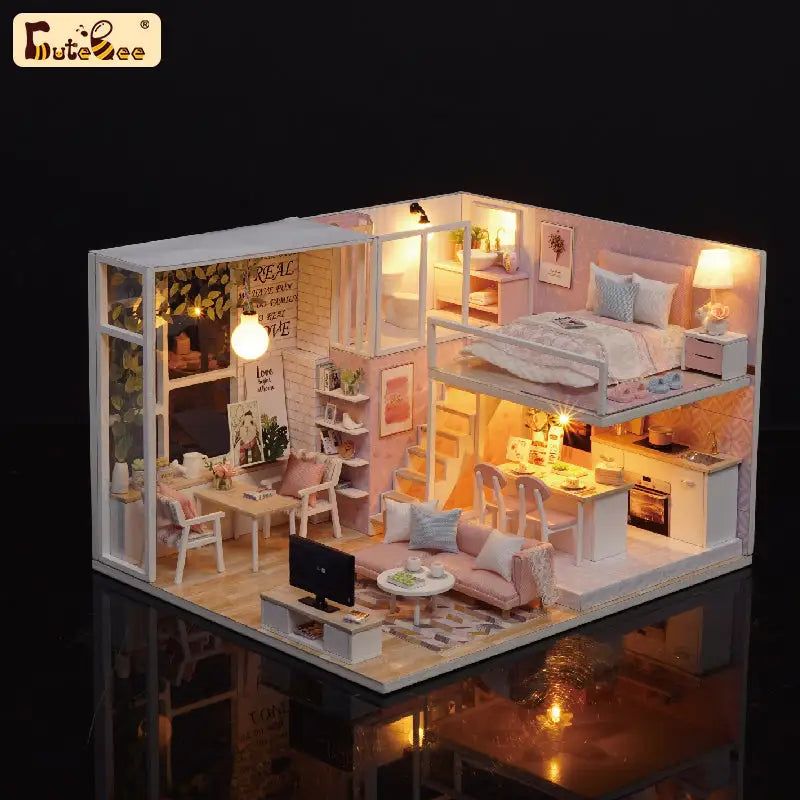
Tranquil Life DIY Miniature House Kit
$67.90
View this kit →
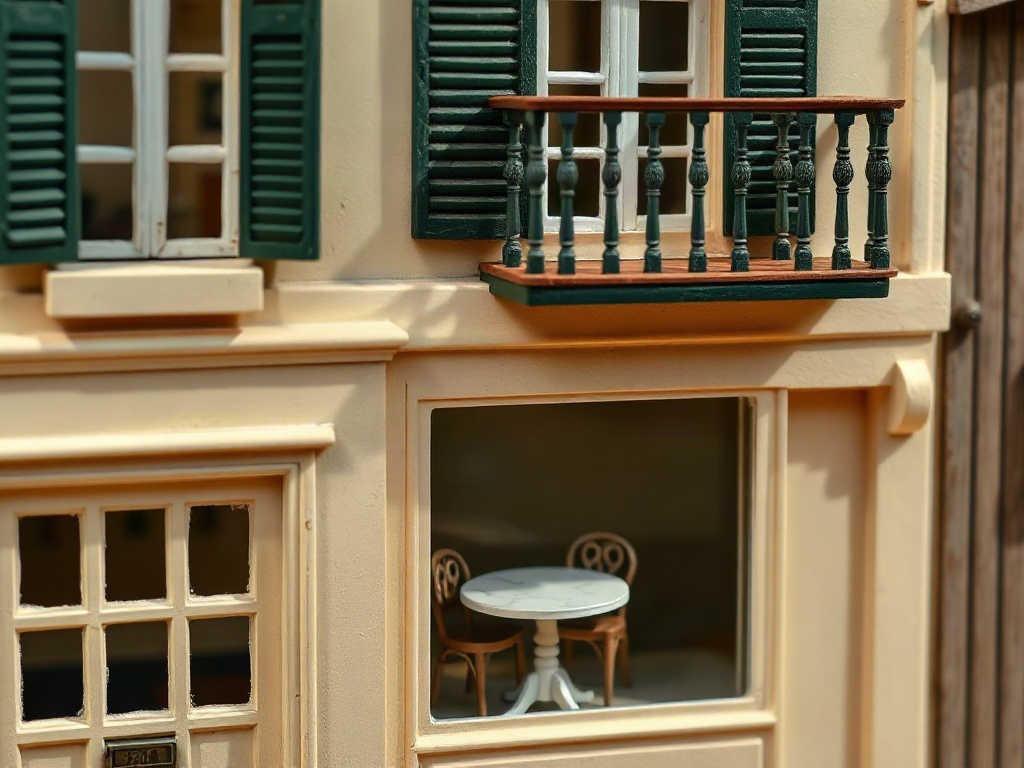
Wrought-iron balconies are the single most recognizable detail of Parisian residential architecture, and getting them right transforms a generic miniature building into an unmistakably French scene. The railings can be sculpted from metal sheets (cut and shaped), cast from resin kits, or etched from paper using careful scoring techniques. The labor-intensive part is often the painting: achieving that oxidized-metal look with layered gray, black, and rust-toned paint techniques.
Furnished balconies feel lived-in. Add a single metal chair, a small wooden table, or window boxes overflowing with miniature flowers. This signals that someone inhabits the space, which elevates the narrative quality of your build.
Hand-Painted Cobblestones
Cobblestones are the most meditative part of this build. You can purchase pre-textured bases, but hand-painting individual stones gives you control over the authentic irregular patterns found in real Parisian streets. The stones aren’t perfectly aligned; they vary in size and color slightly.
Use a stone-colored base (warm grays, taupes, or slightly aged cream). Add shadows between stones with a darker shade. Individual highlight strokes along the top edge of each stone create depth and dimension. This work is slow and repetitive, which many builders find deeply satisfying rather than tedious.
Hannah’s tip
Cobblestone painting goes faster with a plan. Sketch your street pattern lightly in pencil first, breaking the ground into logical groups (four or five stones per grouping). Paint each group as a unit, varying your shadow intensity slightly across the scene. Step back every 10 minutes to check that the overall effect reads as intentional street layout, not random dots. This also prevents the common mistake of making all stones identical in size and shade, which reads as unnatural.
Cobblestone painting goes faster with a plan. Sketch your street pattern lightly in pencil first, breaking the ground into logical groups (four or five stones per grouping). Paint each group as a unit, varying your shadow intensity slightly across the scene. Step back every 10 minutes to check that the overall effect reads as intentional street layout, not random dots. This also prevents the common mistake of making all stones identical in size and shade, which reads as unnatural.
Material Selection and Sourcing
Choosing the right materials for a Parisian miniature means prioritizing surfaces that age gracefully, hold acrylic paint in thin layers, and give you the warm, slightly imperfect finish that makes European architecture look lived-in rather than newly built.
Structural Materials
Balsa wood or MDF board form your base and building frames. Balsa is easier to carve for fine details (window frames, door moldings), though it’s more fragile during assembly. MDF cuts cleanly and holds paint beautifully, making it ideal for flat facade work. Many builders combine both, using balsa for decorative elements and MDF for structural walls.
Paint and Finish
Acrylic paint is the standard choice for miniature work because it dries quickly, layers cleanly, and cleans up with water. For a Parisian aesthetic, invest in a limited palette: warm white or cream, soft gray, pale ochre, deep forest green, and a rust or burnt sienna for aging effects. These colors, mixed and layered, create the authentic palette you’ll see across real Parisian architecture.
Weathering and aging are critical for authenticity. After your base coats dry, add dry-brush strokes of darker shades along edges where water would naturally stain stone or wood. Paint isn’t flat in miniature work; it’s built in intentional layers with deliberate imperfections that suggest decades of weather rather than fresh construction.
Explore the collection
All Book Nook Kits
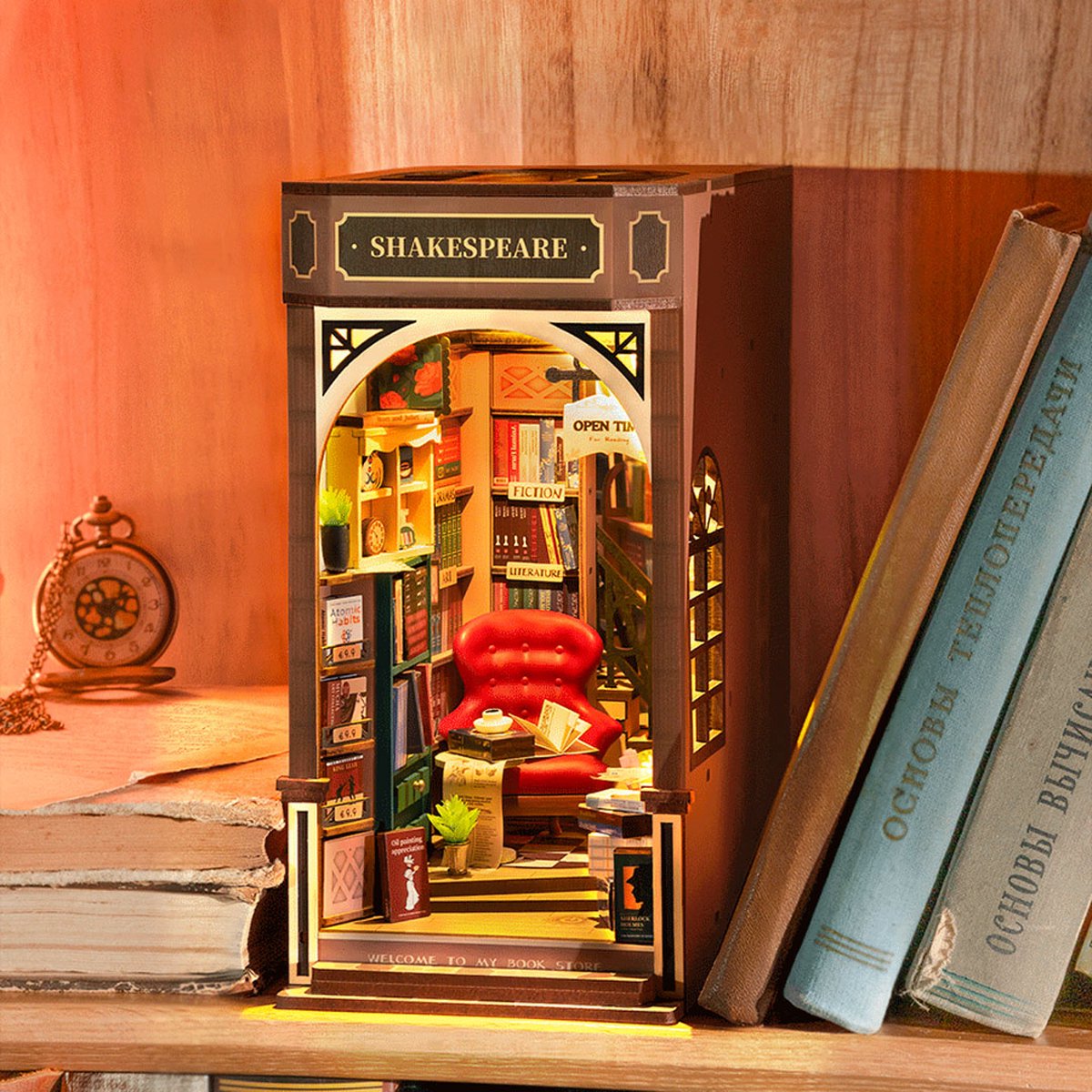
76 handcrafted book nook kits
Browse all book nooks →
Textiles and Accessories
Fabric choices matter significantly. Linen or linen-blend fabrics aged to a cream or natural tone work for café linens and window treatments. Avoid bright whites or oversaturated colors, which feel modern and out of place in a historically-inspired scene. Weathered green fabric for shutters, burgundy for seat cushions, and cream-and-check patterns for café tablecloths all reference real French bistro aesthetics without feeling costume-y.
Assembly and Construction Techniques
A Parisian miniature scene builds most cleanly when you paint individual components before gluing them in place, because once walls are joined and the scene is enclosed, your brush simply cannot reach the recessed corners that matter most for realism.
Building the Foundation and Layout
Start with a solid base platform, roughly 12 by 16 inches if you’re building a book nook-sized scene, though any scale works with adjusted proportions. This doesn’t need to be fancy; a sturdy wooden board or foam base will suffice. Lightly sketch your street layout and building footprints in pencil so you can visualize how the space flows before committing to any cuts or glue.
Position the café storefront as your focal point, usually center or slightly off-center. Decide whether you’ll include an upper facade, a side street view, or a corner where two streets meet. This layout decision affects every subsequent cut and proportion, so take an extra ten minutes with pencil and paper before you pick up a saw.
Constructing Walls and Facades
Cut your balsa or MDF panels to scale. Walls in European city blocks are typically narrow (individual buildings occupy maybe 15-20 feet wide in reality), so your miniature facade panels should reflect that proportion. Sand all edges smooth to avoid paint chipping.
Add dimensional details like door and window frames before final assembly. Carved or glued-on molding strips create shadow lines that make flat facades read as three-dimensional. This step is where patience pays off; rushing leads to visible gaps and misaligned frames.
Creating Depth with Foreground Elements
Don’t assemble everything flush to your base platform. Create depth by building stepped levels: place a section of street in the very foreground (raised slightly), and the café building slightly recessed behind it. This layering technique is what makes a two-inch-tall scene feel like you’re looking down a real street rather than at a flat painted panel.
Did you know?
The iconic Parisian café culture as we know it emerged in the 18th century, but it truly flourished in the 19th century when cafés became centers of intellectual and artistic life. Writers like Hemingway, Sartre, and Simone de Beauvoir spent entire afternoons in cafés like Café de Flore and Les Deux Magots. Miniaturizing this setting captures not just architecture, but a piece of cultural history that still feels alive today.
The iconic Parisian café culture as we know it emerged in the 18th century, but it truly flourished in the 19th century when cafés became centers of intellectual and artistic life. Writers like Hemingway, Sartre, and Simone de Beauvoir spent entire afternoons in cafés like Café de Flore and Les Deux Magots. Miniaturizing this setting captures not just architecture, but a piece of cultural history that still feels alive today.
Easy starter under $50
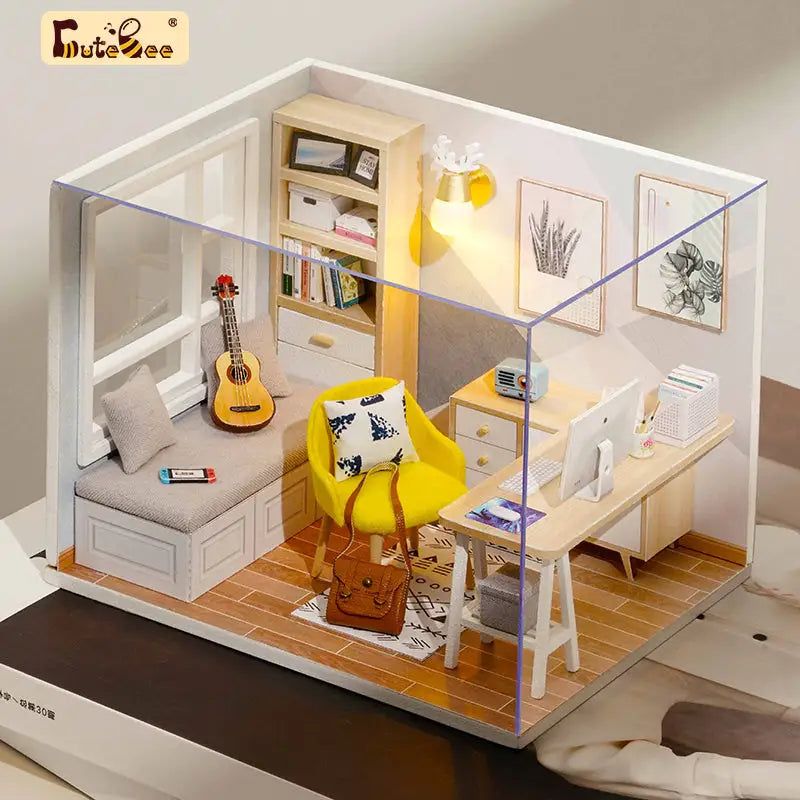
Sun Room DIY Miniature House Kit
$49.99
Its generous glazed walls and neutral cream palette make it a natural starting point before you attempt a full Parisian street scene. Master the construction sequence here, then bring those skills to your cobblestone build.
Start with this kit →
Painting Techniques for Authenticity
The difference between a good Parisian miniature and a great one almost always comes down to paint layering: three or four thin coats built up slowly will always look more convincingly aged than a single thick coat applied quickly.
Base Coating and Color Harmony
Apply two thin coats of your cream or pale ochre base color to all facades. Let each coat dry fully. This foundation matters more than you’d think; uneven base coats show through subsequent layers, breaking the illusion. Use a matte finish base coat so that weathering layers (which often use slightly glossier paints) will sit visibly on top rather than blending invisibly.
Adding Age and Patina
Real Parisian buildings show centuries of weathering. Dirty water stains run down from gutters. Stone discolors where rain pools. Window frames show rust and oxidation. Replicate this with careful dry-brushing using gray, taupe, and rust-colored paints mixed with water to create translucent washes.
The key is subtlety. You’re suggesting the soft imperfections that come with age, not painting visible damage. Paint darker tones only in recessed areas and along architectural edges. A single vertical streak of rust down a painted metal shutter reads as authentic weathering, not negligence.
Hand-Painting Details
Window panes benefit from fine-line work. A thin dark line suggesting the division between panes, with a tiny reflected highlight in one corner of each pane, creates dimensionality that reads even from arm’s length. Door panels, café awning stripes, and architectural detailing all reward slow, focused work with a detail brush. This is the part of the build that most builders find genuinely meditative: the world narrows down to a single two-millimeter stroke and whether it lands exactly where you intended.
Furnishing and Accessorizing Your Scene
Furnishings and accessories are where a technically correct Parisian shell becomes a story: the right chair arrangement, a single newspaper on a table, or a bicycle leaned against a wall each tells the viewer exactly who lives here and what they were doing five minutes ago.
Cafe Interior Styling
Rare in the niche
Miniature Greenhouse Kits
22 LED-lit greenhouse builds
See our greenhouse range →
Bentwood café chairs in dark wood tones are the most recognizable element. Arrange them around small marble-topped tables in conversational groupings, not rigid rows. Add place settings: tiny plates, miniature wine glasses, and small bread baskets. A portrait on the wall or a mirror behind the bar counter reflects light and suggests depth. A newspaper left open on a table is one of the cheapest and most effective narrative props in your entire scene; it anchors the moment in real time.
Street-Level Storytelling
A single figure (a miniature person figurine) walking across the cobblestones or entering the café anchors the entire scene in human scale. A flower cart or street vendor adds activity. A bicycle leaned against a building or a potted topiary beside the café entrance all whisper stories about who moves through this space and how. The goal isn’t to fill every corner but to place two or three carefully chosen props that let the viewer’s imagination complete the picture.
Lighting Considerations
If your scene will be lit (with small LED strips inside or above), warm-toned lighting transforms the entire piece. Café interiors should glow amber or soft gold, suggesting incandescent bulbs. Street-level lighting should be cooler and slightly dimmer, mimicking evening light in narrow European streets. Lighting is optional but dramatically increases the emotional impact, especially in a dark room where the tiny glowing windows create exactly the feeling you were chasing when you started the build.
Common Challenges and How to Solve Them
The three problems that trip up builders most often on a Parisian miniature are flat-looking railings, cobblestones that read as random texture rather than intentional stonework, and proportions that feel slightly wrong without the builder being able to identify why. All three have straightforward fixes.
Balcony Railings Looking Flat or Plastic
If your wrought-iron railings feel unconvincing, the issue is almost always insufficient painting or weathering. Add a matte black base coat, layer on dark gray with dry-brushing to suggest rust and oxidation, and add tiny highlights of gun metal or light gray in the raised areas. Real iron has visual complexity; synthetic materials feel flat. Combat this entirely with paint technique rather than replacing the material.
Cobblestones Reading as Random Texture Instead of Intentional Stonework
Step back frequently while painting. If your stones look like noise rather than a street, your color variation is too aggressive. Narrow your palette to 2-3 closely related tones instead of using your entire range. Group similar-toned stones together so the eye can find rhythm in the pattern. Real cobblestone streets have areas of visual consistency broken by occasional variation; pure randomness reads as a mistake.
Proportions Feeling Off
This usually means your door is too wide or your windows are too large relative to the building height. Real Parisian ground-floor retail has relatively modest display windows (maybe 4-5 feet wide in reality), with residential floors stacked above. Match these proportions in your miniature and the entire piece will feel more believable. When in doubt, make the door slightly narrower and the upper facade slightly taller than feels natural.
Premium collector piece
Monet’s Garden DIY Miniature House Kit
$155.00
Discover this kit →
Frequently Asked Questions about French Parisian Miniature Scenes
Everything you might be wondering (click a question to expand).
How long does a Parisian miniature scene typically take to complete?
A café-focused scene with balcony and street elements takes most hobbyists 30-50 hours over 4-8 weeks of casual building. This includes design planning, material sourcing, assembly, painting, weathering, and final details. The cobblestone hand-painting alone can consume 10-15 hours of that time, but many builders find it meditative rather than tedious.
What scale is best for capturing Parisian architectural details?
1:24 scale (roughly half-inch to one foot) strikes the sweet spot for Parisian miniatures. Doors, windows, and architectural molding are large enough to paint convincingly without requiring specialized tools. Smaller scales (1:48) work but demand fine-motor control and magnification. Larger scales (1:12) need more space and materials but reward fine detail work.
Can I build a Parisian scene without advanced painting skills?
Absolutely. Start with a pre-finished kit or pre-painted architectural elements, then layer on additional details. Focus on one element done well (perfect cobblestones or beautifully furnished café interior) rather than trying to execute every aspect at advanced skill level. Precision placement often matters more than perfect painting technique, especially for beginners.
What materials hold up best over time without fading?
Acrylic paint with a matte varnish topcoat protects against UV fading. Store your finished piece away from direct sunlight. Avoid oil-based paints for miniatures; they’re difficult to layer and can yellow over time. Fabric elements fade eventually, but this can actually enhance the aged aesthetic if it happens slowly and evenly.
Should I include a back wall or leave the scene open?
This depends on display space. A back wall allows you to paint a second facade, street, or sky backdrop, which adds depth and enclosure. An open back is simpler to build and display. Either approach works; choose based on your available wall space and how you want the finished piece to be viewed.
What’s the best way to add realistic miniature plants and flowers to a Parisian scene?
Dried natural materials (tiny dried flowers, preserved moss, lichen) tend to look more convincing than plastic alternatives. Paper flowers punched from tissue paper or crepe paper hold color well and can be shaped to replicate geraniums and trailing ivy. Fix them in place with a small dab of PVA glue rather than hot glue, which can melt delicate paper petals. For window boxes, pack the base with air-dry clay first so your flowers have something to anchor into at the right height.
Bringing Your Parisian Vision to Life
A French Parisian miniature scene sits at the intersection of history, craft skill, and personal storytelling, and the building process itself is half the reward. You’re not just assembling a decorative object; you’re translating a real place, with its specific light and textures and social rhythms, into a scale where you can hold it in your hands and spend hours simply observing the details you’ve created.
The best part of building this way is how the work teaches you to see. You notice how light hits Parisian stonework differently than modern concrete. You learn why cobblestones are sized and shaped the way they are. You understand, on a deeply practical level, why a café chair design from the 1800s still feels exactly right in that space.
Whether you’re building from one of our book nook kits featuring themed European collections or assembling from scratch using individual components, the process becomes the point. Each painted cobblestone, each weathered shutter, each tiny chair pulled up to a table is a small act of attention. That’s where the real satisfaction lives, and once you’ve felt it, you’ll understand why builders come back to this theme again and again.