🎁 Buy 2 kits, get the 3rd FREE · Free shipping on every order

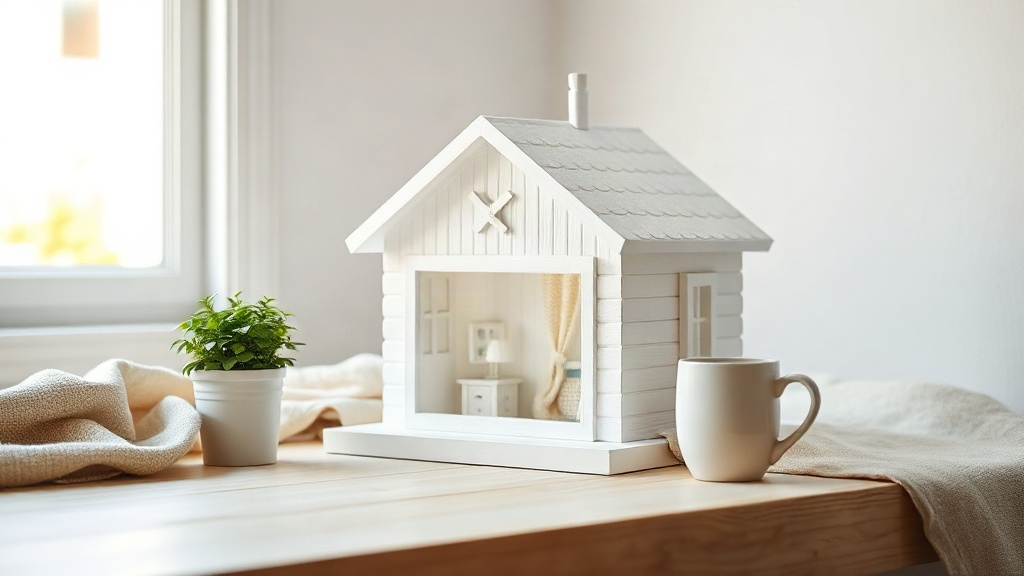
Minimalist Scandinavian Miniature Houses: Clean Lines, Timeless Calm
Discover why minimalist Scandinavian miniature house designs captivate crafters and collectors. Clean aesthetics, functional beauty, and the meditative joy of building with purpose. Explore kits, design principles, and how this style transforms your creative space.

There’s something deeply satisfying about entering a space stripped down to essentials. A white-painted wooden frame. Pale linen curtains. A single shelf holding three carefully chosen objects. When that space is small enough to hold in your hands, the effect becomes almost meditative.
These designs embody a principle that’s harder to follow than it sounds: beauty through subtraction. Rather than cluttering tiny rooms with every possible detail, minimalist Scandinavian miniature houses celebrate open space, natural materials, and the quiet power of restraint. They’re not sparse or cold. They’re purposeful.
The Scandinavian design movement emerged in the 1950s across Denmark, Sweden, Norway, and Finland, rooted in the region’s long dark winters and cultural values around functionality and craftsmanship. That philosophy translates perfectly to miniature building, where every millimeter counts.
Why Minimalist Scandinavian Design Resonates Now
Minimalist Scandinavian miniature house kits resonate because they offer an enclosed world of intentional calm, fewer pieces, lower cost, faster builds, and a finished result that looks gallery-worthy on any modern shelf or desk. The appeal isn’t nostalgia. It’s psychological relief. In 2026, most of us live surrounded by visual noise: screens, notifications, clutter that accumulates without intention. A minimalist Scandinavian miniature house project offers the opposite: an enclosed world where every element has a reason to exist.
Builders choose this aesthetic for several concrete reasons. First, the cost is lower than maximalist kits; fewer pieces means less materials and less manufacturing complexity, which translates to kits priced 20-30% below elaborate Victorian or cottagecore alternatives. Second, the build time is more forgiving. Fewer decorative elements means fewer places to feel overwhelmed during assembly. Third, the finished result feels modern and gallery-worthy, not dated.
Community feedback consistently highlights one unexpected benefit: the projects become portable conversation starters. A completed minimalist Scandinavian miniature house looks intentional on a shelf or desk, not like a children’s toy. Gift buyers especially appreciate this; they’re giving something that adults genuinely want to display.
🪄 Hannah’s tip
If you’re new to miniature building, start with a minimalist kit. The reduced piece count means fewer assembly steps, simpler gluing sequences, and clearer visual feedback as you build. You’ll finish faster, feel more accomplished, and develop core techniques without being buried in micro-details. Many experienced builders return to minimalist projects specifically because the simplicity allows room to focus on precision and finish quality.
If you’re new to miniature building, start with a minimalist kit. The reduced piece count means fewer assembly steps, simpler gluing sequences, and clearer visual feedback as you build. You’ll finish faster, feel more accomplished, and develop core techniques without being buried in micro-details. Many experienced builders return to minimalist projects specifically because the simplicity allows room to focus on precision and finish quality.
Core Design Principles of Scandinavian Minimalism
Scandinavian minimalism rests on three principles: honest natural materials that show their grain and texture, functional objects with clear purpose, and a restrained palette of white, pale gray, and natural wood that lets structure become the visual interest. Understanding the “why” behind these aesthetics makes building more rewarding. You’re not just following instructions; you’re honoring a design philosophy.
Natural Materials and Honest Construction
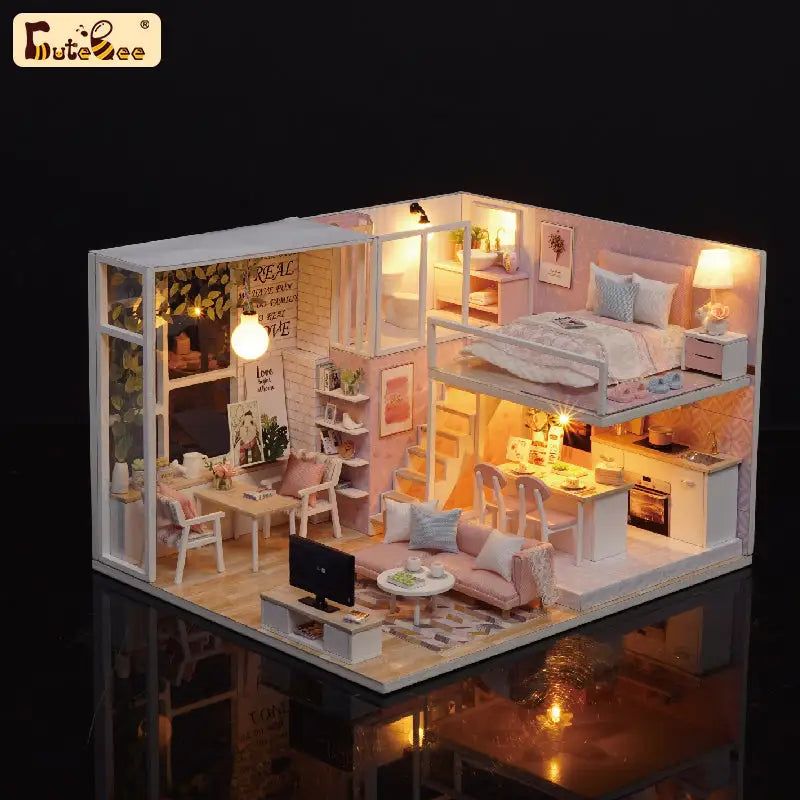
The kit that taught me precision
Tranquil Life DIY Miniature House Kit
$67.90
View this kit →
Scandinavian design celebrates what materials actually are. Wood shows grain, not veneers. Metal is visible, not hidden. Paint is matte, not glossy. Quality miniature kits in this style use real birch or ash rather than plastic, natural linen rather than printed fabric, and untreated or lightly stained finishes.
This approach means your hands feel the difference during building. Sanding birch is satisfying in a way plastic never is. The grain patterns guide your eye naturally. Paint absorbs into wood slightly, creating subtle depth impossible in synthetic materials.
Functional Beauty
Every object in a minimalist Scandinavian space serves a purpose. That shelf doesn’t exist for decoration; it holds things you actually need. That window isn’t there to fill wall space; it brings light and connection to the world outside. This principle simplifies decision-making during assembly: if a piece doesn’t have a clear function, it isn’t included.
For builders, this clarity is liberating. You never face the paralyzing question “where should this decorative thing go?” There’s no excess to place. Instead, you focus on the few elements present and how they relate to light, line, and proportion.
Color Restraint with Intention
Minimalist Scandinavian palettes rely on white, off-white, pale gray, and natural wood tones as foundations. Accents arrive in one or two colors: perhaps soft blue-gray, muted green, or warm tan. This restraint creates visual calm and allows wood texture to become the primary visual interest.
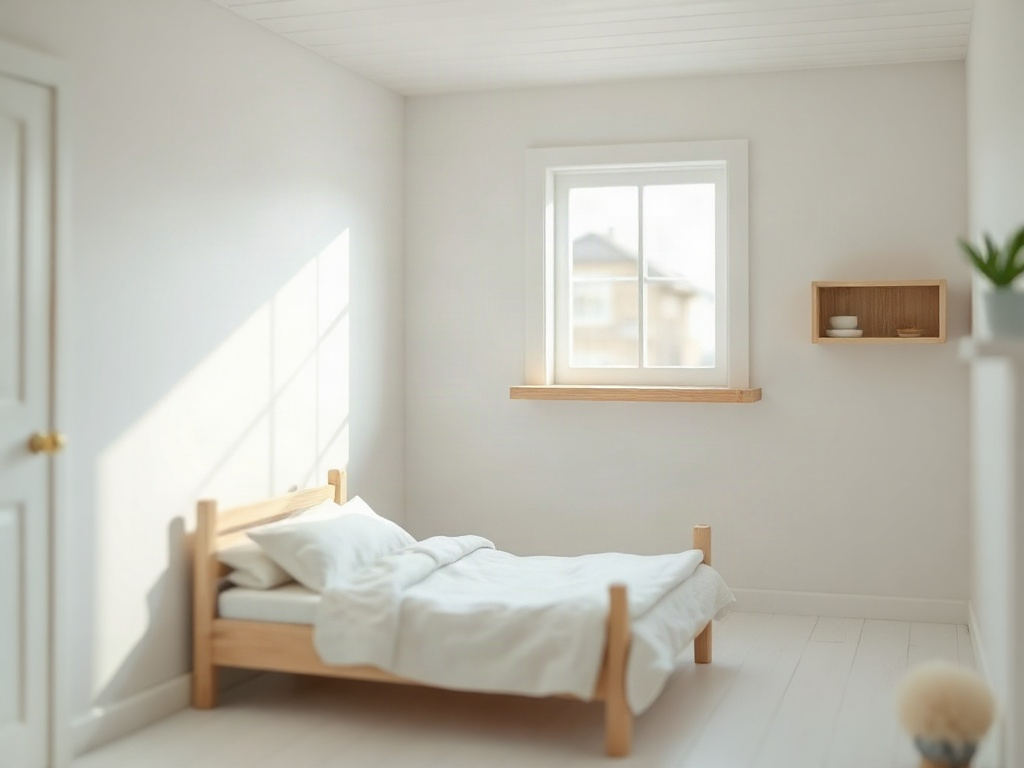
Quality kits include paint samples or pre-finished components that respect this palette. Cheaper alternatives sometimes add garish colors that undermine the entire aesthetic. Checking paint specifications before purchase prevents this disappointment.
Types of Minimalist Scandinavian Miniature House Kits
Minimalist Scandinavian miniature house kits fall into three main types, cottage, cabin, and urban loft, ranging from beginner builds of 5-10 hours at $35-$60 to advanced multi-room lofts of 12-18 hours at $65-$120, each offering a distinct meditative quality. Not all minimalist kits ask the same things of you. The table below gives an honest at-a-glance comparison so you can pick the build that fits your schedule, budget, and headspace right now.
| Style | Difficulty | Build time | Price range | Meditative quality | Best for |
|---|---|---|---|---|---|
| Cottage | Beginner | 5 – 10 hrs | $35 – $60 | High: single room, clear sequence, zero overwhelm | First build, gift, desk display |
| Cabin | Intermediate | 8 – 15 hrs | $45 – $95 | Very high: open floor plan invites slow, deliberate work | Second build, weekend project, shelf centerpiece |
| Urban Loft | Advanced | 12 – 18 hrs | $65 – $120 | Focused: spatial problem-solving adds a different kind of flow | Experienced builder, statement piece, lighting enthusiast |
Modern Cabin Designs
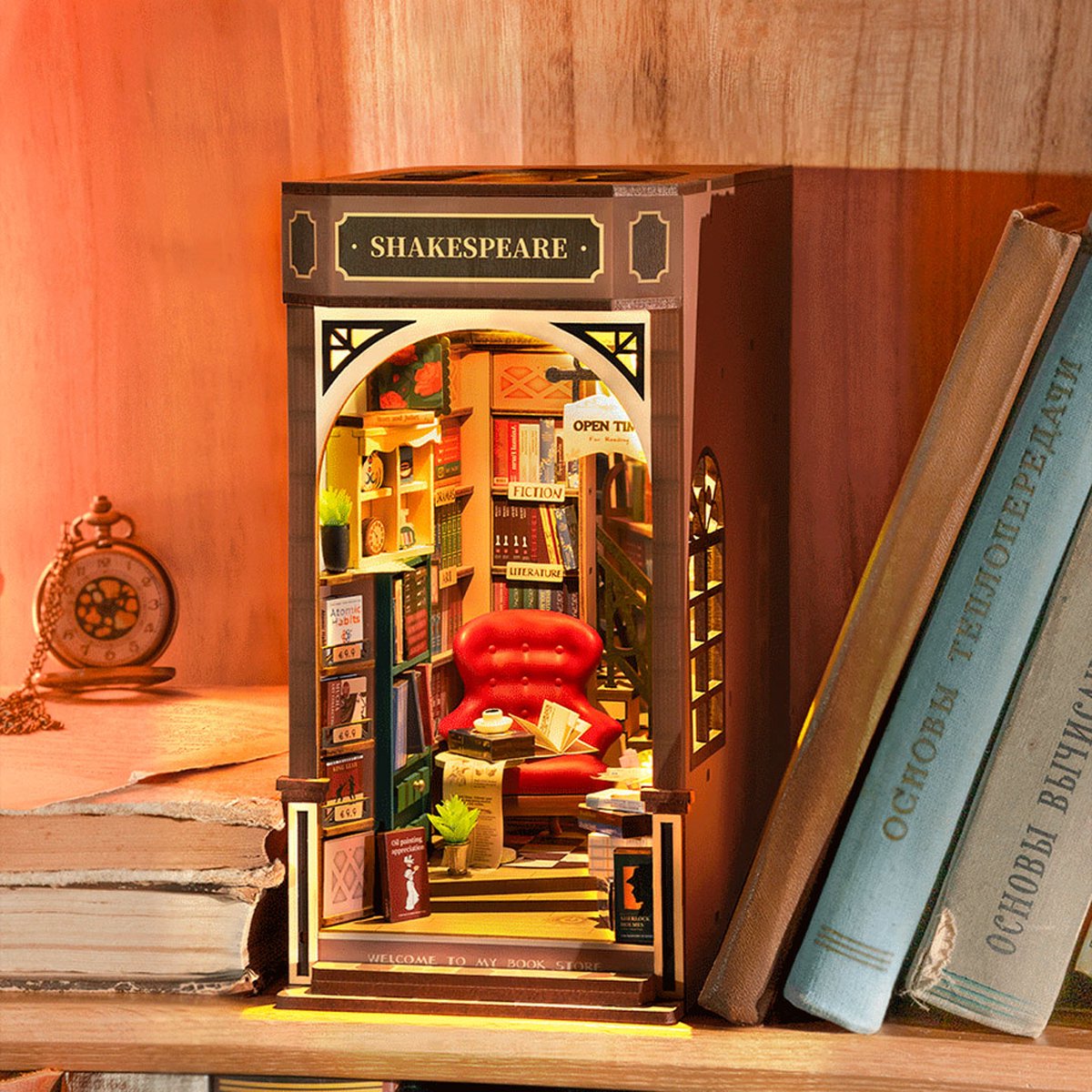
These kits capture the essence of Scandinavian summer retreats: simple pitched roofs, large windows for natural light, open interior spaces with minimal walls. Typical difficulty: beginner to intermediate. Most include pre-cut wood panels, basic assembly hardware, and clear visual instructions. Build time: 8-15 hours. Price range: $45-$95.
What’s typically included: wood structure, window and door frames (usually require assembly), interior floor, basic roof panels, paint, and a small set of furniture pieces (usually 3-5 items like a bed frame and table). Some kits bundle LED lighting; check product descriptions to confirm what’s included before ordering.
Apartment and Urban Lofts
These designs celebrate vertical space and multi-functional rooms, inspired by contemporary Scandinavian city living. Divided lofts with staircase details, open kitchens merging into living areas, and clean-lined room dividers are common. Difficulty: intermediate. Build time: 12-18 hours. Price range: $65-$120.
The meditative aspect here shifts: instead of building a complete structure, you’re creating micro-ecosystems within one space. How does the kitchen layout encourage flow? Where does natural light create zones? Builders often spend extra time on these conceptual decisions, and that slow thinking is half the pleasure.
Cottage Variations
Smaller, single-room designs emphasizing coziness without clutter. A bedroom, kitchenette, and sitting area share one open space. Perfect for first-time builders or those with limited display space. Difficulty: beginner. Build time: 5-10 hours. Price range: $35-$60.
Building Techniques Specific to This Aesthetic
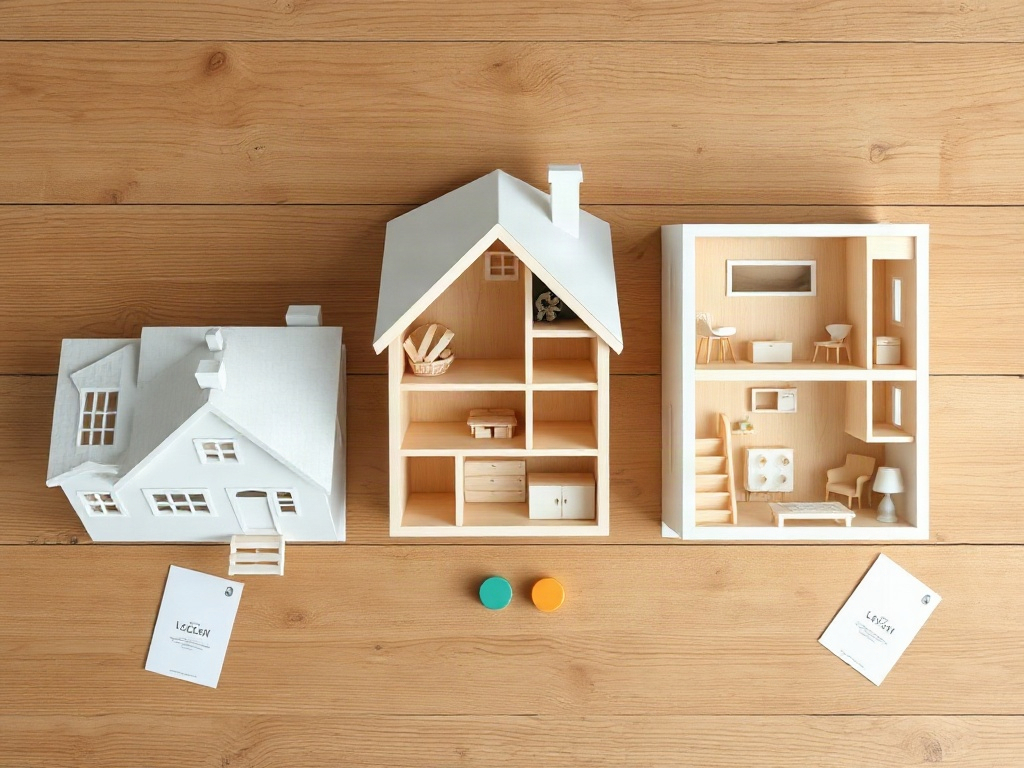
Minimalist Scandinavian builds reward precision over embellishment: seamless painted finishes, strategically placed LED lighting, and intentional negative space are the three techniques that separate a pleasant result from a gallery-worthy one. Minimalist designs reward precision over embellishment. A few techniques make the difference between “pleasant” and “gallery-worthy.”
Community favorite for first-timers
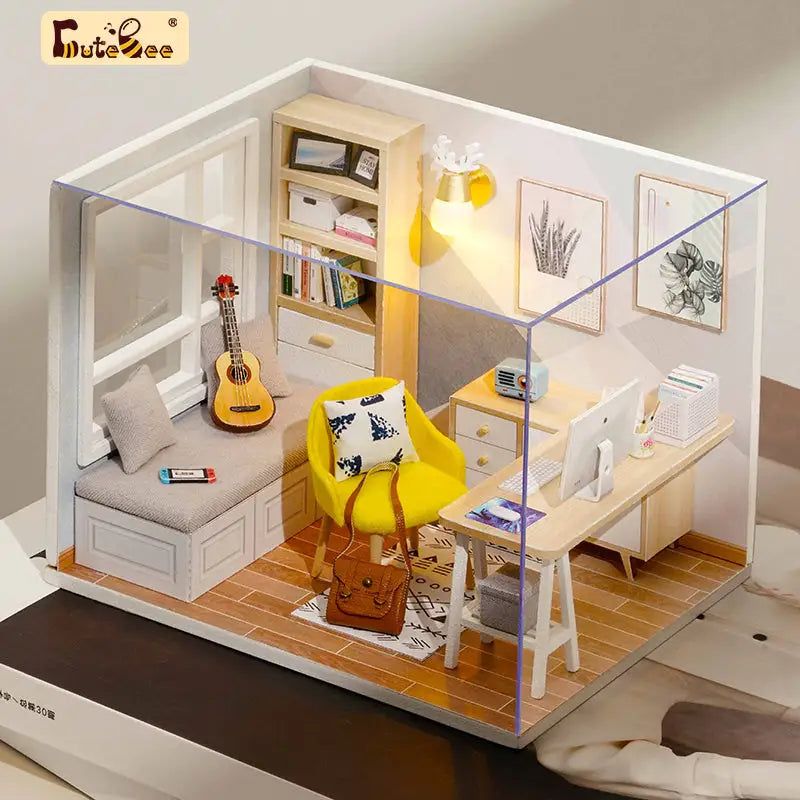
Sun Room DIY Miniature House Kit
$49.99
Start with this kit →
Achieve Seamless Finishes
With fewer visual distractions, any glue seams, paint runs, or misaligned edges become obvious. Sand between paint coats. Use wood filler on gaps before finishing. Invest in quality paintbrushes; the $8 brush prevents visible bristle marks far better than the $2 alternative. These aren’t optional flourishes; they’re part of the aesthetic. Hannah’s practical rule: if you can see a join from 30 cm away, fill it before you paint.
Lighting Becomes Architectural
LED kits transform minimal spaces. Rather than scattering lights throughout, position them to highlight structure: backlighting behind translucent window panels, a single warm bulb in a reading corner, or edge lighting along a staircase. Restraint in lighting placement mirrors the design philosophy. One well-placed light always beats five scattered ones.
Negative Space as a Material
In minimalist design, empty space is not a flaw; it’s intentional. Resist the urge to fill every surface with tiny objects. Leave shelves partially bare. Let large wall areas breathe. This choice actually makes your finished piece more striking, not less. Think of a blank wall as the pause between notes in a piece of music; it’s what gives the rest meaning.
📜 Did you know?
The Scandinavian design movement formalized during the 1950s through a series of exhibitions called “Design in Scandinavia,” which toured North America and Europe. The style emerged partly from practical constraints: limited daylight during long winters meant interiors had to maximize natural light and use pale colors to reflect it. What began as necessity became a global design language emphasizing simplicity, function, and beauty.
The Scandinavian design movement formalized during the 1950s through a series of exhibitions called “Design in Scandinavia,” which toured North America and Europe. The style emerged partly from practical constraints: limited daylight during long winters meant interiors had to maximize natural light and use pale colors to reflect it. What began as necessity became a global design language emphasizing simplicity, function, and beauty.
Choosing the Right Kit for Your Skill Level
Match your skill level honestly: beginners thrive with cottage kits at $35-$60, intermediate builders handle multi-room lofts with staircase assembly, and advanced crafters appreciate these designs precisely because clean lines demand excellence in core techniques. Minimalist kits range dramatically in assembly complexity. Here’s how to match kit to skill realistically.
Beginners thrive with cottage designs or simple cabin kits. These include pre-assembled roof panels, simplified electrical harnesses (if included), and instructions that rarely require interpretation. You’ll encounter gluing, painting, and basic furniture assembly. Estimated build time translates accurately; most builders complete these within stated hours. Cost advantage: genuine. These kits cost less because they contain fewer parts, not because quality is compromised.
Intermediate builders handle loft designs with multiple rooms and staircase assembly. These kits require stronger spatial reasoning and more careful finishing work. Instructions may assume you’ve built before; they’ll show a concept but leave some assembly sequences to your judgment. Build times often run 25% longer than estimates. This is normal, not a sign of fault.
Advanced builders appreciate the technical precision these designs demand. Minor gaps between panels become visible. Paint uniformity matters. Lighting integration requires some electrical problem-solving. Many experienced crafters prefer minimalist miniature house kits specifically because they eliminate distraction and demand excellence in core techniques.
Interior Styling Within Minimalist Constraints
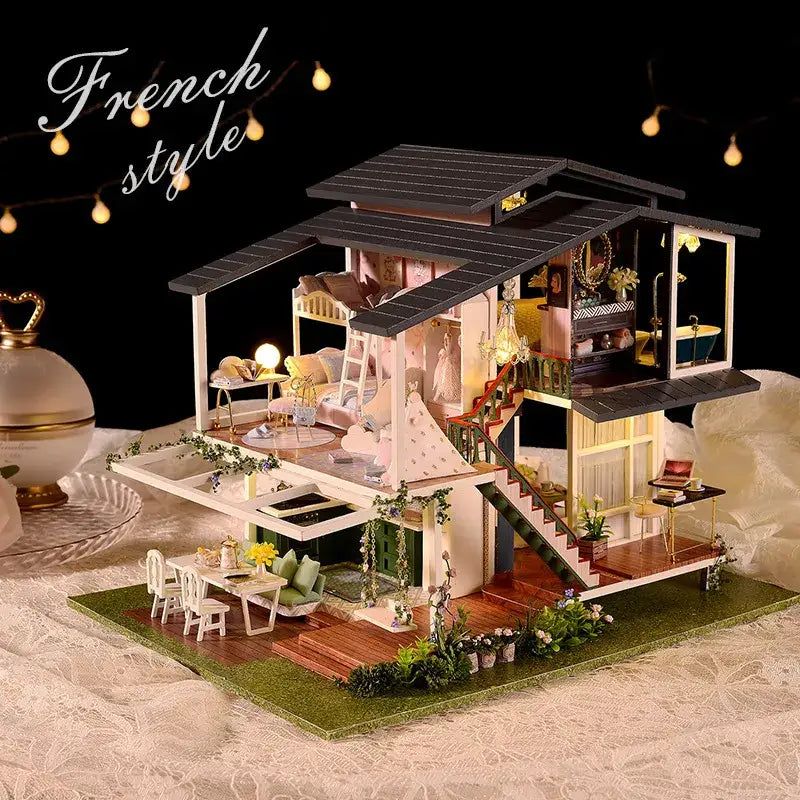
Minimalist interiors aren’t empty, they’re edited: furnish each room with only what someone would actually need, source unfinished wood and natural linen pieces, and apply strict color discipline so every element feels chosen rather than accidental. Once structure is complete, furnishing tests your restraint. Minimalist interiors aren’t empty; they’re edited.
Each room asks: what would someone actually need? A bedroom needs a bed, maybe a small nightstand. A kitchen needs a counter, stove, and place to eat. A living area needs seating and perhaps a table. Stop there. The power of the space emerges from what’s absent.
Sourcing appropriate furniture is easier than it was five years ago. Brands now produce minimalist dollhouse collections specifically. Look for unfinished wood, natural linen, and simple geometric forms. Avoid anything with ornament, bright colors, or fussy details.
Color discipline matters intensely. If your walls are off-white, your furniture should range from light natural wood to pale gray to soft accent tones. One vibrant piece can work as intentional contrast, but it must feel chosen, not accidental.
Many builders photograph their finished houses for social media or portfolio purposes. The clarity of minimalist design photographs beautifully. Clean lines, open spaces, and intentional objects create compositions that feel composed, not chaotic. This is another reason enthusiasts choose this aesthetic: the final product genuinely impresses others.
Maintenance and Long-Term Display
Minimalist miniature houses age exceptionally well: few small objects mean dust stays manageable, neutral paint tones hide wear, and quality wood finishes develop a richer patina over decades with minimal care. Minimalist miniature houses age gracefully. Few small objects mean dust doesn’t collect in corners or on tiny shelves. Wood finishes develop subtle patina over years, becoming richer. Paint in neutral tones hides wear far better than bright colors.
Display considerations favor these designs. Unlike elaborate houses requiring careful shelf positioning and protected corners, minimalist pieces look at home on modern desks, in minimal decor contexts, or even in office environments. The aesthetic feels professional, not childish or kitschy.
Archival materials matter: use UV-protective finishes if displaying near windows, seal wood properly to prevent warping, and store in climate-controlled spaces if not on display. Minimalist designs, built from quality materials, last decades with minimal care.
Frequently Asked Questions about Minimalist Scandinavian Miniature Houses
Everything you might be wondering (click a question to expand).
Are minimalist kits genuinely easier than detailed ones?
Fewer parts means fewer assembly steps, which reduces opportunity for error or frustration. That said, minimalist designs demand higher precision in finishing because imperfections show more clearly. If you’re skilled at gluing and painting but intimidated by complex assembly sequences, yes, these are easier. If you want a kit that hides small mistakes, detailed Victorian designs might suit you better.
What’s the typical build time for a minimalist Scandinavian house kit?
Cottage designs take 5-10 hours spread across several evenings. Cabin kits typically require 8-15 hours. Urban apartment or loft designs run 12-18 hours or longer if you customize or add lighting. These estimates assume moderate skill and no rushing. First-time builders often take 25-30% longer, and that extra time is worth it.
Can I customize a minimalist kit without breaking the aesthetic?
Absolutely. The principle behind minimalism is intentionality, not strict adherence to a template. Add custom lighting, repaint in different neutral tones, or source alternative furniture. The constraint is restraint: each addition must have clear purpose. If you’re adding something just to fill space or because it’s cute, it probably violates the aesthetic. If it serves a function or creates intentional visual interest, it works.
Which kit should I choose if this is my very first miniature build?
Start with a cottage-style kit in the $35-$60 range. Single-room layouts mean a clear, linear assembly sequence with nowhere to get truly lost. The Sun Room kit is the one Hannah recommends most often to complete beginners: the window wall teaches you how to dry-fit before gluing, which is the single most important habit in miniature building. Once that muscle memory is there, moving up to a cabin or loft feels natural rather than daunting.
What paints work best for achieving the Scandinavian palette on wood?
Flat or *eggshell* acrylic in white, off-white, or pale linen is the go-to. Avoid satin and gloss finishes; they catch light in ways that look too polished for this style. Apply two thin coats rather than one thick one: the wood grain stays visible, which is exactly what you want. For furniture pieces, leaving raw birch unsealed is a perfectly valid choice and one that many community builders prefer. A light coat of matte wax adds protection without sheen.
Where should I display a finished minimalist Scandinavian house?
These designs thrive in minimal modern decor. A shelf in a Scandinavian-style home feels perfectly at home. A desk in a contemporary office looks intentional. A bookshelf among other design objects reads as art. Avoid displaying alongside maximalist decor or cluttered shelving; the contrast undermines both.
Are minimalist kits more affordable than other styles?
Generally yes. Fewer components and simpler manufacturing drive lower production costs, which translate to lower retail prices. Expect to pay 20-30% less for comparable minimalist kits versus elaborate Victorian or cottagecore alternatives. Quality of included materials remains high; you’re saving money through design philosophy, not material compromise.
Building Your Minimalist Sanctuary
A minimalist Scandinavian miniature house kit is more than a craft project: it’s permission to slow down, choose intentionality, and create genuine beauty through subtraction, and the finished piece photographs well, displays confidently, and impresses builders and viewers alike. A minimalist Scandinavian miniature house kit is more than a craft project. It’s permission to slow down, to choose intentionality, to create something genuinely beautiful through subtraction rather than addition.
The build process itself becomes meditative. Fewer decisions mean more presence in each action. Sanding wood, mixing paint, positioning a shelf. The satisfaction comes from doing these simple things excellently, not from juggling dozens of tiny embellishments.
Whether you’re a first-time builder drawn to the reduced complexity, an experienced crafter seeking elegant simplicity, or someone shopping for a gift, minimalist Scandinavian miniature house designs deliver. They photograph well, display confidently, and honor both the crafter’s hands and the viewer’s eyes. In a world of excess, that restraint feels revolutionary.