🎁 Buy 2 kits, get the 3rd FREE · Free shipping on every order

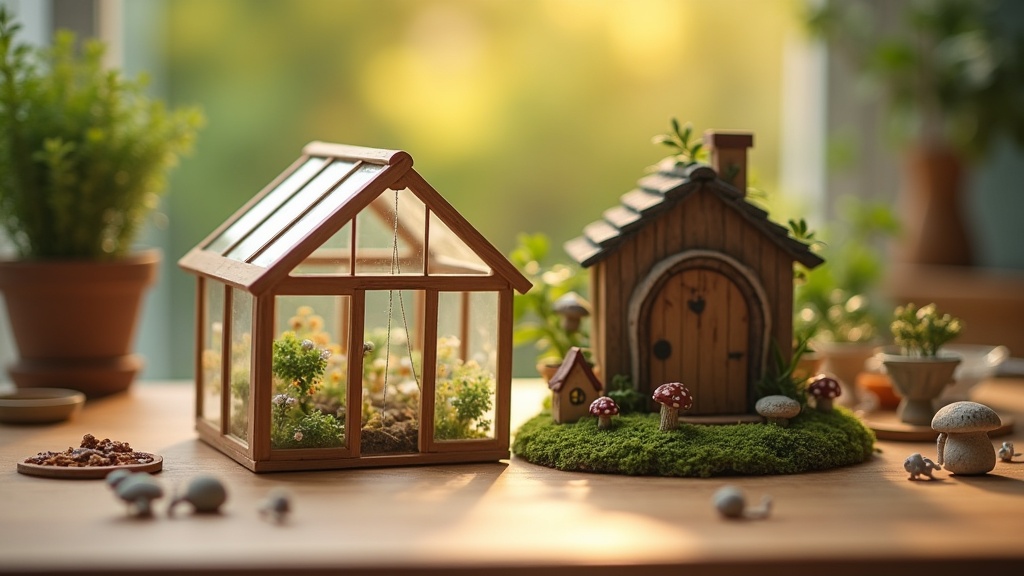
Miniature Greenhouse vs Fairy Garden: Which Build Is Right for You?
Torn between a miniature greenhouse kit and a fairy garden project? This guide breaks down both crafts honestly, from skill level and materials to the meditative satisfaction each one delivers, so you can pick the build that truly fits your creative life.

You have an afternoon free, a cup of tea going cold on your desk, and a creative itch you genuinely need to scratch. Two options keep coming up: a miniature greenhouse vs fairy garden. Both are small-scale, both are deeply satisfying, and both have passionate communities behind them. But they are not the same craft, and picking the wrong one for your personality can mean a half-finished project gathering dust by March.
This guide puts both builds side by side, honestly. No hype. Just the real textures, time commitments, and quiet joys each one offers, so you walk away knowing exactly which shelf space to claim.
What Each Craft Actually Is (And Is Not)
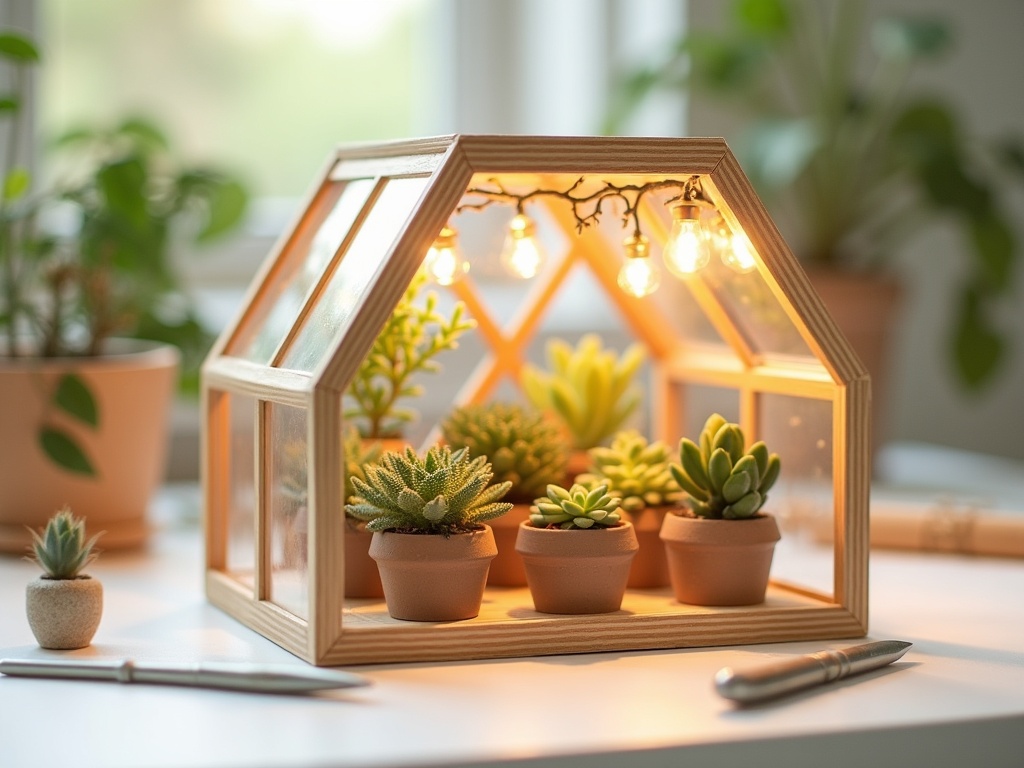
A miniature greenhouse is a structured architectural build using laser-cut wood and acrylic panels; a fairy garden is an organic, imaginative arrangement of moss, figurines and plants. Both create a tiny complete world, but through very different paths. A miniature greenhouse is a structured architectural build. You are assembling a scaled-down version of a real glass-and-timber structure, typically using laser-cut wood pieces, acrylic or acetate panels, and tiny decorative elements like potted plants, grow lights, or seed trays. The appeal is precision. Every joint clicks or glues into place. The finished object looks like something that genuinely exists at 1:12 or 1:24 scale.
A fairy garden, by contrast, is an organic, imaginative arrangement. You are creating a habitat, not a building. Moss, pebbles, small figurines, miniature furniture, and living or preserved plants combine into a scene that suggests a tiny world rather than replicating a real one. The appeal is improvisation and storytelling.
Both pull from a genuine human impulse: the desire to make something small and complete, a world you can hold in two hands and call entirely yours. The path to that feeling just looks different depending on which craft you choose.
Skill Level and Learning Curve
Miniature greenhouse kits offer guided, beginner-friendly builds with numbered steps and rated difficulty; fairy gardens demand more compositional instinct from the start. Your best starting point depends on whether you prefer a roadmap or open-ended creative freedom. Before we compare techniques, it helps to see both crafts side by side at a glance. We pulled together the most useful dimensions our community asks about when deciding between a miniature greenhouse vs fairy garden build.
| Dimension | Miniature Greenhouse Kit | Fairy Garden |
|---|---|---|
| Starting difficulty | Guided; beginner kits rated 2/5 | Open-ended; compositional eye required |
| Build time | 4 to 20 hours (kit-dependent) | 1 afternoon to ongoing months |
| Entry cost | $35 to $120 all-inclusive | $10 to $150+ (accumulates gradually) |
| Finish line | Clear; kit is complete | None; evolves seasonally |
| Display lifespan | Years with basic care | Ongoing; living plants need tending |
| Gift suitability | Excellent; self-contained experience | Moderate; requires personal curation |
| Meditative quality | Focused flow; structured repetition | Contemplative; ritual caretaking |
Miniature Greenhouse Kits: Structured Progress
Most miniature greenhouse kits come with numbered parts, a step-by-step instruction booklet, and all the hardware you need. Beginners can absolutely tackle them. That said, you will use craft glue, small clamps or clips, and occasionally tweezers for fiddly interior pieces. Fine motor patience matters here.
Difficulty typically scales like this:
- Beginner kits (difficulty 2/5): Under 80 pieces, pre-scored wood, no painting required. Good for ages 14+ or first-time miniaturists.
- Intermediate kits (difficulty 3-4/5): 100 to 200 parts, multi-room interiors, optional LED wiring, paint-your-own elements.
- Advanced kits (difficulty 5/5): Working hinges, real glass inserts, hand-painted botanical details. Built over several sessions spanning a weekend or more.
The structured nature of a kit gives beginners a genuine roadmap. You follow the path; the path takes you somewhere beautiful. That is not a limitation. For many crafters in our community, it is the whole point. We regularly hear from first-time builders who tell us they had not sat quietly for two hours in months before they opened their first kit. There is something about the numbered steps and the tiny pieces that pulls you completely into the present moment.
Fairy Gardens: Creative Freedom, Open-Ended Challenge
Fairy gardens have a deceptively low barrier to entry. Buy a pot, grab some moss, place a mushroom figurine. Done? Sort of. The real challenge is composition. Making a fairy garden that looks intentional rather than like a jumbled toy box requires an eye for scale, color, and negative space that takes time to develop.
You are also sourcing your own materials, often from multiple shops or even your own backyard. There is no instruction booklet. That freedom thrills some crafters and stalls others completely. If you have spent time on the miniature house kit side of the hobby first, you will likely find fairy garden composition easier because you have already trained your eye for miniature scale relationships.
📜 Did you know?
The modern fairy garden trend traces back to the 1800s when Victorian-era gardeners created ferneries and moss grottos in terracotta pots, believing miniature planted scenes brought good luck to the household. By the early 2000s, the style had spread across American hobby shops and garden centers, with the industry now valued at over $500 million annually in the US alone (Garden Media Group, 2024).
The modern fairy garden trend traces back to the 1800s when Victorian-era gardeners created ferneries and moss grottos in terracotta pots, believing miniature planted scenes brought good luck to the household. By the early 2000s, the style had spread across American hobby shops and garden centers, with the industry now valued at over $500 million annually in the US alone (Garden Media Group, 2024).
Time Investment and Build Sessions
A beginner miniature greenhouse build takes 4 to 8 hours across two or three sittings, while a fairy garden can be finished in one afternoon or stretched across months of gradual additions. Your preference for clear endpoints shapes which suits you. Time shapes the experience more than most crafters admit upfront.
A beginner-level miniature greenhouse build typically takes 4 to 8 hours of focused work, spread across two or three sittings. You need dry time between gluing stages, so you cannot rush it. Intermediate kits push toward 12 to 20 hours total. That sounds like a lot until you realize most crafters describe those hours as genuinely meditative: your world shrinks to the width of a toothpick, time stops tracking itself, and you resurface with something real in your hands. Hannah describes it as “the closest I have found to actual quiet in a loud week.” That sense of absorbed concentration, of being wholly present in a task that demands just enough of your attention without overwhelming it, is something we hear echoed constantly from builders across all skill levels.
Fairy gardens can be assembled in a single afternoon or stretched over weeks as you add pieces gradually. A lot of enthusiasts treat their fairy garden as a living project, swapping plants with the seasons, adding new figurines after a trip to the craft store. There is no finish line unless you decide to draw one. Several of our community members share yearly “before and after” photos of the same container, and the seasonal evolution is genuinely lovely to watch.
If you want a clear start and a satisfying end point, a kit wins every time. If you want an ongoing creative outlet you can revisit whenever inspiration strikes, a fairy garden fits that rhythm better.
Materials, Cost, and What You Actually Get
Miniature Greenhouse Kits
Miniature greenhouse kits run $35 to $120 all-inclusive with everything in one box; fairy garden costs start low but accumulate gradually to $60 to $150 or more. The kit delivers a single curated purchase while the fairy garden delivers an ongoing sourcing journey. A solid beginner kit runs between $35 and $65. Mid-range kits with LED lighting and detailed interiors sit between $65 and $120. Everything arrives in one box: pre-cut wood sheets, fasteners, acrylic panels, decorative accessories, glue, and instructions. You supply only basic tools like scissors, a toothpick for glue application, and optionally sandpaper for smoothing.
What you get at the end is a self-contained, displayable object. It sits on a shelf, catches light, and invites people to lean in closer. Gifting one is straightforward because the recipient receives a complete, curated experience rather than a pile of loose parts to figure out.
Browse our full range of miniature greenhouse kits for all skill levels to find the right match for your first (or next) build.
✨ Hannah’s tip on gifting a kit
If you are giving a miniature greenhouse kit as a gift, pair it with a small set of acrylic paints and a fine brush even if the kit does not require painting. Most recipients end up wanting to personalize the flower pots or window frames once the structure is done. I started doing this after the third person told me they wished they had had paints on hand. That tiny extra push toward customization turns a great gift into an unforgettable one.
If you are giving a miniature greenhouse kit as a gift, pair it with a small set of acrylic paints and a fine brush even if the kit does not require painting. Most recipients end up wanting to personalize the flower pots or window frames once the structure is done. I started doing this after the third person told me they wished they had had paints on hand. That tiny extra push toward customization turns a great gift into an unforgettable one.
Fairy Garden Supplies
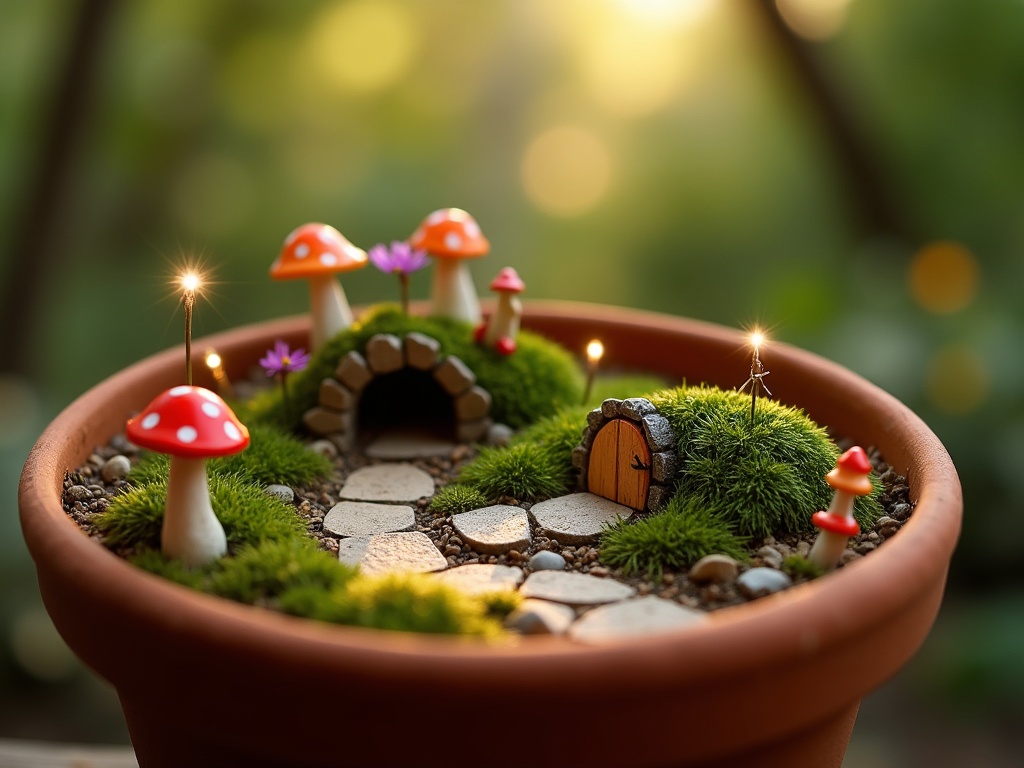
Entry cost for a fairy garden is low on paper: a $10 pot, $8 of moss, a handful of figurines. But costs accumulate fast. Crafters regularly report spending $60 to $150 on a single container garden once you add quality plants, resin figurines, fairy lights, and specialty soils. The difference is that spending happens gradually and feels optional at every step.
Materials are almost entirely sourced by you. That means more creative control and more shopping trips. For those who genuinely enjoy the hunt for the perfect tiny mushroom or the right shade of gravel, this is a feature rather than a bug. For those who just want to sit down and build, the open sourcing can feel like the project never quite starts.
🌿 Community favourite: the hybrid approach
Several crafters in our community told us they solved the sourcing problem by pairing a miniature greenhouse kit with a surrounding fairy garden tray. The kit gives them the structured anchor; the fairy garden surrounding it lets them improvise freely. One crafter described it as “having the cake and eating it, with moss.” We thought that was worth sharing.
Several crafters in our community told us they solved the sourcing problem by pairing a miniature greenhouse kit with a surrounding fairy garden tray. The kit gives them the structured anchor; the fairy garden surrounding it lets them improvise freely. One crafter described it as “having the cake and eating it, with moss.” We thought that was worth sharing.
Where Each Build Truly Shines
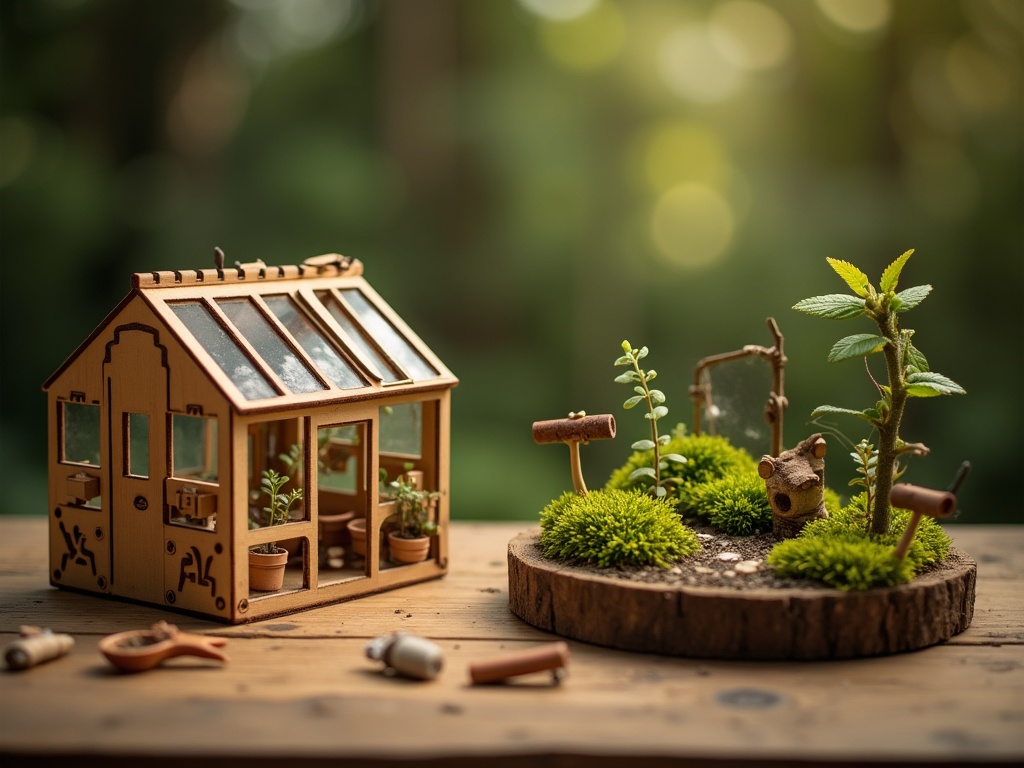
Choose a miniature greenhouse kit when you want structured, step-by-step progress and a displayable finished object; choose a fairy garden when you want an open-ended, living project that evolves over seasons. Each excels in a distinct creative mode.
Choose a Miniature Greenhouse Kit When…
- You want a structured, step-by-step crafting experience with a clear finished result.
- You are buying a gift for someone and need something complete and impressive out of the box.
- You find satisfaction in precision work: aligning panels, fitting joints, watching a tiny building take shape.
- You want a display piece that holds up for years without maintenance.
- You are new to miniatures and want a guided introduction to the craft before freestyling.
If any of those land for you, our miniature greenhouse kit collection shows difficulty ratings, estimated build times, and a full parts list for every kit so you can match the right build to your weekend.
Choose a Fairy Garden When…
- You want an open-ended project you can keep evolving over months or years.
- You love working with natural, living, or organic materials like real moss and small plants.
- You have children involved. Fairy gardens are highly tactile and endlessly imaginative for young crafters.
- You prefer foraging and sourcing your own supplies over following a kit’s parts list.
- The destination matters less to you than the ongoing creative process.
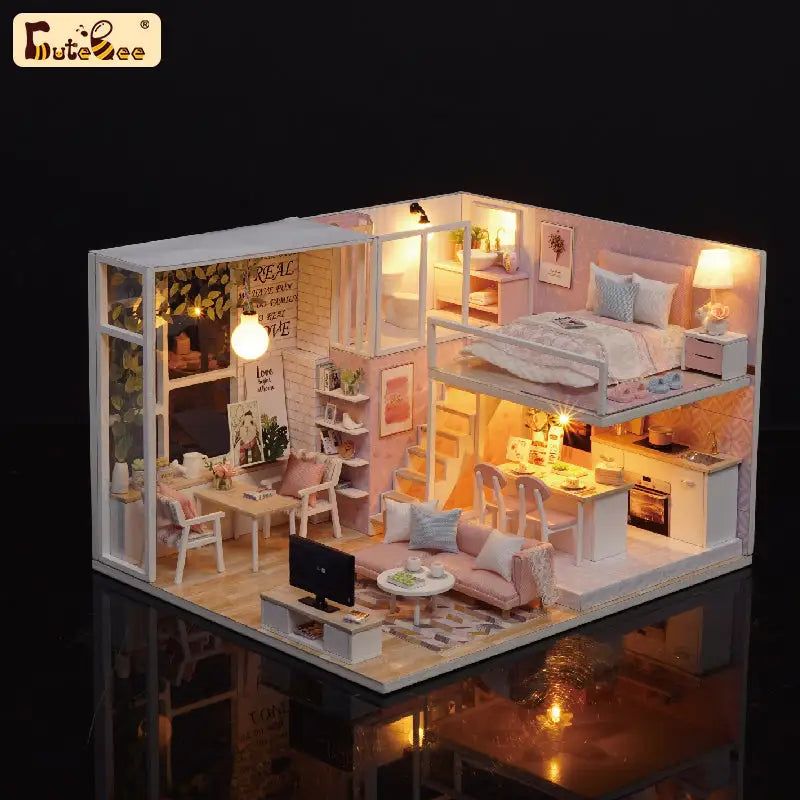
Community favourite starter
Tranquil Life DIY Miniature House Kit
One of our most-gifted kits, loved for its manageable pace and beautiful result
$67.90
The Meditative Factor: Where Crafters Find Their Calm
Both crafts offer genuine stress relief, but miniature greenhouse building delivers focused flow and a satisfying sense of closure, while fairy garden tending is more contemplative and ritual-like, closer to caring for something living. Each calms a different kind of restlessness. Both crafts get brought up repeatedly in crafting communities when people talk about stress relief. But the type of calm differs in a meaningful way, and it is worth understanding which one your nervous system is actually asking for.
Miniature greenhouse builders describe a state of focused flow. Your world shrinks to the size of a toothpick applying glue to a window hinge. Forty minutes pass without you noticing. You resurface an hour later with something real and beautiful in your hands. That sense of completion, that small but genuine closure at the end of a build session, is deeply grounding. It is the same satisfaction as finishing a sentence perfectly or folding a fitted sheet flat on the first try, except it lasts for years on your shelf. Hannah says the moment she pressed the last acrylic panel into her first Victorian dollhouse kit was the moment she understood why miniaturists call this a practice rather than a hobby.
Fairy garden tending, especially when living plants are involved, carries a different quality. It is more contemplative, more like ritual. Watering the moss, rearranging a stone path, adding a tiny lantern for the winter season. It is less about building and more about caretaking. Several fairy garden crafters in our community describe it the way others describe tending a houseplant or a bonsai: a slow, recurring conversation with something living. Both are legitimate forms of creative calm. They serve different nervous systems and different seasons of life.
If you are curious about other meditative build formats, our greenhouse kit collection includes several slow-build options designed specifically for crafters who want long, immersive sessions rather than quick wins. The book nook kit range is also worth a look if you find architectural detail work particularly absorbing.
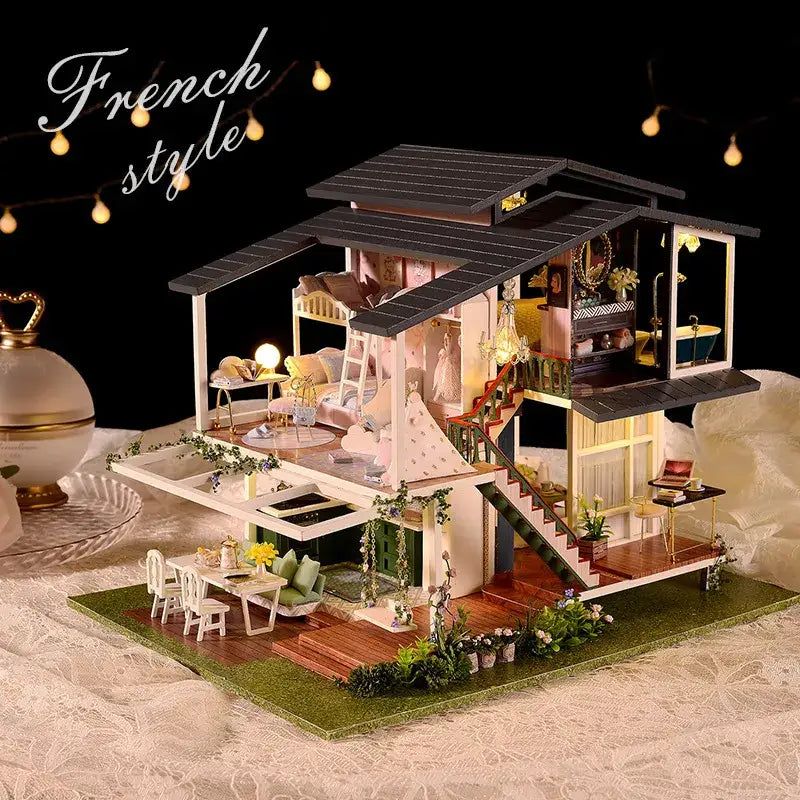
Premium collector piece
Monet’s Garden DIY Miniature House Kit
Our most immersive garden-themed build; crafters regularly report 15+ deeply satisfying hours
$155.00
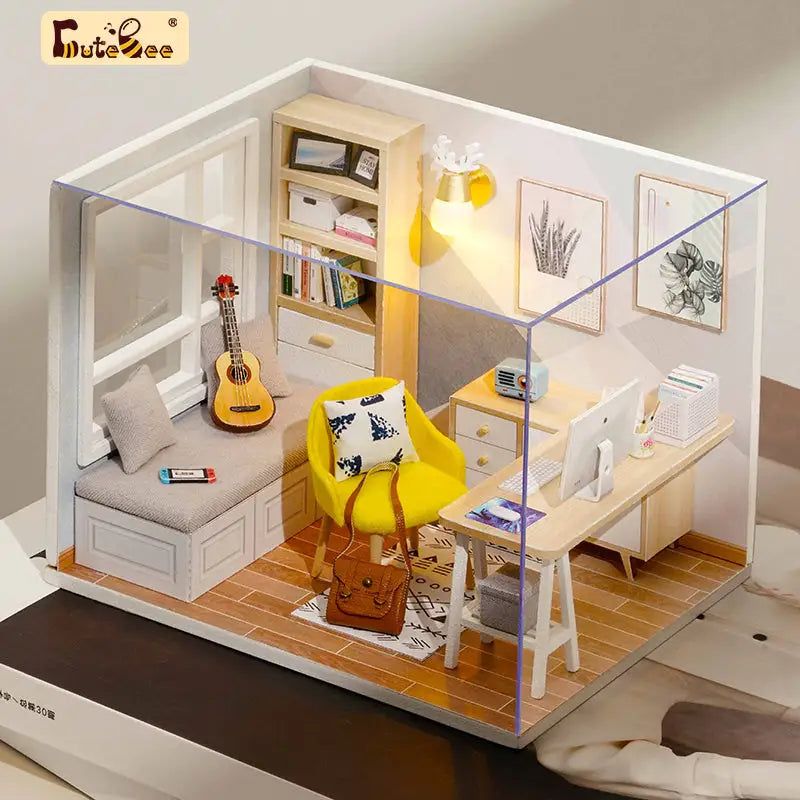
Perfect first greenhouse-style build
Sun Room DIY Miniature House Kit
Light-filled, approachable, and genuinely lovely on a windowsill
$49.99
Rare in the niche
All Miniature Greenhouse Kits
22 LED-lit greenhouse builds, difficulty 2/5 to 5/5
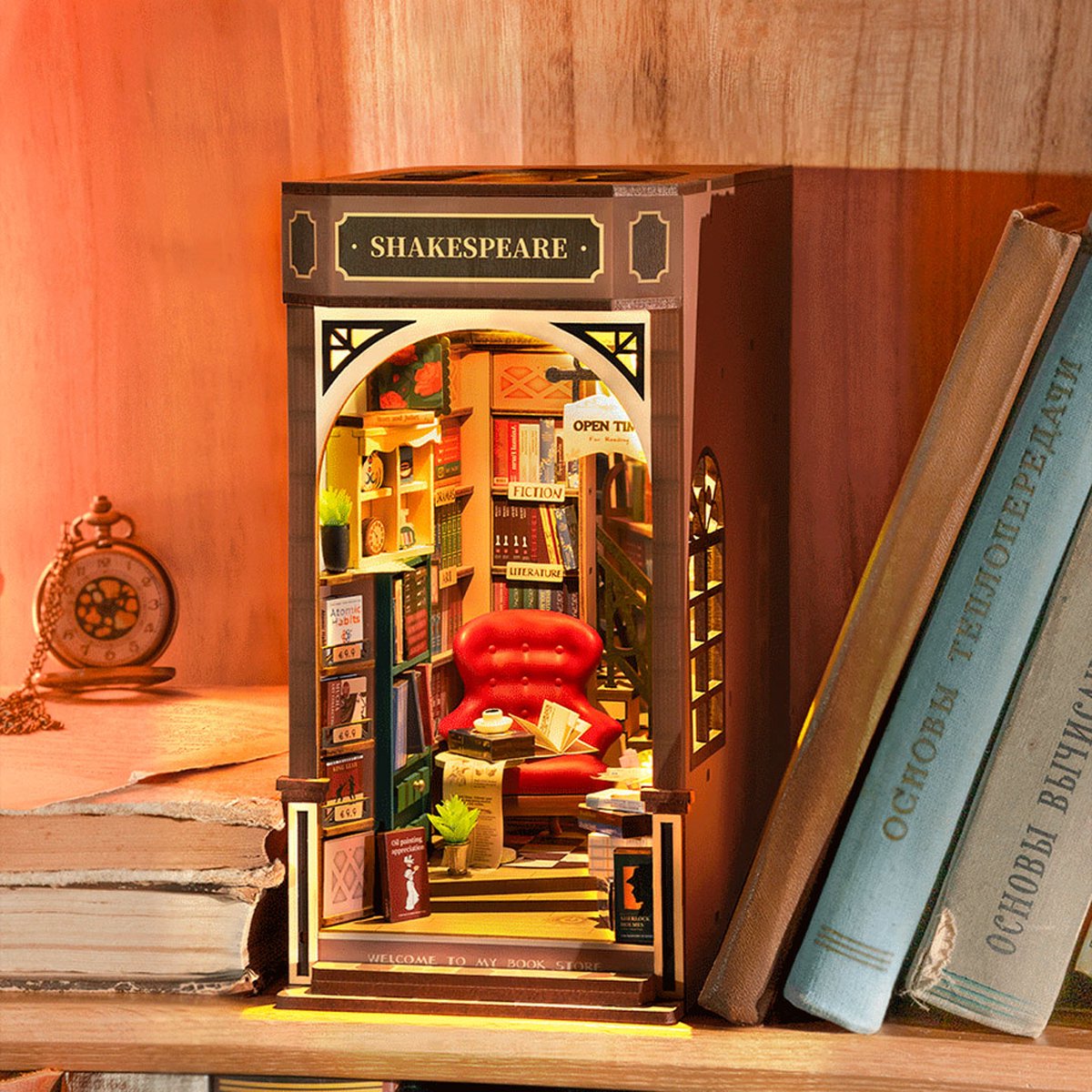
Explore the collection
All Book Nook Kits
76 handcrafted book nook kits for every shelf and skill level
Frequently Asked Questions about Miniature Greenhouse vs Fairy Garden
Everything you might be wondering (click a question to expand).
Can I combine a miniature greenhouse with a fairy garden theme?
Absolutely, and this is actually one of the most popular hybrid builds in our community. A miniature greenhouse kit placed inside a larger fairy garden container becomes the focal structure, surrounded by moss, figurines, and tiny winding pathways. The kit gives you a confident anchor point while the surrounding fairy garden lets you improvise freely. It works beautifully at any scale, and several crafters have told us it was the configuration that finally got them hooked on miniatures for good.
Which craft is better for complete beginners with no miniature experience?
A beginner-rated miniature greenhouse kit is often the easier starting point because everything you need arrives in one box with clear, numbered instructions. Fairy gardens require more curation and compositional instinct, which can feel overwhelming without a roadmap. That said, a fairy garden in a single small pot is genuinely low-stakes and forgiving if you prefer organic creativity from day one. Our honest suggestion: start with a difficulty 2/5 kit to build your miniature eye, then bring those instincts to a fairy garden arrangement next.
Are miniature greenhouse kits suitable as gifts for people who don’t craft regularly?
Yes, and they are one of the stronger gift options in the miniature space precisely because they are self-contained. The recipient does not need prior experience or extra supplies. A beginner kit rated 2/5 difficulty is achievable for virtually any adult willing to spend a relaxed Saturday afternoon on it. Pairing the kit with a small set of acrylic paints is a lovely touch for anyone who might want to personalise the details once the structure is complete.
Do fairy gardens work indoors or only outdoors?
Both. Indoor fairy gardens typically use preserved or artificial moss, succulent plants, and resin figurines. Outdoor versions can incorporate living ground covers, small ferns, and weather-resistant materials. The key difference is choosing plants rated for your light conditions and swapping any organic materials that would deteriorate indoors. Many crafters keep a small indoor version year-round and a more adventurous outdoor arrangement in the warmer months.
How long does a finished miniature greenhouse kit last as a display piece?
A well-built kit using quality wood and sealed with a light coat of matte varnish will last for many years on an indoor shelf. The main risks are humidity warping the wood over time and dust accumulating in fine details. Keep it away from direct sunlight to prevent the acrylic panels from yellowing, and it will hold up beautifully. Hannah’s first Victorian dollhouse kit, built in 2021, still sits on her studio shelf looking exactly as it did on completion day.
Is the miniature greenhouse vs fairy garden choice permanent, or can I try both?
Not permanent at all. Most crafters who start with one eventually try the other, often within a few months. A miniature greenhouse kit builder starts eyeing fairy doors after their second or third build. A fairy garden enthusiast starts craving the structure of an architectural build. The two crafts overlap more than their aesthetics suggest, and the skills transfer surprisingly well. Consider your first choice the one you lead with, not the one you are locked into.
Picking Your Build and Making It Yours
The miniature greenhouse vs fairy garden decision comes down to one honest question: do you want to follow a map or draw your own? Both crafts reward patience, and most crafters eventually try both. The honest answer to “miniature greenhouse vs fairy garden” is not a verdict. It is a question back to you. Do you want to follow a map or draw your own? Do you want a finished object or a living scene? Do you find calm in precision or in improvisation?
Most crafters who start with one eventually try the other. A miniature greenhouse builder starts eyeing fairy doors after their third kit. A fairy garden enthusiast starts craving the structure of a full architectural build. The two niches overlap more than their aesthetics suggest, and both communities are genuinely welcoming to crossovers.
If you are leaning toward the kit side, start with our curated miniature greenhouse kit collection where each listing shows difficulty rating, estimated build time, and exactly what is included. No guessing required. Your next quiet, satisfying afternoon project is already waiting. ✨