🎁 Buy 2 kits, get the 3rd FREE · Free shipping on every order

Rolife vs Robotime vs CuteBee: Which Miniature House Brand Is Right for You?
A neutral, in-depth comparison of the three most popular miniature house kit brands in 2026: Rolife, Robotime, and CuteBee. Covers kit quality, price ranges, difficulty levels, community reputation, and how a curated catalog alternative stacks up for hobbyists and gift buyers alike.

You search for a miniature house kit, and three brand names come up over and over: Rolife, Robotime, and CuteBee. They look similar in product photos. Prices overlap. Some kits even share aesthetic DNA. So how do you actually choose?
The honest answer is that these brands are not interchangeable. Each has a distinct manufacturing philosophy, a different sweet spot for skill level, and a real gap between their best kits and their weakest ones. Buying the wrong one is a frustrating waste of an afternoon. Buying the right one is the start of a seriously addictive hobby.
This comparison covers everything that matters: kit construction, piece fit, included materials, difficulty range, price-per-hour of build time, community feedback, and where each brand falls short. No hype, no affiliate fluff. Just the details a crafter actually needs. Jump to the section that matters most to you: Rolife, Robotime, CuteBee, the side-by-side table, or the choosing guide.
How These Three Brands Are Related (and Why It Matters)
Rolife is a sub-brand of Robotime launched in 2019, while CuteBee is a fully independent manufacturer, understanding this family tree sets the right expectations before you open any box and explains key differences in quality control. A lot of buyers are surprised to learn that Rolife and Robotime share corporate roots. Robotime is the parent company, founded in China in 2007. Rolife launched as a younger sub-brand around 2019, targeting a more design-forward, younger audience with smaller kits at lower price points. CuteBee is a fully independent third-party manufacturer, also China-based, that entered the Western market more aggressively around 2021 through Amazon and Etsy resellers.
Why does this matter for your purchase? Because Robotime operates the largest R&D team of the three. Rolife benefits from that infrastructure while keeping prices accessible. CuteBee, operating independently, has less quality control consistency but occasionally surprises with genuinely clever designs.
Understanding the family tree helps you set the right expectations before you open a box. It also explains why you will sometimes see an almost identical staircase component appear in both a Rolife and a Robotime kit: they share tooling at the factory level, even when the finished product feels quite different.
📜 Did you know?
Robotime shipped its first wooden 3D puzzle kits back in 2007, before the miniature room box format became popular in the West. The company helped pioneer the “DIY miniature house with LED lighting” category, and by 2024 had sold over 10 million kits globally across more than 80 countries. That distribution scale is part of why Rolife kits are so widely available today, and why you can usually trust the quality baseline even on a kit you have never seen reviewed.
Robotime shipped its first wooden 3D puzzle kits back in 2007, before the miniature room box format became popular in the West. The company helped pioneer the “DIY miniature house with LED lighting” category, and by 2024 had sold over 10 million kits globally across more than 80 countries. That distribution scale is part of why Rolife kits are so widely available today, and why you can usually trust the quality baseline even on a kit you have never seen reviewed.
Rolife Kits: Accessible, Stylish, and Beginner-Friendly
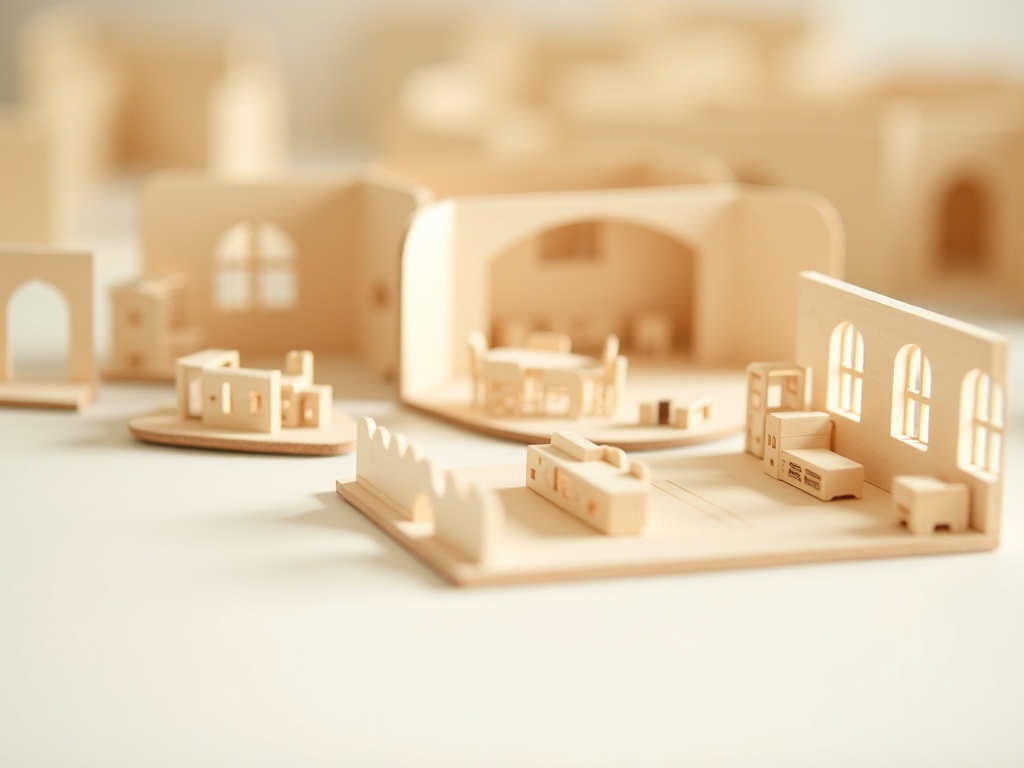
Rolife hits the sweet spot for beginners and gift buyers: kits retail between $25 and $55, build in 2 to 6 hours, arrive with laser-cut wood, glue, and clear illustrated instructions, and the designs skew modern and cozy. Rolife sits at the sweet spot of the market. Kits typically retail between $25 and $55, run between 2 and 6 hours of build time, and arrive with pre-cut laser wood sheets, a small bottle of glue, and clear illustrated instructions. The designs skew modern and cozy: bookshops, music studios, rooftop cafes, Japanese street-food stalls. I find myself reaching for a Rolife kit when I want that particular Sunday-afternoon feeling of steady, satisfying progress without pressure.
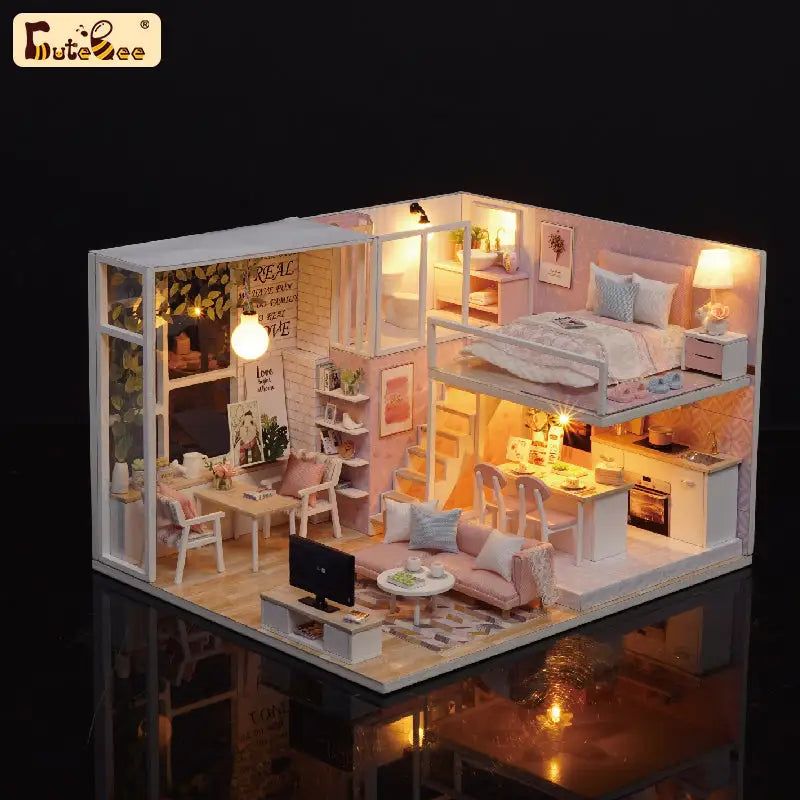
Bestseller cottage kit
Tranquil Life DIY Miniature House Kit
$67.90
Why this kit: tight piece tolerances, video tutorial support via QR code, and a finished cottage atmosphere that looks genuinely lovely on a shelf. One of the most-gifted kits we stock, and I have built it myself twice.
What Rolife Does Well
- Piece fit precision: Rolife consistently delivers tight tolerances on laser cuts. Pieces pop out cleanly and seat firmly without gaps.
- Beginner-friendly instructions: Step-by-step diagrams are numbered clearly, and Rolife includes a QR code linking to video tutorials for most SKUs released after 2022.
- Aesthetic consistency: The brand has a recognizable visual identity. If you own one Rolife kit, you already know the style of the next one.
- LED integration: Most kits in the mid-range tier include a pre-wired LED strip. No soldering needed.
Where Rolife Falls Short
The smaller kits (under $30) often use thinner wood stock, around 2mm, which can warp if you apply glue too liberally. The included glue bottle is also notoriously small for the amount of bonding the instructions call for. Plan to have a secondary wood glue or PVA on hand before you start.
Advanced crafters may also find Rolife kits slightly too quick to finish. A 4-hour build is meditative; a 90-minute rush is not. The brand’s entry-level “Tiny House” series sits firmly in that faster category. If depth is what you are after, I would look at Robotime’s flagship line instead.
Difficulty rating range: Beginner to Intermediate (most kits sit at 2-3 stars out of 5).
Best for: First-time builders, teens, gift buyers wanting a reliably pleasant experience.
Robotime Kits: The Originals, Built for Depth
Robotime’s flagship kits target crafters who want a genuine multi-session project: a full Victorian manor build runs 15 to 30 hours, finishes at 12 to 16 inches tall, and delivers display presence that no other brand in this comparison matches. Robotime’s flagship series, particularly the ROBOTIME Dollhouse line and the TGB (Tiny Great Buildings) collection, targets crafters who want a genuine project. These are not weekend impulse buys. A full Robotime Victorian manor kit can take 15 to 30 hours across multiple sessions, and the finished piece sits comfortably at 12 to 16 inches tall. The first time I worked through a multi-room Robotime build, spread across four consecutive evenings, I genuinely looked forward to picking it up each night. That kind of slow, absorbing progress is rare in any hobby.
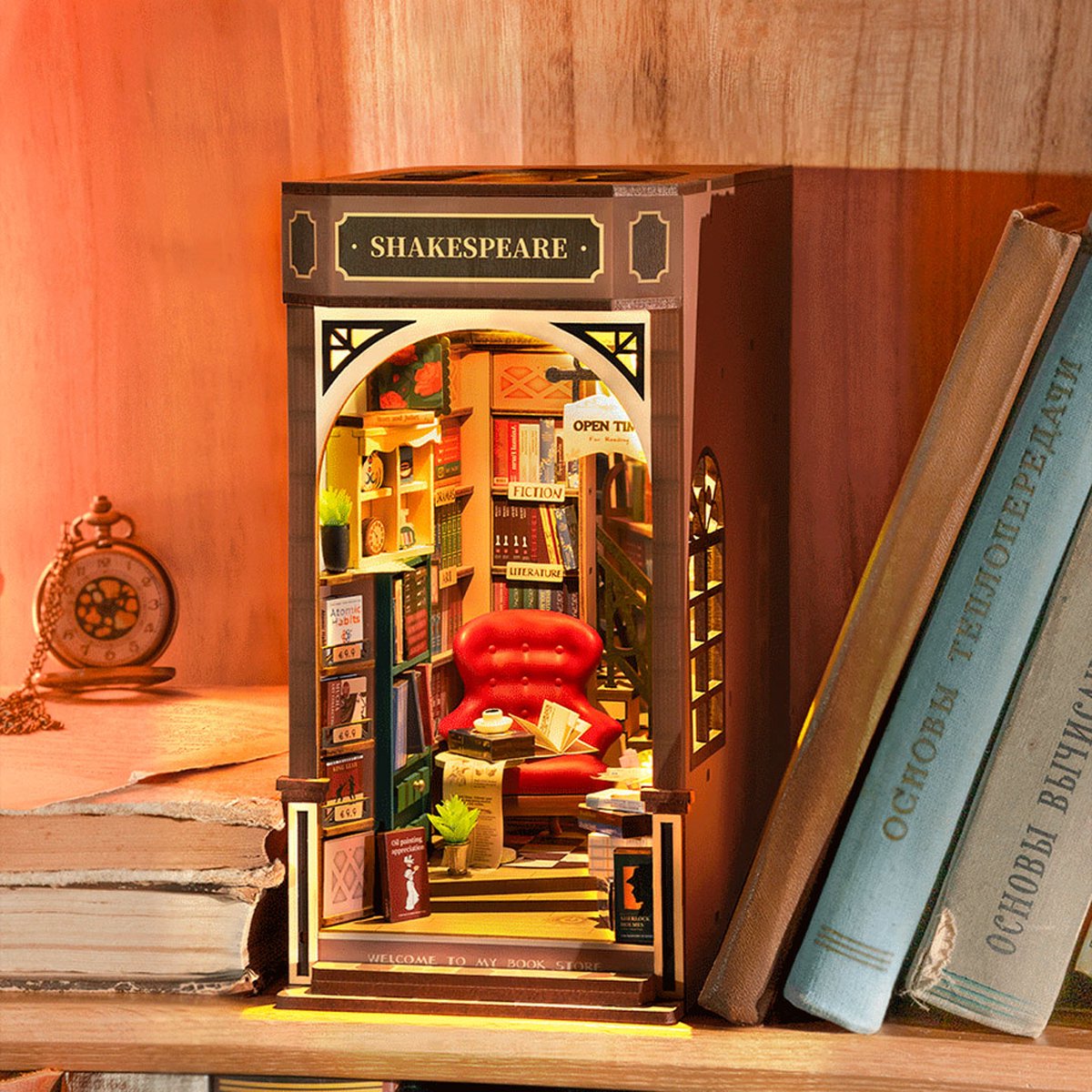
Robotime-inspired builds
Book Nook Kits: Depth in a Small Footprint
76 handcrafted book nook kits
Why this collection: book nook kits pack the multi-layered detail and long build time that Robotime fans love into a compact shelf-insert format. Perfect if you want a serious project without dedicating a full display shelf to the finished piece.
What Robotime Does Well
- Kit completeness: Premium Robotime kits include fabric swatches, acrylic paints, pre-printed wallpaper sheets, and occasionally resin accessories. You genuinely need very little from outside the box.
- Structural scale and presence: These kits have physical weight when finished. They are display pieces, not shelf fillers.
- Design depth: Multi-room layouts with staircases, opening doors, and furniture that actually fits inside rooms rather than being glued in place arbitrarily.
- Community resources: Robotime has a large active forum and YouTube ecosystem. If you get stuck, someone has documented the exact step you are struggling with.
Where Robotime Falls Short
Price is the main barrier. Flagship kits run $65 to $130, and some collector-tier pieces push past $150. Shipping from official channels can add time, too. A few older catalog SKUs use instruction sheets that were clearly translated from Chinese without revision, creating genuine ambiguity at certain steps. The brand has improved this significantly post-2023, but older kits still circulate through resellers. If you are buying second-hand or from a marketplace, check the SKU’s release year before assuming the instructions will be clean.
The complexity can also intimidate newer builders. A Robotime kit rated 4 or 5 stars on their own scale is not a beginner project. Attempting one without prior miniature house kit experience often results in misaligned walls and lasting frustration. I would honestly recommend completing at least two Rolife kits before stepping up to Robotime’s flagship tier. The difference in build confidence is real.
Difficulty rating range: Intermediate to Advanced (3 to 5 stars out of 5).
Best for: Experienced hobbyists, collectors, people wanting a multi-session meditative project with genuine display value.
✨ Hannah’s tip
Before you open any miniature house kit, lay out all the wood sheets and count the punch-out pieces against the parts list. It takes about 10 minutes and saves you from discovering a missing piece on hour 6 of a build. With Robotime kits especially, some accessory bags are tucked under the foam insert, not on top. I have seen so many builders contact support thinking pieces are missing when they are just hiding at the bottom of the box. Also: if you are working on a Robotime kit with pre-printed wallpaper, dry-fit the paper against the wall panel before applying any glue. The paper can shrink slightly when humidity changes, and a dry-test takes 30 seconds but can save you from a wrinkled wall.
Before you open any miniature house kit, lay out all the wood sheets and count the punch-out pieces against the parts list. It takes about 10 minutes and saves you from discovering a missing piece on hour 6 of a build. With Robotime kits especially, some accessory bags are tucked under the foam insert, not on top. I have seen so many builders contact support thinking pieces are missing when they are just hiding at the bottom of the box. Also: if you are working on a Robotime kit with pre-printed wallpaper, dry-fit the paper against the wall panel before applying any glue. The paper can shrink slightly when humidity changes, and a dry-test takes 30 seconds but can save you from a wrinkled wall.
CuteBee Kits: Budget Appeal with Uneven Execution
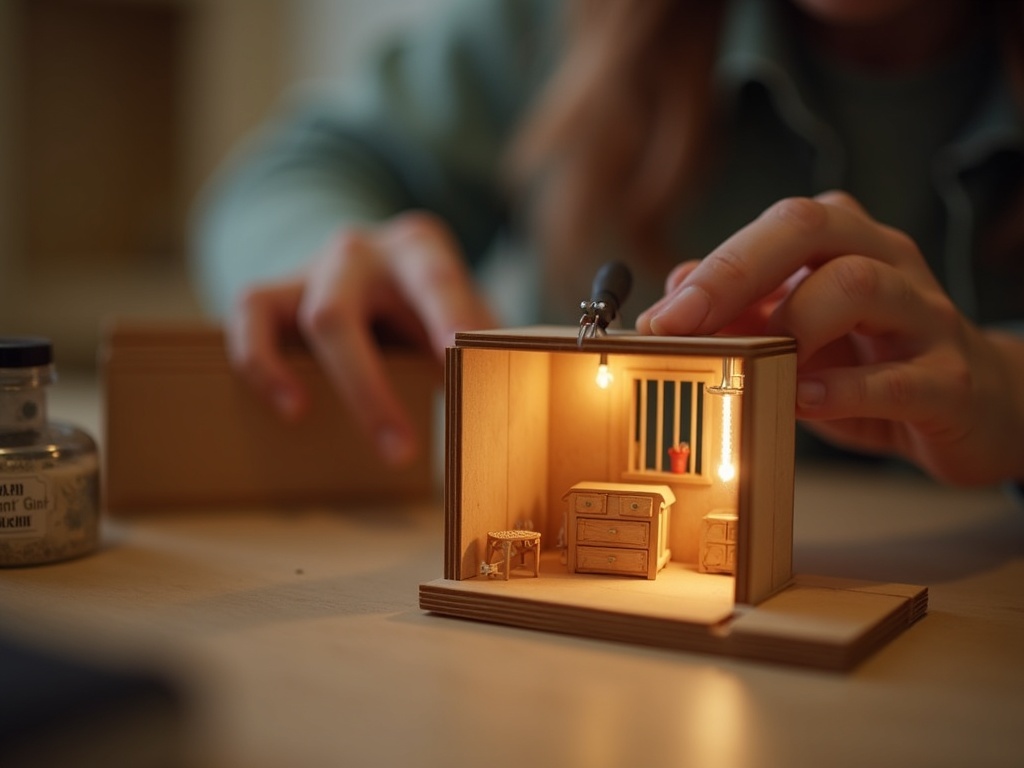
CuteBee markets itself as a premium miniature house brand at a discount price point of $18 to $40, and its “coffee shop” and “flower shop” room boxes have gone viral, but quality control varies significantly between production batches. CuteBee markets itself as a premium miniature house brand at a discount price point, typically $18 to $40. The brand photographs well on Instagram and Pinterest, and several designs, particularly the “coffee shop” and “flower shop” room boxes, have achieved viral reach. That visibility drives a lot of first purchases, which is both the best and the riskiest thing about the brand.
What CuteBee Does Well
- Price accessibility: For gift buyers with a limited budget, CuteBee is often the most affordable path to a complete-looking kit.
- Variety of aesthetics: CuteBee has released a broader range of cultural themes than either Rolife or Robotime: Chinese tea houses, Parisian patisseries, Tokyo convenience stores.
- Packaging appeal: Boxes are gift-ready. The unboxing experience is genuinely pleasant.
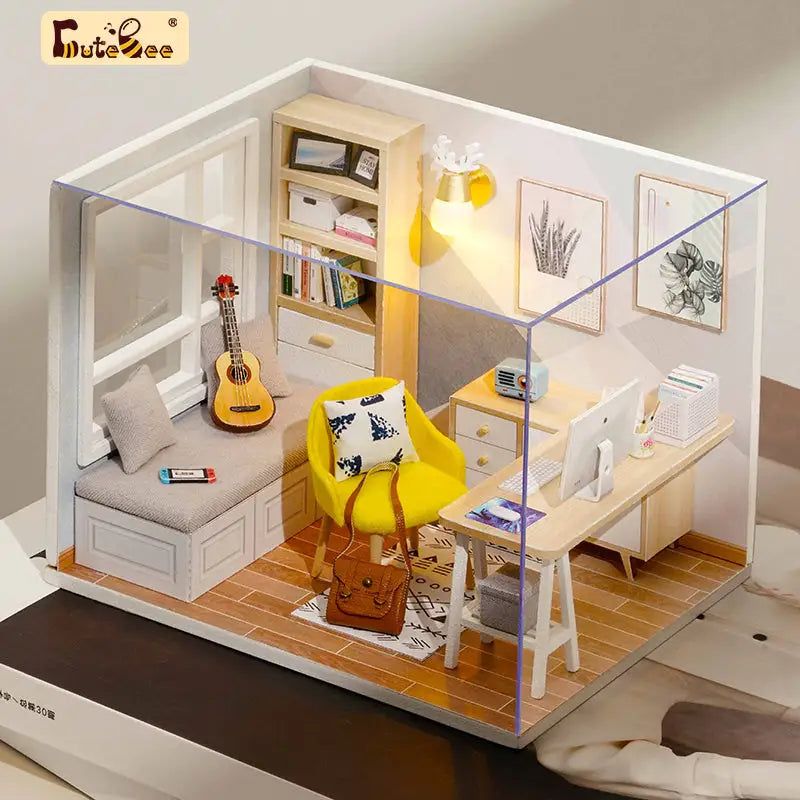
Easy starter under $50
Sun Room DIY Miniature House Kit
$49.99
Why this kit: if you like the CuteBee aesthetic but want reliable QC and complete instructions, this sun-room build delivers the same bright, airy feel with pieces that actually fit together cleanly first try. A confident starting point for anyone stepping into the hobby.
Where CuteBee Falls Short
Quality control is the core issue. Community reviews across Reddit’s r/miniatures, Amazon, and dedicated Facebook crafting groups consistently describe a lottery-like experience. Some batches arrive with clean cuts and snug fits. Others have pieces that require sanding, force-fitting, or outright replacement. The wood stock thickness varies between production runs in ways that affect how furniture sits inside rooms. The practical impact: if you receive a “bad batch” CuteBee kit, you may spend an extra 2 to 3 hours just correcting fit before you can enjoy the build. That erases the price advantage quickly.
Instructions are also the weakest of the three brands. CuteBee relies heavily on pictogram-style diagrams with minimal written guidance. For straightforward builds that is manageable. For anything with a staircase or curved roof panel, a first-time builder will likely need to find a YouTube walkthrough just to get past step 4. I would avoid CuteBee entirely for a first-ever kit, and I would be cautious recommending it as a gift unless the recipient has solid prior craft experience.
CuteBee kits also lack the finishing materials included by Robotime. Paints, wallpaper, and fabric are rarely bundled, which means the “budget” price often climbs once you account for separate purchases.
Difficulty rating range: Beginner to Intermediate on simple kits, effectively Advanced on complex ones due to instruction gaps (1 to 4 stars depending on the specific kit).
Best for: Budget-conscious buyers who have prior kit experience and can compensate for instruction gaps independently.
🔍 Hannah’s honest take on CuteBee QC variance
The inconsistency is real and it is not random. CuteBee’s simpler room boxes (under 150 pieces, no staircases) come through with strong batch consistency in most of the orders I have seen. The quality lottery really kicks in on their more ambitious kits, particularly anything with multiple floor levels or transparent acrylic window panes. The acrylic pieces are where fit problems concentrate. If you are set on a CuteBee kit, choosing one of their simpler 2-star designs is the way to get the pleasant experience the photos promise.
The inconsistency is real and it is not random. CuteBee’s simpler room boxes (under 150 pieces, no staircases) come through with strong batch consistency in most of the orders I have seen. The quality lottery really kicks in on their more ambitious kits, particularly anything with multiple floor levels or transparent acrylic window panes. The acrylic pieces are where fit problems concentrate. If you are set on a CuteBee kit, choosing one of their simpler 2-star designs is the way to get the pleasant experience the photos promise.
Side-by-Side Comparison: The Numbers That Matter
The table below summarizes the decisive differences across price, build time, difficulty, instruction quality, included materials, and true value per hour so you can match the right brand to your needs at a glance. Use it alongside the brand sections above for full context on each rating.
| Factor | Rolife | Robotime | CuteBee |
|---|---|---|---|
| Price range | $25 – $55 | $65 – $150+ | $18 – $40 |
| Typical build time | 2 – 6 hours | 10 – 30 hours | 2 – 8 hours |
| Difficulty range | Beginner – Intermediate | Intermediate – Advanced | Variable (kit-dependent) |
| Instruction quality | Good (video support) | Good to Excellent | Basic (gaps on complex kits) |
| Materials included | Wood, glue, LED | Wood, glue, paints, fabric, wallpaper | Wood, glue (accessories limited) |
| QC consistency | High | High | Moderate (batch variance) |
| Display presence | Moderate | Strong | Moderate |
| True value per hour | High | Highest (long builds) | Variable (troubleshooting costs time) |
What to Consider Before Choosing a Brand
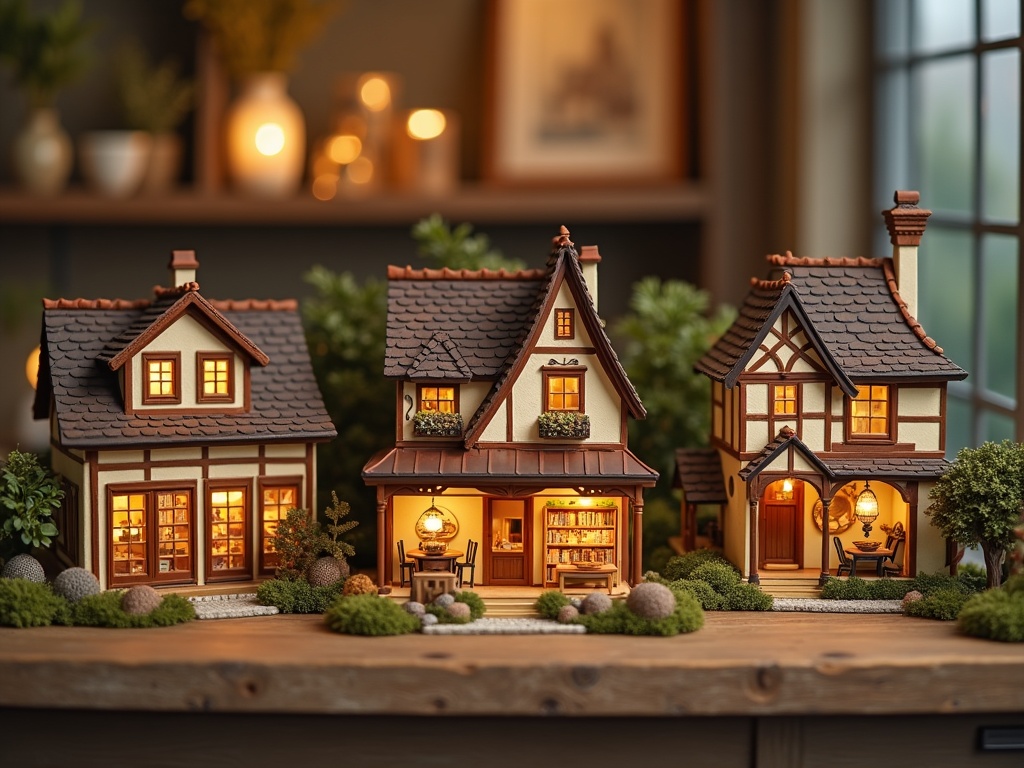
The right pick depends on three honest questions: who is building the kit, how important is the finished display piece, and what is your real budget once you factor in build experience, not just the sticker price. The right pick depends less on which brand is “best” and more on what kind of build experience you actually want. Three questions cut through the noise fast.
1. Who Is Building This Kit?
A complete beginner, especially a younger builder or someone receiving a kit as a gift, will have the most success with Rolife. The instructions are forgiving, the pieces fit reliably, and finishing a kit in an afternoon creates the positive first experience that makes someone want to build a second one.
An experienced crafter who already owns a few kits and wants a real challenge should look at Robotime’s multi-room flagship designs. The build time alone, spread across several evenings, delivers the slow, meditative quality that makes this hobby genuinely restorative rather than just a quick task to check off.
2. How Important Is the Finished Display Piece?
If the finished kit is going on a shelf where guests will see it, Robotime wins on presence. The structures are physically larger, structurally sturdier, and more detailed at close inspection. Rolife kits display beautifully for their size, particularly the room-box format. CuteBee’s display quality is harder to predict without knowing the specific production batch.
3. What Is Your Real Budget?
A $25 Rolife kit often delivers better value per hour than a $20 CuteBee kit once you factor in the time spent troubleshooting fit issues. Budget framing should account for experience quality, not just the sticker price. And if you genuinely want the richest finished piece, Robotime’s higher entry cost is consistently justified by the end result sitting on your shelf.
For buyers who want a curated selection across difficulty levels and styles, without having to research individual SKUs from multiple brands, browsing our best-selling miniature house kits is a faster path to finding a well-matched kit. Every kit in that collection has been hand-reviewed for fit quality and instruction clarity before listing.
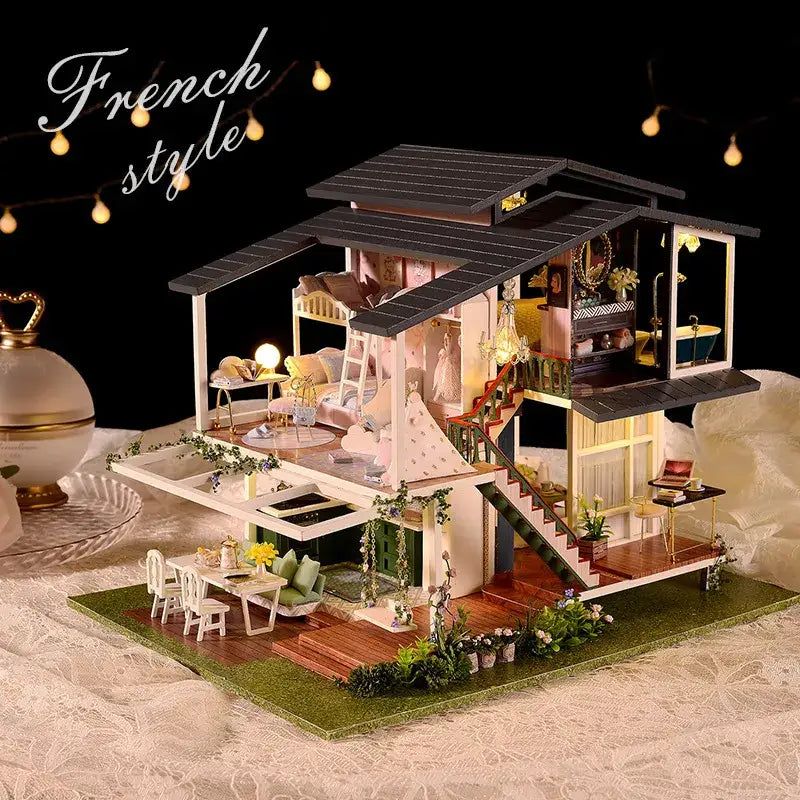
Rare in the niche
Miniature Greenhouse Kits
22 LED-lit greenhouse builds
Why this collection: greenhouse kits sit in a category almost no other retailer stocks well. These are intermediate-level builds with outstanding display payoff, ideal for the crafter ready to step up from their first kit.
Premium collector piece
Monet’s Garden DIY Miniature House Kit
$155.00
Why this kit: this is the kind of build you clear a full weekend for. Layered garden scenery, pre-painted accessories, and a finished size that genuinely commands a room. If you want one collector-grade piece that shows what this hobby can produce at its best, this is it.
Frequently Asked Questions about Rolife, Robotime, and CuteBee
Everything you might be wondering (click a question to expand).
Are Rolife and Robotime the same company?
Rolife is a sub-brand of Robotime, launched around 2019. They share manufacturing infrastructure, but Rolife targets younger buyers and beginners with smaller, lower-priced kits, while Robotime’s flagship lines focus on larger, more complex builds. You can think of Rolife as Robotime’s accessible entry tier. The shared tooling means baseline quality is consistent across both, even though the build experience feels quite different.
Is CuteBee a trusted brand for gift giving?
CuteBee works well as a gift when you choose simpler kits (their room boxes rated 2 stars or below on their own difficulty scale) and purchase from a verified retailer. The brand’s quality control inconsistency matters more on complex kits than on straightforward ones. For a stress-free gift purchase, Rolife is the safer, more consistent choice at a comparable price point. If budget allows, a Rolife kit in the $35-$50 range makes a noticeably better gift experience than a CuteBee kit at half the price.
Do these miniature house kits require tools beyond what is included?
All three brands include basic glue. For a cleaner build, having a pair of fine-tip tweezers, a toothpick applicator for precise gluing, and a small cutting mat is strongly recommended. Robotime premium kits also benefit from having a small flat brush for applying the included paint to furniture pieces. None of these extras are expensive, but they make a real difference in the finished result. A $10 set of craft tweezers is probably the single best accessory investment any new builder can make.
Which brand has the widest range of architectural styles?
CuteBee currently offers the broadest cultural and architectural variety in its catalog, including designs inspired by East Asian, European, and contemporary themes. Rolife has the most cohesive and consistent aesthetic identity. Robotime offers the deepest selection within the Western vintage and Victorian categories specifically. If you are drawn to Japanese street scenes or Chinese courtyard aesthetics, CuteBee’s catalog is worth exploring, just filter for simpler kits if you are still building experience.
Can I customize these kits with my own paints and materials?
Yes, and many experienced builders actively prefer doing so. The bare wood in all three brands accepts acrylic paint, stain, and chalk paint well. Swapping out the included wallpaper for custom-cut scrapbook paper, adding real dried flowers, or wiring in a different LED color temperature are all popular community modifications. Our curated kit collection includes several builds that experienced crafters have noted as especially easy to personalize.
How do I know if a Robotime or Rolife kit will suit my current skill level?
Both brands use a 1 to 5 star difficulty scale printed on the box. For Rolife, 1 to 2 stars is comfortable for complete beginners; 3 stars suits anyone who has finished one kit before. For Robotime, treat their scale as shifted: their 3-star kits require the confidence of someone who has completed at least two or three prior builds. Their 4 and 5 star kits are genuinely advanced projects. A practical shortcut: if the kit photo shows a staircase, multiple separate rooms, or curved roof panels, add one difficulty level to whatever the box says.
Building Beyond Brand Labels: Finding the Kit That Actually Fits You
The most reliable filter is not brand at all: match the difficulty rating honestly to your skill level, choose a build time that fits your schedule, and pick a theme you will genuinely want on your shelf for years. Brand loyalty in the miniature house hobby is real, but it is often misplaced. The same manufacturer can produce a beginner-perfect kit and a frustrating one within the same product line. Rolife’s “Tiny House” series and their larger “Cozy Corner” rooms are almost different products in terms of complexity and satisfaction. Robotime’s entry-level wooden 3D puzzle kits share almost nothing experientially with their flagship dollhouse builds.
The most reliable filter is not brand at all. It is matching difficulty rating honestly to your current skill level, choosing a build time that fits your schedule, and picking a visual theme that will actually make you happy to look at on your shelf for the next few years. I keep a small spreadsheet of every kit I have built, noting the actual hours it took and how the finished piece aged on the shelf. The kits I have rebuilt most are not always the most technically impressive. They are the ones whose atmosphere I could not stop returning to.
If you are still figuring out where you land on that spectrum, starting with a top-rated beginner kit from a curated selection removes most of the guesswork. You build one kit, learn how your hands handle tweezers and tiny glued joints, and then you know exactly what to reach for next. That first completed build, lights glowing, details all in place, is the moment most crafters realize this hobby has serious staying power.
Take your time with it. ✨