🎁 Buy 2 kits, get the 3rd FREE · Free shipping on every order

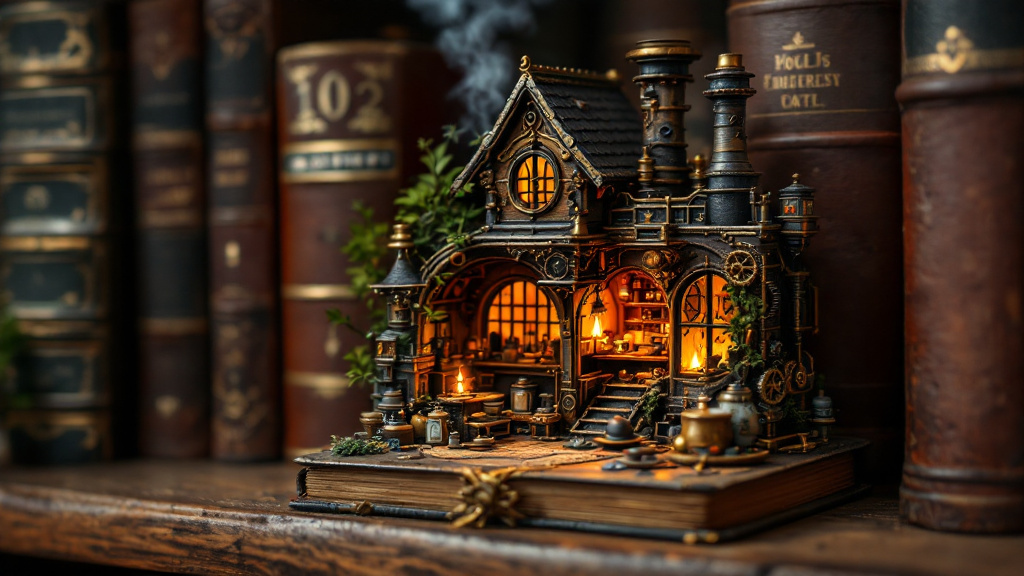
Howl’s Moving Castle Miniature Inspiration: Building the Magic in Miniature
A deep-dive guide to building Howl's Moving Castle-inspired miniatures, covering the steampunk-meets-cottage-magic aesthetic, material sourcing, scale decisions, lighting layers, and practical tips for crafters from beginner to advanced levels.

Howl’s Moving Castle miniature inspiration hits differently when you first hold a tiny brass gear in your palm and realize it could be the heart of Calcifer’s hearth. That mechanical, smoke-breathing, magic-soaked castle has lived in the heads of crafters for over two decades, and for good reason. It is one of the most visually layered fictional structures ever put on screen or page. Reproducing even a fragment of it in miniature form is one of those projects that starts as a weekend idea and quietly becomes a months-long obsession.
If you have been scrolling through miniature builds online and feeling that itch to make something truly atmospheric, this is the article for you. Below, you will find a deep breakdown of the aesthetic pillars of the castle, practical build advice, material sourcing notes, and the creative decisions that separate a forgettable build from one that stops people mid-scroll.
Why Howl’s Castle Translates So Well to Miniature Builds

Howl’s castle translates so well to miniature builds because its deliberately impossible, rule-breaking architecture demands only atmosphere, not accuracy, giving crafters total creative freedom to interpret every room, texture, and mechanical detail in their own way. The castle in Diana Wynne Jones‘s novel and Hayao Miyazaki‘s 2004 film is architecturally impossible. It sits on legs. It breathes smoke. It changes shape depending on its mood. That total rejection of structural logic is exactly what makes it such a rich source of Howl’s Moving Castle miniature inspiration: there are no rules to break because the source material already broke them all.
Most miniature builds struggle with authenticity. Recreating a real Victorian terrace or a documented historical interior demands accuracy. The moving castle demands only atmosphere. That is a genuinely liberating constraint. Your build does not need to match a floor plan. It needs to feel like Calcifer could be grumbling in the hearth, like Sophie’s flower hat is somewhere in the chaos, like the dial on the door could still turn between Market Chipping and Kingsbury.
This is why the build attracts both beginners and experienced crafters. A newcomer can focus on one room box. A veteran can attempt a layered, multi-level structure with working mechanisms. The IP gives everyone permission to interpret freely. And because the castle is by design a creature that grows and changes, no two moving castle miniature builds will ever look alike, which is half the joy of sharing them in the community.
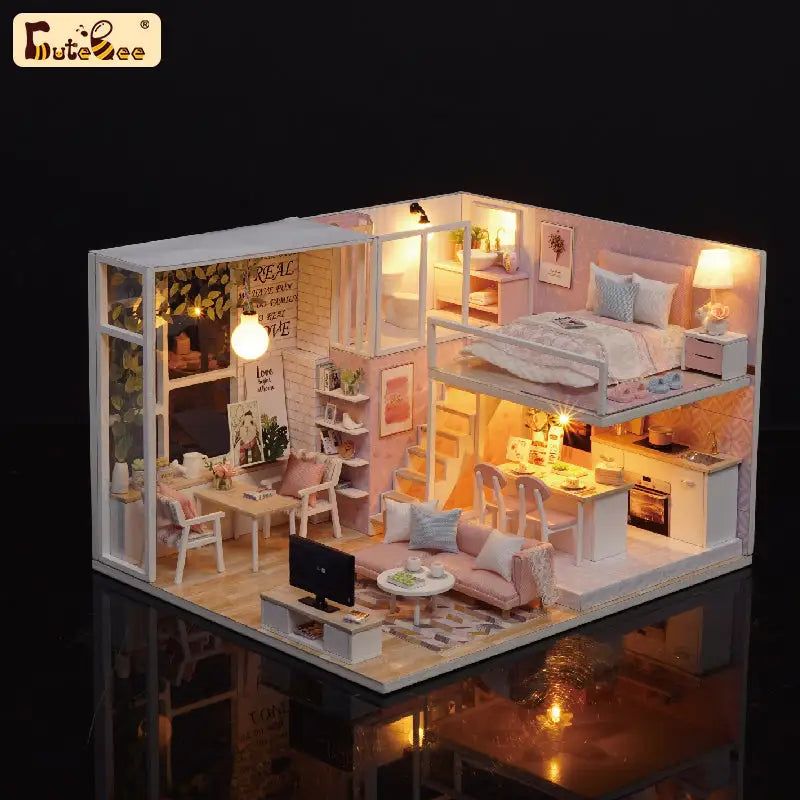
The Two Aesthetic Pillars: Steampunk Mechanics and Cottage Magic
The two aesthetic pillars of a Howl’s Moving Castle miniature are raw industrial steampunk mechanics on the exterior and warm, cluttered cottage magic inside, and keeping those palettes visually separate is the key craft challenge every builder must solve. Howl’s castle operates on a visual tension between two worlds. On one side, you have raw industrial machinery: exposed rivets, smoke stacks, clanking metal legs, rusted iron surfaces, and gear-driven movement. On the other, you have Howl’s private quarters, which are draped in velvet, filled with potions, lit by candle flame, and radiating that specific kind of beautiful-but-cluttered wizard energy.
Getting that contrast right is the real craft challenge. Approach each pillar with a separate material palette and a separate emotional intention, and the finished build will feel coherent rather than confused.
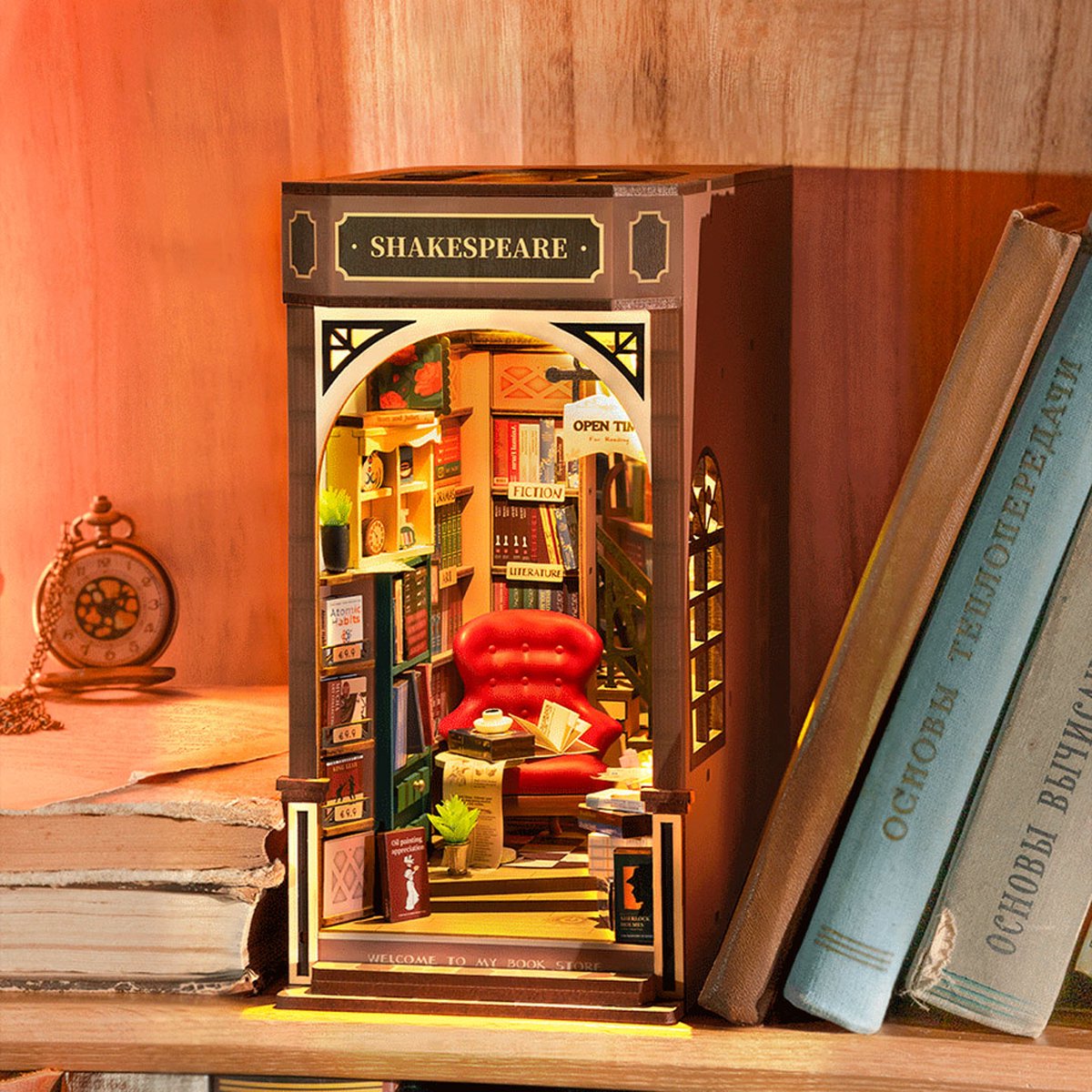
Steampunk Mechanical Elements
- Aged brass and copper tones are your primary palette. Brass jump rings, copper wire coils, and raw metal findings from jewelry supply stores read immediately as “mechanical magic.”
- Exposed gears do not need to be functional. Flat laser-cut wooden gears painted in gunmetal or verdigris-patina finishes do exactly the same visual work at a fraction of the cost.
- Rivet textures can be simulated with tiny half-sphere beads glued along seams, then dry-brushed with rust-colored paint.
- Smoke stack chimneys made from small wooden dowels, painted matte black with soot-effect charcoal powder at the tips, add that moving-castle silhouette instantly.
- Consider adding thin copper tubing sections (available at hobby shops) as pipe runs along exterior walls. Even three or four pipes create enormous depth.
- Weathering with a fine salt-and-alcohol wash over metallic paint creates convincing surface pitting that feels genuinely aged rather than freshly painted.
Cottage Interior Magic Elements
- Sophie’s workspace should feel warm and slightly chaotic. Tiny hat forms, scraps of fabric, and miniature flowers are all achievable with paper clay or polymer clay at 1:12 scale.
- Calcifer’s hearth is the emotional center. A small LED tea light inside a blackened fireplace surround, with orange-tinted cellophane for flame effect, creates that glow that makes viewers stop and look twice.
- Howl’s bathroom: deep jewel tones, tiny potion bottles made from glass seed beads with wax-sealed tops, and a mirror with a decorative frame made from air-dry clay filigree.
- Texture contrast matters here. The interior should feel soft where the exterior is hard. Velvet ribbon scraps work beautifully as curtain material at this scale.
- A few tiny pressed dried flowers tucked into Sophie’s corner add an organic warmth that no painted prop can replicate. Forget-me-nots pressed flat fit perfectly within a 1:12 scene.
🪄 Hannah’s tip
Before you pick up a single tool, spend 30 minutes collecting reference images sorted into two folders: “exterior/mechanical” and “interior/warm.” This forces your brain to actually separate the two visual languages rather than blur them. Once you can see the contrast clearly in images, you can reproduce it in materials. The builds that feel muddled almost always skipped this step.
Before you pick up a single tool, spend 30 minutes collecting reference images sorted into two folders: “exterior/mechanical” and “interior/warm.” This forces your brain to actually separate the two visual languages rather than blur them. Once you can see the contrast clearly in images, you can reproduce it in materials. The builds that feel muddled almost always skipped this step.
Scale Decisions and Structure Planning for Detailed Howl’s Moving Castle Room Box Builds
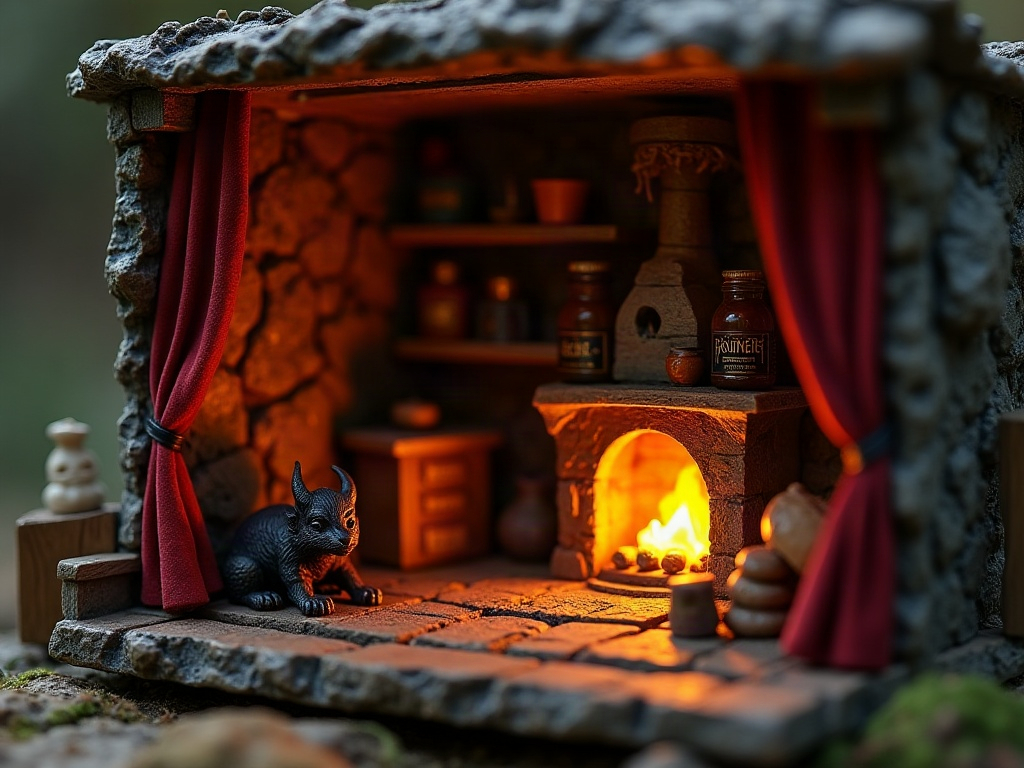
For most Howl’s Moving Castle room box builds, 1:12 scale is the right starting point: it offers enough detail for meaningful props, fits the book nook shelf format, and keeps material costs manageable for beginners and veterans alike. Most book nook and room box builds aimed at capturing this aesthetic sit comfortably at 1:12 scale (one inch equals one foot). At that scale, the average door is roughly 7 inches tall, which gives you enough room to include meaningful detail without needing a workshop the size of a dining table.
Below is a quick comparison of the two most popular scales for detailed Howl’s Moving Castle room box builds, so you can choose the right starting point before you buy a single material:
| Feature | 1:12 Scale | 1:6 Scale |
|---|---|---|
| Typical room box width | 6 to 10 inches | 14 to 24 inches |
| Calcifer’s face detail | Simplified, impressionistic | Fully sculpted, expressive |
| Shelf display | Easy, book nook format | Needs a dedicated shelf |
| Material cost | Lower | Higher |
| Best for | Beginners and gift-givers | Experienced collectors |
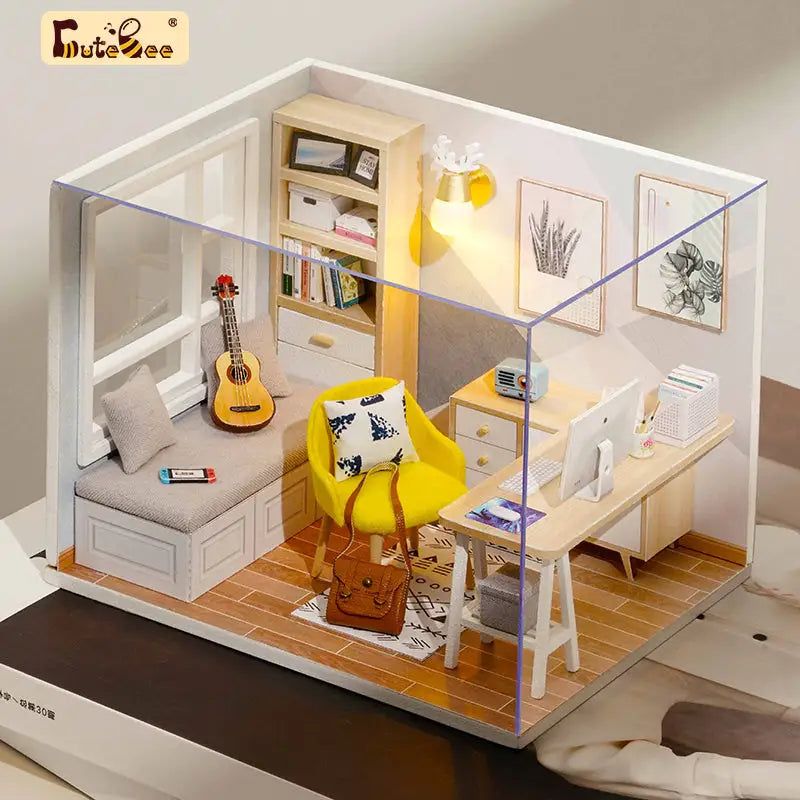
For most hobbyists, the sweet spot is a book nook insert format: a structure roughly 6 inches wide, 8 inches tall, and 5 inches deep that slides between books on a shelf. This format creates a built-in forced perspective that actually flatters the castle aesthetic. The narrow field of view makes everything feel more cinematic. You are not looking at a diorama; you are peeking through a gap into another world.
A fantasy book nook kit gives you the structural shell and the scale baseline, freeing you to focus your creative energy on the surface details, textures, and storytelling elements that make the build personal. Browse our full range of book nook kits to find a shell that fits the dimensions you have in mind.
Materials Worth Sourcing Specifically for This Build
A handful of materials make the moving castle aesthetic click: verdigris patina paint, real clock movement gears, micro corrugated cardboard for siding, and fiber optic strands for ambient glow effects that standard tea lights simply cannot produce. General miniature supplies get you most of the way there. A few specific materials are worth hunting down for the moving castle aesthetic:
- Verdigris patina paint (available from most art supply stores): apply over gold or copper base coats on metal-effect surfaces for aged-copper realism that no simple green paint can match.
- Micro-scale corrugated cardboard: several specialty paper suppliers sell corrugated sheets with flutes at roughly 2mm, perfect for industrial-looking siding panels on the castle exterior.
- Clock parts and watch movements: thrift stores and flea markets often carry broken clock movements cheaply. The gears inside are real, beautifully made, and scale-perfect for 1:12 miniature work. Disassemble with care.
- Fiber optic strands: a thin bundle fed through the structure and connected to a small LED creates ambient glow effects that are not possible with standard tea lights. The effect inside a dark book nook is genuinely striking.
- Air-dry clay in terra cotta: Sophie’s flower hats and assorted cottage clutter are faster to shape in air-dry clay than polymer, and the natural color of terra cotta reads as unglazed earthenware when sealed lightly.
- Micro-mesh metal sheets (sold in model railway supplies): these thin punched metal sheets add an industrial grid texture to interior walls and look convincingly structural without adding weight.
📜 Did you know?
Diana Wynne Jones published Howl’s Moving Castle in 1986. The castle’s visual design in Miyazaki‘s film adaptation drew heavily on Welsh and English vernacular architecture, mixed with imagery from 19th-century industrial England. Art director Yoji Takeshige described the castle as a creature as much as a building, a frame that helped Miyazaki’s team justify its organic, ever-changing silhouette. That creature quality is exactly what miniature builders are tapping into when they let their structures grow organically rather than follow a rigid plan.
Diana Wynne Jones published Howl’s Moving Castle in 1986. The castle’s visual design in Miyazaki‘s film adaptation drew heavily on Welsh and English vernacular architecture, mixed with imagery from 19th-century industrial England. Art director Yoji Takeshige described the castle as a creature as much as a building, a frame that helped Miyazaki’s team justify its organic, ever-changing silhouette. That creature quality is exactly what miniature builders are tapping into when they let their structures grow organically rather than follow a rigid plan.
Lighting: The Single Biggest Upgrade to Any Fantasy Miniature
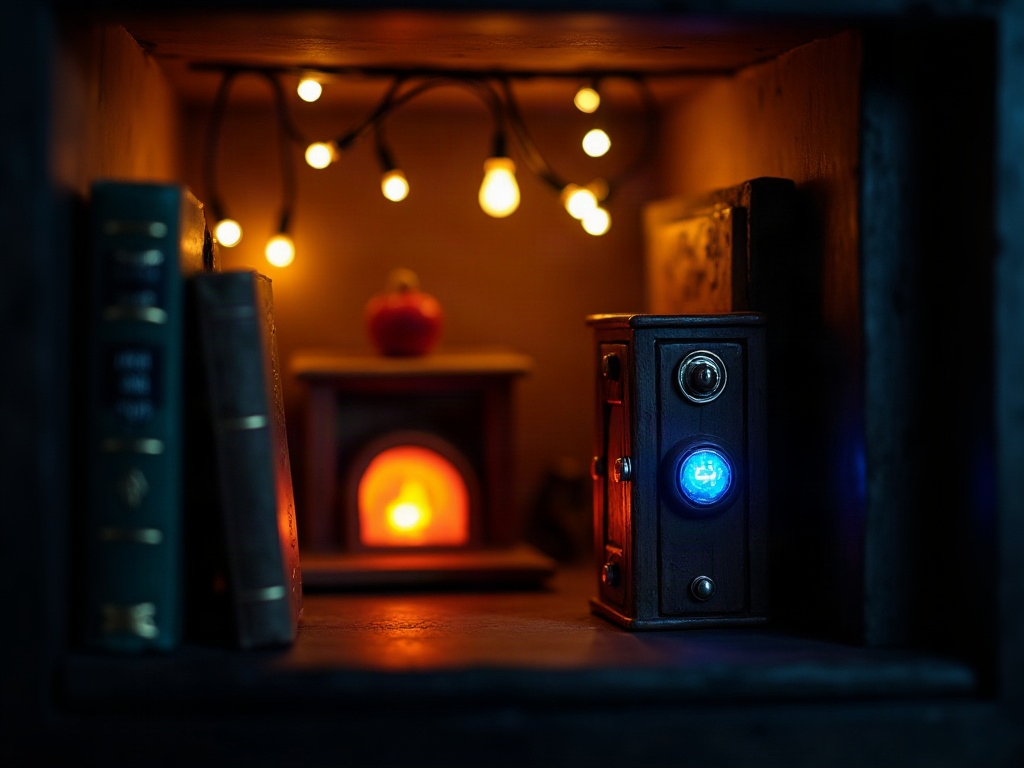
Lighting is the single biggest upgrade to any fantasy miniature build: three layered LEDs, a warm amber hearth, a warm-white ambient ceiling, and a cool blue door accent, transform an ordinary room box into something that feels genuinely alive. Lighting transforms a miniature. No other single upgrade has a comparable visual impact, and nowhere is that more true than in a build meant to evoke firelight, candle glow, and magical warmth.
For a Howl’s Moving Castle miniature inspiration build, plan your lighting in three layers:
- Calcifer’s hearth glow: A warm amber LED (color temperature around 2200K) placed inside the fireplace chamber. Cover it loosely with a piece of amber-tinted acetate cut to mimic irregular flame shapes.
- Room ambient light: Two or three micro LEDs on copper wire (sold as “fairy lights for crafts”) distributed through the interior at ceiling height. Use warm white, not cool white. Cool white kills the magic immediately.
- Exterior accent: A single blue-tinted LED placed near the door dial reference creates a subtle, eerie contrast to the warm interior. It hints at the portal magic without over-explaining it.
Run all three layers from a single USB-powered controller if you can; it makes the build displayable without battery changes. Several miniature-focused craft shops sell wiring kits specifically for book nook lighting at under $15.
If you are building from a fantasy-themed miniature book nook kit, check whether the kit includes pre-drilled wire channels. Many do, and threading lighting through pre-cut channels versus drilling your own after the fact is one of those quality-of-life differences that experienced builders appreciate immediately.
💡 À retenir
Always wire your lighting before you glue the final walls closed. It sounds obvious, but more than a few beautiful builds have been carefully sawed apart because a builder forgot one LED connection behind a sealed panel. A quick dry-assembly test run with the lights on costs five minutes and saves hours of repair.
Always wire your lighting before you glue the final walls closed. It sounds obvious, but more than a few beautiful builds have been carefully sawed apart because a builder forgot one LED connection behind a sealed panel. A quick dry-assembly test run with the lights on costs five minutes and saves hours of repair.
The Build as a Meditative Practice, Not a Race to Finish
Building a Howl’s Moving Castle miniature is best treated as a meditative practice: the story gives the project emotional stakes, and the slow, session-by-session craft gives your hands something meaningful to do while your mind is quiet. Something interesting happens when crafters commit to a project rooted in a story they love. The build stops being purely technical and starts being personal. Each tiny prop placed in Sophie’s corner of the castle is a small act of homage. The hours spent dry-brushing rust effects onto metal panels are oddly peaceful, the kind of focused repetition that clears mental noise in a way that few other activities manage.
That meditative quality is part of why fantasy miniature builds inspired by beloved stories have such staying power in the craft community. The story gives the build emotional stakes. The craft gives the fan a physical relationship with something they love. The result is an object that holds memory and meaning in a way a poster or a figurine simply cannot.
Community builders who share their progress in monthly build-along threads often note the same thing: the sessions where they work in silence for two hours and surface to find Calcifer’s hearth suddenly glowing exactly right are the ones they remember longest. It is not about the destination. It is about what the hands learn while the mind is quiet.
Where to Take Your Build Next: Howl’s Moving Castle Miniature Inspiration Beyond the First Room Box
Once your first Howl’s Moving Castle room box is complete, the natural next step is expanding outward: a mechanical exterior panel, a Market Chipping market stall, or a modular multi-room cross-section that grows one scene at a time. Once the first room box is finished and sitting on your shelf, most builders immediately start planning the next layer. The castle, after all, has more than one room. Common next-stage projects from the community include:
- A stand-alone exterior facade panel with the castle’s walking legs suggested by curved brass rod armatures, designed to sit beside the original room box as a diorama companion piece.
- A market stall scene set in Market Chipping, capturing the moment before Sophie is turned into an old woman, using 1:12 hat forms, flower baskets, and a tiny striped awning.
- A Witch of the Waste scene as a dark counterpoint to Sophie’s warm interior, leaning into deep reds, velvet, and heavy gold accents.
- A modular panel system where each room snaps together side by side, eventually forming a full castle cross-section for display on a long shelf.
Exploring our miniature house kits collection can spark ideas for these companion scenes. Even a kit not designed for fantasy use can be repainted, retextured, and re-propped into the moving castle world with surprisingly little effort.
Frequently Asked Questions about Howl’s Moving Castle Miniature Builds
Everything you might be wondering (click a question to expand).
What skill level is needed to build a Howl’s Moving Castle-inspired miniature?
It depends on the scope you choose. A single room box focused on Sophie’s cottage interior rates as a beginner-to-intermediate project. Adding mechanical exterior elements, working lighting, and multi-level structure moves it into intermediate-to-advanced territory. Starting with a kit that provides the shell and scale baseline is one of the most effective ways to reduce the skill barrier on your first attempt.
How long does a project like this typically take?
A focused single room box with basic lighting runs roughly 15 to 25 hours of build time spread across several sessions. More elaborate builds with custom mechanical exteriors, scratch-built furniture, and full fiber optic lighting can run 60 to 80 hours. Many crafters find the long timeline part of the appeal: this is not a weekend sprint, it is a meditative slow build.
Can I use a standard book nook kit as the starting structure?
Yes, and it is often the smartest approach. A fantasy book nook kit gives you a dimensionally accurate shell with pre-cut openings. From there, you apply the Howl’s castle aesthetic through surface treatment, color, lighting, and props rather than structural woodworking. The kit handles the precision; you handle the storytelling.
Where do I find miniature gears and mechanical parts at the right scale?
Three reliable sources: broken clock movements from thrift stores (real, beautifully machined gears at no cost beyond the clock price), laser-cut wooden gear sets sold by miniature and model suppliers, and resin gear packs from craft marketplaces like Etsy. Avoid plastic toy gears; they look exactly like plastic toy gears and break the illusion immediately.
How do I make Calcifer look convincing at 1:12 scale?
Calcifer is essentially an expressive face made of fire. At 1:12, a face roughly 1.2 cm tall is achievable in polymer clay with fine tools. The key is exaggerating the expression: wider eyes, more pronounced brow, more dramatic mouth than feels natural at full size. Miniature faces read as flat from viewing distance, so exaggeration corrects for that perceptual compression. Back the face with that warm amber LED glow and the effect clicks into place.
Is this type of build suitable as a handmade gift?
Absolutely. A finished Howl’s Moving Castle miniature room box is one of the most personal gifts you can give to a fan of the film or novel. The 1:12 book nook format travels well when packed carefully in a shallow box with foam padding, and the recipient almost always recognizes the scene immediately, which makes for a memorable reveal. If you are giving it as a gift, consider adding a small handwritten note tucked inside Calcifer’s fireplace for them to discover later.
Bringing It All Together: A Summary Before You Build
Before your first session, lock in your scale, split your reference images into mechanical and cottage folders, source brass and copper hardware first, plan your three lighting layers, and start from a fantasy book nook kit shell so structural guesswork never slows you down. If you are ready to start, here is what to carry into your first session:
- Choose your scale (1:12 for most builders, 1:6 if Calcifer’s face is your focal point).
- Gather reference images in two folders: mechanical exterior and warm cottage interior.
- Source your brass and copper hardware first; these set the tone for everything else.
- Plan your lighting layers before a single wall is glued closed.
- Start with a fantasy book nook kit shell to eliminate structural guesswork and let you focus on atmosphere.
The fantasy book nook collection is a practical starting point. Pick a scale, gather your reference images, and let the castle grow at its own pace. The best Howl’s Moving Castle miniature builds are not rushed. They accumulate, session by session, until the moment you switch on the amber light and the whole thing glows exactly the way you imagined it would. 🪄