🎁 Buy 2 kits, get the 3rd FREE · Free shipping on every order

Avatar Last Airbender Miniature Scenes: Build an Air Temple Display
Learn how to design and build stunning Avatar Last Airbender miniature scenes, from Air Temple architecture to Fire Nation aesthetics. Covers materials, techniques, lighting, weathering, and sourcing options for hobbyists and gift buyers.

The urge to recreate beloved fictional worlds in miniature form runs deep for fans. Avatar Last Airbender miniature scenes offer a tactile way to bring the show’s most iconic locations to life, from the serene cliffs of the Air Temple to the volcanic majesty of Fire Nation fortresses. Unlike passive collecting, building these tiny realms becomes a meditative practice, the kind where hours disappear and you emerge with something tangible and beautiful. That feeling is exactly what hooked our founder **Hannah Brooks** on miniatures in the first place: a rainy Sunday in 2021, a single Victorian dollhouse kit, and the sudden realization that building tiny worlds is its own form of quiet magic.
Why Air Temple and Fire Nation Aesthetics Captivate Builders
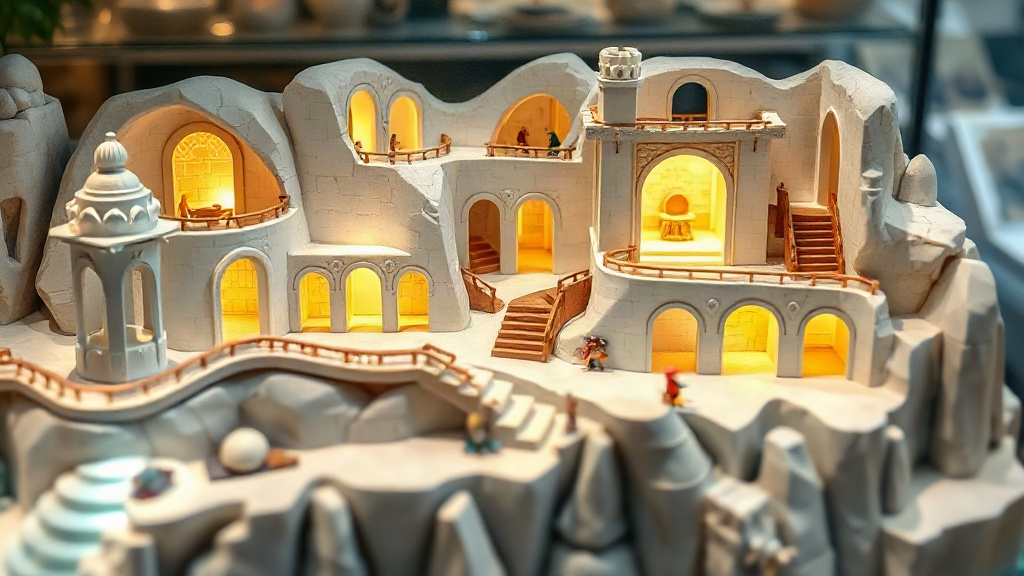
Air Temple and Fire Nation aesthetics captivate miniature builders because their contrasting palettes, one open and airy, the other dramatic and enclosed, each translate naturally into 3D craft while rewarding both freehand texture and precise color work. The visual grammar of Avatar: The Last Airbender resonates with miniaturists for specific reasons. The Air Temple’s architecture emphasizes flowing lines, open spaces, and a harmony with natural rock formations. These elements translate beautifully into 3D models because they reward detail without demanding rigid precision. A slightly uneven plaster cliff face feels authentic. Paint variations that suggest weathering look intentional.
The Fire Nation palette offers a different draw. Deep reds, golds, and charcoal grays create drama even at small scales. Lanterns glow warmer. Metallic accents catch light in ways that make a 6-inch scene feel cinematic. For builders who love atmospheric lighting, Fire Nation interiors are a natural playground.
What makes these two settings so compelling to miniaturists is precisely their contrast. Put them side by side in a single diorama and the visual tension tells a story without a single figure needing to be placed. That narrative potential is rare in fictional architecture, and it is one of the reasons Avatar Last Airbender miniature scenes have developed such an active community of dedicated crafters.
Core Components of a Miniature Air Temple Build
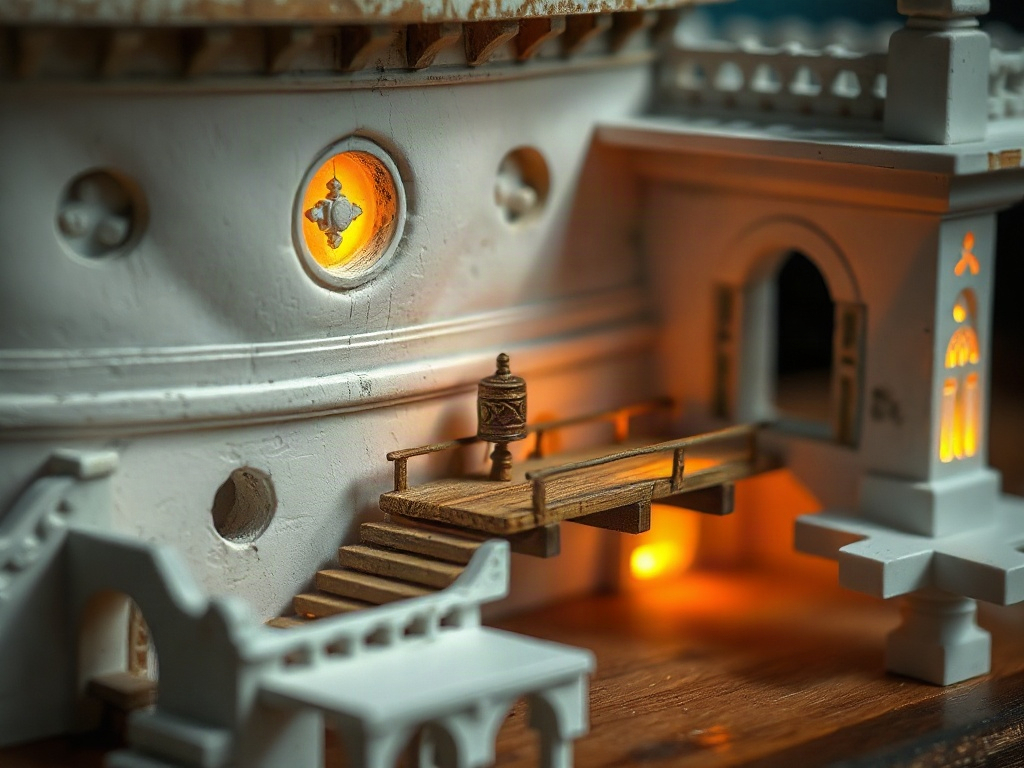
A successful miniature Air Temple build rests on three pillars: a vertically stacked foam or wooden structure, weathered bridges connecting the levels, and warm-white LED lighting to suggest the temple’s serene, open atmosphere. A functional Air Temple display rests on three pillars: structure, atmosphere, and narrative detail.
The Architecture Foundation
Start with the bones. The Air Temple’s defining feature is vertical space. Unlike buildings that sit on a flat plane, the temple sprawls across cliff faces and connects via bridges. A 1:48 or 1:64 scale model captures this drama without overwhelming a shelf or desk.
Most builders begin with a foam or wooden base measuring 12 by 16 inches, carved or stacked to suggest elevation. Three to four levels work best for miniature dioramas; more becomes visually confusing, fewer loses the temple’s sense of scale. Paint the foam in soft grays and earth tones before adding structure. This base coat prevents white foam from showing through gaps.
Here is a quick checklist of essential Air Temple build materials to gather before you start:
- Foam board or XPS insulation foam (2-inch thickness) for terrain and cliff faces
- Basswood strips (1/8-inch and 1/4-inch) for bridges, door frames, and railings
- Model cement or cyanoacrylate for structural joints
- Grey and white acrylic primer for base coating foam before detail painting
- Dry-brush set in pale grey, off-white, and earth tones for weathering
- Warm-white LED strip or fiber-optic kit for interior ambient glow
- Fine sand and mat medium for ground texture in alcoves and courtyards
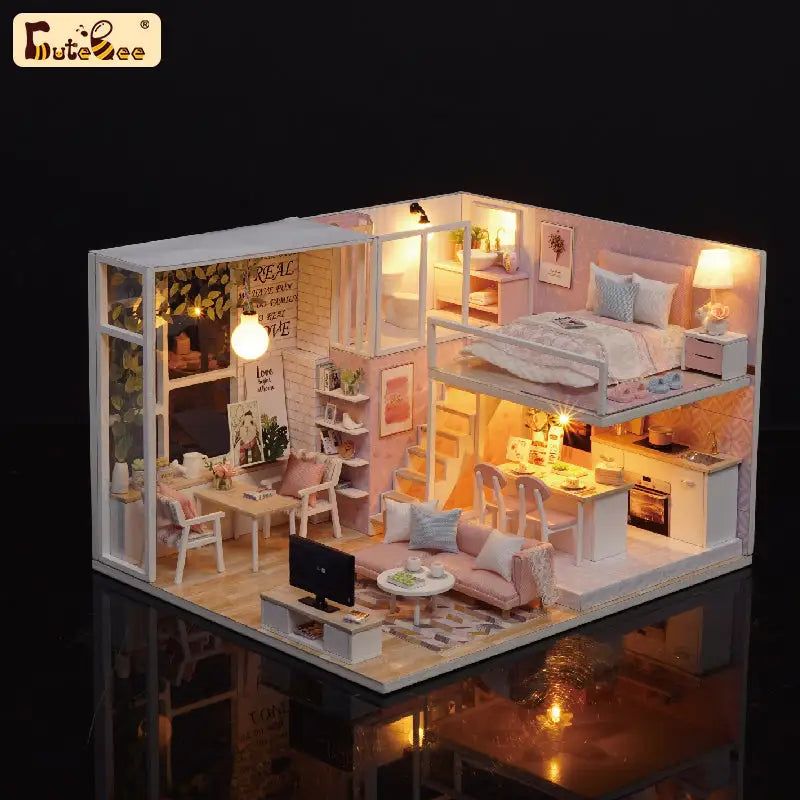
Laser-cut wooden or 3D-printed components form the actual buildings. Doorways should be tall and narrow, consistent with Air Nomad geometry. Windows are small, often circular. Walls angle slightly outward at the top, a detail that takes minutes but signals intentional design. If you want a shortcut on the structural shell, a miniature house kit with an open or modular design gives you solid bones that you can repaint and reshape into something unmistakably Avatar-inspired.
Bridges and Pathways
The Air Temple is as much about movement as it is about shelter. Bridges connecting different sections create visual interest and opportunity for storytelling. Use 1/4-inch basswood strips, sand them smooth, and weather them with dry brushing (a light skim of dark paint applied with an almost-dry brush). A single human hair’s-width line of shadow under each plank makes it appear suspended.
Pathways demand texture. Carved or embossed foam, then sealed with a thin acrylic base and dry-brushed highlights, suggests worn stone. If you’re patient, tiny grout lines made with a pencil before painting can hint at individual paving stones.
🪄 Hannah’s tip
Before committing to paint, photograph your work in progress under natural light and indoor lamp light. Foam behaves differently depending on how it’s lit, and what reads as “stone” in daylight might look plastic under tungsten. Adjust your primer or base coat color before you layer details. I learned this the hard way on my very first Victorian dollhouse build: a full evening’s worth of painting, only to discover the next morning under sunlight that my “warm sandstone” was actually screaming yellow. Save yourself the repaint.
Before committing to paint, photograph your work in progress under natural light and indoor lamp light. Foam behaves differently depending on how it’s lit, and what reads as “stone” in daylight might look plastic under tungsten. Adjust your primer or base coat color before you layer details. I learned this the hard way on my very first Victorian dollhouse build: a full evening’s worth of painting, only to discover the next morning under sunlight that my “warm sandstone” was actually screaming yellow. Save yourself the repaint.
Air Temple vs. Fire Nation: A Quick Builder Comparison
The Air Temple suits beginners best thanks to its forgiving organic textures and soft palette, while the Fire Nation demands more precision color work but rewards builders who love dramatic lighting and metallic accents. If you are deciding where to focus first, this side-by-side breakdown makes the choice easier. Both settings reward different builder strengths.
| Feature | Air Temple | Fire Nation |
|---|---|---|
| Primary palette | Soft whites, greys, earth tones | Deep burgundy, charcoal, gold |
| Architecture feel | Vertical, open, organic curves | Enclosed, geometric, fortified |
| Key lighting mood | Warm white, ambient, diffuse | Amber/orange, directional, dramatic |
| Best for beginners? | Yes, forgiving textures | Moderate, precision color work |
| Signature detail | Suspended bridges, carved niches | Arrow slits, interior LED glow |
| Approx. build time | 25 to 40 hours | 20 to 35 hours |
Fire Nation Elements and Color Theory
Fire Nation miniature scenes rely on deep burgundy walls, charcoal stone, and gold leaf accents, with warm amber LED lighting doing the heavy lifting to shift the mood from neutral craft to cinematic diorama. If your display includes Fire Nation aesthetics, the shift in mood must be visual and immediate. Where the Air Temple breathes in light tones and open space, Fire Nation architecture feels enclosed and warm.
Building a Fire Nation Fortress Segment
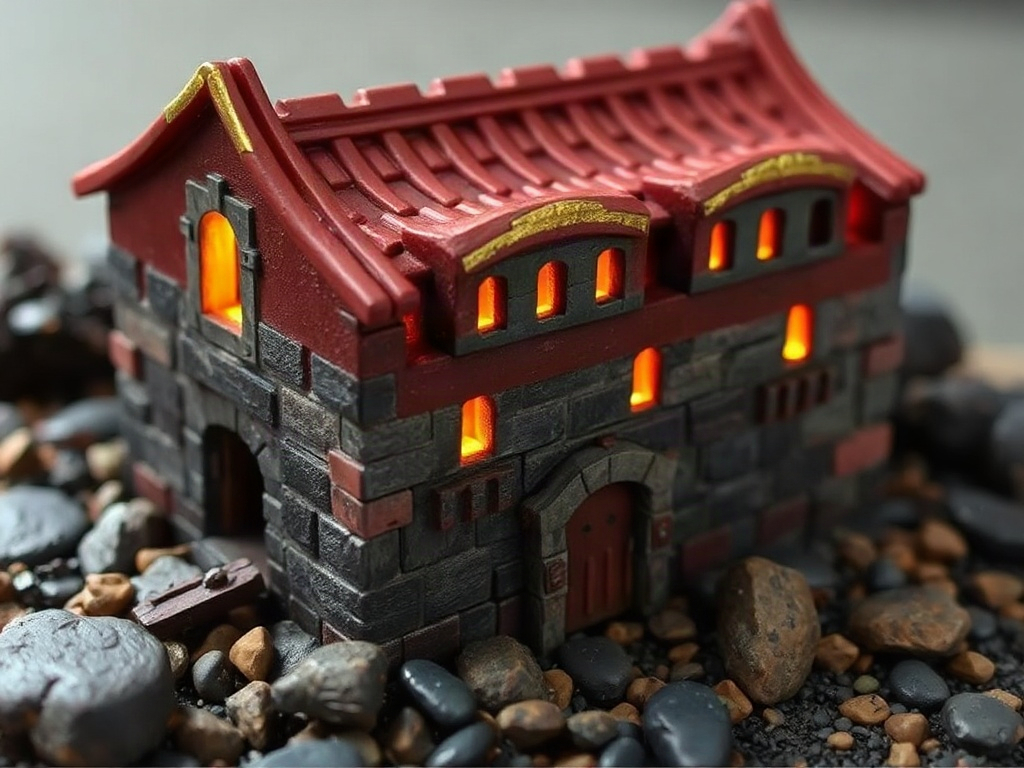
Fire Nation structures use heavier stonework, more geometric precision, and layers of defense. Walls are thicker. Roofs curve upward at the edges. The color palette centers on deep burgundy, charcoal, and gold leaf accents.
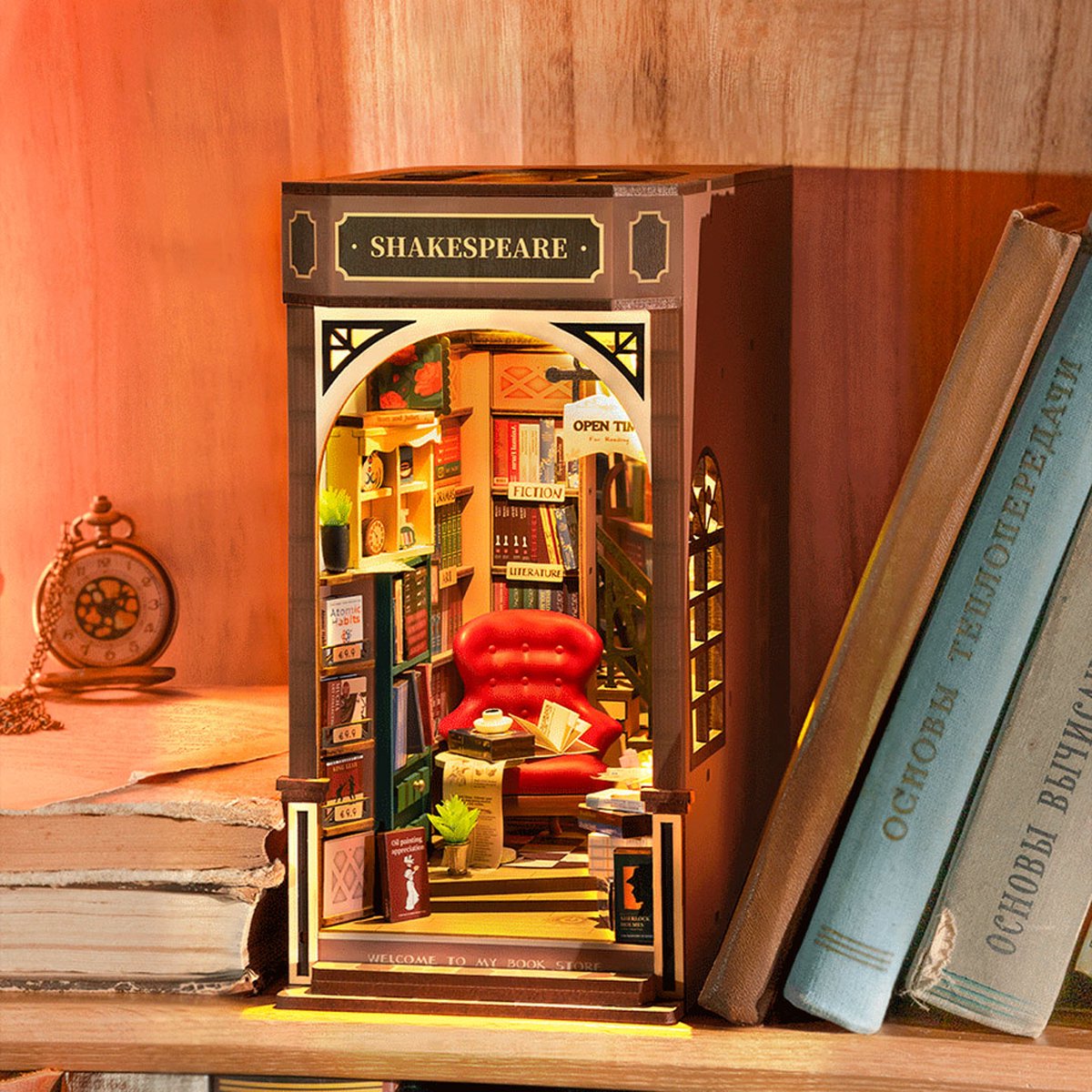
A functional miniature fortress (6 to 8 inches tall) needs interior space. Rather than solid foam, carve or assemble walls that leave a cavity. This lets you place tiny furniture, figures, or lighting inside. A 1-watt LED battery pack hidden behind a back wall costs under $5 and transforms the piece. Light spilling through arrow slits or window openings feels alive. The book nook kit format is particularly well-suited to Fire Nation interiors: a narrow, deep cavity lit from behind mimics the look of a fortress hall seen through an open doorway.
Surface Treatments for Warmth
Fire Nation aesthetics demand texture that reads as metal and ceramic. Use acrylic metallics sparingly but strategically. Gold and copper accents on roof trim, door frames, and brazier stands create focal points. A thin wash of burnt sienna over a gray base suggests age and heat exposure.
For ceramic elements (roof tiles, vessels), a gloss varnish over flat paint mimics the reflective quality of glazed pottery. One coat is enough; two looks artificial. Two additional techniques that experienced builders swear by:
- Oil paint pin-wash: Thin a dark brown or black oil paint to near-water consistency and run it into recessed lines and joints. Capillary action pulls it into crevices and leaves the raised faces clean. Wipe excess after 15 minutes with a dry brush.
- Pigment powder dusting: Loose rust or soot pigment powders pressed into corners with a dry flat brush create instant age. Seal lightly with a matte varnish misted from at least 12 inches away to preserve the powdery texture.
Lighting and Atmospheric Details
The single biggest quality upgrade in any miniature Avatar scene is getting the lighting right before placing figures: warm-white LEDs at 2700K for Air Temple interiors, cooler amber for Fire Nation spaces, with sources buried behind walls rather than exposed. The difference between a display and a scene is often atmosphere. Miniature builders who master lighting elevate their work to diorama status.
Strategic LED Placement
Warm white LEDs (2700K color temperature) suit Air Temple interiors, reinforcing a sense of peace and sanctuary. Cool white (5000K) feels harsh, better reserved for Fire Nation spaces where tension is part of the aesthetic.
Bury LED strips behind the back wall or under elevated platforms. Direct light sources (lanterns, braziers, torches) are often less effective than ambient backlighting because you see the bulb. The exception is tiny fiber-optic lights inserted into translucent paper lanterns or gemstones. A 3-pack of fiber-optic light wheels costs around $12 and justifies itself in the magic it creates.
Weathering and Narrative
A pristine miniature scene feels inert. Weathering signals history. For the Air Temple, a dry brush of pale blue-gray over white plaster suggests centuries of wind and rain. Streaks of darker pigment down from roof edges mimic water damage. A dusting of fine sand adhered with mat medium in alcoves and corners reads as accumulated dust.
Fire Nation structures benefit from char marks around window edges (soot from interior fires) and patina on metal. A thin glaze of yellow-green oxide paste in metal joints mimics verdigris and age.
📜 Did you know?
Miniature dioramas modeled on fictional architecture exploded in popularity after Japanese craft communities began sharing detailed builds online around 2015. The trend accelerated during periods of isolation, when fans channeled passion for beloved stories into hands-on creation. Today, themed miniature scenes represent a significant segment of the craft hobby, with dedicated communities sharing techniques and commissioned work valued at thousands of dollars. Avatar Last Airbender miniature scenes are among the most requested themes in fan craft forums, regularly appearing in Reddit communities like r/miniatures and r/TheLastAirbender.
Miniature dioramas modeled on fictional architecture exploded in popularity after Japanese craft communities began sharing detailed builds online around 2015. The trend accelerated during periods of isolation, when fans channeled passion for beloved stories into hands-on creation. Today, themed miniature scenes represent a significant segment of the craft hobby, with dedicated communities sharing techniques and commissioned work valued at thousands of dollars. Avatar Last Airbender miniature scenes are among the most requested themes in fan craft forums, regularly appearing in Reddit communities like r/miniatures and r/TheLastAirbender.
🔖 À retenir
The single biggest quality upgrade you can make to any Avatar Last Airbender miniature scene is lighting before figures. Get the ambient glow right first, then populate. Figures placed in a flatly lit scene look like toys. The same figures bathed in a warm amber LED become characters.
The single biggest quality upgrade you can make to any Avatar Last Airbender miniature scene is lighting before figures. Get the ambient glow right first, then populate. Figures placed in a flatly lit scene look like toys. The same figures bathed in a warm amber LED become characters.
Sourcing and Customization Options
You have three clear paths to an Avatar-inspired miniature scene: build from raw components for under $40, customize an existing kit to cut build time roughly in half, or commission a professional miniaturist for a museum-quality result. You have three paths to a miniature scene inspired by Avatar: The Last Airbender: build from raw components, customize a semi-finished kit, or commission bespoke work.
Building from Scratch
Materials run modest in cost. A foam base, wooden strips, model cement, primer, and acrylics total under $40 for a substantial display. The time investment is 20 to 40 hours depending on ambition. This path suits builders who enjoy problem-solving and don’t mind learning through iteration.
Customizing Existing Kits
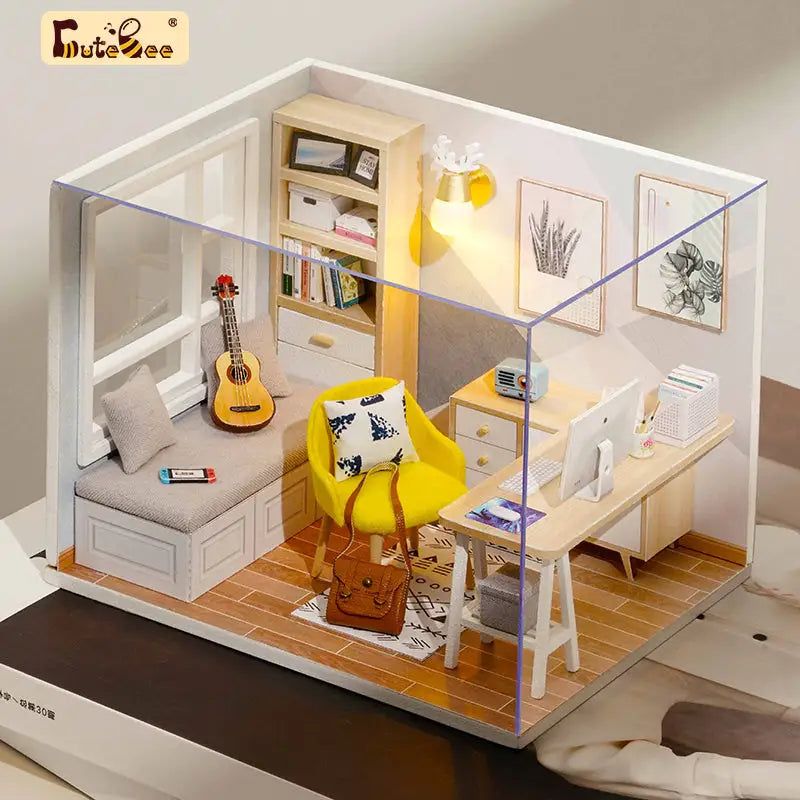
Miniature house kits designed for Victorian or Japanese aesthetics can be repurposed. A miniature house kit with an open or modular design offers a structure you can modify. Repainting, reshaping roofs, and adding custom bridges transforms a generic foundation into something distinctly Avatar-inspired. This method compresses building time to 10 to 20 hours. Hannah’s first experiment with kit customization used a standard cottage kit repainted in Air Nomad whites, with foam cliffs hot-glued to the sides: the result looked like it was always meant to be a mountain temple.
Commission Work
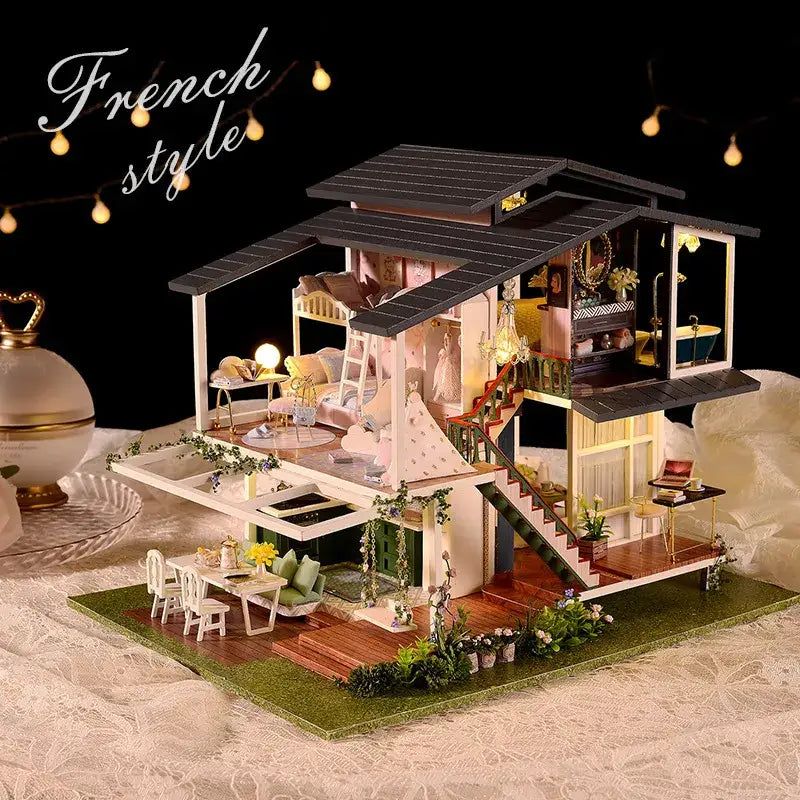
Professional miniaturists who specialize in themed dioramas charge $800 to $3,000 for original pieces, depending on size and detail. If you have a clear visual reference (scene screenshots, mood boards), a commission yields a museum-quality result without the learning curve.
Populating Your Scene with Figures and Props
Figures and props transform a bare Avatar diorama into a living scene: 1:48 scale historical figures repainted in Air Nomad or Fire Nation colors, plus tiny hand-rolled polymer clay scrolls and vessels, anchor the build in the show’s specific visual language. Architecture is the spine, but figures and props are the story. A bare Air Temple feels abandoned. Add monks, perhaps a visiting Avatar. Furniture, scrolls, and cooking vessels suggest daily life.
Sourcing Avatar-specific miniatures is challenging because official licensed products are rare. Most builders either 3D-print figures, commission custom sculpts, or adapt existing miniature figures from other properties. A dancer figure painted in Air Nomad colors, a warrior in Fire Nation armor, a sage in meditation posture all read as intentional casting.
Tiny props multiply impact. A 1-inch scroll, a brushed-metal teacup, woven baskets, prayer wheels, and oil lamps anchor a scene in specificity. These details differentiate a generic Asian-inspired display from one that honors Avatar’s visual language. Some reliable sourcing options for props and figures:
- 1:48 scale figures from historical wargaming suppliers (e.g., monk or scholar poses adapt well to Air Nomad aesthetics)
- 3D-printed STL files available on Etsy or Cults3D, often at $2 to $8 per file for fan-made Avatar props
- Polymer clay sculpts rolled at home for scrolls, pottery, and simple furnishings
- Jewelry-making components (tiny chains, wire-wrapped beads) that become fire-lantern chains and decorative hangings
Display and Preservation
A glass display case measuring 12 by 16 by 12 inches on a north-facing shelf gives your finished miniature scene the best long-term protection, preserving colors and preventing LED heat buildup. Once complete, your miniature scene deserves protection and a stage.
A glass display case (12 by 16 by 12 inches, acrylic or real glass) preserves the work from dust and handling while keeping it visible. Acrylic yellows slightly over years, so real glass is worth the cost if the display will remain permanent. Budget $50 to $150 depending on quality.
Placement matters. A north-facing shelf or cabinet with indirect natural light preserves colors and prevents pigment fading. If using LEDs for atmosphere, keep the glass open slightly or use ventilated cases to prevent heat buildup.
Frequently Asked Questions about Avatar Last Airbender Miniature Scenes
Everything you might be wondering (click a question to expand).
What scale is best for an Air Temple diorama?
1:48 and 1:64 scales are most popular for shelf displays. 1:48 allows more detail and is easier on aging eyes but requires 16 by 20 inches of space. 1:64 fits smaller shelves and suits rapid builds. 1:100 and smaller suit collectors with display-case aesthetics but demand steady hands for detail work.
How long does a beginner take to build their first scene?
Expect 30 to 50 hours spread over 2 to 4 weeks if working evenings. This includes material sourcing, cutting, assembly, painting, weathering, and final details. Your first build teaches technique; your second will move faster. Most builders in our community report that the second project takes roughly half the time of the first.
Can I combine Air Temple and Fire Nation in one display?
Absolutely. A “two kingdoms” diorama works beautifully if you use visual separation. Elevated terrain for the Air Temple, lower fortified ground for Fire Nation creates natural hierarchy. Keep a color and material buffer (a bridge, a neutral platform) between zones so they read as distinct. The comparison table earlier in this article outlines the key differences in palette and technique to help you plan both sections before you start cutting foam.
What’s the best adhesive for miniature foam construction?
Low-temperature hot glue works for rough assembly, but model cement (cyanoacrylate) bonds foam more durably and creates less visible seams. For foam-to-wood joints, use carpenter’s white glue or foam-safe construction adhesive. Never use solvent-based glues on foam; they dissolve it.
Do I need special tools to weather a miniature scene?
No. A dry brush (an old, stiff brush), pigment powders, watered-down acrylics, and a spray bottle are sufficient. Sanding foam for texture requires only 100-grit sandpaper and a dust mask. Professional weathering sets exist, but they’re conveniences, not necessities.
Where can I share my finished Avatar Last Airbender miniature scene?
The most active communities are r/miniatures and r/TheLastAirbender on Reddit, the Miniature Enthusiasts group on Facebook, and dedicated Discord servers for Avatar fans. Instagram hashtags like #avatarminiature and #miniaturescene also connect you with other builders. We love seeing what our community creates: tag us @miniaturehouse and your work may be featured on our site.
Building a World That Honors the Show
Building Avatar Last Airbender miniature scenes is ultimately about sustained, meditative attention paid to a story you love, one ceramic tile and painted shadow at a time, whether you’re 20 hours into a first build or commissioning your fifth display. The deepest satisfaction in crafting Avatar Last Airbender miniature scenes comes from something beyond the final display. It’s the sustained attention you pay to detail, the problem-solving when something doesn’t fit as planned, and the quiet meditative state that building induces. An Air Temple diorama becomes a physical conversation with a story you love, one ceramic tile and painted shadow at a time. Whether you’re 20 hours into your first build or commissioning your fifth display, the practice connects you to a growing community of fans who believe their favorite worlds deserve to exist in tactile form.
Hannah started with a Victorian dollhouse kit on a rainy Sunday and no plan. If you’re reading this, you’re already further along than she was. Pick your setting, gather your foam, and start carving. The Air Temple has been waiting for you.
Ready to begin? Browse our full range of miniature house kits, or explore the book nook collection for a compact Fire Nation scene that fits on a single shelf. Tag your builds with #miniaturehouse and share them with us; we feature community creations every month.