🎁 Buy 2 kits, get the 3rd FREE · Free shipping on every order

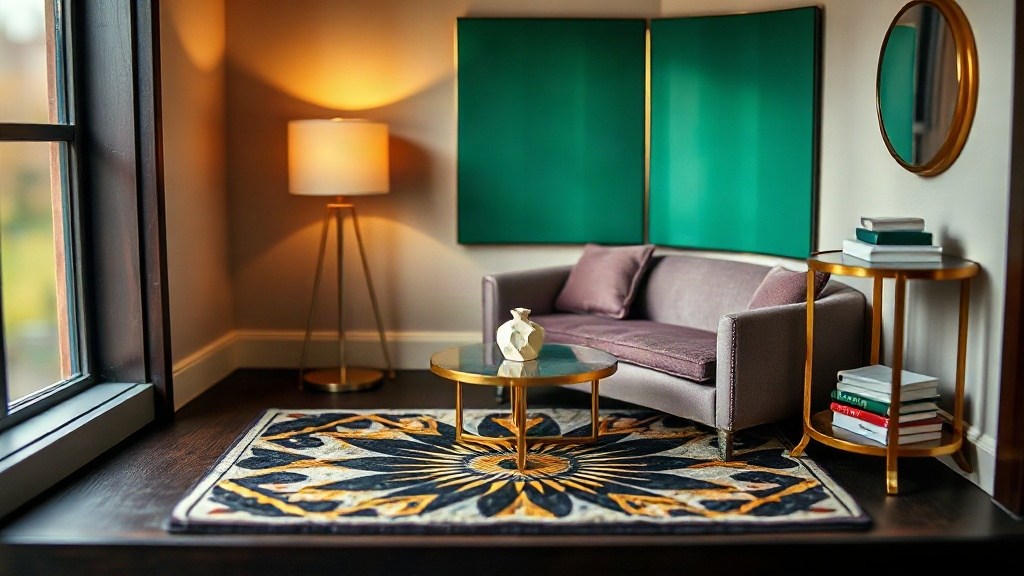
Art Deco Miniature Scenes: Crafting Golden 1920s Elegance in Miniature
Discover how to create stunning Art Deco miniature scenes with geometric patterns, gold accents, and 1920s styling. Learn the design principles, materials, and techniques to build authentic period rooms that capture the glamour of the Jazz Age.

The 1920s brought a seismic shift in design. Clean lines replaced ornate flourishes. Geometry became the new language of luxury. Gold, black, and cream spoke of prosperity and modernity in equal measure. Today, recreating that Art Deco miniature scene captures something we still crave: the marriage of elegance and bold visual confidence.
Hannah here. My miniature obsession started with a rainy Sunday, a Victorian dollhouse kit, and absolutely no plan. That first build taught me something unexpected: the style of an era is always easier to feel than to explain. When I eventually tackled my first 1920s parlor room box, every design decision suddenly had a rule behind it. That structure made the whole process deeply satisfying, almost meditative. You’re not guessing; you’re listening to a period that already knew what it wanted.
Building an Art Deco miniature room is less about filling space and more about understanding a specific aesthetic moment. Every element earns its place. Every color choice shapes the whole. The meditative satisfaction comes from honoring those constraints, not fighting them.
Understanding Art Deco Design Principles in Miniature
An Art Deco miniature scene is built on bold contrast, sharp geometry, and a disciplined palette of jewel tones, cream, and gold, principles drawn from cubism, ancient Egypt, and machine aesthetics that translate directly into repeatable miniature patterns. Art Deco thrived on contrast. It loved symmetry paired with unexpected angles. The style rejected the soft, natural curves of Art Nouveau in favor of sharp geometries inspired by cubism, ancient Egypt, and machine aesthetics. Historians often cite the 1925 Exposition Internationale des Arts Décoratifs et Industriels Modernes in Paris as the moment the style went global, and its influence on domestic interiors was immediate.
In miniature, this means you’re working with repeatable patterns. Chevrons, sunbursts, lightning bolts, and stepped pyramids appear on walls, rugs, and furniture. The color palette is deliberately limited: deep jewel tones (emerald, sapphire, burgundy) against pale cream or ivory, accented with brass and gold. Black grounds details and creates contrast. Nothing is soft or rounded unless it’s a period-accurate curve.
The 1920s taste in interiors favored geometric miniature designs that create visual rhythm. A single sunburst on a wall panel can anchor an entire room. Repeated chevrons on a rug establish movement without chaos. The key is restraint. Deco spaces breathed. They didn’t overwhelm.
Choosing the Right Foundation and Furniture
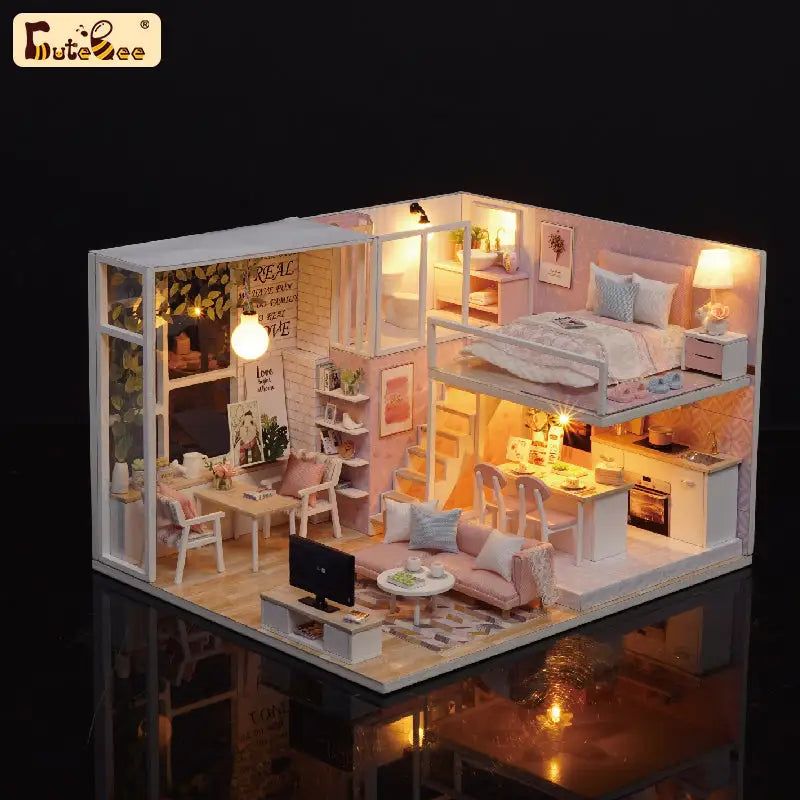
Bestseller cottage kit
Tranquil Life DIY Miniature House Kit
$67.90
View this kit →
The right foundation for an Art Deco miniature room starts with a clean rectangular room box, geometric parquet or dark-stained flooring, and furniture with visible legs, flat panel doors, and veneered or chrome surfaces. Your miniature scene begins with architecture, not decoration. The room box itself, whether you’re building from scratch or using a pre-made kit, should have clean lines. Simple rectangular rooms work best. Avoid rooms with excessive trim or ornamental molding unless those details fit the streamlined Deco aesthetic.
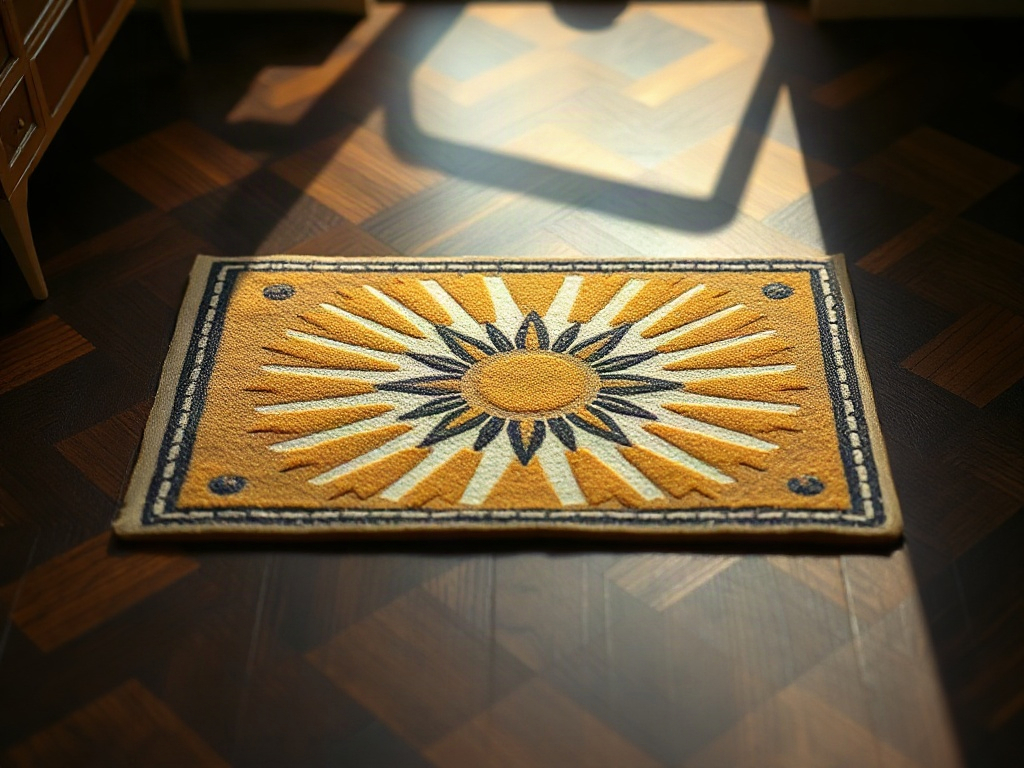
Flooring sets the tone immediately. Art Deco rooms featured parquet in geometric patterns, polished marble in black and white, or solid-colored wood stained dark. Pale walls demand darker floors; lighter floors suit jewel-toned walls. Lay a miniature rug with a sunburst, chevron, or stepped pattern in the center. This anchors the entire composition.
Furniture in the Deco era favored clean silhouettes, often with veneered surfaces (think exotic woods, lacquer, or chrome). A settee with a high back and geometric fabric. A side table with chrome or brass legs and a mirror surface. A cabinet with stepped handles and symmetrical panel lines. The proportions are restrained. Legs are visible. Ornamentation is architectural, not applied.
If you’re working from a miniature house kit, check whether the furniture pieces have visible legs and flat panel doors. Those two details alone signal Deco authenticity more reliably than any paint color.
🪄 Hannah’s tip
Hunt for miniature furniture with tapered legs, sunburst veneers, or stepped handles. If a piece feels “too fancy” with curlicues or excessive carving, it’s probably not Deco. Authentic 1920s furniture whispers rather than shouts. One statement piece (a bold lacquered cabinet, a geometric mirror frame) is enough. The rest should be understated.
Hunt for miniature furniture with tapered legs, sunburst veneers, or stepped handles. If a piece feels “too fancy” with curlicues or excessive carving, it’s probably not Deco. Authentic 1920s furniture whispers rather than shouts. One statement piece (a bold lacquered cabinet, a geometric mirror frame) is enough. The rest should be understated.
Mastering the Color Palette
An authentic Art Deco miniature color palette anchors pale cream or ivory walls against one deep jewel tone, layers in strategic black for contrast, and adds gold and brass metallics at roughly 15-20% of the visual surface. An authentic Art Deco miniature scene relies on a disciplined color strategy. Start with your wall color as the foundation. Cream or pale ivory are safest and most period-accurate. Some collectors choose soft gold, pale gray, or even a pale peachy tone. Once the wall color is locked, every other element must work in conversation with it.
Against pale walls, introduce one jewel tone. This might be a deep emerald, sapphire blue, or burgundy. Let it appear in the rug, in upholstery, in a single painted accent wall or a lacquered cabinet. This is your visual anchor. Then layer in black: picture frames, furniture legs, window trim, or a bold striped pattern on fabric.
Gold and brass metallics are non-negotiable. These appear in lamp bases, mirror frames, decorative objects, and hardware. Polished brass reads warm and intentional. Gold leaf on frames or wall accents adds luxury without overwhelming a small space. The ratio matters: about 15-20% metallic accents keeps the room sophisticated, not gaudy.
Avoid more than three active colors in a confined miniature room. The human eye needs rest. A successful 1920s miniature interior feels cohesive because the palette is tight. Every color choice was deliberate.
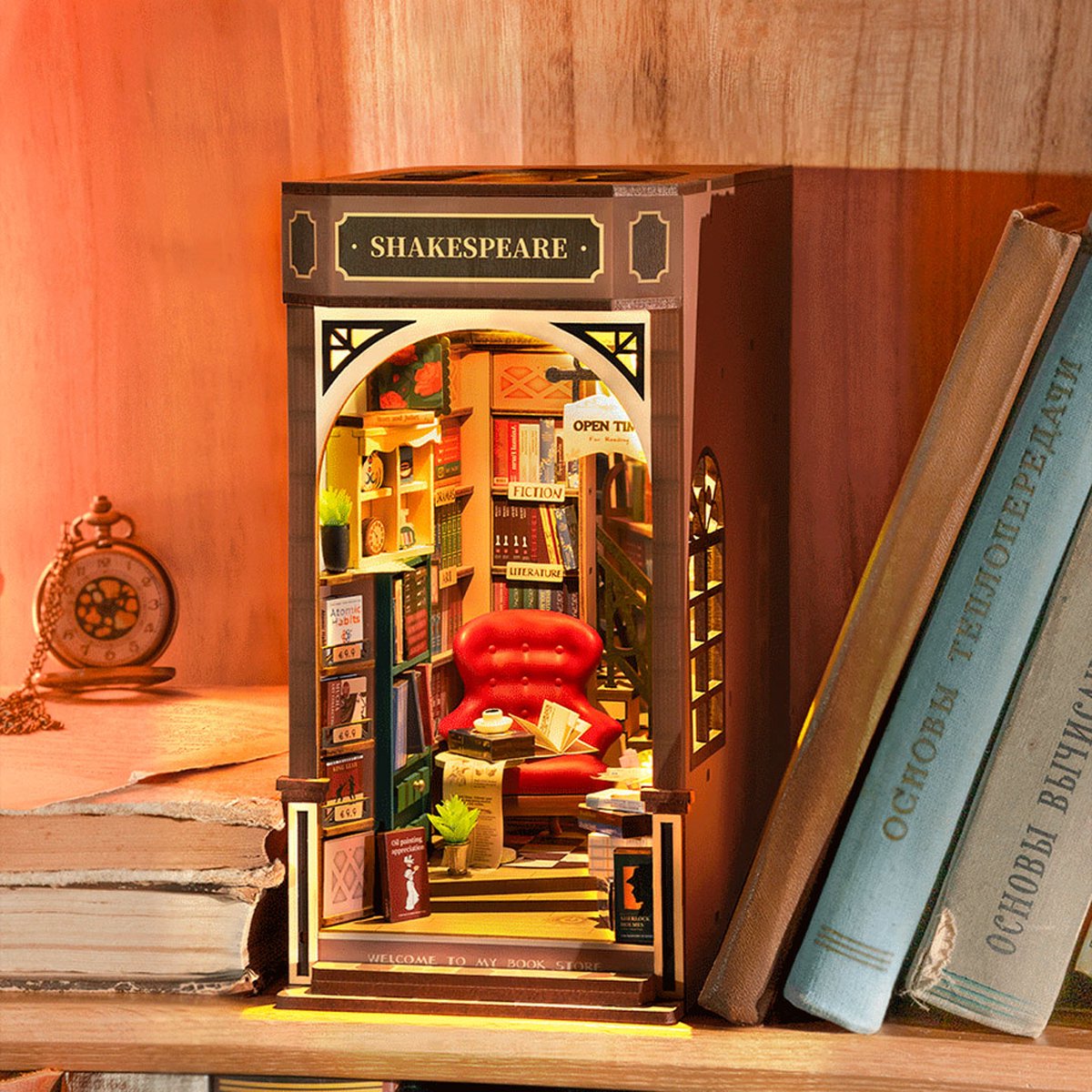
Explore the collection
All Book Nook Kits
76 handcrafted book nook kits
Several kits feature geometric paneling and warm-lit interiors that translate beautifully into 1920s-inspired display shelves. Difficulty ratings from beginner (2 hrs) to intermediate (6 hrs). Each kit includes pre-cut wood pieces, LED strip, adhesive, and step-by-step instructions.
Building Authentic Geometric Wall Details
Authentic Art Deco geometric wall details are achieved through miniature Deco wallpaper, hand-painted chevrons or sunbursts using a ruler and fine brush, or applied matboard strips and gold foil tape that build sculptural stepped patterns. Walls in Art Deco interiors were rarely plain. Geometric patterns created drama. In miniature, you have three practical approaches: wallpaper, painted details, or applied elements.
Miniature Deco-style wallpaper is available from specialty suppliers. Look for papers with sunbursts, chevrons, stepped pyramids, or linear patterns in period-appropriate colors. Apply with PVA adhesive, smoothing carefully to avoid air bubbles. This is the fastest route and yields professional results.
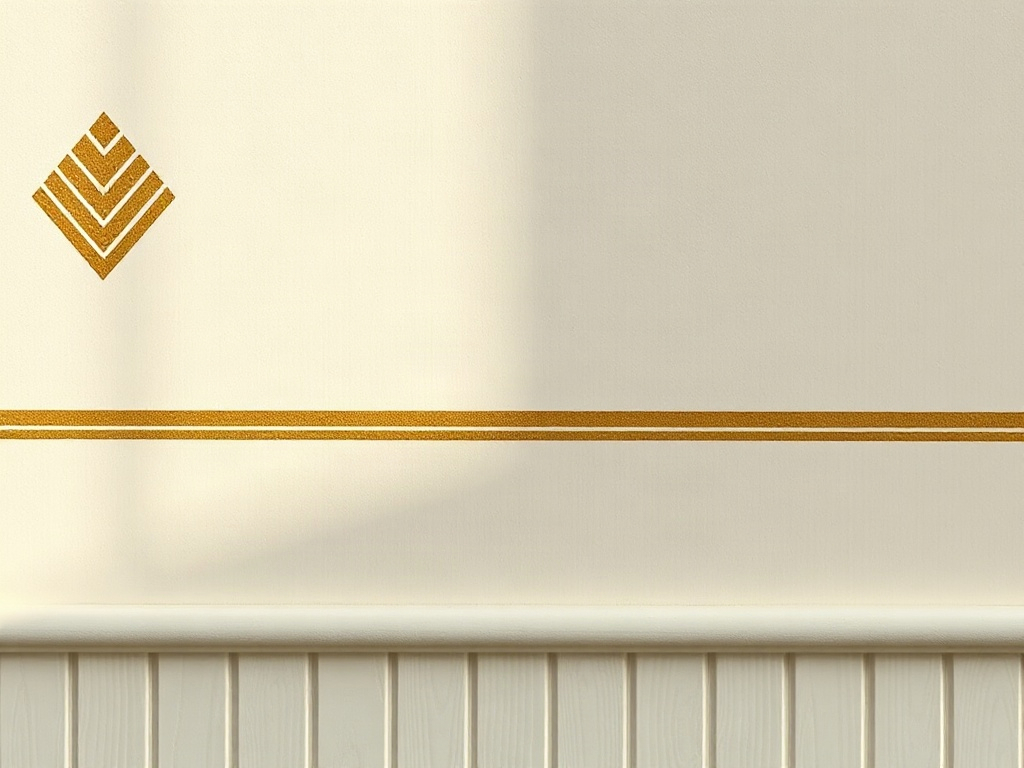
If you’re painting, consider a simple approach. Paint the wall a base color, then use a ruler and fine brush to add linear details in gold or black. A painted sunburst radiating from a corner or a geometric border running along the top creates period accuracy without demanding advanced painting skill. Work in thin coats and let each dry fully before adding detail.
Applied elements offer sculptural interest. Thin strips of matte black matboard create stepped pyramid patterns. Gold foil tape forms geometric frames around a painted motif. A textured embossed paper glued to the wall and then painted adds shadow and dimension. The goal is visual complexity that feels intentional, not cluttered.
This is also the stage where the build becomes most meditative. Measuring, cutting, and placing each strip of matboard requires your full attention, but in a quiet, absorbing way. Many builders in our community describe it as the “hour that disappears.” You look up and the light has changed. The wall looks completely transformed. That rhythm is one of the great gifts of miniature work at any scale.
Lighting That Honors the Era
Lighting in an Art Deco miniature room should use a single warm LED source positioned at table-lamp height, with a geometric shade and gold or bronze base, to create the soft evening glow of a 1920s parlor. The 1920s saw a revolution in electric lighting. Art Deco lamps became sculptural objects. Table lamps featured geometric shades (often frosted glass or cream fabric) with bronze or gold bases shaped like stylized figures, pyramids, or sunbursts. Floor lamps had tall, attenuated brass stems and simple cream or pale fabric shades.
In your miniature room, lighting is crucial. A single well-placed LED light source creates warm pools and brings the whole scene to life. Position a miniature lamp on a side table, shade facing into the room. The glow should be soft, suggesting evening light in a 1920s parlor. Avoid harsh overhead light that flattens the Deco geometry you’ve worked to establish.
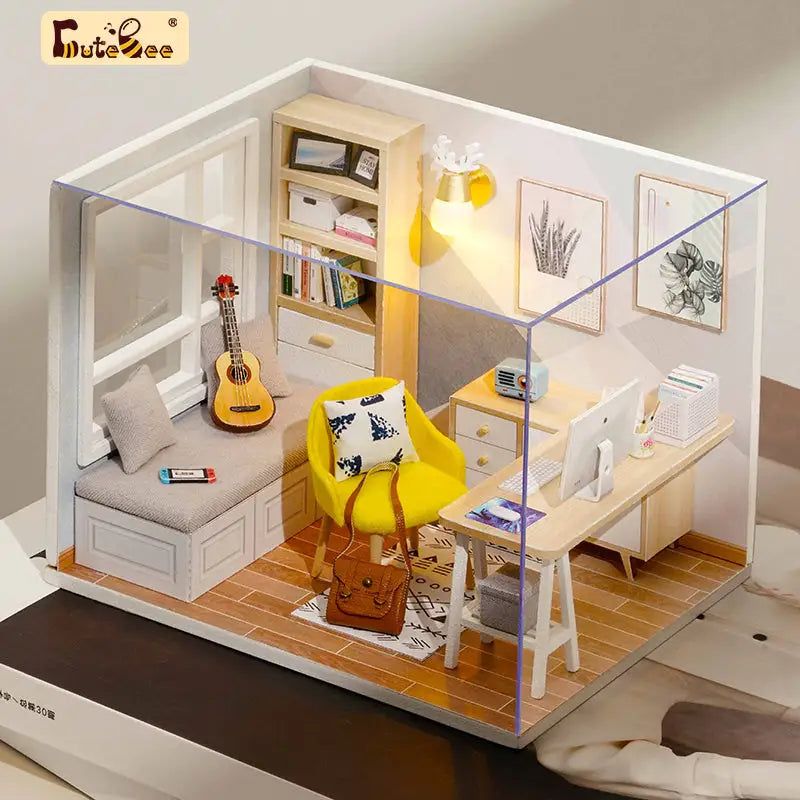
Easy starter under $50
Sun Room DIY Miniature House Kit
$49.99
Start with this kit →
The lamp itself is decor. Choose one with period authenticity: a geometric base, clean lines, a cream or pale shade. If you can find one with brass or gold details, even better. A single beautiful lamp adds credibility to the entire composition.
📜 Did you know?
The Chrysler Building, completed in 1930, became the most iconic symbol of Art Deco architecture. Its gleaming stainless steel crown and geometric patterns inspired designers worldwide. Many miniature enthusiasts use photographs of the Chrysler Building’s interiors as reference for color, proportion, and detail. The building’s design language translated beautifully to domestic spaces in the 1920s and 1930s. Architectural historian David Garrard Lowe noted in his survey of the period that the Chrysler’s lobby used the same gold-and-black contrast palette that appeared in private parlors across New York and Paris at exactly the same time.
The Chrysler Building, completed in 1930, became the most iconic symbol of Art Deco architecture. Its gleaming stainless steel crown and geometric patterns inspired designers worldwide. Many miniature enthusiasts use photographs of the Chrysler Building’s interiors as reference for color, proportion, and detail. The building’s design language translated beautifully to domestic spaces in the 1920s and 1930s. Architectural historian David Garrard Lowe noted in his survey of the period that the Chrysler’s lobby used the same gold-and-black contrast palette that appeared in private parlors across New York and Paris at exactly the same time.
Styling Accessories and Decorative Objects
Art Deco miniature accessories should be chosen for geometric form and material beauty, a sunburst vase, a stepped lacquer mirror, a chevron pillow, displayed selectively so each object earns its place without crowding the room. Accessories make the difference between a well-furnished room and an authentically styled one. In Art Deco interiors, objects were chosen for geometric form and material beauty. A ceramic vase with a sunburst pattern. A mirror with a stepped black lacquer frame. A small sculpture with clean, modernist lines. Books stacked on a side table. A potted plant in a brass planter.
Avoid cluttering. Deco spaces favored selective, curated display. A single striking vase on a shelf. Two matching bookends flanking a small stack. A geometric clock face (gold numerals on black or cream) mounted on the wall. Each item should spark genuine interest and reflect the geometric or streamlined aesthetic.
Textiles matter enormously. A throw pillow with a chevron or lightning bolt pattern adds color and pattern without overwhelming the space. A small decorative rug with a sunburst or stepped design anchors the seating area. A window swag or curtain in a period fabric (often striped or solid) frames the space. The fabric palette should echo your wall color and accent colors, creating visual coherence.
Paintings or prints with Deco-era imagery work beautifully. Art Deco posters, stylized botanical prints, or geometric abstracts mounted in simple brass frames elevate the whole room. Many collectors frame vintage Art Deco advertisements, which perfectly capture the era’s aesthetic. Our community members often share finds in the blog comments, and the most common discovery is how inexpensive reproduction Deco prints look genuinely luxurious once they’re trimmed to miniature scale and framed in gold.
Assembly and Display Tips
Build your Art Deco miniature display in sequence: room box and flooring first, then walls and geometric details, large furniture next, and accessories last, photographing as you go to catch proportion and color-balance issues early. Building an Art Deco miniature display is a process. Start with the foundation: room box, flooring, wall base color. Work your way up: walls and geometric details, then large furniture pieces, lighting, and finally accessories.
Take photographs as you build. This helps you see the composition with fresh eyes and catch proportion issues before final styling. Does the rug size feel right? Is the color balance working? Does the metallic accent feel luxe rather than overdone? Adjust as you go.
Lighting for display matters. If showing your finished room, position it so light enhances the geometry and metallics without creating harsh shadows. A soft overhead LED or a carefully angled task light works well. Avoid direct sun, which can fade period fabrics and papers over time.
Consider the footprint of your scene. Art Deco design thrived on clean lines and open space. In a miniature room, this means strategic negative space. Don’t fill every corner. A half-empty shelf creates more visual impact than one crammed with items.
Finding Kits and Curated Collections
Art Deco themed miniature kits handle the heaviest design work for you, providing pre-cut geometric walls, a matched furniture set, and curated accessories in a balanced palette, with difficulty ratings from beginner (2-3 hours) to intermediate (5-8 hours). If building from scratch feels daunting, several miniature enthusiasts offer Art Deco themed miniature kits that handle the heavy lifting. These include pre-cut walls with geometric patterns, a complementary furniture set, and carefully selected accessories. Difficulty ratings typically run from beginner (2-3 hours of assembly) to intermediate (5-8 hours with light customization).
A quality Art Deco kit includes: room box with pre-printed or wallpapered walls, 3-5 furniture pieces (usually a settee, side table, cabinet, and mirror or lamp), a geometric rug or flooring treatment, 4-6 decorative accessories, wood stain or paint for finishing, glues and basic tools, and detailed instructions. Assembly involves securing walls, staining or finishing pieces, gluing components, and arranging accessories.
The advantage of a curated kit is color harmony. The designer has already balanced your palette. Every piece is sized correctly for the room. This frees you to focus on the meditative work of assembly, detailing, and styling rather than troubleshooting proportions. Hannah tested the first batch of kits on her own workbench specifically for this reason: if the color harmony doesn’t hold in a real room with real light, the kit doesn’t make the cut.
Browse our miniature house kits collection for Art Deco themed options and other period aesthetics. Each kit is selected for authenticity and craft satisfaction. You may also enjoy reading about how to style a miniature room for tips that apply across all eras, including a section on negative space that Deco builders find especially useful.
Frequently Asked Questions about Art Deco Miniature Scenes
Everything you might be wondering (click a question to expand).
What’s the most important color for an Art Deco miniature room?
The most important element is contrast. Pale walls (cream, ivory, or soft gold) paired with one deep jewel tone and strategic black accents create authentic Deco style. The metallic accents (gold and brass) add the luxury feel. If you nail the contrast, the room reads as Deco immediately.
Can I mix Art Deco with other styles in the same miniature scene?
Art Deco is quite distinct and doesn’t blend easily with, say, Victorian or Cottage aesthetics. You can introduce subtle transitional elements (a simple geometric rug, a streamlined side table), but mixing eras usually dilutes the impact. A focused, cohesive Art Deco room is stronger than a hybrid approach.
How do I add geometric patterns without wallpaper?
Painting is your best option. Use a ruler, pencil, and fine-tipped brush. Create a sunburst by drawing thin lines radiating from a corner. Paint chevrons using masking tape as your guide. A stencil (hand-cut from card stock) lets you repeat patterns across a wall. Work in thin coats of miniature-scale paint and allow drying time between layers.
What materials work best for Art Deco metallics?
Polished brass, brushed gold, and chrome are historically accurate. In miniature, metallic foil tape, painted brass finishes, and small brass hardware (hinges, handles, decorative corner plates) create authenticity. Apply these sparingly. A few strategic brass lamp bases and a gold-framed mirror are more impactful than every surface shimmering with metallic paint.
How long does a typical Art Deco miniature scene take to build?
A beginner working with a kit can complete a basic scene in 4-6 hours. Intermediate builders with some customization and detail work might invest 10-15 hours. Advanced crafters who scratch-build and incorporate custom details can spend 30+ hours. The meditative satisfaction often comes from the process itself, not rushing to completion.
Is an Art Deco miniature scene a good project for a complete beginner?
Yes, and in some ways it’s an ideal first period style. The rules are clear: limited palette, geometric shapes, restrained accessorizing. That structure actually makes decision-making easier for beginners than an open-ended “cozy cottage” build, where every choice feels equally valid. Start with a kit rated beginner (2-3 hours), nail the palette, and you’ll finish with something that looks genuinely considered. Many people in our community say their first Deco build is still their favorite piece.
Embracing the Geometric Soul of 1920s Design
A successful Art Deco miniature scene comes down to five things: a tight palette anchored by cream and one jewel tone, repeating geometric patterns, metallics at 15-20% of the visual surface, clean furniture silhouettes, and enough negative space to let the room breathe. An Art Deco miniature scene is a love letter to a specific moment in design history. The 1920s rejected fussiness. They celebrated clean geometry, bold color, and the marriage of art and industry. Building one asks you to think deliberately about every choice. Why this color? Why this pattern? Why this object?
That restraint, that intentionality, is what separates a beautiful Art Deco room from a cluttered approximation. The craft rewards patience and careful observation. Spend time with photographs of period interiors. Notice how often spaces breathe. How few objects fill a room. How one striking geometric pattern anchors an entire wall. How gold and brass are used as accents, not as overall finishes.
To recap what makes a Deco miniature succeed: a tight palette anchored by cream and one jewel tone; geometric patterns that repeat without overwhelming; metallics used at 15-20% of the visual surface; furniture with clean silhouettes and architectural ornamentation; and just enough negative space for the room to breathe. Get those five things right and the era announces itself instantly.
Once you’ve built one Art Deco scene, the style becomes a language you can speak fluidly. The next room flows faster. The color choices feel instinctive. And the satisfaction of standing back to see a perfectly balanced 1920s parlor in your hands, complete with its sunburst motifs and gleaming metallics, never gets old.