🎁 Buy 2 kits, get the 3rd FREE · Free shipping on every order

Fairycore Miniature House Kits: DIY Fairy Garden Guide
Complete guide to fairycore miniature house kits for DIY crafters. Explore aesthetic appeal, build difficulty levels, design elements, display options, and community inspiration for creating magical fairy garden miniatures. Includes beginner-friendly guidance and expert tips from Hannah Brooks.

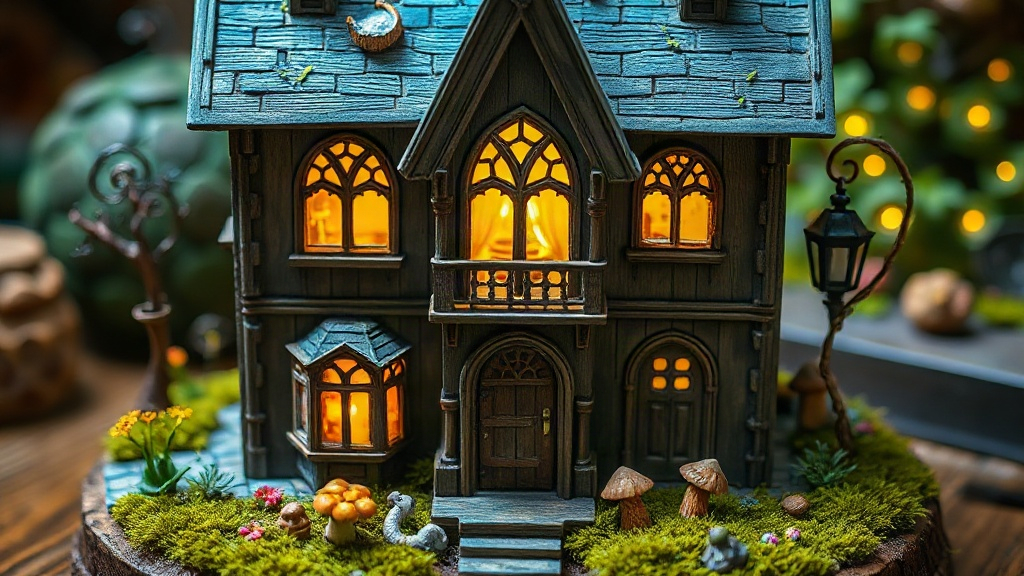
A fairycore miniature house kit isn’t just a dollhouse. It’s a doorway into a world where flowers bloom sideways, tiny doors open onto hidden glens, and every spiderweb catches golden light. The fairycore aesthetic has captivated makers for the past few years, blending Victorian dollhouse traditions with modern fantasy, woodland magic, and that deep human need to build something small and impossible. If you’ve scrolled through bookstagram or TikTok, you’ve seen them: enchanted little houses tucked into forest corners, draped in moss and surrounded by hand-crafted mushrooms. These kits bring that dream within reach.
I know that feeling firsthand. On a rainy Sunday in 2021, I sat down with a single Victorian dollhouse kit, no real plan, and zero woodworking experience. Three hours in, I had glue on my jeans, a slightly crooked roof, and the most absorbed, quietly joyful afternoon I’d had in years. That kit changed how I thought about making things. Every piece that followed has been me chasing that same feeling, and sharing it. Hannah Brooks, founder of this shop.
What Makes a Fairycore Miniature House Kit Different?
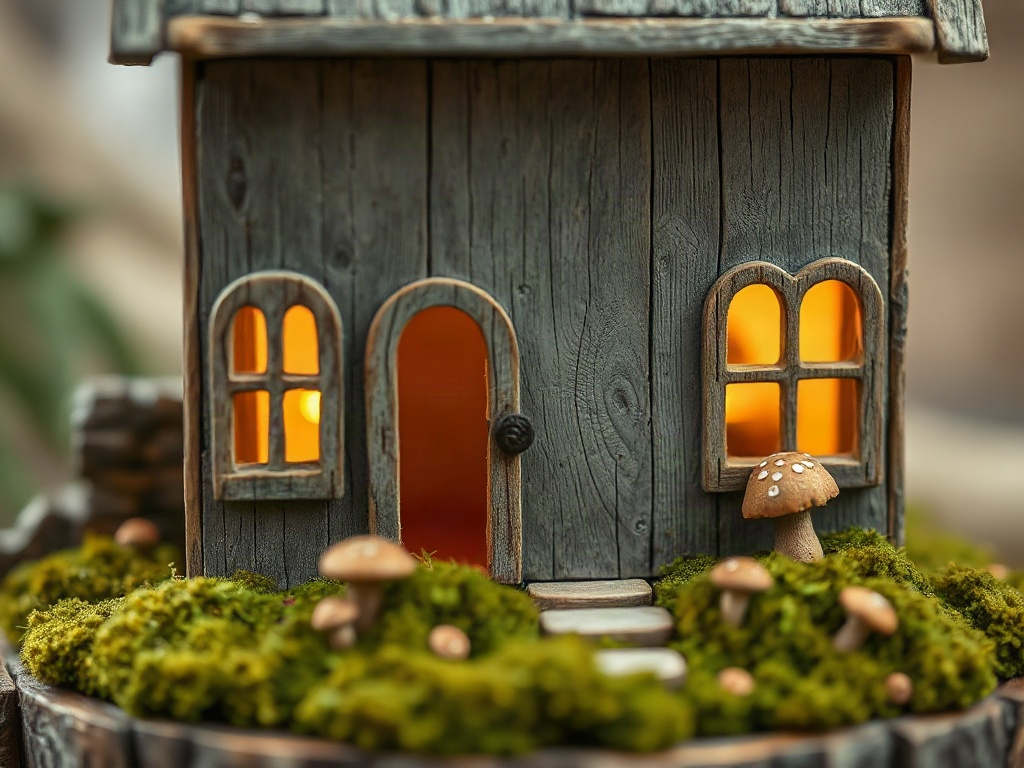
A fairycore miniature house kit differs from traditional dollhouses by embracing fantasy, asymmetry, and nature reclaiming structure, weathered wood, arched doorways, overgrown vines, and deliberate “imperfection” are the aesthetic, not mistakes to fix. Fairycore draws its power from contradiction. It’s gothic yet dreamy. Victorian yet wild. The aesthetic combines delicate, ornate architectural details with overgrown, nature-reclaiming materials. A typical fairycore dollhouse features weathered wood trim, arched doorways, round windows, and deliberately unfinished textures that suggest age and enchantment rather than pristine perfection.
Traditional miniature house kits focus on realism: perfect Victorian reproductions, modern homes scaled to precision. Fairycore kits flip that approach. They invite moss, asymmetry, and “imperfection” as features, not flaws. A fairycore kit might include materials for creating cracked plaster, vines creeping up walls, or tiny mushrooms growing at odd angles. The beauty lies in the decay, the mystery, the sense that magic happens in the margins.
Most kits include pre-cut wood pieces, assembly hardware, interior and exterior details, and often weathering materials or paints designed to age the structure. Some include LED lighting kits. Higher-end versions offer hand-cast resin elements: tiny doors, hinges, roof tiles, or decorative flourishes that elevate the final piece from hobby project to heirloom.
The Enchantment Factor: Why People Love Fairy Garden Miniature Kits
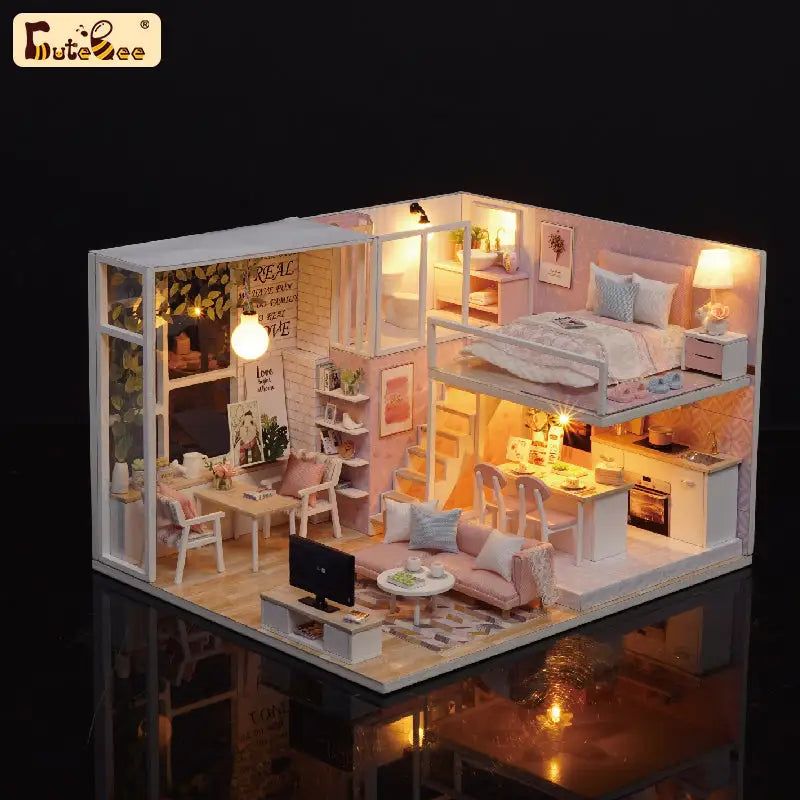
People love fairy garden miniature kits because the building process is meditative and grounding: hands stay busy, the mind quiets, and hours disappear in the best possible way. Ask a hobbyist why they build, and you’ll hear similar words: meditative, grounding, satisfying, peaceful. There’s something about holding a piece smaller than your palm, painting a tiny door frame, placing it just so in a moss-covered corner. Your hands stay busy. Your mind quiets. Hours disappear.
For gift buyers, fairycore kits hit different. They signal: I see you. I know you love fantasy, detail, and the quiet magic in small things. Unlike generic dollhouses, a fairy garden miniature kit appeals to adults who read fantasy novels, follow aesthetic blogs, and crave something handmade in a mass-produced world. They sit on desks, in reading nooks, on windowsills where they catch morning light and cast tiny shadows.
Some makers build a single kit and display it. Others collect, creating miniature worlds room by room. Communities form around the process. Builders share photos, techniques, custom-made add-ons, and “haunted house” challenges. The fairycore building community is vivid and welcoming, celebrating both technical precision and artistic experimentation.
Building Your First Fairycore Miniature House: Difficulty and Timeline
Beginner kits take 8 to 15 hours and need only a craft knife and glue; intermediate builds run 2 to 4 weeks; advanced projects can span 4 to 12 weeks and involve LED wiring and precision staining techniques. Difficulty scales widely. Here’s a quick reference so you can match the right kit to your schedule and skill level before you buy.
| Level | Build Time | Tools Needed | Best For |
|---|---|---|---|
| Beginner | 8 to 15 hours (1 to 2 weeks) | Craft knife, white glue, basic brushes | First-time builders, gift recipients, anyone who wants a finished piece quickly |
| Intermediate | 2 to 4 weeks part-time | Small saw, files, sandpaper, acrylic paints | Crafters with some hobby experience; rewarding challenge without being overwhelming |
| Advanced | 4 to 12 weeks | Precision tools, staining supplies, LED wiring basics | Dedicated miniaturists who enjoy slow, meticulous work and custom detailing |
Entry-level kits include pre-painted components, minimal gluing, and clear step-by-step instructions. No special tools required beyond a craft knife, basic glue, and patience.
Intermediate kits require painting, some staining, assembly of more complex parts, and integration of custom details. You might need a small saw, files, and paint brushes, but nothing beyond a hobbyist’s toolkit.
Advanced kits are closer to miniature architecture projects. They demand precision, custom painting techniques, understanding of scale and proportion, and often involve hand-staining wood, wiring for LED lighting, and creating bespoke details from raw materials. Browse our fairycore kits collection to see examples at each difficulty level.
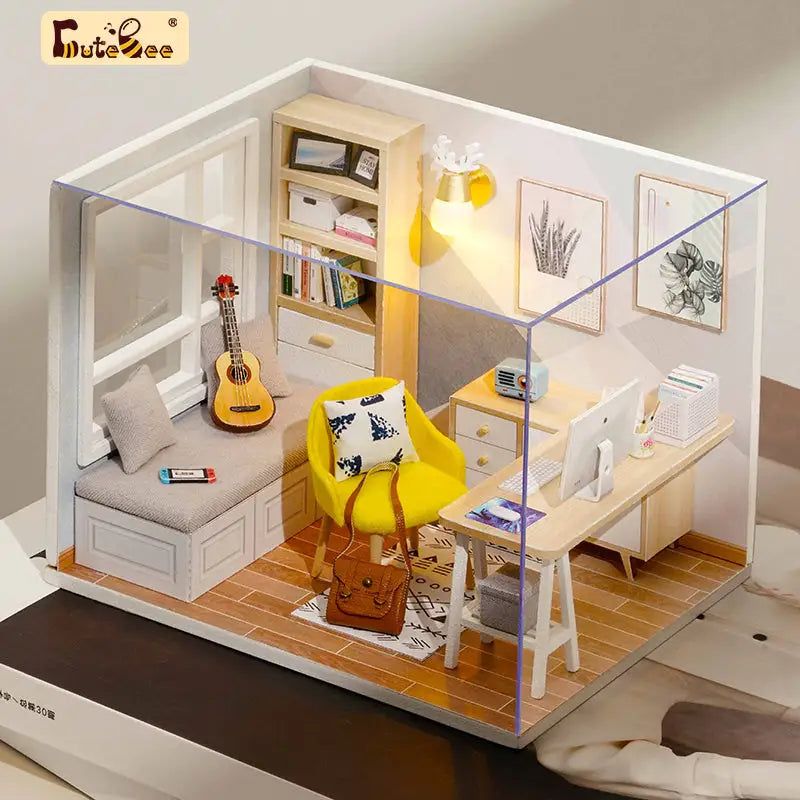
A beginner shouldn’t shy away from intermediate kits if they’re drawn to them. The building process teaches you; mistakes become character. A crooked doorframe. Paint that drips in interesting ways. Uneven weathering. These become part of the story.
Timeline matters for gift-giving. If you’re building a kit as a present and the recipient will unwrap it completed, budget for the full assembly duration plus buffer time. Many builders find that the 4 to 8-hour kit is the sweet spot: engaged enough to be rewarding, finished fast enough to deliver before the occasion fades.
The Elements That Create a Living Fairycore World
Warm LED lighting, consistent 1:12 scale, and layered weathering techniques, dry brushing, flock moss, and hand-sculpted botanicals, are the three core elements that turn a kit into a living fairycore world.
Lighting and Mood
Most quality kits offer LED options. Warm white lights (2700K to 3000K) feel intimate and magical. Cold whites risk making a fairycore house feel clinical. Some builders use multiple light sources: a glowing window, a lantern on the ground, backlighting on vines or moss. The kit’s wiring is usually thin and hides easily.
Scale and Proportion
Standard dollhouse scale is 1:12 (1 inch represents 1 foot). A fairycore miniature house kit uses this consistently, so all accessories fit together. This matters when sourcing extra details. A door that looks right in a 1:12 house looks cartoonish in 1:10 scale. Check your kit’s specifications before buying add-ons.
Weathering and Aging Materials
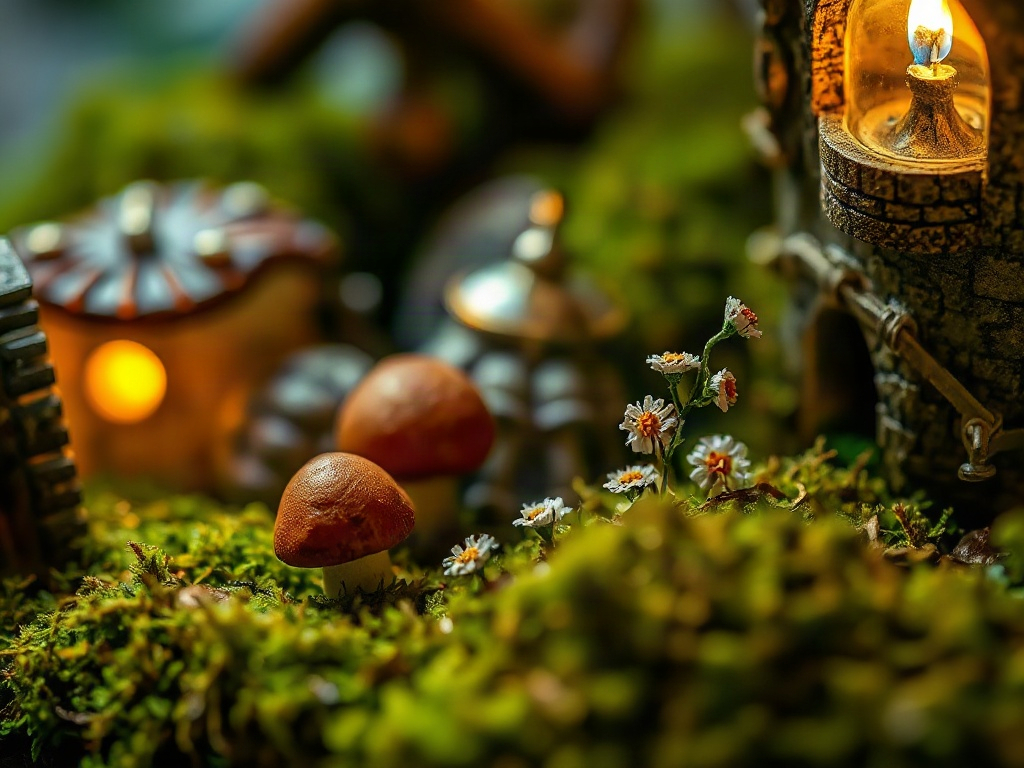
Fairycore thrives on contrast between structured (architecture) and untamed (nature). Use dry brushing (a barely-wet brush dragging paint across textured wood) to suggest age. Moss effect can come from model-making flock, real moss (if you live in a humid climate; it will dry and brown indoors), or synthetic moss from craft stores. Ivy, tiny flowers, and mushrooms are often pre-made resin pieces, but crafters also hand-sculpt from clay.
This is where kit quality matters. Cheaper kits provide bare wood and basic paint. Nicer kits include weathering pigments, specialty paints, and carefully selected materials that work together.
🪄 Hannah’s tip
If this is your first fairycore kit, resist the urge to rush weathering. Build first. Paint and detail second. Let each layer dry fully before adding the next. I’ve seen beautiful kits ruined by impatient layering, where moss effect smudges into the wood stain, or paint doesn’t grip properly. Patience here is the actual magic. Spend an afternoon on one wall if needed. Your hands will remember the shapes, the tiny hinges, the geometry of the space. That’s the meditative part people don’t capture in photos.
If this is your first fairycore kit, resist the urge to rush weathering. Build first. Paint and detail second. Let each layer dry fully before adding the next. I’ve seen beautiful kits ruined by impatient layering, where moss effect smudges into the wood stain, or paint doesn’t grip properly. Patience here is the actual magic. Spend an afternoon on one wall if needed. Your hands will remember the shapes, the tiny hinges, the geometry of the space. That’s the meditative part people don’t capture in photos.
🌿 From the workbench
The kit that changed everything for me personally was a cottage-style build with a thatched roof. I spent 45 minutes just on one window frame, painting three coats of a green-grey wash, sanding between each, trying to replicate the look of old painted wood that’s been rained on for decades. My partner walked in and asked if I was “still on the same tiny window.” I was. And honestly? That window is my favorite part of the whole house. The fairycore aesthetic rewards that kind of obsessive care in a way most hobbies don’t.
The kit that changed everything for me personally was a cottage-style build with a thatched roof. I spent 45 minutes just on one window frame, painting three coats of a green-grey wash, sanding between each, trying to replicate the look of old painted wood that’s been rained on for decades. My partner walked in and asked if I was “still on the same tiny window.” I was. And honestly? That window is my favorite part of the whole house. The fairycore aesthetic rewards that kind of obsessive care in a way most hobbies don’t.
📜 Did you know?
Miniature houses have existed for centuries. Victorian-era dollhouses were status symbols, tiny replicas of grand homes created for wealthy children (and sometimes their mothers). The craftsmanship was extraordinary: hand-carved furniture, silk wallpaper, and real brass hinges. Fairycore kits honor that tradition but flip the script. Instead of replicating reality in miniature, they build fantasy. The lineage is real, but the permission to invent? That’s new.
Miniature houses have existed for centuries. Victorian-era dollhouses were status symbols, tiny replicas of grand homes created for wealthy children (and sometimes their mothers). The craftsmanship was extraordinary: hand-carved furniture, silk wallpaper, and real brass hinges. Fairycore kits honor that tradition but flip the script. Instead of replicating reality in miniature, they build fantasy. The lineage is real, but the permission to invent? That’s new.
Making Your Fairy House Feel Real in Your Home
Display your finished fairy house on a dedicated shelf, position it where natural or lamp light catches the details, and consider a shadow box, glass case, or moss-covered base to frame it as a complete miniature world.
On the Shelf
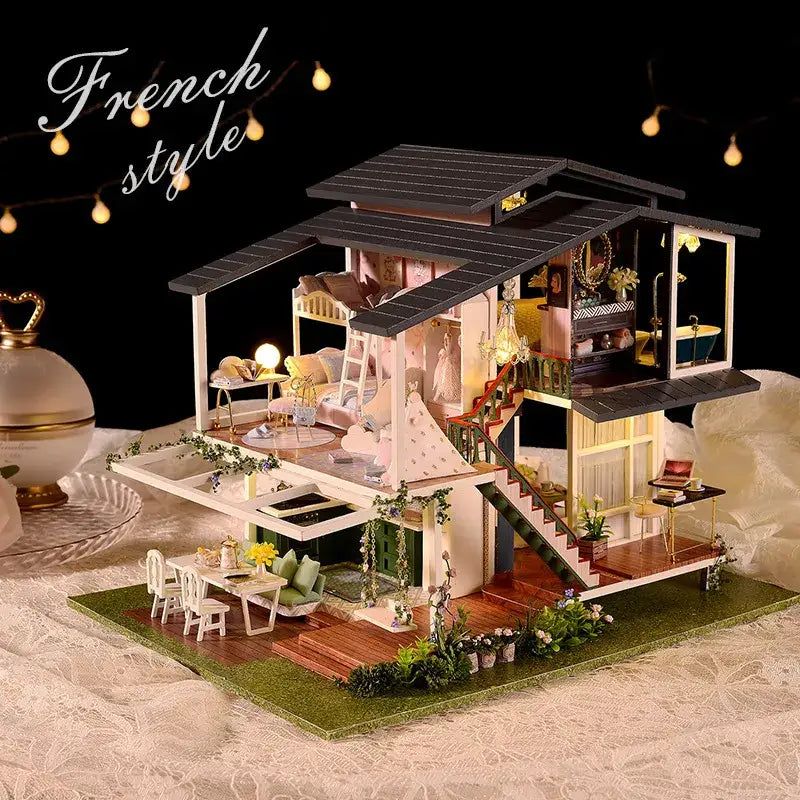
A fairycore house commands a shelf of its own. Clutter around it competes for attention. If you’re displaying on a bookshelf, consider it part of the scene. Stack relevant books nearby: fantasy novels, illustrated nature guides, poetry collections. Position the house so light (natural or a nearby lamp) highlights details.
Creating a Micro-Environment
Some builders place their finished kit in a small shadow box or glass case. This keeps it dust-free and creates a frame, which isolates the miniature world from the surrounding room. Others build a base: a wooden plinth, a moss-covered platform, or a terrarium-like setup with soil, stones, and real plants scaled to the miniature. This approach turns a single kit into an installation.
Care and Longevity
Once finished, fairycore houses are surprisingly durable if kept dry and away from direct sunlight (which fades paint and materials). Real moss indoors tends to brown; synthetic is more stable. LED lights, if included, rarely fail. Most builders report their kits lasting years with minimal maintenance. A light dusting with a soft brush keeps details crisp.
Why Fairycore Kits Matter to Makers and Collectors
Fairycore kits matter because you can’t automate or mass-produce one, every build is a slow, hands-on act of creation that generates deep personal attachment to the finished piece. The fairycore kit boom speaks to something real: a hunger for slowness, beauty, and agency. You can’t automate a fairycore house. You can’t buy one mass-produced. You build it, piece by piece, decision by decision. That labor creates attachment.
Fairycore appeals across ages and backgrounds because it asks one simple question: what happens if you give yourself permission to make something magical, something impractical, something that serves only beauty and wonder? If this calls to you, explore our carefully curated fairycore and fantasy-aesthetic kit collection, selected for quality, design, and the stories they invite.
Frequently Asked Questions about Fairycore Miniature House Kits
Everything you might be wondering (click a question to expand).
What’s the difference between a fairycore kit and a traditional dollhouse kit?
A traditional dollhouse kit aims for realistic scale reproduction: tidy rooms, clean finishes, familiar architecture. A fairycore miniature house kit deliberately embraces fantasy, asymmetry, and nature reclaiming structure. Think mossy rooftops, arched doorways into hidden glens, vines crawling over windowsills. The goal isn’t a perfect replica of a real house; it’s a house that feels like it belongs in a fairy tale. Materials also differ: fairycore kits often include weathering pigments, flock moss, and resin botanical elements you won’t find in a standard kit.
Do I need special tools to build a fairycore kit?
No. Most entry and intermediate kits require only craft basics: a utility knife, small scissors, woodworking glue, acrylic paint, brushes, and sandpaper. You might invest in a hobby saw for precision cuts on advanced kits, but it’s not mandatory. Many builders use hand tools exclusively.
How long does a fairycore house take to build?
This depends on difficulty and your pace. Beginner kits take 8 to 20 hours over 1 to 2 weeks. Intermediate kits take 4 to 8 weeks of part-time work. Advanced kits can take several months if you’re a perfectionist. Speed isn’t the point; the process is.
Can I customize a kit after I buy it?
Absolutely. The base kit is your foundation. Many builders add extra details: hand-sculpted furniture, custom paint finishes, additional landscaping, or commissioned resin pieces from other artisans. Fairycore thrives on personalization. Online communities like r/miniatures on Reddit regularly share customization ideas and sourcing tips.
Are fairycore kits good gifts?
Yes, if the recipient enjoys hands-on creative projects. They’re not passive decorations; they require engagement. A gift-ready kit should include clear instructions, quality materials, and a realistic timeline. Someone who loves fantasy books, nature aesthetic, or miniatures will likely treasure both the building process and the final result.
Where do I find additional miniature details for my fairycore house?
Online communities (like r/miniatures on Reddit) and platforms like Etsy sell custom resin pieces, hand-sculpted elements, and specialist materials. Many fairycore builders collaborate with artisans to source rare or custom details. Check your kit’s scale (typically 1:12) to ensure compatibility.
Your Fairycore Journey Starts Here
A fairycore miniature house kit is an invitation to slow down, build something impossible by hand, and end up with a finished world small enough to hold yet large enough to imagine yourself into. A fairycore miniature house kit is an invitation. To slow down. To build something impossible. To let your hands and mind work together on a scale small enough to hold, large enough to imagine yourself into.
The kits in our collection balance quality materials, clear instructions, and design that celebrates both precision and the beautiful chaos of magic. Start with the difficulty level that matches your interest, not your fear. A beginner kit finished is better than an advanced kit abandoned.
The fairycore community is generous with techniques, encouragement, and shared wonder. Your first house won’t be perfect. It will be exactly right. And once it sits on your shelf, catching light, you’ll understand why thousands of makers have chosen to slow down and build a world small enough to fit in your hands. Explore our fantasy-themed miniature collection and find your next project today.