🎁 Buy 2 kits, get the 3rd FREE · Free shipping on every order

Best Hobby Knife for Miniature Kits: X-Acto vs. the Top Alternatives
X-Acto, Swann-Morton, Excel, or Tamiya: which hobby knife actually gives you the cleanest cuts on miniature kits? Hannah breaks down blade types, handle ergonomics, and the real differences that show up at 1:12 scale.

Pick up the wrong blade and a balsa wall crumbles, a scored hinge tears, or a delicate window frame snaps clean off. The best hobby knife for miniature kits is not the one sitting on the shelf at every craft store by default. It is the one that matches your blade style, your hand size, and the specific cuts your current project demands. After years of building Victorian dollhouses, Tudor cottages, and tiny café scenes, I have worked through more handles and blades than I can count. Here is what I actually learned, including a few things I wish someone had told me before I ruined my first set of pre-cut basswood window frames.
Why Your Cutting Tool Makes or Breaks a Miniature Build
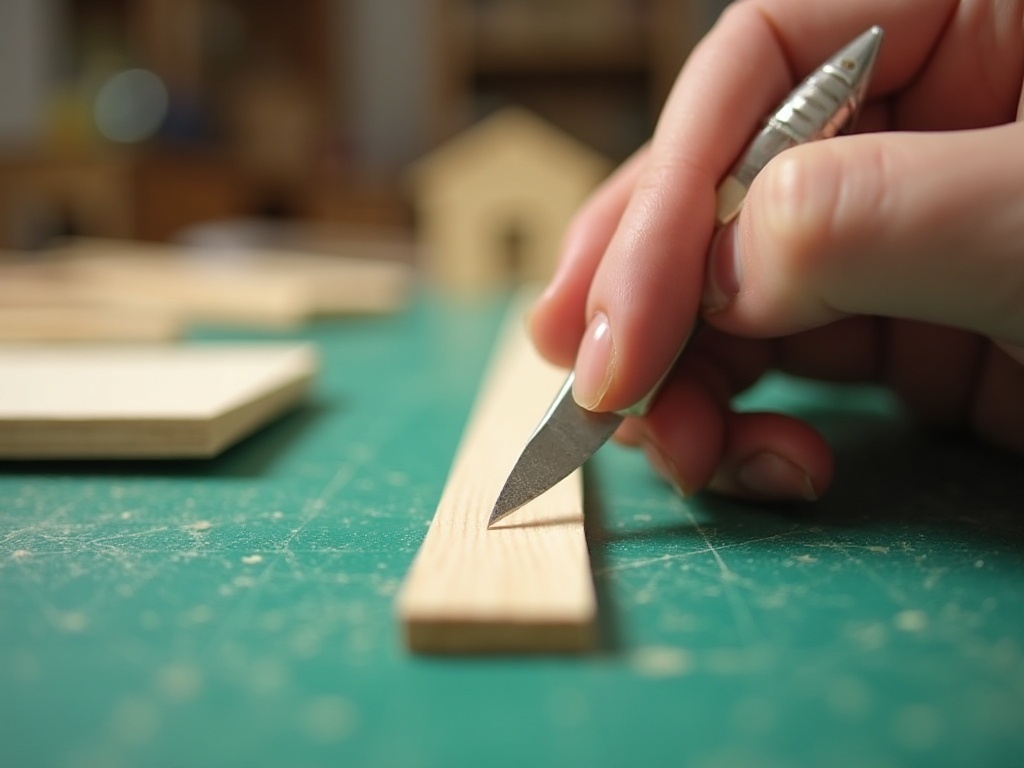
Your cutting tool is the single biggest factor in miniature build quality: at 1:12 scale, a 0.5 mm gap becomes a gaping crack, precision cutting is the baseline, and a handle that causes fatigue puts micro-tremors into every scored strip and paper panel. Miniature construction is unforgiving at 1:12 scale. A gap of 0.5 mm that would vanish in a full-size woodworking project becomes a gaping crack in a bay window sill. Precision cutting is not a luxury; it is the baseline.
The blade does most of the work, but the handle determines how long you can work comfortably before fatigue sets in. A heavy, unbalanced handle puts micro-tremors into your cuts after about 20 minutes. Those tremors show up as slight angle drift on scored basswood strips and as frayed edges on paper interior panels.
The meditative rhythm of a miniature build, that quiet, focused state where an hour disappears without notice, only happens when your tools stop fighting you. A knife that slips, skips, or requires excessive pressure pulls you straight out of that flow. I noticed this vividly on my first Victorian dollhouse: I spent more time wrestling a loose-chuck X-Acto than actually building, and the frustration killed the mood entirely. Once I found a handle that fit my hand, the building became the thing I looked forward to all week.
✨ Hannah’s tip
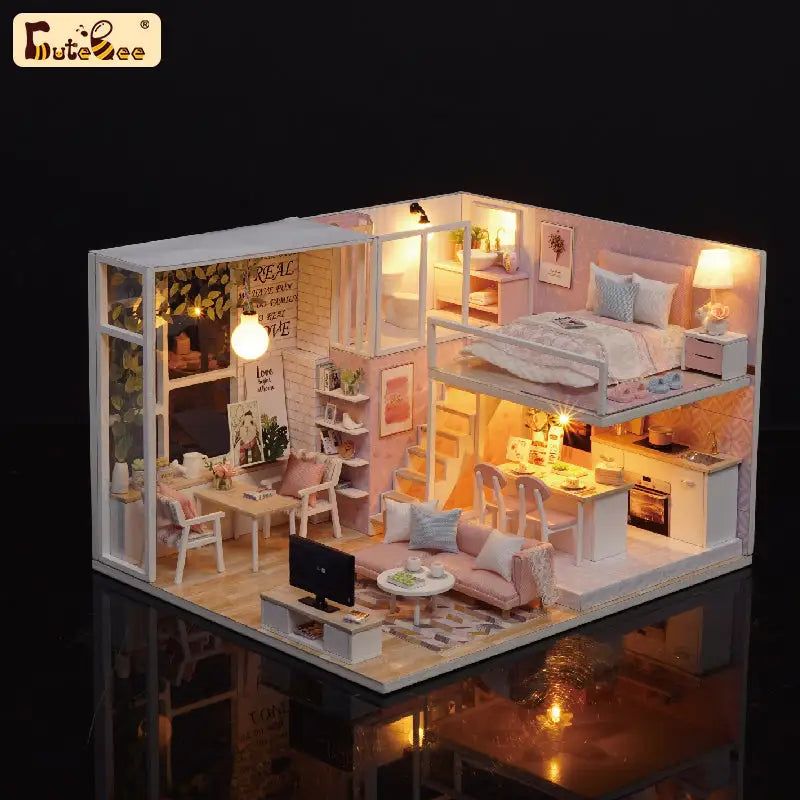
The Tranquil Life kit below is one of the gentlest introductions to miniature cutting I know. Its pre-scored basswood pieces let you focus on understanding how blade angle and pressure affect the material, without the stress of freehanding every measurement. Perfect for getting a feel for your new knife before tackling anything more ambitious.
The Tranquil Life kit below is one of the gentlest introductions to miniature cutting I know. Its pre-scored basswood pieces let you focus on understanding how blade angle and pressure affect the material, without the stress of freehanding every measurement. Perfect for getting a feel for your new knife before tackling anything more ambitious.
Bestseller cottage kit
Tranquil Life DIY Miniature House Kit
$67.90
Ideal for practicing blade control on pre-scored basswood; great first build for any skill level.
X-Acto No. 1: The Benchmark Everyone Measures Against
The X-Acto No. 1 is the default precision knife in North American craft rooms: its narrow aluminum barrel mimics a pencil grip, its No. 11 blade excels on balsa up to 1/8 inch thick, but its thin handle causes cramping on long sessions and its collet chuck loosens over time. The X-Acto No. 1 handle has been the default precision knife in North American craft rooms since the 1930s. Its aluminum barrel is narrow (roughly 3/8 inch in diameter), which makes it feel like holding a pencil. For crafters who sketch or letter, that grip transfers naturally.
What the No. 11 blade does well
- Extremely fine, pointed tip for piercing thin sheets and scoring fold lines on paper components.
- Widely available; replacement 100-packs cost around $12-$15, making per-blade cost negligible.
- Works well on balsa wood up to about 1/8 inch thick, thin cardstock, acetate, and foam sheets.
Where X-Acto falls short for miniature kit builders
- The thin handle becomes uncomfortable during long sessions cutting basswood furniture pieces. Fingers cramp around the narrow barrel.
- The collet-style chuck loosens over time. Blade wobble at that scale is a real problem.
- Swapping blade types mid-build (say, from a pointed No. 11 to a curved No. 22 for convex cuts) takes 30-45 seconds and requires careful finger placement near a sharp edge.
✨ Hannah’s tip
Keep two handles on your mat simultaneously: one loaded with a fresh No. 11 for straight cuts, one with a No. 22 curved blade for rocker cuts on curved roof shingles or rounded furniture legs. Swapping blades mid-momentum is where fingers get nicked. Two handles costs you about $10 total and saves a lot of band-aids.
Keep two handles on your mat simultaneously: one loaded with a fresh No. 11 for straight cuts, one with a No. 22 curved blade for rocker cuts on curved roof shingles or rounded furniture legs. Swapping blades mid-momentum is where fingers get nicked. Two handles costs you about $10 total and saves a lot of band-aids.
The Serious Alternatives Worth Testing
Swann-Morton No. 3 Handle + 10A Blade
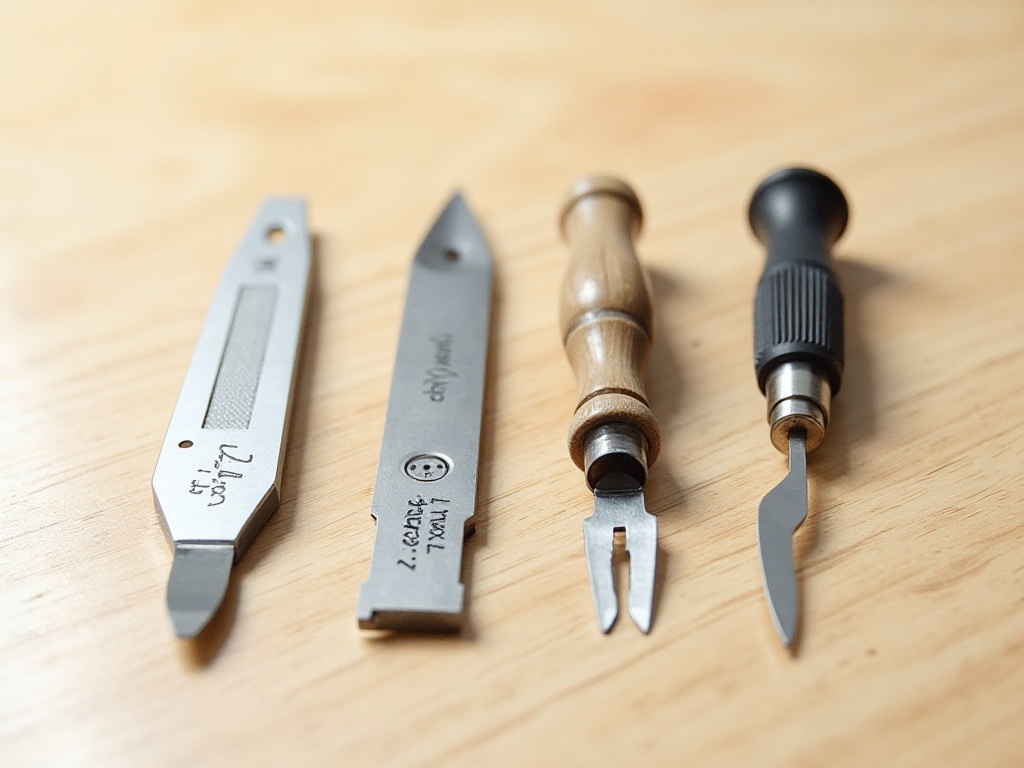
Swann-Morton is a Sheffield, UK surgical instrument maker. Their No. 3 handle is slightly longer and heavier than the X-Acto No. 1, which actually helps with control on long, straight cuts across basswood planks. The 10A blade is nearly identical in profile to the X-Acto No. 11, but the steel is harder (a higher Rockwell hardness typical of surgical-grade carbon steel), so the edge holds longer before it starts to drag.
The catch: blades come in packs of 5 or 100. The 100-pack runs about $18-$22 from surgical supply distributors, slightly pricier per blade than X-Acto. For most hobbyists, a pack of 100 lasts the better part of a year. Given how much longer each 10A edge stays crisp compared to a standard No. 11, the real cost difference is smaller than it looks on paper.
Excel Blades K1 Handle
Excel makes a direct X-Acto-compatible handle with a knurled aluminum grip that is noticeably thicker at the base (about 1/2 inch versus X-Acto’s 3/8 inch). That extra width spreads finger pressure across more surface area, which reduces fatigue on 90-minute build sessions. It accepts standard No. 11, No. 22, and No. 26 blades without adapters. Street price is around $6-$8.
Community feedback from our kit builders has been consistently positive. Several crafters working on our miniature building accessories collection switched to Excel handles specifically for the grip improvement and reported cleaner cuts on delicate laser-cut basswood parts. One builder who completed both the Tranquil Life kit and a more advanced tudor build told me the Excel handle was the single change that made the second build feel noticeably more controlled.
✨ Hannah’s tip
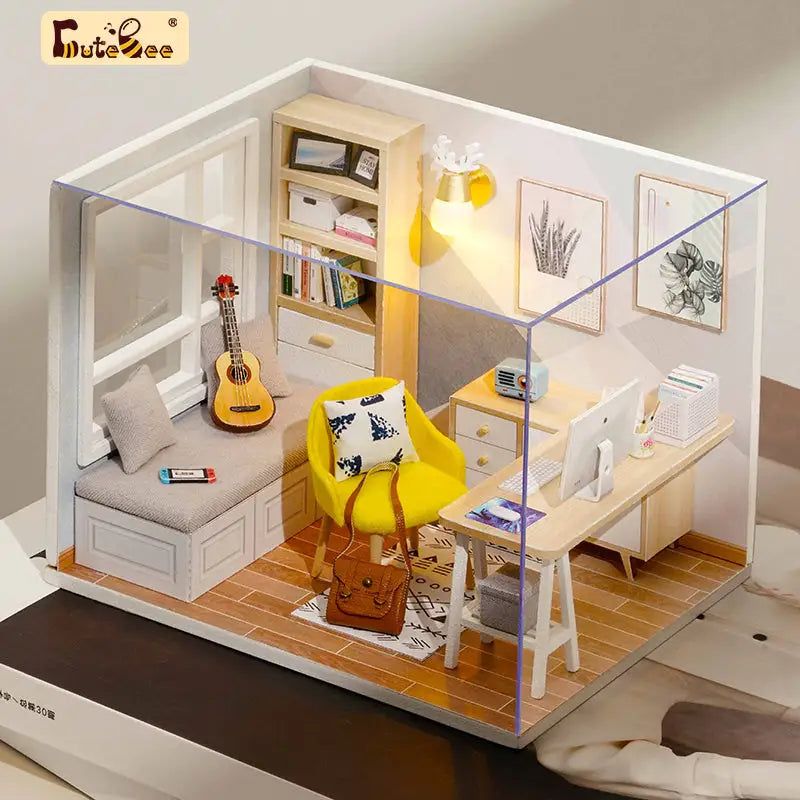
If you are starting out and want a kit that rewards careful, confident cuts, the Sun Room is a beautiful choice. Its open-plan layout means your cutting work stays visible in the finished piece, which is genuinely motivating when you nail a clean window trim.
If you are starting out and want a kit that rewards careful, confident cuts, the Sun Room is a beautiful choice. Its open-plan layout means your cutting work stays visible in the finished piece, which is genuinely motivating when you nail a clean window trim.
Easy starter under $50
Sun Room DIY Miniature House Kit
$49.99
Open-plan design makes every clean cut visible in the finished piece; great motivation for new builders.
Tamiya Modeler’s Knife
Designed for plastic model kits, the Tamiya modeler’s knife has a wider, flatter grip that resembles a mechanical pencil more than a scalpel. It excels at controlled pushing cuts on thin styrene and light ABS plastic miniature components. For predominantly wood and paper kits, it is less ideal because the blade angle favors a push rather than a pull stroke, which goes against the grain of natural wood cutting instincts.
That said, if your miniature build includes plastic window glazing, a Tamiya knife scoring thin acetate is noticeably cleaner than an X-Acto pulled at high speed.
Fiskars Pro Carving Knife (Compact)
A niche pick, but worth mentioning for crafters whose kits include soft wood carving. The Fiskars compact carving knife has a fixed blade (no chuck to loosen), a rubberized grip that absorbs vibration, and a blade profile optimized for push-carving rather than slicing. For adding hand-carved texture to wooden miniature beams or rustic furniture, it outperforms any scalpel-style knife. For precision cutting of pre-measured kit strips, it is overkill.
📜 Did you know?
The X-Acto knife was originally patented in 1931 by Sundel Doniger, a Polish-American inventor, and was first marketed as a tool for retouching photographic negatives. Miniature model builders and architects began adopting it in the 1940s and 1950s for precision cutting, and by the 1960s it had become standard in hobby shops across North America. Its original design has changed very little in nearly a century.
The X-Acto knife was originally patented in 1931 by Sundel Doniger, a Polish-American inventor, and was first marketed as a tool for retouching photographic negatives. Miniature model builders and architects began adopting it in the 1940s and 1950s for precision cutting, and by the 1960s it had become standard in hobby shops across North America. Its original design has changed very little in nearly a century.
If you enjoy projects that push your cutting precision into genuinely intricate territory, book nook kits are worth exploring next. Their layered paper and wood depth scenes require the same blade discipline as a complex dollhouse, but the finished piece sits on your shelf like a tiny portal into another world. Our full book nook collection covers everything from cosy library scenes to enchanted forest interiors.

Explore the collection
All Book Nook Kits
76 handcrafted book nook kits
Layered paper and wood scenes that reward precise blade work. A natural next challenge once your knife technique is solid.
Blade Types and When to Use Each
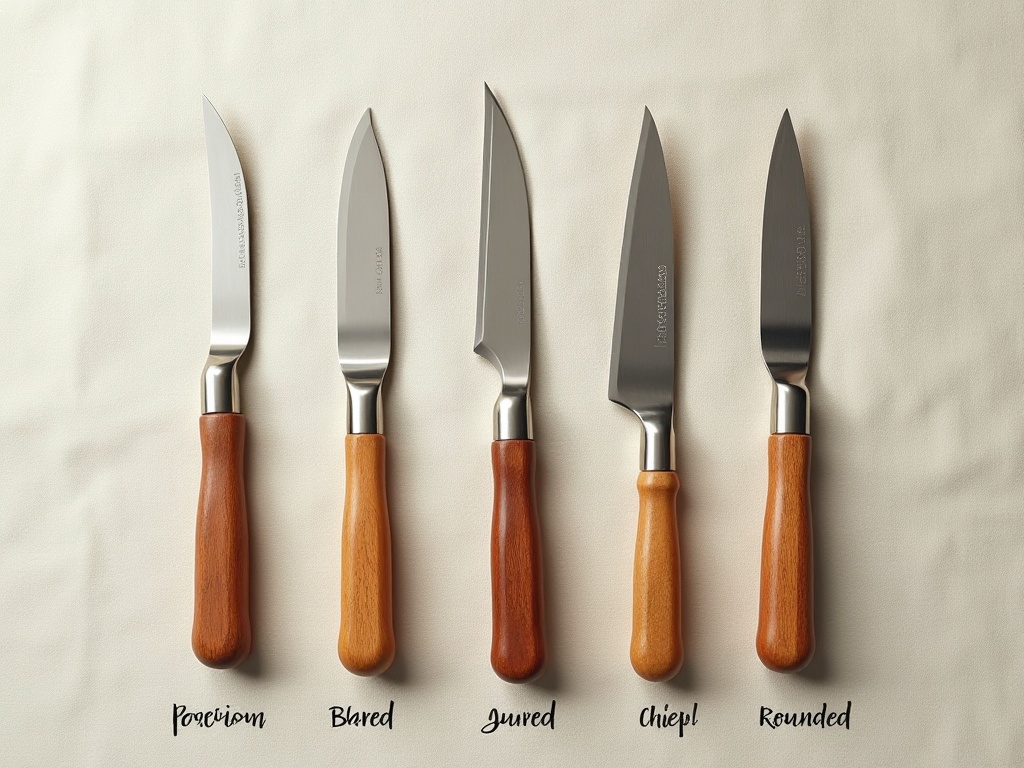
Blade shape decides whether a cut succeeds or fails: the No. 11 handles scoring and straight cuts, the No. 22 manages curves, the No. 24 cleans glue seams, the No. 26 trims fabric and wallpaper, and the Swann-Morton 10A outlasts them all on edge retention. The handle choice matters, but blade shape is what determines whether a cut succeeds or fails. Here is a practical reference for the best hobby knife for miniature kits blade selection:
A practical rule: change blades more often than feels necessary. A dull blade requires more pressure, which pushes material sideways instead of cutting through cleanly. For laser-cut basswood kits, I swap to a fresh No. 11 after every 30-40 minutes of active cutting. It feels wasteful at first. It is not. The difference in edge quality shows up most clearly on the thin, pre-printed paper wallpaper panels that come in many of our kits: a fresh blade glides; a tired one drags and tears.
How to Choose Based on Your Kit Difficulty Level
Match your hobby knife to your kit’s difficulty: beginners need only a fresh No. 11 blade in an X-Acto or Excel handle; intermediate builders gain from a wider grip and a curved blade; advanced kits reward surgical-grade Swann-Morton steel paired with a second chisel-profile handle for seam cleanup. Not every knife suits every builder. Here is a quick match guide based on the kit difficulty ratings we use across our miniature house kits. Think of it as a starting point, not a rulebook. Your hands will tell you what feels right after the first session.
- Beginner kits (Difficulty 1-2/5): X-Acto No. 1 with No. 11 blades is perfectly adequate. These kits use pre-scored pieces and require minimal freehand cutting. Focus on keeping blades fresh rather than upgrading your handle.
- Intermediate kits (Difficulty 3/5): Consider the Excel K1 handle for its improved grip. You will spend 3-5 hours cutting on a single kit, and fatigue becomes a real factor. Introduce a No. 22 blade for any curved components.
- Advanced kits (Difficulty 4-5/5): Swann-Morton handles paired with 10A blades, plus a second handle loaded with a No. 24 chisel for seam cleanup. Precision at this level rewards surgical-grade steel. Keep a self-healing cutting mat sized at least 12×18 inches; smaller mats force awkward angles.
Pairing the right knife with a quality self-healing cutting mat makes a measurable difference in straight-line accuracy. The mat grip prevents material from shifting mid-cut, which is the silent cause of most alignment errors at scale.
Our miniature greenhouse kits sit at the more intricate end of the difficulty spectrum. Their transparent acrylic panels require clean, confident scoring cuts, and the structural frames demand precise strip-wood trimming. If you have got your blade discipline dialed in and want a build that genuinely shows off that skill, these are worth a look.

Rare in the niche
Miniature Greenhouse Kits
22 LED-lit greenhouse builds
Acrylic panels and precise strip-wood frames make these a genuine test of your cutting precision. Best tackled once you have a solid blade-change habit established.
Premium collector piece
Monet’s Garden DIY Miniature House Kit
$155.00
One of the most intricate builds in the collection; rewards experienced blade handling and patience.
Frequently Asked Questions about Hobby Knives for Miniature Kits
Everything you might be wondering about choosing the best hobby knife for miniature kits (click a question to expand).
How often should I replace blades when cutting miniature kit parts?
More often than most beginners expect. For active cutting sessions on basswood or balsa, replace the blade every 30-40 minutes. A blade that feels “still sharp” to the touch can already be leaving compressed, slightly ragged edges that show up once the kit is assembled and painted. Blade packs are cheap. Restarting a damaged component is not.
Can I use a box cutter or a kitchen knife instead of a hobby knife?
Not practically. A box cutter blade is too thick to score thin basswood strips without splitting the grain, and its wide body prevents close work near glued joints. Kitchen knives are ground for slicing food, not for controlled precision cuts at 1:12 scale. A dedicated hobby knife for miniature kits with a fine-pointed blade is genuinely the right tool for this job, not a luxury upgrade.
Is the X-Acto No. 1 handle the same as the No. 2?
No. The No. 1 handle is the standard slim aluminum barrel (roughly 5 inches long) that accepts small precision blades like the No. 11. The No. 2 handle is heavier, slightly longer, and designed for larger blades (No. 22 and up). For miniature kit work, the No. 1 is the correct starting handle. The No. 2 is better suited to model airplane work and heavier balsa carving.
Do safety scalpel handles (with retractable blades) work for miniature building?
Retractable-blade safety scalpels are excellent for safety but mediocre for control. The mechanism adds slight play to the blade-to-handle connection, which translates to micro-wobble on fine cuts. For casual hobbyists cutting infrequently, the safety benefit outweighs the precision loss. For builders working through complete kits over many hours, a standard collet chuck with a safe blade-change habit (always use the blade foil or a hemostat, never bare fingers) gives better results.
What accessories should I buy alongside a hobby knife for miniature kits?
Three things that directly improve cut quality: a self-healing cutting mat (12×18 inches minimum), a metal ruler with a cork back (the cork prevents sliding, which is the main cause of ruler-guided cut drift), and a set of spare blades in at least two profiles (No. 11 and No. 22). You can find these, along with precision scissors and bone folders for paper components, in our complete accessories collection.
What is the best hobby knife for a complete beginner starting their first miniature kit?
Start with an Excel K1 handle loaded with No. 11 blades. It costs about $6-$8, offers a slightly wider grip than the standard X-Acto barrel (which reduces hand fatigue on your first long session), and accepts all the common blade types you will need as your kits get more complex. Pair it with a 100-pack of blades and commit to swapping frequently. That single habit, fresh blades, will do more for your cut quality than any handle upgrade.
Building a Toolkit That Grows with Your Projects
Start with one good handle, a fresh pack of No. 11 blades, and the discipline to swap blades regularly: that single habit puts you ahead of most beginners, and adding a second curved-blade handle is the natural next step as your builds grow in complexity. Start with one good handle, a fresh pack of No. 11 blades, and the discipline to swap blades regularly. That alone puts you ahead of most beginners. As your builds get more complex, adding a second handle loaded with a curved blade becomes the natural next step, not an upgrade for its own sake but a response to what the project actually asks of you.
The best hobby knife for miniature kits is ultimately the one that disappears in your hand. When you stop noticing the tool and only notice the kit taking shape in front of you, that quiet, absorbed focus that makes a Saturday afternoon feel like five minutes, that is when the right setup is working. Pair it with sharp blades, a stable cutting surface, and good light, and the rest follows naturally.
I have been building long enough to know that the difference between a frustrating session and a genuinely joyful one often comes down to something as simple as a fresh blade and a handle you actually like holding. Get those two things right first. Everything else is refinement.
Ready to put your new knife skills to work? Browse our full range of miniature house kits, from beginner-friendly cottages to intricate collector builds, and find the one that calls to you. Or explore our tools and accessories collection to complete your setup before your first cut. Every kit we carry has been tested at my own workbench, so you can trust there are no nasty surprises waiting inside the box.