🎁 Buy 2 kits, get the 3rd FREE · Free shipping on every order

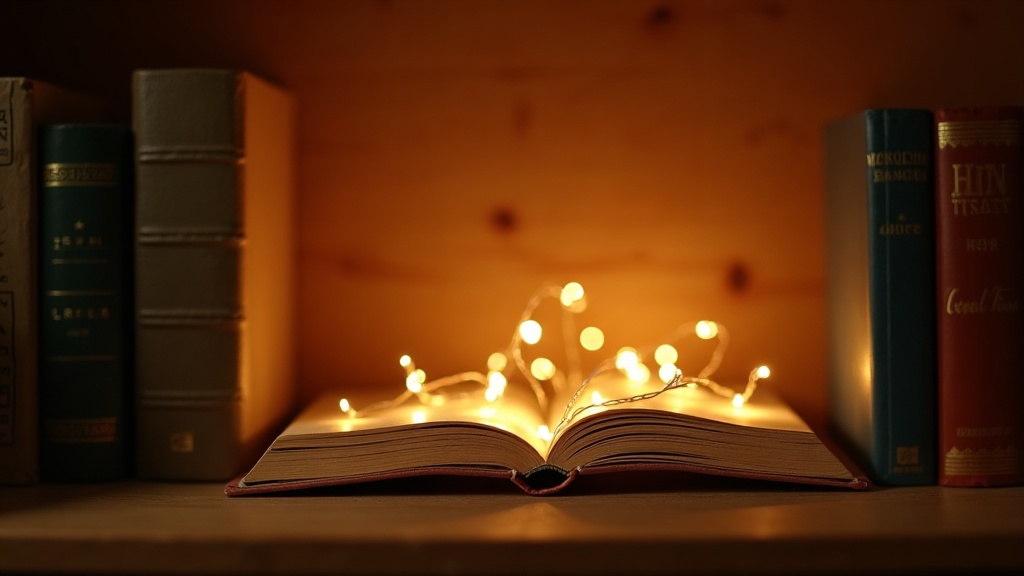
Best LED Lights for Book Nooks: Battery vs USB Options Compared
Not all LED lights work equally well inside a book nook insert. This guide breaks down the best LED lights for book nooks in 2026, comparing battery-powered and USB options so you can light your miniature scene exactly the way you imagined it.

Finishing your book nook build is incredibly satisfying. Painting is done, furniture is placed, tiny details are glued in. Then you switch on the lights, and either the whole scene comes alive or it looks flat and wrong. Choosing the best LED lights for book nooks is genuinely the step that separates a good build from a great one, and it comes down to fewer variables than you might think.
This guide covers what actually matters when picking miniature LED lighting in 2026: color temperature, power source, wire gauge, heat output, and where to put each type of light for maximum effect. Battery versus USB is the central debate, and both have real strengths depending on your shelf setup. Read both sections before you decide. If you are still choosing a base kit to light up, our book nook kits collection is a good place to start before committing to a power approach.
Why Lighting Changes Everything in a Miniature Scene
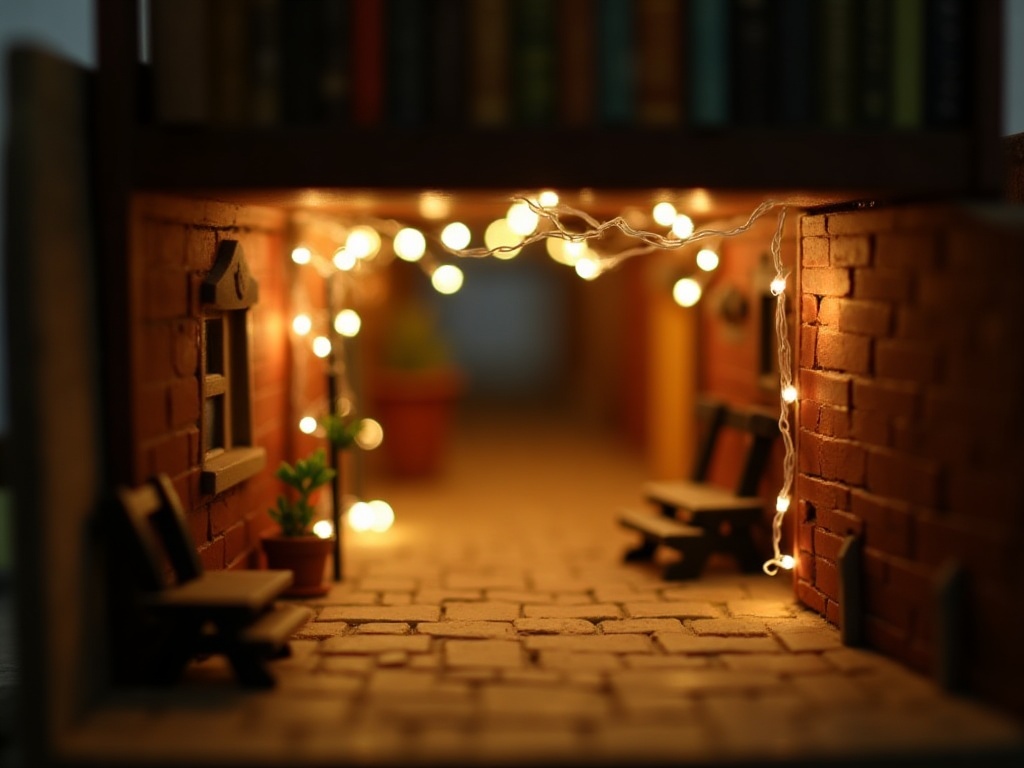
Lighting transforms a miniature scene by creating perceived depth, shadow, and atmosphere that flat overhead light simply cannot deliver, a warm glow behind a tiny window makes even a simple build feel like a real, inhabited world. A book nook is essentially a diorama squeezed into a few inches of depth. Shadows and highlights do the heavy lifting. Without light, even the most detailed miniature scene reads as a flat rectangle on the shelf. Add a warm glow behind a tiny window, and suddenly there is perceived depth, atmosphere, and life in there.
The key word is “perceived.” You are not actually illuminating a real room. You are tricking the viewer’s eye. That means the placement of your light source matters as much as the light itself. A single point of light from the back of the scene creates a dramatically different mood than a diffused strip along the top edge. This is something I discovered the hard way during my first Victorian dollhouse build: I placed a single LED dead-center in the back wall, expecting warmth, and got a harsh interrogation-room spotlight instead. Moving it behind a frosted acetate panel changed everything.
- Warm white (2700K-3000K): Best for cottage, tavern, library, and vintage scenes. Mimics candlelight or old tungsten bulbs.
- Cool white (5000K-6500K): Works well for futuristic, hospital, or modern urban scenes. Can feel clinical if overused.
- Amber or orange-tinted LEDs: Ideal for fireplace effects or Halloween builds. Not a universal choice.
- RGB addressable LEDs: Flexible for themed builds, but controlling them adds complexity. Good for experienced builders.
For most beginner and intermediate builds, a warm white in the 2700K-3000K range is the starting point. It forgives imperfect painting and makes wood tones and brick textures look richer than they really are. Builders in our community consistently say this was the single tweak that “finally made my build look like the photos.” It is not magic; it is just the right temperature.
📜 Did you know?
The concept of the book nook insert was popularized in the early 2010s by Japanese and Korean craft communities who called them “book shelf dioramas.” By 2023, the global market for miniature hobby kits had grown to over $2 billion annually, with lighting accessories becoming one of the fastest-growing subcategories in the craft supply space.
The concept of the book nook insert was popularized in the early 2010s by Japanese and Korean craft communities who called them “book shelf dioramas.” By 2023, the global market for miniature hobby kits had grown to over $2 billion annually, with lighting accessories becoming one of the fastest-growing subcategories in the craft supply space.
The Tranquil Life DIY Miniature House Kit is one of the clearest examples in our range of why warm lighting matters at a kit level. It ships with a pre-routed wire channel and a recommended 2800K LED strip length because the interior wall finish (a warm cream plaster texture) would wash out completely under anything cooler. The kit is designed around its lighting, not the other way around.
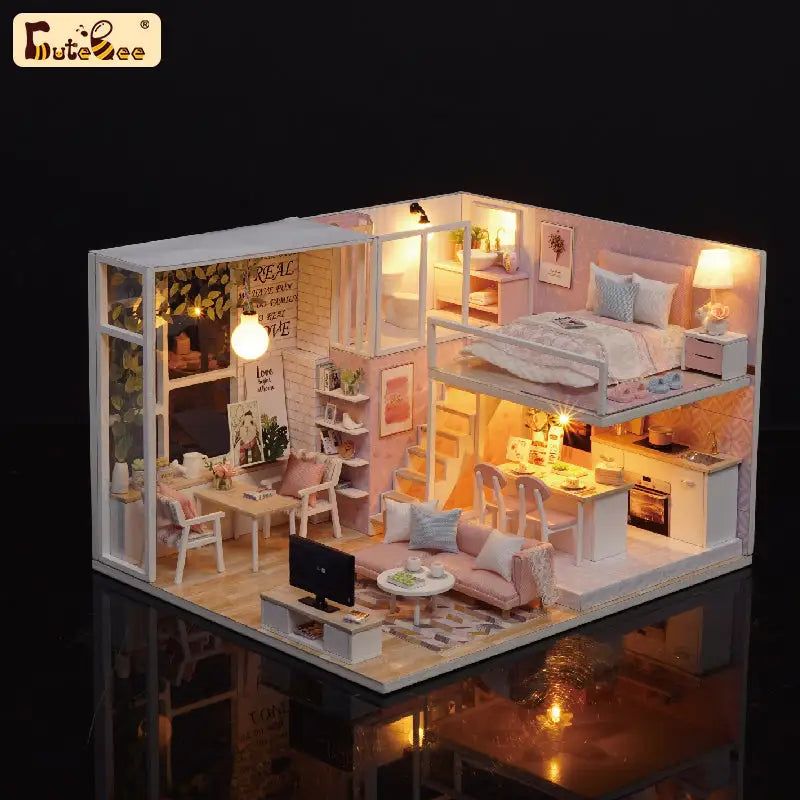
Bestseller cottage kit
Tranquil Life DIY Miniature House Kit
Pre-routed wire channel. Designed for 2700K-3000K warm white LEDs. Interior cream-plaster finish looks best under warm light.
$67.90
Battery-Powered LED Lights: Portability and Placement Freedom
Battery-powered LEDs are the best choice for book nook builds placed away from an outlet, offering complete cord-free display with a simple setup that requires no cable management, just tuck the battery box behind the scene and you are done. Battery-powered LEDs are the default choice for shelf builds that sit away from a power outlet. No cord running down the spine of your books, no cable management headache. You place the book nook, tuck the tiny battery box behind it, and that is the whole setup.
The most common battery options for book nook LED lighting are CR2032 coin cells, AAA packs, and rechargeable LiPo pouches. Each has a different trade-off on runtime versus size.
CR2032 Coin Cell Packs
These are the smallest option physically. A two-cell CR2032 holder is roughly the size of a thick button, which means it can hide inside the build itself or right at the back wall. Runtime on a single CR2032 pair runs roughly 8-15 hours depending on how many LEDs you power.
The limitation is that coin cells die faster than people expect. If you leave your book nook lit for two to three hours every evening, you will be swapping batteries every three to five days. Annoying and costly over time. This format works best for display builds that only get lit for short periods, like during a dinner party or a photo shoot.
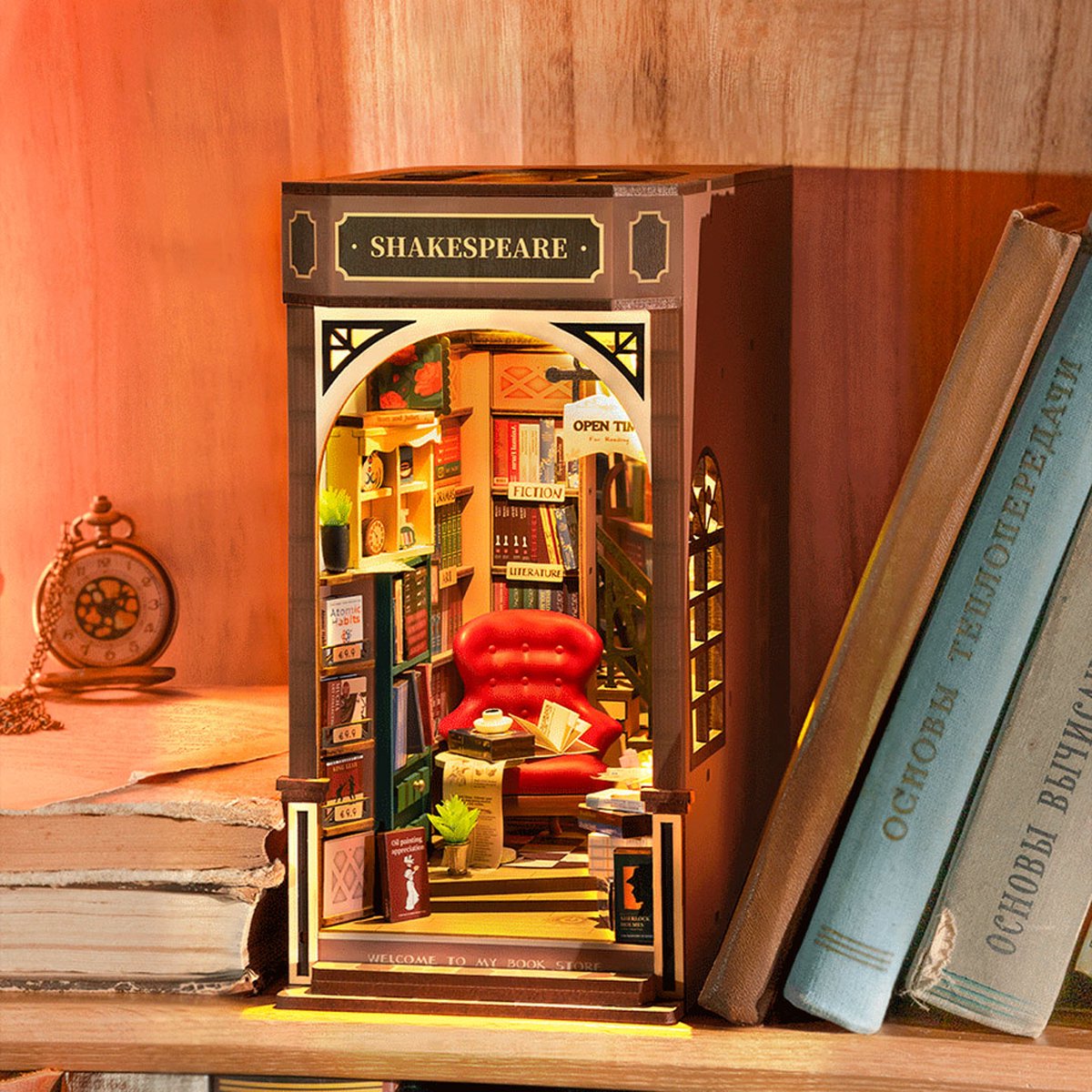
Explore the collection
All Book Nook Kits
76 handcrafted book nook kits
Every kit in this collection is tested with LED lighting before it ships. The product page notes which color temperature works best for each interior finish, so you are not guessing when you buy your LEDs separately.
AAA Battery Packs
A three-AAA pack gives you around 4.5V and significantly better runtime than coin cells, often 40-80 hours of continuous light from a set of quality alkaline batteries. The pack itself is larger, roughly the size of a small TV remote, so it needs to live behind or beside the book nook rather than inside it.
Many commercially available LED fairy light sets designed for miniature and book nook use ship with a three-AAA box already attached. This is the format to choose if you want reliability without buying a power adapter.
Rechargeable LiPo Battery Packs
A small 500mAh or 1000mAh LiPo pouch paired with a micro USB charging board gives you the best of both worlds: cordless display with rechargeable convenience. The setup requires a little more DIY skill to wire, but the running cost drops to almost zero after the initial investment. Builders in our community who have switched to LiPo packs consistently say it was “the upgrade I wish I had made at the start.” Several have noted that a 500mAh pouch powers a 10-LED copper wire set for roughly 12-15 hours between charges, which covers a week of evening display without touching a battery.
✨ Hannah’s tip: batteries and gifting
If you are building a book nook as a gift, a three-AAA pack is almost always the right call. The recipient does not need a USB adapter or a nearby outlet. They just need batteries, which they almost certainly already own. I made this mistake once: gifted a gorgeous USB-only build to a friend whose bookshelf had no power nearby. She loved the build and never lit it. AAA packs solve that problem at zero extra cost.
If you are building a book nook as a gift, a three-AAA pack is almost always the right call. The recipient does not need a USB adapter or a nearby outlet. They just need batteries, which they almost certainly already own. I made this mistake once: gifted a gorgeous USB-only build to a friend whose bookshelf had no power nearby. She loved the build and never lit it. AAA packs solve that problem at zero extra cost.
USB-Powered LED Lights: Consistent Brightness, Zero Battery Fuss
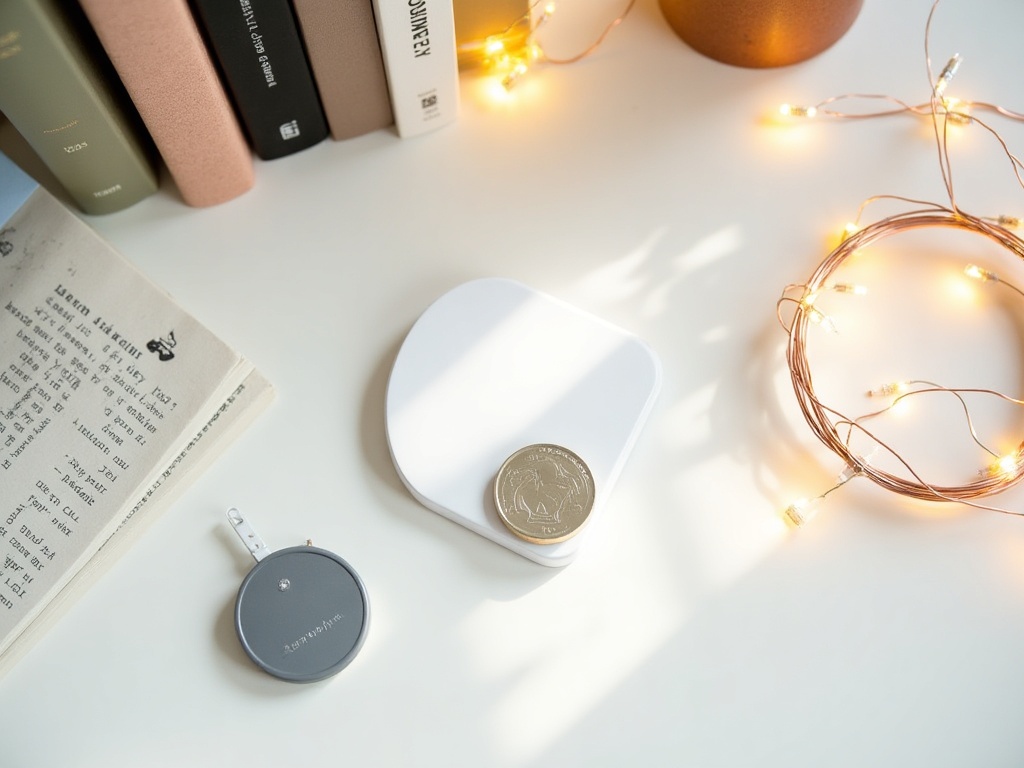
USB-powered LEDs deliver perfectly consistent brightness for as long as they are plugged in, because stable 5V power means no dimming as a power source drains, making them the best book nook lighting option for permanent shelf displays near an outlet. USB-powered LEDs pull current from any USB-A port: a phone charger, a laptop, a smart power strip, or a dedicated USB hub. The brightness stays completely consistent because voltage is stable, which battery power is not. As batteries drain, LEDs dim. USB LEDs do not dim.
The trade-off is the cord. A thin micro-USB or USB-C cable has to exit the book nook somewhere and connect to a power source. For shelf setups near an outlet or a power strip, this is trivial. For a floating shelf in the middle of a wall, cord management becomes a real design challenge.
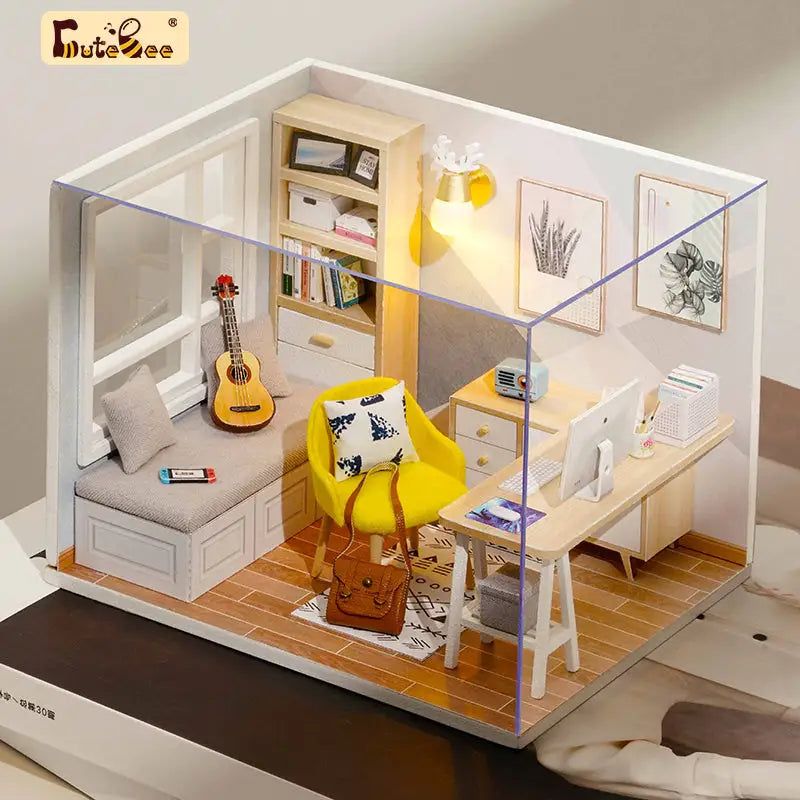
The Sun Room DIY Miniature House Kit is an ideal first USB-powered build. Its open-roof greenhouse architecture means a single 5V USB copper wire string threaded through the roof trellis lights the entire interior without any visible wiring. The geometry does the cord-hiding for you.
Easy starter under $50
Sun Room DIY Miniature House Kit
Open-roof trellis architecture hides USB copper wire naturally. Great first USB-powered build for beginners.
$49.99
5V USB LED Strip Lights
The most versatile format for book nook interiors. A 5V LED strip can be cut at marked intervals (every 3 LEDs on most strips, roughly every 25mm on a standard 60 LEDs/meter strip). This means you can trim a strip to fit an exact roofline, a tiny storefront, or a recessed window ledge without any soldering required at standard cut points.
Look for strips with a density of 60 to 120 LEDs per meter. Below 60, you get visible hot spots. Above 120, heat becomes a minor concern in very small enclosed spaces. For a build cavity smaller than 4 inches deep, keep total strip length under 12 inches on 5V to stay cool and safe. Most 5V strips produce so little heat that the wood and cardstock components are genuinely not at risk, but it is still worth doing a 10-minute touch-test before sealing the final panel.
USB Copper Wire Fairy Lights
Rare in the niche
Miniature Greenhouse Kits
22 LED-lit greenhouse builds
Greenhouse builds have the highest density of glass panels and translucent acetate of any kit category, which makes diffused USB fairy lights an especially strong match. Browse the range to see how builders wire them.
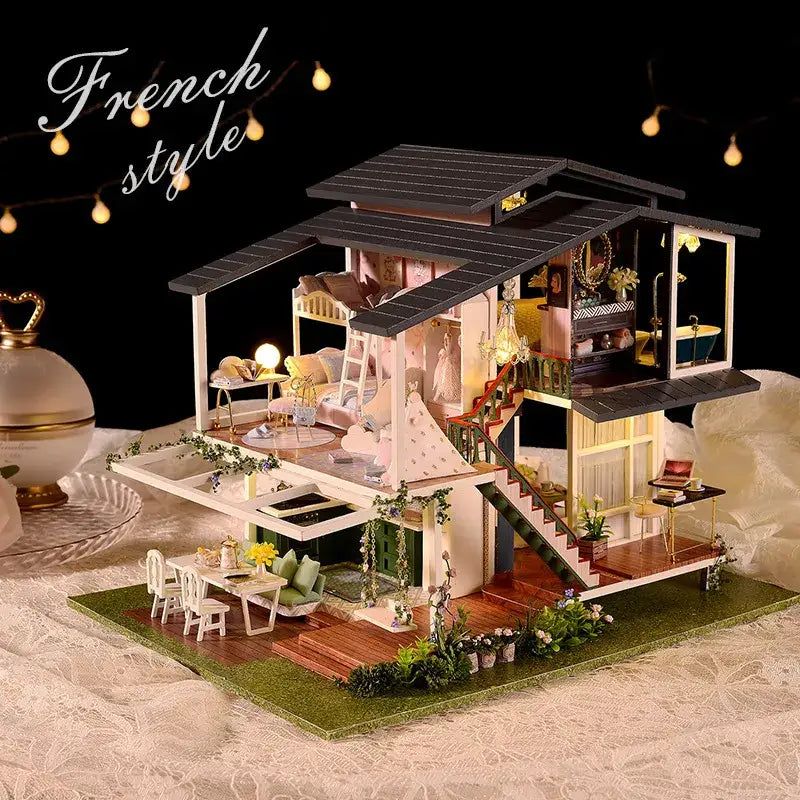
Copper wire LED strings are the most beginner-friendly lighting option for book nooks. The wire is extremely thin (typically 0.3-0.5mm), bends and stays wherever you push it, and the individual LED dots are 3-5mm in size. You can curl them around a tiny staircase banister, drape them across a rooftop, or pool them behind a frosted acetate window for a diffused glow.
USB versions typically run on 5V and draw between 0.1A and 0.3A total, well within what any phone charger can supply. Runtime is unlimited as long as the USB source is powered. For builders who want a simple, reliable, low-fuss setup, USB copper wire fairy lights for book nooks are the single strongest recommendation in this guide.
✨ Hannah’s tip: the dark test
Before committing your LEDs to glue or tape, do a “dark test.” Close the curtains, hold the build at shelf height, and observe where light leaks out from unintended gaps. Hot spots next to a wall seam or a gap at the back panel will ruin the illusion. Fix gaps with a thin strip of black foam tape before you permanently mount anything. This five-minute check has saved more builds than any other single step I know. A reader named Clare shared in our community group that she almost abandoned a tavern build over uneven glow; the dark test revealed a 1mm gap at the floor seam that black foam tape fixed in 30 seconds.
Before committing your LEDs to glue or tape, do a “dark test.” Close the curtains, hold the build at shelf height, and observe where light leaks out from unintended gaps. Hot spots next to a wall seam or a gap at the back panel will ruin the illusion. Fix gaps with a thin strip of black foam tape before you permanently mount anything. This five-minute check has saved more builds than any other single step I know. A reader named Clare shared in our community group that she almost abandoned a tavern build over uneven glow; the dark test revealed a 1mm gap at the floor seam that black foam tape fixed in 30 seconds.
Side-by-Side: Battery vs USB for Book Nook Lighting
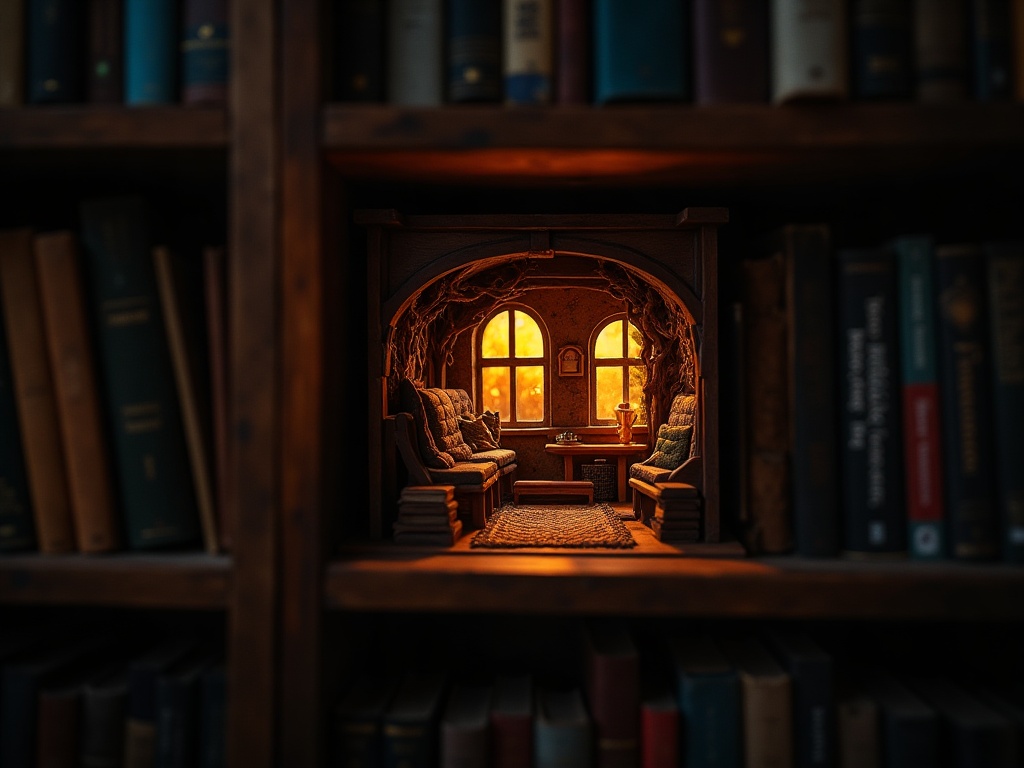
Battery LEDs win on portability and gifting ease, while USB LEDs win on consistent brightness and near-zero running cost, your shelf’s proximity to a power outlet is the single most practical factor in choosing between them.
| Factor | Battery LED | USB LED |
|---|---|---|
| Cord-free display | Yes | No |
| Consistent brightness | Fades with battery level | Always consistent |
| Running cost | Ongoing battery cost | Near zero |
| Heat output | Minimal | Minimal to low |
| Beginner friendliness | High (plug and play) | High (copper wire) / Medium (strip) |
| Best for gifting | Yes (no adapter needed) | Depends on recipient’s setup |
| Control options | On/off, timer on some | Dimmer adapters available |
| Soldering required? | No (pre-wired sets) | No (copper wire); optional (strip) |
The simplest rule: if the shelf has an outlet nearby, USB wins on cost and consistency. If the book nook is going as a gift or will sit on a shelf with no convenient power source, battery wins on convenience. And if you light your display for more than two hours a day, rechargeable LiPo is worth the small upfront effort. You can explore more build ideas where this decision matters in our miniature house kits range.
Installation Tips That Most Builders Skip
The most impactful installation steps are diffusing bare LED dots before mounting, routing wires in scored grooves, and doing a dark test before closing the build, skipping any of these is the most common reason a finished book nook scene looks staged rather than naturally lit. Getting the light physically into the build is where most problems start. Here are the steps that matter most:
- Diffuse before you install. Bare LED dots create harsh bright points. A layer of white tissue paper, tracing paper, or thin craft foam over a window opening scatters the light beautifully and makes it look like actual interior illumination rather than a visible bulb.
- Run wires in grooves. A fine-tipped hobby blade scores a shallow groove along a wall or floor edge. Lay the wire in the groove and seal with a thin line of PVA glue, then paint over it. The wire disappears.
- Use warm-tinted acetate for fireplace effects. An orange or amber cellophane scrap placed in front of a small LED creates a convincing fire glow with zero electronics beyond a basic LED.
- Plan your exit point before you close the build. Whether it is a wire to a USB plug or a wire to a battery box, that cable needs a clean exit. Drill a 2-3mm hole at the back bottom edge of the frame during construction, not as an afterthought.
- Test every connection before final assembly. Once the roof panel is glued, rerouting a wire is a nightmare. A five-minute powered test before closing saves a potential rebuild.
- Layer your light sources. The most convincing scenes use two distinct sources: a strip or fairy wire for ambient fill, and a single point LED positioned behind a window or fireplace opening for focal warmth. The combination reads as naturally lit rather than staged.
If you want to explore lighting accessories sized specifically for book nook kits and miniature builds, our full accessories collection includes LED sets, diffuser materials, and wire management supplies curated for this exact type of project.
The Monet’s Garden DIY Miniature House Kit is one of the most rewarding builds to light precisely because it has three distinct interior zones (garden terrace, glasshouse interior, and covered entrance) that each benefit from a slightly different approach. The garden terrace works beautifully with battery fairy lights pooled among the miniature plants; the glasshouse benefits from a short USB strip along the upper frame; and the entrance calls for a single warm-point LED behind the tiny door glass. The kit is designed so those three zones can be wired independently, which makes it an excellent project for builders who want to experiment with layering.
Premium collector piece
Monet’s Garden DIY Miniature House Kit
Three independently lightable zones. Garden terrace, glasshouse interior, and covered entrance each suit a different LED approach.
$155.00
Frequently Asked Questions about Book Nook LED Lighting
Everything you might be wondering (click a question to expand).
What color temperature is best for a cozy book nook scene?
Warm white LEDs between 2700K and 3000K are the most universally flattering choice for cozy, lived-in scenes like libraries, cottages, and taverns. That temperature range mimics old incandescent bulbs and makes wood grain, warm paint colors, and aged textures look richer. If your build has a more modern or sci-fi aesthetic, step up toward 4000K-5000K for a crisper, cooler look.
How many LEDs do I need for a standard book nook insert?
Most book nook inserts measure between 3 and 6 inches wide by 6 and 9 inches tall. For that footprint, 10 to 30 individual LED points is typically enough to create a convincing glow without overexposing the scene. A single 12-inch strip of 60 LEDs-per-meter density, or one 20-LED copper wire fairy light set, covers the majority of standard builds without hot spots or excessive heat.
Do I need to solder to wire LED lights into a book nook?
No, soldering is not required for the vast majority of book nook lighting setups. Pre-wired copper wire fairy lights (battery or USB) are entirely plug-and-play: you thread the wire where you want it and connect the plug. Standard 5V LED strips can be cut at marked intervals without soldering, and many strips come with pre-attached JST connectors or simple screw terminals. Soldering only becomes useful if you want to extend a strip, join two segments at a custom length, or build a multi-zone circuit. Beginners can safely ignore it entirely.
How much heat do LED strips produce inside a small build?
Very little. A 12-inch section of a standard 5V, 60 LEDs-per-meter strip produces roughly 0.5-1W of heat total, which is imperceptible to the touch after a few minutes of operation. This is well below any threshold that would damage wood, cardstock, or PVA glue joints. The scenario where heat becomes a concern is using 12V strips incorrectly powered or leaving a very dense strip (240 LEDs/meter or higher) enclosed in a completely sealed cavity with no airflow. For typical book nook dimensions and standard 5V strips, heat is not a practical worry. Still worth a 10-minute touch-test on your first build just to confirm your specific setup behaves as expected.
Can I mix battery and USB power in a single build?
Yes, and it is actually a smart approach for multi-zone builds. The important rule is to never connect a battery circuit and a USB circuit to the same LED strip simultaneously, as the voltage difference can damage the LEDs or the USB port. Instead, wire each zone independently with its own power source and its own switch. A common setup: USB strip along the roofline for ambient fill (always on when plugged in), plus a battery-powered copper wire coil inside a fireplace recess with its own on/off switch for accent lighting. The two circuits share no wiring and coexist without any issue.
Are USB LED lights safe to leave on overnight?
Quality 5V USB LED strips and copper wire fairy lights from reputable suppliers draw very low current (typically under 0.5A for a book nook application) and produce minimal heat. Many builders leave their displays running for 6-8 hours using an outlet timer. For long overnight runs, use a USB outlet timer set to shut off after a few hours. It extends LED lifespan and gives you peace of mind without any technical complexity.
Will LEDs damage the wood or cardstock in my book nook?
Standard 5V LED strips and battery-powered fairy lights run cool enough that heat damage to wood or paper components is not a practical concern. Where builders run into trouble is with older, higher-wattage bulbs or by using 12V strips on a small battery supply that causes voltage mismatch and overheating. Stick to 5V USB or battery-rated fairy lights and you will be fine. Always touch-test after 10 minutes of operation before leaving a build unattended.
Picking Your Lighting Setup and Moving Forward
Choose USB fairy lights for a permanent shelf display near an outlet, or a three-AAA battery pack for a gift-ready or outlet-free setup, both deliver great results when the light is placed thoughtfully with diffusion, hidden wires, and a clean exit point. The right LED choice really does come down to your shelf situation and how often you want to interact with batteries. USB fairy lights on a simple phone charger are hard to beat for a permanent display that lives on a bookshelf near an outlet. A three-AAA battery pack with copper fairy lights is still the easiest gift-ready setup you can build, no adapter required, no outlet needed.
What stays constant across both options is the craft of placing the light well. Diffused, warm, hidden wires, and a clean exit point make any setup for the best LED lights for book nooks look considered and intentional rather than tacked on. That meditative process of deciding where each tiny glow should fall, and watching the scene transform when you finally switch it on, is genuinely one of the most satisfying moments in the entire book nook build. It is the moment where weeks of gluing, painting, and fussing over 1:12 scale furniture becomes a world rather than a box.
If you are still choosing your base kit or looking for lighting accessories that fit the specific tolerances of a miniature scene, browse our book nook accessories collection for LED sets, diffuser sheets, and wiring supplies we have tested personally inside our own builds. Every item in that collection has been through at least one finished project before it makes it onto the shelf. You can also explore the full book nook kits range to find a build whose architecture suits the power approach you have decided on. ✨