🎁 Buy 2 kits, get the 3rd FREE · Free shipping on every order

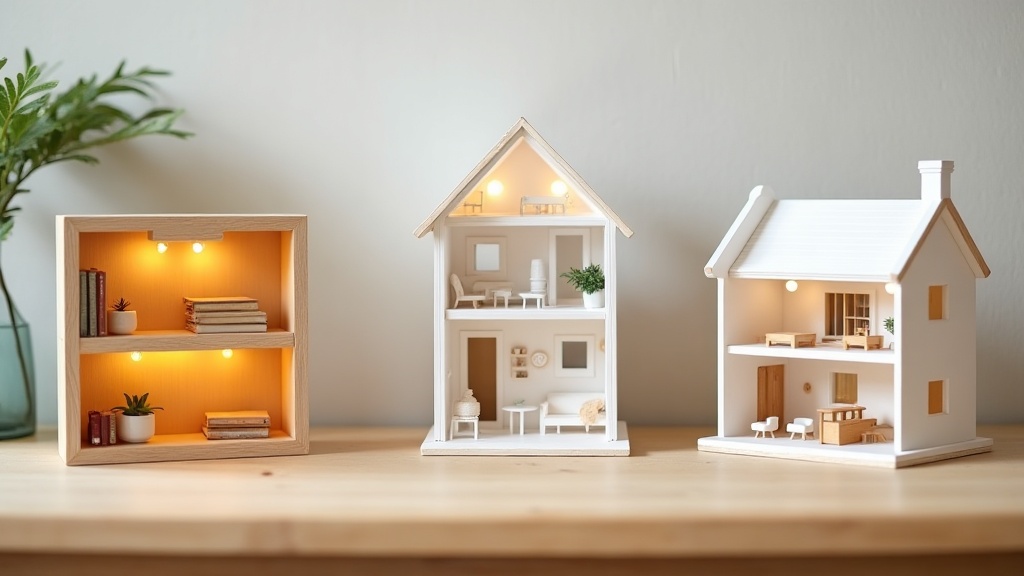
Book Nook vs Dollhouse vs Miniature House: Which One Is Right for You?
Not sure whether to start with a book nook, a dollhouse, or a miniature house kit? This guide breaks down all three formats side by side: scale, size, build time, display options, and price, so you can pick the project that actually fits your space, budget, and skill level.

You spotted a gorgeous photo online. Maybe it was a tiny Victorian alley tucked between two novels on a bookshelf. Maybe it was an intricately furnished cottage sitting on a side table, every miniature tea cup in place. You thought: I want to make that. But then you realize there are actually three very different things people are talking about: book nooks, dollhouses, and miniature houses. And choosing the wrong one can mean a project that sits unfinished on your craft table for six months.
This guide cuts through the confusion. Below you’ll find a real comparison covering size, scale, price range, build time, and where each format actually lives once it’s done. No fluff. Just the information you need to pick the right project for your space, your schedule, and your skill level right now.
What Each Format Actually Is
A book nook is a shelf-sized miniature scene, a miniature house is a standalone scaled model, and a dollhouse is a large open-ended structure you furnish over time, three formats that share miniature DNA but deliver completely different building experiences and finished objects. Before comparing numbers, it helps to understand what makes each format distinct. They share the miniature DNA, but the building experience and the end result are genuinely different.
Book Nooks: The Shelf Insert Format
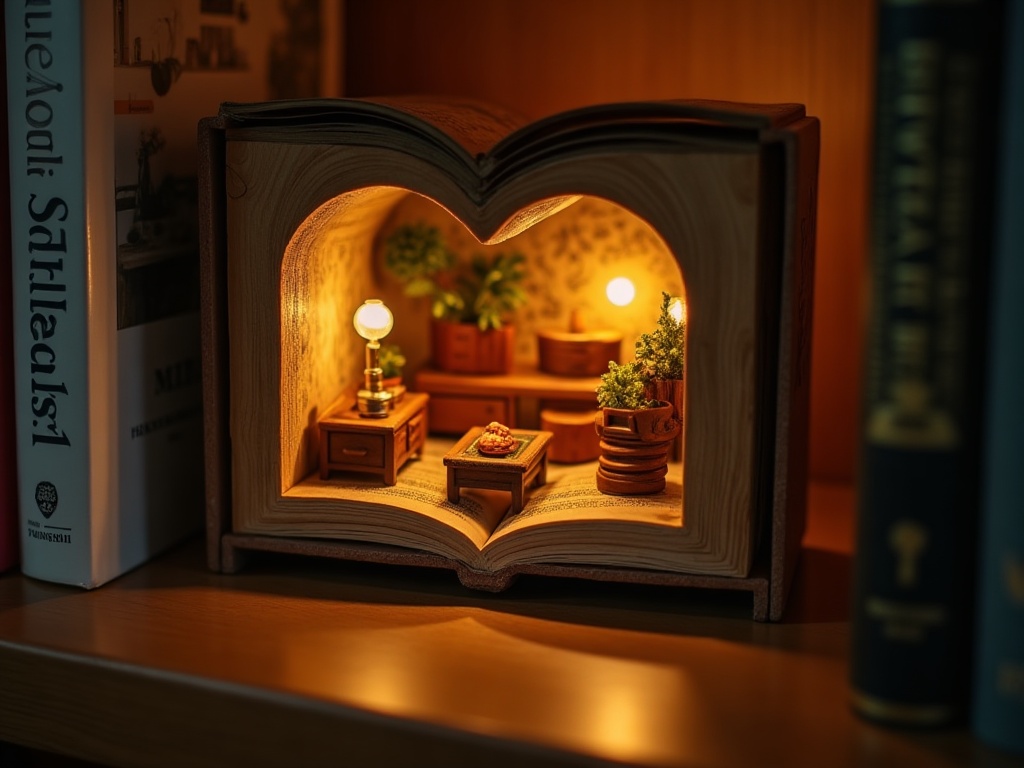
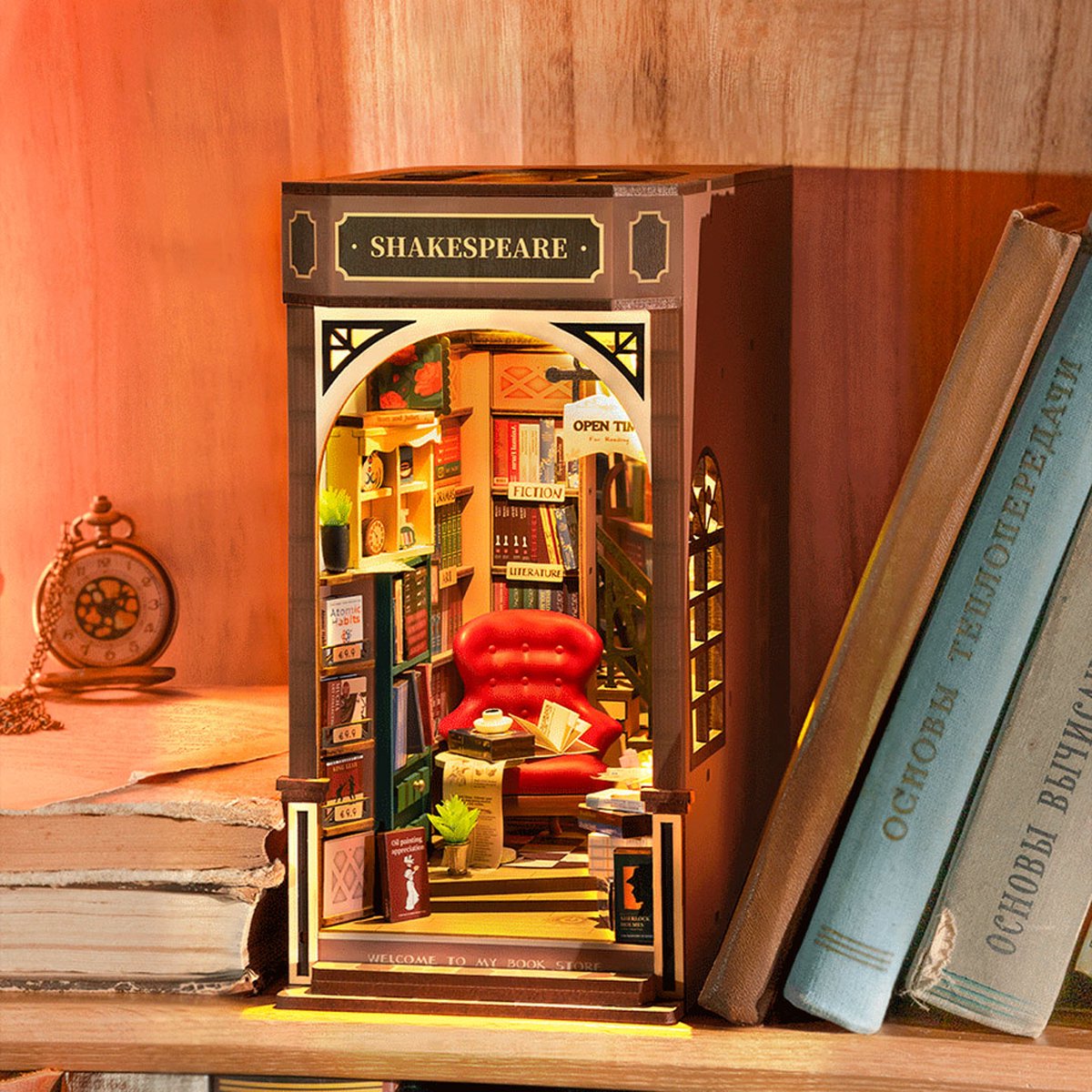
A book nook is a self-contained miniature scene built inside a box designed to sit between books on a shelf. The front is open (or features a decorative facade), and the interior uses forced perspective and LED lighting to create the illusion of a much deeper space. The box is typically 5 to 8 inches wide, 7 to 9 inches tall, and 4 to 6 inches deep.
The appeal is immediate. You build it, slide it onto your bookshelf, plug in the USB light, and the effect is instant. No dedicated display furniture required. No clearing a table. It lives where books already live.
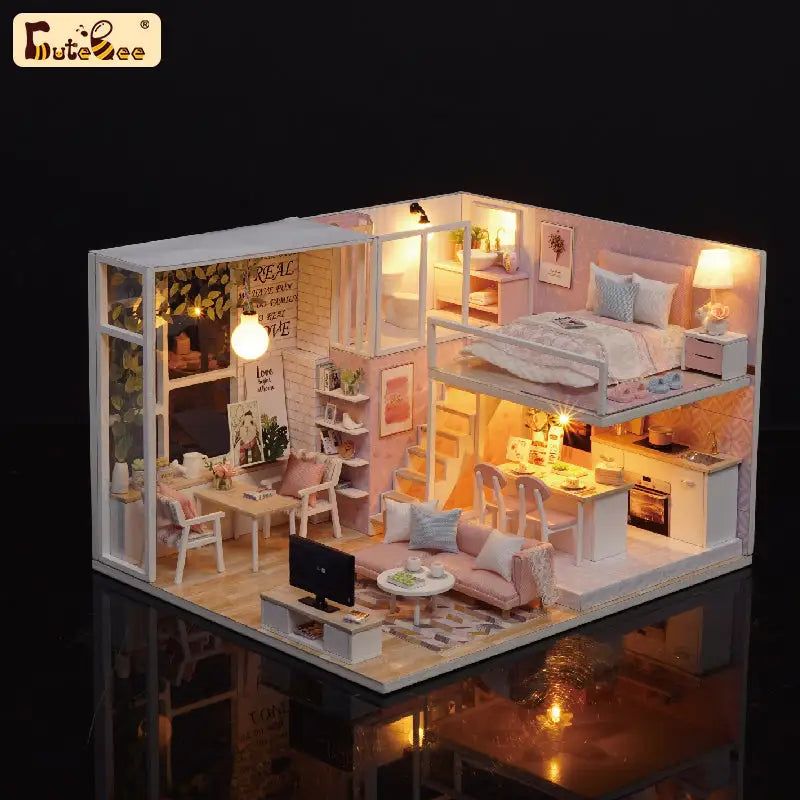
Popular themes range from hidden libraries and enchanted forests to Japanese ramen shops and cozy Parisian cafes. Our book nook kits collection covers more than 30 distinct scenes, and the community consistently rates them as the most “pick up and put down” friendly format because each build session can be as short as 20 minutes.
Miniature Houses: The Standalone Architectural Model
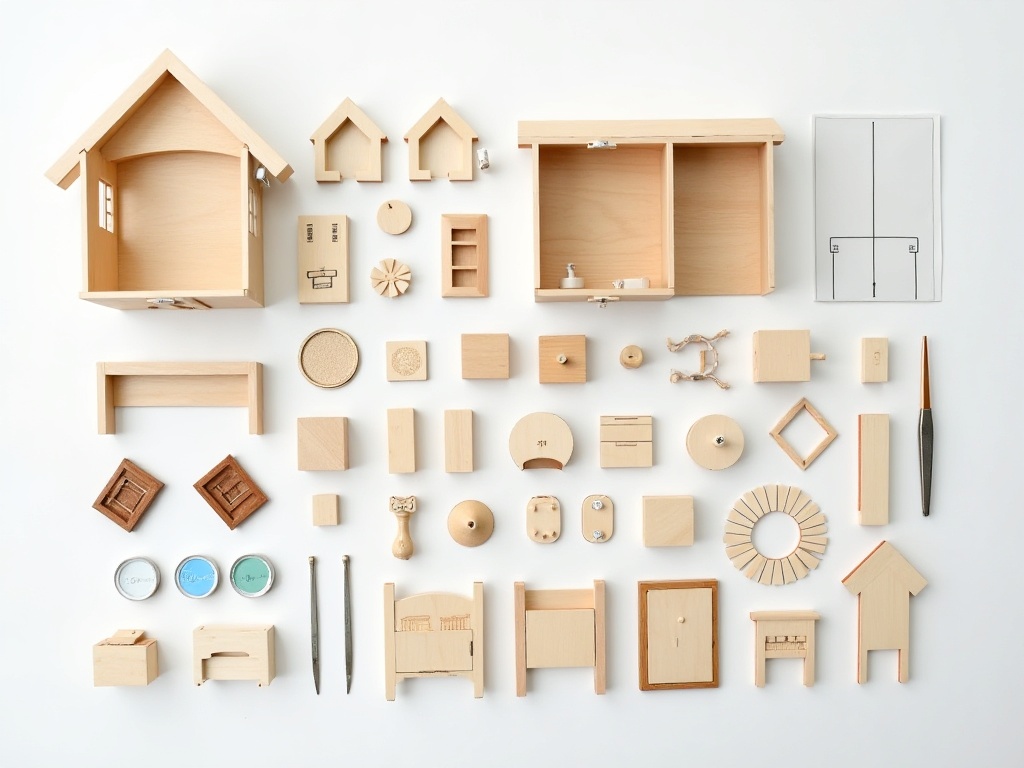
A miniature house is a scaled architectural model, usually built at 1:24 or 1:12 scale, that stands on its own on a table, shelf, or display cabinet. The structure is the project. You assemble walls, floors, roofing, window frames, and then furnish the interior with scaled pieces.
Unlike a dollhouse (more on that below), a miniature house kit is sold as a complete, finite build. Every component is pre-specified. When the kit is done, the house is done. It’s closer in spirit to a model train layout or a scale architectural diorama than to a child’s toy.
Browse our miniature house kits collection if you’re drawn to this format. Builds range from a compact Japanese tea house (roughly 8 x 8 x 10 inches finished) to a three-story Victorian with a working light kit that can reach 18 x 14 x 22 inches.
Dollhouses: The Modular, Open-Ended Format
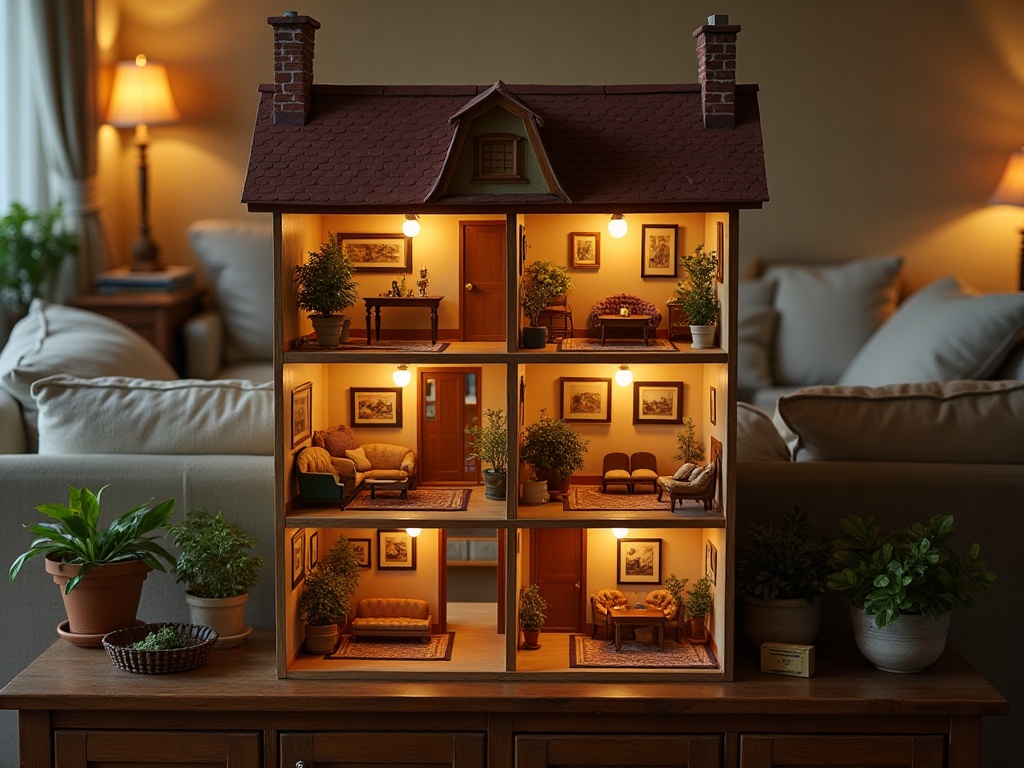
A dollhouse is the oldest of the three formats. Its roots as a display object for wealthy European households stretch back to the 17th century, but today it’s a serious adult hobby as much as a child’s pastime. A dollhouse is typically a larger (often 1:12 scale) open-front structure with multiple rooms, sold either as a bare shell or a basic kit that the builder then furnishes, wallpapers, and decorates over time.
What makes dollhouse building so absorbing is the tactile richness of the process. You’re mixing tiny paint colors to match a specific wallpaper swatch, hand-stitching miniature cushion covers from fabric scraps, aging wooden floorboards with a tea-stained brush. It rewards patience and curiosity in equal measure. Many builders in our community describe sitting down at their dollhouse for “just 20 minutes” and surfacing two hours later, completely absorbed. That meditative pull is real, and it is the whole point.
The key difference from a miniature house kit: a dollhouse is never really finished. That’s the point. You add a new piece of furniture, swap out the wallpaper, build a tiny garden on the side. It’s a long-term creative platform, not a single project with a start and end date.
From Hannah’s workbench: The first kit I ever finished was a Victorian dollhouse. I remember the afternoon I glued the last tiny newel post onto the staircase and stepped back to look at it. I’d spent a rainy Sunday in 2021 on that project with no real plan and almost no prior crafting experience. What surprised me was how the small, repetitive actions of the build, fitting a door frame, painting a skirting board, arranging three books on a half-inch shelf, felt genuinely calming. I wasn’t thinking about anything else. That feeling is exactly why I started this whole business. If you’re curious whether it will work for you, start small and see. ✨
Long-term creative projects
Dollhouse Kits Collection
Multi-room builds for dedicated crafters
📜 Did you know?
The oldest surviving dollhouse dates to 1611 and belongs to Duke Albrecht V of Bavaria. It was built not as a toy but as a detailed record of how a wealthy household was organized, complete with a working kitchen, wine cellar, and chapel. Miniature houses as collector’s objects predate miniatures as children’s toys by at least a century.
The oldest surviving dollhouse dates to 1611 and belongs to Duke Albrecht V of Bavaria. It was built not as a toy but as a detailed record of how a wealthy household was organized, complete with a working kitchen, wine cellar, and chapel. Miniature houses as collector’s objects predate miniatures as children’s toys by at least a century.
Side-by-Side Comparison: Size, Scale, Price, Build Time, and Display
Book nooks cost $35, $90 and take 6-15 hours to build; miniature house kits run $55, $150 and 12-30 hours; dollhouses start at $80 and are open-ended in both time and ongoing cost, the table below shows every key difference at a glance. Here’s the full breakdown in one place. All price ranges reflect 2026 US retail for quality DIY kits at beginner-to-intermediate level.
| Category | Book Nook | Miniature House Kit | Dollhouse |
|---|---|---|---|
| Typical finished size | 5-8″ W x 7-9″ H x 4-6″ D | 8-18″ W x 8-22″ H x 6-14″ D | 18-36″ W x 18-30″ H x 12-18″ D |
| Common scale | 1:24 to 1:48 (often forced perspective) | 1:24 or 1:12 | 1:12 (standard) |
| Kit price range | $35 – $90 | $55 – $150 | $80 – $300+ (shell only, furnishings extra) |
| Average build time | 6 – 15 hours | 12 – 30 hours | Open-ended (ongoing) |
| Difficulty (beginner scale 1-5) | 2 – 3 / 5 | 3 – 4 / 5 | 3 – 5 / 5 (varies widely) |
| Display location | Bookshelf (no extra furniture needed) | Table, shelf, display cabinet | Dedicated surface or stand (often large) |
| Ongoing cost after kit | Minimal (kit is self-contained) | Low (occasional finishing supplies) | High (furniture, wallpaper, accessories) |
| Best for gifting? | Yes – compact, themed, easy to wrap | Yes – complete standalone project | Better for long-term collectors |
✨ Hannah’s tip
If you’re buying a kit as a gift for someone who has never done miniature crafting before, pay close attention to the “what’s included” list. A good beginner kit includes pre-cut wood panels (no sawing), pre-mixed or clearly labeled paints, labeled hardware bags, and a photo-based instruction guide. A kit that ships just the raw components and a single-page diagram will frustrate a first-timer fast. Our kits all list exactly what’s in the box on every product page, because I’ve personally been burned by vague packaging before. ✨
If you’re buying a kit as a gift for someone who has never done miniature crafting before, pay close attention to the “what’s included” list. A good beginner kit includes pre-cut wood panels (no sawing), pre-mixed or clearly labeled paints, labeled hardware bags, and a photo-based instruction guide. A kit that ships just the raw components and a single-page diagram will frustrate a first-timer fast. Our kits all list exactly what’s in the box on every product page, because I’ve personally been burned by vague packaging before. ✨
The Build Experience: Three Very Different Rhythms
A book nook build is compact and focused, with visible progress every session; a miniature house kit feels architectural and rewards longer sittings; a dollhouse is an open-ended creative practice with no fixed finish line. The finished object matters. But so does the 15 hours you spend making it. These three formats feel genuinely different at the craft table.
Building a Book Nook: Focused and Meditative
A book nook build is concentrated. You’re working inside a small box, which means everything stays within arm’s reach. Gluing a tiny bookcase, wiring a USB LED strip, placing a 1-inch-tall figure in a doorway. Each session gives you a visible result. Many crafters describe it as the miniature equivalent of a puzzle: clear steps, satisfying clicks of progress, and a definite moment when it’s done.
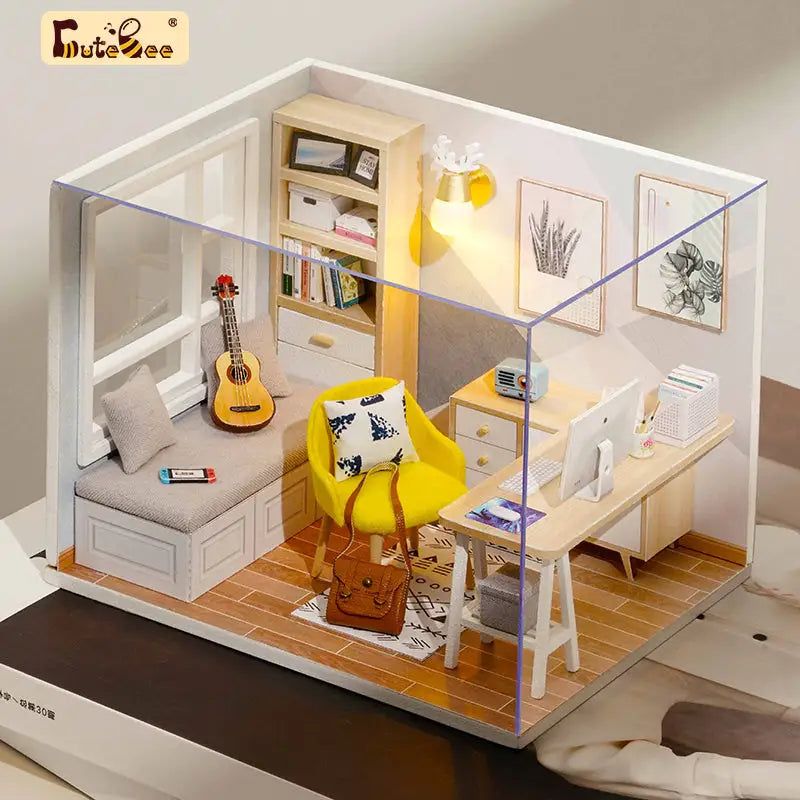
Because the build area is small, mistakes are small too. Misplace a sticker? Peel it. Wrong color on a wall panel? Sand and repaint. The confined format is actually forgiving in ways that larger builds are not.
Building a Miniature House Kit: Architectural and Absorbing
A miniature house kit build feels more like assembling a piece of scaled architecture. You’re thinking about how rooms connect, how light falls through windows, whether the staircase angle matches the floor plan. Sessions run longer because there’s more at stake structurally. You might spend an entire afternoon just dry-fitting the main shell before any glue touches wood.
The payoff is proportional. A finished miniature house is a proper display object, something that commands attention on a shelf or sideboard. Guests ask questions. People pick it up. It holds detail at 1:12 scale that rewards close inspection: a tiny newspaper on the kitchen table, a miniature mirror reflecting back a reflected room.
Building a Dollhouse: A Long-Game Creative Practice
Dollhouse building is less a project and more a practice. You might spend a Saturday building the shell, then three weeks hunting for the perfect tiny chandelier. Then a month sourcing 1:12 scale curtain fabric. Then another weekend hand-papering the nursery walls.
This is beautiful if it’s what you want. If you love the hunt, the curation, and the ongoing relationship with a creative project, a dollhouse is a lifetime companion. If you want the satisfaction of completing something, it can feel like a project that never quite ends. The community of dedicated dollhouse builders online is extraordinary, by the way. Builders share room reveals, trade sourcing tips for hard-to-find 1:12 fabrics, and cheer each other through the fiddly bits. If you join that world, you will not feel alone in it.
Space, Storage, and Display Realities
A book nook takes up zero new surface area by slotting between existing books; a miniature house kit needs a shelf or desk corner; a dollhouse demands dedicated real estate and can measure 30 inches wide or more, plan your display spot before you buy. One factor that comparison guides consistently skip: where does this thing actually live when you’re done?
A book nook takes up zero new surface area. It slots between books that were already there. For anyone in an apartment, a shared space, or a room that’s already full of things they love, this is not a trivial advantage. You don’t need to find a new home for it. The shelf is already its home.
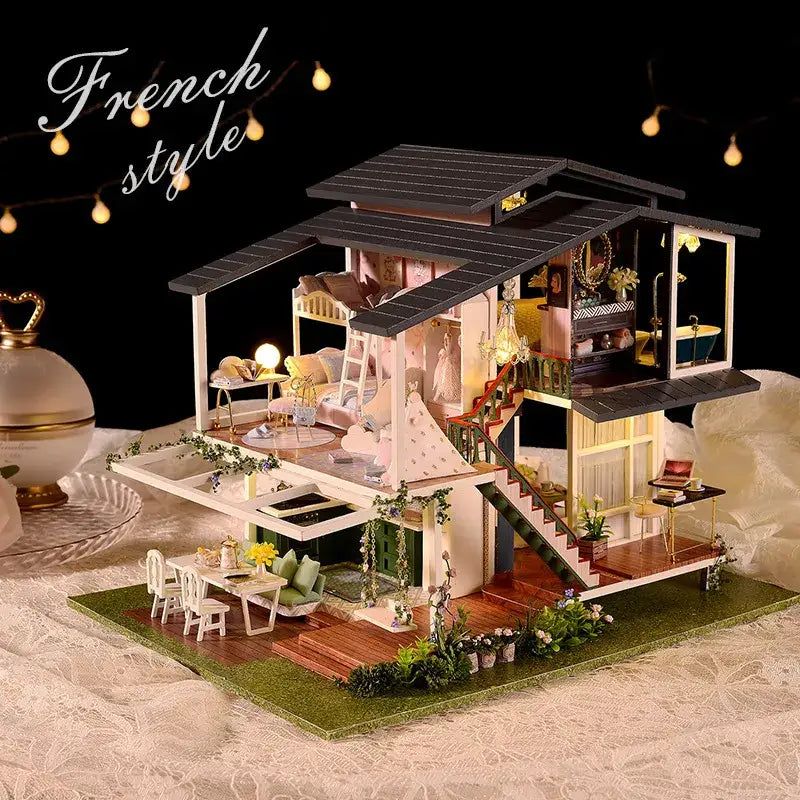
A miniature house kit produces a finished object roughly the size of a carry-on bag. It needs a surface: a corner of a desk, a bookshelf with enough depth (most standard shelves are 10-12 inches deep, which works for most kits), or a display cabinet. That’s manageable for most living spaces without rearranging furniture.
A dollhouse is genuinely large. A standard 1:12 scale two-story with four rooms might measure 30 inches wide and 24 inches tall. It needs dedicated real estate: a side table, a dedicated shelf unit, or a spot on the floor. Factor that into your decision before you start. Several crafters in our community have shared that they underestimated the footprint and ended up storing a half-finished dollhouse in a closet for months. Plan the display spot first.
Which Format Fits Which Kind of Crafter
Beginners and gift-buyers should start with a book nook kit; crafters who want an impressive standalone display piece should choose a miniature house kit; those who want a long-term creative practice with no fixed endpoint are the natural fit for a dollhouse. After talking with thousands of crafters across our community and reading the build logs people share online, a few clear patterns show up.
- You should probably start with a book nook if: you’ve never done miniature crafting before, you have limited surface space, you want to finish a project in under two weeks of casual building, or you’re buying a gift for someone who loves reading and cozy aesthetics.
- A miniature house kit is the right move if: you’ve done a book nook or two and want more architectural complexity, you have a specific theme in mind (Japanese, Victorian, Scandinavian cabin), or you want a display piece that genuinely stops people in their tracks.
- A dollhouse is your path if: you want a long-term creative project with no fixed endpoint, you love collecting and curating miniature furniture and accessories, you have the space to give it a permanent home, and the idea of a project that evolves over years sounds appealing rather than daunting.
Gift buyers take note: both book nook kits and miniature house kits make far better gifts than a bare dollhouse shell. A kit arrives as a self-contained creative experience. A dollhouse shell arrives as a beginning that requires a lot of additional decisions and purchases before anything fun can happen.
Frequently Asked Questions about Book Nooks, Dollhouses, and Miniature Houses
Everything you might be wondering (click a question to expand).
Can a complete beginner build a book nook kit without any prior crafting experience?
Yes. Most quality book nook kits are specifically designed for first-time miniature builders. Pre-cut wood panels eliminate the need for any sawing or carpentry. The main skills involved are gluing, painting small surfaces, and following step-by-step visual instructions. A beginner should expect to spend 8-12 hours on their first build, working in short sessions. The small scale of the project means that any mistake is equally small and usually correctable.
What scale are miniature house kits, and does it matter for buying furniture separately?
Most miniature house kits ship at 1:24 scale (sometimes called *demi-scale*, where half an inch represents one real foot) or 1:12 scale (one inch represents one real foot). The scale matters significantly if you plan to add separately sourced furniture or accessories. A 1:12 chair will look bizarre in a 1:24 room. Always check the kit’s stated scale before buying any additional miniature pieces, and look for that spec clearly listed on the product page.
How long does a typical miniature house kit take to build?
Build times vary based on kit complexity and how long each session runs. A compact single-room miniature house kit (like a small Japanese tea house or a studio apartment scene) typically takes 12-18 hours total. A larger multi-room Victorian or cottage kit can run 25-35 hours. Most builders spread that time across 3-6 weeks of casual evening or weekend sessions, not continuous marathon builds.
Are dollhouses only for children, or are they a serious adult hobby?
Adult miniature collecting and dollhouse building is a thriving hobby with a dedicated global community. The International Guild of Miniature Artisans (IGMA) has trained and certified professional miniature artists for decades. Many serious adult collectors work at 1:12 scale and spend years (and significant budgets) furnishing and curating their houses. The child’s toy version and the collector’s art form share a name but almost nothing else in terms of materials, scale accuracy, or craftsmanship.
What is the difference between a miniature house kit and a dollhouse kit?
The main difference comes down to scope and intent. A miniature house kit is a finite, self-contained project: every component is included, and the build has a clear completion point. A dollhouse kit, by contrast, typically provides the structural shell and basic fittings, but the furnishing, decorating, and curating continues indefinitely. Miniature house kits suit people who want to complete a project; dollhouses suit people who want a long-term creative practice they can keep returning to.
Which format holds its value best if I ever want to sell a finished piece?
Finished miniature houses and dollhouses with high-quality hand-painted details and custom furnishings tend to hold value best on the secondary market, particularly pieces built from well-known kit brands or with verifiable scale accuracy. Book nooks are harder to resell simply because the market expects new kits at retail price. That said, most crafters build for the joy of building, not resale, and the meditative satisfaction of completing any of these three formats is the real return on investment.
Picking Your First Kit: A Practical Starting Point
If you are short on space or new to the craft, start with a shelf insert kit; if you want a standalone display piece, choose a miniature house kit; if you are ready for a years-long creative project, a dollhouse is waiting for you. The best project is the one you actually finish. And the one you finish is almost always the one that fits your real life, not your ideal life.
If you’re reading this at a desk in a small apartment, a book nook is probably your answer. If you have a dedicated craft corner and a few months of casual evenings to invest, a miniature house kit will give you something that genuinely impresses. If miniatures have been a quiet obsession for years and you want a long-term creative home base, a dollhouse is waiting for you.
Start small if you’re unsure. A single book nook build will tell you everything you need to know about whether the meditative rhythm of miniature crafting is something you want more of. Most people who finish one come back for a second. Many come back for a third in a totally different scale. That’s how it tends to go. ✨