🎁 Buy 2 kits, get the 3rd FREE · Free shipping on every order

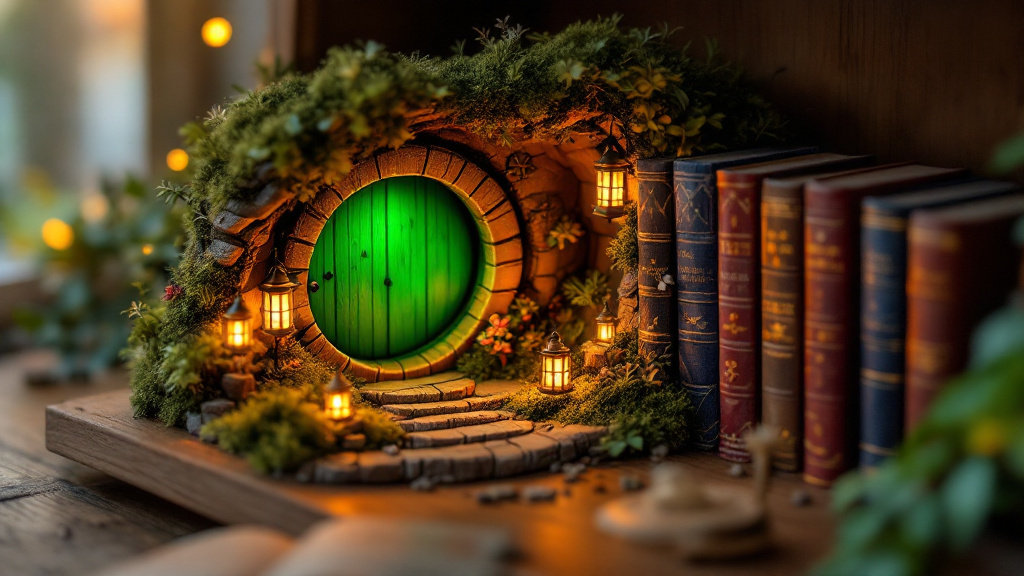
Lord of the Rings Inspired Book Nook: Shire, Rivendell & Minas Tirith Builds
Build your own Lord of the Rings inspired book nook with detailed guidance on Shire hobbit-hole aesthetics, Rivendell elven architecture, and Minas Tirith stonework. Includes tips on lighting, materials, difficulty ratings, and kit recommendations for 2026.

Why a Lord of the Rings Inspired Book Nook Hits Different
A Middle-earth book nook works because Tolkien built his world on tactile, architectural detail, and those sensory details translate beautifully into three-dimensional miniature craft that delivers a moment of recognition every single day. You slide a book aside on your shelf and suddenly there it is: a round green door, warm amber light spilling from a tiny window, and the faint suggestion of rolling hills beyond. That moment, that flicker of recognition, is exactly what a Lord of the Rings inspired book nook delivers every single day. Not just decoration. A portal.
Book nooks have become one of the most satisfying miniature building projects of the decade, and Tolkien’s Middle-earth is the single most requested setting among the craft community. The reason is obvious once you think about it. Middle-earth is already a world built on tactile, architectural detail. Tolkien described the smell of pipe-weed, the weight of stone under a hobbit’s bare feet, the way elven stonework seemed to grow rather than be carved. Those sensory details translate beautifully into three-dimensional miniature craft.
Whether you’re brand new to miniature building or you already have a few shelf inserts under your belt, this guide walks through the three most beloved Middle-earth aesthetics: the warm domesticity of the Shire, the serene grandeur of Rivendell, and the epic stonework of Minas Tirith. Each one has its own material logic, its own lighting personality, and its own difficulty curve.
Compare the Three Middle-earth Aesthetics at a Glance
The three Middle-earth aesthetics differ significantly in difficulty, build time, light temperature, and key materials, so knowing those differences upfront helps you choose the right starting point for your Tolkien shelf insert. Before diving into the details of each setting, here is a quick overview that our community builders find genuinely useful when deciding where to start. Difficulty, time, light, and dominant materials all vary significantly across the three aesthetics.
| Aesthetic | Difficulty | Build Time | Light Temperature | Key Materials |
|---|---|---|---|---|
| The Shire | Beginner | 8-15 hrs | Warm amber (2700-3000K) | Air-dry clay, static grass, balsa wood |
| Rivendell | Intermediate-Advanced | 20-35 hrs | Cool white (4000-5000K) | Basswood arches, UV resin, copper foliage |
| Minas Tirith | Advanced | 30-50 hrs | Daylight / moonlight blue (5000-6500K) | Foam armature, spackling, white clay, wire tree |
The Shire Aesthetic: Warmth, Texture, and the Round Door
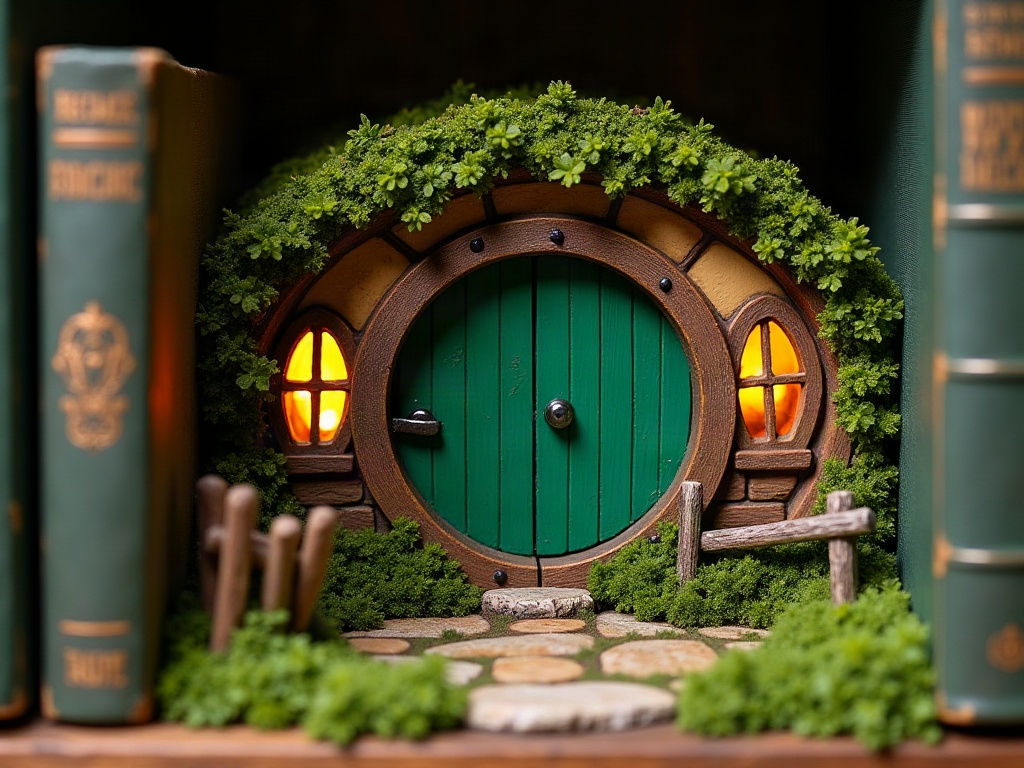
The Shire aesthetic is the natural starting point for most builders because organic shapes are forgiving, the visual impact is high, and a round green door set into a grass-covered hillside is instantly recognizable at any skill level. No element in all of Tolkien’s writing is more immediately recognizable than a hobbit-hole door. Round, painted in deep green or yellow, set into a grass-covered hillside. Build that door and everything else in your scene clicks into place around it.
The Shire aesthetic book nook is the natural starting point for most builders in our community, and for good reason: it rewards imperfection. Organic shapes are forgiving. A slightly uneven mossy hillside reads as more authentic, not less. You get the satisfying combination of high visual impact and low technical stress.
If you want a structured kit to get your Shire build underway without sourcing every component individually, the Tranquil Life DIY Miniature House Kit makes an excellent launchpad. Its cottage-scale wooden pieces, warm LED wiring, and earthy accessory set all translate naturally into Shire territory. Several builders in our community have used it as the structural backbone of their hobbit-hole builds, adding their own clay hillside and round door on top.
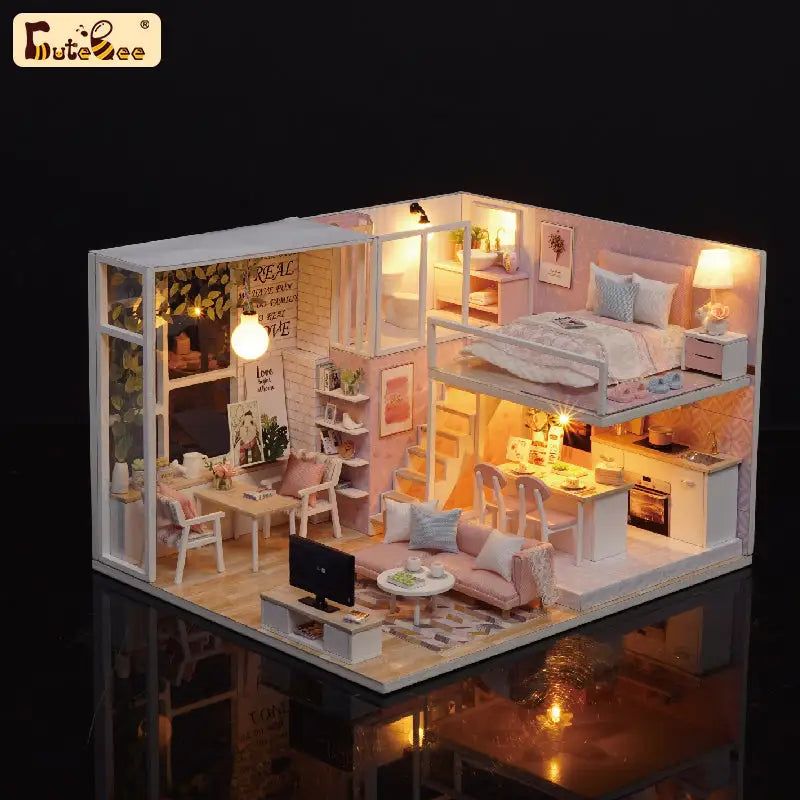
Bestseller cottage kit
Tranquil Life DIY Miniature House Kit
Perfect structural base for a Shire-inspired build
$67.90
Core materials for a Shire-style build
The Shire is fundamentally an organic aesthetic. That means natural textures dominate: moss, wood grain, fieldstone, terracotta flower pots, climbing roses, and thatched or grass-covered rooflines. Here’s what builders reach for most often:
- Air-dry clay or polymer clay for the hillside mound, door surround, and stone pathway. Clay holds fine texture impressions beautifully.
- Static grass and flock (fine green blends) to coat the hill and create that lush, overgrown character.
- Balsa wood or pre-cut laser wood sheets for the door itself, window frames, and tiny fence pieces.
- Warm white or amber LED fairy lights (3V micro LEDs) tucked behind the door and windows to simulate firelight inside.
- Dried moss, lichen, or preserved reindeer moss for organic scatter around the base and roof.
The color palette is warm: earthy greens, ochre yellows, muted terracotta, and the occasional burst of flower color in red or purple. Avoid anything cold or metallic. The Shire should feel like an afternoon in late September, right before first frost.
Difficulty rating and time investment
A Shire-style book nook sits at a beginner-to-intermediate level. Expect 8 to 15 hours of build time depending on how much decorative detail you add. The forgiving nature of organic shapes (hills don’t need to be perfectly symmetrical) makes this the best starting point for first-time book nook builders. Imperfections actually add character here.
🪄 Hannah’s tip
When painting your hobbit-hole door, layer two or three slightly different greens rather than using one flat coat. A base of deep forest green, a dry-brush of sage, and a few scuffs of raw umber at the bottom edge will make it look genuinely aged and lived-in. The same layering trick works on the stone pathway: gray base, a wash of diluted brown, then a dry-brush of white for highlights. Takes five extra minutes, doubles the realism.
When painting your hobbit-hole door, layer two or three slightly different greens rather than using one flat coat. A base of deep forest green, a dry-brush of sage, and a few scuffs of raw umber at the bottom edge will make it look genuinely aged and lived-in. The same layering trick works on the stone pathway: gray base, a wash of diluted brown, then a dry-brush of white for highlights. Takes five extra minutes, doubles the realism.
Rivendell Aesthetics: Elven Arches and Silver Light
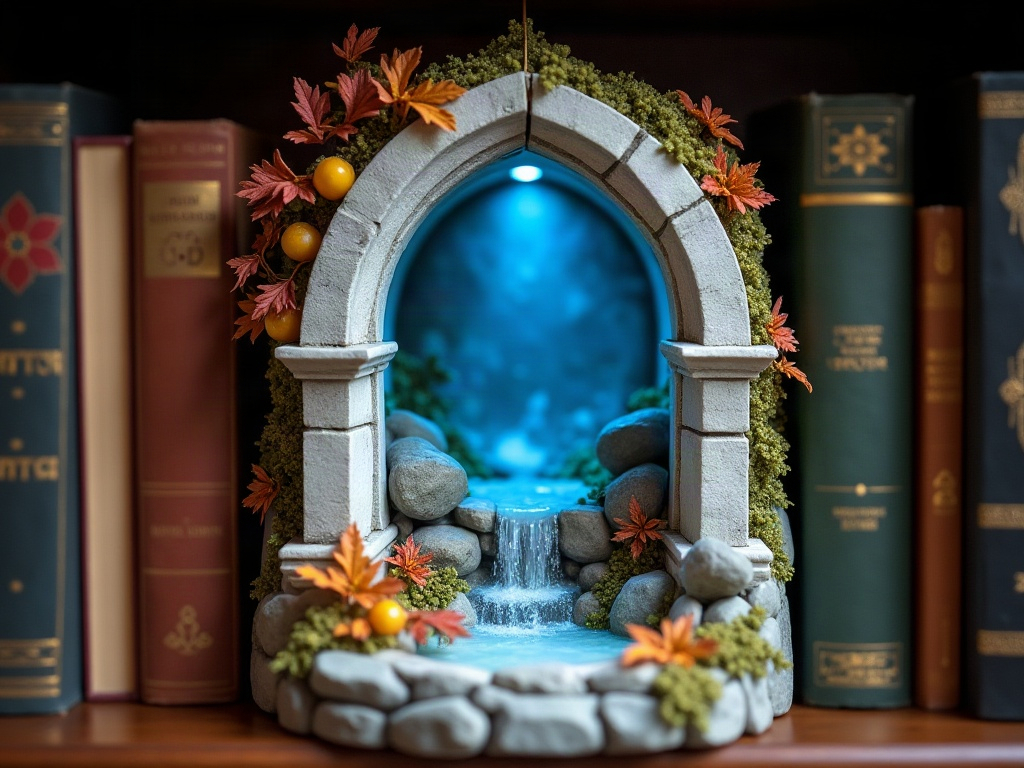
A Rivendell book nook is the hardest of the three aesthetics to get right, requiring delicate arches, poured resin water effects, and cool white lighting, but it delivers the most rewarding result when it finally comes together. Rivendell is the hardest of the three aesthetics to get right, and also the most rewarding when it comes together. The challenge is that elven architecture in Tolkien (and in Peter Jackson’s visual interpretation) is simultaneously delicate and monumental. Slender columns carry enormous weight. Water falls in perfect, controlled arcs. Stone looks as if it grew that way.
A builder in our community described her finished Rivendell nook this way: “I turned the lights on for the first time, and my husband literally said ‘oh.’ Just that. That single syllable was everything.” That reaction, that quiet awe, is what you’re building toward.
For a Rivendell build, you need a kit with clean architectural components and good lighting hardware. Our full book nook kit collection includes several intermediate and advanced options with pre-cut arch pieces and LED wiring that suit the elven aesthetic well. Browse the range to find the structural backbone that fits your build vision before you start sculpting water effects.
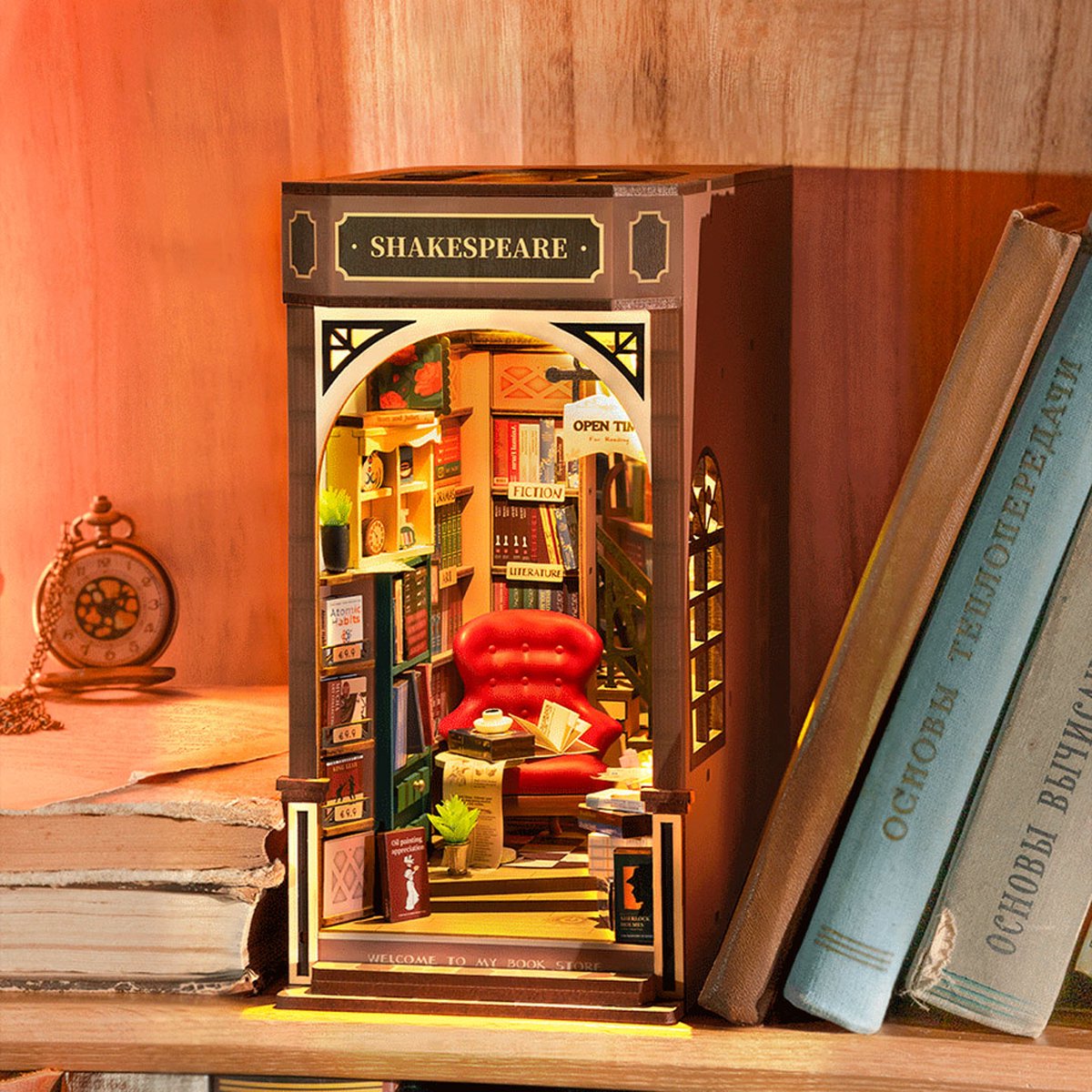
Explore the collection
All Book Nook Kits
76 handcrafted book nook kits, including intermediate and advanced arch builds
Architectural details that define an elven scene
The signature elements of a Rivendell book nook are arches, water, autumn foliage, and cool luminosity. Each one requires a slightly different technique:
- Arches: Thin balsa or basswood strips bent over a curved form, or laser-cut arch pieces from a kit, painted in off-white and pearl. Sand the edges to a slight softness. Elven stonework has no sharp corners.
- Water effects: Poured resin tinted pale blue-green, or UV resin layered in thin passes to build up depth. Even a small simulated waterfall, 2 to 3 cm of layered resin, creates enormous visual drama.
- Foliage: Rivendell sits in perpetual autumn in many of the most iconic visual representations. Tiny paper or fabric leaves in amber, copper, and gold, scattered on pathways and caught in water, add narrative detail instantly.
- Lighting: Cool white or soft blue-white LEDs work far better here than warm amber. Place them above arches and behind waterfalls to create a luminous, ethereal glow rather than a cozy firelight effect.
Difficulty rating and time investment
Rivendell builds land firmly in the intermediate-to-advanced range. The resin water effects alone require patience: most poured resins need 24 hours to cure between layers, so a believable waterfall can take three to four days of incremental work. Budget 20 to 35 hours total. The payoff is a scene that genuinely looks like something assembled by people who had several centuries to practice.
🪄 Hannah’s tip
Several community builders have told me that the Rivendell resin waterfall was the step they nearly gave up on, then ended up most proud of. The trick is adding a tiny drop of white acrylic paint to your final resin layer and using a cocktail stick to pull fine lines downward before it sets. This creates the broken-water texture that looks impossibly realistic once the light catches it. Do it on the very last pour, after you’ve already built up the base depth. Patience with this step pays off more than almost anything else in the whole build.
Several community builders have told me that the Rivendell resin waterfall was the step they nearly gave up on, then ended up most proud of. The trick is adding a tiny drop of white acrylic paint to your final resin layer and using a cocktail stick to pull fine lines downward before it sets. This creates the broken-water texture that looks impossibly realistic once the light catches it. Do it on the very last pour, after you’ve already built up the base depth. Patience with this step pays off more than almost anything else in the whole build.
Minas Tirith: Seven Tiers of Stone on Your Shelf
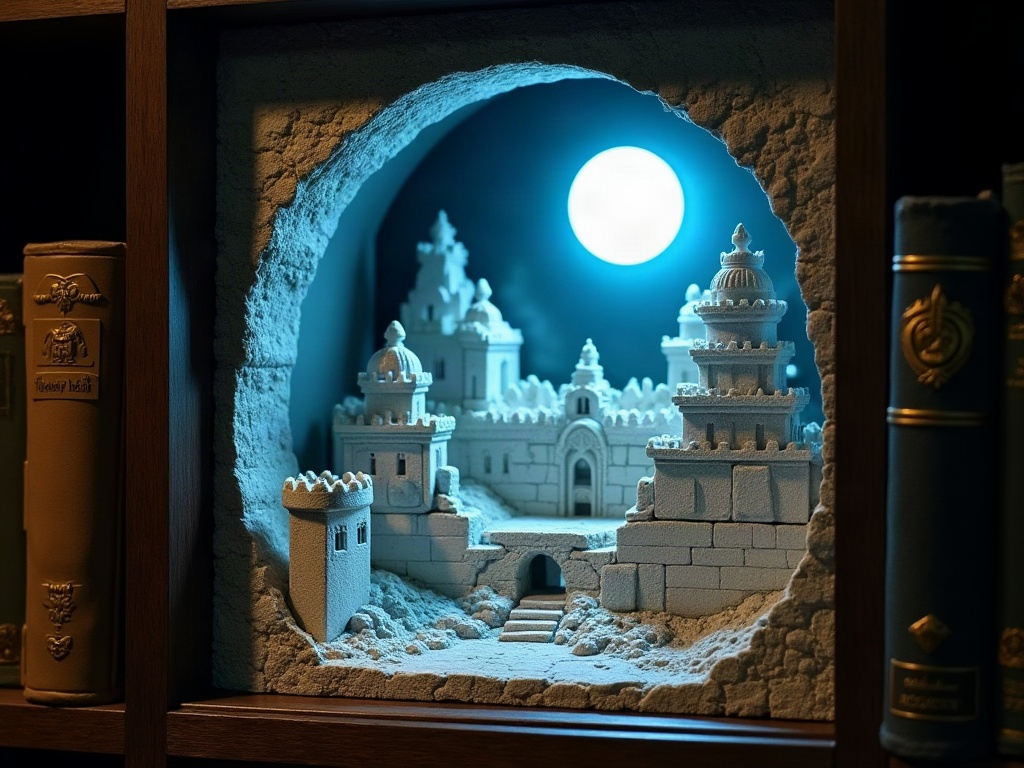
A Minas Tirith book nook is an advanced, multi-week build that uses forced perspective, pale stone textures, and cool LEDs to compress the White City’s seven tiers into a shelf-width insert that looks genuinely monumental. Minas Tirith is an architect’s challenge. The White City is defined by geometry: concentric rings, tiered levels, vertical walls of pale stone, and the stark silhouette of the Citadel at the summit. Compressing that into a shelf-width book nook means making careful decisions about which tier gets the most detail and how to suggest depth without having 40 cm of horizontal space to work with.
The Lord of the Rings inspired book nook at this difficulty level is genuinely a multi-week project. But builders who have completed a Minas Tirith piece consistently describe a specific moment: the White Tree goes in, the cool LEDs switch on, and something clicks. The scene stops looking like a craft project and starts looking like a city. That shift is worth every hour of planning and drying time.
A compact starter kit helps enormously for the structural planning phase of a Gondor build. The Sun Room DIY Miniature House Kit is particularly useful here: its clean lines, flat-roofed components, and neutral palette translate well into Gondorian architecture, and at under $50 it gives you a working structural framework to modify, layer foam tiers onto, and carve stone detail into without committing a large budget upfront.
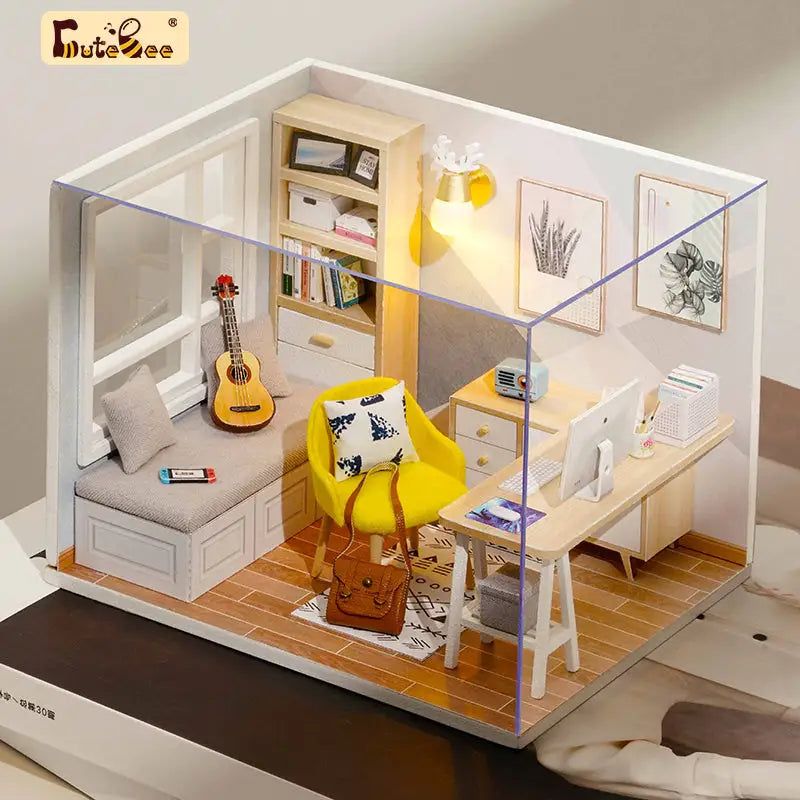
Easy starter under $50
Sun Room DIY Miniature House Kit
Clean architectural lines ideal as a Gondorian base structure
$49.99
Building the illusion of scale
The most effective Minas Tirith book nooks use forced perspective aggressively. The foreground elements (the lower gate, a cobblestone path, perhaps a fountain) are built at close-to-standard 1:12 scale. The middle tiers are built slightly smaller. The upper citadel and the White Tree are miniaturized further still, or suggested with painted backdrop detail rather than physical construction. This technique, borrowed from theatrical set design, creates a sense of immense depth in a space no wider than 10 cm.
- White air-dry clay or lightweight spackling compound over a foam core armature for the stone walls. Inscribe horizontal joint lines with a blunt tool before the material fully sets.
- Cool white or moonlight blue LEDs to replicate the pale, almost silver light that defines Gondor’s stonework in film and illustrated editions.
- The White Tree of Gondor is non-negotiable as a focal detail. A bare-branched tree made from twisted wire, painted white, placed at the Citadel level, gives the whole piece an immediate narrative anchor.
- Dry-brushed titanium white over a gray or pale blue base coat keeps the stonework reading as Gondorian rather than generic medieval.
Difficulty rating and time investment
This is an advanced build. Forced perspective requires planning before a single gram of clay is mixed, and the multi-tiered structure demands a stable internal armature (dense foam insulation board works extremely well). Expect 30 to 50 hours of build time, spread over two to three weeks if you allow adequate drying time between layers. The community builders who share their Minas Tirith projects consistently say the same thing: the moment you place the White Tree, the whole build suddenly becomes worth every hour.
If you want to start with a curated kit rather than sourcing every component individually, browse the fantasy book nook collection for options that include pre-cut structural pieces, LED wiring, and detailed instruction booklets calibrated to each difficulty level.
Lighting: The Detail That Separates Good Builds from Unforgettable Ones
Lighting is not a finishing touch but a structural decision that must be planned before you build your first wall, because the right LED temperature transforms a decent scene into something that stops people mid-sentence. Every experienced book nook builder has the same story: they finished a build, photographed it in daylight, and it looked decent. Then they turned on the LEDs, dimmed the room, and the whole scene came alive in a way that genuinely surprised them. Lighting is not a finishing touch. It is a structural decision that should be planned before you build your first wall.
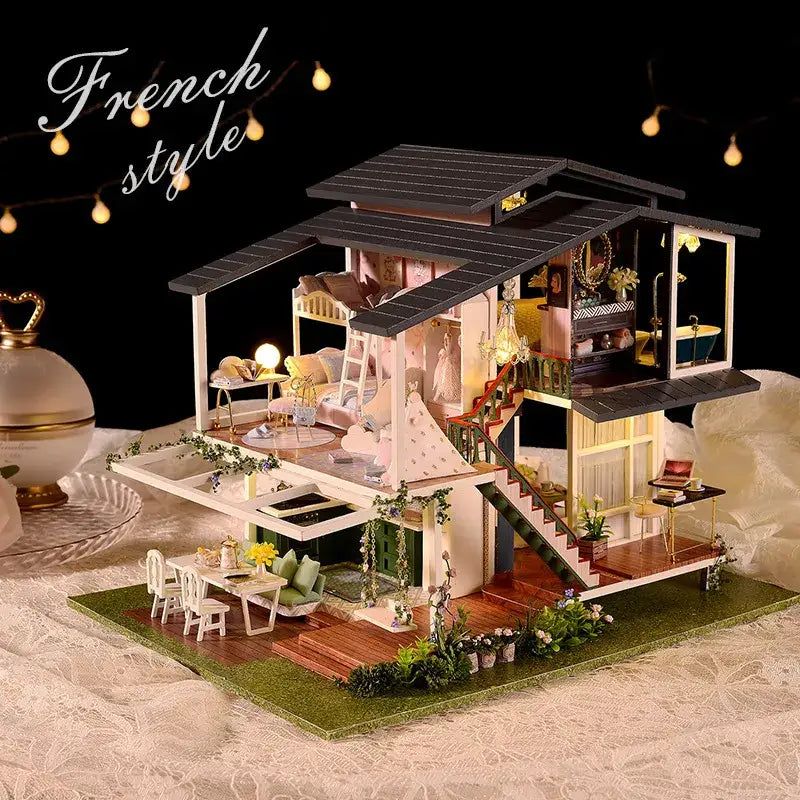
Matching light temperature to your Middle-earth setting
The three aesthetics covered here each have a distinct lighting identity:
- Shire: 2700K-3000K warm white or amber. Simulates candlelight and hearth fire. Creates intimacy and safety.
- Rivendell: 4000K-5000K cool white or very pale blue-white. Suggests something luminous and slightly otherworldly. Avoid warm tones entirely.
- Minas Tirith: 5000K-6500K daylight white or cool moonlight blue. The city is stone and sky. Cold light emphasizes the architecture’s drama.
For wiring, 3V coin cell battery packs are the most popular choice for standalone builds because they fit invisibly behind the back panel. USB-powered LED strips give you more flexibility for brightness control and are worth considering if your book nook will live on a desk near a power source. Either way, plan your wiring channels before you glue your facade in place. It’s the one thing every builder wishes they had done earlier.
Choosing Your Starting Point: Kit or Scratch Build?
Both kit and scratch-build approaches are valid; kits remove sourcing friction so you focus on the personal details, while scratch builds offer total creative control at lower material cost, and your choice depends entirely on what you want from the experience. The honest answer is that both approaches are valid and the choice depends entirely on what you want from the experience. Scratch building gives you total creative control and costs less in materials, but you’ll spend significant time sourcing individual components and troubleshooting structural problems that a well-designed kit has already solved. A good kit does not diminish the craft. It removes the friction so you can focus on the details that actually make your build personal.
Look for kits that specify what’s included clearly: pre-cut wooden pieces, LED lighting hardware, accessory packs (furniture, flora, props), and an instruction booklet with difficulty ratings. A kit that doesn’t tell you its difficulty level upfront is a kit that hasn’t been tested by real builders.
For gift buyers, fantasy-themed book nook kits with Middle-earth aesthetics consistently perform as standout presents for readers, gamers, and film lovers between the ages of 16 and 60. The build itself takes several evenings, which means the gift keeps giving across multiple sittings rather than being opened and shelved in twenty minutes. If you’re exploring premium options, the Monet’s Garden DIY Miniature House Kit showcases the level of detail and accessory richness you should expect from a top-tier kit at any theme.
Premium collector piece
Monet’s Garden DIY Miniature House Kit
Sets the bar for accessory richness and instruction quality
$155.00
Frequently Asked Questions about Lord of the Rings Book Nooks
Everything you might be wondering (click a question to expand).
What size box or frame do I need for a book nook shelf insert?
Most standard book nooks fit a box between 6 cm and 12 cm wide, 18 cm to 22 cm tall, and 16 cm to 20 cm deep. The exact size depends on your shelf spacing. Measure the height between your shelves and the depth from front to back before buying or building a frame. A common mistake is building a scene that’s too deep and won’t slide between books cleanly.
Do I need prior miniature building experience to attempt a Shire-style build?
No. The Shire aesthetic is specifically forgiving for beginners because organic shapes (hills, moss, stone paths) look better with slight irregularities. Start with air-dry clay for the hillside, pre-cut laser wood for the door, and a single strand of warm fairy lights. Those three components alone are enough for a recognizable, charming first build.
Which kit should I choose to start a Lord of the Rings inspired book nook?
For a Shire-style build, the Tranquil Life Kit gives you an organic cottage framework with warm LED hardware already included. For a Minas Tirith build, the Sun Room Kit provides clean architectural lines at a low-commitment price point. For Rivendell, browse the full book nook kit collection for intermediate and advanced options with arch-friendly pre-cut components. In all three cases, the kit handles the structural friction; you handle the creative detail that makes it unmistakably Middle-earth.
How long does a Rivendell book nook take to build?
Budget 20 to 35 hours spread across at least two weeks. The reason for the extended calendar time is resin curing: a believable elven waterfall typically requires three to five separate pours, each needing 24 hours to cure fully before the next layer. You can work on other elements (painting arches, preparing foliage) during those waiting periods. The build rewards patience far more than raw speed.
Can I use a Lord of the Rings book nook as a gift for someone who doesn’t craft?
Absolutely. Kit-based builds are designed so that a complete beginner can follow step-by-step instructions without any prior experience. Look for kits rated “beginner” or “intermediate” that include all materials. A Shire-style kit with a round door and warm LED set is one of the most universally appealing options for a non-crafter, because the finished result is immediately recognizable and genuinely beautiful on any bookshelf.
How do I attach LED lights without them showing through the facade?
Run micro LED strands through small drilled holes in the back or side panel before assembling your facade. Test the placement with the lights on in a darkened room before gluing anything permanently. The most common mistake is installing LEDs last, which usually means awkward visible wiring. Plan your wiring channels at the structural stage, the same way an electrician wires a house before the drywall goes up.
Which Middle-earth setting is best for a first-time book nook builder?
Start with the Shire. The forgiving organic shapes, warm lighting, and instantly recognizable iconography (the round door above all else) mean you get a high-impact finished result without needing precision carpentry or resin-casting skills. Rivendell and Minas Tirith both require more structural planning and more specialized materials. Build your confidence and your tool kit on a Shire project first.
Building Middle-earth One Shelf at a Time
Building a Middle-earth miniature scene is quietly meditative, a few slow evenings absorbed in small, solvable problems, and the finished piece sits on your shelf as an ongoing conversation with a story you love. There’s something quietly meditative about spending three evenings building a tiny hobbit-hole. You’re painting stone texture onto clay at 11pm, the house is quiet, and you’re completely absorbed in whether the door hinge looks convincing at 1:12 scale. That focus, that absorption in small, solvable problems, is exactly what draws thousands of people to miniature building every year. It has nothing to do with productivity and everything to do with the particular satisfaction of making something real with your hands.
Middle-earth is a perfect subject for that kind of making. Tolkien built a whole world through accumulated, loving detail. Every craft builder who recreates a corner of it is doing something structurally similar: building a small, complete world where the details matter and the light is exactly right. A Lord of the Rings inspired book nook sits on your shelf not as a finished object, but as a tiny ongoing conversation with a story you love.
Pick your setting, gather your materials, and give yourself permission to spend a few slow evenings in the Shire, or Rivendell, or on the walls of Gondor. Your bookshelf will never look the same again. And if you have questions, a build photo to share, or just want to tell us which scene you chose, drop a comment below. We read every one.