🎁 Buy 2 kits, get the 3rd FREE · Free shipping on every order

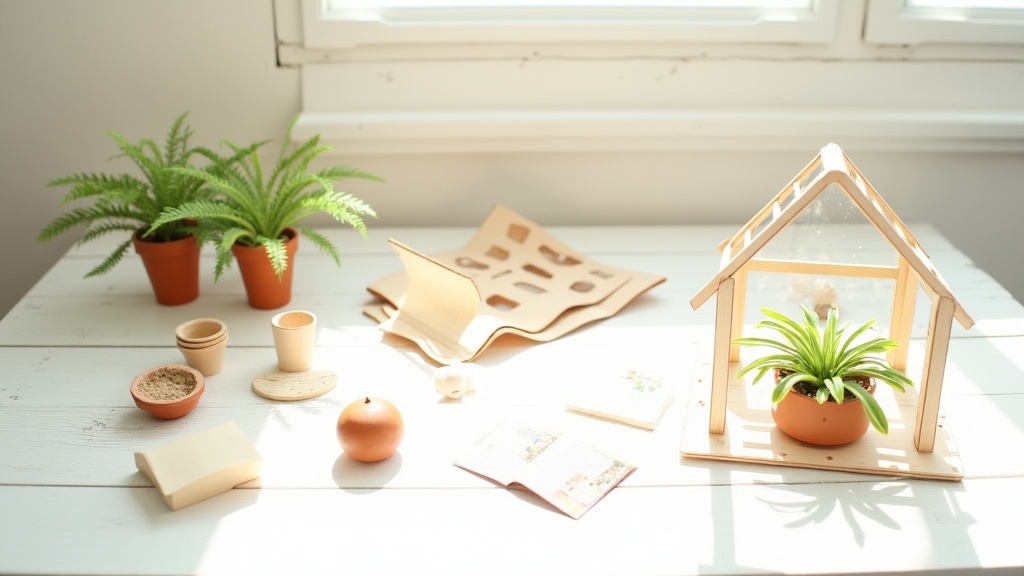
Miniature Botanical Garden Kit: Build Your Own Tiny Green World
A complete guide to choosing, building, and displaying a miniature botanical garden kit. Covers difficulty levels from beginner to advanced, display tips, gifting advice, and a detailed FAQ. Includes a historical note on Victorian Wardian cases and Hannah's personal building tips.

A single afternoon, a small wooden frame, and a handful of paper leaves. That is all it takes to get completely lost in the process of building a miniature botanical garden kit. The outside world fades. You focus on placing one tiny fern frond just right, then another. Before you know it, two hours have slipped by and you have something genuinely beautiful sitting on your desk.
These kits have become a real phenomenon among hobbyists who want the satisfaction of gardening without the mud, the weather, or the waiting. They also make spectacular gifts, the kind that gets unwrapped and immediately put together that same evening. Whether you are a seasoned miniature builder or someone picking up craft tools for the first time, there is a kit designed to meet you exactly where you are.
What Makes a Botanical Garden Kit Different from Other Miniature Kits
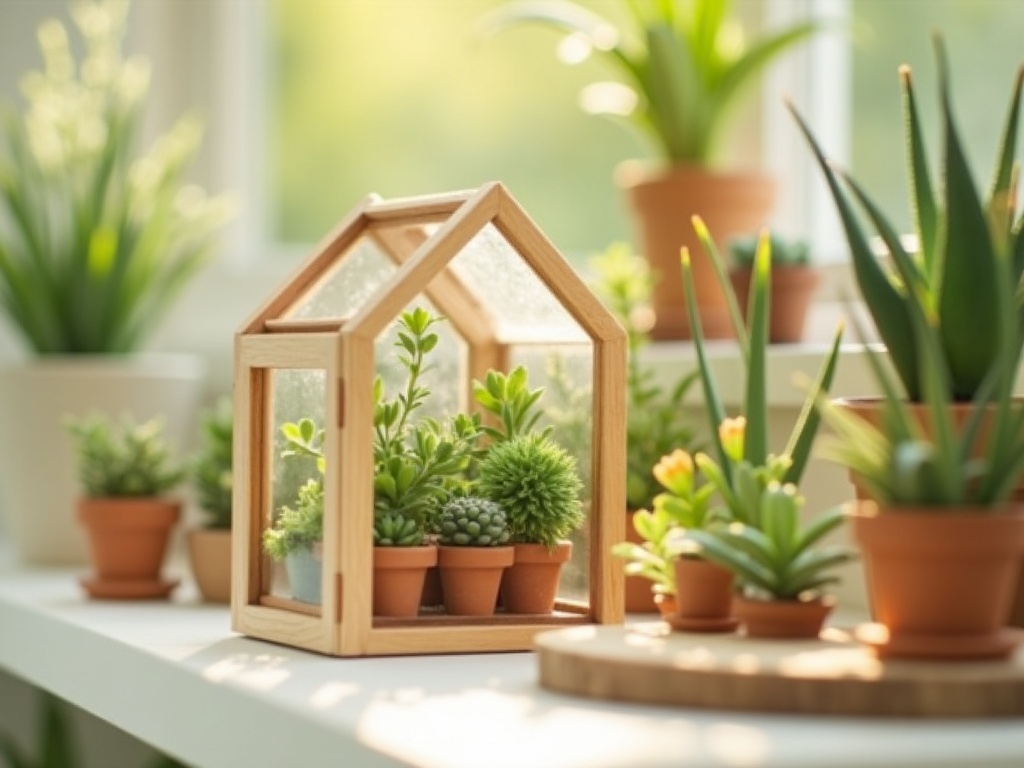
A botanical garden kit sets itself apart by focusing entirely on plants, mosses, glass structures, and lush organic textures rather than rooms or furniture, making it uniquely inviting even for complete beginners who have never tried miniature craft before. Most miniature kits focus on rooms, furniture, or architecture. A botanical garden kit shifts the emphasis entirely toward living things: plants, mosses, glass structures, terracotta pots, and the soft textures of a greenhouse or garden. The challenge is less about precise joinery and more about layering organic shapes to create something that feels genuinely lush. That difference in focus is also why these builds attract people who have never tried miniature craft before; the plant-first aesthetic feels familiar and inviting even to complete newcomers.
The materials tend to be different too. You will typically find:
- Laser-cut wooden structural pieces (greenhouse frames, potting benches, shelving)
- Pre-dyed paper, silk, or dried botanical materials for foliage
- Miniature terracotta or resin pots in multiple sizes
- Clear acrylic or cellophane panels to simulate glass panes
- Tiny accessories: watering cans, seed packets, clay soil texture, stone paths
That variety of tactile materials is a big part of what makes the building process so absorbing. Each texture asks something different from your hands and your attention. It pulls you into a kind of focused calm that is hard to replicate with other hobbies.
If you are curious about the broader range of greenhouse-themed builds, the miniature greenhouse kit collection covers everything from compact windowsill versions to full Victorian-style conservatory replicas. Each design sits at a different difficulty level, so there is always a clear next challenge waiting for you.
📜 Did you know?
The *Wardian case*, invented by botanist **Nathaniel Bagshaw Ward** around 1829, was a sealed glass box used to transport live plants on long sea voyages. It became so popular in Victorian homes that miniature glass garden enclosures turned into a major decorating trend by the 1870s. Today’s miniature botanical garden kits carry that same 19th-century fascination with bringing nature indoors, just in kit form.
The *Wardian case*, invented by botanist **Nathaniel Bagshaw Ward** around 1829, was a sealed glass box used to transport live plants on long sea voyages. It became so popular in Victorian homes that miniature glass garden enclosures turned into a major decorating trend by the 1870s. Today’s miniature botanical garden kits carry that same 19th-century fascination with bringing nature indoors, just in kit form.
Choosing the Right Kit for Your Skill Level
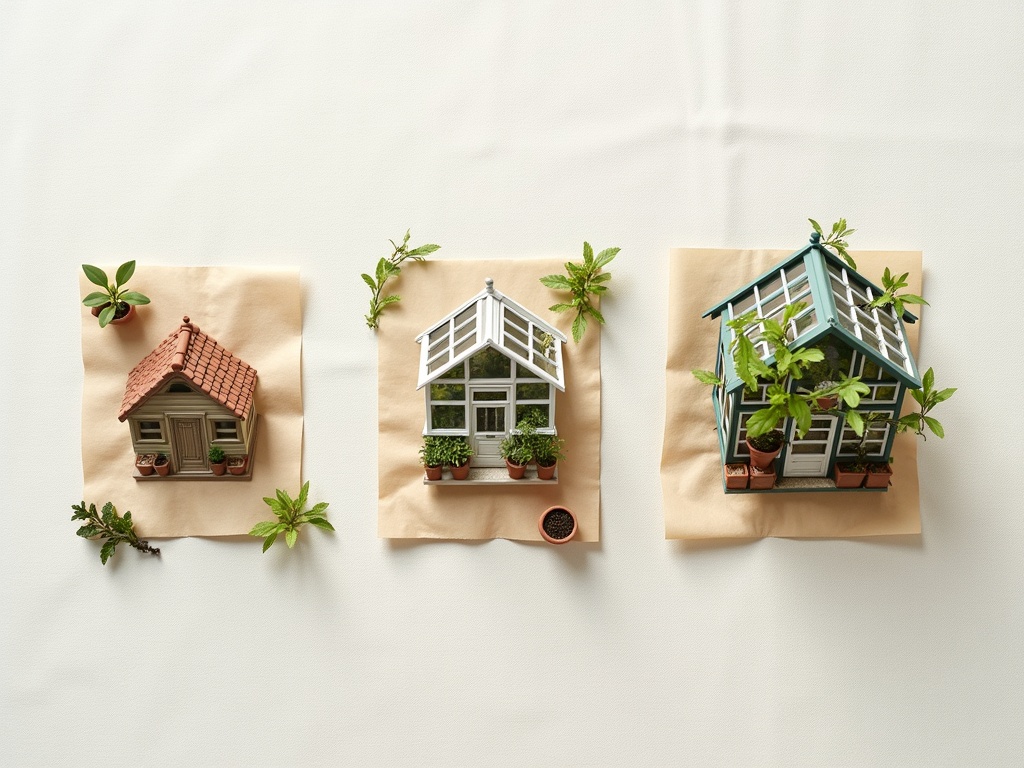
Matching your skill level to the right botanical garden kit is the single most important decision you will make: beginners suit a $25, $55 build of 3 to 5 hours, while advanced collectors should look at the $90, $160 range for a 30 to 50-hour statement piece. Picking the wrong difficulty level is the fastest way to kill enthusiasm for a new hobby. Too simple and the finished piece feels hollow. Too complex and you abandon it halfway. Here is a practical breakdown of what to expect at each tier, including typical price ranges so you can plan your budget before you browse.
| Level | Difficulty | Build Time | Price Range | Best For |
|---|---|---|---|---|
| Beginner | ★★☆☆☆ | 3 to 5 hrs | $25 to $55 | First-time builders, gift for teens |
| Intermediate | ★★★☆☆ | 8 to 14 hrs | $50 to $90 | 1 to 3 completed builds, weekend ritual |
| Advanced / Collector | ★★★★★ | 30 to 50 hrs | $90 to $160+ | Experienced crafters, display statement piece |
Beginner Miniature Botanical Garden Kits (Difficulty 1-2 out of 5)
These kits usually feature a single-room or single-structure design, minimal glue work, and generous pre-cut pieces that slot together without special tools. A small potting shed with a handful of plants, or a compact window greenhouse with three or four shelves, falls into this range. Build time runs roughly 3 to 5 hours across a relaxed weekend. Everything you need comes in the box, including glue, tweezers, and a basic instruction booklet with illustrated steps. Prices typically sit between $25 and $55, making them a low-risk entry point if you are not yet sure how deep you want to go with the hobby.
Beginners often describe their first completed build as a turning point. There is a specific satisfaction in seeing a tiny watering can placed on a tiny potting bench that you built with your own hands. It is concrete, immediate, and genuinely surprising the first time it happens.
“I had never done anything like this before. I finished the little potting shed in one Sunday afternoon and immediately ordered another kit the same evening. I genuinely did not expect to feel that proud of something so small.”
Sophie R., community member (first-time builder)
Intermediate Miniature Botanical Garden Kits (Difficulty 3 out of 5)
Step up to intermediate and the structures get more elaborate: multi-paned greenhouse roofs, opening doors, layered planting beds at different heights. You will spend more time on plant arrangement because the scene has enough depth to reward careful composition. Build time stretches to 8 to 14 hours, which most builders spread over several evenings. Budget between $50 and $90 for a well-equipped intermediate kit with LED lighting and a generous foliage selection.
This is the range where the meditative quality really kicks in. Each session ends at a natural stopping point, and coming back the next day to a half-built greenhouse feels genuinely exciting. The kit becomes a small ritual. Many community members tell us they specifically time their sessions to coincide with their favourite podcast or playlist, turning the build into a two-part treat.
Hannah’s Tip
Before you start any miniature botanical garden kit, lay out every single piece on a clean white surface and photograph it with your phone. This takes about five minutes and saves significant frustration later. When a tiny part goes missing mid-build (and it will happen), you can zoom into that photo and confirm exactly what you are looking for. I have been doing this since my third kit and I will never skip it. It also helps you get familiar with the shapes before the instructions ask you to find them quickly.
Advanced and Collector Miniature Botanical Garden Kits (Difficulty 4-5 out of 5)
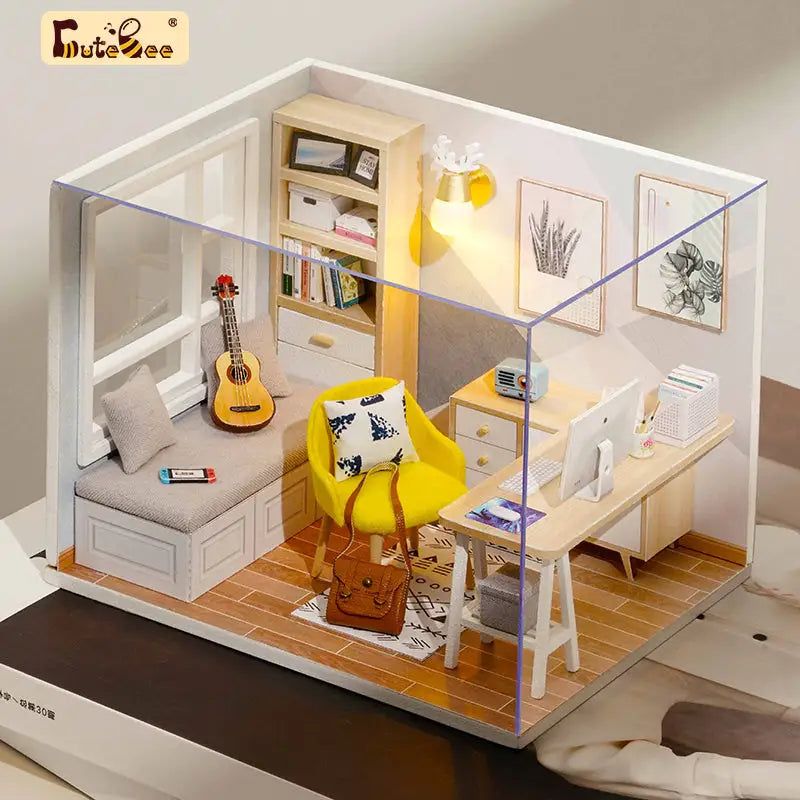
Advanced botanical kits are statement pieces. Think a full Victorian conservatory with working LED lighting, dozens of individual plant species rendered in paper and silk, tiled floors, painted backdrops, and fine brass-look hardware. Build times can reach 30 to 50 hours, and prices typically range from $90 up to $160 or more for premium collector editions. They are not rushed. They are built with patience, revisited, adjusted, and ultimately displayed with real pride.
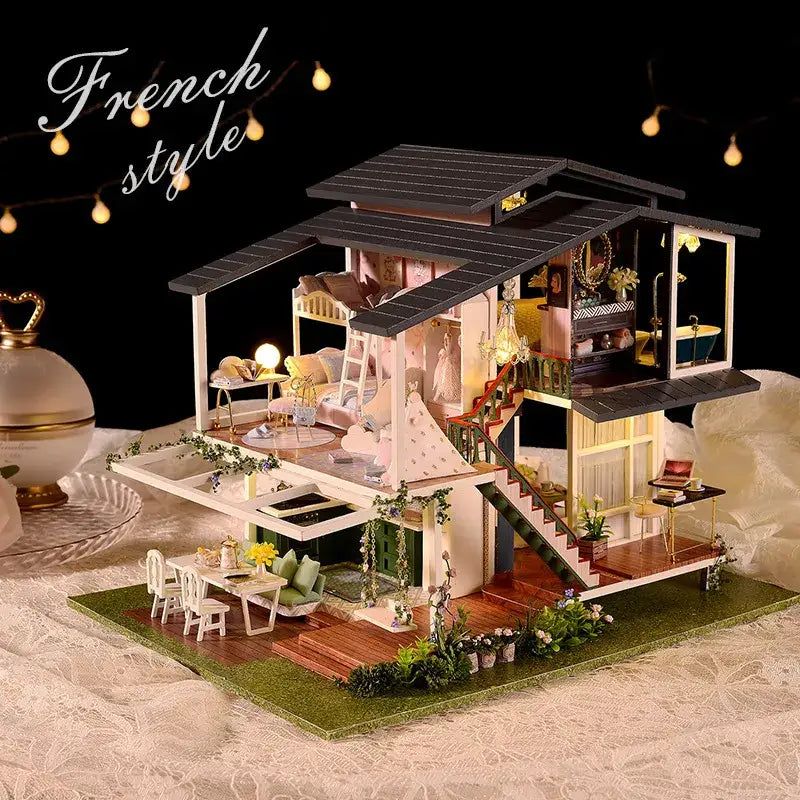
These kits are also popular as gifts for experienced crafters who have already completed a few intermediate builds and are ready for something that will genuinely challenge them. If you want to see what the top end looks like, the Monet’s Garden DIY Miniature House Kit below is one of the most stunning botanical builds in the collection.
How to Style and Display Your Finished Miniature Greenhouse
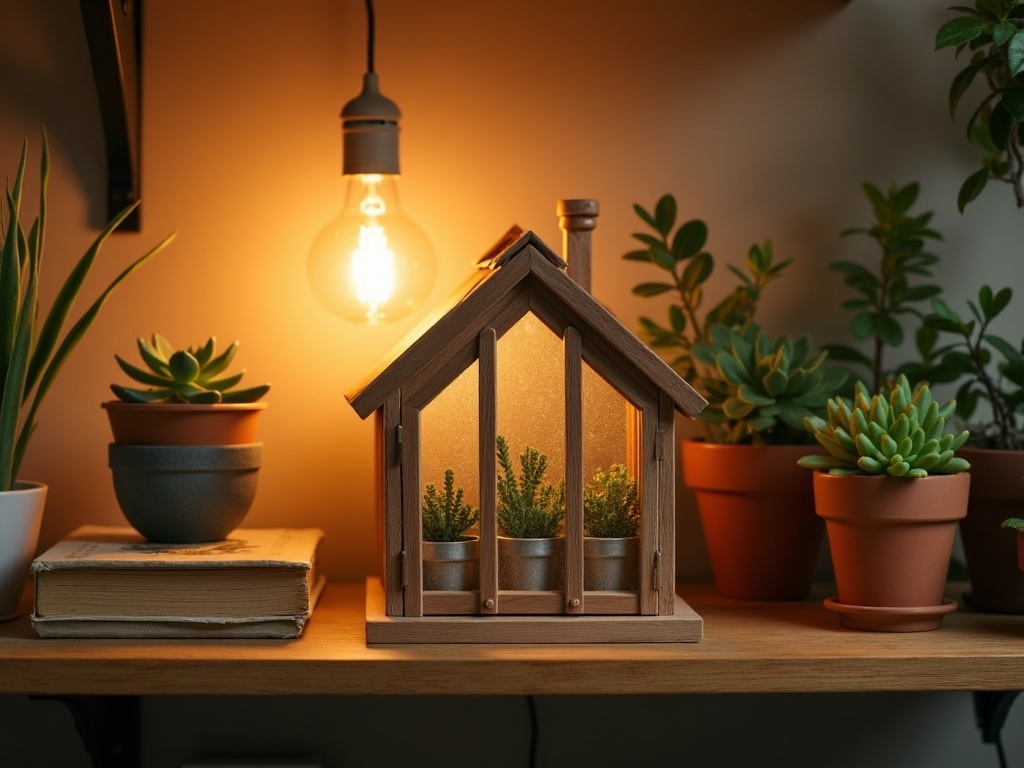
Display your finished miniature greenhouse at eye level or slightly below, lit by a warm 2700K directional lamp, and grouped with real plants or botanical prints to turn it into a curated corner that earns a second look from every visitor. The build is only half the story. Where and how you display the finished piece changes how much you enjoy it every single day. These are not items to tuck into a drawer; they are designed to be lived with, glanced at over morning coffee, and noticed by every visitor who comes through the door.
A few display principles that work consistently well:
- Eye level or slightly below. Miniature scenes are designed to be looked into, not down at. A small shelf, a stack of books, or a dedicated display stand puts the scene at the right viewing angle. The interior depth of a greenhouse kit rewards a slightly downward gaze, so positioning the base about 10 to 15 cm below eye level is the sweet spot most builders land on.
- Warm, directional lighting. A small clip-on LED lamp pointed at an angle picks up the textures of the wooden frame and makes the tiny plants glow. Avoid overhead fluorescent light, which flattens everything. Several community members use a warm-white 2700K bulb on a flexible arm; it transforms even a modest build into something that looks professionally photographed.
- Grouped with complementary objects. Real botanical prints, a small stack of gardening books, or a few actual succulent pots placed nearby create a coherent corner that feels curated rather than random. One community member paired her finished potting shed with a trailing pothos and a stack of vintage seed catalogues; the result looked like it had always belonged there.
- Dust management. A glass cloche or a small acrylic display case keeps the build clean without hiding it. Most intermediate and advanced botanical kits are designed to fit standard display box sizes.
“I mounted my window greenhouse in a shadow box frame and hung it on the wall like a piece of art. People always stop and stare. They never guess it is a kit.”
Marcus T., intermediate builder, community showcase
Community members frequently share their display setups, and the range is genuinely inspiring: a miniature conservatory tucked into a vintage wooden crate, a potting shed scene paired with a real trailing pothos, a window greenhouse mounted on a shadow box frame and hung on the wall like art. There is no single right answer, which is part of what makes the hobby so personal.
For builders who want to expand their scene with additional plants or furniture pieces, the greenhouse kit accessories section has individual add-on packs that slot into most standard botanical builds without modification.
The Best Miniature Botanical Garden Kit as a Gift
A miniature botanical garden kit makes one of the most thoughtful gifts you can give: it communicates that you think the recipient will enjoy something slow, satisfying, and beautiful, and it delivers an experience that stretches across several evenings. A miniature botanical garden DIY kit is one of those rare gifts that communicates something specific: I think you would enjoy something slow, satisfying, and beautiful. That lands differently than a generic present. The recipient does not just unwrap an object; they unwrap an experience that can stretch across several evenings.
A few things to keep in mind when gifting:
- Match the difficulty level to the recipient’s experience. A beginner given an advanced kit will feel overwhelmed. A seasoned builder given a beginner kit will feel patronized. When in doubt, intermediate is the safe middle ground for adults who like making things. The $50 to $90 range covers most well-received intermediate options.
- Most kits include everything needed to start immediately, but a set of fine-tip tweezers and a small craft mat make a thoughtful addition to any gift package.
- Birthday, Mother’s Day, and holiday gifting all skew strongly toward botanical themes, according to our community feedback. The visual appeal of the finished piece matters to recipients who will display it.
Kits also pair well with our botanical-themed miniature builds if the recipient is the type to want a matching set. Several customers have built out entire shelf displays using two or three complementary greenhouse and garden scenes side by side.
Frequently Asked Questions about Miniature Botanical Garden Kits
Everything you might be wondering (click a question to expand).
What age is appropriate for a miniature botanical garden kit?
Most beginner kits are rated for ages 14 and up because of small parts and the need for craft glue. That said, many parents build alongside children aged 10 to 13 with great results, handling the glue steps themselves and letting the child focus on assembly and decoration. Advanced kits are firmly adult territory, primarily because of the fine detail work and longer sustained focus required.
How long does a typical kit take to complete?
It depends heavily on difficulty level. Beginner kits run 3 to 5 hours. Intermediate kits typically take 8 to 14 hours spread over multiple sessions. Advanced collector kits can reach 30 to 50 hours. Most builders prefer shorter daily sessions of 1 to 2 hours rather than one long marathon, both for comfort and because glue needs drying time between stages.
Do botanical kits require any tools not included in the box?
The vast majority of kits include everything needed: glue, tweezers, a craft knife or punch-out tool, and instructions. A cutting mat is useful to protect your work surface. Some builders add a small pair of curved-tip tweezers for placing very fine foliage pieces. Good lighting, either natural or a dedicated desk lamp, makes a genuine difference to both precision and enjoyment.
Can I customize the plants in my kit with different colors?
Yes, and many builders do. Pre-dyed paper foliage takes acrylic paint well, and a dry-brush technique with a slightly lighter shade adds convincing depth to flat leaf pieces. Some community members also swap out kit foliage entirely for materials sourced from other botanical or floral craft suppliers, creating fully custom color palettes that match their home decor.
Are these kits suitable for someone with no crafting experience?
Beginner-rated kits are specifically designed for exactly that person. The instructions are illustrated step by step, the pieces are labeled or color-coded, and the construction sequence is tested to avoid frustrating moments where you realize you needed to attach Part B before Part A. The most important thing is to read the full instruction sheet before starting, so you understand the overall sequence before your hands get involved.
How much does a good miniature botanical garden kit cost?
Prices vary by complexity. Beginner kits generally run between $25 and $55 and include all essential materials. Intermediate kits with LED lighting and richer foliage selections typically fall between $50 and $90. Advanced collector pieces, such as full Victorian conservatory builds, range from $90 to $160 or more. In all tiers, the kits are designed to be complete in the box, so there are no surprise add-on costs for materials.
Building a Hobby That Grows With You
What starts as a single botanical garden kit can grow into a full shelf of miniature greenhouse scenes, thanks to a natural difficulty progression that takes you from reading instructions to making creative choices entirely your own. One of the things I hear most from community members is that they started with a single botanical kit expecting a one-time project, and two years later they have an entire shelf dedicated to miniature greenhouse scenes. That is not an accident. These kits are designed at multiple difficulty tiers precisely because the hobby has a natural progression arc.
You get faster at reading instructions. Your hands learn to handle tiny pieces with more confidence. You start making choices the kit did not anticipate, substituting a color here, adding a detail there. That progression from follower to creator is genuinely one of the most satisfying things a craft hobby can offer. The moment you look at a finished miniature botanical garden kit build and notice a small customisation that was entirely your own decision is the moment it stops being a kit and becomes your work.
The full greenhouse and botanical kit collection is organized by difficulty so you can see at a glance where your current skill level sits and what is waiting for you at the next step. And if you have already completed a build and want to share it, our community feed is always open. Some of the most beautiful botanical displays we have seen came from people who were convinced they were “not crafty” six months before they posted that photo. ✨