🎁 Buy 2 kits, get the 3rd FREE · Free shipping on every order

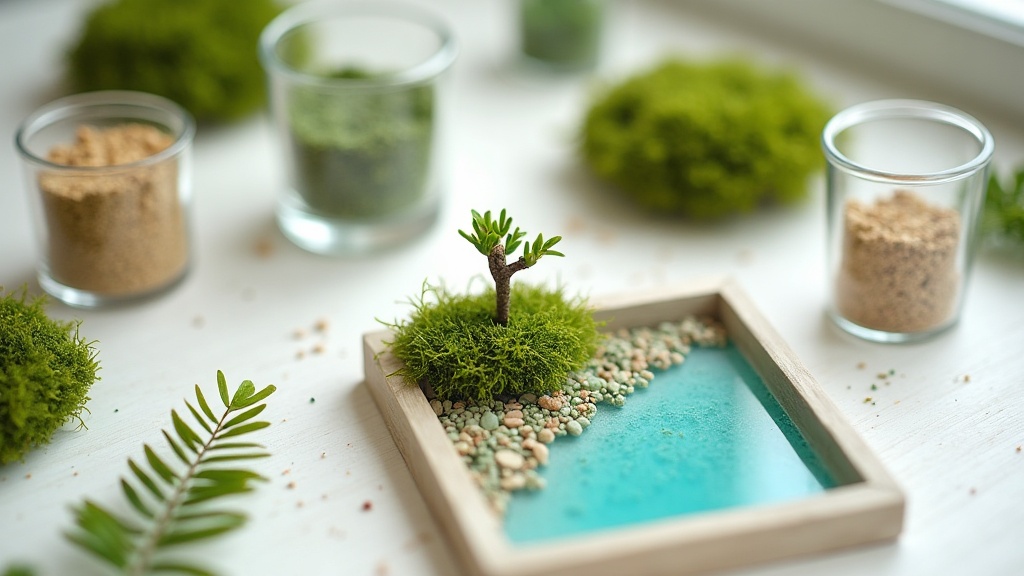
Miniature Scenery Materials for Book Nooks: Moss, Gravel, Water Effects, and More
A practical, material-by-material guide to miniature scenery for book nooks, covering preserved moss, sand and gravel ground cover, foliage techniques, and resin water effects. Includes theme-by-theme scenery recipes and a beginner-friendly FAQ, written for US hobbyists building shelf dioramas in 2026.

You’re three hours into building a forest book nook. The tiny shelves are done, the micro-lighting is wired, and then you stare at the bare floor of the scene and realize: it needs miniature scenery materials for book nooks to actually feel alive. That moment, right there, is where the project transforms from a craft into a tiny world.
Choosing the right scenery materials is less about following a formula and more about understanding what each texture communicates. Rough gravel reads as a mountain path. Soft green moss whispers old-growth forest. Still resin water stops time at the edge of a pond. Each material carries a feeling, and the combinations you choose tell the story your book nook is trying to tell.
This guide walks through the most versatile miniature scenery materials for book nooks available in 2026, how to apply them confidently, and which combinations work best for popular themes. Whether you are picking up a craft knife for the first time or you already have three finished builds on your shelf, you will find something useful here.
Why Scenery Materials Change Everything in a Book Nook
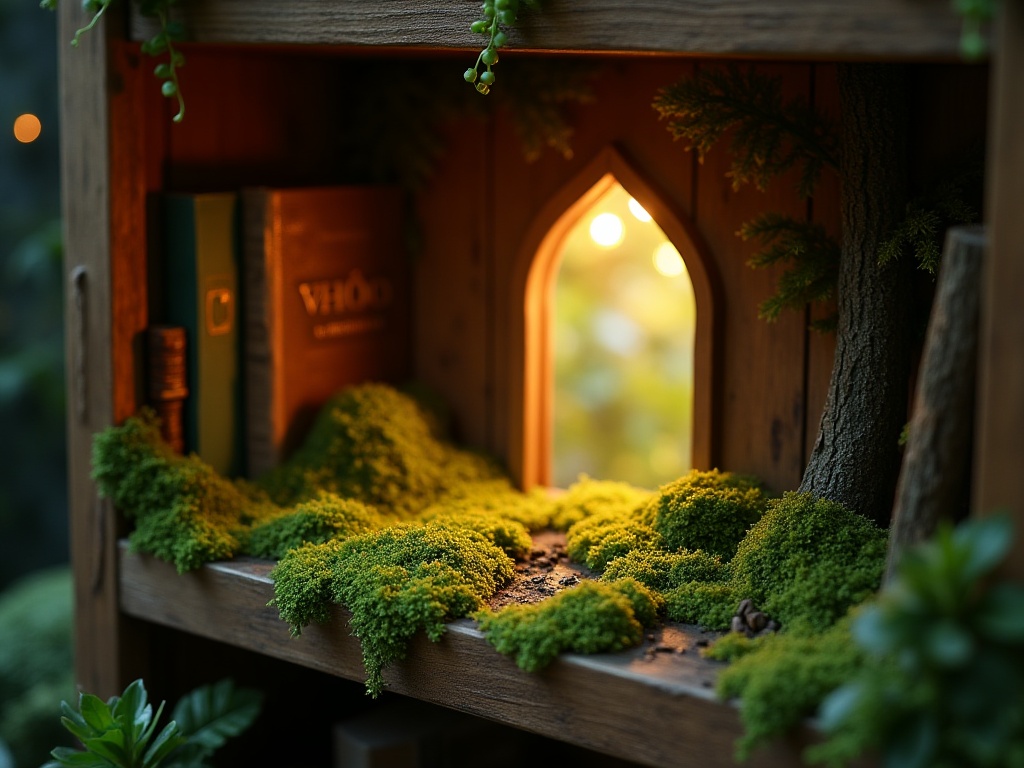
Scenery materials transform a book nook from a bare shelf insert into a believable miniature world: ground cover, foliage, and water effects anchor every other element visually, making the scene feel plausible rather than merely decorative. A book nook without ground texture looks unfinished, no matter how detailed the architecture. When your eye lands on a miniature scene, it naturally reads the ground plane first, then travels upward to walls, furniture, and lighting. Ground cover, foliage, and water effects anchor every other element visually, making the miniature feel plausible rather than merely decorative.
There is also a deeply meditative side to applying scenery materials. Sprinkling static grass, pressing moss clusters into wet glue, dripping resin into a tiny stream channel: these are slow, repetitive actions that settle the nervous system in a way that few hobbies match. Many crafters describe this phase of a build as the most calming part of the whole process. Hannah noticed exactly that when finishing the garden path on her first Victorian dollhouse kit, a Sunday afternoon that stretched happily into evening.
Beyond the sensory experience, scenery materials are where your book nook stops looking like a kit build and starts looking like yours. The angle at which you push a fern frond, the density of gravel you choose for a cobblestone effect, the tint you mix into epoxy water: these micro-decisions are invisible signatures.
📜 Did you know?
Model railroad hobbyists pioneered most of the scenery techniques miniaturists use today. Companies like Woodland Scenics began developing ground cover products in the 1970s specifically for N-scale and HO-scale train layouts. The foliage clusters, fine turf, and scenic cements that book nook builders reach for in 2026 are direct descendants of those original railway diorama supplies, refined over roughly 50 years of hobbyist feedback.
Model railroad hobbyists pioneered most of the scenery techniques miniaturists use today. Companies like Woodland Scenics began developing ground cover products in the 1970s specifically for N-scale and HO-scale train layouts. The foliage clusters, fine turf, and scenic cements that book nook builders reach for in 2026 are direct descendants of those original railway diorama supplies, refined over roughly 50 years of hobbyist feedback.
What that history means for you practically: the materials are well-tested, widely available, and beginner-forgiving. You are not experimenting in the dark. You are stepping into a long, well-worn craft tradition and making it your own.
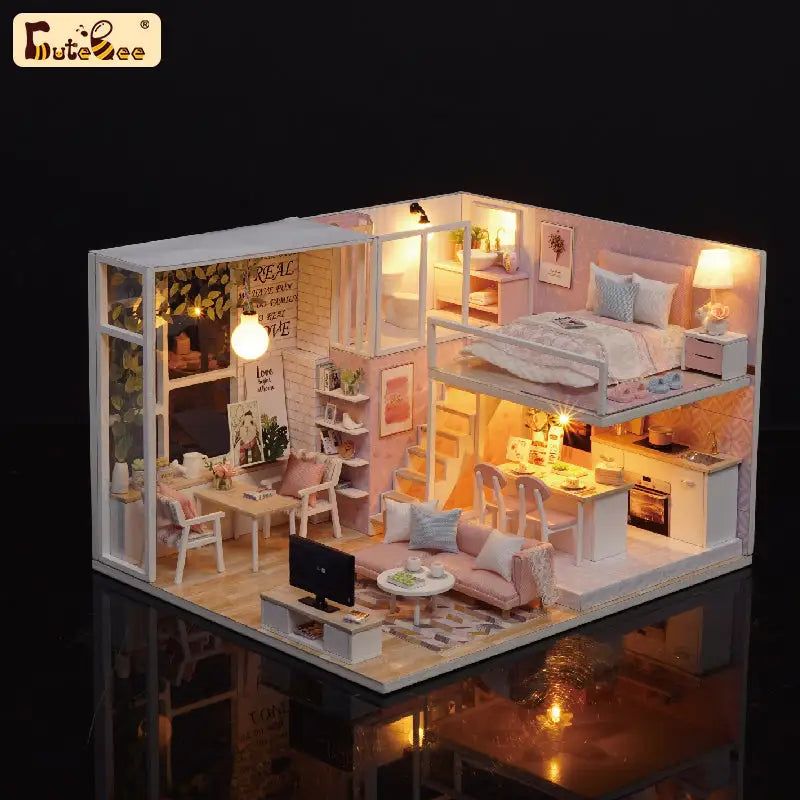
Bestseller cottage kit
Tranquil Life DIY Miniature House Kit
Includes ground cover scatter, moss tufts, and pre-cut foliage punches, so you can practice every technique in this guide on a single build.
$67.90
Moss: The Most Forgiving Miniature Scenery Material for Book Nooks
Preserved sheet moss and granular lichen are the workhorses of book nook scenery: press them onto PVA-coated surfaces, let dry, and they hold their shape permanently with no special skill required. Preserved sheet moss and granular lichen are the workhorses of miniature scenery materials for book nooks. Sheet moss comes pre-dried and dyed in multiple green tones. You tear small sections, press them onto PVA-coated surfaces, and they hold their shape permanently once dry. No special skill required. Difficulty rating: beginner-friendly.
Lichen clusters (often sold under the name “reindeer moss” or “Scandinavian moss”) add dimension because they are three-dimensional by nature. Pile them in corners to suggest undergrowth or glue individual pieces to painted wire armatures to build miniature shrubs in under 20 minutes.
A few practical tips for working with moss in book nooks:
- Seal the moss with a 50/50 mix of PVA glue and water before painting over it. Unsealed moss can shift color when varnished.
- Layer two or three shades of green (yellow-green, mid-green, dark forest green) for a realistic depth that single-color moss never achieves.
- For fantasy-themed book nooks, a light dry-brush of pale blue or lavender over dark moss creates a bioluminescent glow effect that photographs beautifully.
- Preserved moss does not need watering or light, so it is fully archival for a display piece meant to last years.
Moss pairs especially well with fairy tale, enchanted library, and dark academia book nook themes. It is the single material that reads as “old and magical” faster than almost anything else in a miniature scene. If you are only buying one scenery material to start, moss is the one.
You can find preserved sheet moss and lichen clusters sized specifically for shelf-scale builds in our book nook accessories collection, alongside foliage punches and scatter materials that pair naturally with it.
Sand, Gravel, and Fine Turf: Building Ground Texture from Scratch with Miniature Scenery Materials
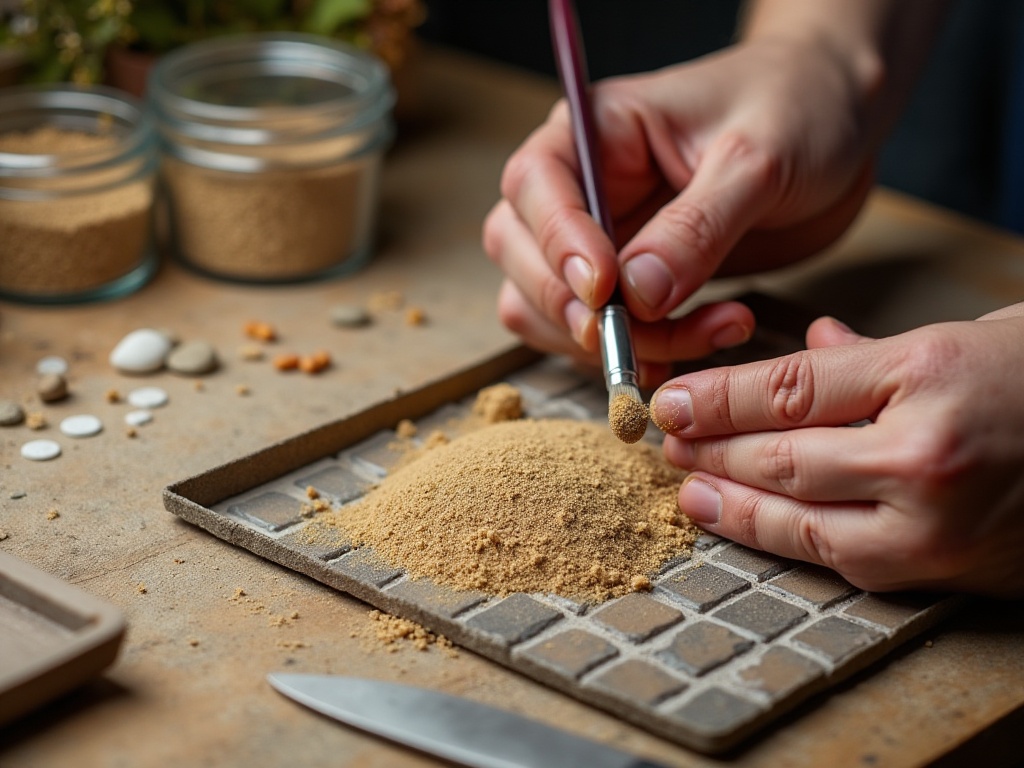
Sand and fine gravel are the most underrated ground cover materials in a crafter’s toolkit: cheap, widely available, and strikingly realistic when applied with patience using PVA glue and a matte varnish seal. Sand and fine gravel are the most underrated miniature scenery materials for book nooks in a crafter’s toolkit. They are cheap, endlessly available, and produce strikingly realistic results when applied with a little patience.
Fine sand (the type sold for children’s art projects or aquarium substrate) creates beach floors, desert canyon aesthetics, or the dusty cobblestone between a market scene’s flagstones. Apply PVA to the surface, sprinkle sand generously, wait 30 minutes, then vacuum away the excess. One coat of matte varnish locks everything permanently.
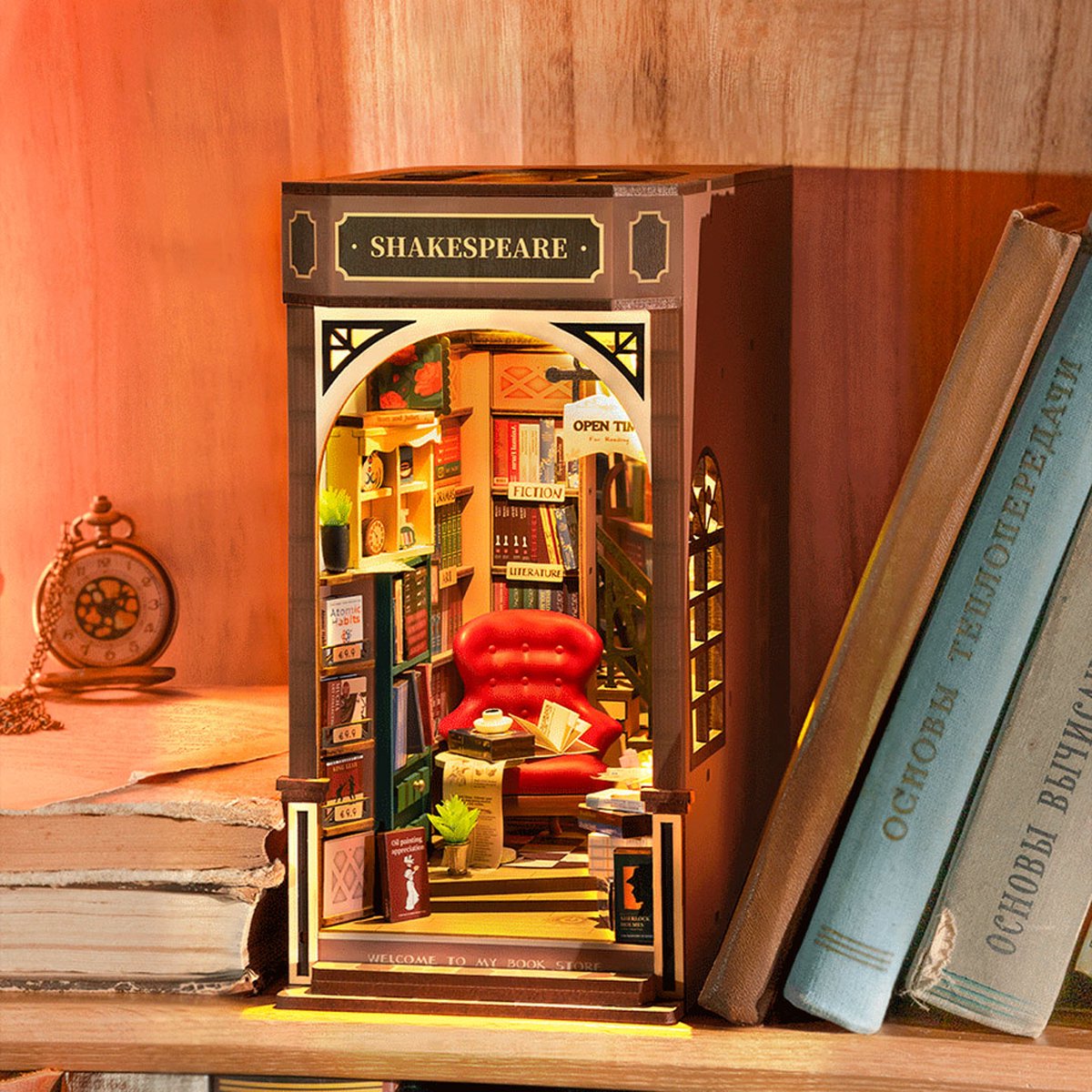
Explore the collection
All Book Nook Kits
76 handcrafted book nook kits
Each kit arrives with a starter ground cover layer built in, giving you a real base to practice sand and gravel scatter techniques before adding your own touches.
Coarser gravel, in 1-3mm particle sizes, reads as cobblestones, scree slopes, or riverbed shingle at standard book nook scale (most shelves sit between 1:12 and 1:24 scale). Mix it with fine sand in a roughly 30/70 ratio to avoid a uniform texture that looks artificial.
Fine turf products (finely ground foam or natural materials dyed in earth tones) bridge the gap between gravel and static grass. They read as dirt, dried leaves, or patchy meadow depending on color. Apply them with the same PVA method as sand: wet surface, sprinkle, press gently, seal.
For a layered ground effect that feels genuinely three-dimensional, follow this sequence:
- Base coat of acrylic paint in a dark earth tone.
- Scenic cement or diluted PVA brushed over the whole area.
- Fine turf or sand as the primary layer.
- Scattered gravel on top for texture variation.
- Final press of moss clusters or foliage tufts while the glue is still wet.
- Matte varnish once fully cured (24 hours minimum).
✨ Hannah’s tip
Before you commit to any ground texture on your actual book nook floor, test your material combination on a scrap piece of foam board or cardboard first. Tuck it into the shelf to check how it reads in that specific light. Indoor shelf lighting is dramatically different from your workbench lamp, and colors shift in ways that surprise even experienced builders. Thirty minutes of testing saves hours of regret. ✨
Before you commit to any ground texture on your actual book nook floor, test your material combination on a scrap piece of foam board or cardboard first. Tuck it into the shelf to check how it reads in that specific light. Indoor shelf lighting is dramatically different from your workbench lamp, and colors shift in ways that surprise even experienced builders. Thirty minutes of testing saves hours of regret. ✨
Foliage and Miniature Plants: Ferns, Vines, and Wildflowers for Book Nook Scenery
Foliage punches the hardest visually for its price: a single bag of mixed miniature fern punches, paper leaves, or laser-cut foliage sheets can populate an entire book nook with believable plant life at easy-to-intermediate difficulty. Foliage punches the hardest visually for its price. A single bag of mixed miniature fern punches, paper leaves, or laser-cut foliage sheets can populate an entire book nook with believable plant life. Difficulty rating: easy to intermediate, depending on the technique.
Paper and laser-cut leaves take paint well. A thin wash of raw sienna over a pre-painted green leaf adds the kind of natural color variation that pre-tinted materials rarely achieve out of the package. Bend the leaves slightly before gluing: flat leaves read as paper, curved leaves read as real.
Vines are among the most requested elements when it comes to miniature scenery materials for book nooks, and with good reason. A single strand of twisted florist wire wrapped in green tape, then dotted with tiny punched leaves, can drape over a doorframe or wrap a miniature column in under an hour. The wire holds any shape you bend it to, permanently.
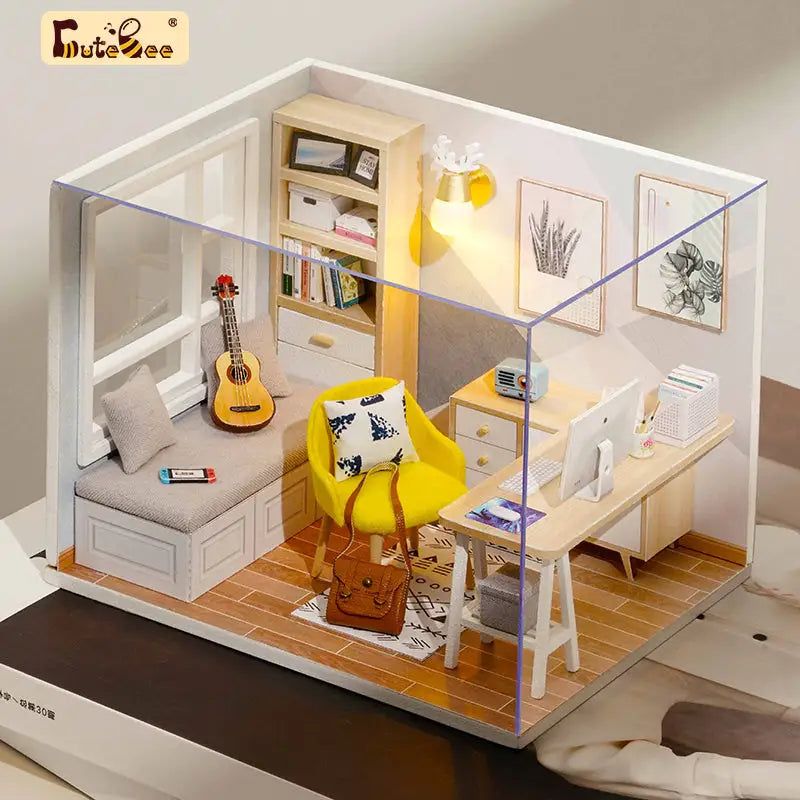
Easy starter under $50
Sun Room DIY Miniature House Kit
A favorite for practicing vine and foliage placement: the kit’s open architecture gives you plenty of surfaces to experiment with draping greenery before the glue sets.
$49.99
Static grass adds wildflower meadow energy to book nooks themed around countryside cottages or fairy gardens. Apply it with a static grass applicator if you have one, or simply press tufts (pre-glued bundles) into wet PVA for a low-tech result that is nearly as convincing. Pre-made tufts are widely available in seed-head, flowering, and dry-grass varieties.
You can find a curated selection of foliage products, ground cover materials, and scenery accessories at our book nook accessories collection, where each product is tested specifically for shelf-scale builds.
Water Effects: Resin, Gel Medium, and Texture Paste for Miniature Scenery
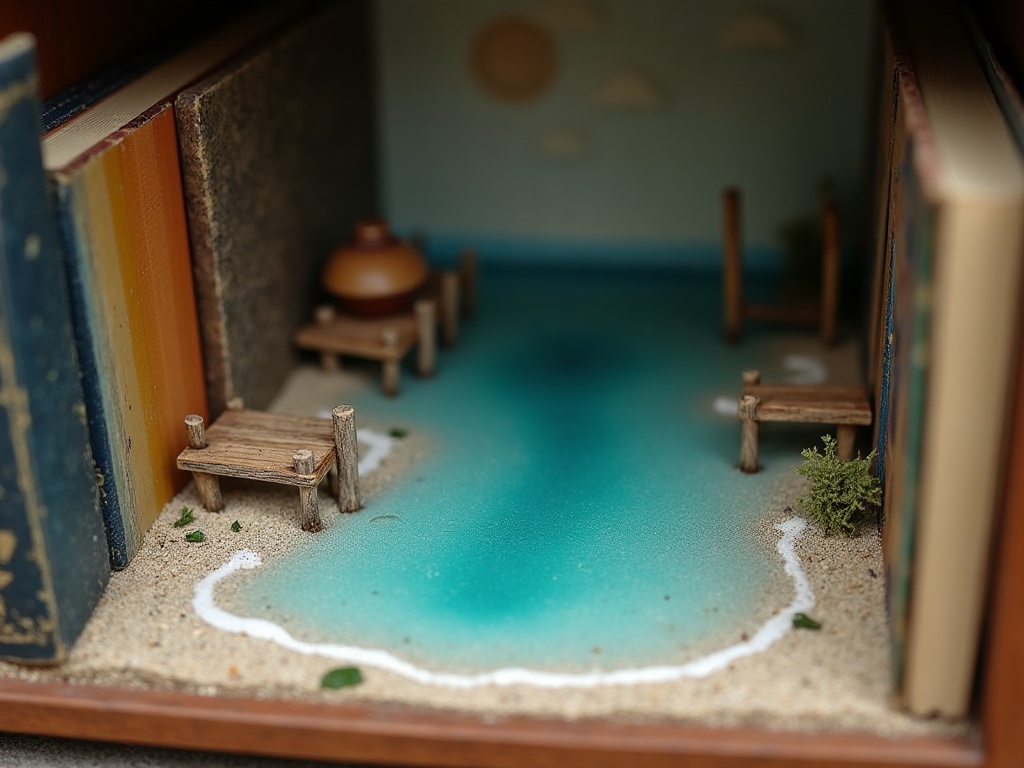
Nothing stops a viewer in their tracks quite like convincing miniature water, and water effects are more approachable than most beginners expect, whether it is a still forest pond, a rushing creek, or the reflective surface of a rain-soaked cobblestone street. Nothing stops a viewer in their tracks quite like convincing miniature water. Whether it is a still forest pond, a rushing creek, or the reflective surface of a rain-soaked cobblestone street, water effects are the showpiece element in any book nook that includes them. They are also more approachable than most beginners expect.
Two-part epoxy resin is the most popular choice for still water surfaces, and it earns that popularity. Pour it in shallow layers no deeper than 6mm at a time (deeper single pours generate too much heat during curing and risk surface cloudiness), tint it with alcohol inks or acrylic paint, and you get a glass-clear finish that genuinely looks like captured water. The working time on most hobby resins is 30 to 45 minutes, which is enough to add subtle color gradients from the “shallow shore” to the “deep center” of a miniature pond.
For flowing water or rapids, acrylic gel medium is more flexible and forgiving. Apply it with an old brush in directional strokes, let it dry translucent, then paint thin lines of white over the ridges to simulate foam. Repeat two or three layers for depth. The result looks convincing and costs a fraction of specialty resin products.
Texture paste (the type sold for mixed media art) creates rain-slicked streets and damp stone surfaces without requiring any pouring. Apply a thin coat, comb it lightly with a palette knife for directionality, then seal with a gloss varnish. The result is subtle, photographic, and completely repeatable.
A few things to know before you start with resin water:
- Work in a dust-free environment. Particles that land in wet resin are permanent.
- Warm the resin bottles in a bowl of warm water for 5 minutes before mixing. Warmer resin flows better and produces fewer bubbles.
- A quick pass with a heat gun or kitchen torch about 30 seconds after pouring pops surface bubbles cleanly.
- Seal all wood or foam surfaces with PVA before pouring. Unsealed porous materials off-gas and create trapped bubbles you cannot fix.
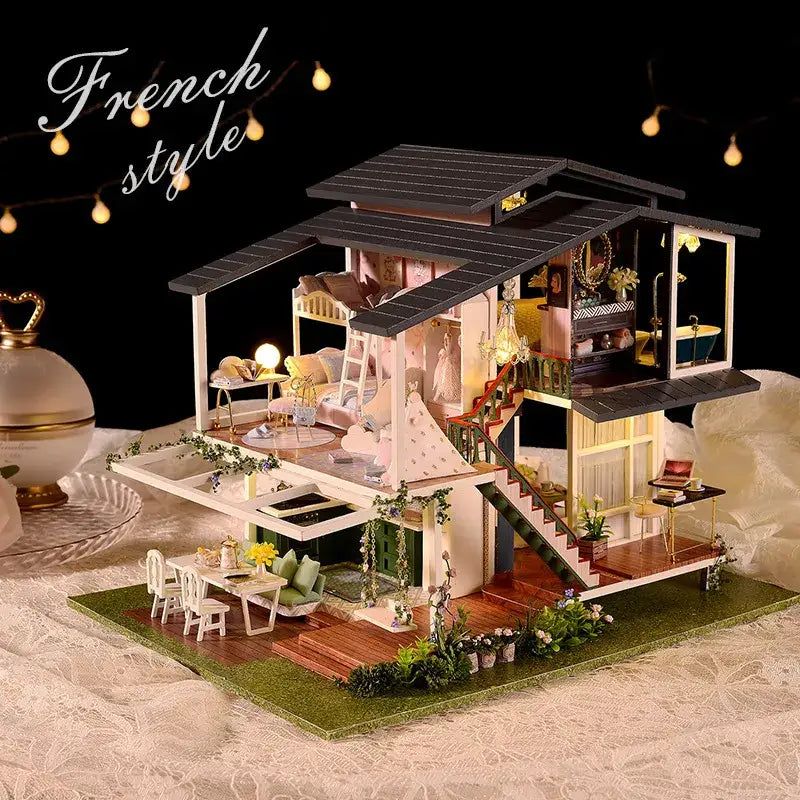
Rare in the niche
Miniature Greenhouse Kits
22 LED-lit greenhouse builds
Several of these greenhouse builds include a small water feature or reflecting pool, making them a great low-stakes first project for practicing resin water effects.
Combining Materials: Theme-by-Theme Scenery Recipes
The real craft in miniature scenery is understanding which materials work together: each theme calls for a specific combination of ground cover, foliage, and optional water effects that together make the scene instantly readable. The real craft in miniature scenery is understanding which materials work together. Here are three reliable combinations organized by book nook theme:
Enchanted Forest
Dark green preserved moss as the primary ground cover. Lichen clusters in yellow-green and gray-green for variation. Miniature ferns pressed into wet glue along the back wall. Fine turf in dark brown around the roots. Optional: a shallow resin pool with a blue-green tint in one corner. This combination reads as ancient, wild, and full of hidden life. If you want to see all three of these elements playing together before committing to materials, the Monet’s Garden kit is a lush, plant-forward build that shows exactly how layered greenery transforms a miniature space.
Coastal Village or Harbor Scene
Fine sand (natural beige) for the beach area, transitioning to rounded gravel at the waterline. Resin water in a gradient from pale turquoise near the shore to deep blue-green further back. Dried seaweed (actual dried seaweed works at small scale) as scatter material. A light dry-brush of white over the sand creates the watermark line beaches always have. This is a slightly more intermediate build, mostly because of the resin pour.
Abandoned Library or Ruins
Fine gray sand as the floor dust layer. Coarse gravel mixed with fine stone powder (chalk pastel ground down) for rubble. Moss in muted, desaturated green on the stone surfaces. Creeping vine armatures in dried florist wire. The key to this theme is keeping the color palette deliberately muted: no bright greens, no saturated blues. Ruin reads through restraint.
Premium collector piece
Monet’s Garden DIY Miniature House Kit
This build layers moss, foliage punches, fine turf, and a small water feature into a single project, making it an exceptional way to practice every major scenery technique at once.
$155.00
Frequently Asked Questions about Miniature Scenery Materials for Book Nooks
Everything you might be wondering (click a question to expand).
What glue works best for attaching scenery materials to a book nook floor?
PVA glue (white craft glue) diluted 50/50 with water is the go-to option for most miniature scenery materials for book nooks, including moss, sand, gravel, and fine turf. For heavier materials like coarse gravel or resin elements, undiluted PVA or a gel-type super glue provides more holding strength. Avoid hot glue for ground cover: it dries too fast to allow repositioning and leaves visible strings.
Is two-part epoxy resin safe to use indoors for water effects?
Most hobby-grade two-part epoxy resins are safe for indoor use when you work in a well-ventilated space and wear nitrile gloves. Low-odor formulations are available specifically for craft use. Avoid casting resins marketed for industrial use, as they generate more heat during cure and release stronger fumes. Always read the manufacturer’s safety data sheet before your first pour.
How do I keep moss green and vibrant in a book nook displayed on a shelf?
Preserved moss is already treated to hold its color without any light or water, so it will not fade the way fresh moss does. To keep it looking its best long-term, keep the book nook out of direct sunlight, which bleaches organic materials over time. A light spritz of matte sealant once a year refreshes the surface and helps it resist dust accumulation.
Can I mix different brands of scenery materials in the same build?
Absolutely. Most miniature scenery products are physically compatible with each other because they share similar application methods (PVA adhesive, acrylic paint, matte varnish). The only thing to watch is color consistency: products from different brands may use different dye batches, so test combinations side by side in your shelf lighting before committing.
What scale should I aim for in a standard book nook?
Most book nooks are built at 1:12 scale (one inch equals one foot), which is the same scale as standard dollhouse miniatures. Some shelf builds use 1:24 scale for a smaller, more delicate aesthetic. The scale you choose affects the gravel and sand particle size you should use: what reads as cobblestones at 1:12 reads as boulders at 1:24. When in doubt, hold the material up next to a printed scale figure before buying in bulk.
Where can I buy miniature scenery materials for book nooks without guessing at scale?
The safest place to start is a supplier who explicitly tests products at 1:12 or 1:24 scale rather than a general-purpose craft store. Our book nook accessories collection carries ground cover kits, foliage sets, and scatter materials that have been checked at shelf scale before listing. Reading community reviews from other book nook builders (rather than general diorama reviews) is also a reliable shortcut: if a product works for someone building a shelf-depth scene, it will work for you.
Putting Your Scene Together One Layer at a Time
The best book nook scenery builds work from the ground up: ground texture first, larger structural elements second, foliage third, and scatter materials last, with water effects in before the final layer so the shoreline blends naturally. The best book nook scenery builds share one habit: they work from the ground up, literally. Ground texture first. Larger rocks and structural elements second. Foliage and plants third. Scatter materials (pebbles, leaf litter, flower tufts) last. Water effects, if any, go in before the final scatter layer so you can blend the shoreline naturally.
None of this requires expensive tools or a dedicated workshop. A tray to contain the mess, a few brushes you do not mind coating in PVA, and a good working surface are all you need. The materials themselves are the investment, and most scenery supplies stretch across multiple builds. A single bag of fine turf, applied sparingly, can easily cover four or five book nook floors.
If you want a solid starting point with products that have been tested by our community specifically for shelf-scale builds, browse the accessories collection, where you will find ground cover kits, foliage sets, and water effect supplies chosen with book nook proportions in mind. The community feedback on each product is genuine, and it will save you the trial-and-error phase that every builder goes through at least once. You can also explore finished kits like the Monet’s Garden or Tranquil Life builds to see these scenery layers in action before sourcing materials separately.
Start with moss and sand. Build your confidence there. Then add a vine, a scatter of gravel, a tiny resin pond. Each material you add is a new sentence in the story your shelf is telling. ✨