🎁 Buy 2 kits, get the 3rd FREE · Free shipping on every order

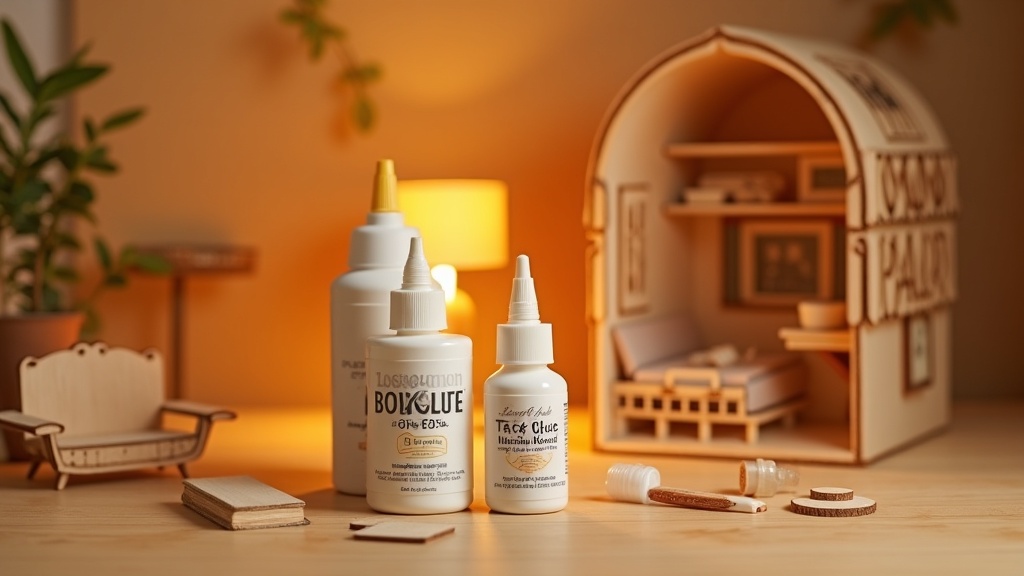
What Glue to Use for a Book Nook: PVA, Tacky & CA Compared
Not all glues work the same on a book nook. This guide breaks down PVA, tacky glue, and CA glue, including US brands like Aleene's, Elmer's, and Gorilla, so you know exactly which adhesive to reach for at every stage of your build.

You’re halfway through building your first book nook, the little café scene is coming together beautifully, and then it happens: a tiny wooden shutter falls off for the third time. The wrong glue ruins more book nook builds than any other single mistake. Picking the right adhesive from the start saves you frustration, wasted materials, and a lot of re-gluing sessions at midnight.
What glue to use for a book nook depends on what you’re bonding, how fast you need it to set, and how much stress the joint will take on a shelf. This guide breaks down the three main adhesive families, names the US brands that crafters actually reach for, and tells you exactly when to use each one. If you’re just getting started, our beginner’s guide to book nooks is a great place to read alongside this.
Why Glue Choice Matters More in Book Nooks Than in Other Kits
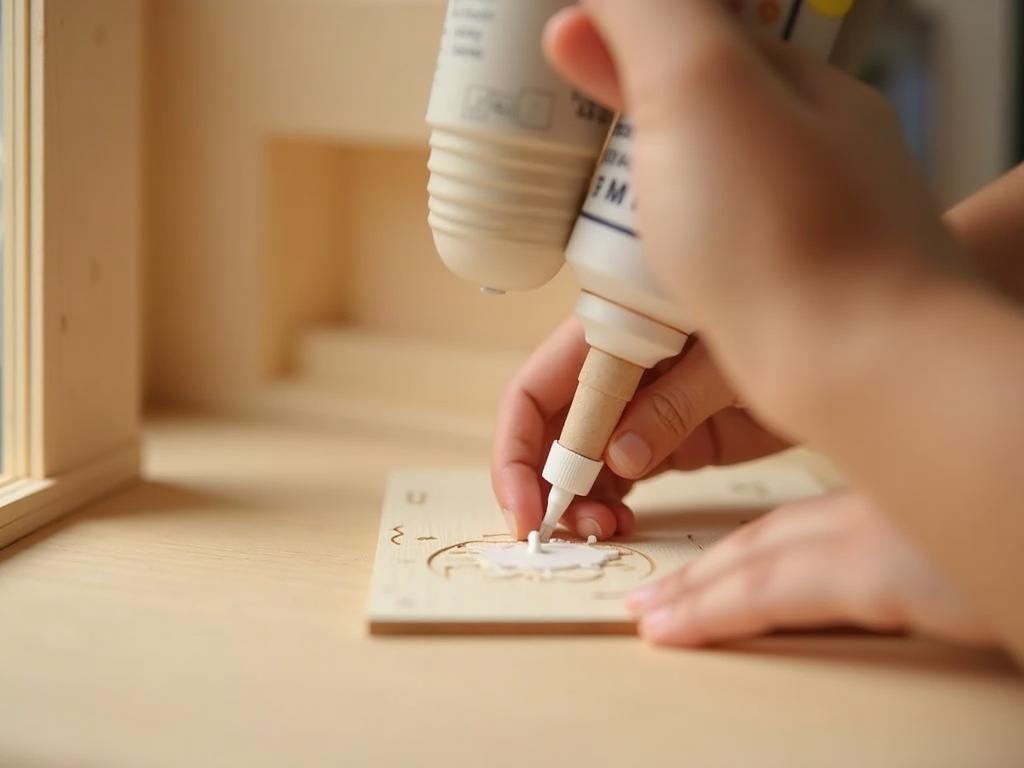
Glue choice matters more in book nooks than in flat kits because the vertical orientation means gravity pulls on every joint constantly, and a single build can demand bonds across wood, fabric, resin, metal, and acetate. A book nook sits upright between books. That vertical orientation means gravity pulls on every joint, every single day. A flat dollhouse can get away with a slightly weak bond because gravity presses pieces together; a book nook works against you constantly.
On top of that, book nooks pack a huge variety of materials into a tiny footprint. In a single kit you might bond:
- Laser-cut basswood or MDF walls to each other
- Acetate or acrylic window film to a wooden frame
- Fabric curtains or felt accents to wood
- Resin details or metal miniatures to painted surfaces
- Paper prints and wallpaper sheets to interior walls
No single glue handles all of those pairs equally well. That’s the core reason experienced builders keep three or four adhesives on their worktable at once, treating each one as a specialized tool rather than a universal fix. Hannah herself learned this the hard way during her first Victorian dollhouse build in 2021: she reached for a single bottle of white PVA for everything, and watched a metal door knocker pop off the painted front door within two days. Three adhesive types have lived on her bench ever since.
Worth noting: the materials inside a kit matter too. Kits that include more resin accent pieces or metal hardware (like the lamp posts and window grilles in many of our book nook kits) will lean more heavily on CA glue, while cottage-style builds packed with paper backdrops and fabric accents are largely a PVA and tacky glue project. Reading the kit parts list before you buy your adhesives saves a last-minute trip to the craft store.
PVA Glue: The Patient Builder’s Best Friend
PVA glue is the best all-around adhesive for book nook structural walls and paper details: it dries clear and flexible, gives you 3 to 5 minutes of open repositioning time, and cleans up with just a damp cloth. Polyvinyl acetate (PVA) is the white or slightly milky craft glue that dries clear and flexible. It’s water-based, cleans up with a damp cloth, and bonds porous materials with surprising strength once fully cured.
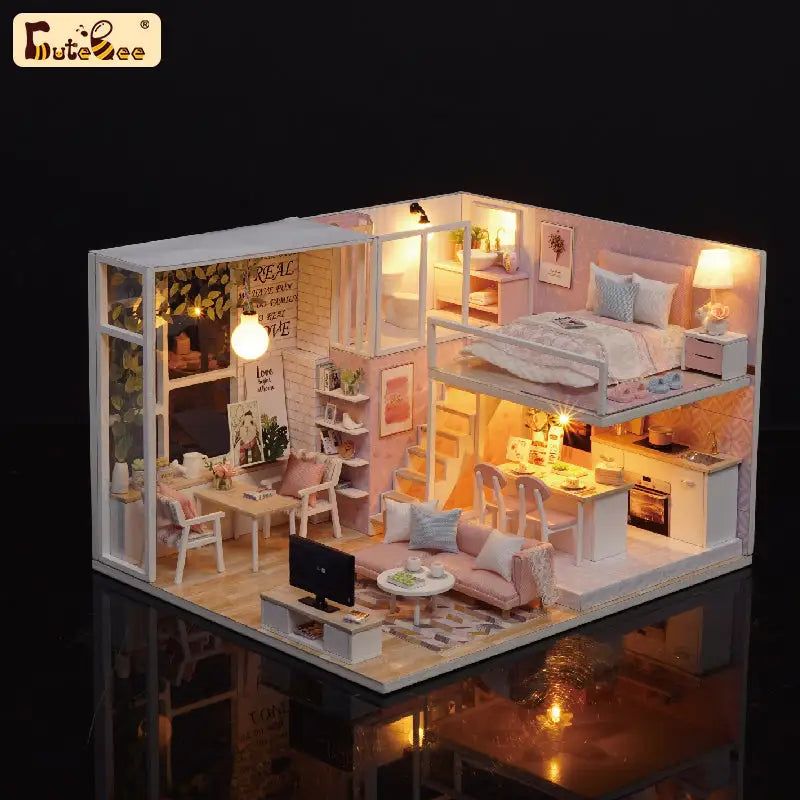
Bestseller cottage kit
Tranquil Life DIY Miniature House Kit
$67.90
A wood-heavy build ideal for practicing PVA and tacky glue technique on structural walls, paper backdrops, and fabric curtains.
What PVA does well in a book nook
- Wood-to-wood joints on structural walls and floors
- Gluing paper wallpaper sheets flat without bubbling (thin it 10% with water for wallpapering)
- Attaching fabric swatches, felt greenery, and paper details
- Sealing raw MDF edges before painting
PVA’s biggest strength is its open time. You have 3 to 5 minutes to reposition pieces before the bond starts to grip. That breathing room matters enormously when you’re aligning a tiny window frame by eye. It also makes PVA the most meditative adhesive to work with: no frantic rush, no panic if a piece slides. You set it, nudge it into place, and move on at your own pace.
PVA’s limitations
It is slow. Full cure on a thick wood joint takes 24 hours. It also fails on non-porous surfaces: metal hardware, acrylic, and painted finishes resist it. If you try to bond a resin mushroom to a painted floor with PVA, it will pop off in a week.
US brands worth buying
Elmer’s Glue-All is the most accessible option and works perfectly for structural wood walls and paper details. Aleene’s Original Tacky Glue sits in a slightly different category (we’ll get to that next), but Aleene’s also makes a straight PVA-style craft glue that dries fully flexible. For archival paper work like printed backdrops and interior wallpaper panels, look for Elmer’s Craft Bond or any PVA labeled “acid-free”.
Hannah’s tip
When gluing the main structural walls of a book nook, apply PVA to both mating surfaces, let them sit for 60 seconds until tacky, then press together. That “kiss-bond” technique cuts your clamping time in half and dramatically reduces the chance of a slip-joint while you hold things together with one hand and reach for a clamp with the other. This is the single habit change that made the biggest difference in Hannah’s own builds.
When gluing the main structural walls of a book nook, apply PVA to both mating surfaces, let them sit for 60 seconds until tacky, then press together. That “kiss-bond” technique cuts your clamping time in half and dramatically reduces the chance of a slip-joint while you hold things together with one hand and reach for a clamp with the other. This is the single habit change that made the biggest difference in Hannah’s own builds.
Tacky Glue: The Middle Ground Most Beginners Skip
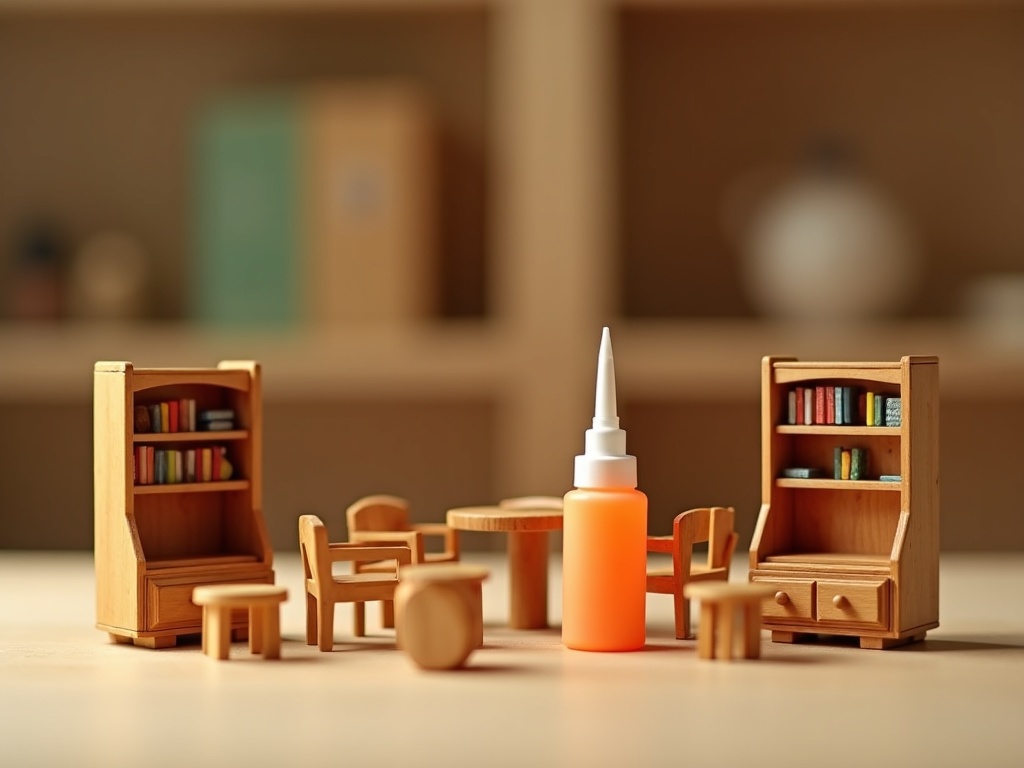
Tacky glue is the adhesive most beginners skip, yet it covers roughly 70% of book nook decorative bonds: it grips almost instantly on contact, stays flexible, and works beautifully on furniture trim, fabric, and vertical surfaces where thinner glue slides. Tacky glue is still a PVA variant, but the formula is thicker and has a much higher initial tack. Where regular PVA slides around for a few minutes, tacky glue grips almost immediately on contact. That single difference changes the entire building experience for small, fiddly pieces. When you’re trying to hold a miniature railing post vertical with one finger while reaching for a toothpick, that instant grip is not a luxury; it’s the whole game.

Where tacky glue wins
- Gluing miniature furniture legs, railings, and decorative trim that you simply cannot clamp
- Attaching dried flowers, moss tufts, and fabric ribbons to wood
- Any vertical surface where the piece would slide with thinner glue
- Fabric-to-fabric and fabric-to-wood bonds
The higher viscosity also means less bleed-through on thin balsa wood or laser-cut veneer. With regular PVA, pressing too hard pushes glue right through the wood grain and ruins a freshly painted surface on the other side. Tacky glue stays put.
Aleene’s Original Tacky Glue: the community favorite
Ask builders inside our community what’s in their toolkit and Aleene’s Original Tacky Glue comes up more than any other single product. One customer who recently completed our Enchanted Forest book nook wrote in to say she used Aleene’s for every decorative step: the felt mushroom caps, the dried flower clusters, even the tiny fabric lanterns, and nothing has moved in four months on her shelf. It bonds porous materials fast, dries clear and flexible, and is available at every major US craft retailer for around $4 to $6 a bottle. The precision-tip bottle variant is especially useful for tiny joints where a regular nozzle would deposit three times too much adhesive.
For builders working through our book nook accessories and tools collection, tacky glue covers probably 70% of all bonds you’ll encounter across a typical kit build.
Did you know?
Polyvinyl acetate was first synthesized in 1912 by German chemist Fritz Klatte. It didn’t reach hobbyist craft shelves in the US until the 1950s, when Elmer’s launched its iconic white glue. The recipe has barely changed since then, which tells you how well it actually works on porous, cellulose-based materials like wood and paper.
Polyvinyl acetate was first synthesized in 1912 by German chemist Fritz Klatte. It didn’t reach hobbyist craft shelves in the US until the 1950s, when Elmer’s launched its iconic white glue. The recipe has barely changed since then, which tells you how well it actually works on porous, cellulose-based materials like wood and paper.
CA Glue: Speed When You Need a Bond in Seconds
CA glue is the right choice for any book nook bond involving metal hardware, resin details, or non-porous surfaces: it cures in 10 to 60 seconds via moisture chemistry, creating a rigid hold that PVA simply cannot achieve on painted or slick materials. Cyanoacrylate (CA) glue, sold under names like super glue and instant glue, works through a completely different chemistry. It bonds via moisture on the surface of materials rather than by evaporating water like PVA does. The result: most joints cure in 10 to 60 seconds.
When to reach for CA glue in a book nook
- Attaching metal hardware: hinges, tiny drawer pulls, bracket feet
- Bonding resin details, acrylic gems, or non-porous decorative elements to painted wood
- Emergency repairs mid-build when you need something held right now
- Fixing broken laser-cut parts where a tight, rigid joint is better than a flexible one
CA glue’s bond is rigid and very strong on non-porous surfaces. That rigidity is a feature and a flaw at the same time. On structural joints that flex slightly when books press in from the sides, a fully rigid CA bond can crack and let go over time. PVA’s flexibility is actually an advantage there.
Easy starter under $50
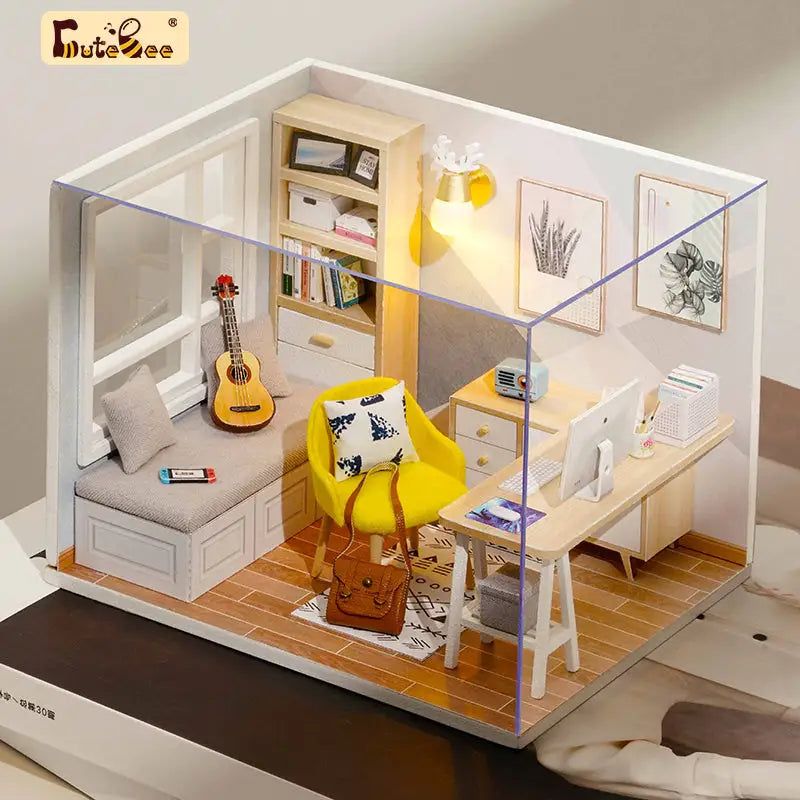
Sun Room DIY Miniature House Kit
$49.99
Includes metal hardware accents and acrylic window panels: the perfect kit to practice all three adhesive types in a low-pressure, beginner-friendly format.
Viscosity choices matter
CA glue comes in thin, medium, and thick (gel) formulas. For book nooks:
- Thin CA: wicks into tight-fitting wood joints by capillary action. Useful for locking a joint that’s already held in place by friction or tape.
- Medium CA: the most versatile for general miniature work. Sets in about 20 to 30 seconds with light pressure.
- Gel CA: stays where you put it, ideal for vertical surfaces and for bonding slightly uneven or porous materials where thin CA would run.
US brands to know
Gorilla Super Glue Gel is a strong first choice for book nook work. The gel formula doesn’t run, the bottle has a no-drip cap, and it’s widely available. Loctite Super Glue Ultra Control Gel is another reliable option with a side-squeeze design that gives good control over bead size. Both retail around $5 to $8 for a small bottle, which goes a long way since you only apply tiny amounts.
One practical note: CA glue fogs acrylic and acetate window film if the vapor touches the surface. Apply CA bonds on metal or wood hardware well away from clear plastic elements, or mask the acetate with painter’s tape first.
Side-by-Side: Choosing the Right Glue for Each Book Nook Task
Use this table as a quick reference: PVA for wood and paper, tacky glue for fabric and trim, gel CA for metal and resin. Those three rules cover virtually every bond in a standard kit.
| Task | Best Glue | Why |
|---|---|---|
| Structural wood walls | PVA (Elmer’s Glue-All) | Strong, flexible cure; forgiving open time |
| Paper wallpaper / backdrops | PVA (diluted, acid-free) | Prevents yellowing; smooth flat bond |
| Miniature furniture trim | Tacky glue (Aleene’s) | Grips instantly; no clamping needed |
| Fabric curtains / felt | Tacky glue (Aleene’s) | Stays flexible; won’t stiffen fabric |
| Metal hardware / hinges | Gel CA (Gorilla / Loctite) | Bonds non-porous surfaces; fast cure |
| Resin / acrylic details | Gel CA (Gorilla / Loctite) | Only adhesive that sticks to non-porous resin reliably |
| Dried florals / moss | Tacky glue or hot glue | Quick grip; low risk of damaging delicate botanicals |
| Acetate window film to frame | Tacky glue (very small bead) | CA fogs clear plastic; PVA may not grip film |
Application Tips That Change Your Results
The right book nook adhesive applied badly still fails: thin even coats, clean surfaces, and matched cure times are what separate joints that last years from ones that pop off in a week. The glue itself is only half the story. How you apply it determines whether a bond lasts six months or six years on a shelf.

Less is always more
A common beginner error is flooding a joint with adhesive. Excess glue doesn’t create a stronger bond; it creates a longer cure time, squeeze-out that ruins painted details, and a weaker joint because the adhesive layer becomes too thick. A thin, even coat is stronger than a thick puddle. Think of it like frosting a very small cake: just enough to cover, never enough to drip.
Surface prep for tricky materials
Painted surfaces and acrylic resist most adhesives. A light sand with 400-grit paper before applying CA gives the glue a mechanical grip. For resin pieces that feel waxy, wipe the bond area with isopropyl alcohol first, let it dry for 30 seconds, then apply gel CA immediately. Skipping this step is one of the most common reasons resin decorations eventually drop off a finished build.
Clamping and holding techniques
For PVA joints, binder clips and small spring clamps are your friends. Rubber bands work surprisingly well for awkward shapes. For CA bonds, a firm 30-second hold by hand is usually enough. Keep a bottle of CA accelerator spray on hand: a single spritz cuts cure time from 60 seconds to about 5, which helps enormously when you’re bonding a dozen tiny fence posts in a row.
Cleaning up excess glue
Surplus PVA or tacky glue wipes away easily with a damp cotton swab while still wet. Once dry, a cocktail stick or the edge of a fingernail lifts most dried PVA without damaging paint. For CA squeeze-out, resist the urge to wipe it while liquid: it smears and bonds your cotton swab to the surface. Let it cure fully, then use a flat toothpick to gently flick the dried bead away. Acetone on a cotton swab dissolves hardened CA, but test it on a hidden spot first because some paints are acetone-sensitive.
Storage and shelf life
PVA and tacky glue last 1 to 2 years sealed. CA glue degrades fast once opened; 6 to 12 months is realistic. Store CA in the fridge (sealed in a zip bag to prevent condensation) to extend it. Never leave CA open on the table; the moisture in room air starts curing it inside the bottle within minutes.
Stocking up on quality adhesives is just as important as having the right miniature tools and finishing supplies for your build. A well-stocked worktable makes the difference between a smooth, meditative build session and a frustrating one. You can also browse our full craft guides and tutorials for more build tips from Hannah and the community.
Premium collector piece
Monet’s Garden DIY Miniature House Kit
$155.00
This complex build includes resin flowers, metal lantern posts, and acetate windows; a good benchmark kit for testing your full three-adhesive toolkit.
Frequently Asked Questions about Glue for Book Nooks
Everything you might be wondering about what glue to use for a book nook (click a question to expand).
Can I use a hot glue gun for my book nook?
Hot glue works for quick, low-stress bonds like attaching moss, dried flowers, and lightweight fabric accents. It’s not recommended for structural joints or anything involving thin laser-cut wood: the heat can warp delicate parts, and the thick bead is hard to hide in tight spaces. Use it as a supplement to PVA and tacky glue, not a replacement.
My wood pieces are pre-painted. Which glue sticks to painted surfaces?
Gel CA (*cyanoacrylate*) is your best option for painted-surface-to-painted-surface bonds. For painted wood to unpainted wood, tacky glue with a brief clamp time works well. Avoid standard PVA on painted surfaces; it has very low adhesion to non-porous paint films.
What’s the best book nook glue for beginners who want just one bottle?
If you’re choosing only one, Aleene’s Original Tacky Glue covers the widest range of book nook tasks: wood-to-wood structural walls, paper backdrops, fabric details, and lightweight decorative pieces. Buy the precision-tip version for better control. Add a small tube of Gorilla Super Glue Gel once you start adding metal or resin hardware.
Can I mix two different glues on the same joint?
Generally, no. Mixing PVA and CA on the same wet joint is unpredictable and can prevent either from curing properly. The one accepted exception is the “CA and baking soda” trick used by model makers to fill gaps: a tiny drop of thin CA followed by a pinch of baking soda hardens almost instantly into a rigid filler you can sand. But for standard book nook assembly, choose one adhesive per joint and apply it cleanly.
How do I clean up excess glue without damaging paint?
For PVA and tacky glue, a damp cotton swab while the glue is still wet removes squeeze-out cleanly. Once dry, a wooden cocktail stick lifts the dried bead without scratching paint. For CA, let it fully cure first, then gently flick the bead away with a toothpick. Acetone dissolves hardened CA, but test it on a hidden area first since some acrylic paints are sensitive to it.
Are any book nook glues toxic or unsafe to use indoors?
PVA and tacky glue are non-toxic and water-based, making them the safest choices for most crafters including children. CA glue emits a sharp fume when bonding that can irritate eyes and airways, so always work near an open window or with a small fan directing air away from your face. The fumes dissipate quickly; once the bond is cured there is no ongoing off-gassing. Hot glue is non-toxic but obviously poses a burn risk. Keep a silicone mat under your work and respect the cooling time.
How long should I wait before putting books against the finished nook?
Give PVA structural joints a full 24 hours before applying any load. Tacky glue on decorative pieces is usually safe after 4 to 6 hours. CA bonds on hardware are load-ready in about 1 hour. Rushing this step, especially on the main frame, is the single most common cause of a nook falling apart on the shelf.
Does humidity affect book nook glue bonds over time?
Yes, significantly for PVA-based adhesives. PVA is moisture-sensitive when cured; in very high humidity (above 70% relative humidity), wood-to-wood PVA joints can soften slightly. If you live in a humid climate, a thin coat of matte varnish over all exterior structural joints adds a moisture barrier. CA bonds are largely unaffected by ambient humidity once fully cured.
Building the Habit of Using the Right Glue at the Right Moment
The cleanest, most durable book nook results come from one habit: read the kit instructions before opening any bottle, mark which step calls for which adhesive, and set out only those three bottles at the start of your session. The crafters in our community who get the cleanest, most durable results all share the same habit: they read through the kit instructions before opening a single bottle, mark which step calls for which adhesive, and set out only those three bottles at the start of a session. That simple prep ritual eliminates the mid-build scramble that leads to grabbing whatever’s closest.
Several builders have shared that this “pre-read and pre-set” approach also makes the build itself more meditative. When you’re not stopping to hunt for a bottle or second-guess whether PVA will stick to a painted surface, the whole session flows. Your hands know what to do and your brain gets to focus on the satisfying part: watching a tiny world take shape, piece by careful piece.
Once you’ve built one book nook with proper adhesive discipline, the logic becomes instinctive. PVA for the bones, tacky glue for the details, CA for the hardware. Three bottles, clear rules, dramatically better results. Browse our full range of book nook accessories including tools, adhesives, and finishing supplies to stock your worktable before you start your next kit, so the only thing you need to think about is the build itself.