🎁 Buy 2 kits, get the 3rd FREE · Free shipping on every order

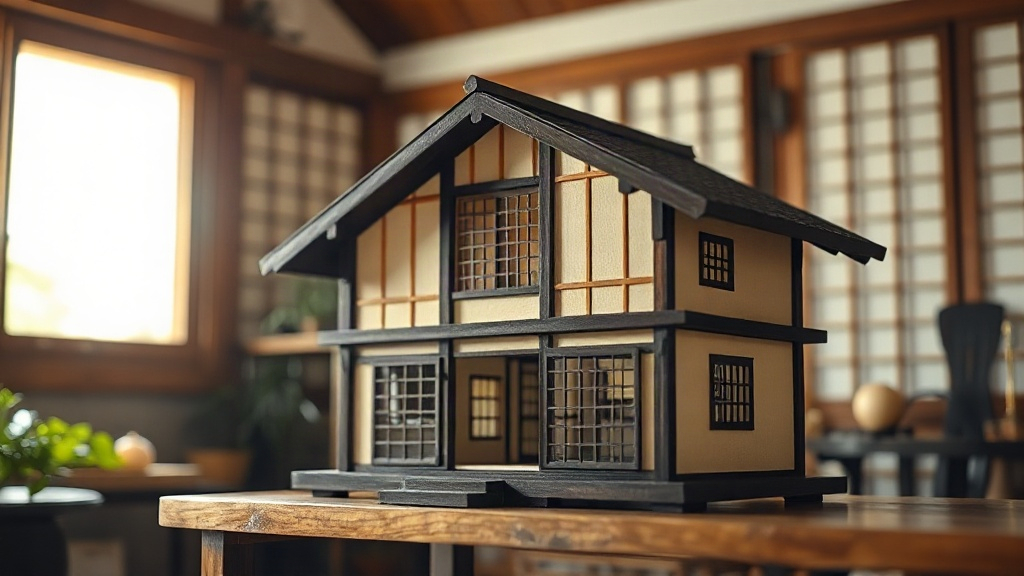
Machiya Miniature House Kits: Building Traditional Japanese Architecture by Hand
Explore Machiya miniature house kits and the beauty of traditional Japanese wooden architecture. Learn how these meticulously detailed builds teach authentic construction techniques while offering a meditative, rewarding craft experience for builders of all levels.

A Japanese miniature house kit focused on the Machiya architectural style isn’t just a build project. It’s a conversation with centuries of craftsmanship, a way to hold in your hands the design logic that shaped entire neighborhoods in Kyoto and Osaka. When you work through a Machiya kit, your fingers trace the same joinery principles that carpenters perfected over generations, no nails required.
The Machiya (*町屋*), literally “town house,” represents a uniquely Japanese approach to urban living. These narrow, deep wooden townhouses lined merchant streets and residential districts from the Edo period onward. Their design compressed function and beauty into a footprint no wider than a modern hallway. A miniature build of one isn’t nostalgia; it’s hands-on architecture history.
What Makes Machiya Architecture Distinct
Machiya architecture stands apart through its narrow street facade, long deep floor plan extending 50 feet or more, load-bearing wooden frames joined without nails, wooden lattice screens for street-side privacy, and gently overhanging tile roofs protecting plaster walls from rain. Machiya houses share several defining characteristics that make them instantly recognizable and fascinating to rebuild at scale. The front facade is narrow and often windowless, designed for privacy and defensive practicality. The real depth stretches backward, sometimes 50 feet or more in life-size versions, creating a long, linear floor plan that maximizes internal light through a central courtyard.
The wooden frame is the Machiya’s skeleton. Load-bearing vertical posts (*nozura*) and horizontal beams create a grid that needs no nails; joints interlock through mortise-and-tenon construction. Walls fill this frame with either plaster (*shikkui*) or clay, painted in soft whites and creams. Windows feature wooden lattice screens (*koshi*) that allow ventilation while preserving the owner’s privacy from the street.
The roof slopes gently forward, often covered in dark ceramic tiles or wooden shingles. Eaves overhang significantly, shading the street-level storefront and protecting the plaster walls from rain. Inside, dark wooden beams contrast sharply with pale walls; the upper floors sometimes feature smaller windows and sleeping quarters.
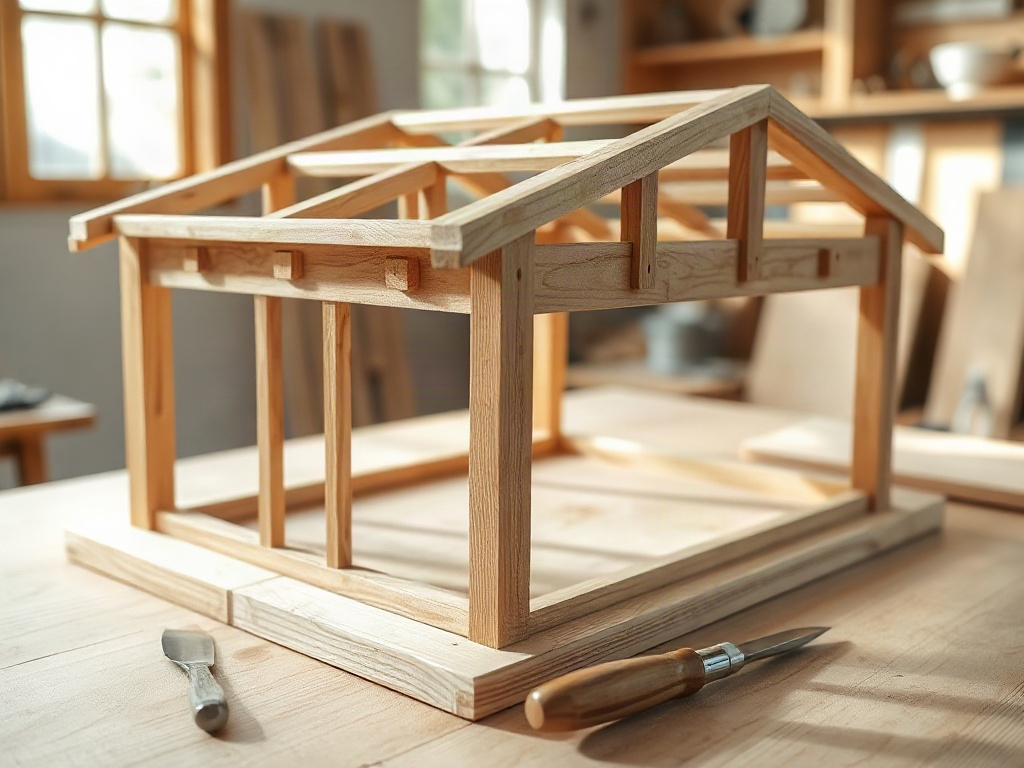
When you work with a traditional Japanese architecture miniature kit, you’re replicating these proportions and materials at 1/24 to 1/50 scale. Many kits include pre-cut wooden components, but the assembly process mirrors full-size carpentry. You’ll learn how beams slip into place, how plaster layers are applied, how roofing tiles overlap for drainage.
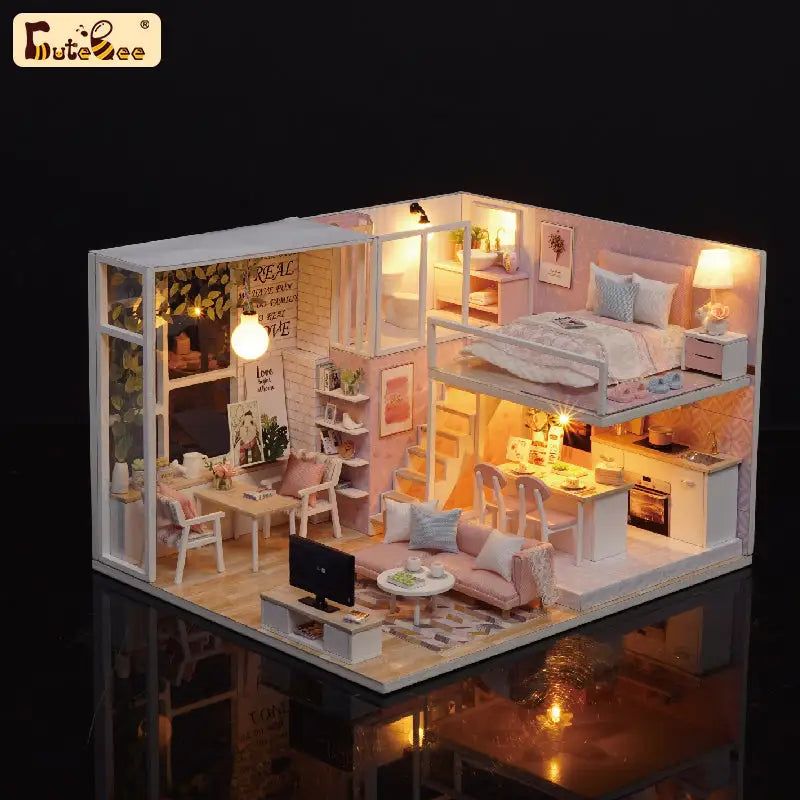
Bestseller cottage kit
Tranquil Life DIY Miniature House Kit
$67.90
View this kit →
The Meditative Craft of Miniature Japanese Construction
Building a Machiya miniature house demands focused slowness: most kits ask for 30 to 60 hours spread across several weeks, each session centered entirely on testing one joint, applying one plaster layer, or fitting one row of roof tiles. Building a Japanese miniature house kit in the Machiya style appeals to hobbyists seeking projects that demand focus without overwhelming complexity. Unlike speedily glued plastic models, these wooden builds ask you to slow down. You might spend 30 to 60 hours across several weeks or months, depending on detail level and your experience.
Each session becomes a ritual. You lay out pre-cut components, study an instruction diagram, test a joint fit, and make micro-adjustments. There’s no rushing; wood doesn’t forgive sloppy assembly. This constraint is liberating. Your phone goes silent. Your mind empties of everything except the grain in your hands and the next step ahead.
The satisfaction compounds. After frame assembly comes plaster work, then roofing, then window installation. With each layer, the house takes on presence. You’ve constructed something real, something that follows engineering principles, something you can rotate and examine from every angle.
🪄 Hannah’s tip
If you’re new to wooden kits, start with a mid-range Machiya model (around 800 to 1500 pieces). Avoid the smallest “quick-build” versions; they skip the joinery pleasure and feel incomplete. Avoid the massive architectural museum replicas on your first try. Mid-range gives you the full experience in a timeframe that doesn’t demand four months of dedicated focus. The difficulty ratings on reputable kits (beginner, intermediate, advanced) matter; read reviews from actual builders before you order.
If you’re new to wooden kits, start with a mid-range Machiya model (around 800 to 1500 pieces). Avoid the smallest “quick-build” versions; they skip the joinery pleasure and feel incomplete. Avoid the massive architectural museum replicas on your first try. Mid-range gives you the full experience in a timeframe that doesn’t demand four months of dedicated focus. The difficulty ratings on reputable kits (beginner, intermediate, advanced) matter; read reviews from actual builders before you order.
What’s Included in a Quality Machiya Miniature Kit
A quality Machiya kit includes pre-cut wooden components, plaster or clay powder for wall infill, roofing tiles or shingles, wooden lattice window screens, appropriate glue, and a multi-language instruction booklet, with premium kits adding metal fittings, miniature furniture, and a lighting system. Depending on the manufacturer and model, a Machiya kit typically includes pre-cut wooden components (cypress, birch, or cherry, depending on regional sourcing), plaster or clay powder for wall infill, roofing tiles or shingles, wooden lattice screens for windows, glue appropriate for wood (usually hide-based, not modern synthetic), and a multi-language instruction booklet with diagrams.
Premium kits add small metal fittings (door handles, roof ornaments), traditionally produced miniature furniture or decorative objects, and sometimes a lighting kit so your completed house glows from within. Entry-level kits omit the furniture and lighting but include all structural components.
The wood quality varies. Authentic Machiya kits sourced from Japanese makers (particularly those in Kyoto and Takayama) often use reclaimed timber or wood salvaged from actual old buildings, adding historical resonance. International kits may use new lumber treated to look aged. Neither approach is wrong; the former carries provenance; the latter offers consistency and affordability.
Explore the collection
All Miniature House Kits
82 handcrafted miniature house kits
Browse all house kits →
Assembly glues matter. Traditional kits favor hide-based adhesives that mirror historical practice; they’re slower-setting but reversible if you need to correct a joint. Modern waterproof glues speed the process but are permanent. Most builders find hide glue worth the extra patience.
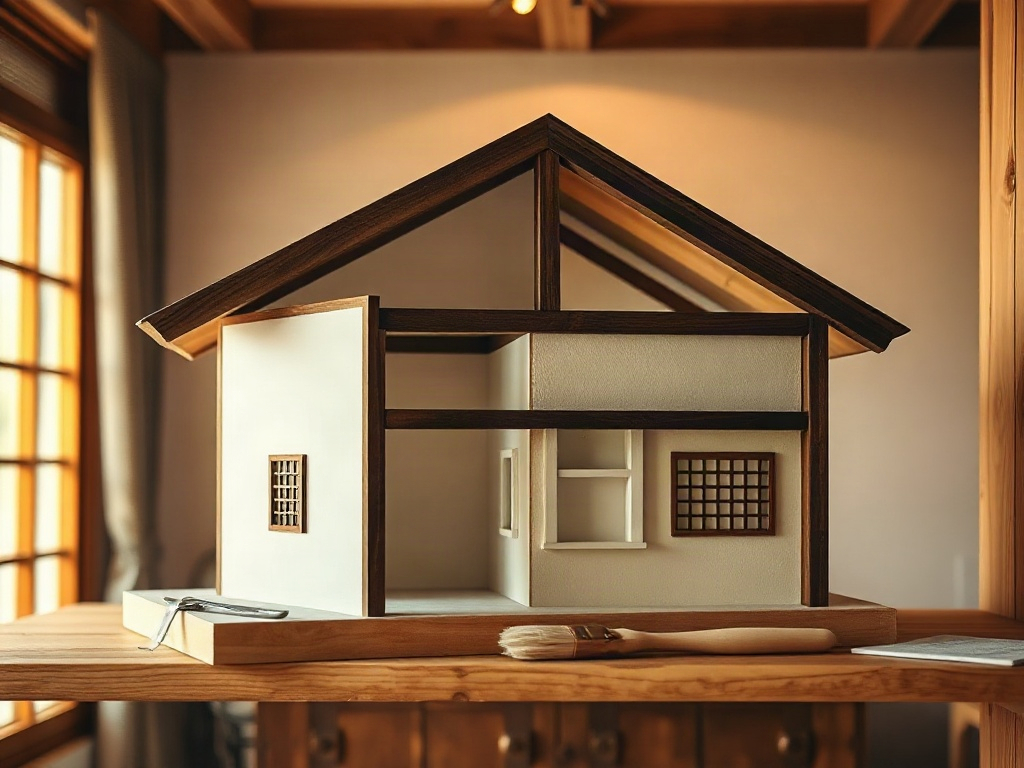
Difficulty Ratings and Skill Progression
Machiya kits span three clear tiers: beginner builds of 400 to 800 pieces taking 20 to 40 hours, intermediate kits of 800 to 1,500 pieces taking 40 to 80 hours, and advanced models demanding 1,500 or more pieces and up to 150 hours of careful work. Choosing the right Japanese miniature house kit tier makes the difference between a satisfying build and a frustrating one. The table below shows what to expect at each level, so you can match a kit to your actual availability and patience rather than guessing.
| Level | Piece count | Build time | Skills practiced | Typical price range |
|---|---|---|---|---|
| Beginner | 400 to 800 | 20 to 40 hrs | Frame assembly, basic plaster, roofing | $80 to $150 |
| Intermediate | 800 to 1 500 | 40 to 80 hrs | Multi-layer plaster, lattice windows, tile fitting | $150 to $280 |
| Advanced | 1 500 to 3 000+ | 80 to 150+ hrs | Hand carving, tatami-making, precise mortise joints | $280 to $450 |
Beginner Machiya kits focus on basic structural assembly and visible plaster work. You’re learning frame construction and how joints function without needing to carve or significantly customize components. Expect 20 to 40 hours and a finished house 8 to 12 inches wide.
Intermediate kits add complexity. You might need to apply plaster in multiple stages, carve window frames, fit roof tiles individually, or assemble smaller decorative elements. These builds teach patience and fine-motor precision. Time commitment: 40 to 80 hours. Your finished model will be 10 to 16 inches across and showcase authentic detail.
Advanced kits demand experience with wood carving, precise joinery, and multi-component assembly. Some include miniature *tatami* mats you must make yourself or carved decorative beams that require gentle hand-tool work. These builds span months and reward deep engagement with Japanese carpentry principles. Finished size and detail vary widely, but many occupy shelf space equivalent to a large book.
The skill progression isn’t linear. A beginner in love with Machiya aesthetics can jump to an intermediate kit if they’re willing to invest the time and watch tutorial videos. Conversely, an experienced modeler new to Japanese architecture might find an intermediate kit appropriate immediately.
📜 Did you know?
The oldest surviving Machiya in Japan dates to the early 1600s, during the Edo period. Kyoto preserves approximately 400 authentic Machiya structures today, many now operating as *ryokan* (inns), restaurants, or craft workshops. Builders and architects have been working to restore these buildings since the 1970s, recognizing them as irreplaceable cultural heritage. When you build a miniature Machiya, you’re contributing to the preservation conversation; several model kit manufacturers donate portions of proceeds to Machiya restoration efforts in Kyoto.
The oldest surviving Machiya in Japan dates to the early 1600s, during the Edo period. Kyoto preserves approximately 400 authentic Machiya structures today, many now operating as *ryokan* (inns), restaurants, or craft workshops. Builders and architects have been working to restore these buildings since the 1970s, recognizing them as irreplaceable cultural heritage. When you build a miniature Machiya, you’re contributing to the preservation conversation; several model kit manufacturers donate portions of proceeds to Machiya restoration efforts in Kyoto.
Cultural Storytelling Through Miniature Details
Every Machiya detail encodes its owner’s life and trade: the shuttered ground-floor shop window, the central courtyard garden visible through cross-section windows, the roof curve directing rainwater away from walls, and the lattice screen pattern that signals wealth or district conventions. A Machiya was never just a shelter. It embodied the life of its owner. A merchant’s Machiya on a busy street would feature a small shop window (shuttered with wooden doors) on the ground floor and living quarters above. An artisan’s Machiya might have a workshop space with high ceilings for natural light and ventilation for smoke or steam.
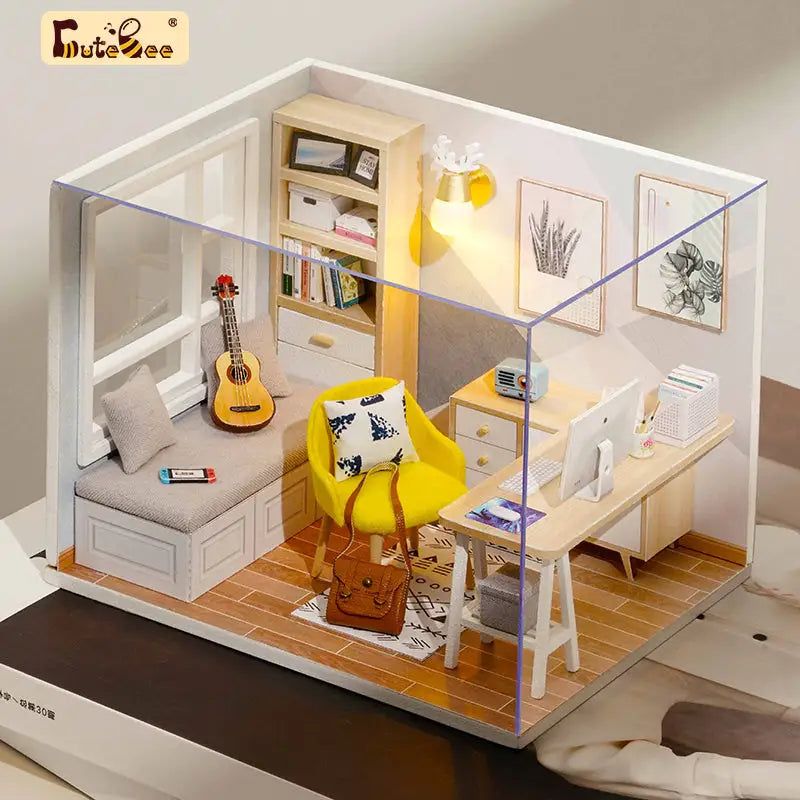
Easy starter under $50
Sun Room DIY Miniature House Kit
$49.99
Start with this kit →
This cultural layering appears in good miniature kits through authentic details. You’ll find representations of a permanent-fixture shop counter, traditional-style shelving, or a small courtyard garden (*tsubo-niwa*) that appears in cross-section when you peer through the windows. Some kits include miniature tools or merchandise scaled to the period and profession of the original house’s occupant.
Rooflines tell stories too. The slight curve upward at the eaves isn’t decorative; it’s structural, directing water away from walls. The placement of roof tiles in overlapping rows follows principles that keep heavy rain from penetrating. When you install these tiles yourself, placing each one, you internalize the engineering that kept these buildings weathertight for centuries.
Window placement and lattice patterns also carry meaning. A dense lattice screen (*koshi*) meant privacy; an open grid pattern allowed more light and airflow. Wide-set wooden slats indicated wealth or a certain district’s conventions. Your Machiya kit’s window design is not arbitrary; it reflects authentic choices made by builders four hundred years ago.
Popular Machiya Miniature House Kit Models
The most respected Machiya kit makers include Showa Grasper and Woody Joe in Japan and Robotime as an international distributor, covering a price range from around $80 for beginner models up to over $400 for advanced architectural builds. Several established model kit manufacturers specialize in Japanese architecture. Showa Grasper (based in Japan) produces meticulously researched Machiya models at 1/24 scale, using cypress wood and traditional joinery. Their kits range from beginner (under $150, 400-600 pieces) to advanced (over $400, 2000+ pieces) and include English instructions alongside Japanese.
Woody Joe, another Japanese maker, focuses on accuracy and accessibility. Their Machiya kits emphasize the beauty of visible wood grain and traditional assembly methods. Difficulty spans beginner to advanced, and prices range from $100 to $350 depending on model size and detail complexity.
Robotime (international distributor with design partnerships) offers Machiya models that balance quality with affordability. Their kits are excellent for hobbyists new to Japanese architecture, typically $80 to $200, with clear step-by-step photographic guides.
All these makers publish build time estimates and difficulty ratings. Community forums (particularly Reddit’s r/miniatures and dedicated dollhouse building communities) share detailed build logs and reviews, helping you choose a model that matches your patience level and time availability. You can also browse our curated selection of Japanese-style miniature house kits filtered by difficulty level.
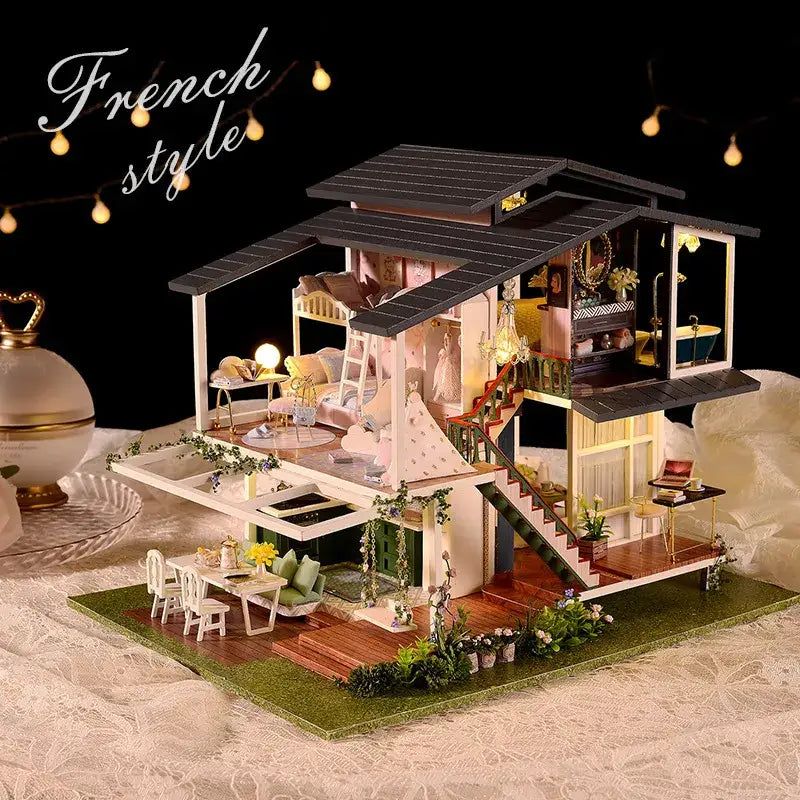
Bringing Your Completed Machiya Into Your Home
A completed Machiya miniature becomes a genuine interior object: mid-range and premium models display beautifully on any shelf, glow warmly under LED lighting, and make thoughtful gifts for anyone drawn to architecture, Japanese art, or absorbing screen-free creative projects. A finished Machiya kit becomes a conversation piece. Shelve it in a living room, bedroom, or study. The craftsmanship quality of mid-range and premium kits means these aren’t toy-like; they’re legitimate interior objects. Collectors often display multiple Machiya models representing different regions or eras, creating a miniature streetscape that tells Japan’s urban history.
Lighting transforms a completed model. Many kits accept simple LED strip lights or battery-operated bulbs that mount inside; warm white (2700K) LEDs complement the cream plaster and dark wood beautifully. You can light a Machiya to glow softly in the evening, creating an almost meditative focal point in your room.
Gift-giving potential is significant. A completed or partially-completed Machiya kit (delivered as a building project) appeals to someone seeking an engaging, screen-free activity. The cultural education angle resonates with people interested in architecture, Japanese art, or history. A beginner-level kit (32 to 60 hours of build time) makes a thoughtful gift for a friend or family member keen on starting a new hobby without overwhelming commitment.
Community and Shared Building Experience
The global miniature architecture community welcomes builders at every skill level, sharing work-in-progress photos, troubleshooting difficult joints, and celebrating finished Machiya houses across Instagram, Reddit, and manufacturer video tutorials that connect thousands of builders worldwide. The miniature architecture community is welcoming and genuinely enthusiastic. Builders share photos of work-in-progress stages, ask for advice on tricky joints, and celebrate completed houses with the care you’d expect for significant personal projects. Instagram hashtags like #miniaturemachiya and #japanesemodel bring together thousands of global builders.
Japanese craft communities occasionally host virtual or in-person building sessions. Some manufacturers publish online tutorials from the original designers, narrated in Japanese with English subtitles, offering deep insight into the reasoning behind each component and assembly stage. Watching these tutorials feels like receiving direct mentorship from the kit designer themselves.
Several miniature architecture museums (particularly in Japan) display completed kits alongside architectural photographs and historical context. Visiting these spaces before or after completing your own model deepens appreciation for the real Machiya buildings you see in photographs and travel documentaries.
Community feedback consistently highlights one thing: the moment the roof goes on and the lattice screens slot into place, something clicks. Builders describe a quiet pride that’s hard to explain to someone who hasn’t done it. One crafter on Reddit’s r/miniatures put it simply: “I built a whole neighborhood inside a weekend and felt like a Kyoto carpenter for about 40 hours. Would do it again immediately.” That shared enthusiasm is part of what makes the Japanese miniature house kit hobby so enduring. If you want to find others at the same stage of their build, the community is only a hashtag away.
Frequently Asked Questions about Machiya Miniature House Kits
Everything you might be wondering (click a question to expand).
How long does a Machiya miniature house kit take to build?
Beginner kits typically take 20 to 40 hours spread across 2 to 4 weeks. Intermediate kits: 40 to 80 hours over 1 to 3 months. Advanced kits can demand 100+ hours, sometimes stretching across an entire season. Your actual time depends on how many sessions per week you dedicate and how meticulously you approach details.
Do I need special tools to assemble a Machiya kit?
No. Most kits include or require only a hobby knife for trimming, a small hammer for gentle tapping, a ruler, and fine-grit sandpaper. Intermediate and advanced kits may benefit from a small jeweler’s saw for custom cuts and carving tools for decorative elements, but these are optional and many builders skip them for simplicity.
Can I customize my completed Machiya with furniture and miniature people?
Absolutely. The kit usually provides the structural shell. Adding custom miniature furniture, figures, plants, or decorative objects personalizes your model. Many builders commission artisans to craft era-appropriate miniature goods or source compatible pieces from other kit makers.
What’s the difference between pre-assembled Machiya models and kits I build myself?
A pre-assembled model arrives finished and ready to display, costing more (typically $300 to $1000+). A kit you build yourself costs less ($80 to $400), takes weeks, and delivers the profound satisfaction of having constructed something beautiful by hand. The build experience is irreplaceable; the finished object is nearly identical either way.
Are Machiya miniature kits suitable for children?
Beginner kits, with adult supervision, work for children ages 10 and up who can follow instructions and exercise patience. Intermediate and advanced kits suit teenagers and adults. The meditative focus required isn’t a drawback for children; many young builders find the project calming and deeply rewarding.
Where is the best place to buy a Japanese miniature house kit online?
Specialist miniature retailers (like this site) curate kits for quality and supply clear difficulty ratings, which is far more useful than sorting through unverified listings on general marketplaces. You also get access to community reviews from builders who have completed the exact kit you’re considering. Look for sellers who list piece counts, build times, and wood species; those details signal a trustworthy source. Our full miniature house kit collection lists all of that information on every product page.
Why a Machiya Kit Matters Beyond the Build
A Machiya miniature kit connects you to a living architectural tradition: thousands of real Machiya buildings still stand and function across Japan today, and building one at scale teaches the authentic carpentry principles and calm deliberate mastery that define the craft. Constructing a Japanese miniature house kit in the Machiya tradition connects you to a living architectural legacy. These buildings still exist; thousands of Machiya houses function as homes, shops, and cultural spaces across Japan today. Your hands-on engagement with authentic building principles honors that heritage while delivering tangible craft satisfaction.
The slowness of the process, the focus on wood grain and joinery, the gentle accumulation of completed sections into a whole structure; these align with principles Japanese craftspeople call *shokunin* spirit: a commitment to quality and deliberate mastery over speed. A Machiya kit invites you into that mindset for a few dozen hours, and that shift in pace alone justifies the time investment.
Every completed Machiya on a shelf is also a small act of cultural memory. You learned something real: how a centuries-old building type holds together, why its proportions feel so calm, and how much patience it took for the original carpenters to do this at full scale. That knowledge stays with you long after the glue has dried.
If you’re ready to explore Japanese miniature house kits and browse the full range of curated building projects, start with a kit whose difficulty aligns with your experience and whose Machiya style resonates with your aesthetic. The best project is the one you’ll actually build, not the showiest one on the shelf.