🎁 Buy 2 kits, get the 3rd FREE · Free shipping on every order

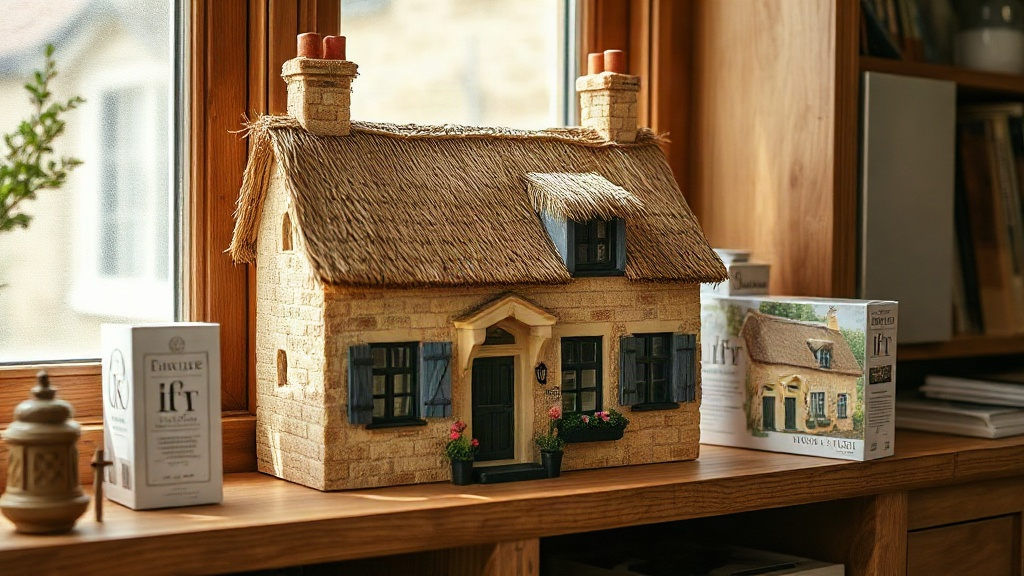
English Cottage Miniature Kits: Building Charm One Detail at a Time
Discover how to build an authentic English cottage miniature from scratch. Learn what makes cottage kits special, which features to look for, and how these meditative projects bring countryside charm to your shelf. Perfect for hobbyists of all skill levels.

English cottage miniature kits capture something real about the British countryside: character built into every detail, from sagging beams to climbing ivy. These are the kind of projects that quiet your mind for hours while your hands work on a tiny chimney or thread thatch strands across a peaked roof. There’s a deep satisfaction in watching a whole village emerge from what started as cardboard sheets and a pile of carefully measured components.
If you’ve been curious about where to start with these kits, or wondering what sets a genuine cottage miniature apart from generic dollhouse pieces, this guide walks you through the essentials. Whether you’re building your first miniature or adding a tenth to your collection, you’ll find concrete details about what to look for, how these projects unfold, and why English cottage aesthetics have held their charm for decades.
What Makes English Cottage Miniatures Different
An English cottage miniature kit is a specific architectural language in miniature form: stone or brick walls with visible mortar joints, windows authentic to the 1700s or 1800s, and sometimes a thatched roof that rewards patience and care. These kits respect the regional details that make the originals beautiful rather than smoothing them into generic “little house” shapes.
The real cottage villages across the Cotswolds, Cornwall, and Yorkshire share common traits. Walls slope slightly. Rooflines aren’t perfectly straight. Doors sit slightly off-center. Windows have small panes, often with working shutters or divided frames. A miniature kit that captures these irregularities will feel more alive than one designed with calculator precision.
Most cottage miniature kits include: pre-cut wooden structure components, printed stone or brick wall panels, real wooden shingles or thatching material, window frames (often glazed), working doors, a base platform, interior flooring, and hardware like tiny hinges and doorknobs. Higher-end kits add features like chimneys with texture, garden fence components, or weathered roof tiles that look hand-laid. Difficulty levels range from 2 to 5 on a 5-point scale depending on how much assembly, painting, and detailing they demand.
🪄 Hannah’s tip
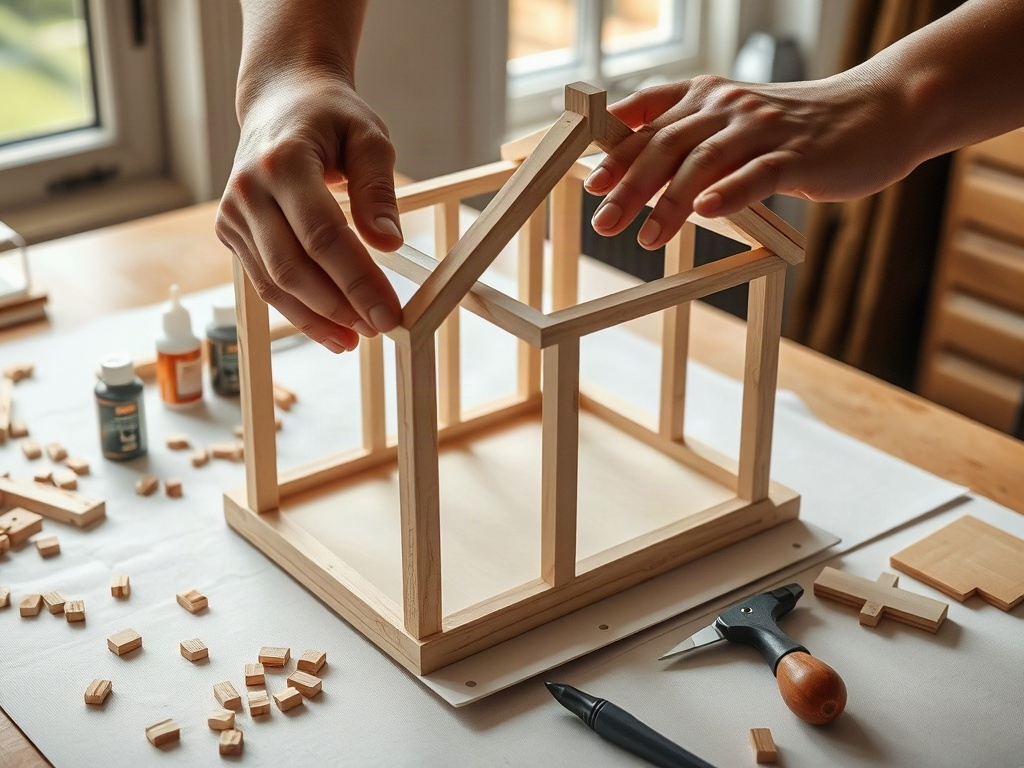
If you’re drawn to cottage kits but worried about complexity, start by checking the included instruction manual length. A 12-page manual with clear diagrams typically means a beginner-friendly build (6 to 12 hours). A 40-page manual with detailed painting stages means you’ll spend 30 to 50 hours, but every hour is meditative if you love detail work. Neither is better, just different. The real test: would you enjoy spending a quiet weekend on this one task? If yes, difficulty doesn’t matter.
If you’re drawn to cottage kits but worried about complexity, start by checking the included instruction manual length. A 12-page manual with clear diagrams typically means a beginner-friendly build (6 to 12 hours). A 40-page manual with detailed painting stages means you’ll spend 30 to 50 hours, but every hour is meditative if you love detail work. Neither is better, just different. The real test: would you enjoy spending a quiet weekend on this one task? If yes, difficulty doesn’t matter.
Thatched Roofs and Why They Matter
A thatched roof is the single feature that most distinguishes an authentic English cottage miniature kit from any ordinary dollhouse: it demands real technique, rewards patience, and makes the finished piece instantly recognizable from across the room.
Bestseller cottage kit
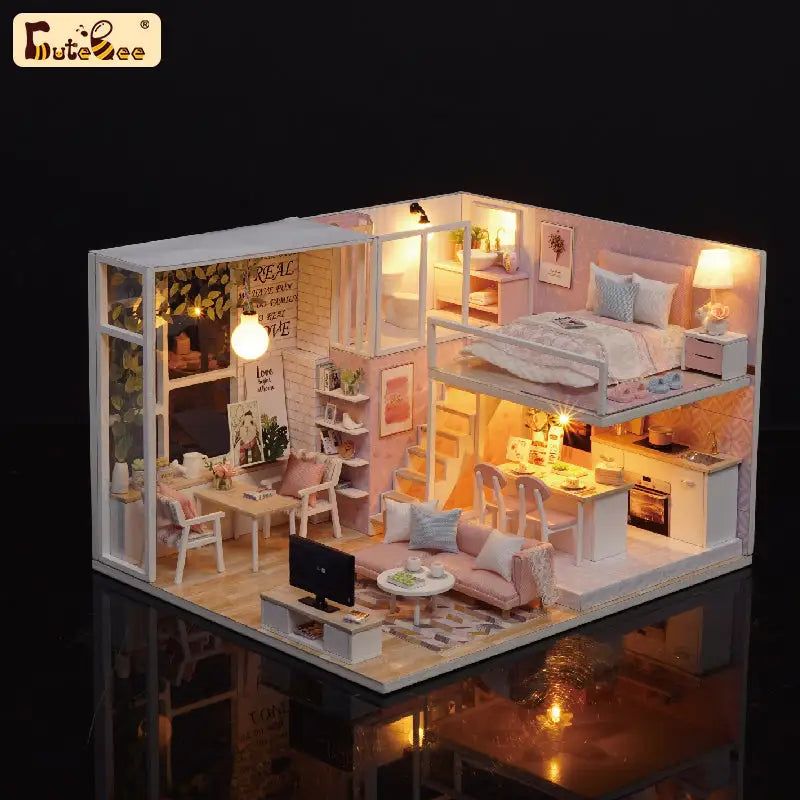
Tranquil Life DIY Miniature House Kit
$67.90
View this kit →
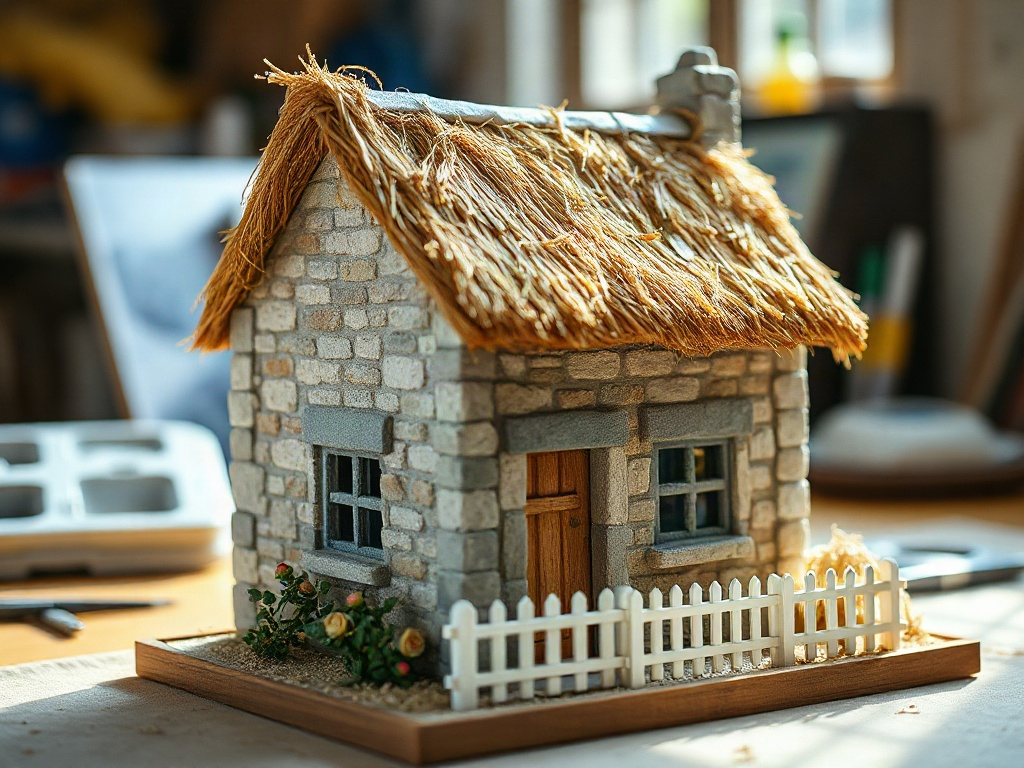
Real thatch uses bundled straw held down with twine and pegged at angles. Miniature versions achieve this through layered materials: raffia strands, paper pulp, or pre-molded polymer that mimics the thatch texture.
The most authentic approach uses individual strands bundled and attached row by row, which can take 8 to 15 hours for one roof. Pre-textured roofs that need only adhesive and base color take 1 to 2 hours. Both produce excellent results, just at different scales of commitment. The detail that matters most is the roof’s ridge line: real cottages have a peaked crown with slightly rounded edges, and good kits replicate this.
Weathering a thatched roof brings it to life. After the base color sets (typically tan, rust-gold, or dark brown), dry-brush a darker shade along shadow areas and the underside of each row. This single weathering step transforms a flat thatched surface into something that looks aged by decades of rain and wind. It takes under 20 minutes and makes an outsized difference to the finished piece.
Building the Stone Walls and Mortar Detail
Stone walls are where cottage kits show their regional character most clearly: a Cotswolds cottage uses honey-colored limestone, a Devon cottage features slate-gray granite, and the right kit will give you panel options or individual stacked stones to match whichever tradition you’re building.
Panel-based walls go up in minutes. Score lightly along the panel edges where walls meet corners, apply wood glue to the frame, position the panel, and clamp for 30 minutes. The visual effect is immediate and convincing.
Stacked stone walls require building row by row. Each stone sits on a bed of adhesive (white craft glue or epoxy resin), aligned with its neighbors. Expect 4 to 8 hours of wall-building time depending on wall area. The payoff is the ability to vary stone placement, leave realistic gaps, and weather individual pieces.
Either approach benefits from mortar enhancement. Once walls are set, use a fine brush and diluted acrylic paint (dark gray or cream, depending on your stone color) to shade mortar lines. This catches light and adds depth. Let paint dry, then use a dry sponge to stipple subtle discoloration into the stone surface. This mimics lichen and natural patina in a way that printed panels alone cannot replicate.
If you enjoy the meditative quality of fine detail work, you might also find our book nook kits rewarding. They share the same satisfying miniature-scene logic as a cottage garden or interior room, built at a scale that fits on a single shelf.
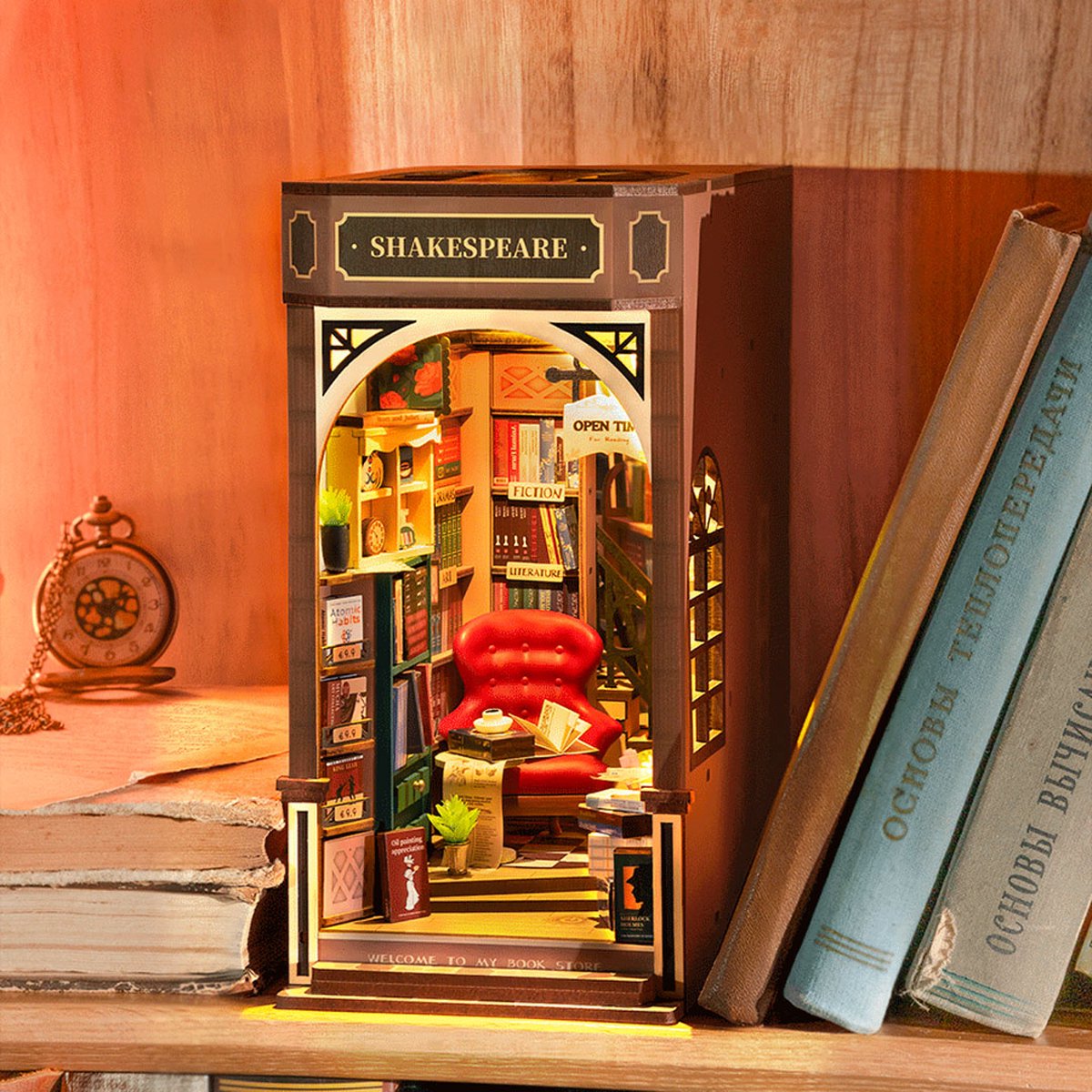
Explore the collection
All Book Nook Kits
76 handcrafted book nook kits
Browse all book nooks →
Garden Features and Landscape Detailing
A cottage without a garden is just a house: the garden phase is where most builders find their deepest satisfaction, placing tiny roses, laying gravel paths with tweezers, and deciding where a bench should catch the afternoon light. Most authentic cottage miniature kits include or pair with garden components: a wooden fence (painted white, gray, or weathered wood), flower bed bases, pathway materials, and sometimes resin-cast planters or benches.
Building the garden is often the most satisfying phase. After weeks indoors assembling walls and windows, suddenly you’re placing tiny roses in a bed, laying a gravel path with fine sand and tweezers, and deciding where a bench should sit. This phase takes 4 to 6 hours and requires almost no special skills, just patience and an eye for balance.
Popular garden additions include climbing ivy (sculpted foam or paper, applied with adhesive), a white picket gate, window boxes with trailing flowers, and a small water feature like a bird bath or fountain. The British cottage garden aesthetic values abundance and softness: more flowers, more vines, more layered planting than a formal design would allow.
📜 Did you know?
The English cottage garden tradition emerged in the 1800s, when working-class gardeners planted kitchen vegetables alongside flowers in small suburban plots. What started as practical thrift became an aesthetic ideal: a mix of hollyhocks, delphiniums, roses, and herbs in seemingly random arrangements. Modern cottage miniatures celebrate this “organized chaos” style, which is why kits include dense flower groupings rather than sparse, symmetrical plantings.
The English cottage garden tradition emerged in the 1800s, when working-class gardeners planted kitchen vegetables alongside flowers in small suburban plots. What started as practical thrift became an aesthetic ideal: a mix of hollyhocks, delphiniums, roses, and herbs in seemingly random arrangements. Modern cottage miniatures celebrate this “organized chaos” style, which is why kits include dense flower groupings rather than sparse, symmetrical plantings.
Interior Finishing and Lighting Options
Interior detailing transforms a cottage miniature kit from a display shell into a room you want to explore with a magnifying glass: it’s the phase where color choices, tiny furniture, and LED lighting combine to make the whole piece feel genuinely inhabited.
The meditative part of interior work happens here. You’re not racing. You’re placing tiny furniture, choosing paint colors for a parlor, deciding whether the kitchen has a ceramic sink or an iron stove. You might add a fireplace mantel with minimal figurines, hang printed paintings on walls, or scatter books on a shelf. Each placement is a small creative decision.
LED lighting elevates the entire piece. Strip lights hidden along ceiling edges, a small pendant in the kitchen, or a table lamp in the parlor make the interior visible and magical after dark. Most kits accommodate basic battery-powered LED systems (usually 1 to 2 volts, powered by a small button battery hidden in the base). Installation takes 20 to 30 minutes and requires only tape and a small screwdriver.
If you want a gentler introduction to interior finishing before committing to a full cottage build, the Sun Room kit below is a great starting point. Rated difficulty 2/5, it includes pre-cut window panels, interior flooring, basic furniture pieces, and LED lighting components, all for under $50. It’s the kit Hannah recommends most often to first-time builders who want satisfying interior work without a steep learning curve.
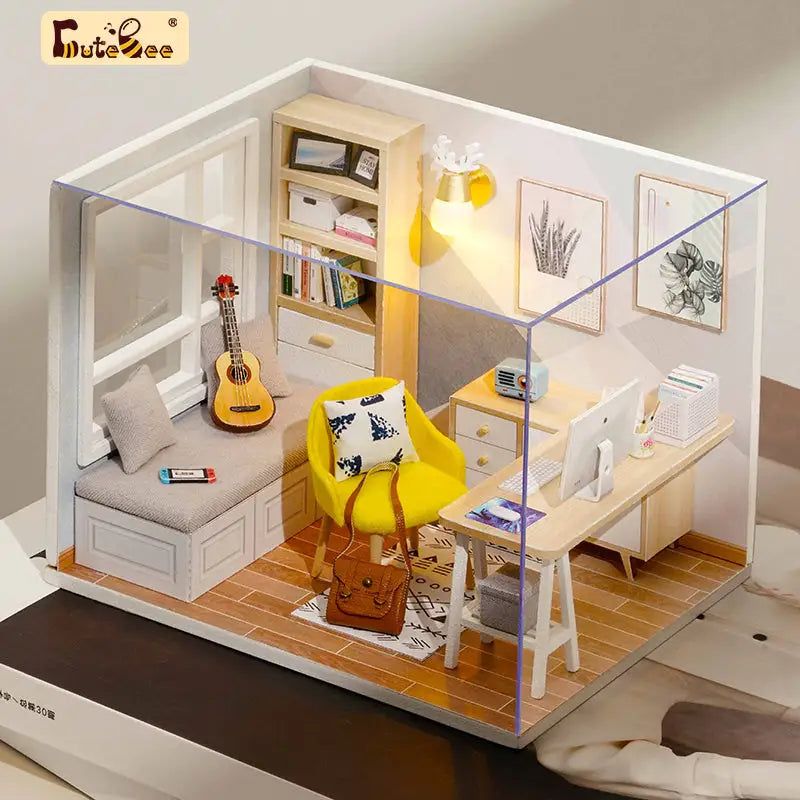
Easy starter under $50
Sun Room DIY Miniature House Kit
$49.99
Start with this kit →
Interior walls often benefit from subtle color choices. A cottage parlor might have soft cream or pale green walls. A kitchen could be warm terracotta or buttermilk. These color decisions don’t change the build time significantly but shift the entire feeling of the finished piece.
Skill Progression and Time Commitment
English cottage miniature kits scale cleanly from a 6-hour beginner weekend project all the way to an 80-hour advanced build that unfolds over months, so matching the kit difficulty to your schedule is the single most important decision before you buy.
A beginner kit (difficulty 2/5) might include pre-assembled walls, basic landscaping, and a 6-hour build window. You glue pieces together, paint simple details, add a few garden items, and you’re done. Perfect for a weekend or a few evening sessions.
An intermediate kit (difficulty 3/5) requires wall assembly from components, detailed painting of stonework and shutters, a realistic garden, and interior furnishing choices. Expect 20 to 30 hours spread over 2 to 4 weeks. This is the sweet spot for most hobbyists: challenging enough to stay engaging, manageable enough to finish.
Advanced kits (difficulty 4 to 5/5) include thatched roof construction, stacked stone walls, intricate mortar work, and often a full interior with multiple rooms. Some builders spend 40 to 80 hours on these projects, working in phases. The satisfaction of completion is proportional to the commitment.
| Difficulty | Build Time | What’s Involved | Best For |
|---|---|---|---|
| 2/5 Beginner | 6 to 12 hours | Pre-assembled walls, basic painting, simple garden | First-time builders, gift recipients |
| 3/5 Intermediate | 20 to 30 hours | Wall assembly, stonework painting, detailed garden, interior furnishing | Regular hobbyists, most experienced builders |
| 4/5 Advanced | 35 to 55 hours | Stacked stone, thatched roof, multi-room interior, weathering | Dedicated crafters seeking deep detail |
| 5/5 Expert | 55 to 80+ hours | Full row-by-row thatch, custom lighting rigs, scratch-built garden features | Collectors, display-quality showcase pieces |
Time isn’t a barrier if you enjoy the process. Many crafters report that cottage kits became their meditation practice: a quiet hour each evening with their hands occupied and their minds at ease. The cottage grew slowly, week by week. This gradual, unhurried rhythm suits the project beautifully and suits most builders better than trying to finish in a single weekend.
Choosing the Right Kit for Your Space and Skill Level
Before purchasing an English cottage miniature kit, measure your actual display space, be honest about your weekly build time, and choose a difficulty level that matches your current skills rather than the one you hope to reach by the end.
Cottage kits range from 8 inches wide (small accent piece) to 24 inches or more (statement centerpiece). Measure your actual display location. A 20-inch cottage on an 18-inch shelf is frustration waiting to happen.
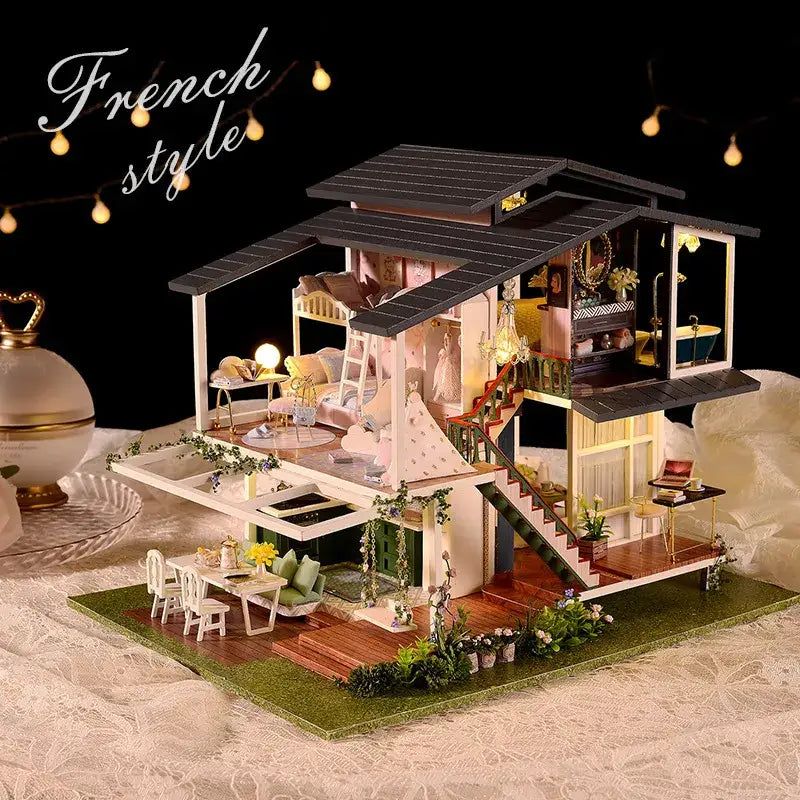
Rare in the niche
Miniature Greenhouse Kits
22 LED-lit greenhouse builds
See our greenhouse range →
What’s your available building time? Honest answer. If you have 30 minutes weekly on Sunday mornings, a 40-hour kit will take 4 months. That’s fine if you’re in it for the long haul. If you prefer completion within weeks, choose accordingly.
What architectural period appeals to you? Some kits replicate Victorian cottages (ornate details, busy gardens). Others focus on Georgian or Regency simplicity (clean lines, restrained palettes). Medieval cottages exist too (rough stone, tiny windows). Your preference shapes the entire project’s emotional tone.
Read reviews from actual builders, not marketing copy. Look for comments about instruction clarity, whether pieces fit together easily, whether paint colors are accurate, and whether the finished piece matches the box photo. These builder reviews reveal which kits are genuinely well-designed versus which are pretty marketing with assembly surprises.
Consider whether you want to integrate your cottage into a larger miniature scene. If you’re building a whole village, choose kits that share compatible scales and aesthetic. If this cottage stands alone, you have complete creative freedom. You might also explore our full miniature house kit range to find neighboring buildings that share the right scale.
Community and Sharing Your Build
The cottage miniature community is one of the most genuinely supportive corners of the crafting world: thousands of builders share progress photos, troubleshoot problems in hours, and cheer each other across the finish line without any competitive edge.
Sharing your process creates accountability and joy. Many crafters post photos at key milestones: walls complete, roof on, garden started, finished interior. Others document their entire build chronologically. Some film time-lapses of the roof thatching, which is mesmerizing to watch.
This community generosity is concrete. Someone posts a photo of a cracked stone wall they’re not sure how to fix. Within hours, three experienced builders reply with tried solutions. Someone else asks for paint color recommendations. Twenty replies arrive with specific brand and shade numbers. This is what makes miniature building more than a solitary project.
Premium collector piece
Monet’s Garden DIY Miniature House Kit
$155.00
Discover this kit →
Frequently Asked Questions about English Cottage Miniature Kits
Everything you might be wondering (click a question to expand).
Do I need special tools to build a cottage kit?
No. Most kits require only a craft knife, cutting mat, ruler, wood glue, paint (acrylics), brushes (sizes 0 and 2 work for most detailing), tweezers, and small clamps or heavy books for holding pieces while glue dries. A hobby knife with replaceable blades is more precise than scissors but not essential. Many builders start with tools they already own.
How long does a typical cottage kit take to complete?
Beginner kits: 6 to 12 hours. Intermediate kits: 20 to 35 hours. Advanced kits: 40 to 80 hours. Most experienced builders don’t finish in one stretch. They work in phases spread over weeks, which keeps the project engaging and fits realistic schedules.
Can I customize a cottage kit after building it?
Absolutely. After the basic structure is complete, you can repaint walls, change garden layouts, replace furniture, add interior details, and even modify exterior features. Many builders treat the finished kit as a starting point, not an endpoint. The cottage evolves with their skills and changing preferences.
Are cottage kits expensive compared to buying a finished miniature?
Kits typically range from $35 for beginner options to $150 to $300 for advanced builds. A finished cottage of comparable quality costs 2 to 3 times that price. If building appeals to you, kits offer better value. If you only want the finished piece, buying completed miniatures from artisan builders is legitimate and worth the premium.
What’s the best way to display a finished cottage miniature?
A glass display case protects the piece from dust and accidental damage, especially important if it includes delicate garden features or interior details. Backlighting (LED strips or small spotlights) highlights stonework texture and interior elements. Avoid direct sunlight for extended periods, as it fades paint and weathering details over time. A dedicated shelf or curio cabinet signals to visitors that this object deserves attention, which it does.
What scale are most English cottage miniature kits?
The most common scale is 1:12, meaning one inch in the model equals one foot in real life. This is the standard dollhouse scale and means furniture, figures, and accessories from different manufacturers are usually compatible. Some cottage kits use 1:24 (half scale) for a more compact finished size. Always check the listed scale before buying accessories or pairing kits in a village scene.
The Lasting Appeal of Cottage Miniatures
Building an English cottage miniature isn’t about owning a decorative object at the end. It’s about the hours of quiet, engaged work that precede it. Your hands occupied, your mind focused, the cottage slowly becoming real under your care. This meditative quality is why people return to miniature building year after year, cottage after cottage, each one a small world they shaped with intention.
A completed cottage sits on a shelf and invites closer looking. Someone new to your home notices it, leans in, and discovers the thatched roof detail, the garden roses, the window that opens. They ask how long it took, whether it’s hard, whether they could ever do something like that. And maybe they can. Maybe they will.