🎁 Buy 2 kits, get the 3rd FREE · Free shipping on every order

What Is a Miniature Greenhouse? History, Anatomy, and Why Crafters Love Them
What is a miniature greenhouse? From Victorian Wardian cases to today's most satisfying hobby kits, this guide covers the full history, anatomy of a build, difficulty levels, and why these detailed scale models became one of 2026's most talked-about craft trends.

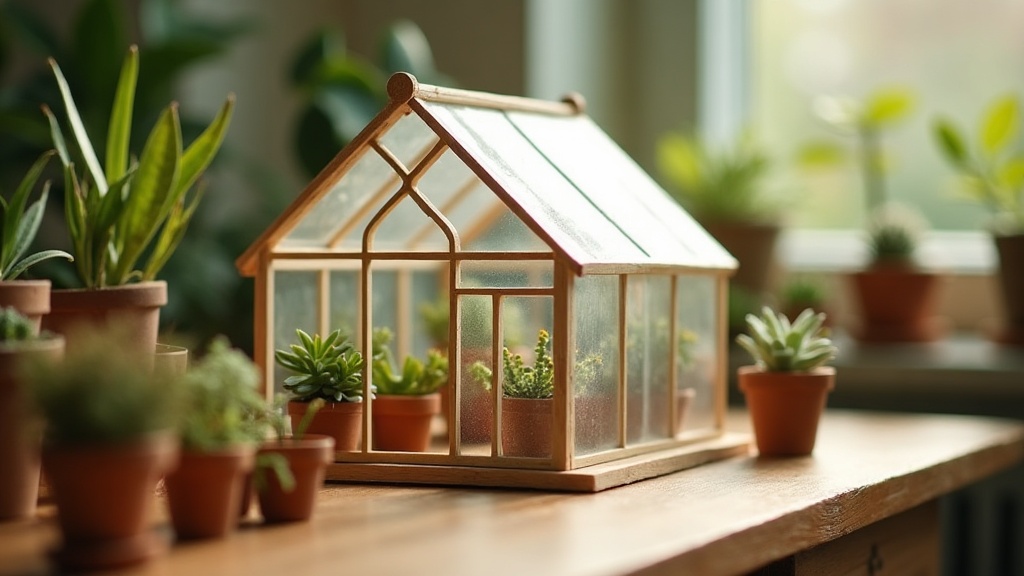
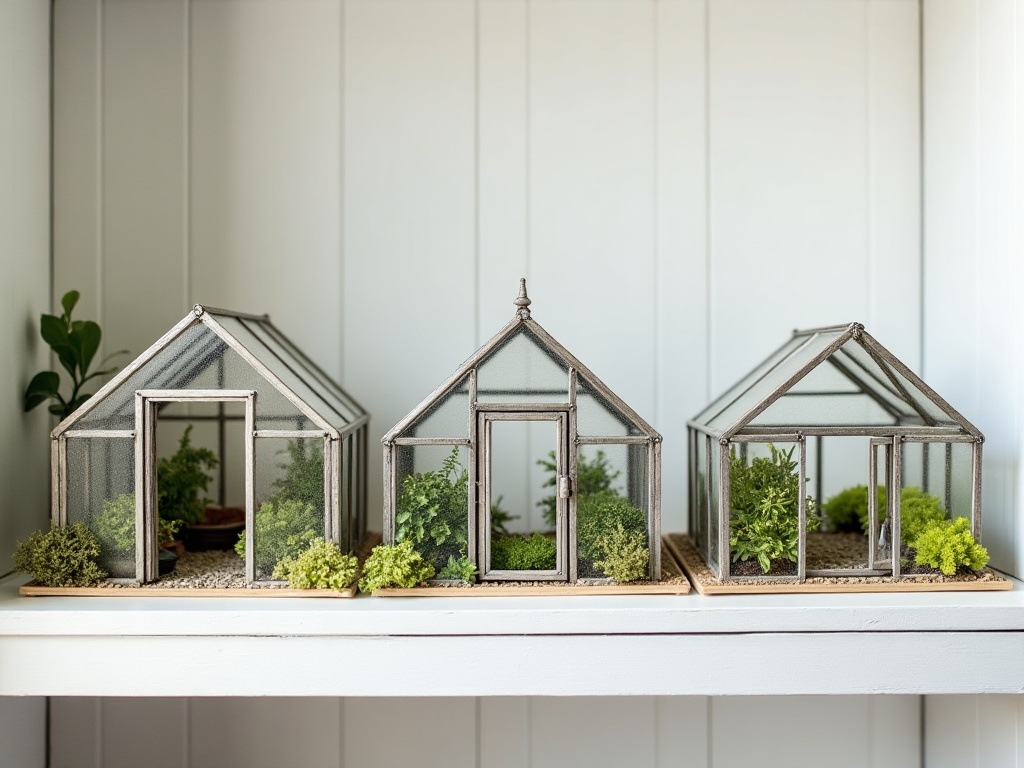
A miniature greenhouse is a small-scale, fully functional or decorative structure that replicates the form and purpose of a full-size greenhouse, typically built at 1:12 or 1:24 scale. Some are working terrariums that actually shelter seedlings and cuttings. Others are intricate wooden or acrylic models, assembled piece by piece, that sit on a shelf and spark conversation every single time someone walks into the room. Both versions share the same soul: careful craft, a love of growing things, and a deep satisfaction in building something beautiful with your own hands.
People ask what makes these structures different from a regular terrarium or a display cabinet. The answer is in the architecture. A miniature greenhouse has pitched or arched roof panels, ventilation details, potting bench elements, and a sense of interior life. It looks like a place where a tiny gardener actually works. That specificity is what makes them so compelling to build and to display.
From Victorian Conservatories to Your Crafting Table
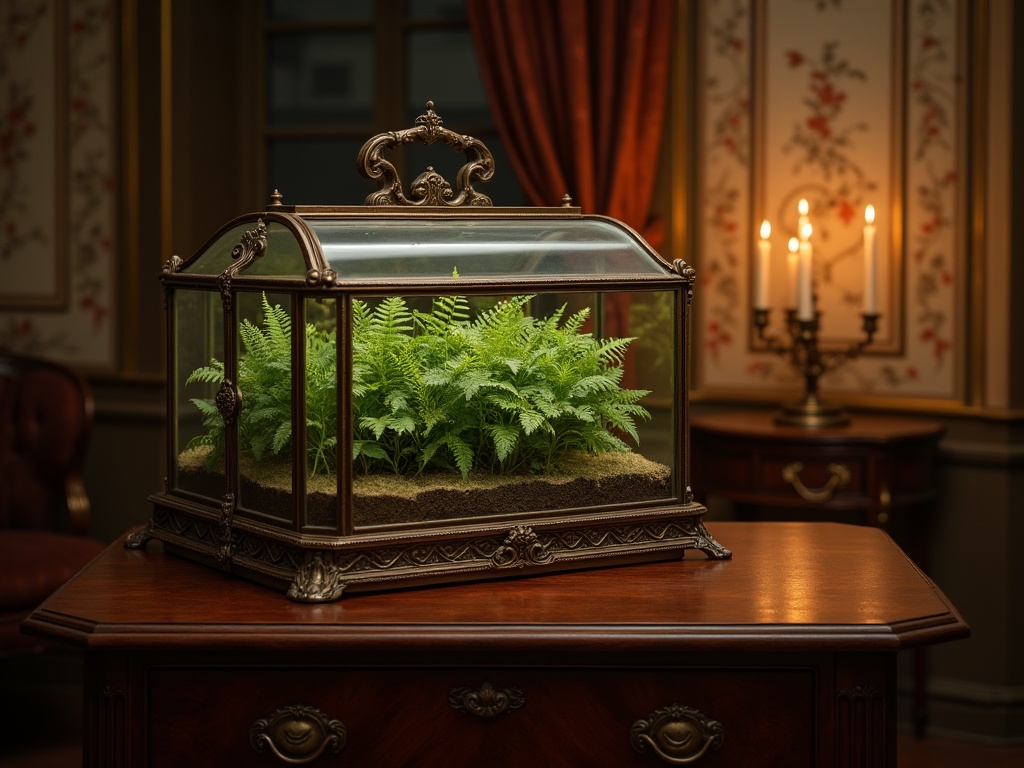
The miniature greenhouse traces its roots to Victorian Britain, where glass-enclosed growing structures became status symbols and the 1829 invention of the Wardian case put botanical elegance within reach of any household, sparking a tradition of small-scale plant enclosures that leads directly to today’s craft kits. The story of the miniature greenhouse cannot be separated from one of the most fascinating chapters in botanical history. During the 19th century, the British upper class became obsessed with glass-enclosed growing spaces. Large iron-and-glass conservatories attached to country houses were status symbols, places to grow exotic ferns, orchids, and tropical specimens imported at enormous cost from colonial expeditions.
But the real catalyst for miniature plant enclosures came in 1829. Nathaniel Bagshaw Ward, a London physician and amateur naturalist, accidentally discovered that plants could thrive inside a sealed glass container after noticing a fern sprouting inside a closed jar he had left out. He refined the concept into what became known as the Wardian case: a portable, glass-sided box that kept humidity stable and protected delicate plants from the coal-smoke-thick air of Victorian London.
📜 Did you know?
Wardian cases were not just parlor decorations. The Royal Botanic Gardens at Kew used them to transport living rubber tree seedlings from Brazil to British Malaya in 1876, helping establish the Southeast Asian rubber industry. A sealed glass box changed global agriculture.
Wardian cases were not just parlor decorations. The Royal Botanic Gardens at Kew used them to transport living rubber tree seedlings from Brazil to British Malaya in 1876, helping establish the Southeast Asian rubber industry. A sealed glass box changed global agriculture.
Wardian cases spread across Victorian parlors rapidly. Manufacturers began producing them in ornate styles: Gothic arches, Italianate columns, hexagonal footprints. Middle-class households that could not afford a full conservatory could still own a piece of that botanical elegance. Miniaturization of the greenhouse form had begun in earnest.
By the Edwardian era (1901-1910), hobbyist scale modeling had taken root alongside the miniature furniture and dollhouse movements already popular since the 17th century. Dutch craftsmen had been building kabinetthaus (cabinet houses) since the 1600s, and by the 20th century, the intersection of botanical enthusiasm and scale modeling gave birth to the ornamental miniature greenhouse as a craft object in its own right.
Browse the full range
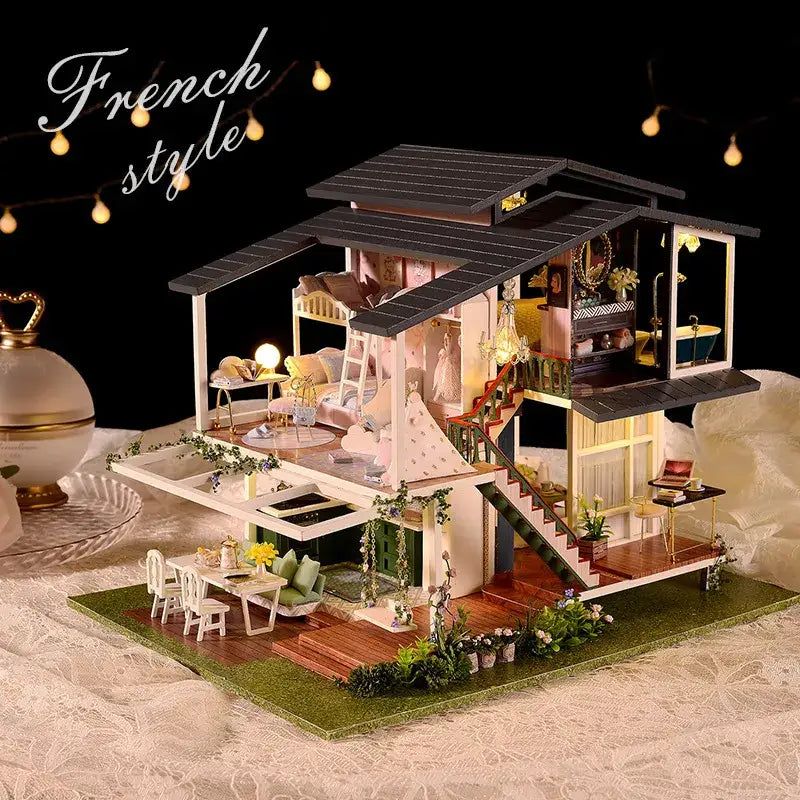
Miniature Greenhouse Kits
22 LED-lit greenhouse builds, beginner to advanced
Today’s miniature greenhouse kits are the direct descendants of that lineage. When you assemble one at your table, you are holding a thread that connects to Ward’s accidental discovery, to the fern-crazy Victorians, and to generations of people who found joy in replicating the structures that housed living, growing things.
The Anatomy of a Miniature Greenhouse: What Each Part Does
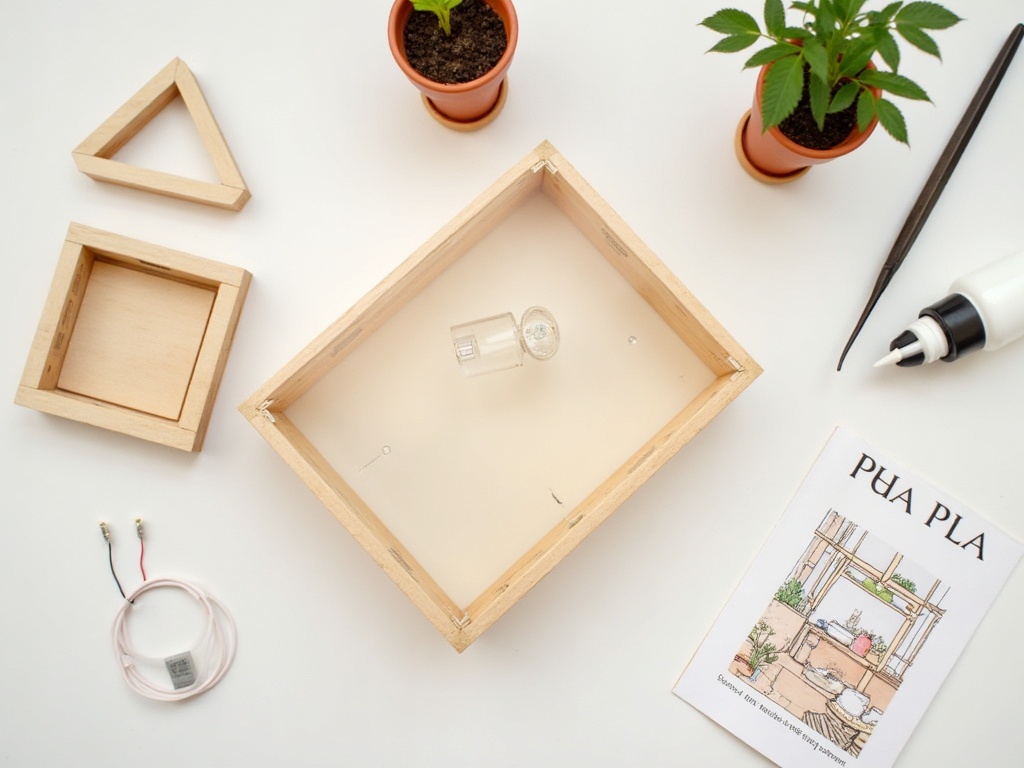
A miniature greenhouse kit is made up of a laser-cut frame, clear acrylic glazing panels, glazing bars, a base platform, door details, interior furnishings, and LED lighting provisions, each part working together to create a convincing scale replica of a real working greenhouse. Understanding the parts of a miniature greenhouse helps you build one more confidently and appreciate the design intelligence packed into a small kit. Here is what you will typically find:
- Frame rails and corner posts: The structural skeleton, usually laser-cut wood (basswood or birch plywood) or cast resin. These pieces set the scale and carry all the load.
- Roof panels: Often clear acrylic or acetate sheets that sit inside wooden glazing bars. The pitched roof is the visual signature of the greenhouse form.
- Glazing bars: The thin strips that divide the roof and wall panels into smaller panes. Victorian conservatories used wrought iron for these; miniature kits replicate them in laser-cut wood or metal wire.
- Base platform: A solid floor piece, sometimes detailed with tile or brick printing, that anchors the whole structure and gives it visual weight.
- Door and opening details: Many kits include a working hinged door or removable panels, adding realism and allowing interior access for decorating.
- Interior furnishings: Potting benches, tiny terracotta pots, watering cans, seed trays, and hanging plant hooks. These are what transform a shell into a scene.
- LED lighting provisions: Higher-end kits include pre-wired battery-powered LED strings that illuminate the interior through the clear panels at night.
The interplay between the transparent panels and the wooden structure is where most of the building challenge lives. Getting the glazing bars aligned so every pane sits flush takes patience. That alignment work is also, for most builders, one of the most meditative parts of the process. You slow down, you focus on millimeters, and an hour disappears in the best possible way.
✨ Hannah’s tip
Before gluing any clear acrylic or acetate panel into place, clean both sides with a soft microfiber cloth and a drop of dish soap solution. Fingerprints trapped behind glazing bars are invisible during assembly but very visible once the LED lights come on. Five extra seconds of cleaning saves a lot of regret later.
Before gluing any clear acrylic or acetate panel into place, clean both sides with a soft microfiber cloth and a drop of dish soap solution. Fingerprints trapped behind glazing bars are invisible during assembly but very visible once the LED lights come on. Five extra seconds of cleaning saves a lot of regret later.
Why Miniature Greenhouses Became a 2026 Trend
Miniature greenhouse kits surged into mainstream hobby culture by 2026 because they sit at the exact crossroads of slow craft, botanical aesthetics, and the search for gifts that feel genuinely personal and creative, drawing in adult hobbyists, plant parents, and gift givers all at once. The surge of interest in miniature greenhouse kits for adults did not appear from nowhere. Several converging forces pushed this category into the mainstream between 2024 and 2026.
The Slow Craft Movement Grew Up
After a few years of hyper-digital life, a significant portion of hobbyists actively sought activities that demanded sustained manual attention. Puzzle sales peaked and then plateaued. People wanted something with a permanent result at the end: an object you could keep, gift, or display. Miniature building kits fit that need exactly. The build takes 8 to 20 hours depending on complexity, and the finished piece is genuinely beautiful.
Cottagecore and Botanical Aesthetics Merged
The cottagecore visual trend, with its emphasis on gardens, pressed flowers, rustic wood, and quiet domestic beauty, aligned perfectly with the miniature greenhouse form. A completed greenhouse kit on a windowsill or bookshelf looks like it belongs in an editorial spread. Builders began sharing their finished pieces on social platforms and the visual appeal did the rest of the recruiting.
Gift Givers Found a Category That Works
One persistent problem in the hobbyist gift market is finding something that feels personal and creative without requiring the giver to know the recipient’s exact skill level or taste. Miniature greenhouse kits solved this. They are gender-neutral, age-flexible (suitable for ages 14 through 80), and carry an obvious artisanal quality that reads as thoughtful. By 2026, search volume for “miniature greenhouse kit gift” had climbed consistently for three consecutive years according to hobbyist retail category reports.
Plant Parents Wanted a Permanent Garden
Millions of people who picked up houseplant hobbies between 2020 and 2023 eventually hit apartment space limits. A miniature greenhouse gave them a botanical aesthetic that required zero watering and zero square footage beyond a small shelf. Some builders created hybrid versions: partly functional terrariums inside a decorative kit frame, combining the visual satisfaction of the model with the living quality of real moss or succulents.
🌱 Community insight
In our builder community, the single most popular greenhouse customisation in 2025 was adding real preserved moss and dried baby’s breath to the interior base before sealing it. It takes about 10 minutes and turns a decorative model into something that looks genuinely alive. Several members have shared that guests assume the plants are real at first glance.
In our builder community, the single most popular greenhouse customisation in 2025 was adding real preserved moss and dried baby’s breath to the interior base before sealing it. It takes about 10 minutes and turns a decorative model into something that looks genuinely alive. Several members have shared that guests assume the plants are real at first glance.
Choosing the Right Miniature Greenhouse Kit for Your Skill Level
Matching your skill level to the right miniature greenhouse kit is the single most important buying decision: beginners do best with 4 to 6 hour builds, most adults land happily at intermediate, and advanced kits reward only those who have already completed several simpler builds. Not all kits are built equal, and matching the right difficulty level to your current skills makes the difference between a joyful build and a frustrating one. The table below gives you an at-a-glance comparison before you commit to a purchase.
| Level | Build Time | Key Skills Needed | Typical Finished Size | Best For |
|---|---|---|---|---|
| Beginner 1-2/5 | 4 to 6 hours | Following numbered steps, basic gluing | 15 to 20 cm tall | First-time builders, teens, gift recipients |
| Intermediate 3/5 | 10 to 15 hours | Glazing bar alignment, LED wiring, tweezers work | 22 to 30 cm tall | Adult hobbyists wanting a weekend project |
| Advanced 4-5/5 | 20 to 30+ hours | Multi-section assembly, custom painting, micro detail | 30 to 45 cm tall | Experienced builders seeking a real challenge |
Beginner Kits (Difficulty 1-2 out of 5)
These typically come with pre-colored or pre-stained wood pieces, minimal glazing bar work, and large clearly numbered steps. Assembly time runs roughly 4 to 6 hours. They are ideal for first-time builders or as an introduction to scale modeling for teenagers. Expect a finished piece roughly 15-20 cm tall. If you have never built a miniature kit before, starting here is genuinely the right call: the confidence you build in a beginner kit carries directly into more ambitious projects.
Intermediate Kits (Difficulty 3 out of 5)
Intermediate kits introduce finer glazing work, LED wiring, and optional interior furnishing details. Assembly time is typically 10 to 15 hours spread across several sessions. This is the sweet spot for most adult hobbyists. The build rewards patience without demanding professional tools or prior woodworking knowledge. Our Monet’s Garden kit sits comfortably at this level and is one of the most-photographed finished pieces in our community.
Advanced Kits (Difficulty 4-5 out of 5)
Advanced builds feature multi-section structures (attached potting sheds, cold frames, raised beds), micro-scale planting details, and complex lighting rigs. Some builders spend 20 to 30 hours on a single piece. These kits are for people who already have completed several simpler miniature builds and want a challenge that pushes their precision and creativity. The payoff is a finished object with genuine collector presence: the kind of piece you frame under a glass dome and treat as the centerpiece of a shelf.
✨ Hannah’s tip
If you are torn between two difficulty levels, choose the simpler one for your first greenhouse build. You can always add complexity through custom painting, aged-wood effects, or botanical props after assembly. A beautifully finished beginner kit beats an abandoned intermediate one every single time.
If you are torn between two difficulty levels, choose the simpler one for your first greenhouse build. You can always add complexity through custom painting, aged-wood effects, or botanical props after assembly. A beautifully finished beginner kit beats an abandoned intermediate one every single time.
Regardless of difficulty, every kit should come with a full parts manifest, illustrated step-by-step instructions (not just diagrams), and all adhesive materials needed. If you are shopping for your first build, check out the full range in our miniature greenhouse kit collection, where each listing includes a clear difficulty rating and a complete parts list so you know exactly what you are getting into before you open the box.
Building One: The Experience Beyond the Object
Building a miniature greenhouse kit delivers more than a finished display piece: the process demands full presence, delivers hours of focused rest, and consistently produces the kind of object that generates real conversation and draws others into the hobby. People who have built miniature greenhouse kits consistently describe the experience in terms that go well beyond “it was a fun project.” There is a particular quality of attention that detailed scale work demands. You cannot check your phone when you are holding a 3 mm glazing bar over a spot of glue. You are fully present.
A community member who completed her first build last winter described it this way: “I put on an audiobook, sat down at 7 pm, and looked up at 11. I had not thought about anything stressful for four hours. The greenhouse was half done. I slept better that night than I had in months.” That kind of feedback shows up again and again. The build is not just a means to an object. It is a practiced, repeatable form of focused rest.
Builders also report a strong social dimension. Finished pieces generate questions. Guests pick them up, ask how long they took, ask if they could build one. Many builders have introduced friends and family members to the hobby through gifting a kit after showing their own completed piece. If you are looking for a handcrafted miniature greenhouse kit to give as a gift, that social ripple effect is a genuine part of the value.
The community aspect extends online as well. Build journals, step-by-step photo threads, and variation galleries where builders share custom paint choices or added botanical props create a warm, low-competition space quite different from other hobbyist forums. People are genuinely happy for each other’s finishes. That culture is worth preserving, and it starts with the object itself being good enough to make people proud of what they built.
Frequently Asked Questions about Miniature Greenhouses
Everything you might be wondering (click a question to expand).
What is the difference between a miniature greenhouse and a terrarium?
A terrarium is a sealed or open glass container that houses living plants. A miniature greenhouse is a scale model of a greenhouse structure, which may or may not contain living plants. The key difference is architectural intent: a miniature greenhouse replicates the design language of a real greenhouse (pitched roof, glazing bars, potting bench details), while a terrarium is primarily a growing vessel. Some builders combine both by placing a small planted terrarium inside a decorative miniature greenhouse frame.
Do miniature greenhouse kits require any special tools?
Most kits are designed to be assembled with basic household tools: tweezers, a ruler, a craft knife, and white PVA glue or the adhesive provided in the kit. No power tools, no clamps, and no prior woodworking experience are required. A well-lit workspace and a flat surface are genuinely the most important conditions for a clean build.
How long does a miniature greenhouse kit take to build?
Build time depends entirely on the kit’s difficulty level. Beginner kits typically take 4 to 6 hours. Intermediate kits run 10 to 15 hours. Advanced multi-section builds can reach 20 to 30 hours. Most builders spread the work across multiple sessions of 2 to 3 hours, which also lets glue cure fully between stages.
Are miniature greenhouse kits suitable for children?
Beginner-rated kits are suitable for children aged 12 and up with adult supervision, particularly for steps involving craft knives or fine wire. The small parts are not appropriate for children under 8. Many families build together, with adults handling precision cuts and children handling painting, decoration, and furnishing placement.
Can I customize a miniature greenhouse kit after assembly?
Absolutely. The wooden frame takes acrylic paint, wood stain, and chalk paint well. Many builders paint their frames in heritage greenhouse colors like sage green, cast-iron black, or cream white before assembly. After completion, the interior can be styled with added botanical props: dried flowers, polymer clay vegetables, printed seed packet labels. Customization is one of the most celebrated aspects of the hobby community.
What scale are most miniature greenhouse kits sold in?
The most common scale is 1:12, which means every 1 cm in the model represents 12 cm in real life. This is the standard dollhouse scale and the one most interior furnishing accessories are made for, which makes it easy to add compatible props from other suppliers. Some kits use 1:24 scale for a more compact footprint. The product listing for each kit in our miniature greenhouse kit collection specifies the scale in the details section.
What to Build Next After Your First Miniature Greenhouse
After your first miniature greenhouse build, the skills you gained with fine alignment, clear panel installation, and scale decoration transfer directly to larger botanical scenes, miniature cottages, seasonal dioramas, and book nook kits, opening up a whole continuing hobby. Finishing your first miniature greenhouse tends to create a very specific problem: you immediately want to build another one. That is not a bad problem to have. The skills you build during a greenhouse project, specifically patience with fine alignment work, comfort with clear panel installation, and a feel for scale-appropriate decoration, transfer directly to other miniature building categories.
Many greenhouse builders move on to larger-scale miniature botanical scenes that incorporate a greenhouse as one element within a full garden setting. Others branch into miniature cottages and house kits, or seasonal scenes that use the same kit-building techniques. A few dedicated builders work toward creating a diorama series where each finished piece tells part of a larger story. If you enjoy the architectural detail of greenhouse glazing bars, you will find the same satisfying precision in book nook kits, which often feature library or garden window scenes.
Whatever comes next, the miniature greenhouse tends to be remembered as the build that started it all. The one that proved you had the patience, the precision, and the genuine pleasure in slow, careful work. Ward’s accidental discovery in 1829 set something in motion that is still arriving at people’s crafting tables nearly 200 years later. That continuity, quiet and uninterrupted, is one of the things that makes this hobby feel like it actually matters.