🎁 Buy 2 kits, get the 3rd FREE · Free shipping on every order


Dark Academia Miniature Library Kit: Build Your Gothic Book Nook
Build a haunting miniature library inspired by dark academia aesthetics. This kit combines gothic architectural elements, hand-painted details, and vintage book reproductions to create an atmospheric book nook that captures the essence of candlelit reading rooms and secret literary spaces.

There’s something quietly magical about the intersection of old books and candlelight. Leather spines catch the flicker of flame. Shadows pool in the corners of towering shelves. Dust motes drift through slanted afternoon light filtered through narrow windows. That’s the world a dark academia miniature library kit lets you build at a human scale, right on your shelf.
This isn’t just a decorative object. It’s an invitation to slow down, to meditate through miniature craftsmanship, and to create something that holds genuine atmospheric weight. Whether you’re drawn to gothic aesthetics, collect miniatures, or simply want a thoughtful gift for someone who treasures literary spaces, this kit offers a satisfying entry point into the craft.
What Defines a Dark Academia Library Kit
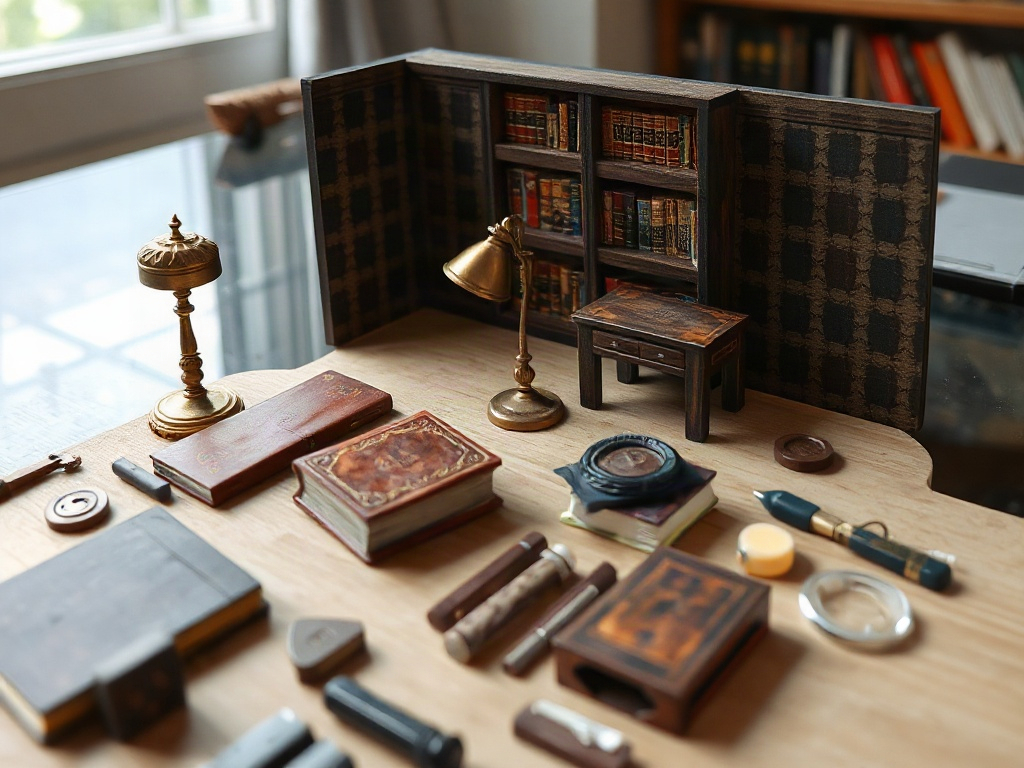
A dark academia library kit is defined by aged architectural surfaces, densely detailed book-spine walls, warm atmospheric lighting, and scholarly furnishings that together recreate the moody, literary atmosphere of Victorian Gothic academic spaces in miniature form. Dark academia as an aesthetic draws from Oxford and Cambridge’s storied halls, from Victorian Gothic revival architecture, and from the romance of scholarly retreats hidden from the modern world. A miniature library kit capturing this mood includes specific visual and narrative elements.
The architectural foundation matters. You’re typically working with walls that suggest age: deep wood paneling, perhaps stone finishes, or wallpaper printed with tattered leather spines. The kit provides these elements pre-cut or pre-printed, ready for assembly. Ceiling details lean toward exposed beams, barrel vaults, or coffered designs. Flooring suggests worn marble, aged wood, or patterned tiles from another era.
Furnishings take second place to the books themselves. A single desk, a reading table, or wingback chairs create focal points, but the real star is the collection lining the walls. Dark academia kits prioritize book detailing: spine printing that suggests authentic titles, varying spine widths, leather texture, and aged paper finishes that catch light unevenly.
Lighting transforms the entire composition. A desk lamp with a warm filament, candles suggested through paint or small LED sources, or the glow of a distant window create that essential mood. Without light, the space feels incomplete. With it, it breathes.
Kit Components and What’s Included
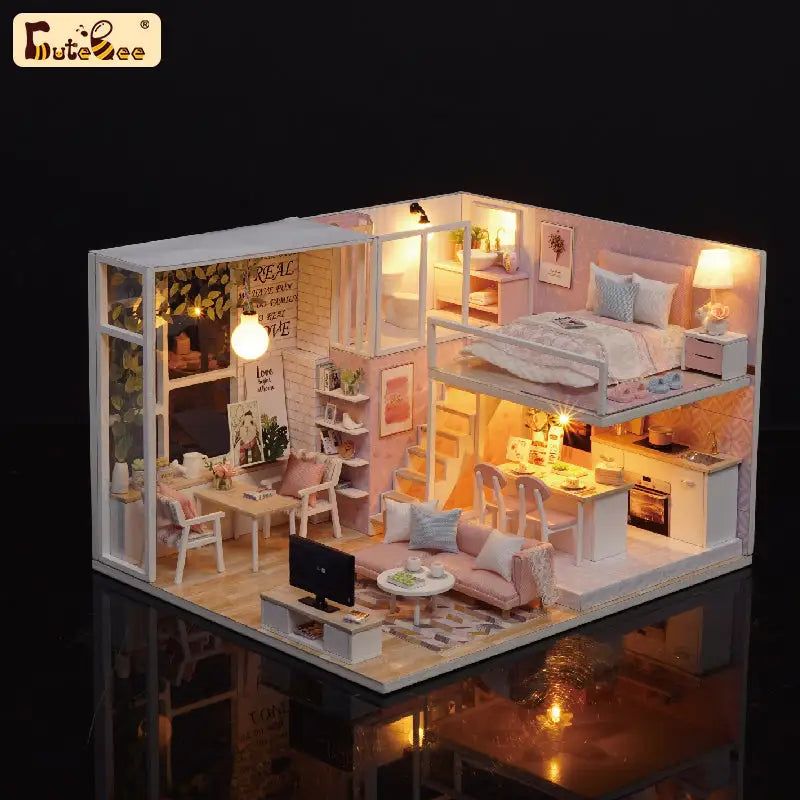
A complete dark academia miniature library kit typically includes pre-cut architectural walls with book-spine wallpaper, wooden furniture, 50 to 100 detailed book pieces, decorative scholarly accessories, and a warm LED light source, all designed to assemble into a self-contained gothic library scene. Before diving into the individual sections, it helps to know what a complete dark academia miniature library kit actually puts in your hands. If you’d like a sense of the finished experience first, the Tranquil Life kit below is one of our most-loved enclosed miniature builds. Its warm wood palette and multi-room layout share real DNA with the gothic library aesthetic: rich tones, layered detail, and that deeply satisfying sense of a world in miniature.
Architectural Pieces and Walls
Pre-cut wood or MDF walls form the box structure. These usually slot together without glue, though many crafters add a small amount for stability. Wall treatments come as wallpaper sheets, fabric overlays, or paint-ready surfaces. The aesthetic almost always includes book-spine wallpaper as at least one wall: this is the visual anchor.
Trim details, crown molding, and baseboard elements arrive pre-stained or ready for finishing. The kit’s difficulty rating typically depends on how much assembly work these components require. Basic kits might feature 5 to 7 separate wall pieces. Advanced kits can include 20 or more individual architectural elements.
Furniture and Accessories
Most kits include at least one wooden desk or table, often in mahogany or walnut tones. A chair or reading bench adds scale and narrative. Some kits feature a small ladder for reaching upper shelves, a quintessential Gothic library detail.
Decorative objects arrive as pre-painted pieces: an ink bottle, stacked papers, a magnifying glass, a pocket watch. These aren’t just fillers. They tell the story of someone working in this space, mid-thought, mid-page.
Books and Shelving
This is where the kit’s personality shines. Book spines come printed and pre-cut, ready to stack or shelve. A typical kit includes 50 to 100 individual book pieces in varying heights and thicknesses. The printing captures real Victorian and scholarly titles, creating an authentic feel.
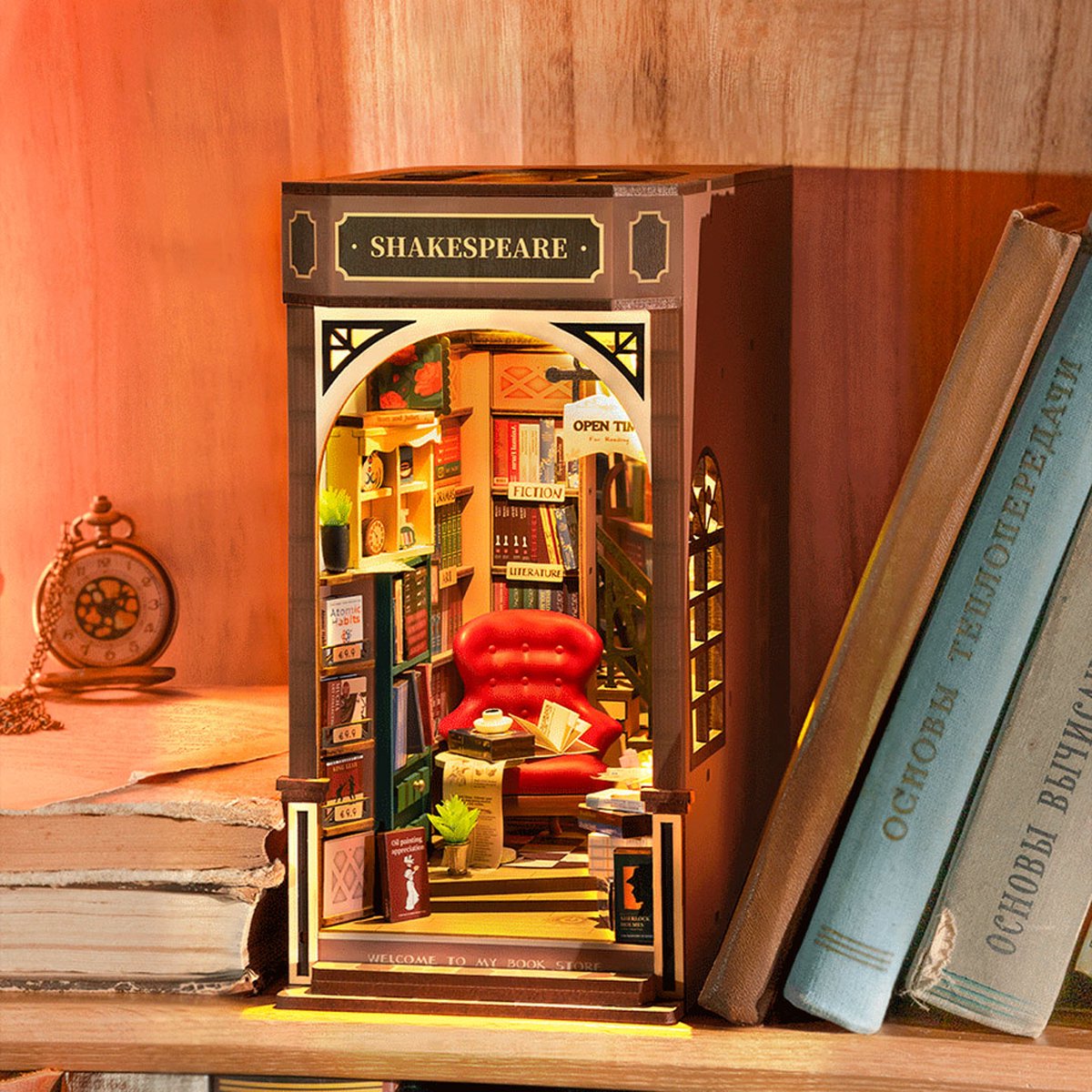
Shelves themselves are usually pre-stained wood, sometimes with ornate brackets. The spacing and depth accommodate the scale of the books precisely. No fussing with adjustments. If you’re drawn specifically to the book nook format, our curated book nook kits collection gathers 76 builds that lean hard into literary shelf inserts, several with a decidedly dark academic flavor.
Lighting Elements
Most kits include an LED light source designed for miniature spaces: either a small lamp with a brass or wood base, or bare LEDs for custom placement. Some advanced kits offer warm and cool color temperature options, letting you dial in the exact mood you want.
Batteries, if required, are usually included. Some kits feature USB-powered lights for always-on availability without battery replacement concerns.

🪄 Hannah’s tip
Before gluing anything, dry-fit the entire structure. Walk through assembly once without adhesive. This catches misaligned pieces early and reminds you of the sequence. Many crafters skip this step and regret it. A small dry run saves hours of frustration and keeps your pieces unstuck.
Before gluing anything, dry-fit the entire structure. Walk through assembly once without adhesive. This catches misaligned pieces early and reminds you of the sequence. Many crafters skip this step and regret it. A small dry run saves hours of frustration and keeps your pieces unstuck.
Difficulty Rating and Time Commitment
Dark academia miniature library kits range from beginner builds taking 2 to 4 hours with pre-assembled walls and plug-and-play lighting, up to advanced 25-hour projects requiring custom finishing, wiring, and precision architectural assembly. Dark academia kits span the full difficulty spectrum, so choosing the right one matters for your satisfaction.
Beginner-Friendly Kits (2 to 4 hours)
These feature pre-assembled walls, pre-stained furniture, and minimal painting. You’re primarily positioning and gluing. Book spines are already printed and cut. The lighting is plug-and-play. Perfect for someone new to miniatures who wants an immediate sense of accomplishment.
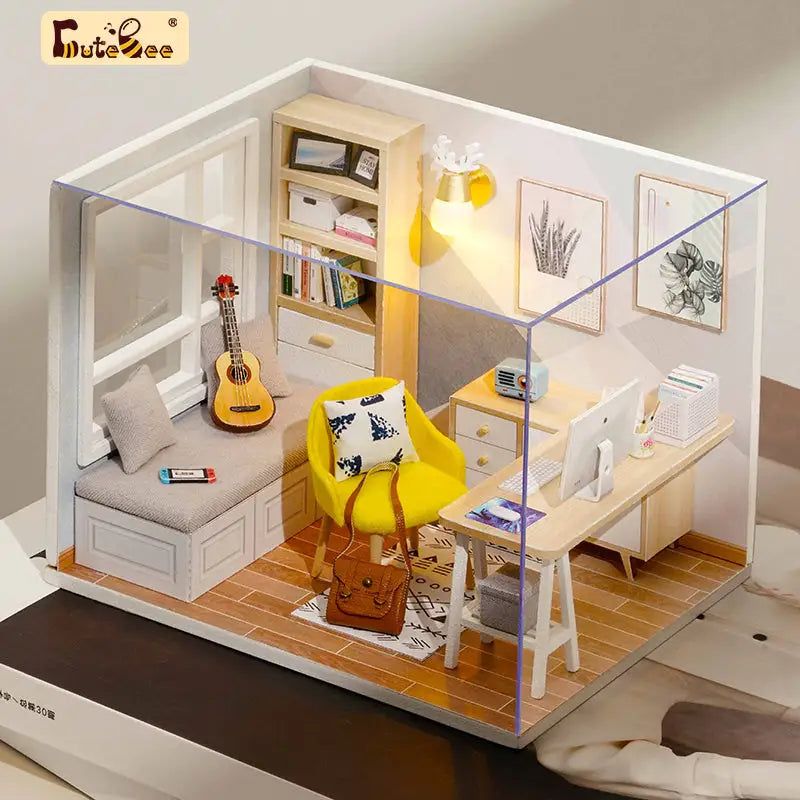
The Sun Room DIY Miniature House Kit at under $50 is a favourite recommendation here. It won’t deliver the darker gothic palette of a full dark academia build, but its straightforward construction is genuinely excellent practice for understanding how walls slot together, how lighting wiring sits, and how tiny furniture finds its place. Think of it as a bright-toned warm-up before you tackle a moodier library build, and you’ll enter that second kit with real confidence.
✅ À retenir
Matching kit difficulty to your actual experience level is the single biggest factor in how much you enjoy the build. An advanced kit attempted too soon can feel defeating. A beginner kit completed with confidence is its own small triumph, and it sets you up for the more complex project you’re really after.
Matching kit difficulty to your actual experience level is the single biggest factor in how much you enjoy the build. An advanced kit attempted too soon can feel defeating. A beginner kit completed with confidence is its own small triumph, and it sets you up for the more complex project you’re really after.
Intermediate Kits (6 to 12 hours)
Walls require assembly from multiple pieces. Furniture needs basic finishing: paint or stain application. Some book spines require cutting or detailing. You’re making creative decisions about layout and decoration. This tier rewards attention and care but doesn’t demand advanced skills.
Advanced Kits (15 to 25+ hours)
Individual architectural elements demand precision assembly. Furniture often arrives unfinished, requiring paint, stain, and weathering techniques. Books might be assembled from blank covers you design and print yourself. Lighting integration requires basic wiring understanding. These kits assume you’ve built at least one miniature before and enjoy technical problem-solving as part of the process.
⚠️ Attention
Wiring a miniature LED system for the first time is genuinely fiddly. Before threading wires through walls you’ve already glued, map your cable route on paper and test the circuit with the structure still flat. Fixing a broken connection inside a sealed miniature room is a patience test nobody needs.
Wiring a miniature LED system for the first time is genuinely fiddly. Before threading wires through walls you’ve already glued, map your cable route on paper and test the circuit with the structure still flat. Fixing a broken connection inside a sealed miniature room is a patience test nobody needs.
Why Dark Academia Resonates in 2026
Dark academia resonates so strongly in 2026 because it offers miniature builders intellectual and literary depth that faster-moving aesthetics miss, combined with the meditative, flow-state quality of slow, deliberate craftsmanship around books, candlelight, and scholarly atmosphere. The dark academia aesthetic isn’t new, but its cultural presence has exploded. Television adaptations of gothic academic stories, booktok trends celebrating literary spaces, and the rise of cottagecore-adjacent home design have all fed interest in creating intimate, book-centered environments.
For miniature enthusiasts, dark academia offers something the prevailing cottage and cozy aesthetics sometimes miss: intellectual and literary depth. A dark academia library nook carries narrative weight. Someone building one is saying something about how they see beauty, intelligence, and atmosphere working together.
The meditative quality of assembly also appeals. Unlike fast-moving hobbies, building a miniature library rewards patience. The act of positioning individual book spines, adjusting a desk lamp angle, or weathering wood surfaces to suggest age pulls you into a flow state. You’re not rushing to completion. You’re inhabiting the process itself.
📖 Le savais-tu
The term “dark academia” as an aesthetic category only gained mainstream traction around 2020, largely through Tumblr and early TikTok. But the underlying love of candlelit libraries and gothic scholarly spaces goes back centuries. You’re building something that taps into a very old human longing for rooms full of books and quiet thought.
The term “dark academia” as an aesthetic category only gained mainstream traction around 2020, largely through Tumblr and early TikTok. But the underlying love of candlelit libraries and gothic scholarly spaces goes back centuries. You’re building something that taps into a very old human longing for rooms full of books and quiet thought.
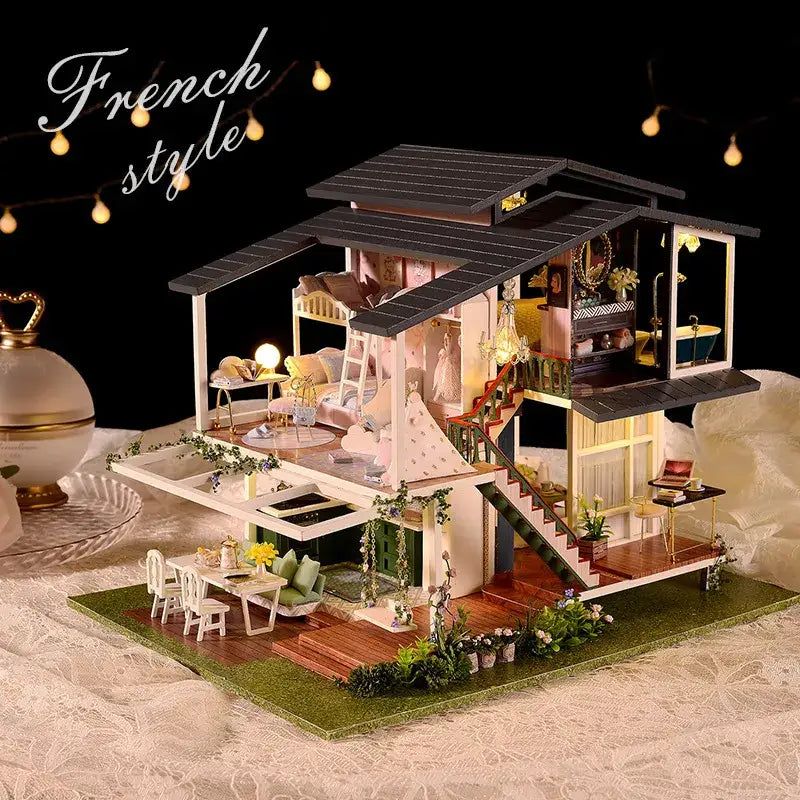
Display and Community Inspiration
Once complete, a gothic library miniature kit inspires creative display options including shadow boxes with museum-quality lighting, integration into larger village scenes, and shelf accents in home offices, all backed by an active online community sharing custom book spines and finishing techniques. Once complete, these kits spark creativity in how you display them. Some crafters build shadow boxes with museum-quality lighting and backdrop photography. Others integrate them into larger miniature village scenes. Several position them as shelf accents in home offices, lending an artistic, personal touch to workspace design.
User-generated content around dark academia kits has grown substantially. Online communities share custom book spine designs, LED modifications, additional furnishing sources, and weathering techniques that push the aesthetic further. A kit isn’t a ceiling; it’s a starting point. You’ll find active discussion threads in the miniature-house.com community where builders share finished photos and ask for finishing advice.
The gift-giving appeal is significant too. For book lovers without time to explore crafts, a dark academia library miniature kit offers a curated, approachable way into the hobby. It’s thoughtful without being niche. It’s beautiful before any modification. And it respects the recipient’s taste and agency: they can build it as-is or make it entirely their own.
Materials and Build Quality Expectations
A quality gothic library miniature kit uses substantial MDF or wood components, matte book-spine printing that suggests aged paper rather than glossy reproductions, and warm-white LEDs between 2700K and 3000K that correctly enhance the dark academia atmosphere. A quality dark academia miniature library kit uses durable materials that survive the build process and reward long-term display. Wood components should feel substantial, not flimsy. MDF should be smooth without rough edges or splinters. Wallpaper and printed elements should have good color saturation and accurate registration.
Book spine printing is worth examining closely. The best kits feature matte finishes that suggest aged paper, not glossy reproductions that catch light unpleasantly. Title authenticity matters too. Generic or AI-generated-sounding titles break immersion. Real Victorian and Gothic literature titles, along with some contemporary academic selections, create believable libraries.
Lighting quality transforms the entire piece. Warm-white LEDs (2700K to 3000K color temperature) enhance the gothic mood. Cool whites feel institutional. The best kits offer warm sources or include a dimmer so you can adjust intensity to match your space.
Pre-finishing on stained wood should be even, without visible brush marks or drips. If a kit arrives sanded but unfinished, that’s fine: you’re expected to apply stain or paint. But finished elements should look intentional, not rushed. For crafters who want to see what premium finishing looks like at the top of the range, the Monet’s Garden kit below is a useful benchmark: its wood components arrive with a level of surface detail that shows exactly what careful pre-finishing can achieve.
Frequently Asked Questions about Dark Academia Miniature Library Kits
Everything you might be wondering (click a question to expand).
How long does a dark academia kit typically take to complete?
Beginner kits take 2 to 4 hours. Intermediate builds run 6 to 12 hours across several sessions. Advanced kits with custom finishing and wiring can stretch to 25 hours or more. Most people break work into multiple sessions rather than attempting one marathon build. The process is meant to be enjoyable, not rushed.
Do I need special tools to assemble these kits?
Basic tools suffice for most kits: a small craft knife, ruler, craft glue or hot glue gun, tweezers for positioning small pieces, and possibly a drill for wiring if lighting requires it. Paintbrushes and paints are needed only if you’re finishing unfinished components. The kit instructions specify what’s needed.
Can I customize the books or titles in my kit?
Absolutely. Many crafters print custom book spine labels using the kit’s scale and color palette. Blank book components let you design your own titles. This is where personal taste shines: include authors you love, inside jokes, or themed selections that match your library aesthetic. Titles from Gothic and Victorian literature work especially well for maintaining dark academia immersion.
What if pieces arrive damaged?
Quality kits ship with damage protection. Inspect contents immediately upon arrival. Manufacturers typically replace damaged components at no cost if reported within 14 days. Wood items occasionally split or chip in transit; plastic or MDF pieces are more robust. Open carefully and keep packaging until you’ve verified everything.
Are these kits suitable for young crafters?
This depends on the kit’s complexity rating and the child’s age and experience. Beginner kits with simple gluing and no sharp edges work for ages 10 and up with supervision. Intermediate and advanced kits suit older teens and adults. Always review specific age recommendations provided by the kit designer, as safety varies.
What makes a miniature library kit feel authentically “dark academia” rather than just a generic bookshelf scene?
Three things separate a true dark academia build from a generic bookshelf vignette: warm amber lighting (2700K to 3000K LEDs, never cool white), aged surface treatments (dry-brushed wood, tarnished metal accents, slightly yellowed paper), and a curated sense of scholarly clutter. A pocket watch, an ink bottle, a half-open tome left face-down: these narrative props signal that someone lives and thinks in this space. The aesthetic is about atmosphere and story, not just objects arranged neatly.
Extending Your Dark Academia Library Beyond the Kit
Once your initial kit is complete, builders extend their dark academia miniature library by sourcing additional miniature books, applying dry-brushing and paint wash weathering techniques, and constructing companion pieces like a scholar’s study or rare books room to build a larger creative world. Once your initial kit is complete, the real creativity begins. Many builders source additional miniature books from specialty shops or print custom collections. Weathering techniques like dry-brushing and paint washes add decades of visual age to new components. Custom lighting gels and diffusers change the mood entirely.
Some crafters build companion pieces: a reading nook adjacent to the library, a scholar’s study with maps and instruments, or a rare books room with a locked cabinet. The dark academia world is vast, and one kit often becomes the entry point into a much larger creative landscape. Hannah’s own workbench started with a single Victorian dollhouse on a rainy Sunday in 2021, and the shelf it sits on now holds six builds, each one teaching something the last one couldn’t.
The community continues to innovate. New book spine designs appear monthly. Makers share weathering tutorials. Photographers capture kits in gallery-quality presentations. Building a dark academia miniature library kit isn’t an isolated project; it’s an invitation to join a creative conversation about beauty, literature, and the spaces where both meet.